

A Crimean icon of St. Princess Olga with a remarkable history
On 11 July, by the new church calendar, the Church commemorates Saint Olga, Equal-to-the-Apostles. In her honour, “Ukraine Incognita” decided to tell you about a very interesting and far from simple monument connected with the veneration of this saint.
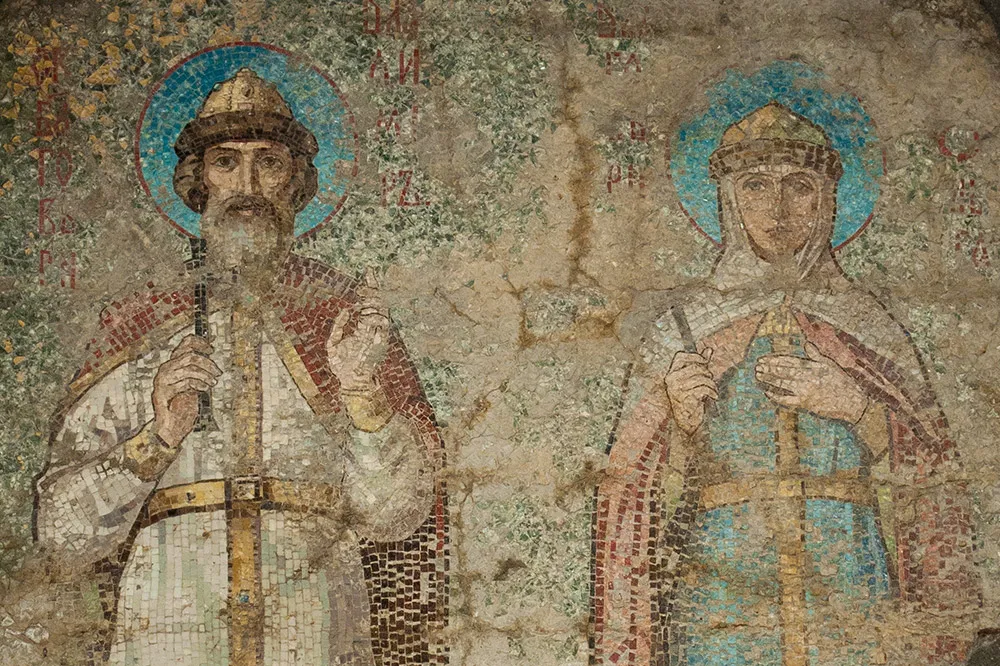
The basis of this research was written back in the early 2000s, long before the occupation of Crimea. We are publishing it not only to tell about a unique monument, but also to remind you: Crimea is Ukraine.
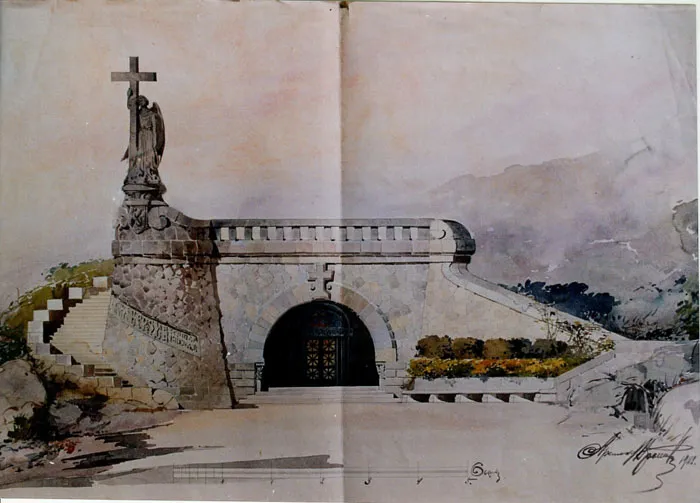
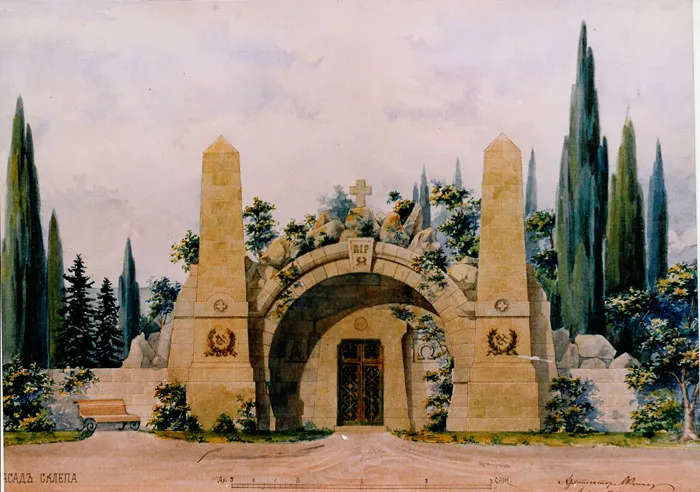
On the top of the Suuk-Su hill, between Hurzuf and Ayu-Dag, stands a unique structure resembling an ancient rock-cut church – the crypt of Volodymyr Berezin. Even for Crimea, so saturated with monuments, this site is unique: a chapel-mausoleum built to a design by the architect Mykola Krasnov, the same man who built the famous Livadia Palace. Even so, most guidebooks do not say a word about this tomb.
The little chapel miraculously survived the atheist bacchanalia of the communist dictatorship. Moreover, inside it a huge mosaic icon survived, with the figures of the Kyivan princes Saints Volodymyr and Olga, Equal-to-the-Apostles.
A little history
At the end of the 19th century the Suuk-Su estate (from Crimean Tatar, “cold water”), east of Hurzuf, was bought by a native of the Poltava region, State Councillor and gifted engineer Volodymyr Berezin (real surname Berezovsky). In his day he developed a unique method of building railway bridges, which became known as the “Berezin method”. We shall skip what it consisted of, but it is still used all over the world. His creations serve people to this day, for example the Old Bridge in the city of Dnipro.
The huge fortune he made building railway bridges, including in Siberia, allowed him to build a resort created with great taste and with a level of comfort matching the best European standards. He received the first visitors in 1903. Sadly, Volodymyr Illich himself did not live to see that day: he died of cancer in 1900. His work was continued by his wife, Olga Solovyova, who by then had become one of the first “business ladies” of Europe. Soon the Suuk-Su resort became very popular among both aristocrats and artists.
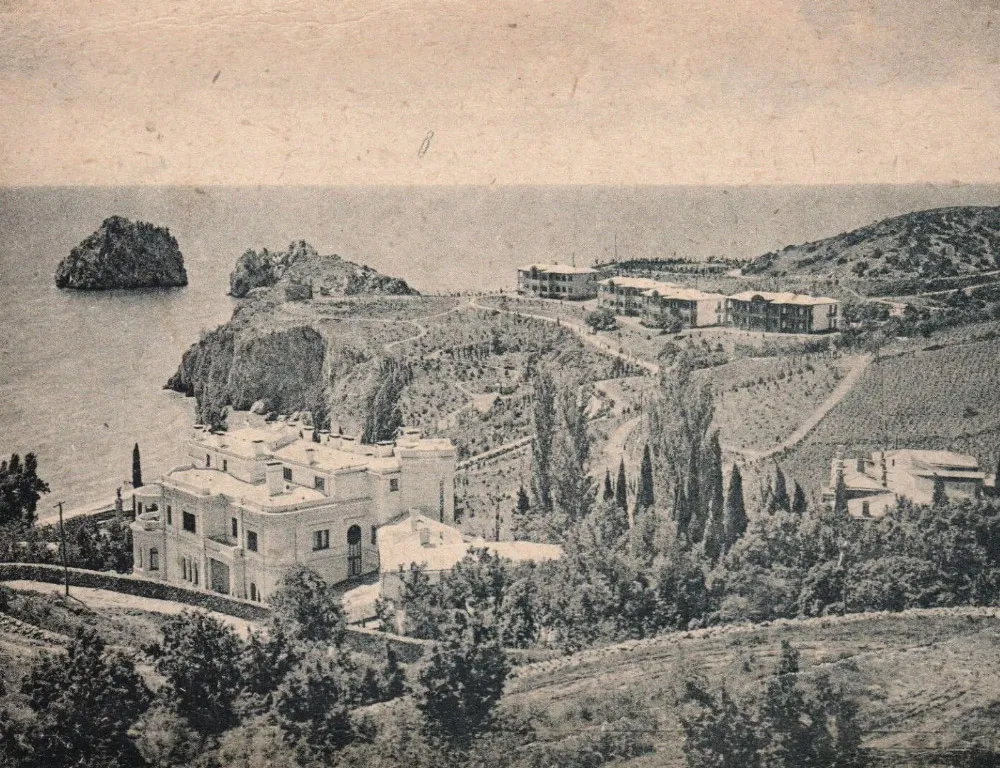
The Suuk-Su resort. Early 20th century
On the hill rising in the very centre of the estate, in memory of her late husband, Olga Solovyova built a chapel-crypt. It was intended as the family tomb of the Berezin-Solovyov family.
There were, we should note, several designs for the structure. According to the first, it was to be a sizeable church. But at that time another wave of crisis had begun in Europe, Mrs Solovyova no longer had that much spare money, and the project was simplified several times.
Miraculously saved
As it turned out, Volodymyr Berezin was the only person buried there. During the Civil War Olga Mykhailivna emigrated to France. Later, marauders broke open and plundered the crypt.
In 1922 the government of the USSR took a liking to the elite resort. A rest home for high-ranking servants of the people and old revolutionaries was set up on its basis. For a long time no attention was paid to the chapel. Krasnov’s masterpiece was remembered only in the 1930s, when marble was needed for some utility purposes, and the crypt was faced with it inside. The workers who removed the marble cladding were also told to knock off the mosaic icon with the images of St. Olga and St. Volodymyr (the heavenly patrons of Olga Solovyova and Volodymyr Berezin). It was said to be a disgrace that such priestly obscurantism was to be seen on the grounds of a government dacha.
And here the first miracle happened.
“The workers then knocked off only the lower right corner,” local historian and keeper of the Artek history museum Volodymyr Svystov once told the author. “Strangely, the blow of the hammer smashed only a fragment that had nothing on it but the background.”
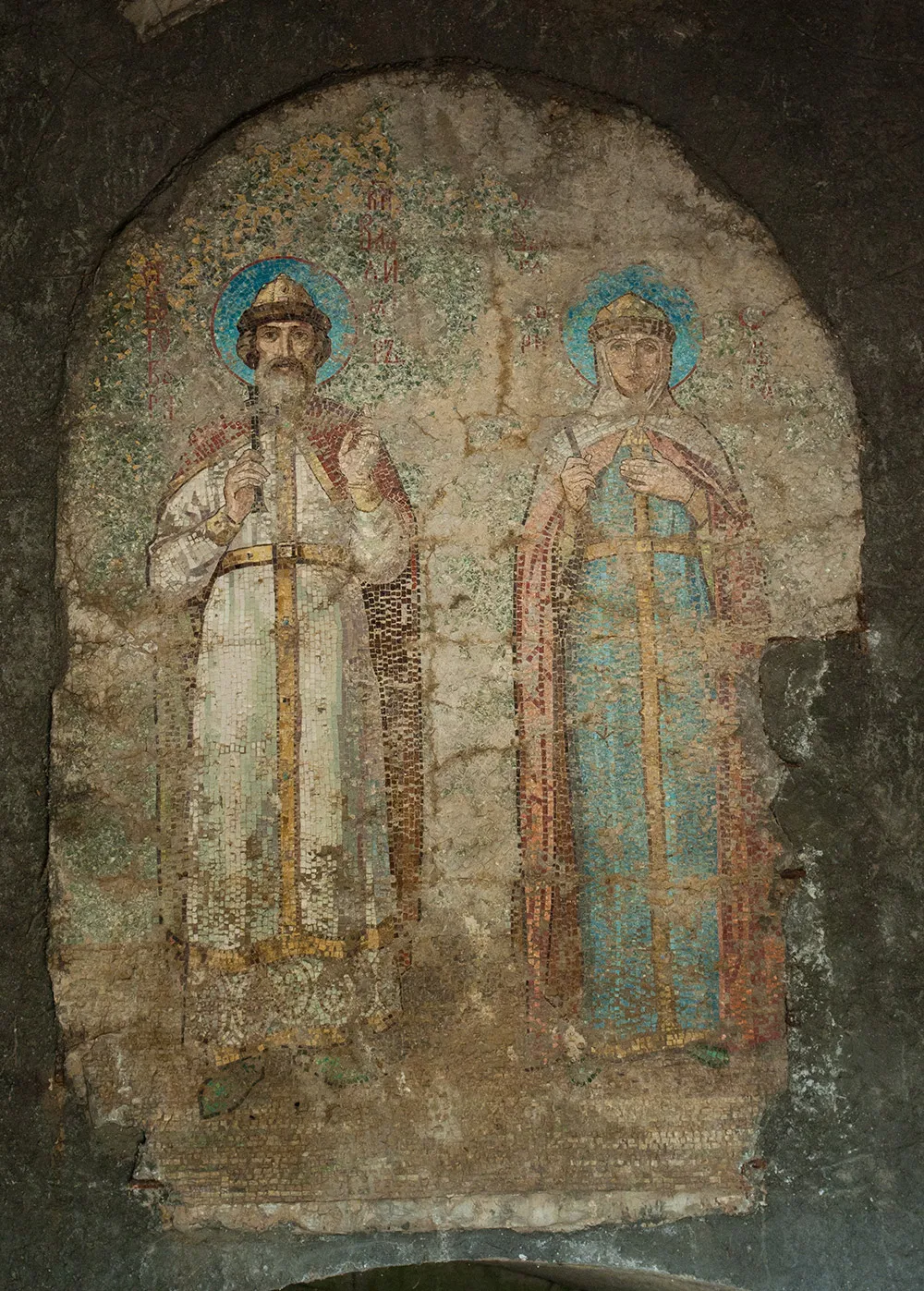
The figures of the saints themselves were not harmed in the least, although literally a few millimetres separate the broken-off piece from the image of St. Olga! What made the workers stop is unknown. But this “something” proved stronger than the fear of being labelled an “accomplice of priests”, with all the consequences that entailed in the 1930s. So the icon survived for the first time.
The second miraculous rescue happened after the Suuk-Su resort was handed over to the Artek pioneer camp. Then the chapel was turned into… a rubbish dump. The point is that in plan the crypt resembles a huge well piercing the hill. It used to be crowned by a small turret with windows through which light entered the chapel. The entrance to the crypt was closed off, the tower was demolished, and what resulted was a pit for rubbish. A convenient road led to the top of the hill, and rubbish, including construction waste, was tipped into the improvised dump straight from lorries. A single stone falling badly from that great height would have been enough to destroy the images of the saints completely, but even then the icon survived…
Only at the end of the 1960s was Berezin’s mausoleum cleared of the refuse – the sanitary and epidemiological station spoke categorically against a dump operating on the territory of a children’s camp.
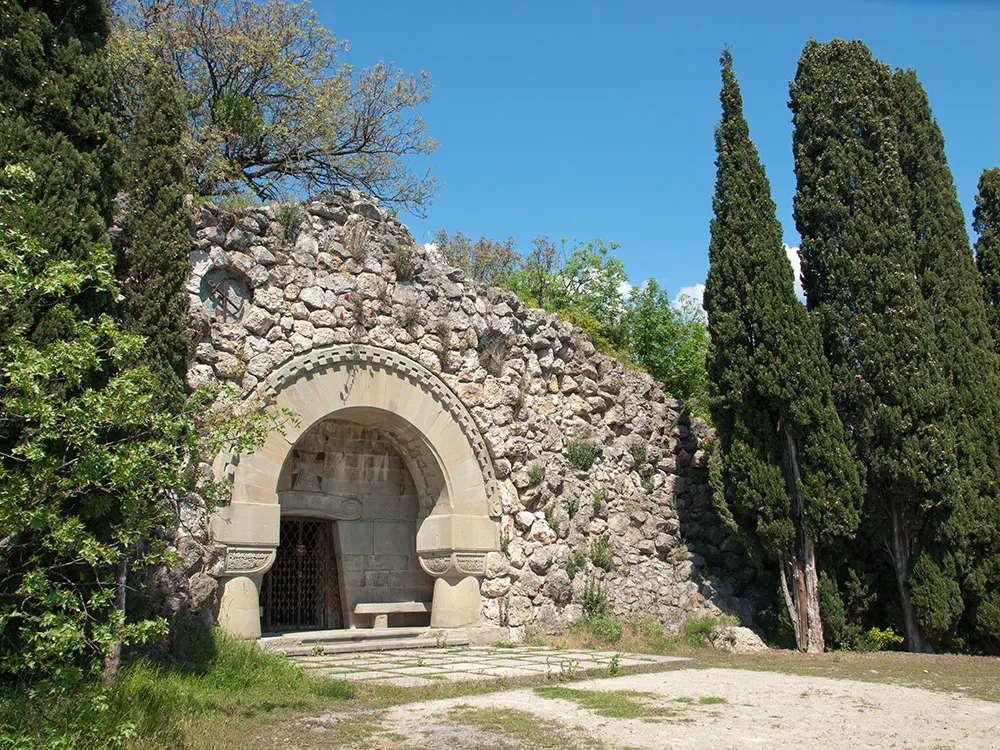
Until the early 1990s the little chapel looked pitiful. Rubbish lay everywhere, and all the walls and columns were scribbled and painted over so that not a clean spot remained – the pioneers were in a hurry to immortalize their stay at the camp. That the icon survived then, and was not turned by the pioneers into a heap of multicoloured rubble, is an even greater miracle than the first two.
Although the mausoleum does not belong to the camp’s property, in the early 1990s, when Ukraine was already in charge here, the international children’s centre tidied up the adjoining territory, cleaned the inscriptions off the walls and carried out a partial restoration. At that time a lockable grille was fitted in the doorway. In the late 1990s the mausoleum was even consecrated again. In 1997, Volodymyr Berezin’s grandson Georgii came to the celebration of the centenary of the Suuk-Su resort, and it was no longer shameful to show him the restored crypt of the famous engineer.
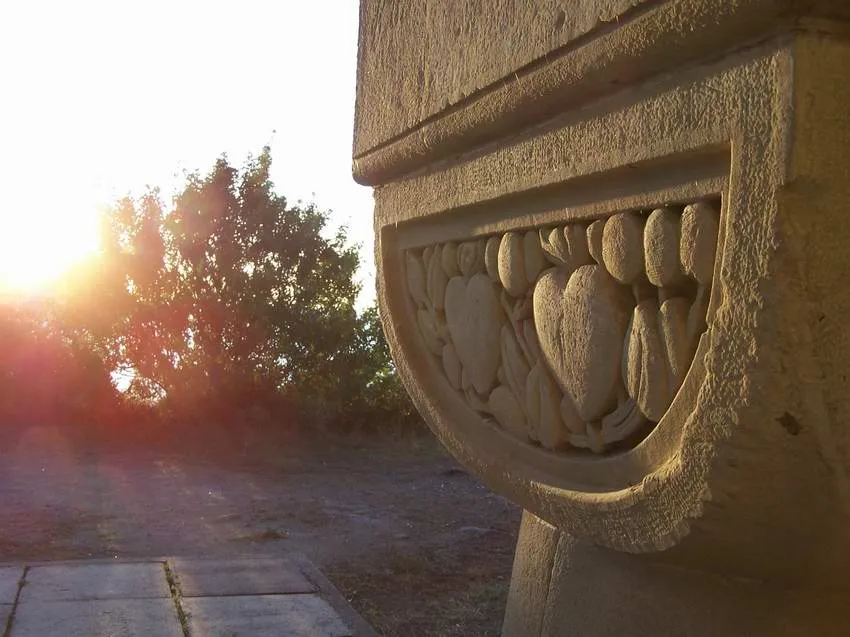
Around 2006, in place of the clumsy doors welded from reinforcing bars, the entrance to the crypt was closed with a highly artistic wrought-iron grille. The monument received this gift from film-makers who shot an episode of some film at the chapel.
What state the crypt and the remarkable icon of the Kyivan princes are in today is unknown.


