

In occupied Sevastopol, the invaders boast of stolen relics from Kamiana Mohyla

· 1 min read
The Chersonesos reserve announced “Chersonesos Taurica”that in Russian-occupied Sevastopol the invaders are publicly boasting of yet another crime against Ukrainian cultural heritage. According to the Russians’ own media, a capsule exhibition called “House of the Fish” is currently taking place there, presenting the trophies of Russian looters taken from the museum of the National Historical and Archaeological Reserve “Kamiana Mohyla” (Zaporizhzhia Oblast)
In particular, the so-called “churingas” are on display in Chersonesos: stone slabs bearing various images.
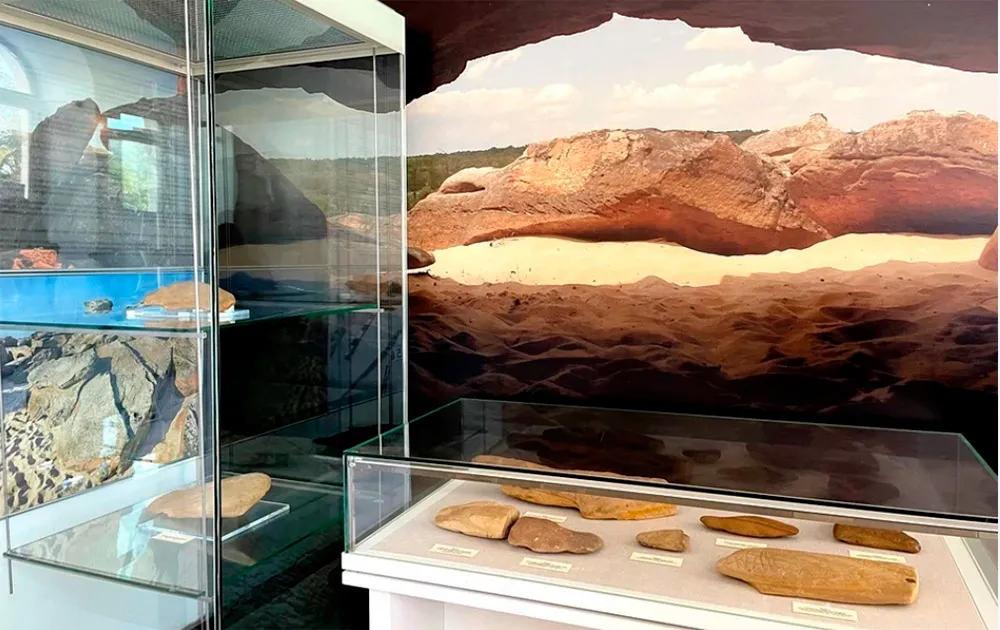
The looters’ “exhibition”
They were first discovered and studied by the Ukrainian archaeologist Valentyn Danylenko, Doctor of Historical Sciences (1913–1982), who was searching for the oldest archaeological layer of Kamiana Mohyla. Among other things, he found images of animals hunted by Stone Age hunters: mammoths, bison, rhinoceroses and so on. These engravings reflect the era of the producing hunting economy of the Upper Palaeolithic and Mesolithic. Besides rock carvings, the researcher found numerous engraved slabs and fish-shaped rounded stones, the churingas. It was because of their fish-like shape that the occupiers named the exhibition “House of the Fish.”
The surface of most churingas is covered with engraved drawings. Particular attention is drawn to the images of animals and of a mother woman, executed in the traditions of Upper Palaeolithic art. These oldest artistic specimens date from the late phase of the Old Stone Age (Palaeolithic) or the Middle Stone Age (Mesolithic), that is, within the 12th–7th millennia BC.
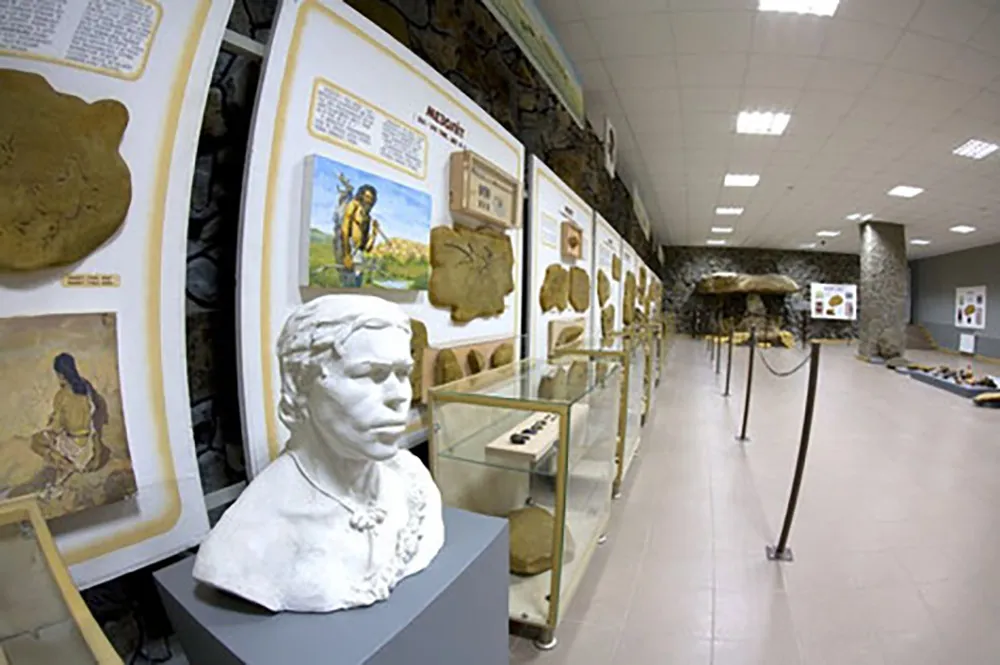
In the museum of the Kamiana Mohyla reserve before the looting by the Russians. Photo: Zaporizhzhia Regional Museum of Local History
The Russians stole these unique exhibits from the reserve’s museum in Zaporizhzhia Oblast, and now they boast of their criminal trophies.


