

Rozhyshche. Church, Catholic church and kirche

· 7 min read
Rozhyshche is a town of district significance in Lutsk district, until 2020 the centre of Rozhyshche district of Volyn Oblast, located almost in the centre of Volhynia, on the Styr River. Population: 15,710 (1 January 2022).
There are various versions of the origin of the town’s name. In particular, the name is linked to the Old Slavonic word “rosha” (grove), a small deciduous forest or a small isolated group of trees. Volhynia has long been a farming land, where grain crops were grown, generally called “rozh” or “rzhyshche” (a rye field). The name could also come from the words “rih” or “roh” (horn, corner), or “rovyshche”.
There are a number of legends linking the origin of the name to the beauty of the nature of the area where the town lies.
The first written mention of Rozhyshche dates to 1322, when Prince Liubart Gediminovych of Lutsk gave it to the cathedral Church of St. John the Theologian, which was located in Lutsk Castle[2]. For more than three centuries the town was owned by the Lutsk Episcopate. In 1567 the Polish king Sigismund Augustus granted the town Magdeburg law. After the Union of Lublin in 1569, Rozhyshche, like the whole region, became part of the Polish–Lithuanian Commonwealth. According to the administrative division it was part of the Volhynian Voivodeship. In 1598 the town received its coat of arms, “two crosses”. After the Third Partition of the Commonwealth in 1795, Rozhyshche, in the territory of Volhynia Governorate of the South-Western Krai, became part of the Russian Empire. In the 1830s, next to Rozhyshche, German colonists, among the first in Volhynia, settled and founded several cloth factories in the colony of Vovnianka (now one of the districts of the town). They began the production of cloth in Volhynia. In 1878 the German colonists built a kirche and established a Lutheran parish. The German community lived in the town until the beginning of the Second World War. The Jewish population was also numerous; they owned a large number of shops and businesses. In 1873 one of the first railways in Volhynia and a railway station were built through the town. At that time Rozhyshche had 20 cloth factories, canning, brick, brewing and distilling plants, factories producing bentwood furniture and iron beds, and several tailoring workshops.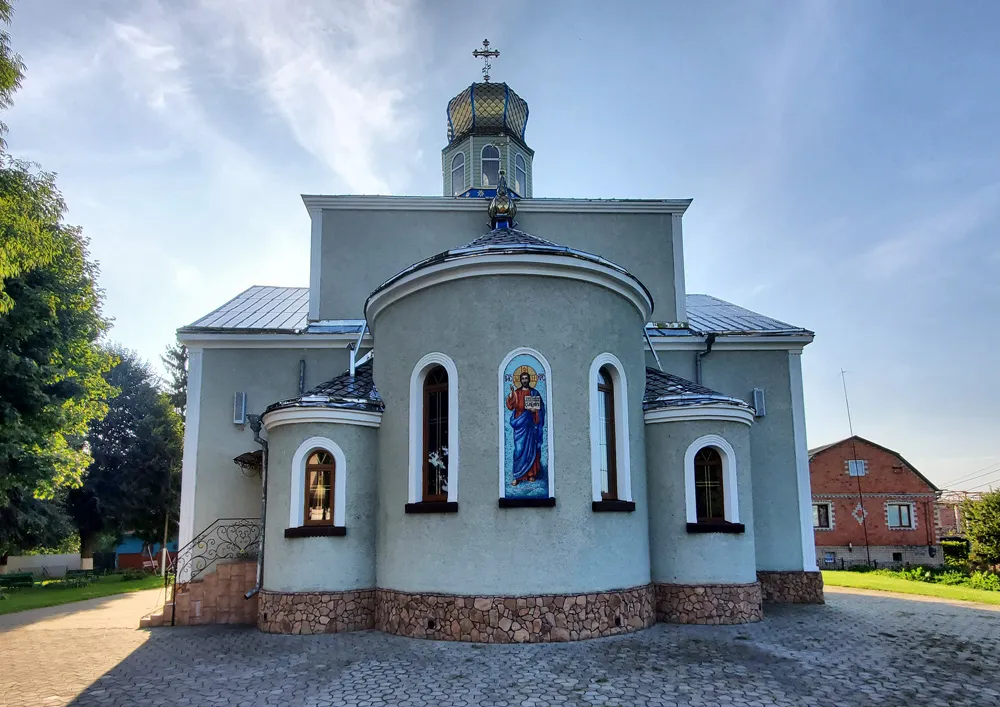
St. Michael’s Church
On 1 August 1914 the First World War began, and Rozhyshche, because of its geographical position, became a front-line zone from the start of the war, with all the negative consequences of such a situation. In 1915 Austro-Hungarian and German troops went on the offensive, carrying out a series of successful operations against the Russian army, which forced the Russian command in August–September 1915 to begin a general retreat; as a result Rozhyshche was occupied. The stabilization of the front prompted the creation of defensive lines and fortifications; the bridge over the Styr River, near which dugouts and observation posts were built, had strategic importance. On 22 May 1916 the so-called Brusilov (Lutsk) Breakthrough began, with significant events taking place precisely on the territory of Rozhyshche. The offensive was carried out by the 8th Army under the command of A. Kaledin; on 25 May units established themselves on the right bank of the Styr along the Lutsk–Rozhyshche–Kolky line. On 28 May, after fierce battles, the 39th Army Corps captured the town of Rozhyshche.
1850 and 1851: a fire destroyed 16 houses, in which 62 families lived, and two cloth factories. Losses: 9,500 silver roubles.
Late 1850s and early 1860s: about 1,000 inhabitants, 27 semi-handicraft enterprises producing cloth, 2 brick factories, a soap factory and 17 shops.
1860s: the landowner D. Holyshyn had 8,557 desiatinas of land, a steam mill and a distillery, with an annual income of 38,000. The landowner von Menk had 8,934 desiatinas of land. The landowner Kempkowski had 310 desiatinas of land.
1871: a one-class school was built.
1892: the school had 43 boys and 8 girls. The town had a German and a Jewish school and a small library.
1899: population 3,646; 20 small cloth factories, canning, brick, brewing and distilling plants, a factory of bentwood furniture and iron beds, several tailoring workshops.
1907: 38 workers were employed at the distillery.
1915 (June): Austro-Hungarian and German troops captured Rozhyshche.
1916 (July): Russian troops captured Rozhyshche.
1919–1939: part of the rural gmina of Rozhyshche, Lutsk county, Volhynian Voivodeship of the Second Polish Republic.
23 January 1934: by order of the Minister of the Interior, the territory of the town of Rozhyshche was expanded by removing the rural gmina of Rozhyshche from Lutsk county and including in the town the villages of Yurydyka and Zhalobove and the colony of Nove Zhalobove, and part of the lands of the Rozhyshche estate and the folwark.
25 June 1941: Soviet troops left the town after fighting.
In August 1943 UPA fighters tried several times to take Rozhyshche. A German-Hungarian garrison was stationed in the town. In addition, the Nazis allowed local Poles to create a large self-defence detachment of 130 people in the town, and also created a Schutzmannschaft unit of Poles. In revenge for attacks, on 29 August the Poles burned several Ukrainian villages in Kivertsi district.
Source: Wikipedia
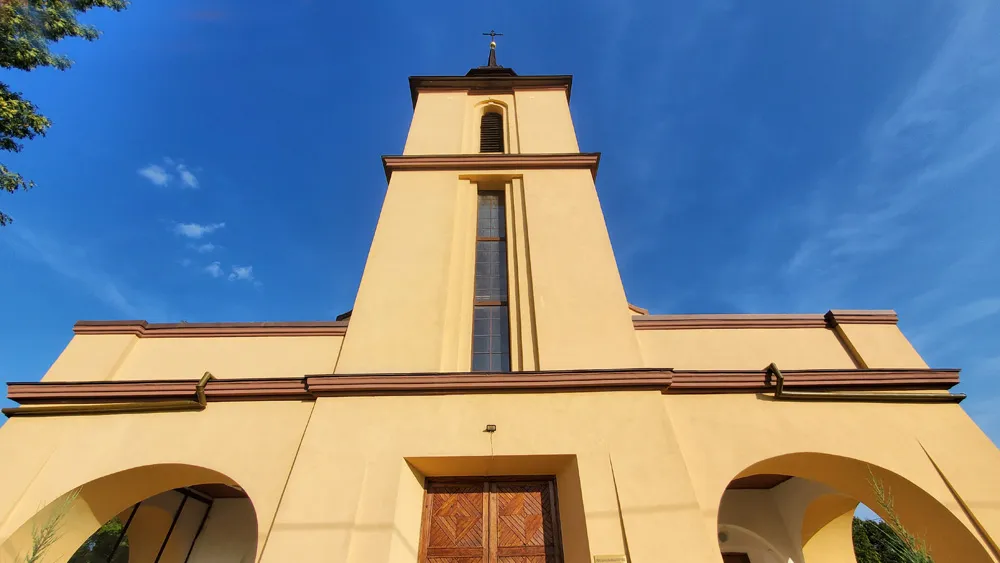
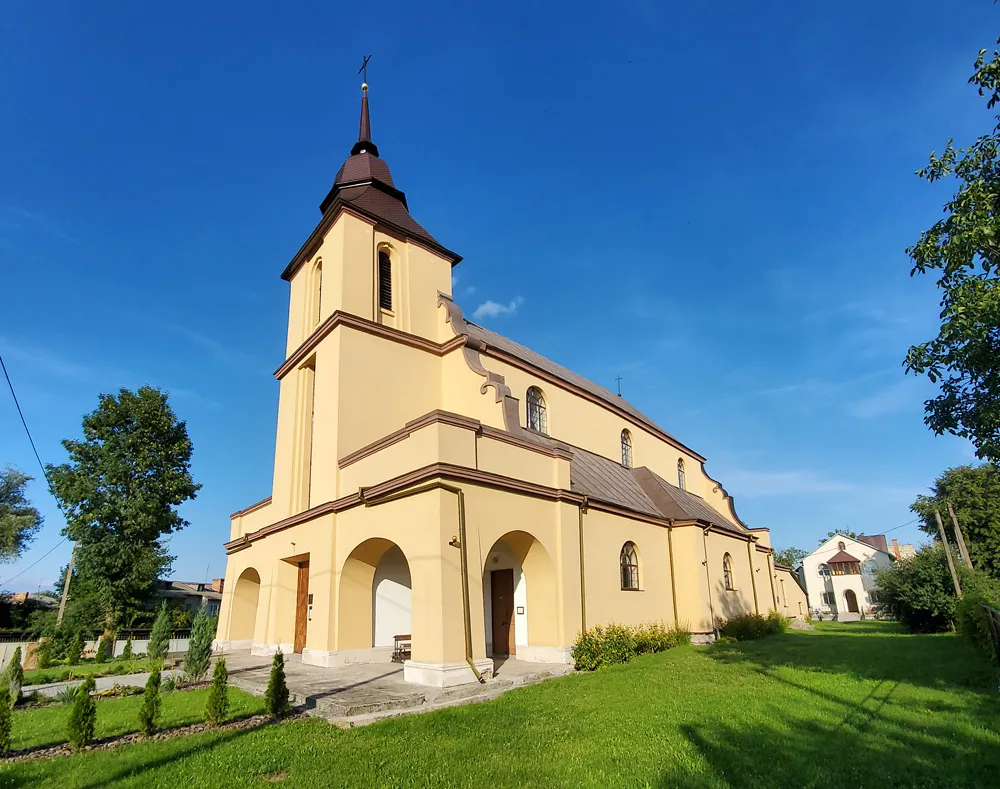
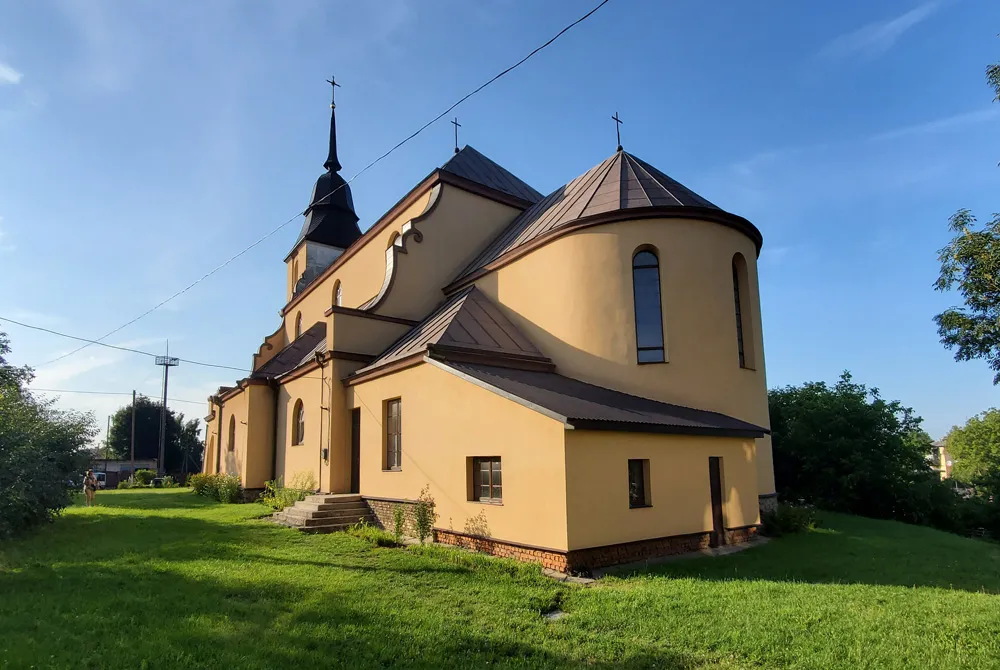
Church of the Transfiguration of the Lord (1921–1931)
In 1921–1931 a brick Catholic church was built in Rozhyshche, consecrated in 1931 by the auxiliary Bishop of Lutsk, Stefan Walczykiewicz. After the Second World War the church was locked, a stable was made in it, and later a warehouse.
The ruined church, without its tower, was returned in 1992. In April 1993 it was consecrated again by Bishop Markiian Trofymiak. On 27 June 2011 a tower was installed on the church, and on 7 August of the same year Bishop Trofymiak consecrated the bells and the installed tower. In 2019 a 50-year-old organ from Poland was installed in the church. Rozhyshche is served by diocesan priests.
Source: Churches and chapels of Ukraine
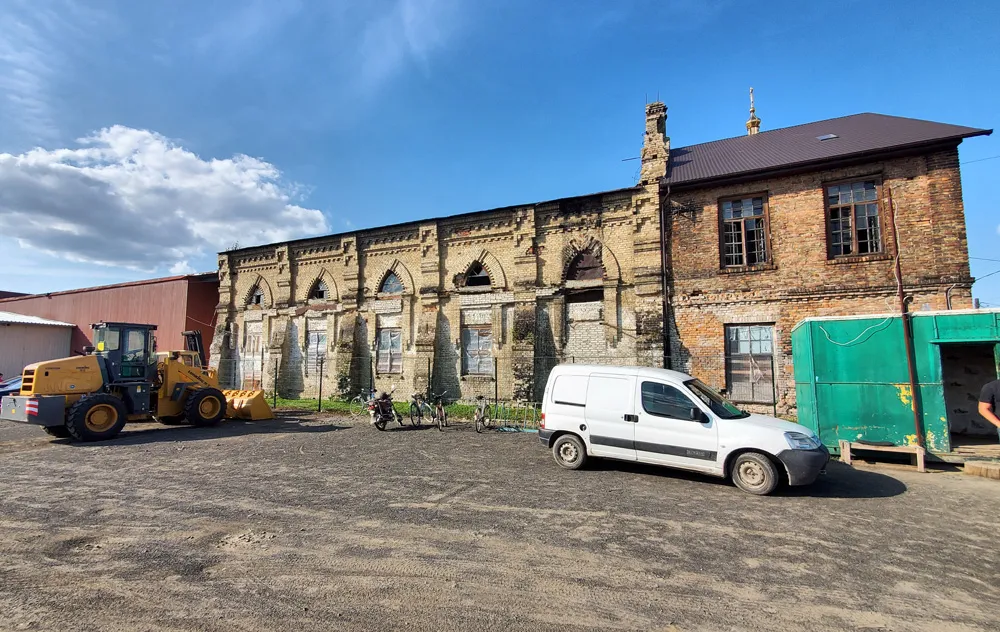
The Baptist kirche
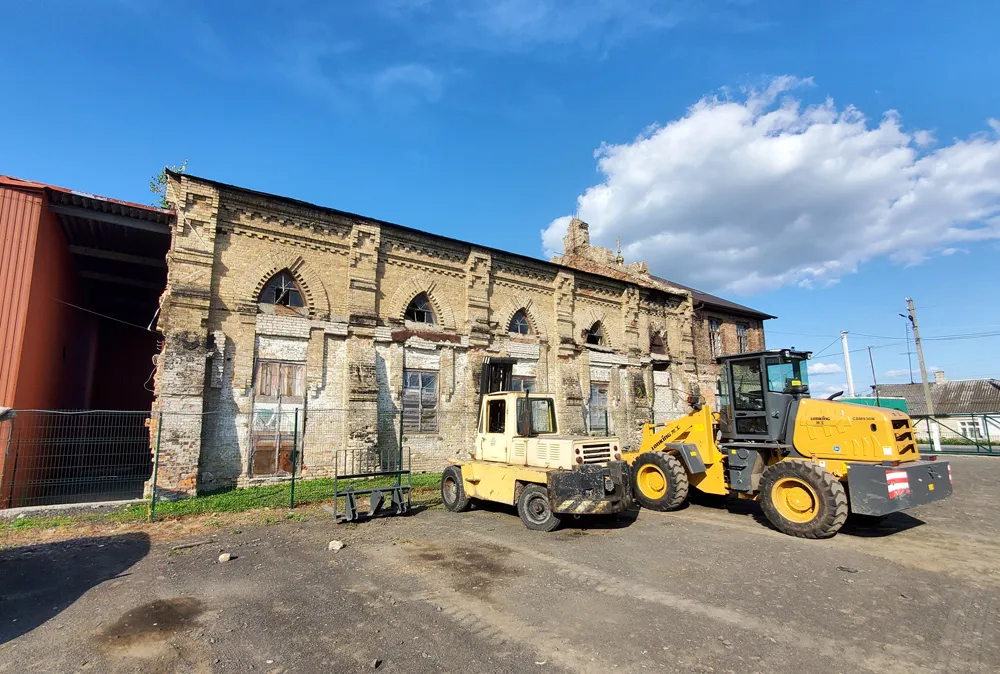
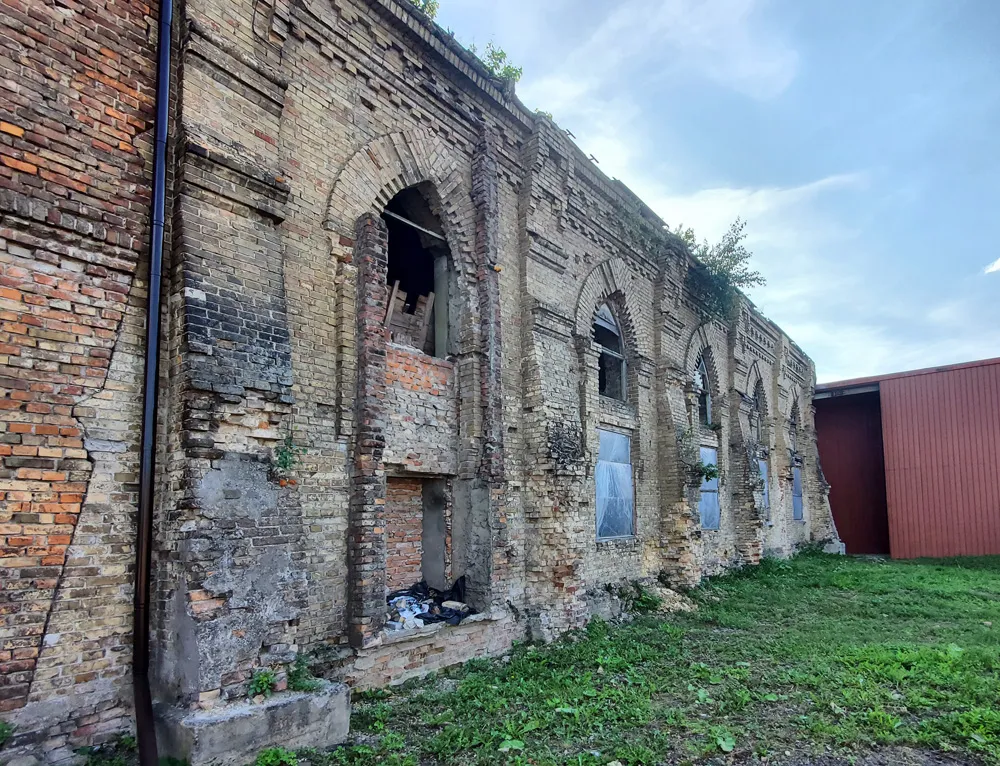
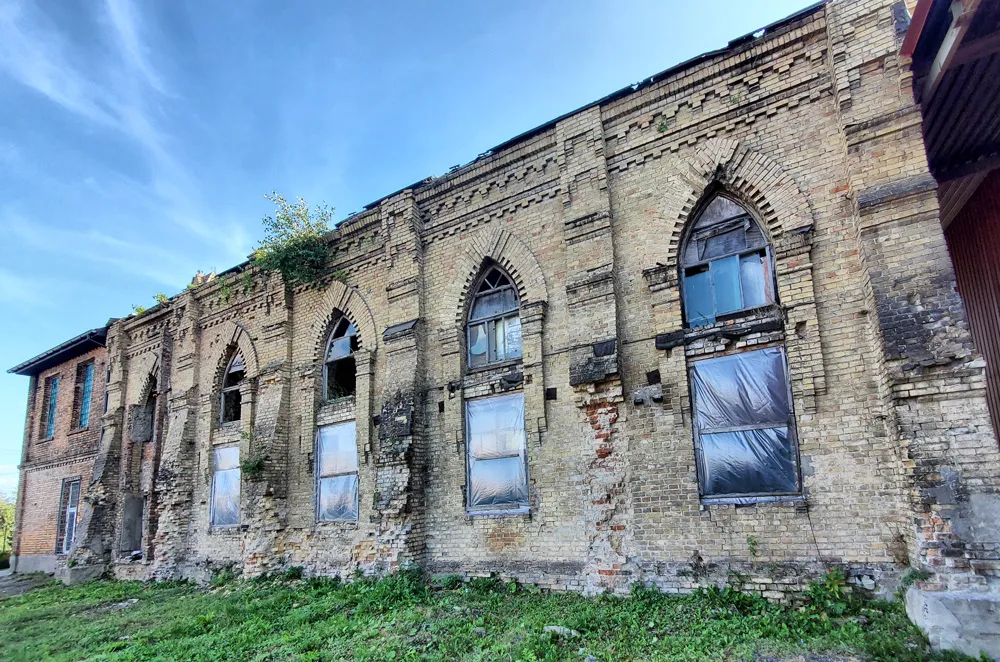
The Baptist kirche in Rozhyshche was built in 1913 by German settlers who settled here in 1832 and founded the colony of Vovnianka (later incorporated into the town). A few hundred metres from the Baptist kirche stood a Lutheran one, but it was completely destroyed during the war. The parishioners of the Baptist kirche were mainly Germans, but Ukrainians and Poles also took part in the services. The kirche was considered one of the largest Baptist buildings in Eastern Poland. Large congresses were held here, during which services were conducted in four shifts in one day, each attended by more than a thousand people. The parishioners did not fit inside, so they gathered all around, with the windows open, and listened to the sermon. In 1935 a congress of the Society of Mutual Aid of Evangelical Christians, of international significance, was held in the town. At that time the kirche had 450 members. Services were held in German, Polish and Ukrainian. In 1939 the church had 716 members. After the Second World War the building passed to the local Ukrainian Baptists; later the Soviet authorities set up a barracks here, initially allowing them to meet in the parsonage. But eventually the parsonage was taken away as well. An extension five metres deep was built to hide the facade of the Baptist Christians’ place of worship, as well as a second floor. Later the kirche was used as a production warehouse of the “Dynamo” factory, which made wool.
Now the kirche is located on the premises of the limited liability company “Woodland”, engaged in forestry and other activities in forest management. One of the founders of this enterprise is Bohdan Kolisnyk, former head of the Volyn regional department of forestry and hunting. At the end of 2016 Kolisnyk transferred the kirche free of charge to the Ukrainian Orthodox Church of the Kyivan Patriarchate. They plan to build a church of St. Sergius the Obedient here and have even laid the first stone. In the opinion of Pastor Vadym Bandura, the kirche should belong to the local Baptists. A public initiative group was created in Rozhyshche that wanted to establish a multicultural historical centre in this building, open to Orthodox, Catholics, Jews and others, but the plan could not be carried out. Restoring the kirche requires considerable funds. There is an opinion that to restore its historical appearance the first five metres would have to be demolished, which would reveal the facade of the building, which has probably survived.
Source: Wikipedia
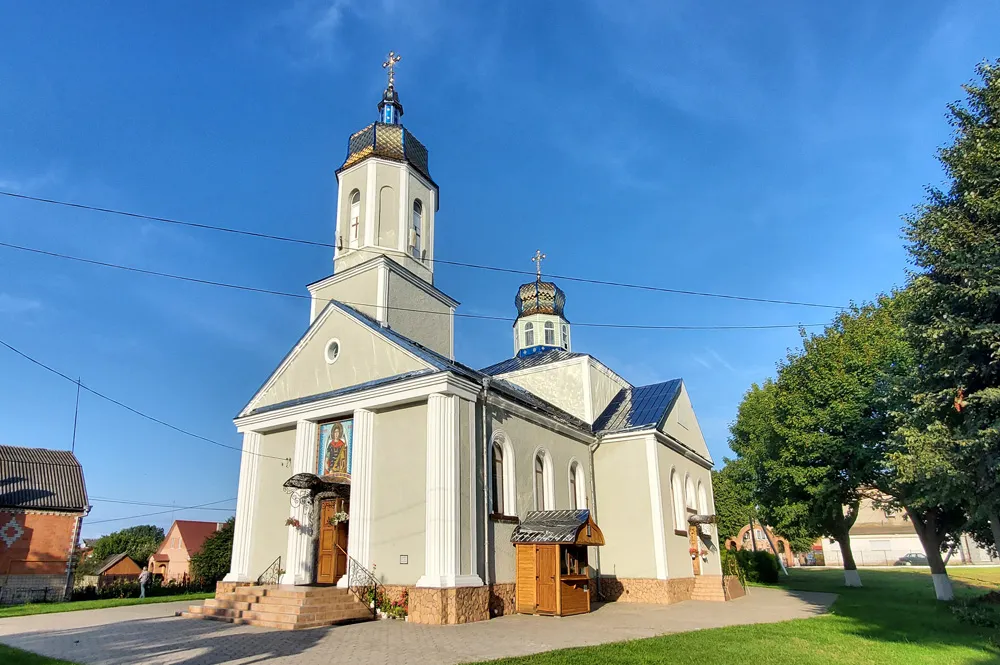
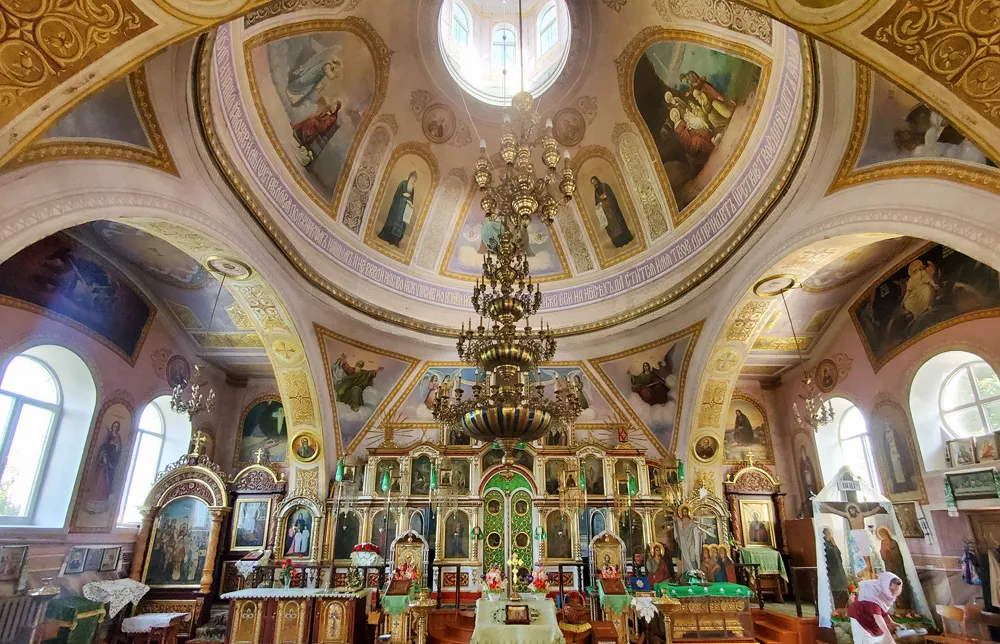
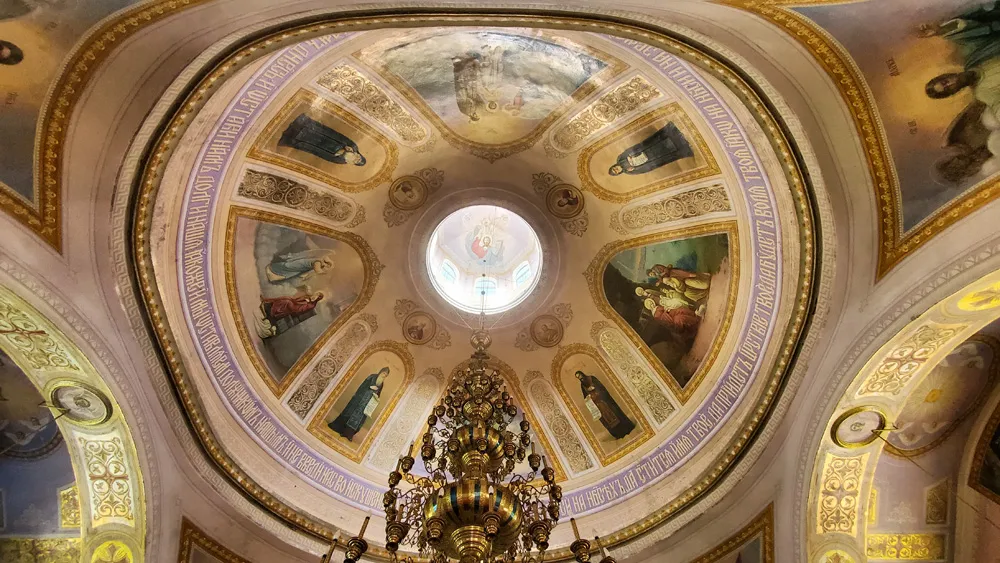
St. Michael’s Church
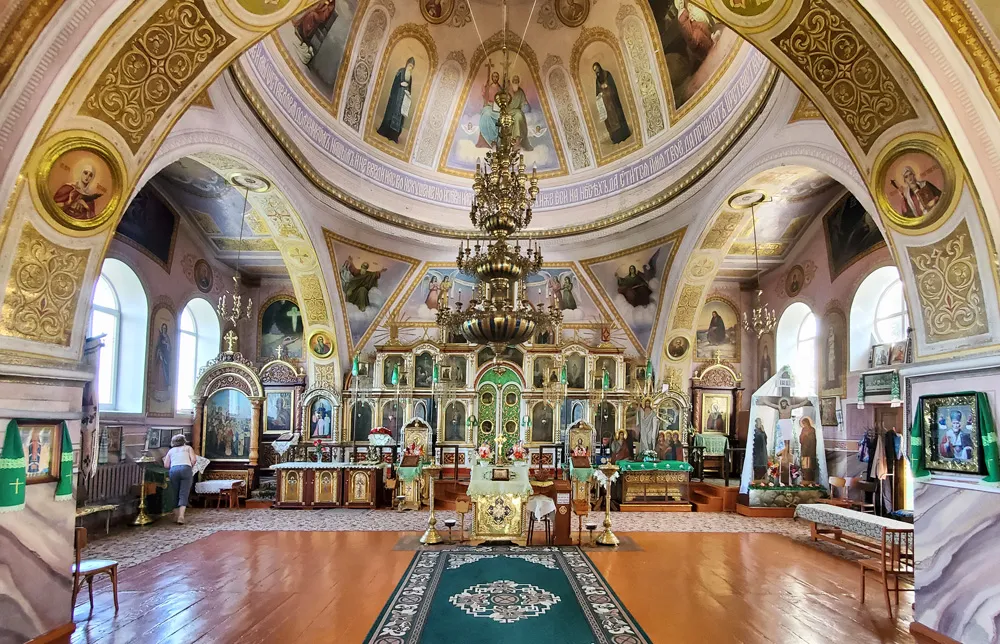
The wooden St. Michael’s Church in Rozhyshche appeared in the second half of the 18th century. It was completely destroyed during the First World War.
In 1920 the parishioners began raising funds for the construction of a new brick church. In 1922 the cornerstone was consecrated, and two years later the church was consecrated.
In spring 2022 the church community voted to transfer to the Orthodox Church of Ukraine; before that, the church was served by priests of the UOC-MP.
Photos by Roman Malenkov


