

Zaturtsi. The Lypynskyi manor museum and the church

· 7 min read
Zaturtsi is a village in Ukraine, in the Volodymyr district of Volyn Oblast. It is the centre of the Zaturtsi rural community. The population is 1,917. The village is home to the Church of the Holy Trinity and the Lypynskyi manor.
In Old Rus times a hillfort was built on the site of the village. Later a feudal castle with stone walls and a water-filled moat was built in its place. The remains of this castle are still called “horodets” by local people.
Zaturtsi is first mentioned at the beginning of the 16th century, because the owner of the village, the magnate B. Zaturetskyi, levied a toll of half a groschen per cart on passing merchants without having a royal charter for it. The village appears a second time in a document of 1557, when peasants, protesting against enserfment, tried to burn down the court of the land judge.
Under the Lithuanian Statute of 1529 the peasants of Zaturtsi, like those of all villages belonging to the Lithuanian princes’ domains, were enserfed.
The nobleman Vasyl Hulevych, voisky of Volodymyr, who became the owner of Zaturtsi in 1570, intensified feudal exploitation still further, increasing the corvée to 4–5 days a week. He set up a folwark farm here and sold its produce on the market, earning large profits. Some residents engaged in crafts. Several craftsmen lived in Zaturtsi (shoemakers, tailors, carpenters, coopers and others) who made various goods for sale.
The hereditary owner of the village was the Volyn castellan Ivan Lahodovskyi, then his elder son Stanislav. His younger sons Oleksandr and Marko killed Stanislav in Lviv, after which they took Zaturtsi for themselves by armed attack.
In 1642 the village’s hereditary owner Andrii Lahodovskyi, son of Ivan Lahodovskyi, sold Zaturtsi to the nobleman Pidhorodenskyi. In the same year a Catholic church and monastery were built in the village.
In the Middle Ages there was a monastery of the Augustinian order in the village. In 1642, at the expense of the Volyn swordbearer Valerii Pidhorodenskyi, the wooden parish Church of the Holy Trinity and Mary Magdalene was built.
Source: Wikipedia
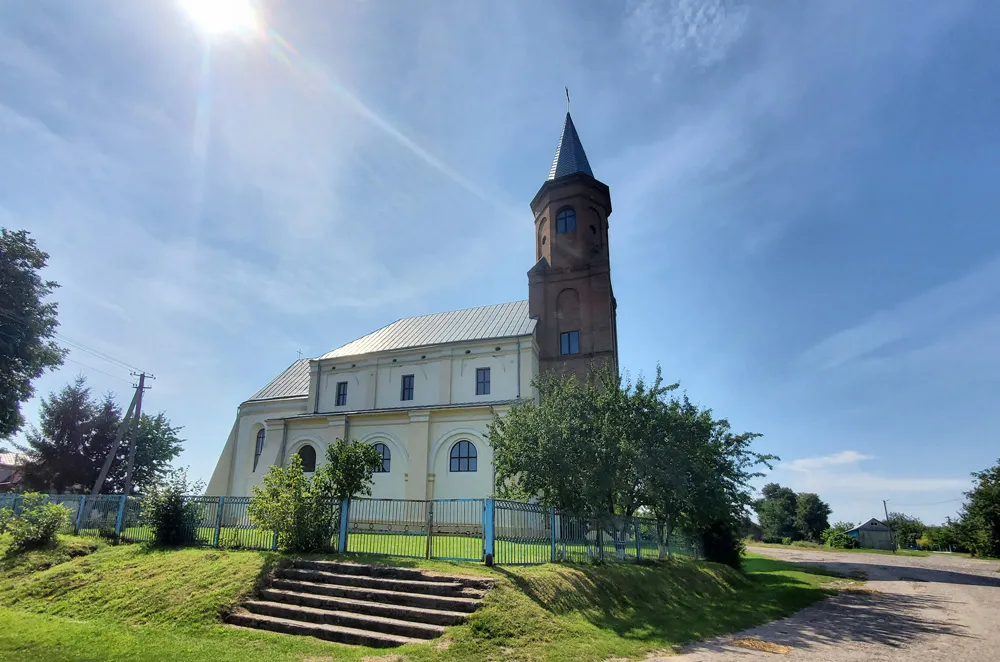
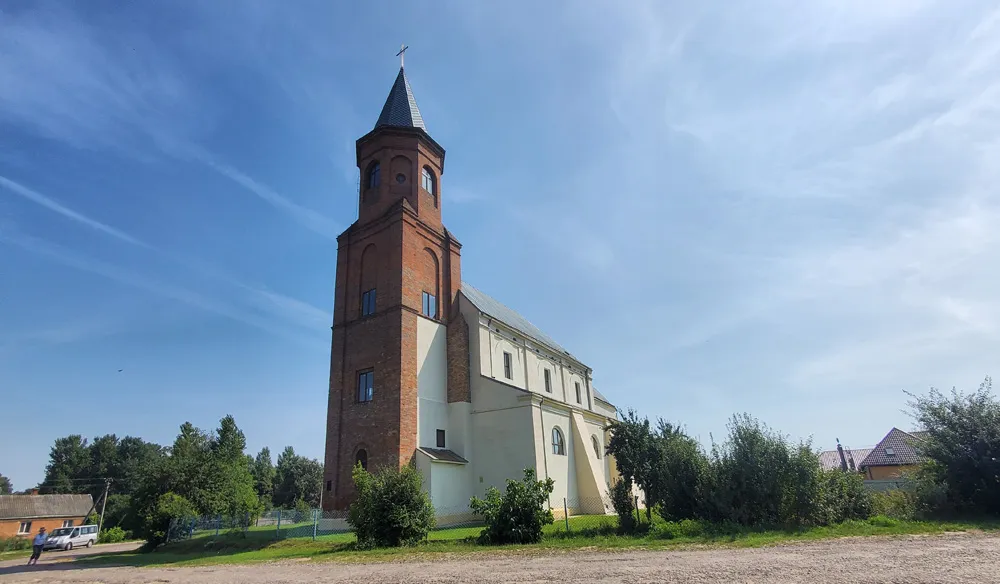
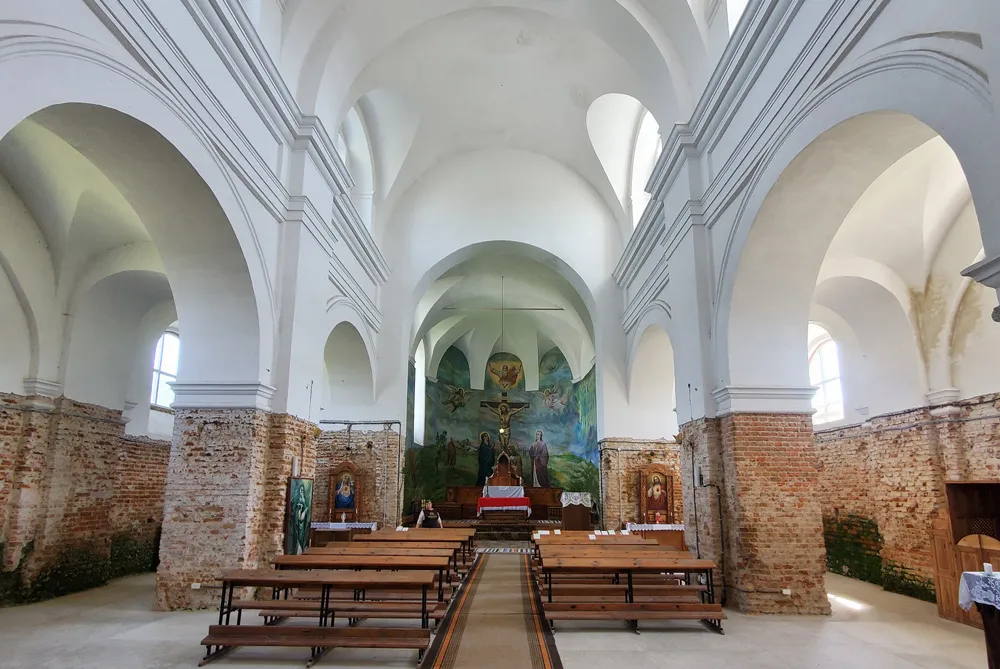
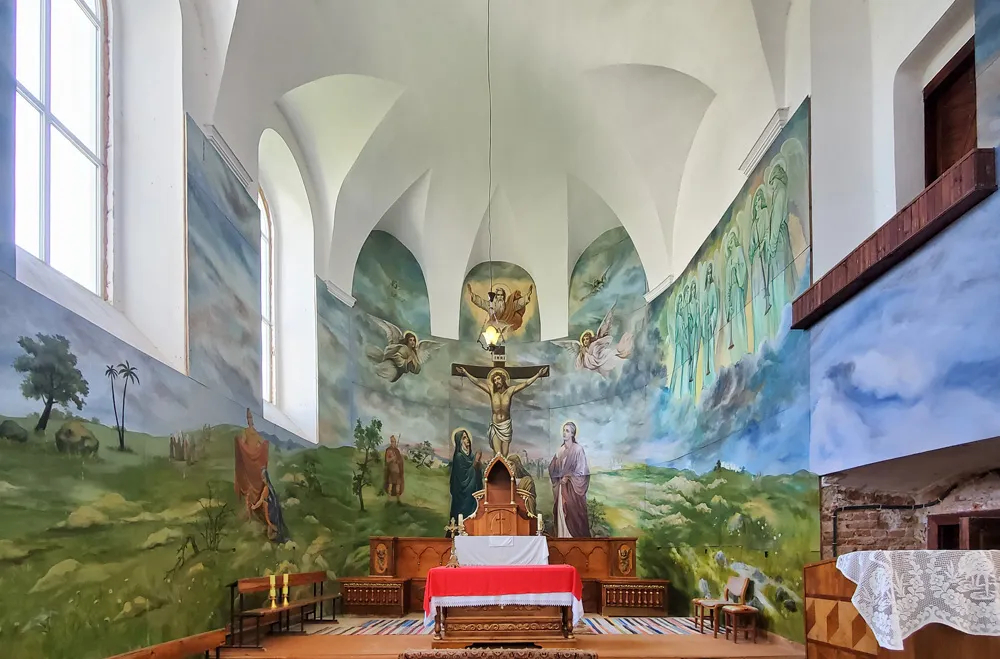
Church of the Most Holy Trinity (1642–1646)
In 1619–1624 a wooden church and monastery complex of the Augustinian fathers was built in Zaturtsi at the expense of Jan Lahodowski. In 1642–1646, at the expense of the village’s new owner Walerian Podgorodeński, a masonry church and monastery for the Augustinians were built in place of the wooden ones. In 1646 Bishop M. Krasicki consecrated the church under the title of the Most Holy Trinity and St Mary Magdalene. In 1648 and 1760 the church and monastery complex was damaged by Cossacks and haidamaks, but was later restored. In 1832 the tsarist authorities closed the Augustinian monastery and converted the church into an Orthodox church.
In 192?–1933 the church and monastery were rebuilt after damage inflicted by the First World War. In 1946–1992 the shrine was closed (until 1960 it was a village club, and then a collective-farm warehouse). In 1994 the church was partly repaired with donations from Germany, Poland, the Netherlands and Great Britain, and on 25 September 1994 it was consecrated under the title of the Most Holy Trinity.
Source: Churches and chapels of Ukraine
The manor of the Lypynskyi family
Twenty-eight kilometres from Lutsk, in the direction of ancient Volodymyr, in the village of Zaturtsi in the Lokachi district of Volyn Oblast, stands the former manor of the renowned Lypynskyi family, from which came whole dynasties of agronomists and doctors. This dynasty left a good memory of itself among its fellow countrymen.
Viacheslav Kazymyrovych Lypynskyi (1882–1931) was an outstanding Ukrainian political figure, historian, sociologist, publicist and diplomat. He was a theorist of Ukrainian conservatism and one of the organizers of the Ukrainian Democratic Agrarian Party. Under the Hetmanate he was Ukraine’s ambassador to Austria.
His childhood was spent in Zaturtsi, and from here, as an adult, he corresponded with outstanding contemporaries, passionately defending the right of the Ukrainian people to their independence. Here he worked on historical and publicistic writings and engaged in educational activity.
“Nationalism is of two kinds: state-building and state-destroying – the kind that promotes the state life of a nation and the kind that eats that life away. An example of the first may be English nationalism; of the second, Polish and Ukrainian nationalism. The first is territorial nationalism, the second is extraterritorial and confessional nationalism. The first is called patriotism, the second chauvinism.
If you want a Ukrainian State to exist, you must be patriots, not chauvinists. What does that mean? It means, first of all, that your nationalism must rest on love for your fellow countrymen, not on hatred of them because they are not Ukrainian nationalists. For you, for example, a Ukrainian Moscophile or Polonophile (this “Little Russian and Rusyn”, as you call him) must be closer than a foreigner who is supposed to help you free yourselves from Moscow or from Poland. You must concentrate all your feeling and all your mind on finding understanding, finding a common political language with the local Moscophile or Polonophile. In other words: to create together with them, on Ukrainian Land, a separate state, and not to seek beyond Ukraine’s borders an ally who would help you destroy the local Moscophiles and Polonophiles” – so wrote Viacheslav Lypynskyi in a letter to Bohdan Shemeta.
Thanks to the persistent and purposeful management of Lypynskyi’s parents, the estate in Zaturtsi became one of the best in the region. By the end of the 19th century the estate covered 717 ha, including 272 ha of forest. The homestead plot with a large orchard, a luxuriant park and farm buildings occupied another 10 ha of the estate.
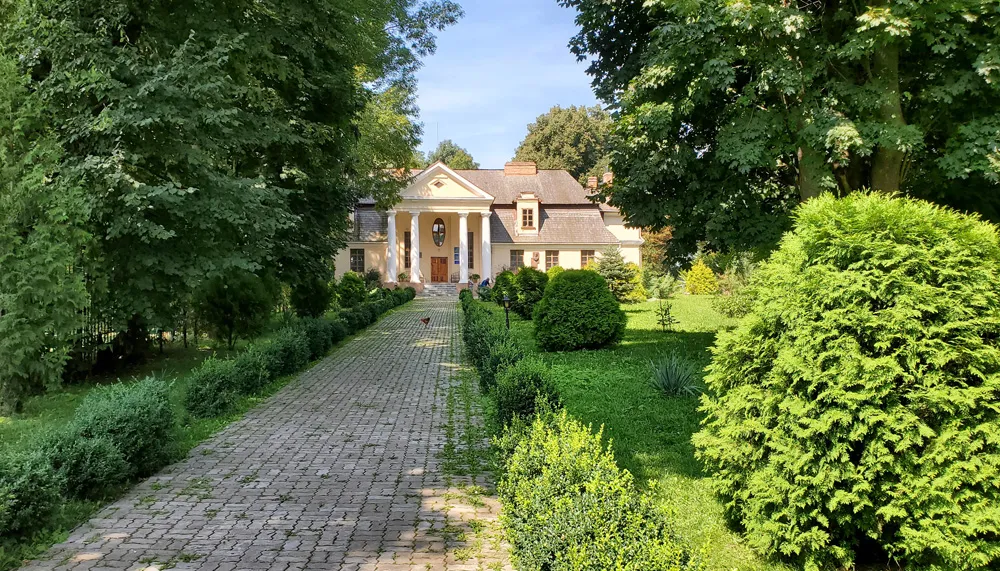
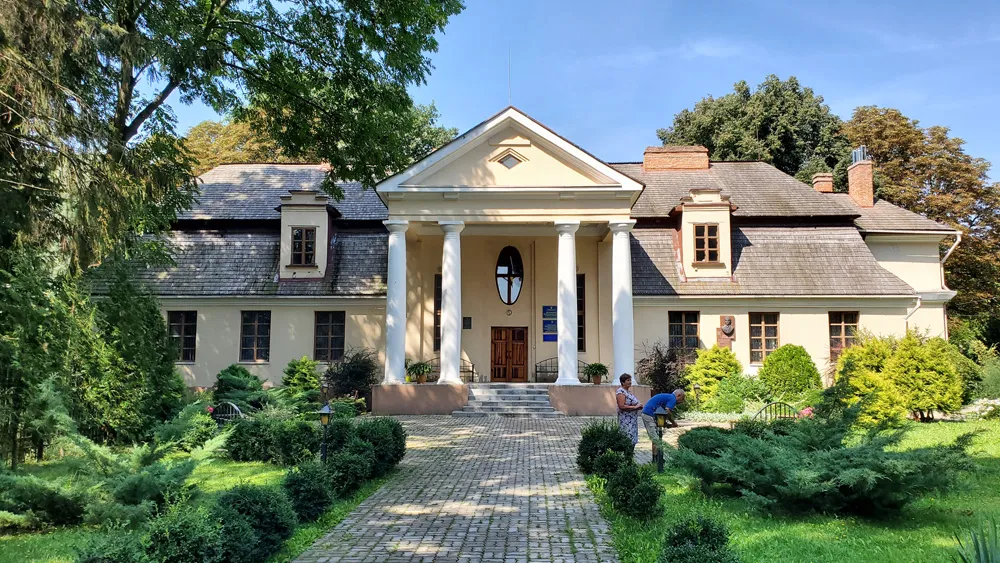
Today the former Lypynskyi manor is an integral part of the historical portrait of the village of Zaturtsi and covers 4.1 ha. Its main elements are the house and the park.
The family house of the Lypynskyi noble family is one of the oldest buildings in Zaturtsi. The foundation was laid in 1871.
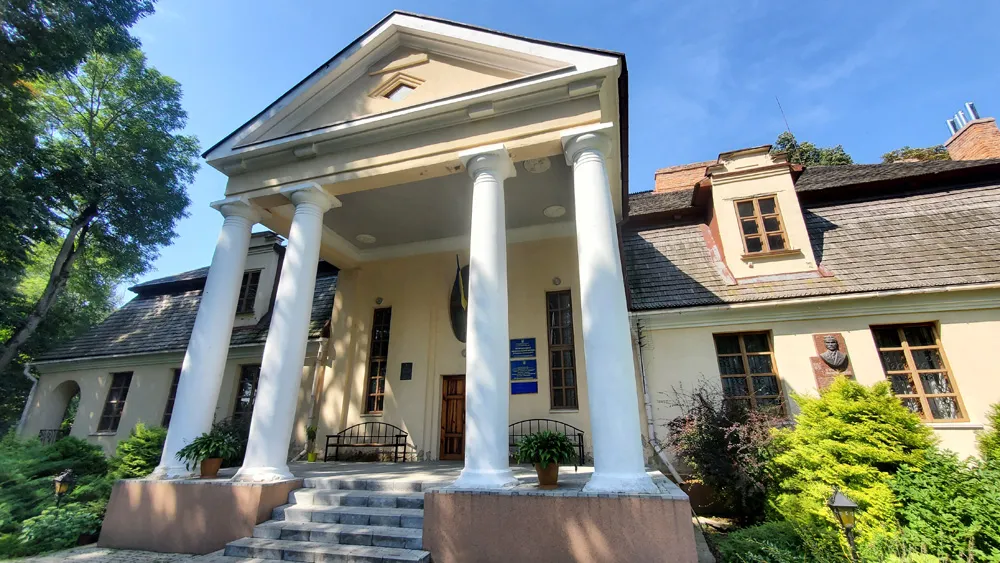
Photographs from 1910 show a masonry residential building with a large porch resting on four massive columns. During the First World War all the farm buildings and the dwelling were burned and destroyed. On the foundations of the old house the young owner Stanislav Lypynskyi built a fine two-storey palace.
It was here that in 1931 the body of Viacheslav Lypynskyi was brought from Austria for the farewell. Here, on the grounds of the family estate, he was buried. For many years after the defeat of the Hetmanate Viacheslav Lypynskyi lived and worked in the small mountain town of Reichenau in Austria and sometimes in Vienna. All his life he suffered from a lung disease, tuberculosis, from which he died prematurely in 1931.
During the war, in 1944, the wooden second floor of the palace burned down. Later it was partly restored and altered. In the mid-1990s restoration of the building began, and a second floor with a mansard roof under tiles was built over it again.
The Lypynskyi park was a kind of calling card of the noble family at the end of the 19th and the beginning of the 20th century.
The features of the landscape were harmoniously combined here with the owners’ love of nature, aesthetic taste and agronomic knowledge. All this created a picturesque example of landscape garden art.
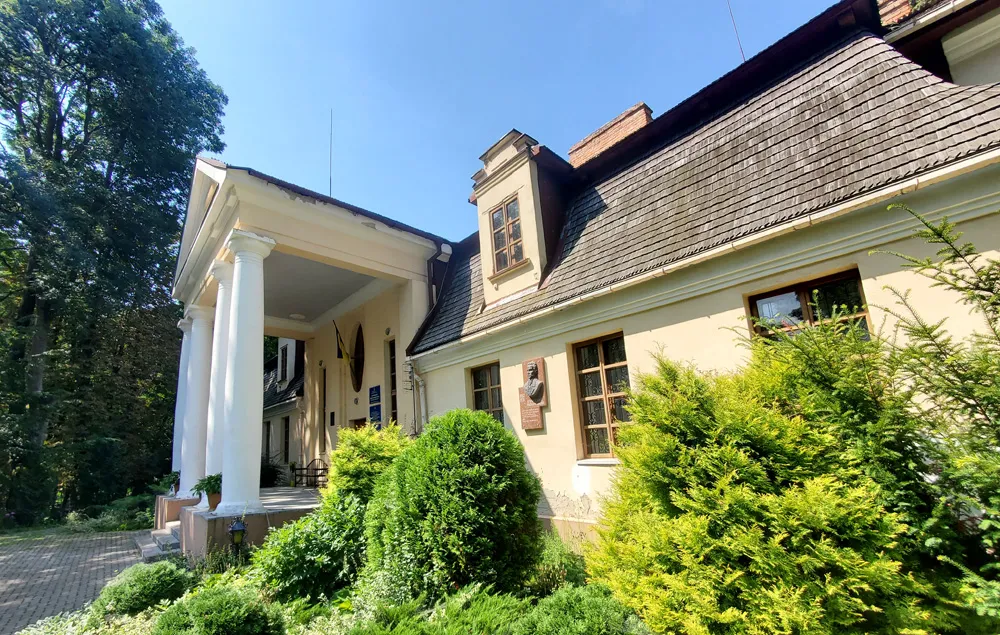
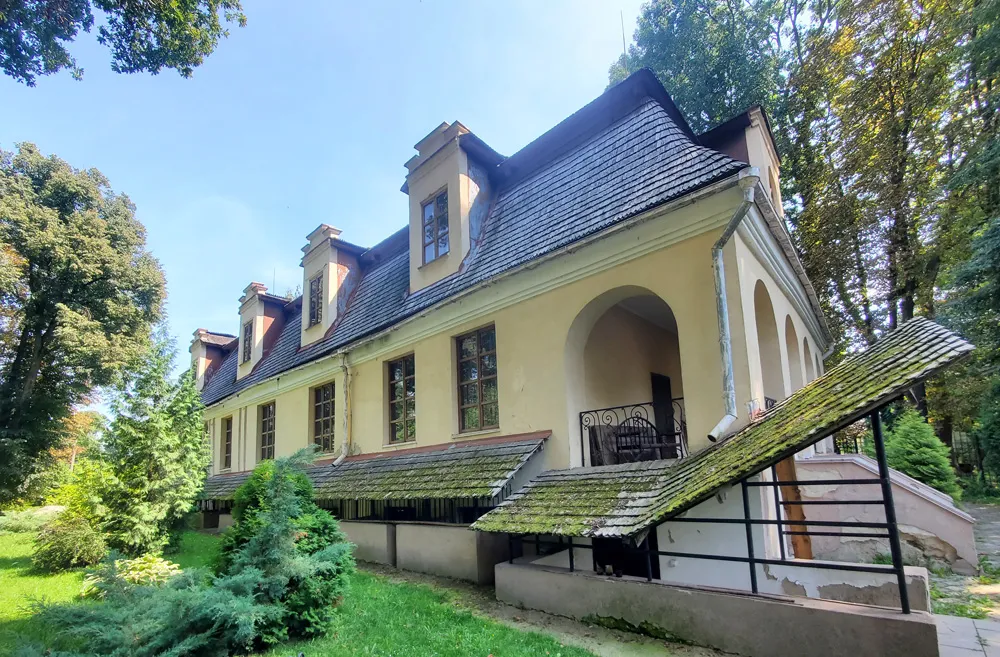
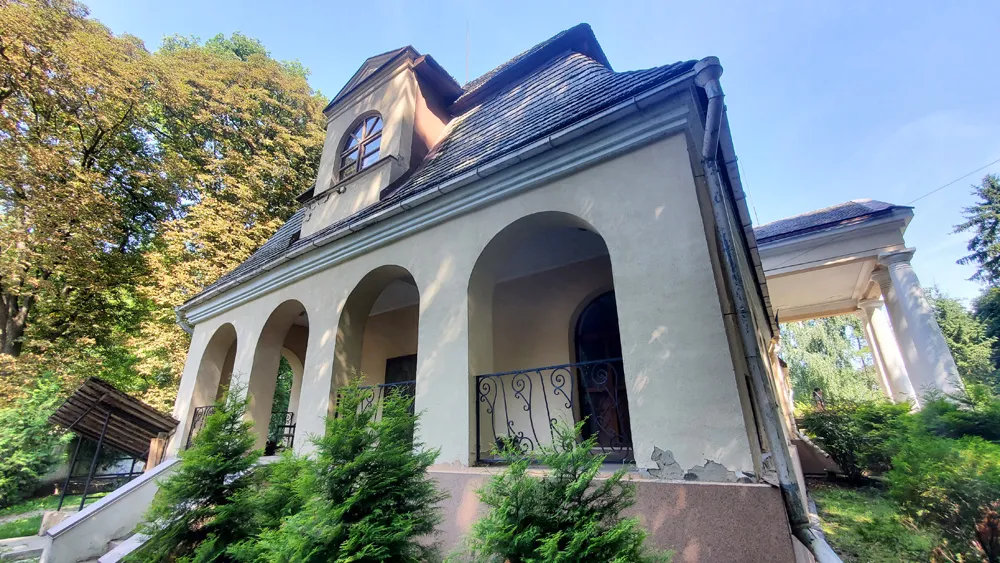
Local species predominated among the trees: oak, linden, hornbeam, ash, chestnut, acacia, rowan. They were planted not chaotically but formed particular compositions – for example, the park had a “walnut alley”, a “circle” planted with ash trees, and on an “island” grew a willow under which Viacheslav Lypynskyi liked to rest and work. This old tree is still growing today. The park was a real recreation area for the Lypynskyi family and their guests, and in the post-war period for all the residents of the village of Zaturtsi.
After several decades of neglect the park is coming back to life. The manor’s reconstruction plan includes not only restoring the house, but also restoring the green architecture of the once beautiful park, one of the few that have survived in Volyn to our time.
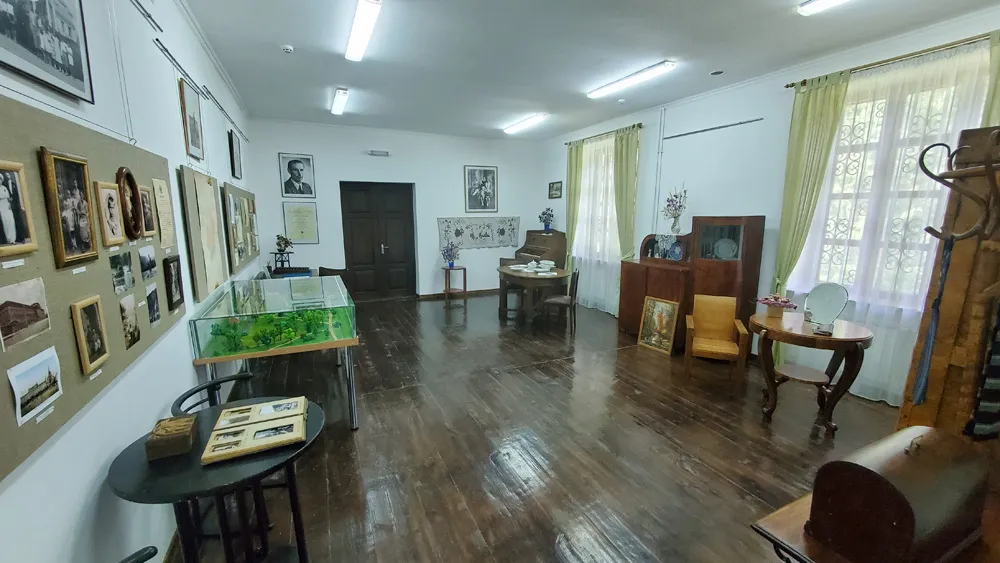
Today the estate is a division of the Volyn Museum of Local Lore. It is planned soon to turn the manor into the Zaturtsi Memorial Museum of Viacheslav Lypynskyi.
The director of the Lypynskyi manor in the village of Zaturtsi is Vitalii Hryhorovych Kushnir. The museum administration plans to open a mini-hotel for tourists and holidaymakers in the building next to the park and the manor.
Source: Ancestral Glory
Photos by Roman Malenkov


