How to choose flowers as a gift to match the mood
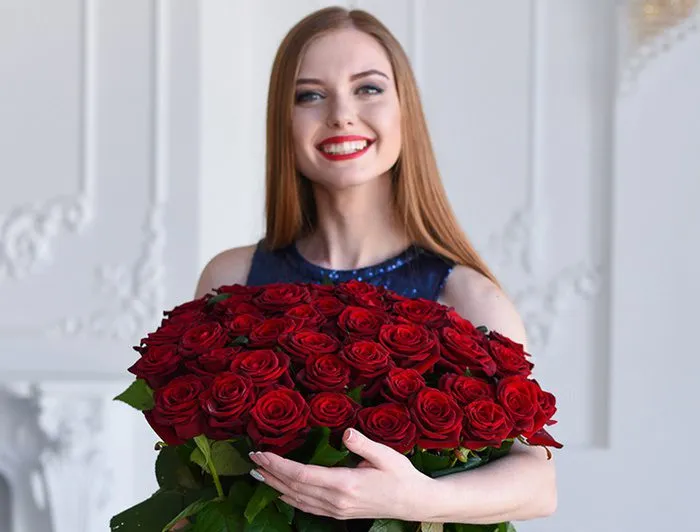
A bouquet is one of the few gifts that works almost every time: both when you need to congratulate someone on an important occasion and when you simply want to please someone for no particular reason. But precisely because of this versatility, people often get lost in the choice and take the first option that comes along, although a well-chosen bouquet can say far more than a standard set of roses. A few simple guidelines help you approach the choice consciously rather than at random.
Start from the person, not the holiday
The most common mistake is to choose flowers solely for a formal occasion: a birthday, so red roses; 8 March, so tulips. In fact, you should consider the recipient’s character and taste. For a reserved person who dislikes excessive brightness, monochrome arrangements of peony roses or lisianthus will do. For those who value naturalness, wildflower bunches with daisies, stock or sunflowers. And for a person with a bright, bold style you can choose contrasting colour combinations that will look like an accent rather than a standard “just in case” gift.
Seasonality matters more than it seems
Flowers that are at their peak bloom right now are usually both the freshest and the best value for money. In spring these are tulips, hyacinths and the first peonies; in summer, sunflowers, hydrangeas and daisies; in autumn, chrysanthemums and dahlias; and in winter, greenhouse roses and cold-resistant arrangements take priority. If you are not set on a particular kind of flower, trusting the seasonal range almost always pays off: the bouquet looks more natural and lasts longer.
Packaging and extra details matter as much as the flowers
The same flowers can look completely different depending on how they are presented. Kraft paper and twine create a natural, “casual” look, while a hat box or a vase immediately adds status to the gift. If the bouquet is meant for a festive table or an office, consider an arrangement in a vase: it is ready to use at once and requires no extra effort from the recipient.
When flowers are not enough
Not every occasion calls for a bouquet alone. Sometimes it is more fitting to complement it with something practical: a candle, perfume, sweets or a small voucher for a floristry workshop. This format works especially well when you are giving a gift to someone you do not know very well: the bouquet itself is a neutral, pleasant gesture, while the accompanying gift leaves room for personalisation without the risk of missing on size or colour. The same applies when the gift is for a colleague or a manager: in a work context an overly personal or bright bouquet may seem inappropriate, whereas a restrained bouquet with a practical addition is always received well.
Delivery time is part of the gift too
Even a perfectly chosen bouquet loses its meaning if it arrives late or at a moment when the recipient is not ready to receive it. If the greeting is tied to a specific hour, such as morning coffee, dinner or the moment the person walks into the office, check in advance whether exact or express delivery is possible rather than relying on an approximate time window. This is especially relevant for surprises: if delivery takes place without a preliminary call to the recipient, precise timing is the only guarantee that the element of surprise works exactly when intended.
The main rule
There is no universal “perfect bouquet”, only one well chosen for a particular person and a particular moment. If you focus on the recipient’s character, the seasonality of the flowers and the suitability of the presentation, rather than just the formal occasion, your chances of matching the mood increase many times over. Examples of successful seasonal arrangements and ready-made solutions for different occasions can be found here: https://donpion.ua/ — this will help you get your bearings among the options, even if you make the final decision yourself.