

The Blue Eye, Albania. Syri i Kaltër
· 2 min read
In the middle of Albania’s high mountains, after a hundred hairpin bends on the road between the towns of Sarandë and Gjirokastër, among plane trees and oaks, dark blue, cold water bursts up to the surface in an aquamarine colour. The Albanian Blue Eye, Syri i Kaltër, is watching you ?.
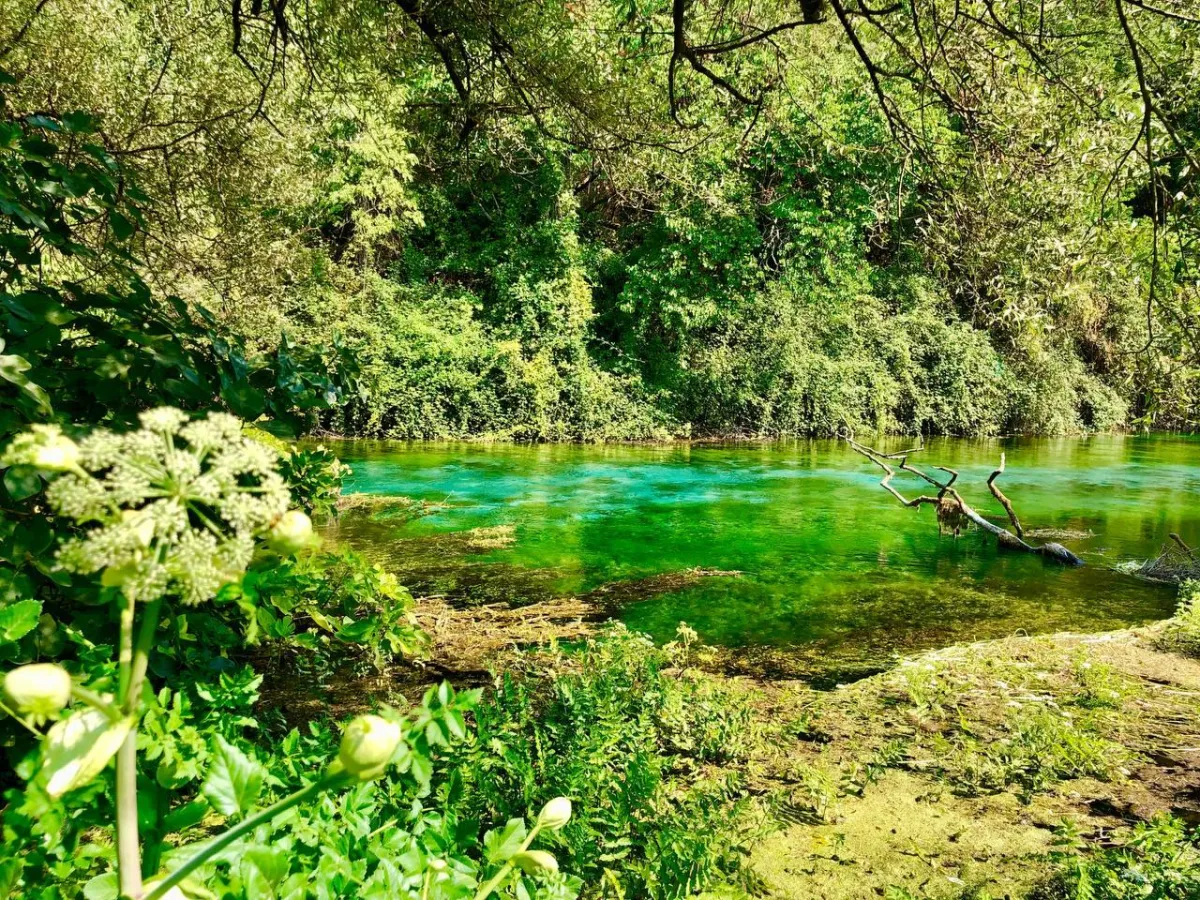
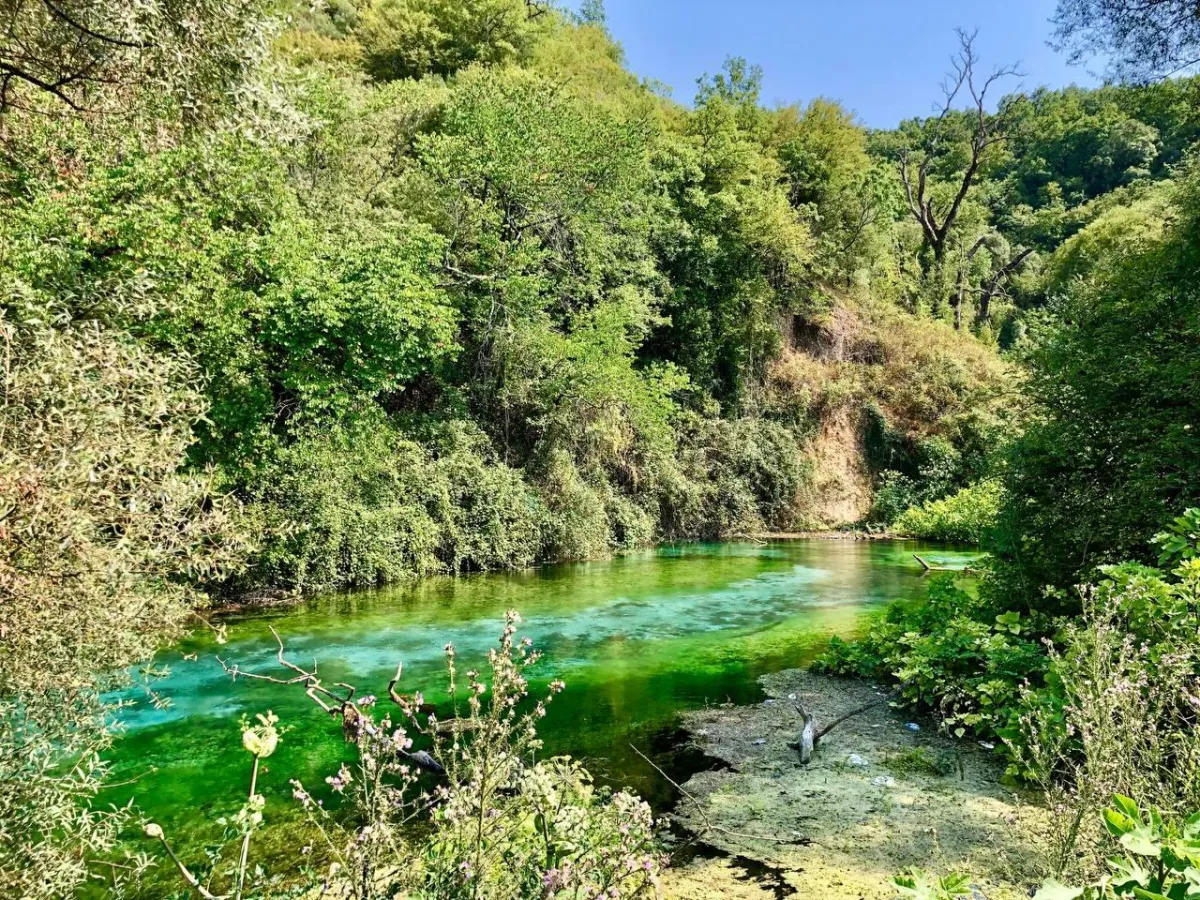
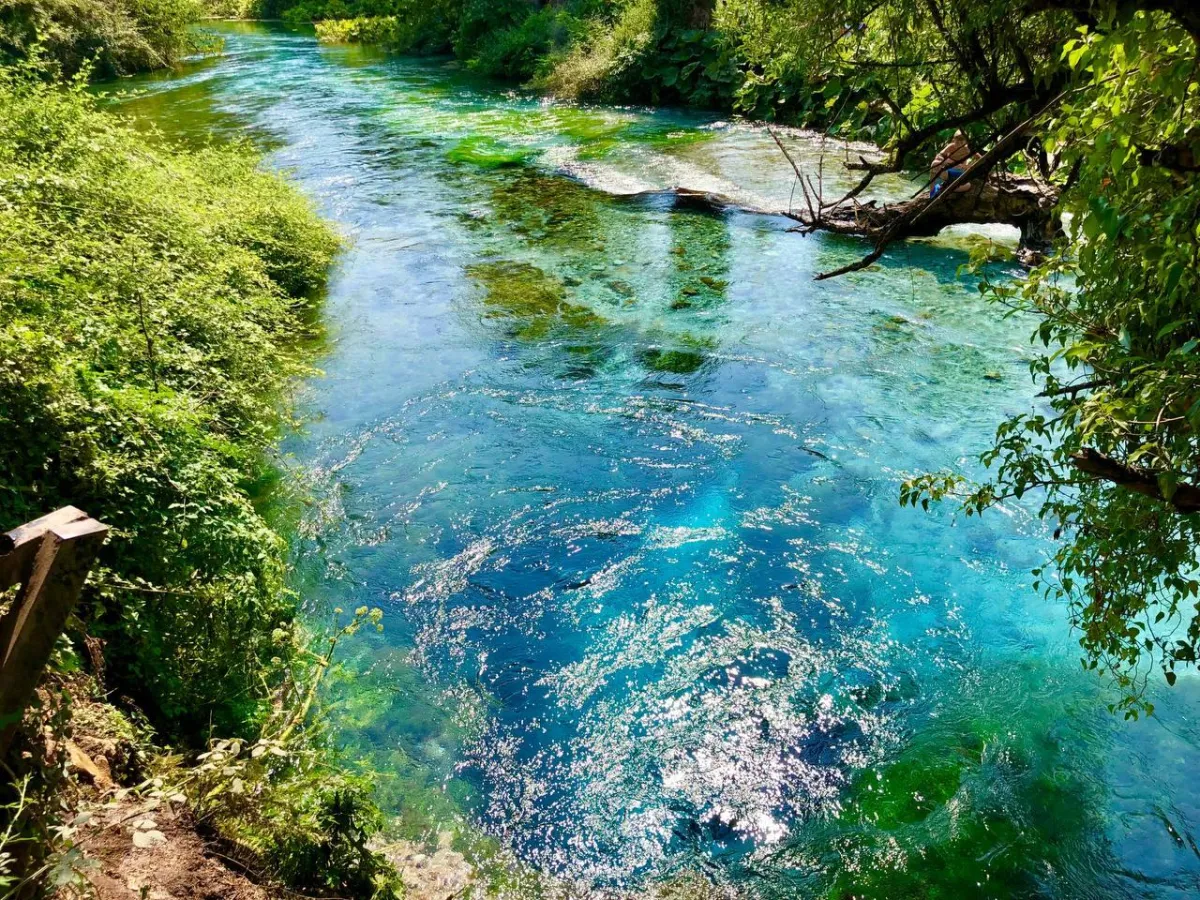
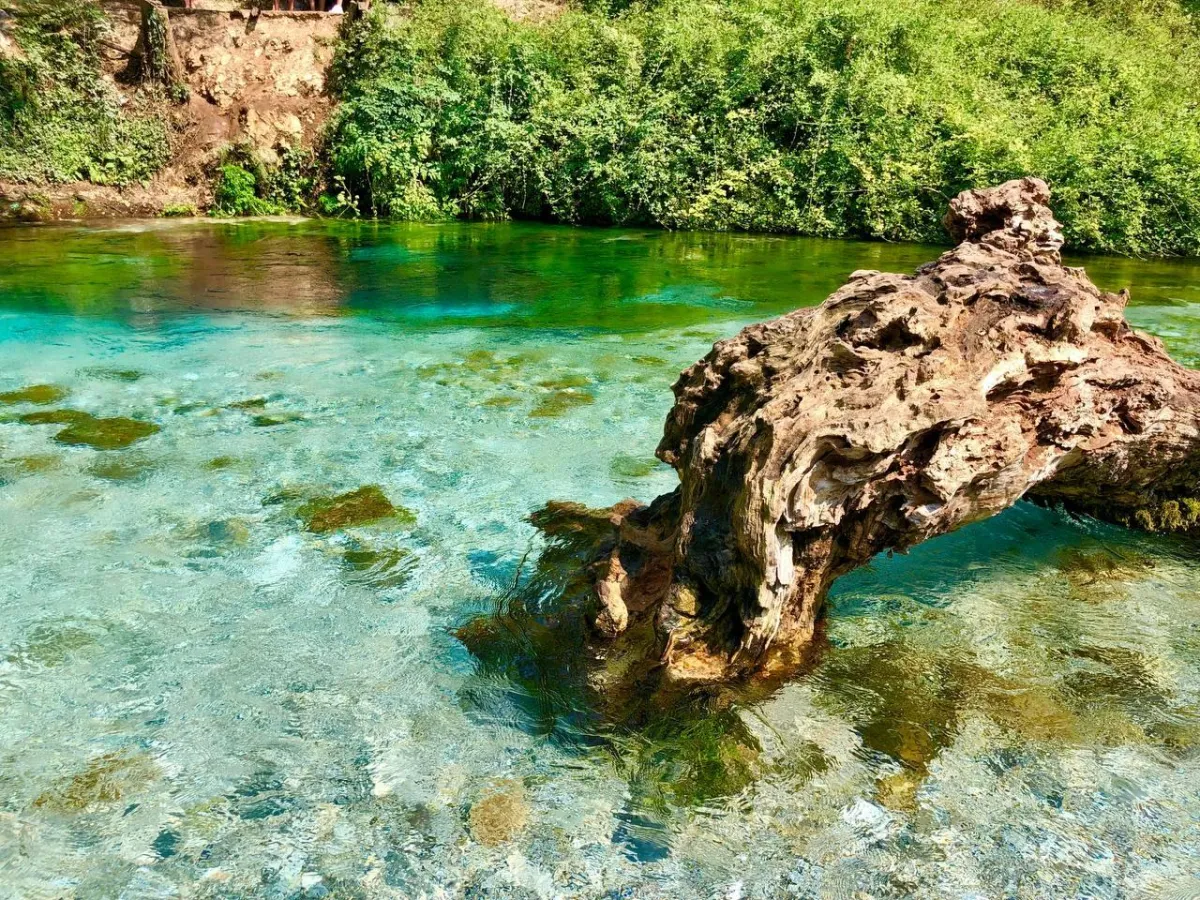
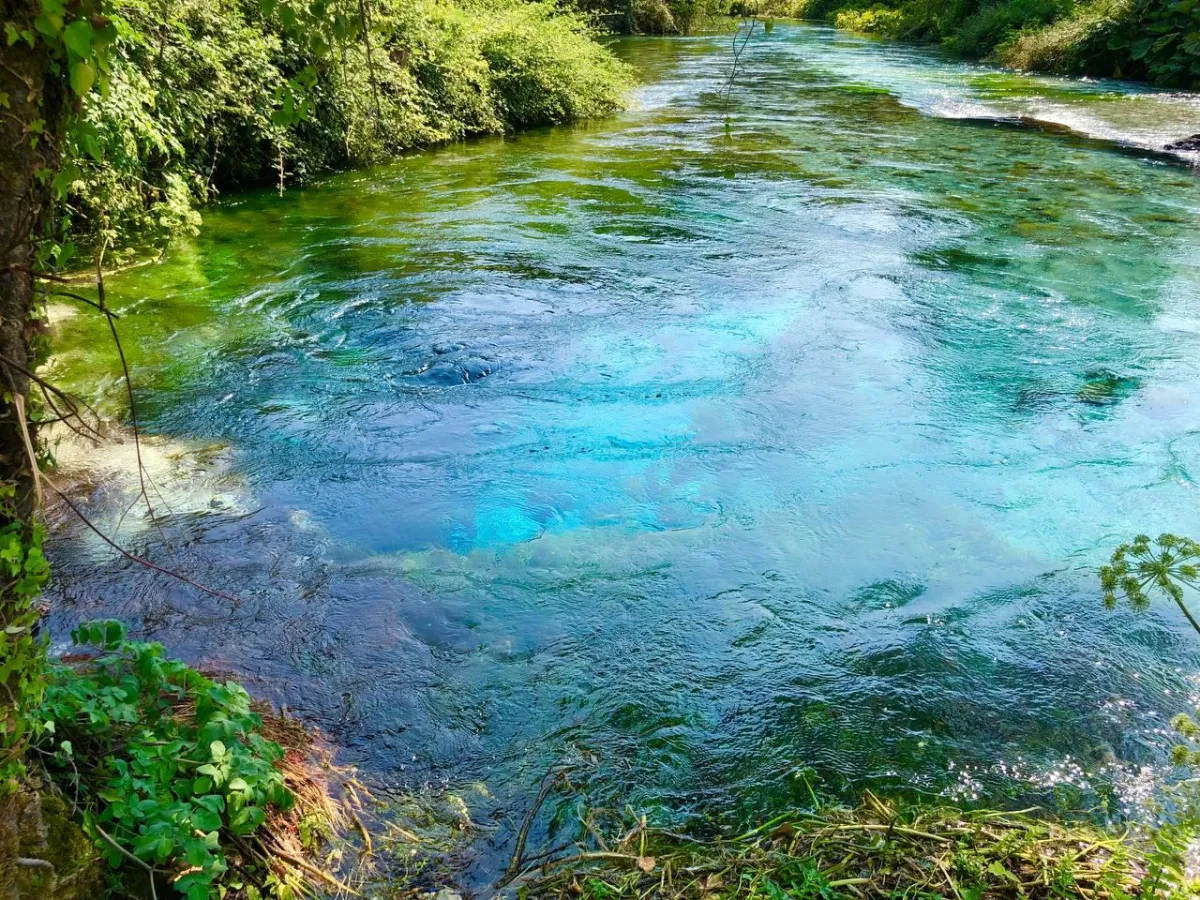
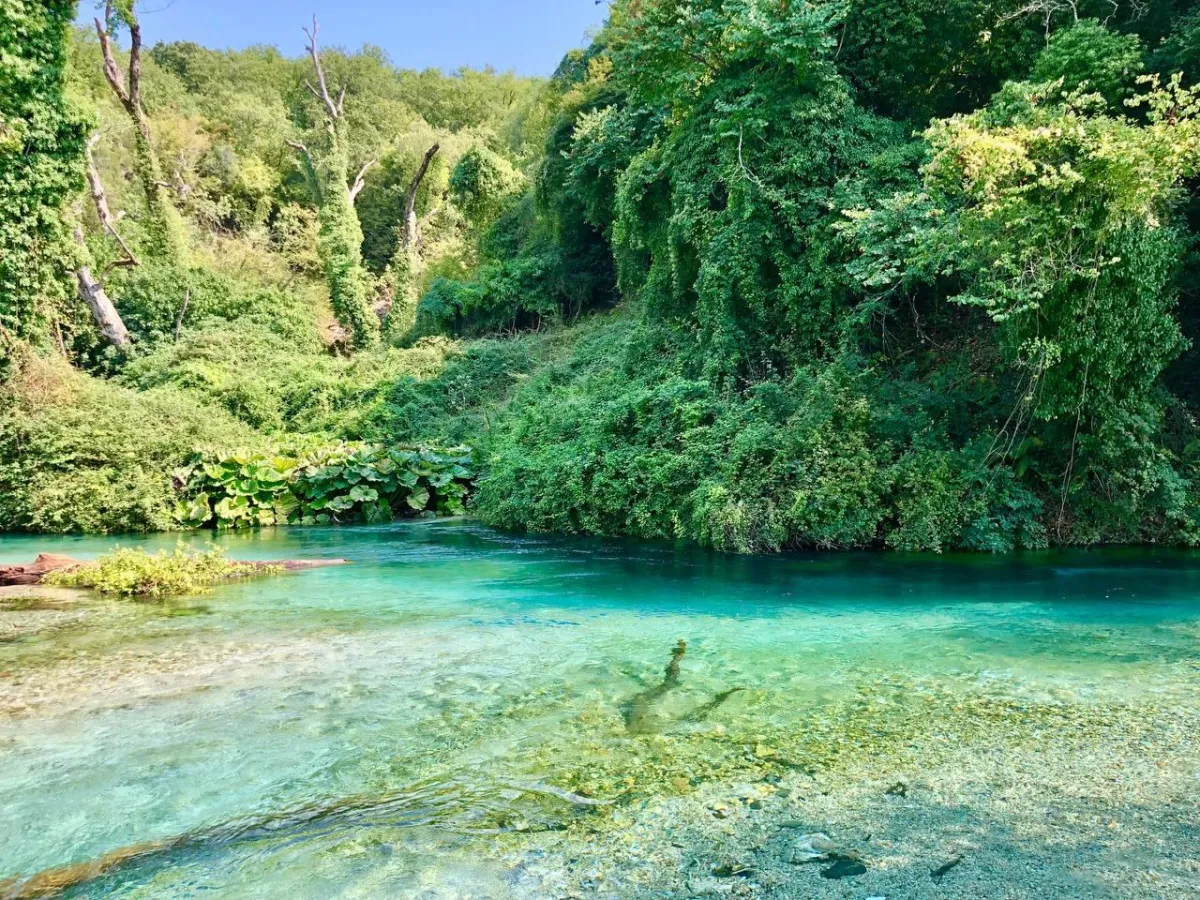
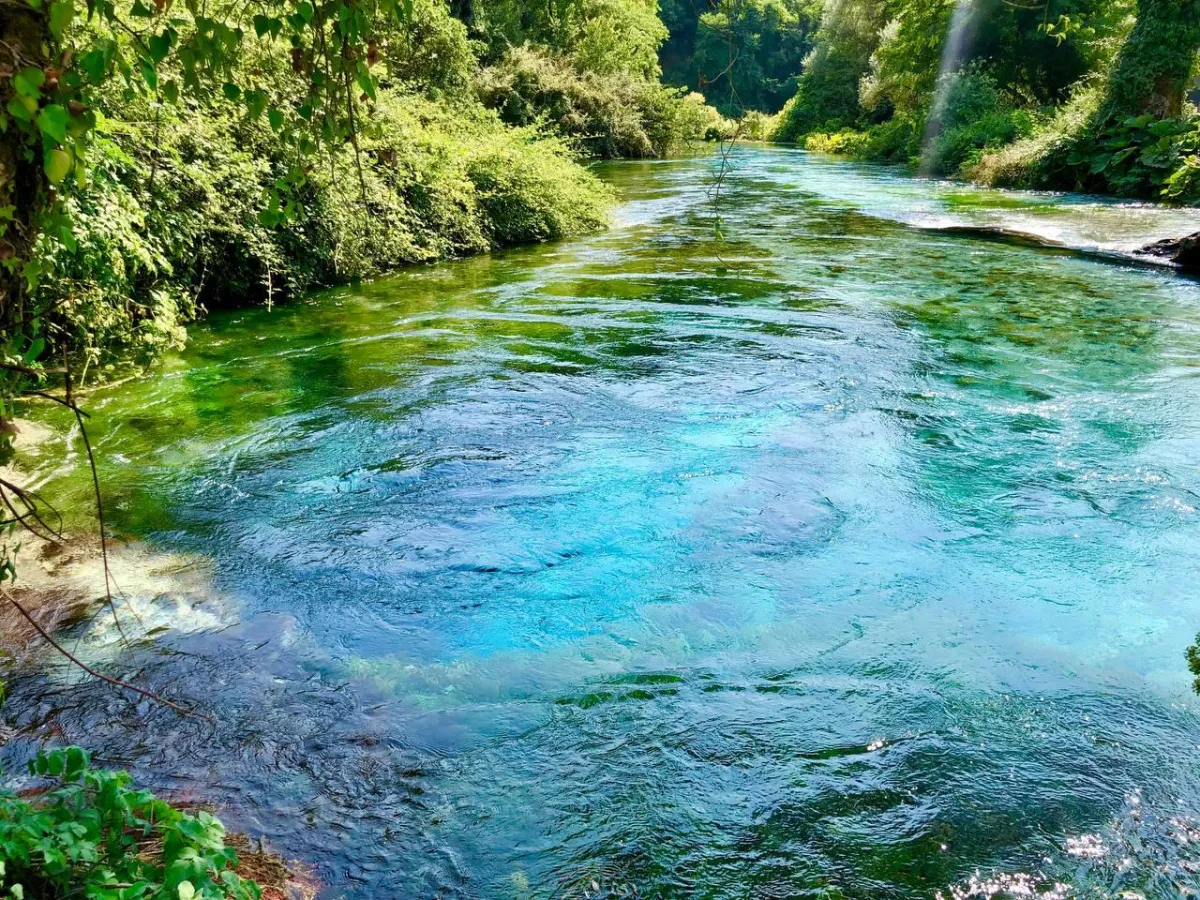
A karst spring pushes water out from its underground depths, now quietly, now turbulently. Spreading wider, it then feeds the Bistricë river. Although this is the historical region of Epirus (remember the Pyrrhic victory of its ruler), we easily read the name of the river: Bystrytsia (“swift”). Slavs were here somewhere and marked their territories.
Incidentally, this is the only Albanian river that flows into the Ionian Sea rather than the Adriatic.
The exact depth of the “Blue Eye”, formed by springs, remains unknown. Information on the internet says that divers have repeatedly tried to explore the pool, but managed to descend only 42–45 metres. Beyond that the powerful pressure of the water does not let them. Someone has even calculated up to six cubic metres per second of water at a constant temperature of about +13 °C. If those wishing to dive do not get in the way, you can run an experiment: how many seconds it takes for a stone thrown into the centre of the spring to bob up to the surface.
Nearby above the river there is a restaurant of traditional Albanian cuisine, with grilled fish. The trees provide pleasant shade, and the river waters coolness.
They say that under communism the public was forbidden to enter the spring, because it lies near a strategic facility, a dam. Now dozens of cars raise dust on 2 kilometres of dirt road. It seems to me that even the castles of Berat and Gjirokastër had fewer visitors.
Text and photos by Serhii Shcherbii



