About the Cossacks in the Venetian Memorial Book

· 3 min read
I keep finding more and more interesting documents as part of a study meant to bring to Ukrainian scholarship two unknown dissertations about Ukrainian lands and the Cossacks.
While the article is in preparation, I will share one interesting document.
Although it is not a discovery, my article needs it for analysis and historical retrospection, so others may find it interesting too. It has already been studied and described by Ukrainian historians, in particular D. Nalyvaiko, S. Plokhy and Kseniia Konstantynenko.
In the days when obtaining such documents from archives was not as easy as it is now, most people used the collection of Roman and Vatican documents processed and published, as a continuation of the great series “Analecta Ordinis S. Basilii Magni”, by the outstanding toiler of historical science Atanasii Velykyi (Athanasius Welykyj). It was from there that most historians learned about what I describe below. These documents were published in 1959 in “Litterae Nuntiorum Apostolicorum historiam Ucrainae illustrantes (1550–1850)”; in this post I will speak specifically about Volume 1 of the collection, which covers documents from 1550–1593.
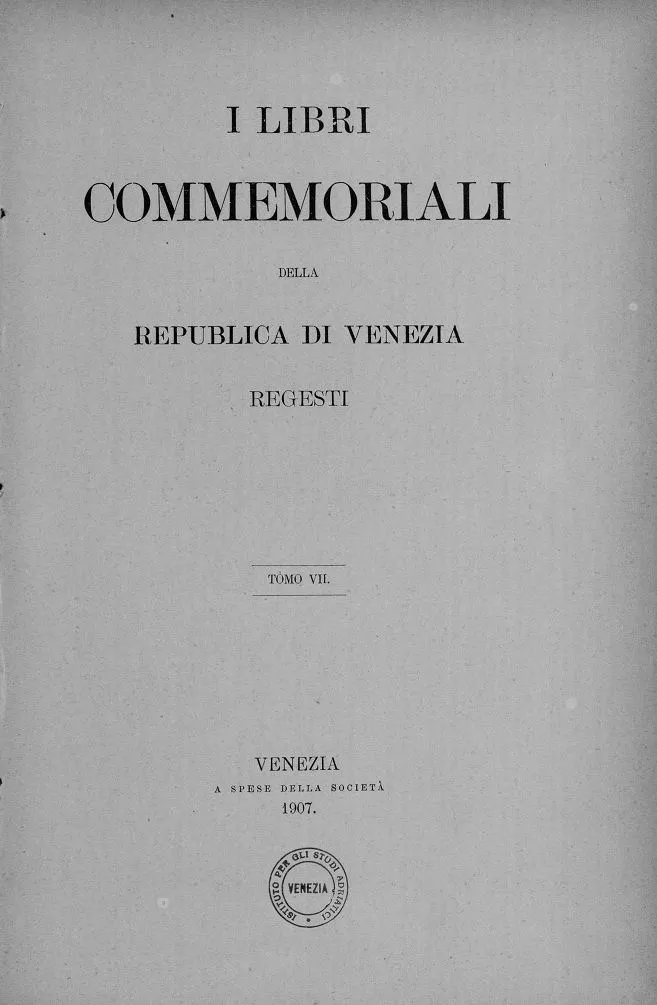
But I used the Italian ones. Caring for its extraordinary history, Venice created huge Memorial Books that recorded important reports (including those of diplomats) from various corners of the world. In 1907 volume 7 of such a register of the Venetian Republic was published, and it had room for the Ukrainian Cossacks too.
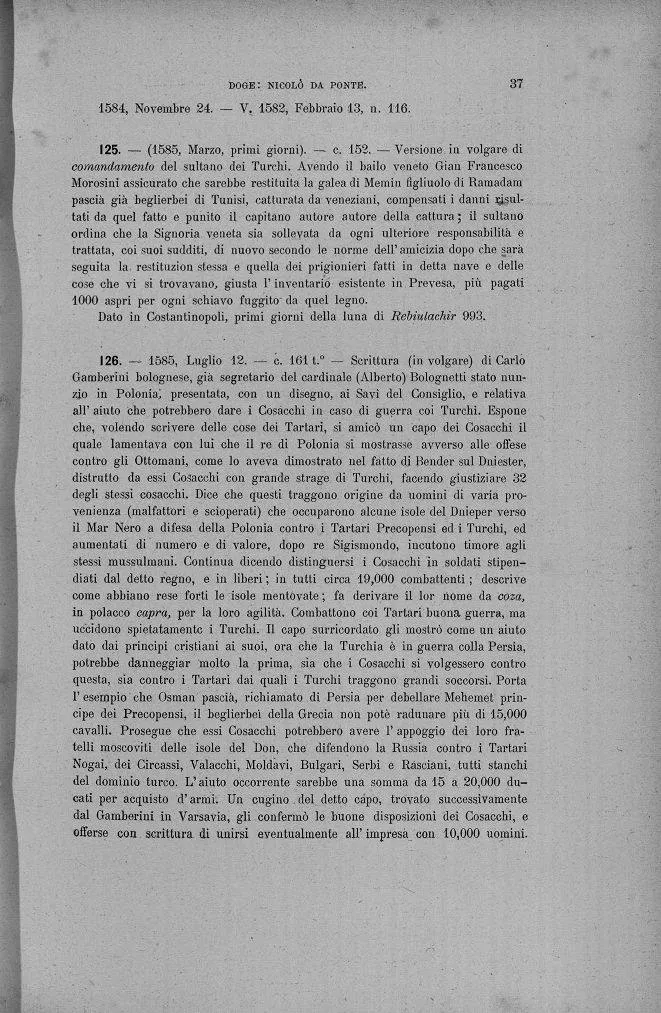
This is the report of Carlo Gamberini, secretary of Cardinal Alberto Bolognetti, who on 12 July 1585 wrote about the Cossacks and how they trample the Turks.
Below I will give the original text, and here I will try to offer a free translation of some episodes that interest me:
Report 126:
1585, 12 July – p. 161v – Note by Carlo Gamberini of Bologna, secretary of Cardinal (Alberto) Bolognetti, nuncio in Poland…
On the help the Cossacks can provide in the event of war with the Turks.
Gamberini advises the Doge and the Senate to consider an alliance with the Cossacks [Cosacchi], who are ready to act in large numbers against the Turks despite prohibitions from the Poles.
He writes that the Cossacks descend from people of various origins (lawbreakers and rebels) who occupied some Dnipro islands down to the Black Sea and defend, among others, Poland as well from the Perekop Tatars [Tartar Precopensi] and the Turks. Having grown in number and strength in the time of King Sigismund, they inspire fear in the Muslims.
He goes on to say that the Cossacks are divided into hired soldiers of the said kingdom and free ones; about 19,000 warriors in all; he describes how they fortified the said islands; he writes that there is a version that their name comes from the Polish word [coza], [capra] (goat), for their agility.
They fight the Tatars in an honest war, but kill the Turks without mercy.
He then describes the geopolitical alignments between Venice, Persia, Poland, the Cossacks, and the Turks with the Tatars, and the possibility of uniting all the “weary” to oppose “Turkish domination”.
He estimates the possible financial costs of “the needs of assistance, which would amount to between 15 and 20,000 ducats”.
He writes about preliminary agreements with the Cossacks, with “proposals to join the campaign at last with 10,000 men”.
He ends the report by acknowledging the difficulties which, he says, he wanted to describe in order to demonstrate his devotion to the Republic.
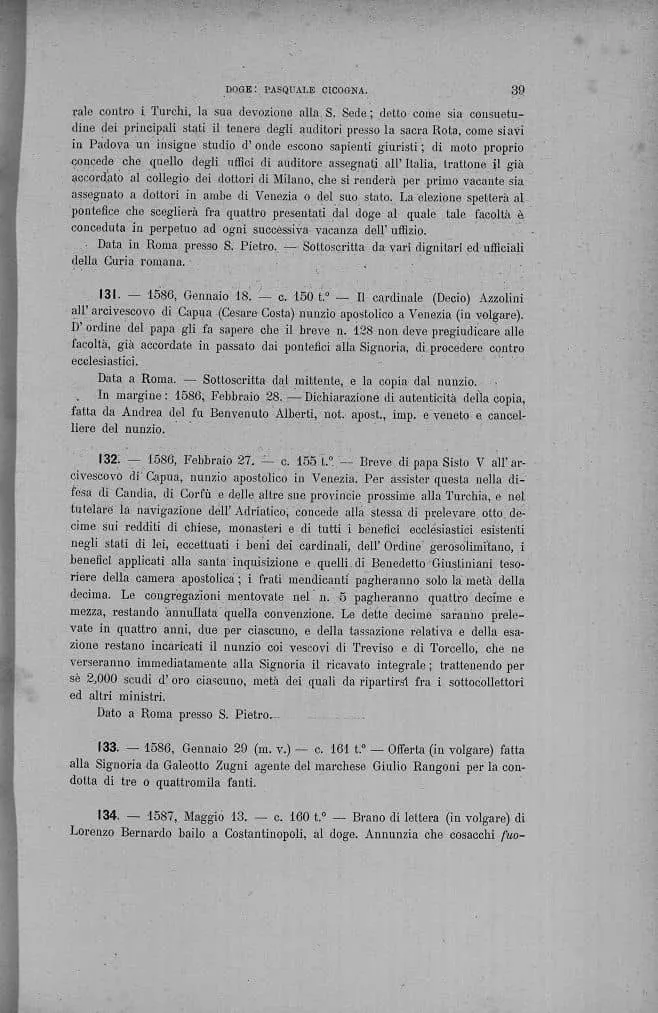
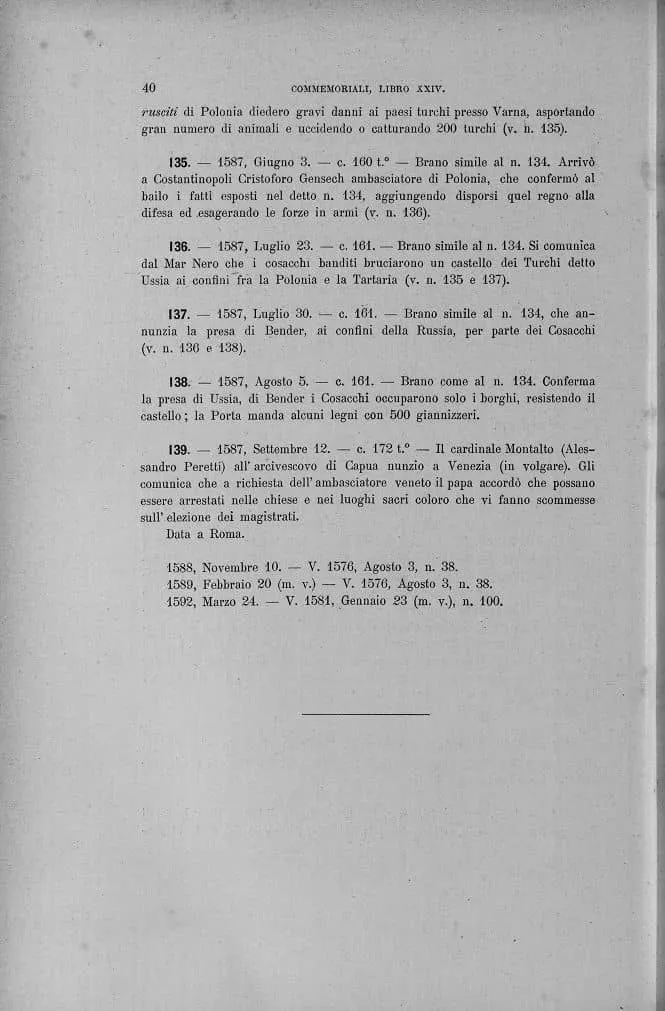
The following reports (134, 136, 137 and 138) of the Memorial Book from Venice are not as informative, but they state that:
for 13 May 1587: the Cossacks inflicted serious damage and losses on the Turks near Varna;
for 23 July 1587: the Cossacks destroyed the Turkish fortress of Ussia on the border between Poland and Tartary;
for 30 July 1587: the Cossacks took Bender on the border of Rus’;
for 5 August 1587: confirmation of the news of the Cossacks’ capture of the fortress of Ussia, as well as of the environs of the Bender fortress.
Such are the interesting reports from Venice about our people in 1585–1587.
Author: Ihor Poluektov