The feat of Marko Yakymovskyi in Italian chronicles

· 7 min read
How did men justify to their wives coming home late in Venice in the early 17th century?
Surprised, just as I was ?
Here is a quotation from an old book published in Venice in 1639, which is written exactly in my own words:
“…he was delayed because he sat until night reading various “relazioni”, from which he learns much, for example about Ukraine, the land of the Cossacks” (p.).
We encounter this everyday scene, in which the residents of Venice, between other business, discuss Ukraine in 1639, in the work “Colmiliana” by the unknown Venetian author Armin.
Although this work itself has no historical value whatsoever, it testifies to a good awareness of, and even a certain fascination with, Ukrainians in the 17th century ?
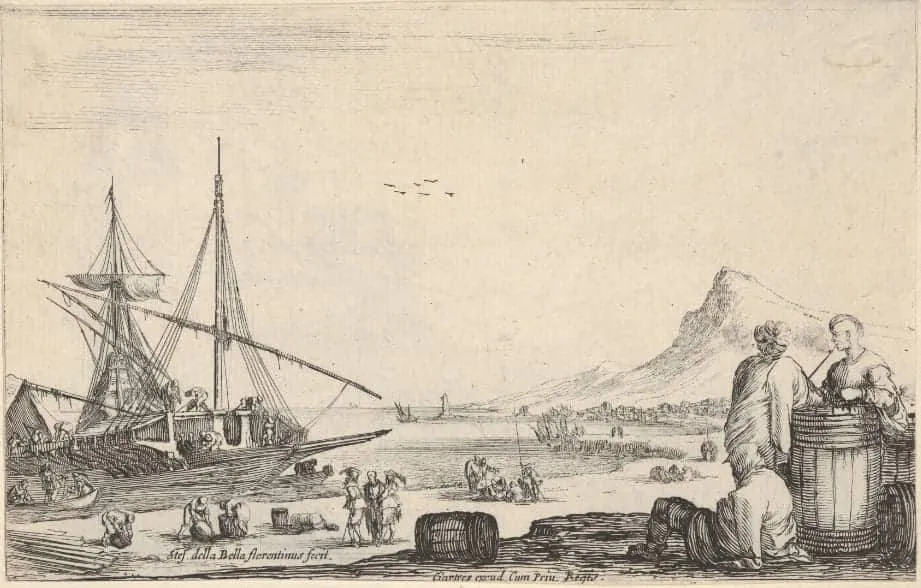
There is nothing strange in this, because besides the famous Cossack campaigns across Europe (as far as Luxembourg and so on), which I wrote about in several posts earlier, the Italians themselves had an opportunity in those years to meet in person heroic representatives of the mysterious, distant and already then legendary Rus’ (Ukraine).
In particular, many knew about the very recent sea exploits of the brave Cossacks Ivan Suleyma and Marko Yakymovskyi, who, repeating the feat of the legendary Samiilo Kishka, also freed themselves from Turkish captivity and, together with themselves, freed from the Turks beautiful galleys and hundreds of Christians aboard them. And they brought all this booty to the Italian shores.
As for Ivan Suleyma, the story of his being awarded a gold medal by the Pope became widely known and is described, for example, by S. Plokhy.
But the feat of Marko Yakymovskyi is less well known.
So as not to retell the entire story of the Italian chronicles, I will tell the main points. After long sea captivity among the Turks, Marko and other Cossacks devised a plan to seize a galley in order to free themselves and several hundred other Christian hostages. Choosing their moment, they attacked the Turkish soldiers, seized the ship and set off in flight. Despite a terrible storm and thunder, the fugitives from the island of Lesbos in the Aegean Sea reached Italian Calabria safely, and then the shores of Sicily.
More can be learned from the news sheet (which then served as newspapers) “Relazione della Conquista fatta della galera capitana d’Alessandria, nel Porto di Metelliono, per opera del capitano Marco Jakimovski, schiavo in detta galera. Con liberazione di 220 schiavi cristiani.— Roma, 1628”:
“…Qasim Bey, a Turk of Alexandria, governor of Damietta and Rosetta, a great estate in Egypt, trades in various goods in those parts together with his brother Mehmet; some years ago he became captain of four galleys guarding the port and overseeing Alexandrian navigation, and his main galley was filled with 220 Christian prisoners, among whom were three Greeks, two Englishmen, one Italian, the others either from Rus’ or from Muscovy.…The event that took place showed the mercy of the Lord God and his protection of Christians in the matter of victory over the pagan monster that everyone so fears…
…Captain Qasim Bey himself stopped in the port called Stretto, or the Narrow. On 12 November, in order to rest a little, he went ashore, taking 70 Turks with him. All the soldiers and officers who were with him on the galley numbered a hundred and fifty. So only eighty Turks remained on the vessel.
Among the Christian prisoners on the galley was Marko Yakymovskyi, a native of Bar in the Podillia land, who from his youth had been accustomed to knightly deeds.…He then told of his plan to two others, Stepan Satanovskyi and Ivan of Tulchyn, who, like him, were unchained… These two cautioned Marko against hasty action…
So Yakymovskyi, ready to do all in his power, having no other weapon at hand, seized three billets of those that the cook had prepared for the fire, and when the cook stood in his way, he struck him on the head so that he fell dead. Giving the other two billets to his comrades (Satanovskyi and Ivan of Tulchyn), Marko ran to the stern, where the Turks always kept their weapons. He had not yet got there when a soldier, a Greek who had turned Turk, blocked his way with a drawn sabre. Yakymovskyi, seizing a pole from the fire, began to fight him, and although he had already been wounded twice, in the left side of the head and in the shoulder blade, he defeated the enemy. Having reached the stern, he quickly handed out weapons to his fellow galley slaves, who were already fighting the enemies with whatever came to hand – clubs, oars, barrels, cauldrons. Then Yakymovskyi rushed to the bow of the galley, where Mustafa, a Neapolitan by birth, was. He had not yet understood what had happened, because the galley was covered (with canvas). He thought a quarrel had broken out among the prisoners, a common occurrence on galleys. However, on seeing Marko running towards him with his comrades, Mustafa grasped the situation. Seizing two sabres, he set about fighting, but Yakymovskyi dealt him a mortal blow between the ribs and threw him into the sea. Meanwhile the Turks cut the ropes that held the awning, in order thereby to hinder the prisoners’ actions. On Marko Yakymovskyi’s orders the rebels quickly folded the canvas and, now with plenty of weapons, bravely fought the Turks, killing them and throwing them into the sea… they captured the galley…
…Then, passing Reggio, after some fifteen days they arrived at Messina, from where in about the same month, on the order of the Viceroy of Naples, they came to Palermo. Here, not wishing to trade in people, even of pagan faith, remembering that they themselves had been freed, having lost not a single man, they unchained and set free 22 Turks condemned, according to custom, to serve their sentences on galleys. They also released Rahmat, the wife of the qadi Yusuf, who had remained in Mytilene, although they could have received a considerable sum for her; the four Christian women slaves who had served this Rahmat for several years – Hanna, Kateryna and two Margarets – were taken as wives by the elder members of the company, and the young lady, also Kateryna, sent to Alexandria for sale, was taken as his wife by Marko, who had been chosen captain.
Then, leaving the galley to the Viceroy and not accepting the one and a half thousand reals offered for it, they set out on the two vessels they had received – a brigantine and a tartane – to Naples, and from there to Rome, where they arrived on the tartane on 16 February (1628) numbering 30 senior comrades and the five women mentioned.”
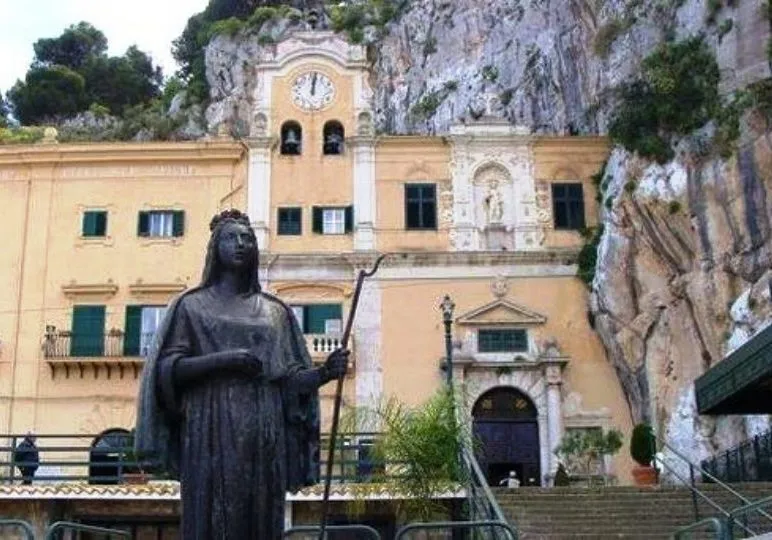
Photo: the same Church of St. Rosalia
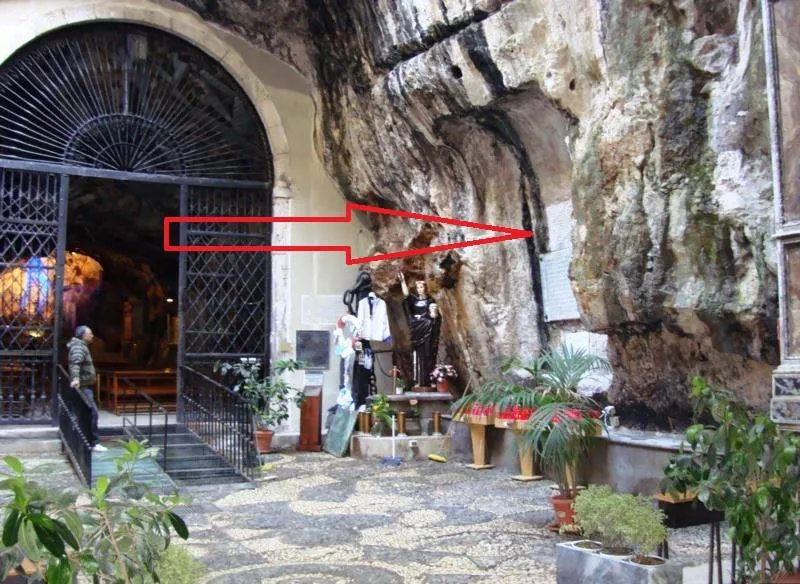
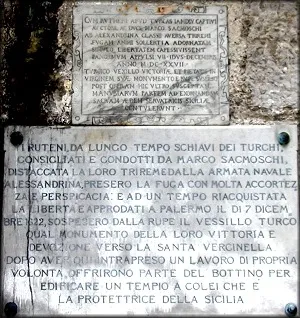
Photo: the same cave in the church with the dedication to the Ruthenians
We omit some details about Yakymovskyi’s visits with his company to Roman churches and monasteries, and his reception by Pope Urban VIII and the numerous papal Barberini family. During the reception the Pope presented Yakymovskyi and his comrades with various gifts.
In addition, our story was also embodied in stone. It was carved on two tablets in the chapel of St. Rosalia in Palermo on Monte Pellegrino, in Latin and Italian:
“The Ruthenians who were in Turkish captivity, under the leadership of Marko (……) prepared a very skilful escape when their warlike three-banked galley from Alexandria became separated from the others; having freed themselves, they arrived on 7 December… in Palermo and, in honour of the victory over the Turks and in veneration of St. Rosalia, set the galley on the rock as a monument; …they donated part of the war booty to the building of a chapel to the patroness of Sicily”
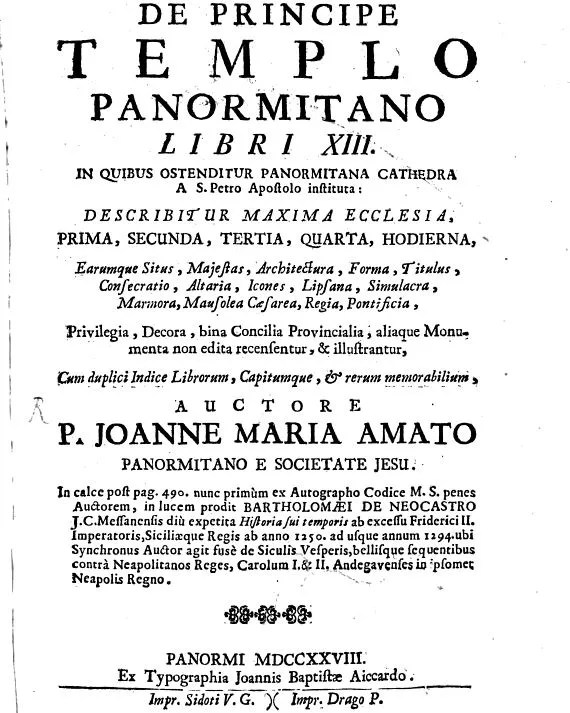
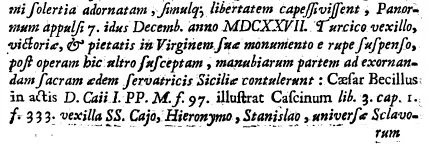
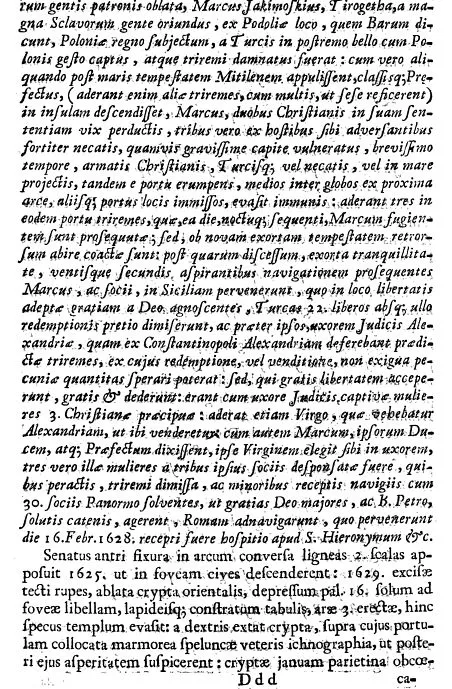
Photo: here our Marko Yakymovskyi is mentioned: Marcus Jakimoskius, from the town of Bar in Podillia
The circumstances of this event – a heroic uprising, seemingly miraculous help in the escape, the impeccable chivalry of yesterday’s slaves, the exceptionally romantic marriage of five couples in love – must have made a strong impression on contemporaries.
So do we have the right to reproach the man who returns home so late, absorbed in reading old relazioni about legendary Cossacks and Ukraine? ?
Author: Ihor Poluiektov