

Slovakia. Michalovce

· 3 min read
The large Slovak city closest to Ukraine is Michalovce. Well, large: 36 thousand inhabitants is a significant figure for Slovakia, though for Ukraine it is below the level of even the biggest district centre. And the first thing we saw on the outskirts of Michalovce was a large number of Roma. Probably it was people from the former USSR who had settled near the city. These camps were built by the state, and quite solidly: whole towns made of large multicoloured containers. Although the residents have dragged all sorts of rubbish in, built themselves crooked little huts and sheds from wooden pallets, and connected everything with ropes on which colourful laundry dries. Unfortunately we did not manage to photograph the camp: first noisy kids ran up to us, shouting “no photo” and holding out a hand for euro cents, and a couple of minutes later the adults came too, so we had to quickly get into the minibus and leave the camp’s surroundings.
Michalovce is not at all like the towns of western Slovakia; it is rather more like a Ukrainian district centre, since there is practically no cohesive old architecture here, but many wide streets, five-storey buildings and trees around them. There are nine-storey ones as well. The town reminded me of Boiarka: such are the socialist realities. Although the roads here are much better.
Michalovce is an ancient town; the first written mention of it dates from 1244, when it was called Michal. The settlement is believed to have been founded by the son of the royal palatine, Count Michal, called the Great for his military valour. He also built the first castle here.
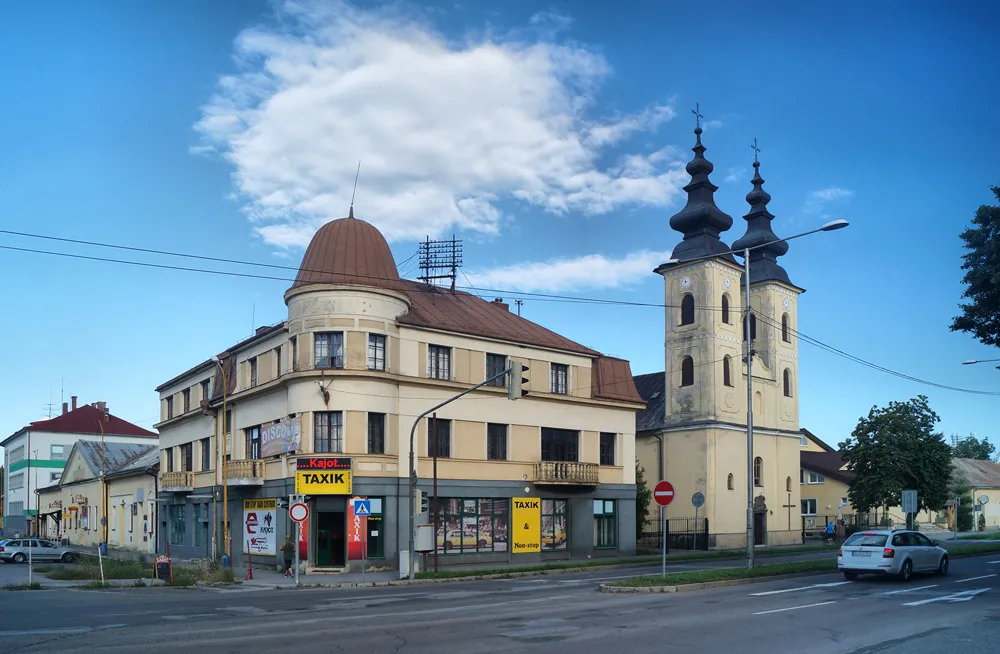
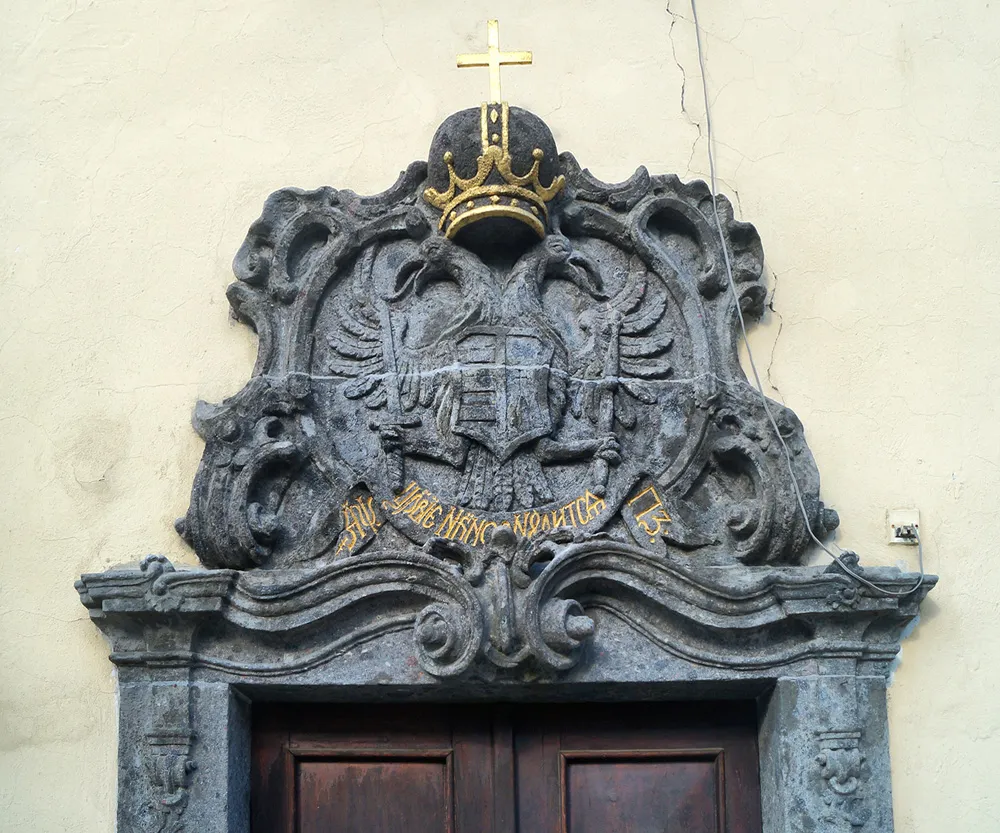
Greek Catholic Church of the Nativity of the Mother of God, 1772–1787
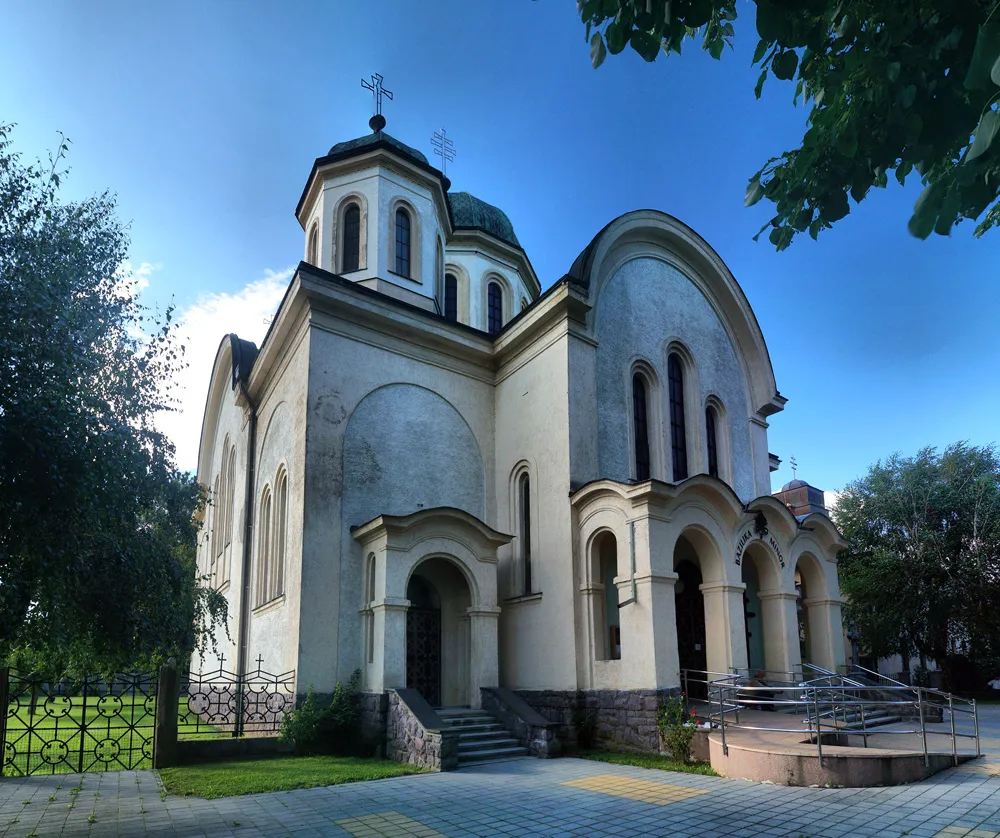
Greek Catholic minor basilica of the Descent of the Holy Spirit, 1934–1935
Over the long period of its existence it passed from one owner to another within the Kingdom of Hungary and the Austro-Hungarian Empire. During that time various ethnic groups settled in the town. There were many Jews, who are practically gone now. Quite a few Ukrainians lived in Michalovce too, and still do. I have no exact statistics on the number of people who identify themselves as Ukrainians, but it is known that more than a quarter of Michalovce’s population are Greek Catholics and Orthodox, and judging by the number of Greek Catholic and Orthodox churches in the town, one can assume that there used to be many more Ukrainians. So, right in the centre stands the Greek Catholic Church of the Nativity of the Mother of God; in the Topolany district (I was not there) there is the Church of the Archangel Michael, built in the 18th century; closer to the centre, by the main avenue (Masarykova Street), is the Church of the Descent of the Holy Spirit; and there is also the Orthodox Cathedral of Saints Cyril and Methodius. Against these four there is only one Roman Catholic church, of the Virgin Mary.
The Roman Catholic church, in the late Gothic style, was built in the 14th–15th centuries, and in the 18th century it was substantially rebuilt in the Baroque style. It has one bell tower and stands next to the Staray manor, of which the town has retained a palace, which now houses the Zemplin Museum, and a beautiful park. The palace stands on the site of the castle once built by Michal. Remains of moats and ramparts survive from the castle. Not far away stands the slender, two-towered Greek Catholic Church of the Nativity of the Mother of God, built in the Baroque-Classicist style in 1772–1787. The portal is in the Rococo style.
The largest Greek Catholic church in Michalovce is the Church of the Descent of the Holy Spirit, which has been recognised as a minor basilica. This is a rare title granted exclusively by the Roman Pope. The church was built in a typical Neo-Byzantine style in 1934–1935, to a design by the well-known Ukrainian architect, scholar and graphic artist Volodymyr Sichynskyi.
Text and photos by Roman Malenkov.
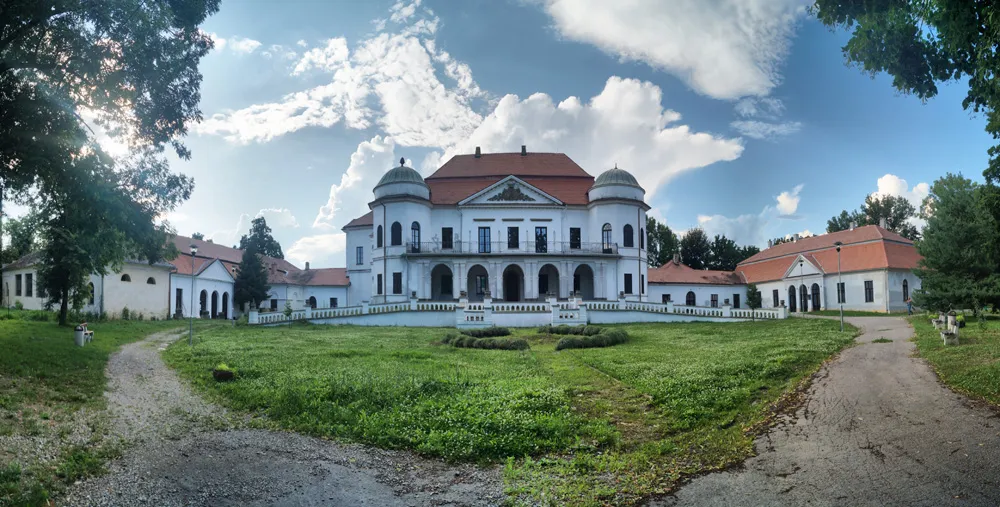
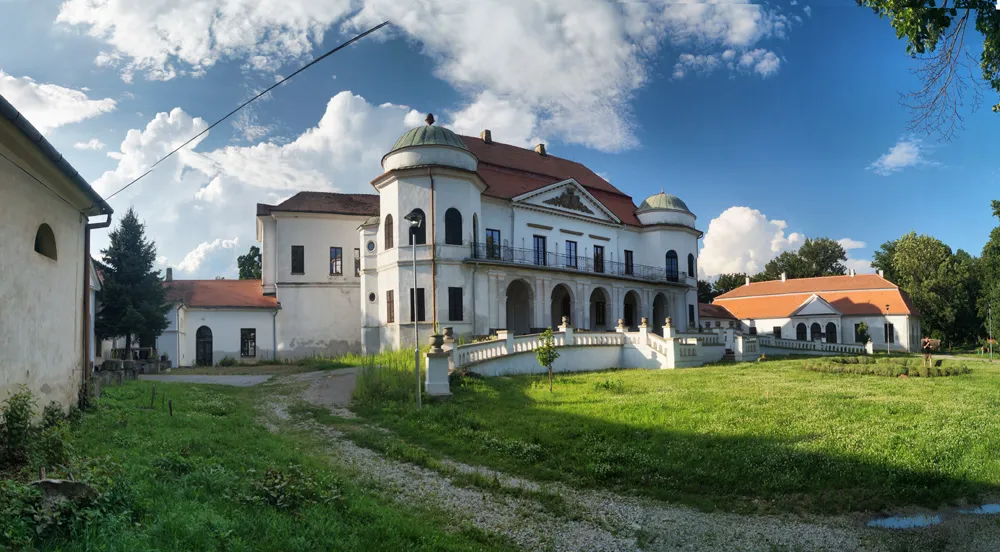
The Staray Palace
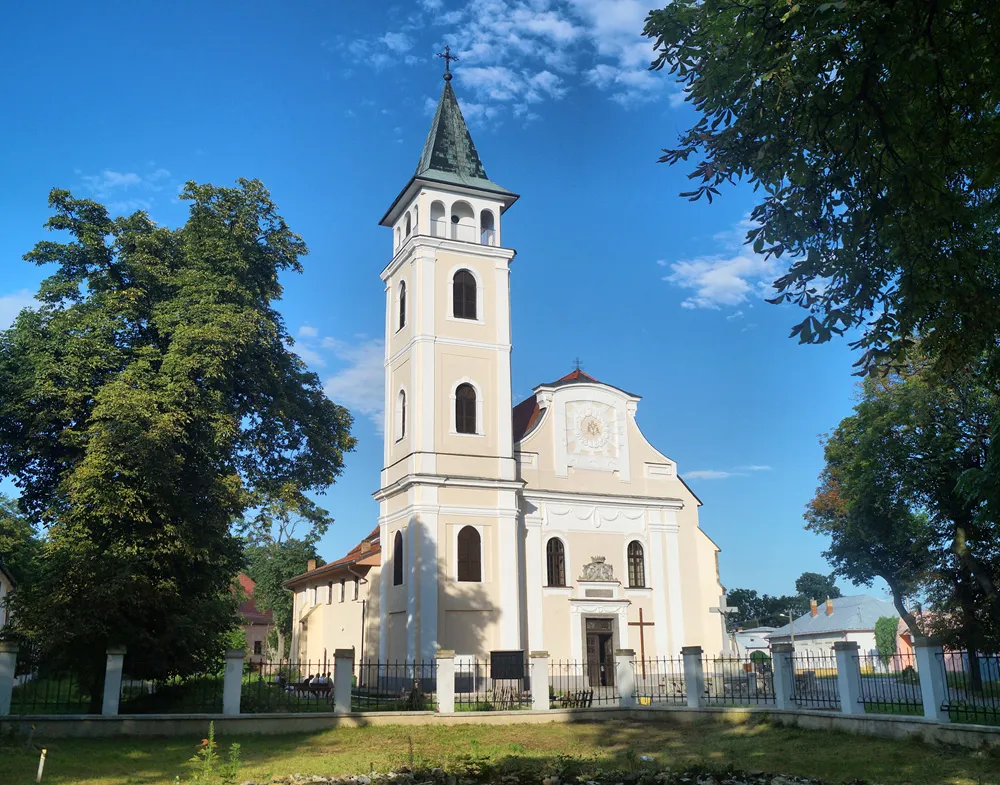
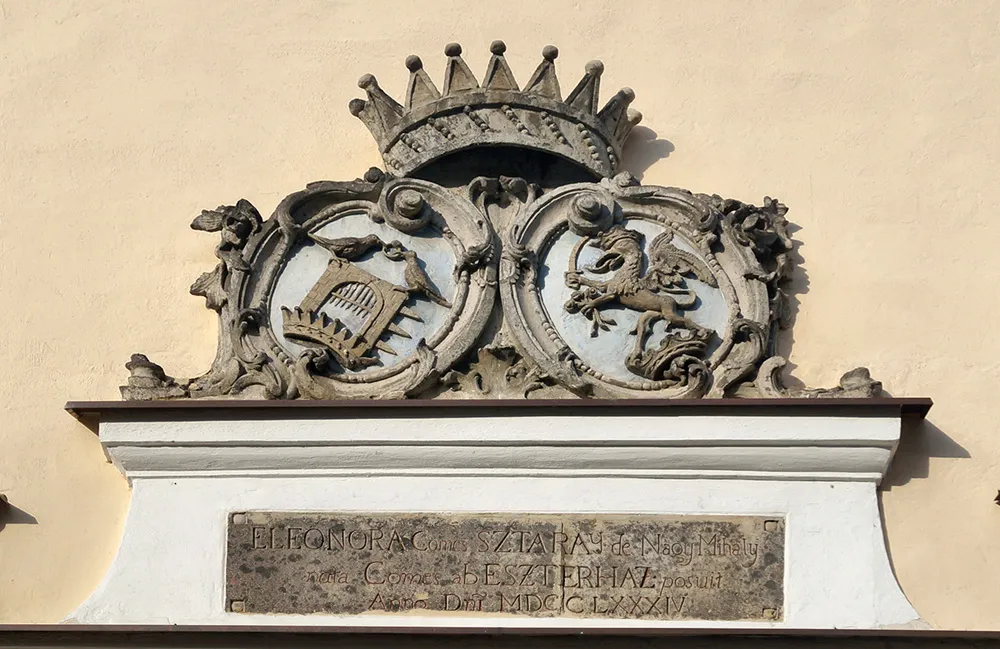
Roman Catholic Church of the Virgin Mary.


