Turkey. Western Cappadocia. The underground city of Gaziemir

· 3 min read
Besides the best-known underground cities of Cappadocia (Derinkuyu, Kaymakli and Özkonak), many more such underground settlements are hidden in this region. Their exact number remains a mystery, since new ones are constantly being found. Not long ago, in 2014, another huge one was found by chance: Gaziemir. It is located 50 km from Aksaray and 35 from Ihlara.
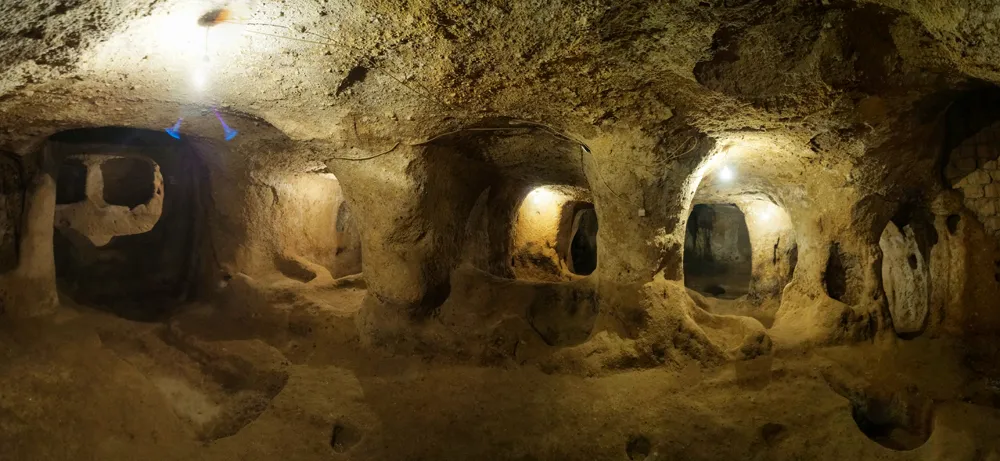
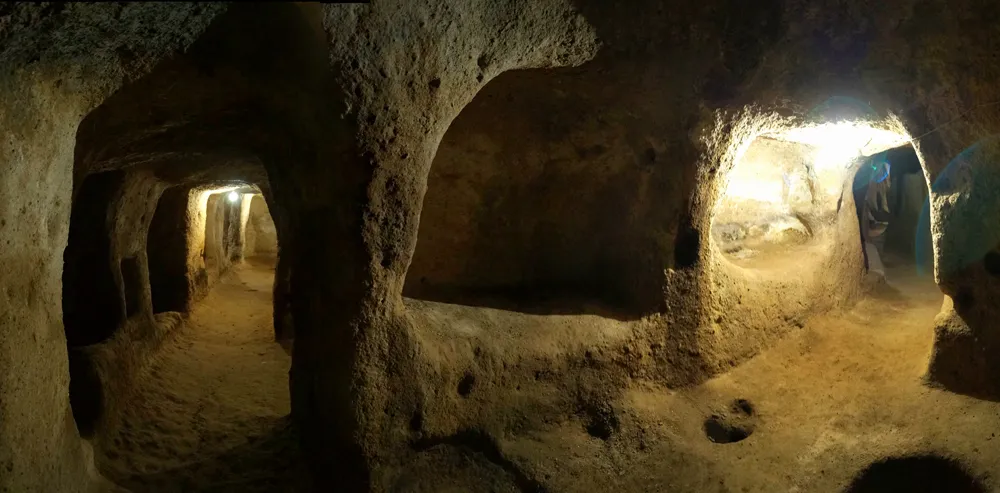
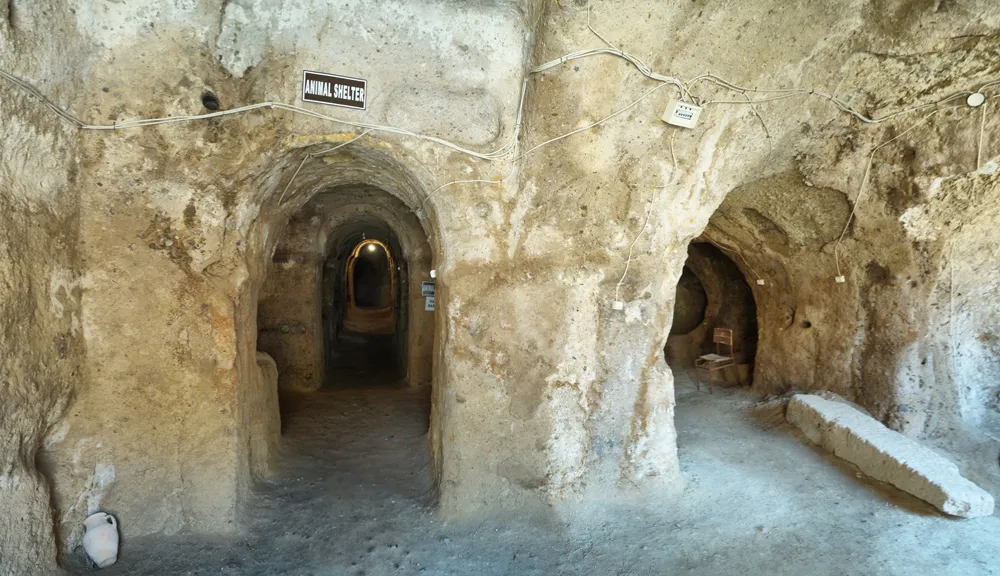
Gaziemir is not visited often. It lies not far from the road connecting the Ihlara valley with Göreme. Gaziemir differs from the other underground cities of Cappadocia. First of all, it lies close to the surface, so there is no need to descend into cave depths to visit it. Moreover, the city is very spacious and has almost none of the narrow and low corridors well known to travellers who have visited Derinkuyu or Kaymakli. For these reasons Gaziemir seems an ideal underground city for people who want to visit such a place but are claustrophobic or have limited mobility.
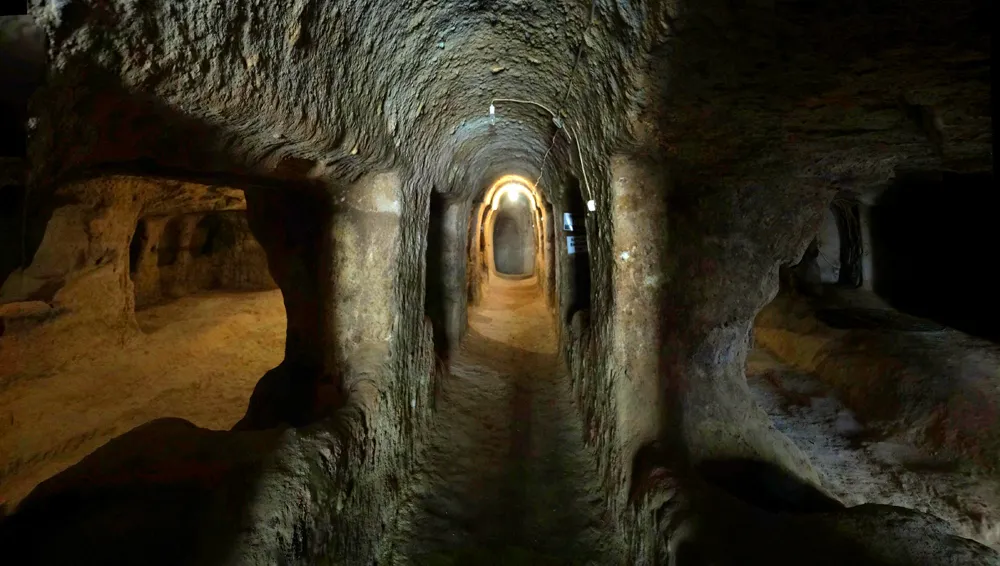
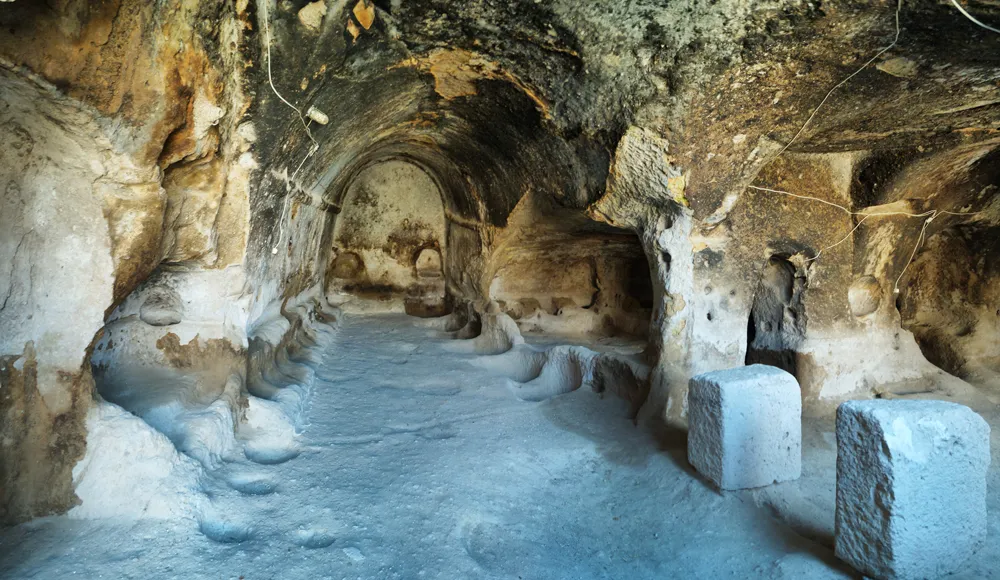
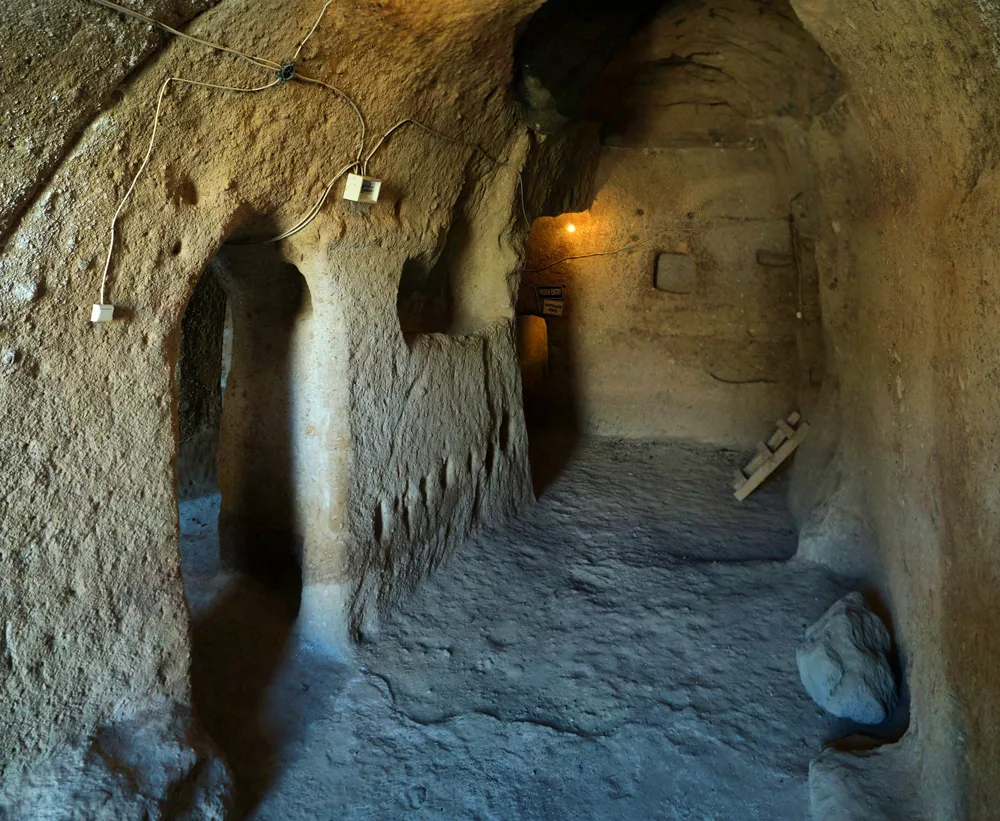
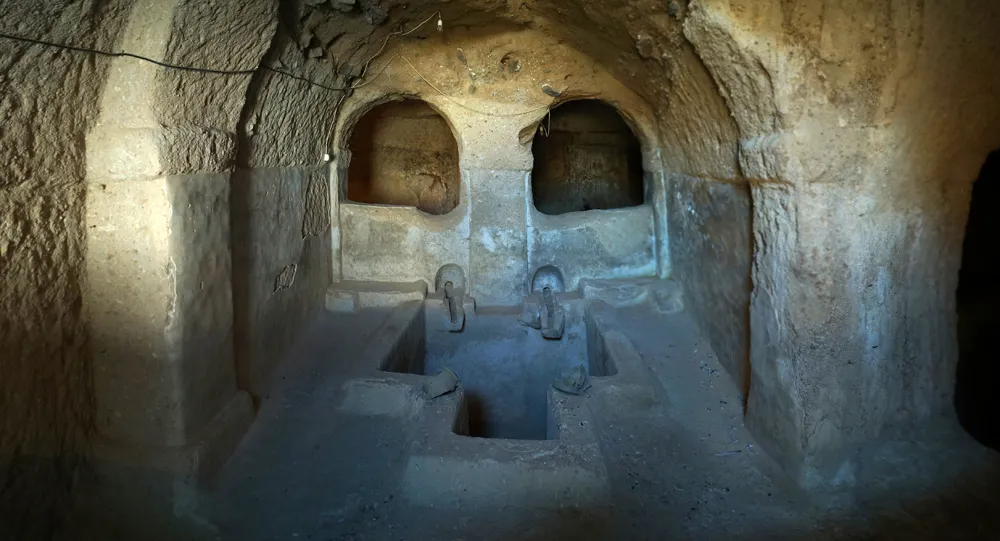
The unusual location of Gaziemir is also a reason for some researchers to doubt its real function. There are suspicions that it was not a typical underground city but rather a monastery, which was later turned into a caravanserai. This theory was put forward by the traveller and writer Pat Yale, who knows Turkey like the back of her hand and lives in Cappadocia. city.
Since written sources do not mention Gaziemir, any information concerning its history is the result of archaeological research, observations and comparison with other similar structures, as well as speculation and guesswork.
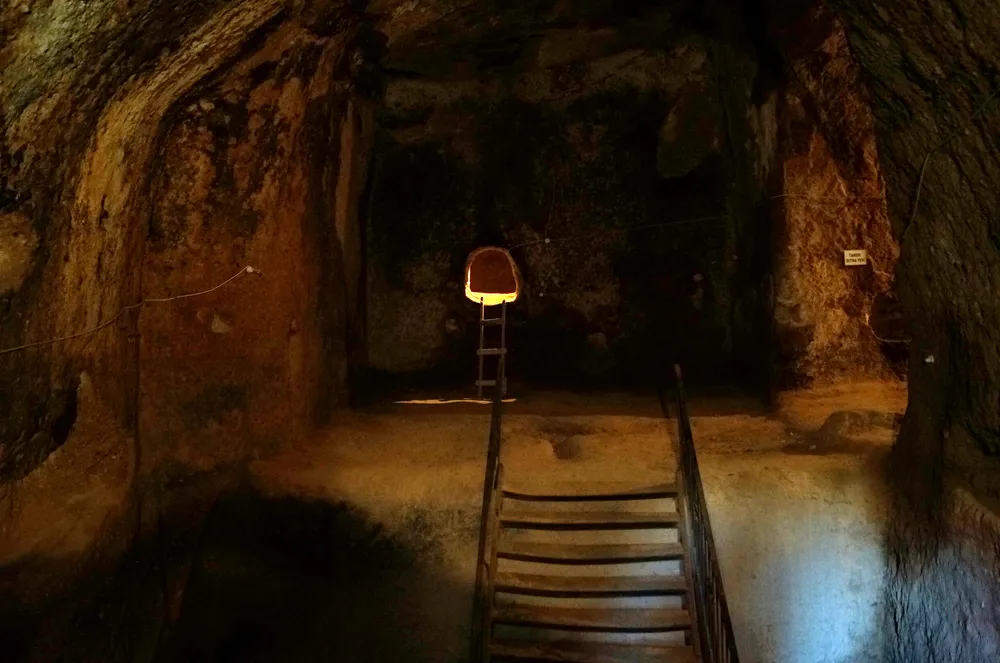
The history of the Gaziemir underground complex goes back at least to the Hittite period, that is, the second millennium BC. Moreover, Gaziemir has a tunnel built using a technology characteristic of Hittite architecture. A very similar tunnel can be seen in the Hittite capital, Hattusa. There is an underground passage known as Yerkapı, made at the beginning of the 14th century BC.
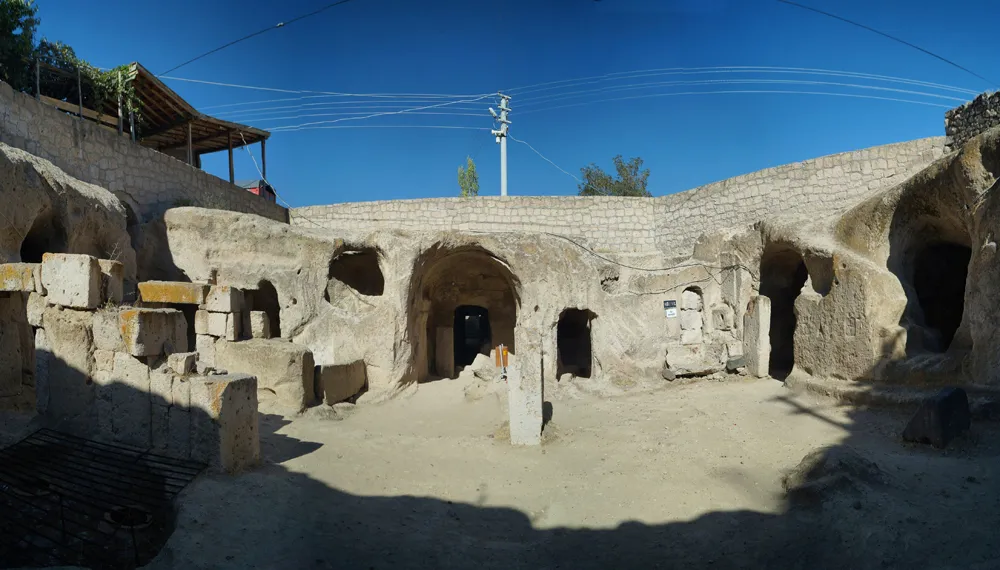
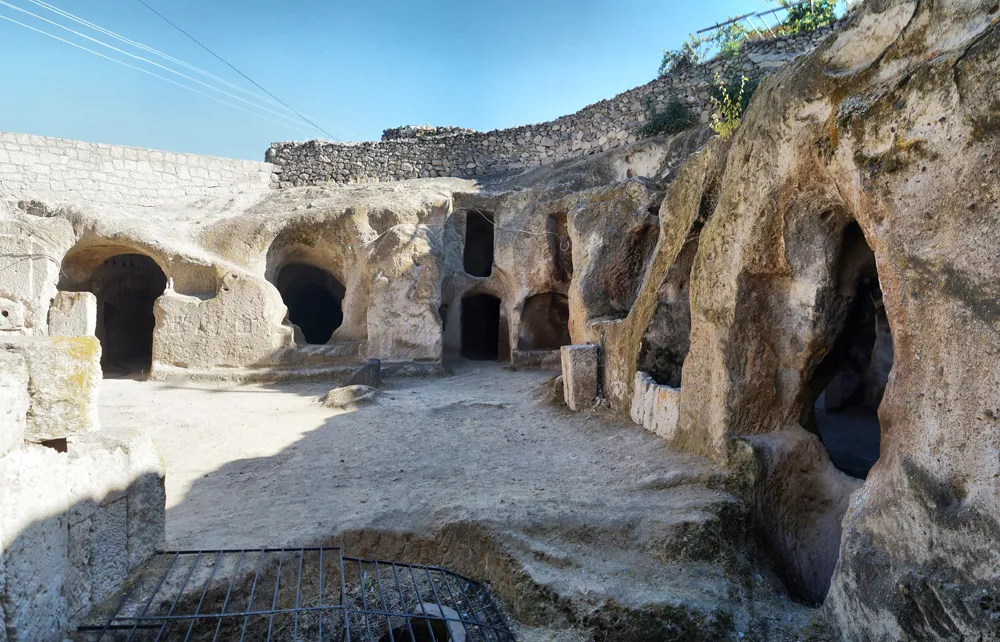
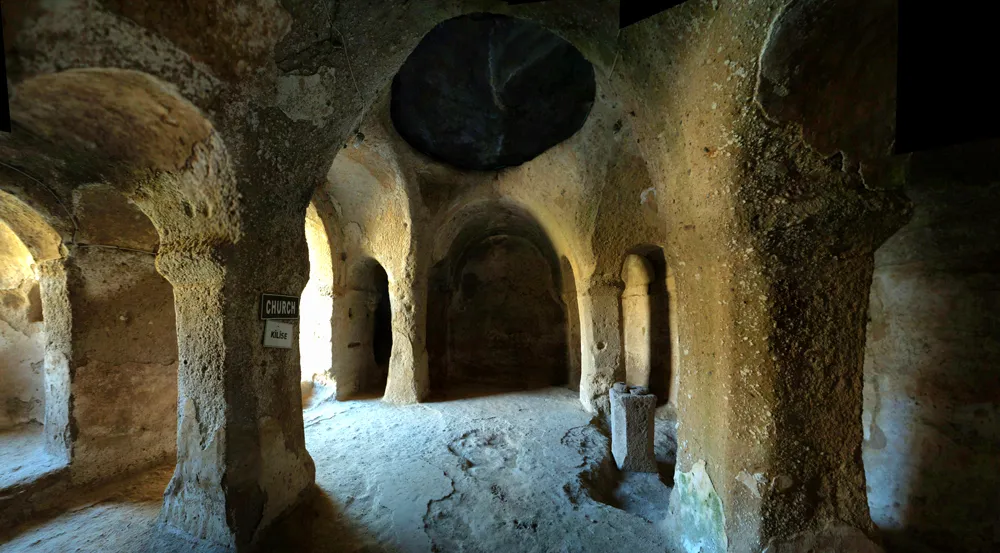
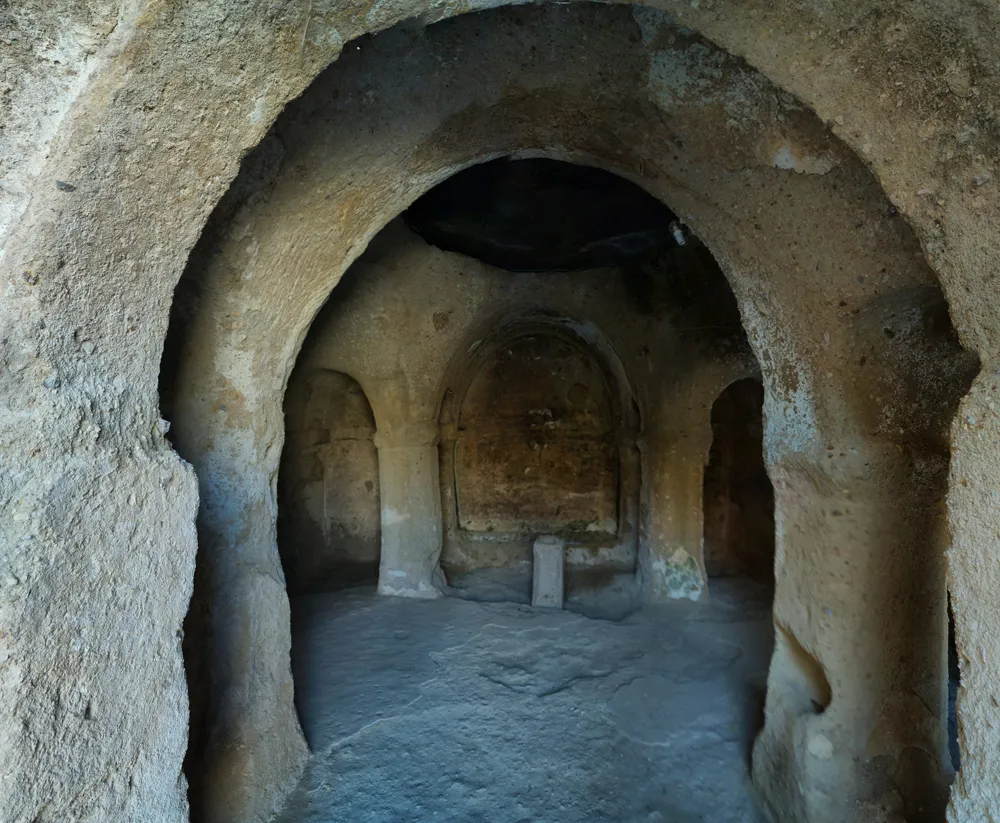
During the work carried out at Gaziemir to open it to visitors, many traces were found testifying to its use in the Byzantine period. This is shown by two underground churches, a wall with carved crosses and a bath in the floor which could be reached by steps. An information plaque identifies it as a tank for wine production, but its appearance suggests rather a baptistery.
In later times, after the conquest of Asia Minor by Turkish tribes, Gaziemir served as a caravanserai, that is, an inn for travellers. The caravanserai had food stores, a Turkish bath, ovens for cooking and a multitude of sleeping rooms. Many passages are so wide that even camels could pass through them freely. Their presence at Gaziemir is attested by camel bones and by stables where they could be tied to the wall.
Gaziemir is divided into two parts. The first resembles a typical underground city of Cappadocia, although it has only two levels open to visit. Across the road there is a much more interesting structure. After passing through the tunnel mentioned above, visitors enter a central courtyard surrounded by various rooms. In this part one can visit a monastery of the Byzantine period, a mysterious tank or baptistery.
The only place where people who suffer from claustrophobia may have difficulty is a narrow and dark tunnel leading to a room called the prison cell. This place is completely cut off from sunlight.
Text from the website of Turkish Archaeological News, photos by Roman Malenkov.