

Bilenke. The Myklashevskyi manor

· 6 min read
The village of Bilenke is located in the Zaporizhzhia district of the oblast. A few years ago Bilenke made headlines across the country, because it was here that a modern river transshipment terminal was opened. The solemn event was attended by the then prime minister, representatives of the European Bank for Reconstruction and Development, the Dutch ambassador to Ukraine Kees Klompenhouwer and many other prominent figures. The opening of the terminal is an extremely important event, but today we will talk about another, no less interesting site — the Myklashevskyi manor. It rises literally a few metres from the huge metal “tanks” and was built almost two centuries ago in the Neo-Baroque and Neo-Renaissance styles.
The first mentions of Bilenke date to 1770. Its founders are considered to be Zaporozhian Cossacks and peasants. In 1802 the village became the property of Governor Mykhailo Myklashevskyi. He had been appointed civil governor of the Katerynoslav Governorate, which at that time included the territory of present-day Zaporizhzhia and Dnipropetrovsk oblasts, as well as parts of today’s Kirovohrad and Donetsk oblasts.
“Myklashevskyi bought the lands from Field Marshal Mykhailo Kamenskyi. It was Mykhailo Myklashevskyi and his descendants who made considerable efforts so that the village would develop. At their expense the village got a paramedic station, a parish school and a church. In addition, an agricultural school and a meteorological service were opened here, and a land bank appeared in Kherson,” says the local historian Petro Kraliev.
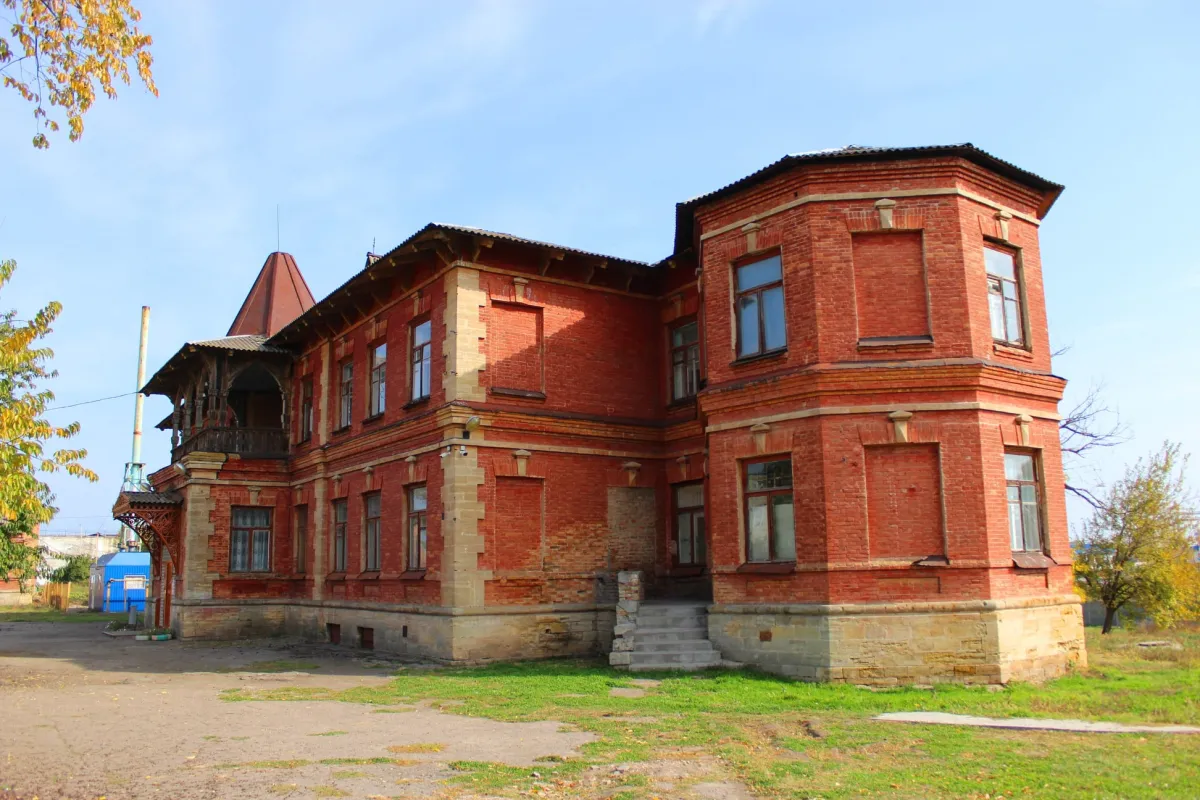
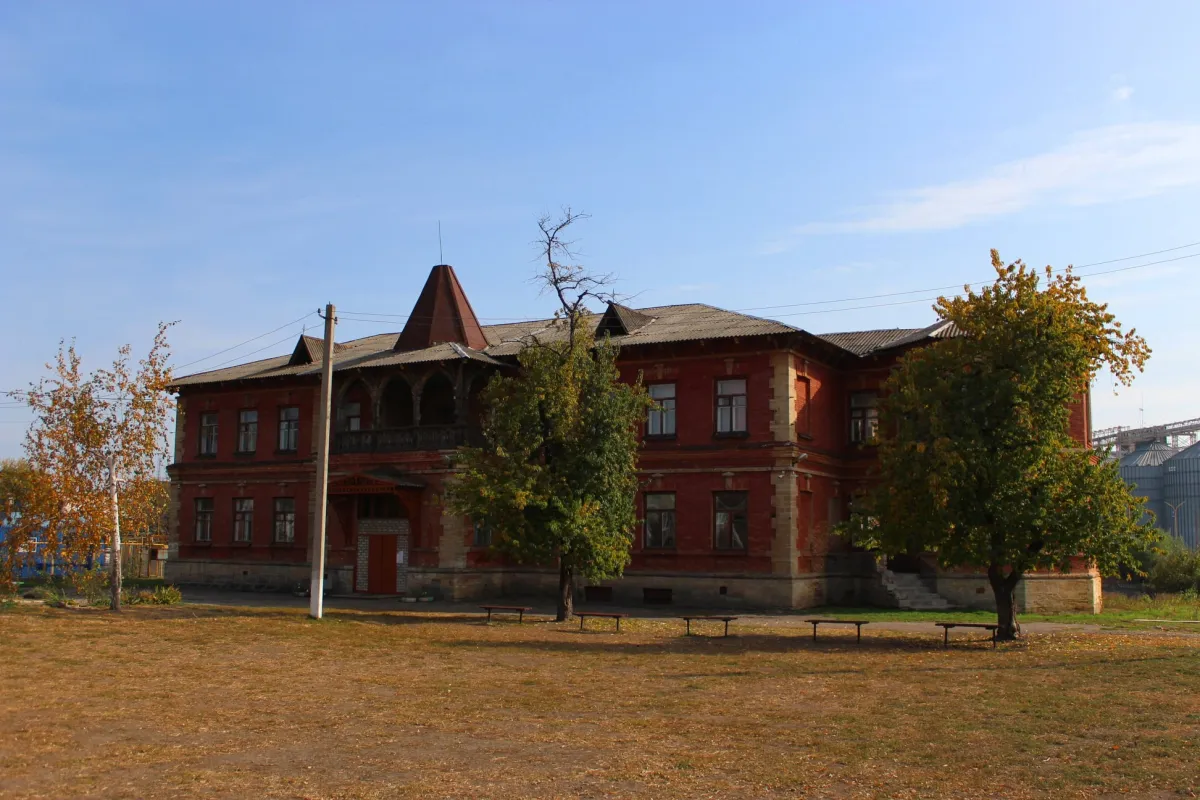
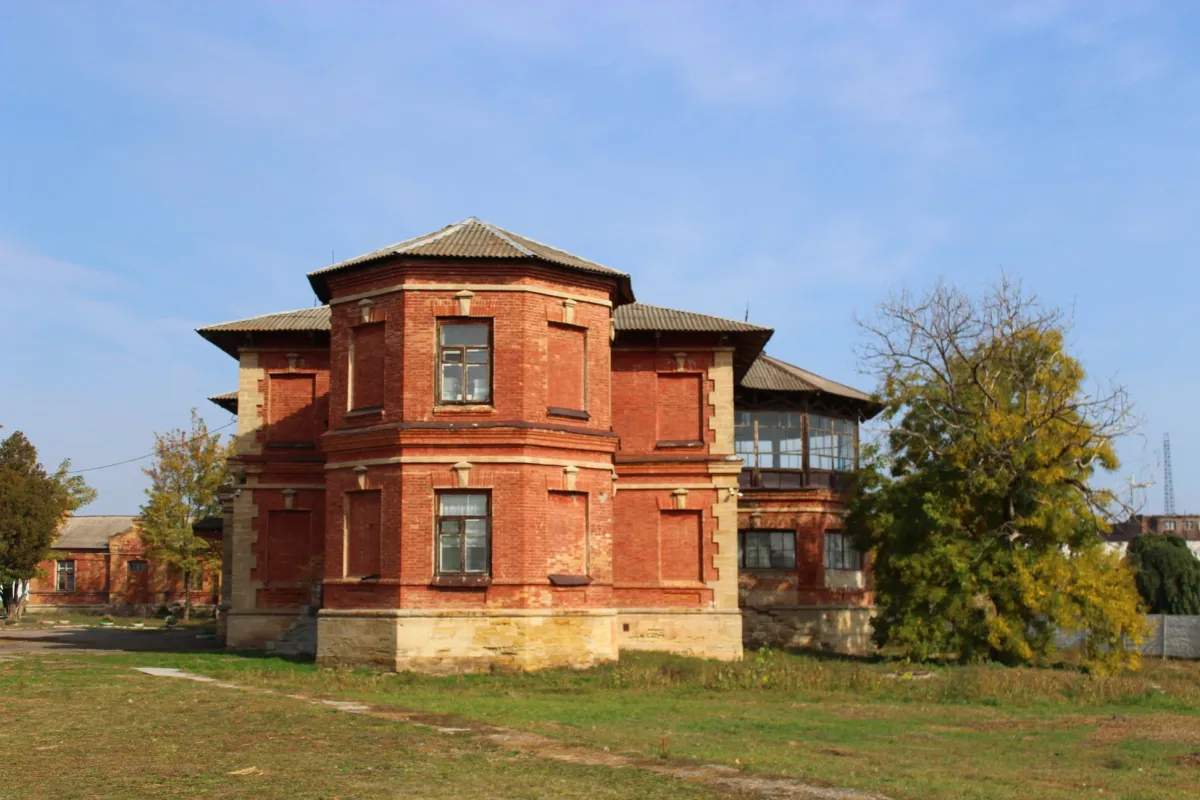
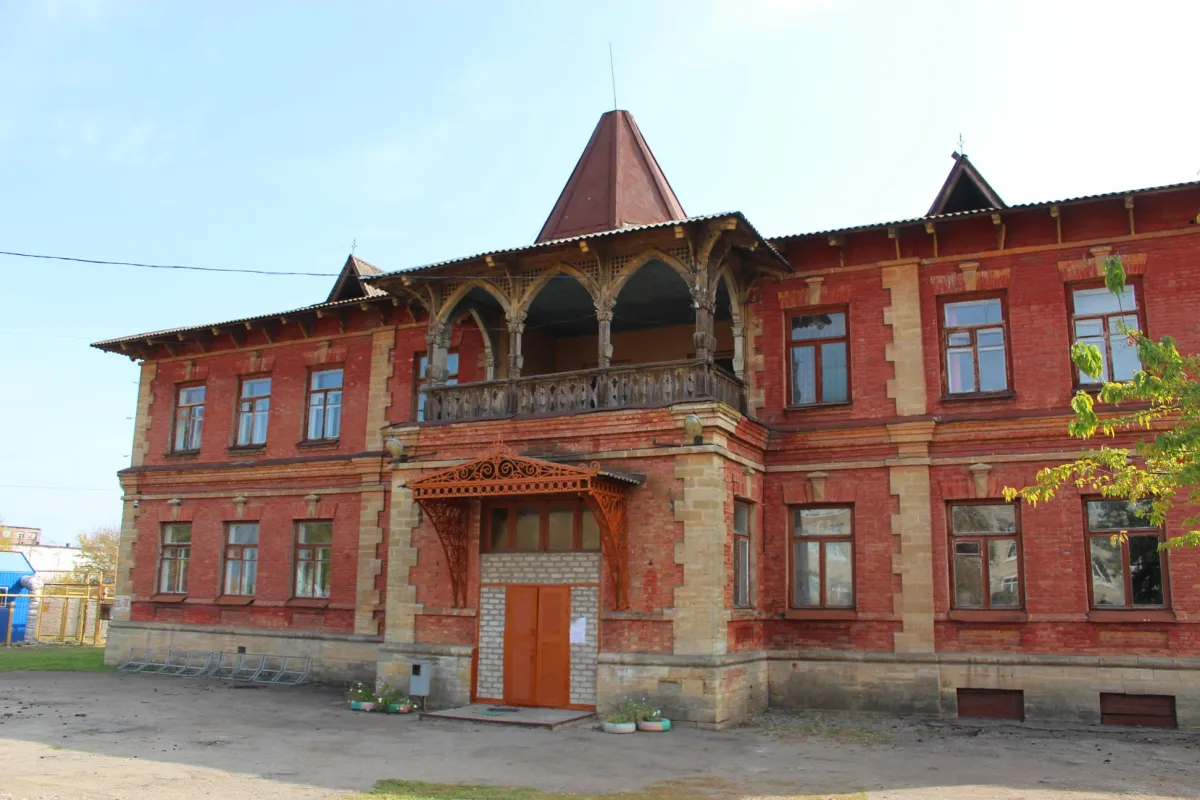
Petro Ivanovych and I agreed to meet on the grounds of the Bilenke school. As it turned out, it is located in the Myklashevskyi manor. The estate, built to a design by the architect Ferdinand Hagen, is still in excellent condition.
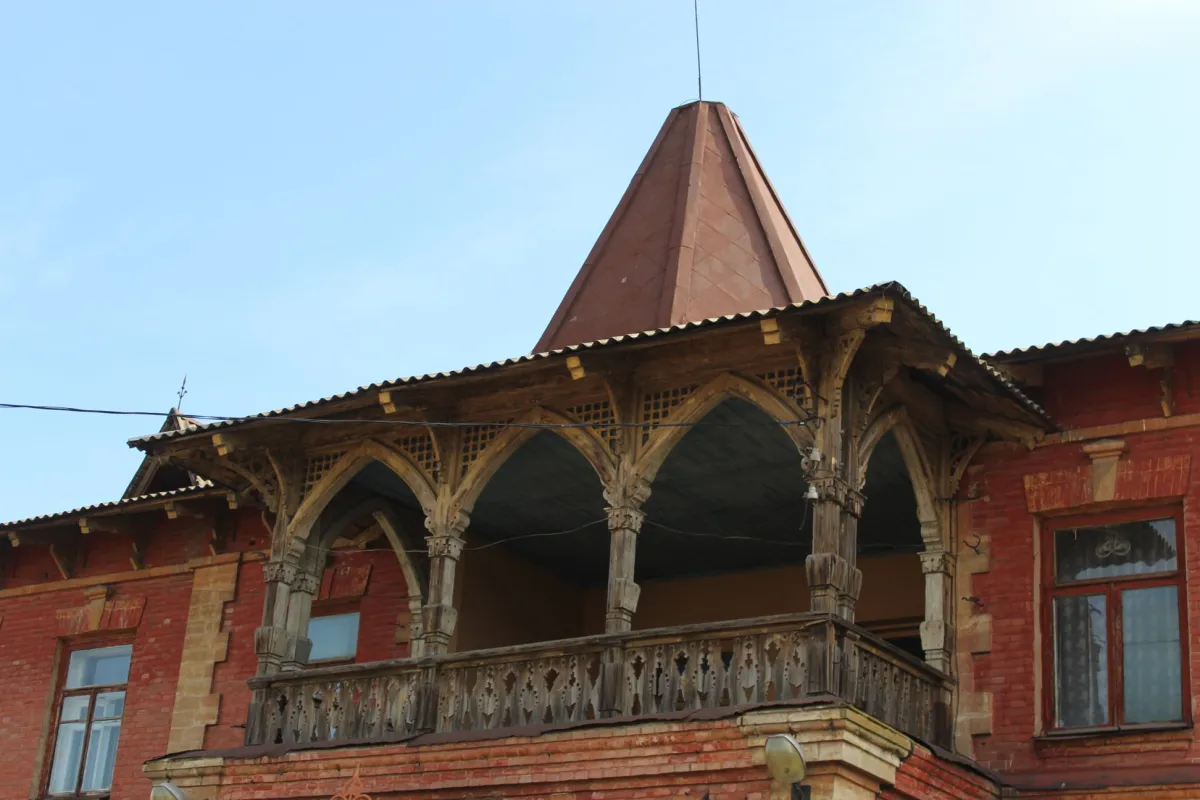
The design of the estate is in the pseudo-Russian style popular at the time, complemented by Neo-Renaissance features and oriental motifs. On the grounds of the manor there was once an English park with fountains and a panorama, and on the bank of the Dnipro a river landing stage.
“By my calculations, this manor is already the third one of the Myklashevskyi family. I found data that in 1806 there was a flood that washed away the church, the village and the landowner’s manor; 500 desiatinas (one desiatina is a hectare and 9 ares) were also washed away. Most likely, the landowner mentioned was Myklashevskyi,” the historian says.
He also showed us the Myklashevskyi family coat of arms, which still adorns the estate.
“The Myklashevskyis are an ancient Ukrainian noble family that traces its origin to Grand Prince of Kyiv Mstyslav, the son of Volodymyr Monomakh, and to the Lithuanian prince Gediminas. The Myklashevskyi clan was so numerous that it had as many as three coats of arms. One of them we can see on the estate building,” says Petro Ivanovych.
An underground passage that led all the way to the Dnipro has survived at the manor. However, for the last few years the entrance to the underground has been welded shut. It was closed on the order of the former school director because children found a machine gun, rifles and other weapons underground — an arsenal left over from the last war. By the way, during the Civil War the headquarters of Nestor Makhno was in the estate itself for four months.
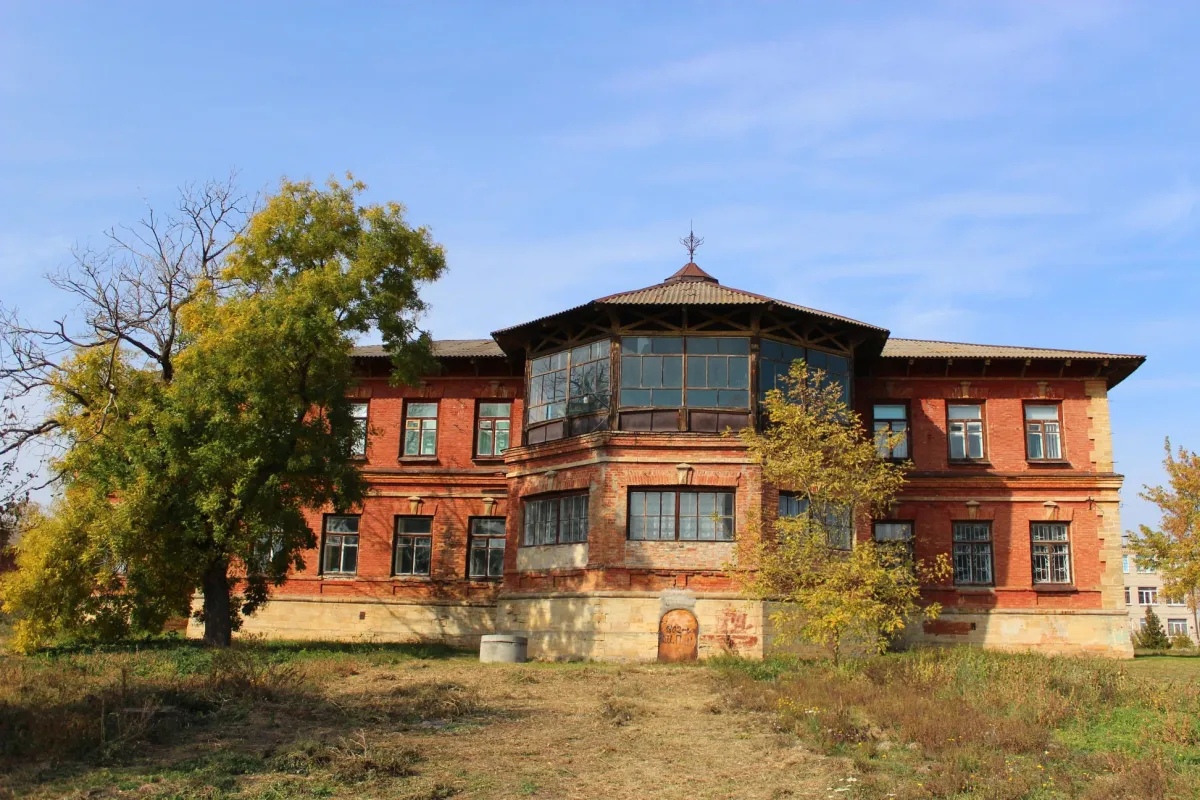
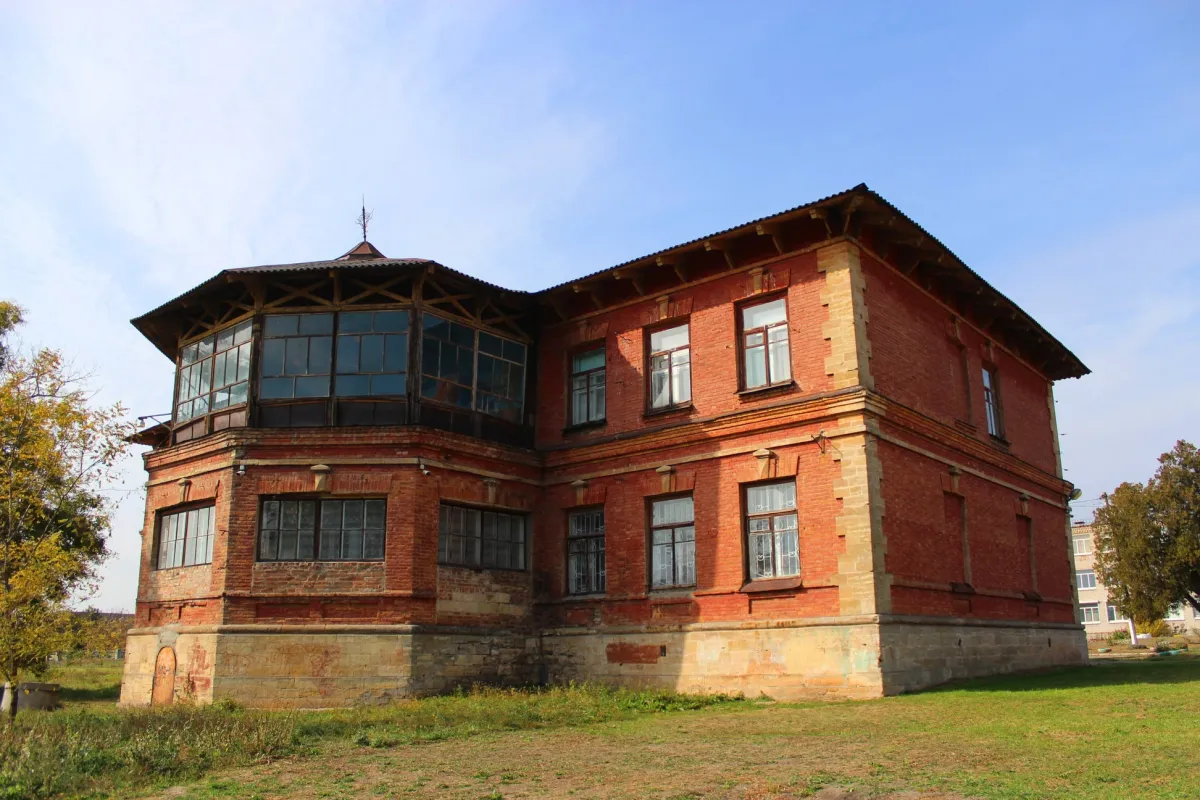
Tiles, stucco, the wooden decorative finish of the balcony — all this has survived almost in its original form. Although there were times when the villagers almost “carted off” the estate to their homes. Some wanted to steal the Gothic stucco from the dance hall (now a gym).
“And this is a real work of art,” says Petro Kraliev during a tour of the estate, pointing at a metal spiral staircase.
“They say that by climbing it you could see the Popov estate in Vasylivka. Exactly the same staircase is in the vocational school — it is also located on the territory of the manor,” the historian explains.
Mykhailo Pavlovych himself was governor only briefly. In 1809 he was invited to St. Petersburg, and from 1812 he was appointed a senator. He held this post until 1818, then decided to take a year’s leave because of his health, went to his homeland, but never came back. He lived to be 91; historians call him a man of European calibre.
In confirmation of this, Kraliev took a whole pile of archival materials out of a folder. One of them is dated 16 October 1808, and it says:
“This landowner, for the well-being of his people, has established a parish school for teaching children according to the established rules of public education. Besides this, an infirmary or hospital has been set up in a particularly good house for 40 persons of both sexes, at which a doctor is kept and there is an adequate pharmacy and staff; food for all the sick is supplied from the estate, fitting and sufficient. Useful vaccination against smallpox is also practised here.”
Petro Kraliev commented that Mykhailo Myklashevskyi founded a school and a pharmacy and also introduced smallpox vaccination.
“He kept two doctors and paid each of them 3,000 rubles. That is on top of housing and food costs. For comparison, I will say that at that time the governor of the Taurida Governorate received 3,000 rubles a year. Myklashevskyi could afford to keep doctors. His family lived in Bilenke and he wanted to protect it from epidemics, so people had to be looked after and treated,” the historian explained.
Mykhailo Myklashevskyi had 9 children (five sons and four daughters). He dreamed of leaving the estate to his eldest son Oleksandr, but it was not to be.
“His son was a Decembrist, he was arrested, then ended up in the Caucasus and died in 1831. Myklashevskyi buried his son in his homeland — the Starodub region (now Bryansk Oblast of the Russian Federation). He also built a church in honour of Alexander Nevsky in memory of his son,” the historian says, adding that the manor remained with two other sons — Andrii and Pavlo.
By the way, it was Andrii who took part in preparing and carrying out the reform of 1861 (the abolition of serfdom). Pavlo proposed creating special educational institutions — agricultural farms whose pupils could in future command both agronomic and craft knowledge. For founding such farm-schools he donated 2,000 rubles, 200 desiatinas of land and 100 rubles of annual scholarship. For comparison, in 1866 a cow could be bought for 10–15 rubles.
“Peasant children must be given an education, and above all a vocational one, otherwise we will raise thieves and swindlers. Agricultural farms must be set up,” the historian Kraliev quotes Myklashevskyi.
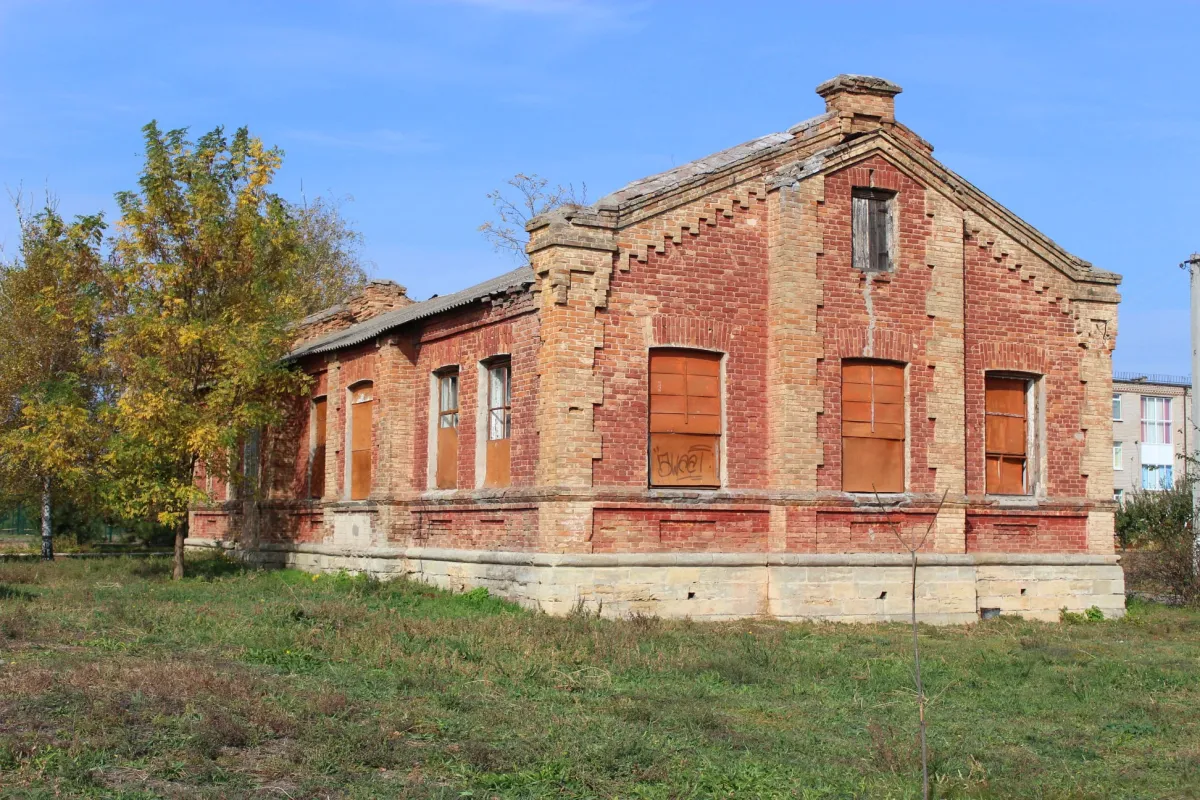
Bilenke also had a cooperage and a tar works, and a tallow-rendering enterprise.
Pavlo Myklashevskyi built a church in the village, in which he was also buried. However, in 1939 the church was destroyed and Pavlo’s remains were thrown onto a rubbish heap.
For a long time the Myklashevskyi house held a school, and after the revolution of 1917, right up to 2005, a sewing workshop. At present one of the rooms has again been given to the school, and in another there is a church of St. Nicholas the Wonderworker.
In the early 2000s the district department of culture and tourism drew up a passport (historical note) of the Myklashevskyi estate. In 2009 the site received the status of a monument of history and architecture of local significance.
Text: Olha Zvonarova. Ukrinform. Photos: Maksym Nazarenko.


