On the Latin correspondence of the Cossacks and European monarchs: one of the heroes of our history, Yurii Nemyrych

· 26 min read
The story of how one of the wealthiest men in the Kyiv region fought in the Polish, Swedish and Cossack armies, had outstanding gifts as a mathematician, wrote several profound scholarly texts, concluded a treaty with Sweden that recognized the independence of the Ukrainian state, drafted and tried to defend an agreement to create something similar to today’s European Union, and was equally hated by the Poles and the Muscovites, for which he was killed…
Moreover, most of this happened literally in the last few years of his turbulent life.
Yet it all began so beautifully and glamorously that it was hard to imagine anything like it.
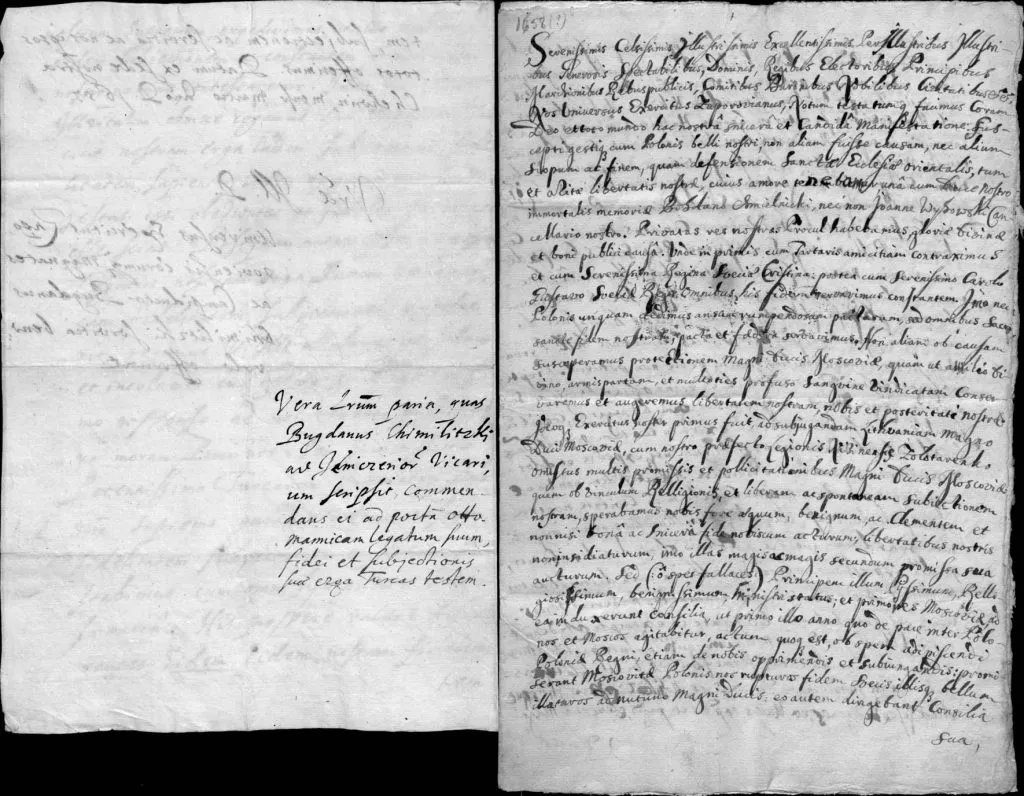
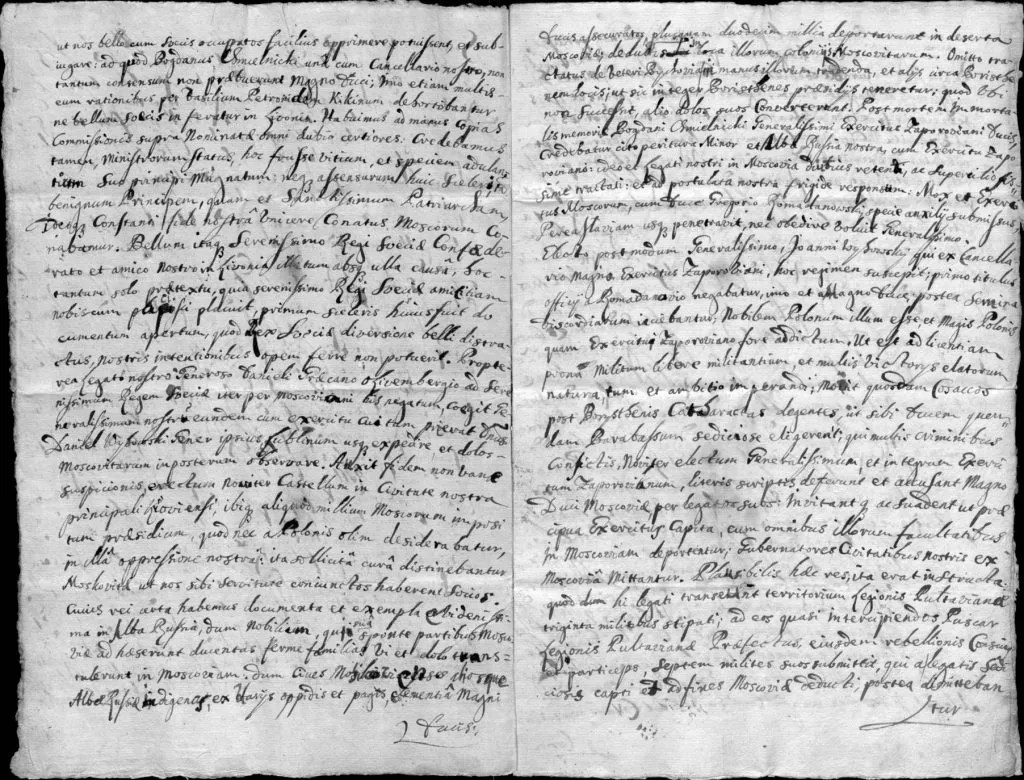
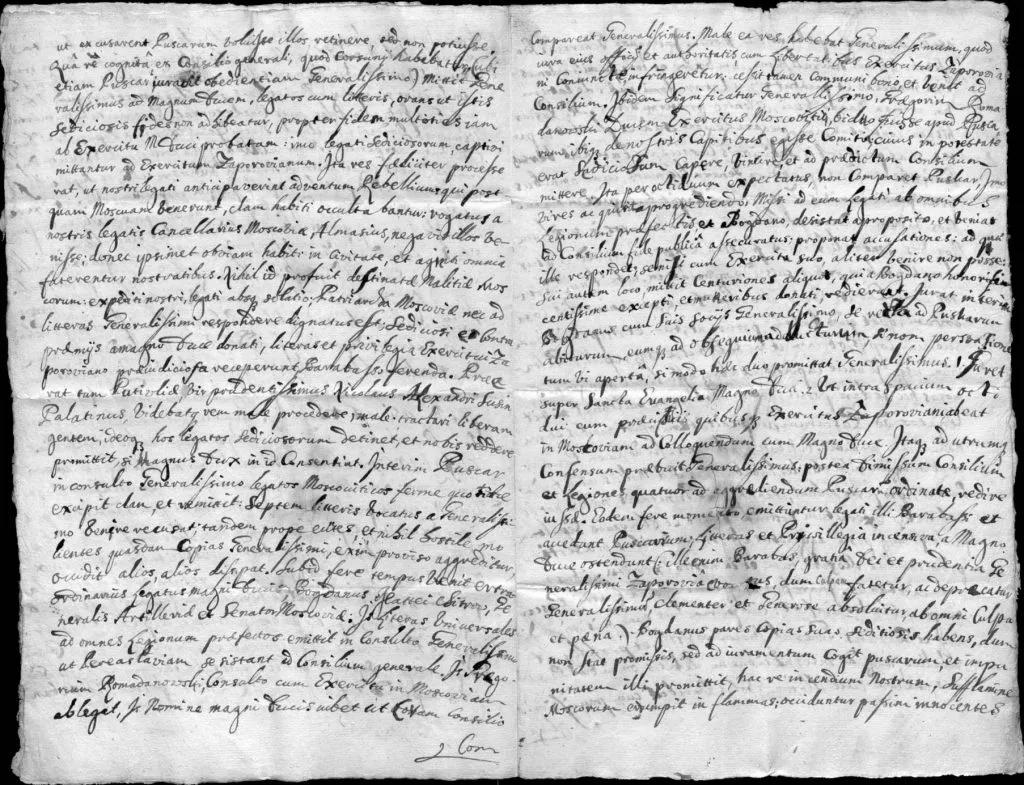
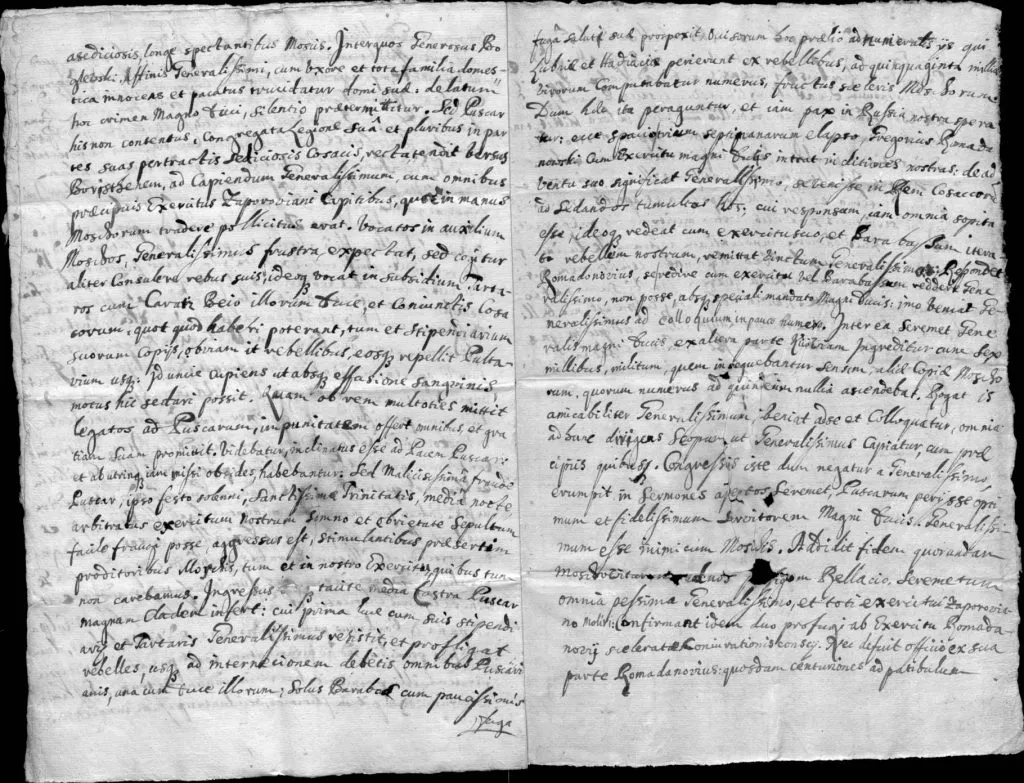
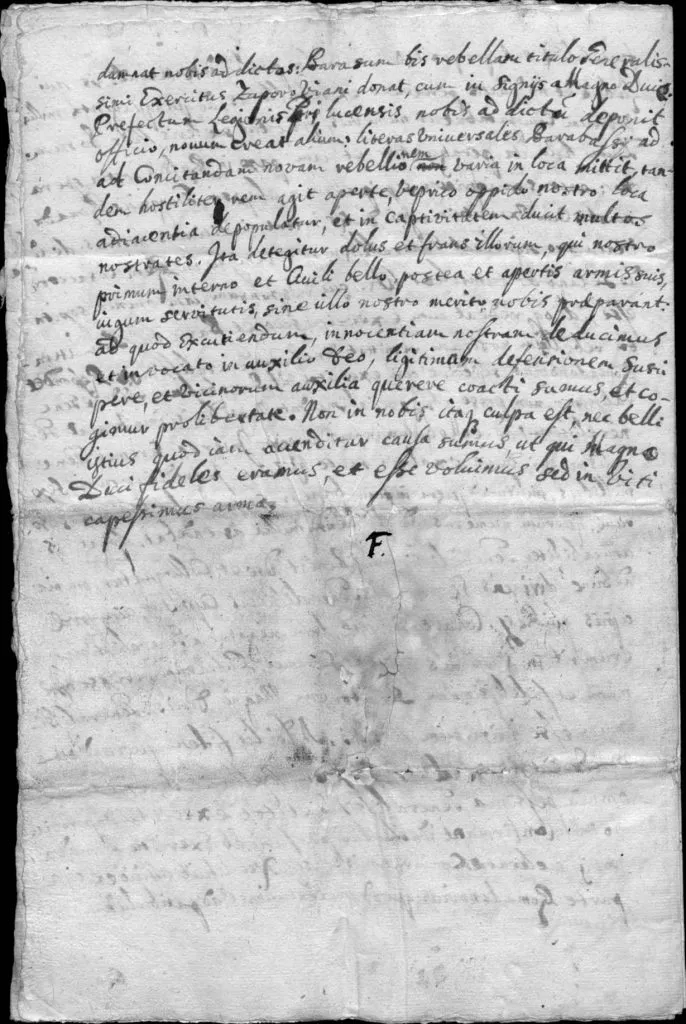
I found a manuscript written personally in the hand of Yurii Nemyrych. In the Swedish archive in Stockholm, where the history of the Cossack era is kept in a special collection called “Cosacica”:
An address of the Zaporozhian Host, as an independent state, to foreign rulers explaining the break with Moscow, the reasons for the Muscovite offensive against the Cossack state, their treachery, their desire to destroy independence and violate treaties, and a call to the European community not to stand aside but to respond jointly to Moscow’s military encroachments in 1658:
MANIFESTO
ON BEHALF OF THE ZAPOROZHIAN HOST TO FOREIGN RULERS, EXPLAINING THE REASONS FOR THE BREAK WITH MOSCOW
of October 1658
HISTORIOGRAPHY.
Many historians have written about Yurii Nemyrych: O. Subtelny, N. Yakovenko, G. Vernadsky, V. Lypynsky, V. Horobets, M. Slaboshpytsky, N. Polonska-Vasylenko, V. Zhuk, T. Chukhlib, D. Doroshenko, I. Krypiakevych, V. Antonovych, M. Hrushevsky and many others, so there would be little point in adding anything to the biography of this outstanding Ukrainian political figure.
Although most historians concentrated mainly on his religious affiliations and the hardships connected with them, and later on the preconditions and the text of the Treaty of Hadiach of 1658 itself. It was meant to unite, by forming a new federal union, the states that until then had been part of the Polish-Lithuanian Commonwealth. This federation, whose structure was modelled on the Dutch or Swiss pattern, was to be headed by an elected king, and its constituent states were to be Poland, the Grand Duchy of Lithuania (Belarus and Lithuania) and the Grand Duchy of Ruthenia (Ukraine). Whereas at first the leading role in drafting the Union project was assigned to Ivan Vyhovsky, now most prefer to credit the extraordinary abilities and education of Yurii Nemyrych, who most likely was its author, and later its official defender in the Sejm.
So in this post I want to speak not so much about Yurii Nemyrych himself as about two texts of his authorship (I found them in archives and am adding scans of the originals: his manuscript of 1658 and the text of his speech of 1659).
BIOGRAPHY.
✒ Interesting historical facts:
the Ukrainian noble family of Nemyrych can be traced in the archival documents of the Kyiv region from 1528. At the end of the 16th century it split into two lines, Cherniakhiv and Olevsk. The best-known members of the family were Yosyp Nemyrych, Kyiv land judge in 1580-1590, and Andrii, Kyiv land judge and founder of the Cherniakhiv line. The father of our hero, Stefan (died 1630), was Kyiv podkomorzy and a highly educated man, who in his time studied at the universities of Altdorf and Basel and took part in drawing up the Kurukove agreement of 1625.
That is why he sent his son to study in Europe, where he gained knowledge at the universities of Leiden, Basel (1630) and Paris, possibly also Oxford, Cambridge and Amsterdam (although, as I wrote in my large article on the studies of Ukrainians at European universities of that time, different sources give different data on some of these for Nemyrych, and some of the discrepancies are insignificant).
Later he became one of the founders of the academy in Kyselyn in Volhynia. He owned large estates on both the Right-Bank and Left-Bank Ukraine, kept private troops, at the head of which he took part in the victorious Polish-Muscovite war of 1632-1634 and in the war with Sweden. Yu. Nemyrych was Kyiv podkomorzy (a judge of the estate court of the nobility). In 1655 he joined the Swedish king Charles X Gustav and, appointed a general of cavalry, took part in military operations in Transylvania and Poland. Later he went over to Ukrainian service and was a sincere supporter of the political plans of B. Khmelnytsky, and even more of the European integration of our lands on favourable terms. Therefore he conducted lengthy negotiations with the Swedish government, which ended with the signing of the Korsun agreement of 1657, under which Sweden recognized Ukraine (the Zaporozhian Host) as an independent state.
Yu. Nemyrych received the rank of colonel, and after Khmelnytsky’s death he supported I. Vyhovsky.
This was when his finest hour came, as the author of outstanding texts of a statesman.
.
✒ It should be said that, given his education, he was already known in Europe for his texts, which he published in Paris, at the famous Sorbonne:
– “An Inquiry into the Muscovite War”, devoted to a comparative analysis of the political systems of Muscovy and the Polish-Lithuanian Commonwealth (1632),
– the Latin treatise “Description and Exposition of the Spiritual Arsenal of Christians”,
– the poem “Panoplia” (1653), and so on.
.
After the death of Bohdan Khmelnytsky he became, de facto, Chancellor of the Grand Duchy of Ruthenia, shared with Ivan Vyhovsky the heavy cross of governing the state, and headed foreign policy. This meant that his texts too acquired state significance.
A few months after the Hetman’s death he successfully completed the treaty with Sweden.
And a little later he drafted the project of the Union of Hadiach of 1658, which I wrote about above, and below I will briefly tell about the consequences.
His younger brother Stefan Nemyrych (1626/1630 – 22 December 1684) received the post of general of artillery, later became castellan and voivode of Kyiv.
Together with his brother he took part in the Battle of Konotop on the Sosnivka river near Konotop, which took place on 28-29 June (8-9 July) 1659. The united Cossack forces led by Hetman I. Vyhovsky, with the Tatars headed by Mehmed Giray, Polish detachments, and German, Hungarian and Serbian mercenaries (today it would be called NATO forces :)) opposed the advancing Muscovite armies commanded by O. Trubetskoy and G. Romodanovsky.
The Muscovites suffered a painful and shameful defeat and fled from Ukrainian lands with heavy losses and at the risk of burning Moscow again.
But after this victory, in August 1659, numerous traitors declared a switch to the side of the Muscovite tsar, and they undermined the might of the Cossack army and the Euro-integration plans of Ukraine of those years.
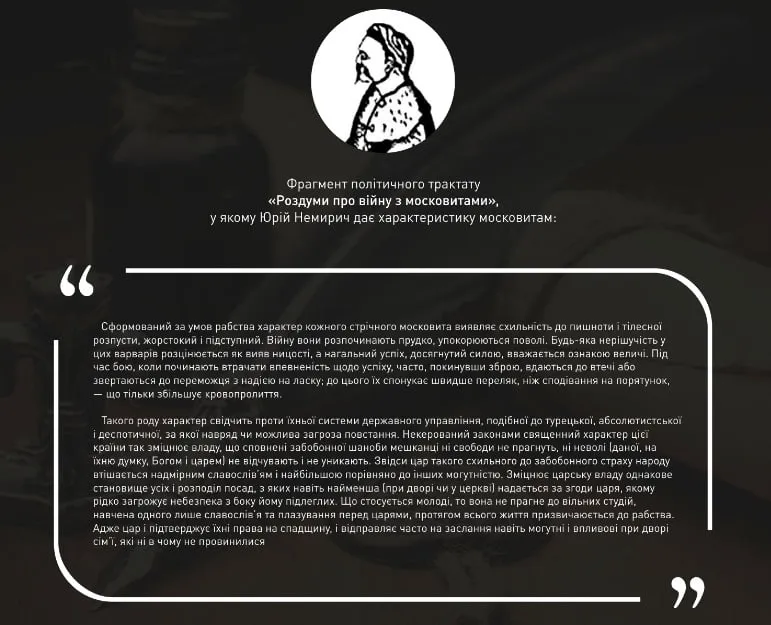
Published in Paris, at the famous Sorbonne: “An Inquiry into the Muscovite War”, devoted to a comparative analysis of the political systems of Muscovy and the Polish-Lithuanian Commonwealth (1632)
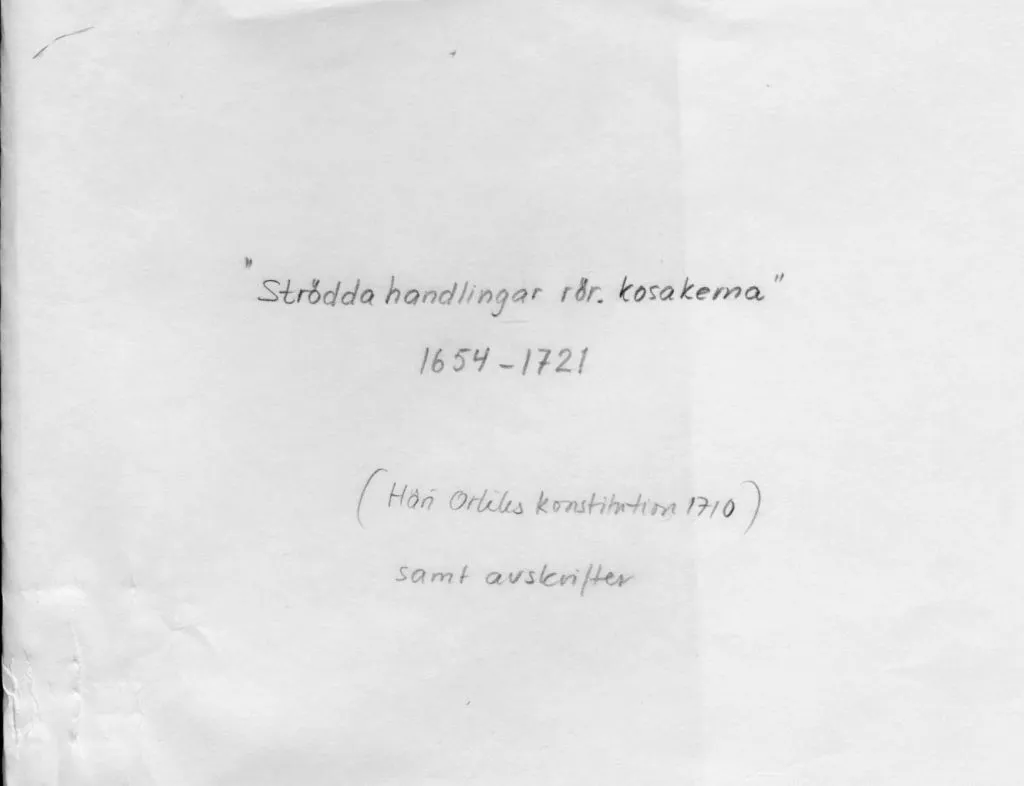
The title page from our archive in Sweden.
TEXTS.
Nevertheless, our hero managed to prepare and publish two extremely informative and important texts that can tell us a great deal about our history.
? I managed to find the first document in the Staatsbibliothek zu Berlin:
printed in German in 1659, it is a record of the speeches of Yurii and Stefan Nemyrych at the Sejm on 13 (23) April 1659, where they defended Ukraine’s European aspirations and, together with Matvii Patskevych, Havrylo Lisovsky, Fedir Vyhovsky, Kostiantyn Vyhovsky, Hryhorii Lisnytsky and Tymofii Nosach, headed the Ukrainian delegation for the ratification of the Union of Hadiach.
For now I give the text without a full translation, because the Gothic script is difficult, and I did not find a full Ukrainian translation by our outstanding historians (an analysis of the speeches at the Sejm can be read in N. Yakovenko, T. Tairova-Yakovleva and A. Bulvinsky)):
“Orationes Oder Reden/ Derer eine von dem Herrn Niemieryczen Kijowischem Podkomorzi Als Abgesandtem der Zaporowischen Kozaken und GroßFürstenthumbs Reußlandt/ den 23. Aprill dieses lauffenden Jahres. Die andere von dessen Herrn Bruder Steffan Niemieryczen Obr. über die Reuterey/ Commendanten des Schlosses Krakaw/ und Abgesandtem von der/ nach Außländischer Art dienendem Polnischen Kriegs-Heer; Auff diesem itzo wehrendem ReichsTage Vor Ihr. Königl. Maytt. und gantzem Senat, gehalten worden” (short summary follows):
“The state of Your Majesty is famed throughout the world for its freedom and is like the Kingdom of God, where both to fiery spirits and to the human race divine and human laws are given, with their free will preserved without the slightest violation, for all time since the creation of the world. Let other countries and states boast of their warm climate, their concentration of earthly riches, their abundance of gold, precious pearls and stones, their luxurious life; let them shine before the whole world like precious stones, like rings set in gold: their peoples do not know true freedom; forgetting that they are endowed by God with free will, they live as if in a golden cage and must remain slaves of another’s arbitrary will and desire. Nowhere in the whole world can such freedom be found as in the Polish crown. This priceless, incomparable freedom, and nothing else, now inclines us to unite with you…” “For so many years we served a cold monarchy, so it is understandable that we seek another fate and something better. It is a matter for higher powers: to raise someone above someone else… Today we declare before the high throne of His Majesty, as envoys of our serene hetman and of all the Zaporozhian Cossacks, that we give free peoples into his hand… We were born free, we were brought up free and we unite with you also as free men… Therefore let our union be indivisible, on the terms of equality of peoples, religions, languages and rights…”.
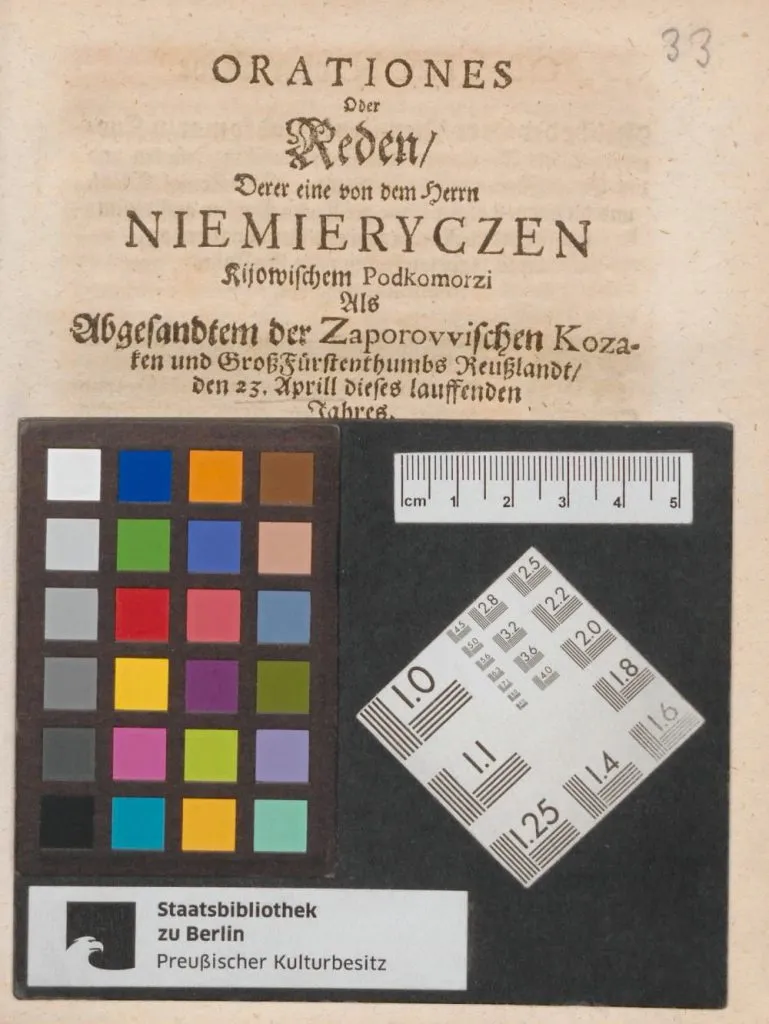
And this is now the German archive.
Staatsbibliothek zu Berlin: the text printed in German in 1659 is a record of the speeches of Yurii and Stefan Nemyrych at the Sejm on 13 (23) April 1659, where they defended Ukraine’s European aspirations. Translation above
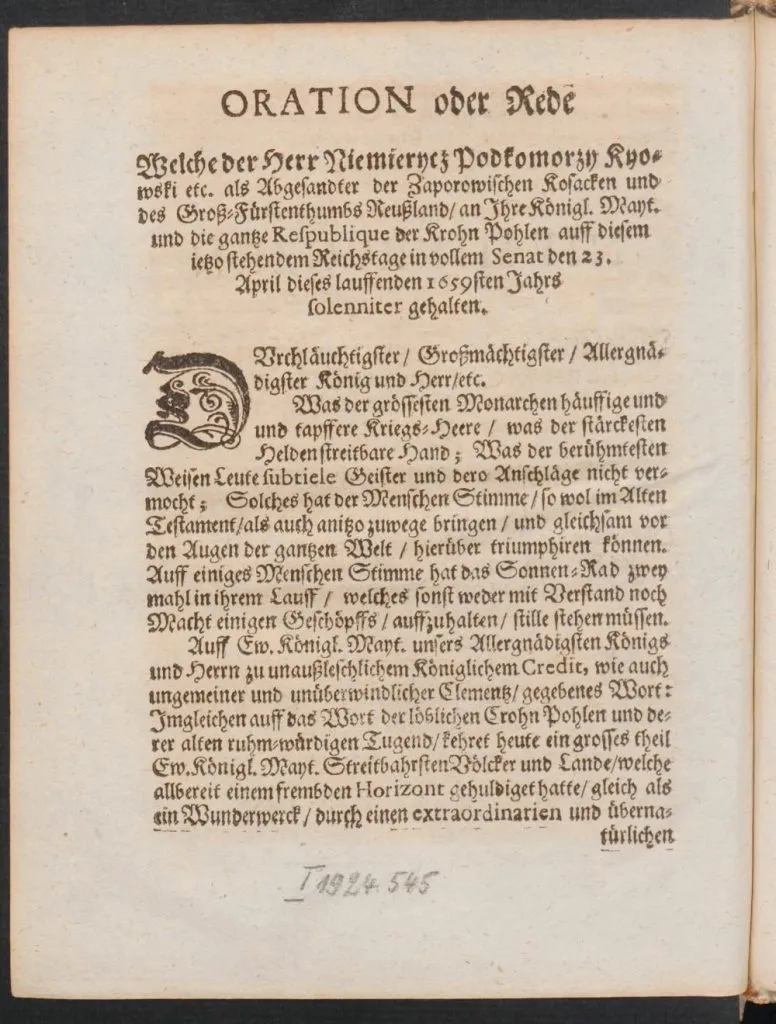
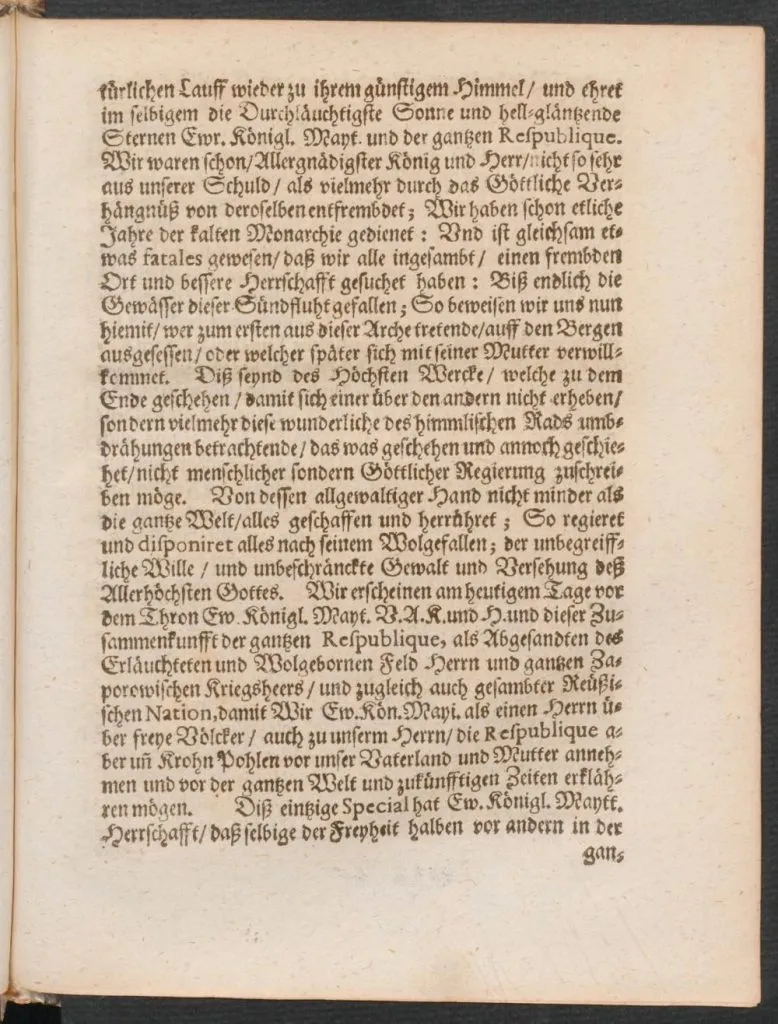
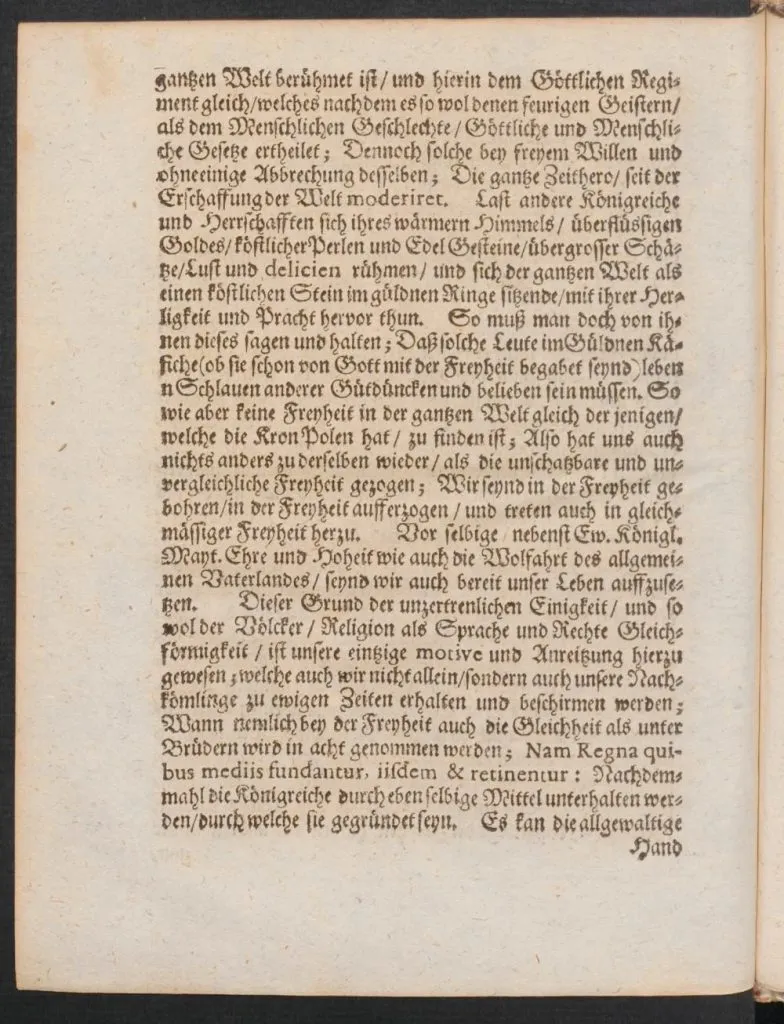
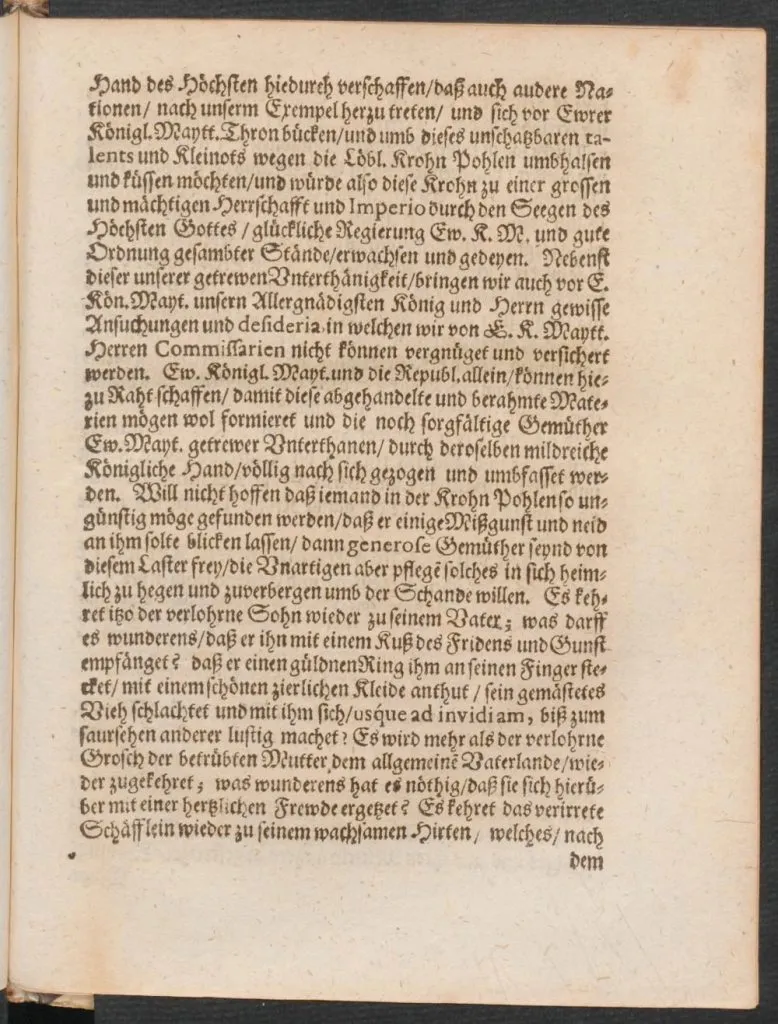
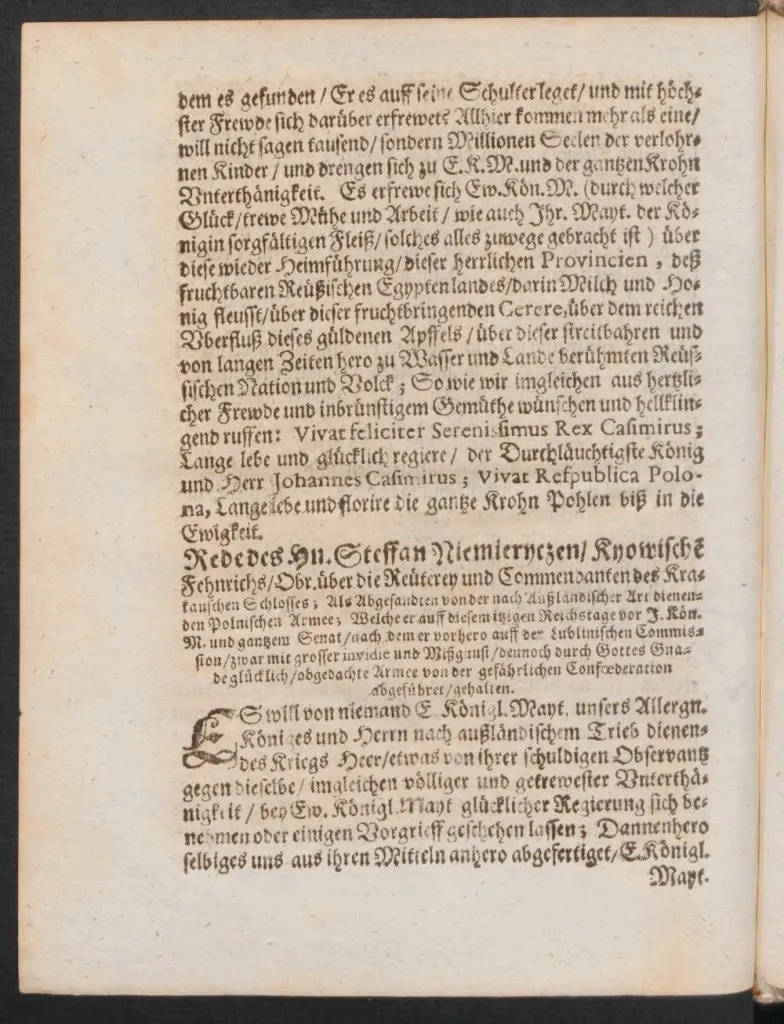
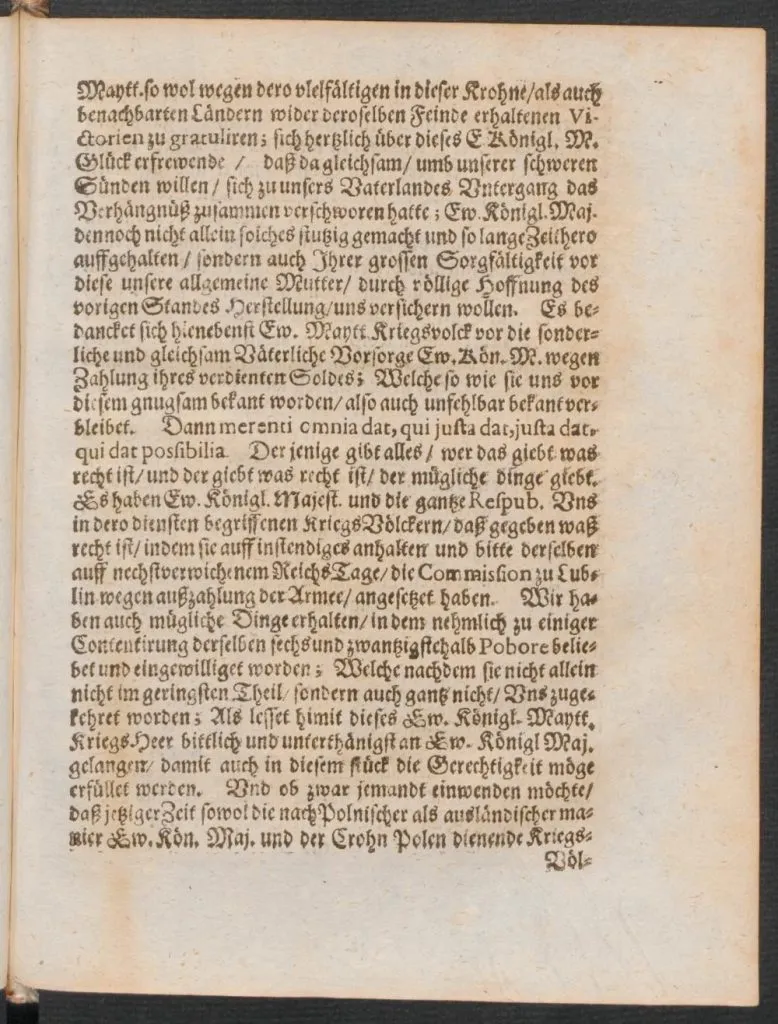
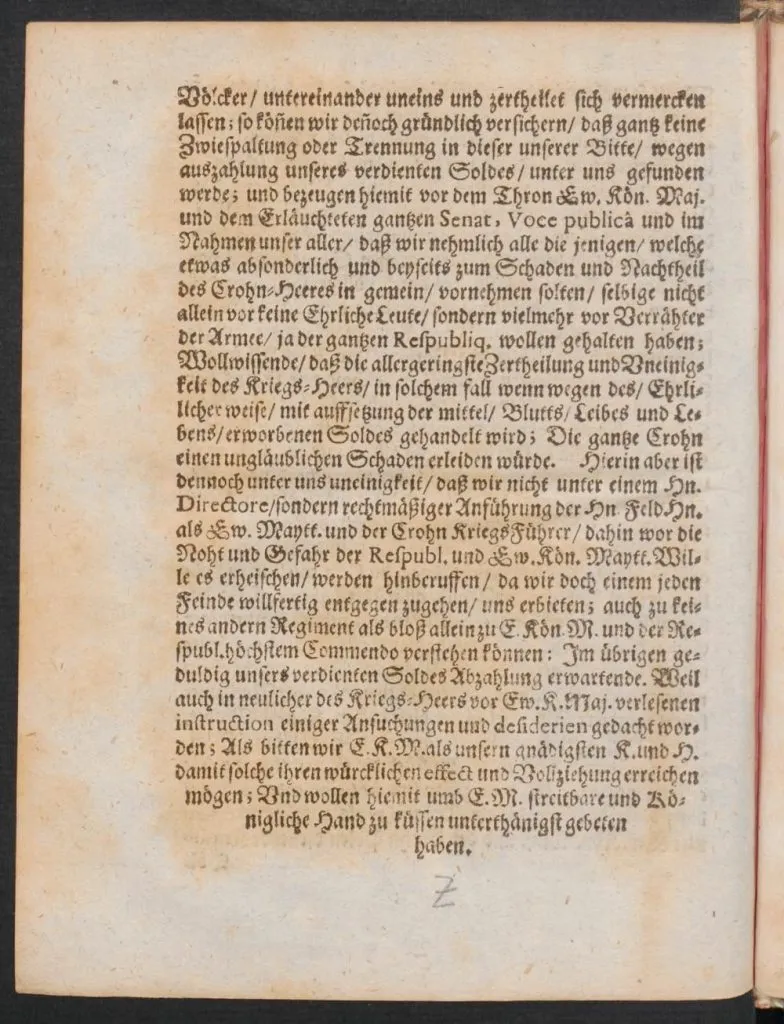
As we can see, the main reason that made the hetman and part of the Cossack officers turn their eyes back toward Poland was their unwillingness to exchange their traditional free status for that of “the sovereign’s bondsmen”, and the leadership of the Cossack state clearly understood that under the tsar’s hand, unlike the king’s, they would have to say farewell to their customary liberties.
Nemyrych’s speech caused a sensation in Warsaw; it immediately began to spread in handwritten copies across the country and was published in Western Europe. Understanding the specific and somewhat conventional nature of such diplomatic speeches, we must nevertheless state that in its main provisions and terminology it explained quite clearly which conceptual reasons prompted the country’s leadership to revise its foreign policy orientation.
On 12 May 1659 the Ukrainian-Polish agreement on the Union was ratified. The Cossack delegates on their side, and the king and senators on theirs, assured each other under oath of reconciliation, and the Cossacks also swore loyalty and obedience to the king. On the last day of the Sejm’s work, 20 May, Jan Casimir issued a charter “to the nobles, starostas, officials and all the knighthood, inhabitants and all other people of any estate and status” in which he recommends that the gentry in those regions of Lithuania and Poland “wherever the Ruthenian language reaches” grant legal status to the “Greek religion”, so that it remains “in full security, protection and respect” and “does not feel… oppression or encroachment from any confessions”, sternly warning against violating the points just ratified and promising to punish violators “without any delay”. On 30 May a royal charter was issued granting K. Vyhovsky the post of treasurer of the Grand Duchy of Ruthenia. What matters for us in this document is the position declared by the king about the actual financial independence of the Grand Duchy of Ruthenia, since K. Vyhovsky was given the authority “to manage, according to his… understanding and the rules of economy, all revenues, estates.., customs duties and all other state revenues without exception in three voivodeships: Kyiv, Bratslav and Chernihiv.., to establish storehouses and customs posts, to appoint and dismiss customs clerks and collectors at his will.., absolutely in the same manner, by the same right and custom as the Crown and Lithuanian treasury are administered and managed by the Crown treasurer and the treasurer of the Grand Duchy of Lithuania”. Jan Casimir also declared that “we have no intention ever to attach the above-mentioned administration either to the Crown treasury or to the treasury of the Grand Duchy of Lithuania, but the treasury of the Grand Duchy of Ruthenia will belong separately to the Grand Duchy of Ruthenia for all time”.
? The second text is better known; I give it in full translation and also add screenshots of the Latin manuscript, which I found in the Swedish archive in Stockholm, where the history of the Cossack era is kept in a special collection called “Cosacica”:
An address of the Zaporozhian Host, as an independent state, to foreign rulers explaining the break with Moscow, the reasons for the Muscovite offensive against the Cossack state, their treachery, their desire to destroy independence and violate treaties, and a call to the European community not to stand aside but to respond jointly to Moscow’s military encroachments in 1658:
MANIFESTO
ON BEHALF OF THE ZAPOROZHIAN HOST TO FOREIGN RULERS, EXPLAINING THE REASONS FOR THE BREAK WITH MOSCOW
of October 1658
For the attention of the most illustrious, most noble, most serene, most honourable, most renowned, distinguished, high-born, worthy sovereigns, tsars, electors, princes, margraves, republics, counts, barons, nobles, citizens, etc., etc.
We, the entire Zaporozhian Host, declare and testify before God and the whole world by this our truthful and sincere manifesto that the cause of our wars with Poland was no other reason, no other aim or intention than the defence of the holy Eastern Church, as well as of our ancestral liberties, the love of which we have preserved together with our hetman, Bohdan Khmelnytsky of eternal memory, and our scribe Ivan Vyhovsky.
Our private affairs, compared with the glory of God and the common good, were always secondary for us. Therefore, having agreed on friendly alliances with the Tatars, with Her Serene Highness Queen Christina of Sweden, and later with His Serene Highness King Charles Gustav of Sweden, we always observed them and remained unfailingly faithful to all these agreements. We never gave even the Poles a pretext for violating agreements, for in keeping with our holy faith we fulfilled all arrangements and resolutions.
And for no other reason did we accept the protectorate of the Grand Prince of Muscovy than so that, under an agreement concluded by force of arms and with God’s help renewed with blood shed more than once, we might preserve and increase our liberties for ourselves and our descendants.
Therefore our army too, together with the acting hetman of the Lower Host, Zolotarenko, trusting the promises and assurances of the Grand Prince of Muscovy, was at first in favour of Lithuania’s joining the Grand Prince of Muscovy.
Relying on the ties that unite our religions and on our free and voluntary submission, we hoped that he would be well-disposed, friendly and gentle toward us, and would treat us only on the basis of sincere trust, without violating our freedom, and would act in accordance with his promises. But, oh, vain hopes!
The obliging state officials of this virtuous and pious tsar and the Muscovite boyars intended that already in that first year, when peace between the Poles and the Muscovites was being discussed, an agreement would also be concluded with the aim of seizing the Kingdom of Poland and suppressing and annexing us. The Muscovites promised the Poles that we would betray our agreement with the Swedes and, at the Grand Prince’s will, would begin a war against them. Their designs were directed at making it easier to suppress and annex us while we were busy with the war against the Swedes; Bohdan Khmelnytsky, together with our scribe, not only did not consent to the Grand Prince, but through Vasilii Petrovich Kikin presented him with many proofs of why a war with the Swedes in Livonia should not be started.
We had in hand copies of the above-mentioned negotiations, undoubtedly authentic, yet we did not think that the state officials had taken this unfaithful step and sign of deception on the part of their sovereign without agreeing this crime with the tsar, who was favourable to him, and with the most holy patriarch. And therefore, true to our word, we tried to forestall the efforts of the Muscovites.
So the war begun in Livonia against His Serene Highness the King of Sweden, our ally and friend, without the slightest cause and merely under the one pretext that His Serene Highness the King of Sweden liked to maintain friendship with us, was the first open evidence of this crime. For the King of Sweden, occupied with conducting military operations, could not help our efforts. For this reason our hetman, with the same army in which Danylo Vyhovsky, his brother-in-law, had previously been, joined our envoy to His Serene Highness the King of Sweden, the noble Danylo Hrekyn Olivenberg, who had twice been refused passage through Muscovy. He escorted him as far as Lublin and observed the cunning of the deceitful Muscovites.
That our suspicions are not groundless is shown by the fortification recently built in our capital city of Kyiv, with a garrison of several thousand Muscovites placed in it, to keep us in the bondage of which there was once plenty in Poland too. So zealously are the Muscovites concerned to make us, once annexed to themselves, their allies in slavery.
We had reliable testimonies and clear examples of this in White Ruthenia too, when people of noble origin who of their own will had gone to the border areas of Muscovy, almost two hundred families, were carried off to Muscovy by force and deceit. At the time when the townspeople of Mogilev and native inhabitants of other towns of White Ruthenia, people from various towns and villages, sought the mercy of the Grand Prince in vain, more than twenty thousand of them were deported and resettled in places of Muscovite colonies. Not to mention those taken in Stary Bykhov, which was handed over into their hands, and in other towns near the Dnipro, for the whole Dnipro is surrounded by [Muscovite] garrisons. Where this does not succeed, they resort to their tricks in another way.
After the death of Bohdan Khmelnytsky of eternal memory, hetman of the Zaporozhian Hosts, they thought that our Little and White Ruthenia together with the Zaporozhian Host would quickly perish. Therefore they detained our envoys in Moscow for a long time and treated them haughtily, and to our requests we received cold replies. Soon the Muscovite army too, led by Prince Grigorii Romodanovsky, sent as relief under the guise of help, advanced as far as Pereiaslav and did not wish to submit to the hetman.
When Ivan Vyhovsky was later elected hetman, having taken the leadership while serving as chief scribe of the Zaporozhian Host, Romodanovsky was the first not to recognize this official title, and the Grand Prince did the same after him. Then the seed of discord was sown further still, and the hetman was reproached that he was a Polish nobleman and therefore more devoted to the Poles than to the Zaporozhian Host.
Since the nature of warriors who fight by their own judgment and are exalted by numerous victories is inclined to wilfulness, together with an ambitious desire to command it pushed some Cossacks living below the Dnipro rapids to rebel and choose as their leader a certain Barabash. In letters written to the Grand Prince and sent through their envoys, these Cossacks accuse the newly elected hetman of the whole Zaporozhian Host of many criminal offences. Through these envoys they also propose and urge that the supreme military leadership together with the entire treasury be moved to Moscow, and that voivodes be sent to us from Moscow.
This praiseworthy business went so that when the mentioned envoys, accompanied by thirty Cossacks, were passing through the lands of the Poltava Regiment, Pushkar, the colonel of Poltava, who was in on the plot and its accomplice, as if intercepted them and added seven more of his Cossacks, who, having been seized by the rebels’ envoys and escorted to the very borders of Muscovy, were later released. The envoys excused themselves by saying that Pushkar had wanted to detain them but had not been able to.
Knowing this from the resolution of the general council held in Korsun, [where Pushkar too swore loyalty to the hetman], the hetman sent envoys with letters to the Grand Prince, in which he asked that these rebels not be trusted, because the army had already repeatedly attested its loyalty to the Grand Prince, and furthermore that the rebels’ envoys be returned under guard to the Zaporozhian Host. But the matter turned out well for us also because our envoys arrived before the rebels, and when the latter came to Moscow they kept their whereabouts secret. Asked by our envoys in Moscow, the clerk Almashev denied that they had already arrived, until their stay in the city, simultaneous with ours and secret, became obvious to us. But this in no way shook the stubborn treachery of the Muscovites: the envoys we had sent received no reply, and the Moscow patriarch did not deign to answer the hetman’s letters. On the contrary, the rebels received from the Grand Prince a reward, letters and obviously unlawful privileges for the Zaporozhian Host, to hand over to Barabash.
At that time the courtier Mykola Oleksandrovych Sushin was in Putyvl and saw that the matter was turning bad, that negotiations with a free people were being conducted unworthily. Therefore he detained the rebels’ envoys and promised to hand them over to us if the Grand Prince gave his consent.
Meanwhile Pushkar, without informing the hetman, almost daily secretly received Muscovite envoys and sent them back. To seven letters sent to him demanding that he appear before the hetman, he replied with a refusal. Finally, when military detachments sent by the hetman, who had no hostile intentions, approached him, he suddenly attacked, killing some and scattering others.
Almost at the same time an extraordinary envoy of the Grand Prince arrived: Bohdan Matveevich Khitrovo, general of artillery and Muscovite senator. Without agreement with the hetman he sends written universals to all the colonels, summoning them to Pereiaslav for a general military council. After talks with the officers he sends Grigorii Romodanovsky back to Moscow and announces that, by order of the Grand Prince, he will appear before the military Council in place of the hetman.
The hetman took it as a bad sign that the rights of his office and his authority were disregarded together with the liberties of the Zaporozhian Host. Nevertheless he yielded to the interests of the common good and came to the council.
There the hetman was informed that Grigorii Romodanovsky, who stood at the head of the Muscovite army, had for two days been near Pushkar and had been conducting negotiations about our wholesale surrender. Although it was within his power to seize the rebels, take them prisoner and send them to the above-mentioned council. Gathering forces for further advance, he waited eight days without reaching an agreement with Pushkar. And to the envoys sent to Pushkar by all the colonels and by Bohdan [Khitrovo], asking him to abandon his design and appear at the council, relying on public trust, and present his accusations, he replied that he could not appear otherwise than together with his warriors. For his part, he sent several hundred men, who were received by Bohdan with great honours and, generously rewarded, returned home.
Meanwhile Bohdan with his entourage ordered the hetman to march directly against Pushkar and bring him to obedience, if not by persuasion then by force, provided the hetman promised two things:
1. To take an oath on the Holy Gospel to the Grand Prince.
2. Within eight days, together with several persons of the military officer corps, to travel to Moscow for negotiations with the Grand Prince.
The hetman agreed to both the first and the second condition. After that he dissolved the council and ordered the four regiments sent against Pushkar to return.
Almost at the same time the envoys of the above-mentioned Barabash were released. They join Pushkar and show the inflammatory letters and privileges received from the Grand Prince. [The above-mentioned Barabash had, by God’s grace and the hetman’s prudence, been summoned from Zaporizhia and, after he acknowledged his guilt and asked the hetman for forgiveness, was graciously and nobly pardoned and freed from punishment].
Bohdan, who had a handful of his rebellious Cossacks, had still not kept his promise, but forced Pushkar to swear an oath and promised him forgiveness. For this reason the fire kindled among us, fanned by the Muscovites, broke out. In various places innocent people were killed by the rebels, while the Muscovites watched from afar. Among them the noble Boglevsky, the hetman’s brother-in-law, blameless and peaceable, was killed in his house together with his wife and all his household. When this crime was reported to the Grand Prince, he kept silent.
But Pushkar, not satisfied with what he had done, combined the forces of his regiment with the forces of the rebellious Cossacks drawn from all corners of his land and moved straight toward the Dnipro in order to seize the hetman together with the entire general officer corps of the Zaporozhian Host, whom he had promised to hand over into the hands of the Muscovites.
Having appealed to the Muscovites for help, the hetman waited in vain for a reply and was forced to reckon his forces differently. Therefore he called on the Tatars, led by their khan Karach Bey, to help, joined them to the Cossacks that could be gathered and to the hired army, and set out to meet the insurgents. He drove them away from Poltava, wishing only that this unrest might be pacified without bloodshed. For this reason the hetman repeatedly sent his envoys to Pushkar, offering forgiveness to all and promising his favour.
Probably Pushkar and those surrounded on all sides understood that they must now incline toward peace and promised it. But, deceiving treacherously, Pushkar, on the very feast of the Most Holy Trinity, in the middle of the night, thinking that our army, overcome by sleep and drink, could easily be defeated, attacked us, egged on above all by Muscovite traitors and those who were in our army, of whom we had plenty. Therefore, having entered the camp, he occupied the greater part of the rear guard. But as soon as dusk fell, the hetman with his hired army and the Tatars offered resistance and defeated the insurgents until their complete destruction together with their leader. Only Barabash escaped with a few. To those who fell in this battle should be added those killed by the insurgents in Lubny and Hadiach. They are counted at up to fifty thousand people, and this is the fruit of the Muscovites’ misdeeds.
And when this had happened and peace could now be hoped for in our Rus’, suddenly, after three weeks, Grigorii Romodanovsky, who had vanished, enters our territories with the Grand Prince’s army. He informs the hetman of his arrival, saying that he has come to help the Cossacks to pacify the unrest. The hetman replied to him that everything had already calmed down, so let him go back with his army, and hand over to the hetman Barabash, who had risen against us again, in chains. Romodanovsky replied that he could neither withdraw with the army nor hand over Barabash to the hetman without a special order from the Grand Prince, and that, anyway, the hetman should come for a talk in a narrow circle.
Meanwhile Sheremet[iev], the Grand Prince’s commander, approached Kyiv from the other side with six thousand troops, behind whom other Muscovite troops secretly followed, numbering up to fifteen thousand. He amicably invited the hetman to come for talks with him, solely with the aim of taking him prisoner together with someone from the officers. When the hetman declined this meeting, Sheremet[iev] openly declared that the slain Pushkar had been the best and most faithful servant of the Grand Prince, and that the hetman was an enemy of the Muscovites. The certainty that Sheremet[iev] was trying to cause every possible harm to the hetman and the entire Zaporozhian Host was confirmed also by reports of several Muscovites who sought refuge with us.
The same was confirmed by two defectors from Romodanovsky’s army, who were privy to the treacherous plot. For his part, Romodanovsky too showed enough zeal: he condemned several centurions loyal to us to the gallows, and to Barabash, who had risen twice, he granted the title of hetman of the Zaporozhian Host together with regalia from the Grand Prince; he stripped the Pryluky colonel, loyal to us, of his rank and appointed another; he sent to various places written universals of Barabash calling for a new uprising. Finally, he took an openly hostile step: he ravaged the areas adjoining our town of Vepryk and took many local inhabitants prisoner.
Thus were revealed the cunning and treachery of those who, without any fault of ours, prepared for us first internecine strife and civil war, and then openly, with the threat of their weapons, the yoke of slavery. In order to destroy it, we prove our innocence and, calling on God for help, begin a lawful defence and are forced to seek the help of our neighbours in the name of our freedom. Therefore the guilt is not ours, and we are not the cause of this war that has now been kindled. We wanted to remain faithful to the Grand Prince, but we were compelled to take up arms”.
.
✒ It seems to me that careful reading of the original texts helps us understand across the centuries those times, the thoughts of the leaders of the young state, their burdens, concerns and aspirations. After all, one need only realize that with every step the outstanding political figures of our history staked nothing less than their own lives. So every letter of their historical connotations deserves attention and respect. That is why I prefer reading primary sources and full texts.
All his life Nemyrych was a staunch Muscophobe; he regarded the Muscovites as slaves incapable of resisting a tyrant, of keeping agreements, or of building anything worthy of attention, and plainly contrasted their lack of breeding, treachery and Asiatic ways with European democracy, legality, refinement and nobility, of which he himself was an adherent and representative.
Nor did he rate their military capacity highly. And not by word but by deed he proved Ukrainian superiority, winning, together with the Cossack army, victories over Muscovy in the wars of 1632-1634 and 1658-1659.
One of the heroes of our history, who today, if not forgotten, is honoured and remembered less often than he deserves.
Author: Ihor Poluiektov