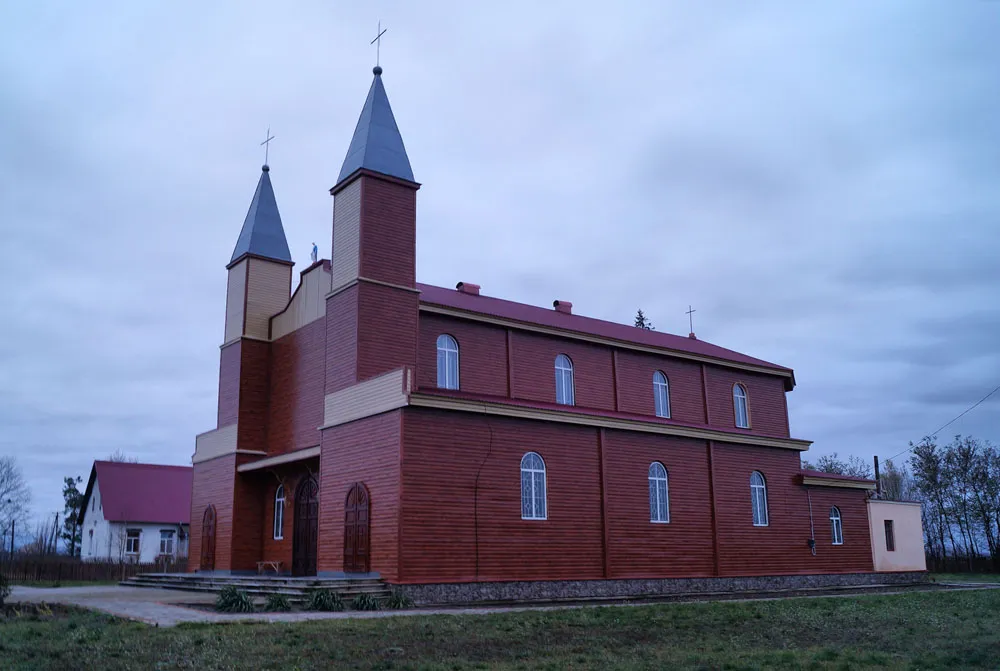
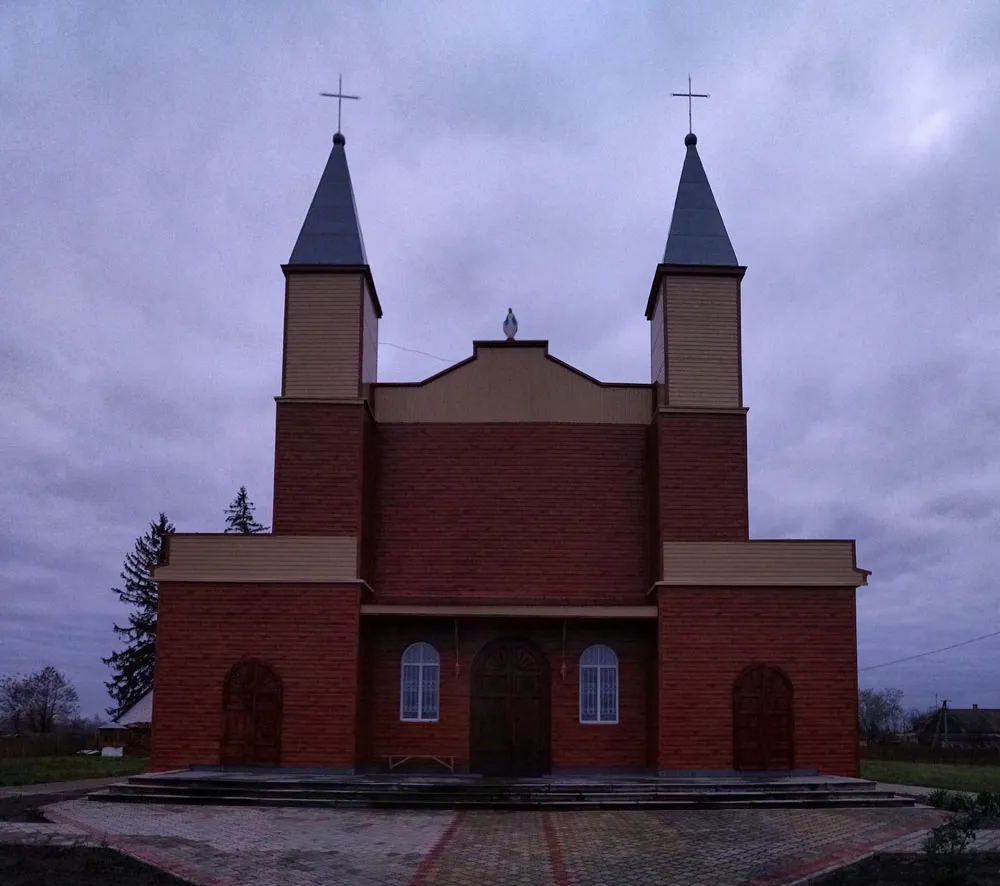
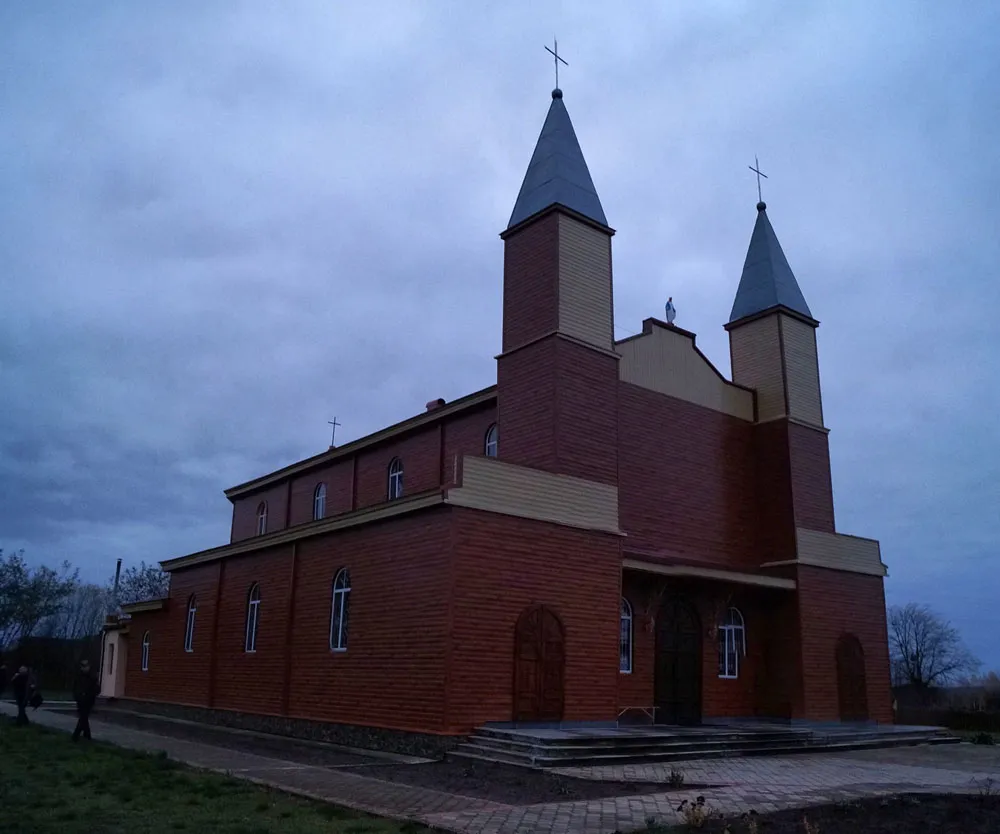
Novyi Zavod. Wooden Roman Catholic church

· 2 min read
Novyi Zavod (“New Factory”): it would seem there could hardly be a more Soviet name. But no, the name has nothing to do with Soviet times, because the village was founded by Polish settlers in 1823 and gave itself this name right away, and the second word does not sound at all as we all thought: the stress falls on the “o”, ZavOd, and this word translates from Polish as “profession”. Impoverished Poles arrived and decided to take up something new, a new profession, and so they named the village Novyi ZavOd. There was also another word, Baliarskyi: baliary were makers of staves for barrels. But with time either that word dropped away or they stopped making staves.
At the end of the 19th century the lands around the village were bought by the German colonist Karol Schlenker. He allocated funds to the Polish peasants for building a Roman Catholic church, and a school was also built with his money.
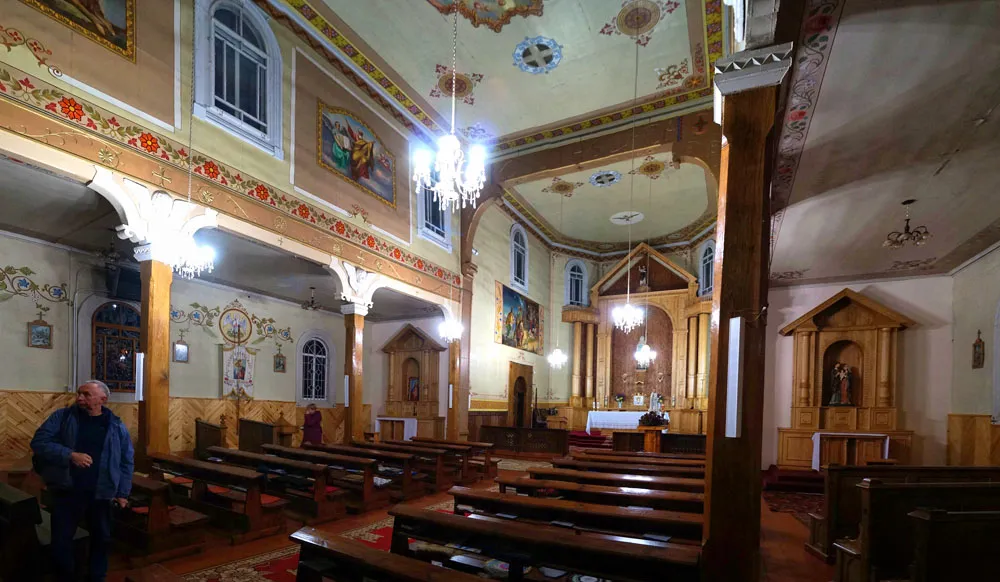
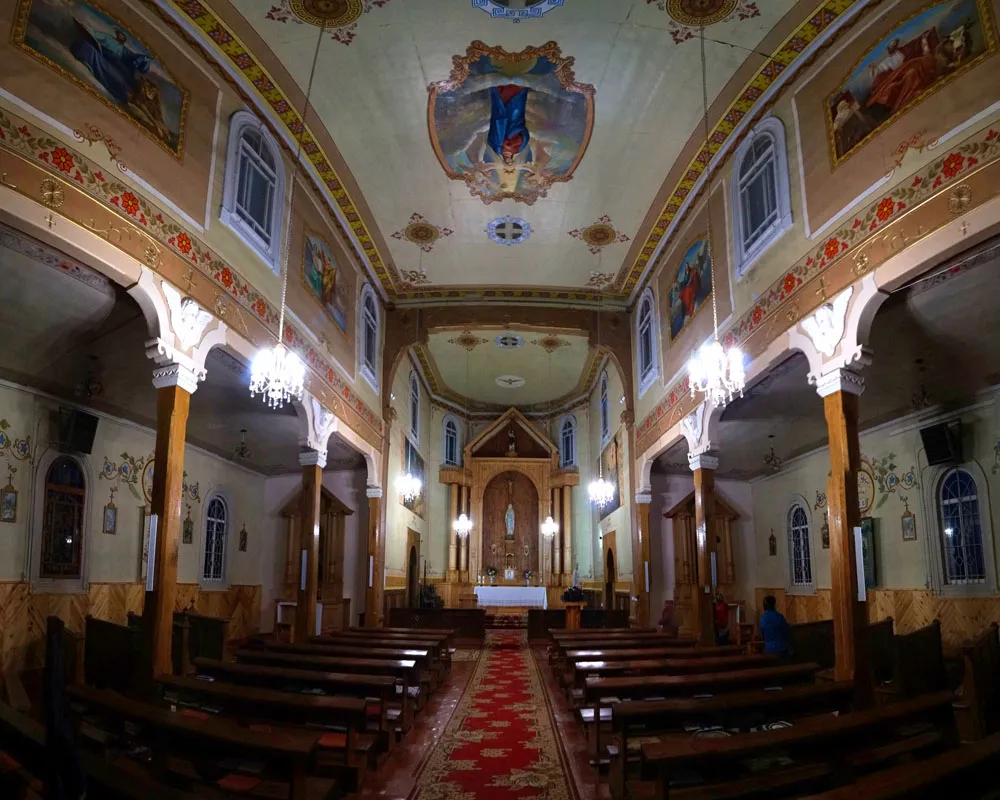
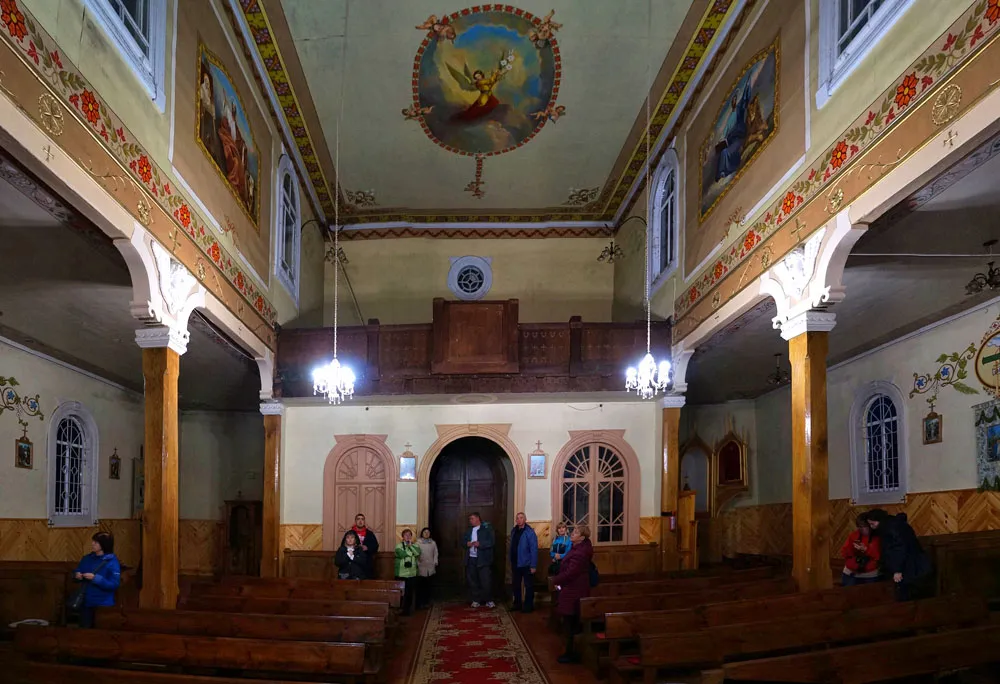
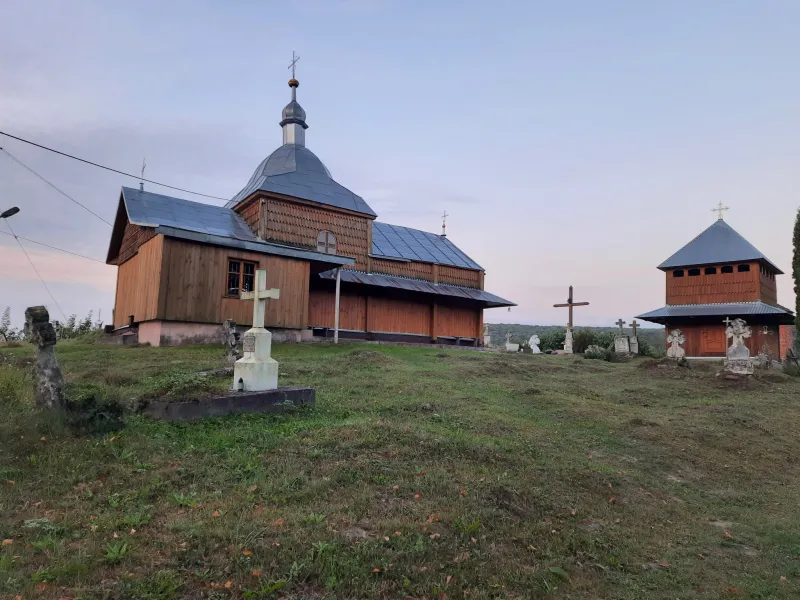
The Roman Catholic Church of the Immaculate Conception of the Virgin Mary was built in 1906. It is large and wooden. In 1935 the Bolsheviks turned it into a club, and the rectory into a hospital. In the independence period the church was restored, although today it stands clad in metal sheeting decorated to look like wood. The priest assures that this is a temporary measure, and that a considerable gap was left between the metal and the wood so that the timber does not rot and is ventilated.
Inside, the church is lined with fibreboard and painted. It looks quite colourful and interesting.
The buildings of the Schlenker manor have survived in Novyi Zavod, but we reached it after dark, so there were no photos. That is a reason to come again.
Text and photos by Roman Malenkov and Serhii Shcherbii.