Balzac on Ukraine and Russia

· 4 min read
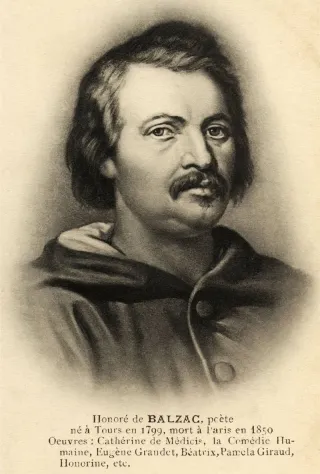
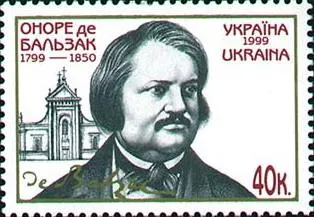
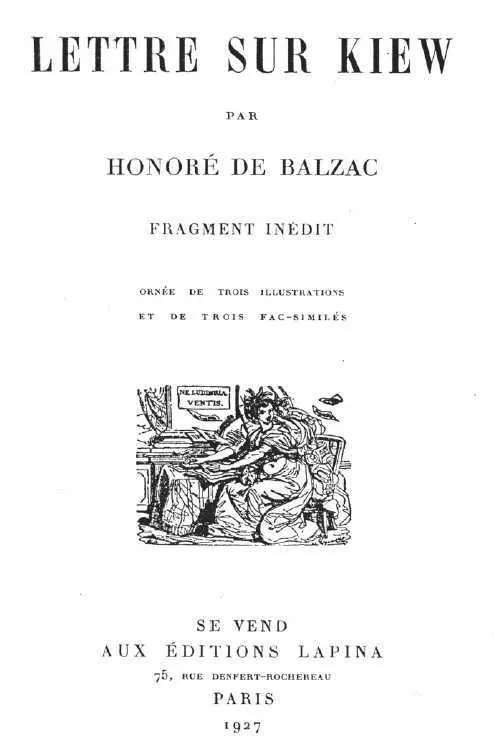
You probably all know that Honoré de Balzac visited Ukraine more than once. He lived longest at the estate of his wife Eveline Hańska in the village of Verkhivnia. First, from September 1847 to January 1848, Balzac stayed with his fiancée. He came a second time in October 1848 and left, already with his wife and gravely ill, in April 1850, and in August of that year he died. One could say that Balzac spent the last years of his life in Ukraine; during this time he visited Kyiv six times (“…so I have seen this Northern Rome, this Tatar city with three hundred churches, with the riches of the Lavra and of St. Sophia of the Ukrainian steppes. It is good to look at it once more…”), was married in Berdychiv, and visited the Branicki manor park in Bila Tserkva… Naturally, Balzac could not help writing something about Ukraine during this time. His well-known work about the journey from Paris to Verkhivnia is called “Letter on Kyiv”. We would like to quote some interesting passages from it. Read them: most of what Balzac wrote 170 years ago is relevant today. Especially regarding russia, where nothing has changed at all.
On russia:
Submission is the charter by which Russia exists, and the emperors do their utmost to sustain this spirit in their subjects.This whole empire, at the tsar’s word, could move to the West; it would have nothing to regret. Wooden houses, villages and towns here resemble nomad camps. Brick houses are a rarity in this country.
Napoleon subdued Europe for a moment precisely because he knew how to make the French obey, and if Russia ever conquers the world, it will owe this solely to the obedience of its inhabitants. It is not hard for me to show that Russians are made to subjugate other peoples, and in this they have no equals.
In the whole empire there is only the highway between Petersburg and Moscow and between Petersburg and Tauroggen, which for two thirds of its length coincides with the road leading to Warsaw. There are no village or provincial roads at all; one can travel more or less unhindered only in winter, by sleigh.
On Russian peasants:
The character of the local peasants is exhausted by two words: barbarous ignorance; these people are nimble and cunning, but it will take centuries to enlighten them. Talk of freedom they understand, exactly like the Negroes, in the sense that they will no longer have to work. Emancipation would throw the whole empire, which is founded on obedience, into disorder. Both the government and the landowners, all who see how little benefit there is in corvée labour, would gladly move from the present order to hired labour; yet on this path they would meet a huge obstacle: peasant drunkenness. Today the peasant earns money only in order to buy himself vodka. The vodka trade is one of the main sources of income for landowners, who, by selling it to the peasants, get back everything they have paid them. The peasants will understand freedom solely as an opportunity to drink themselves senseless.
On Ukraine:
…most French people do not know what Kyiv is, a city whose name the Russians pronounce as “Kieff”. And Kyiv is the capital of Ukraine, a holy city, the former capital of Russia, the Tatar and Russian Rome, founded earlier than Moscow, a princely residence at a time when the rulers here still submitted to the Mongol hordes and, as a sign of their vassal dependence, had to make do with the scraps the khan left them.”Having visited Catholic Rome, I ardently wished to see Orthodox Rome. Petersburg is an infant city, Moscow a grown man, Kyiv an old man whose age is eternity.
My real journey began precisely in Brody, because I was convinced that it is much harder to cover the hundred leagues that separate Brody from Berdychiv than the seven hundred leagues from Paris to Brody.
I had heard of the steppes, peasants, blizzards, Jews, a blend of civilisation and barbarism, and these were such fantastic tales that Ukraine began to seem to me the only place in the world where I could see truly new and interesting people and receive incredible impressions.
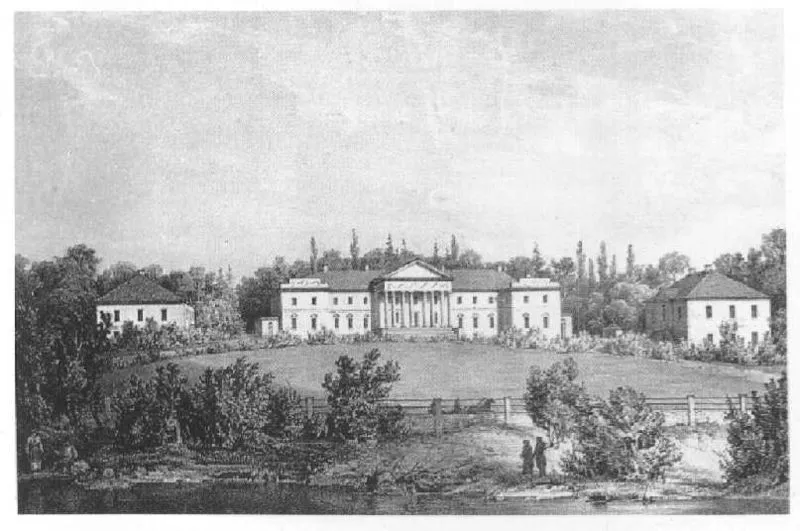
On our pages we have a fairly extensive article about Verkhivnia: read it. And next, a drawing of the palace in Verkhivnia by Napoleon Orda.