Gold wedding rings: yellow, white or rose gold — what really sets these metals apart
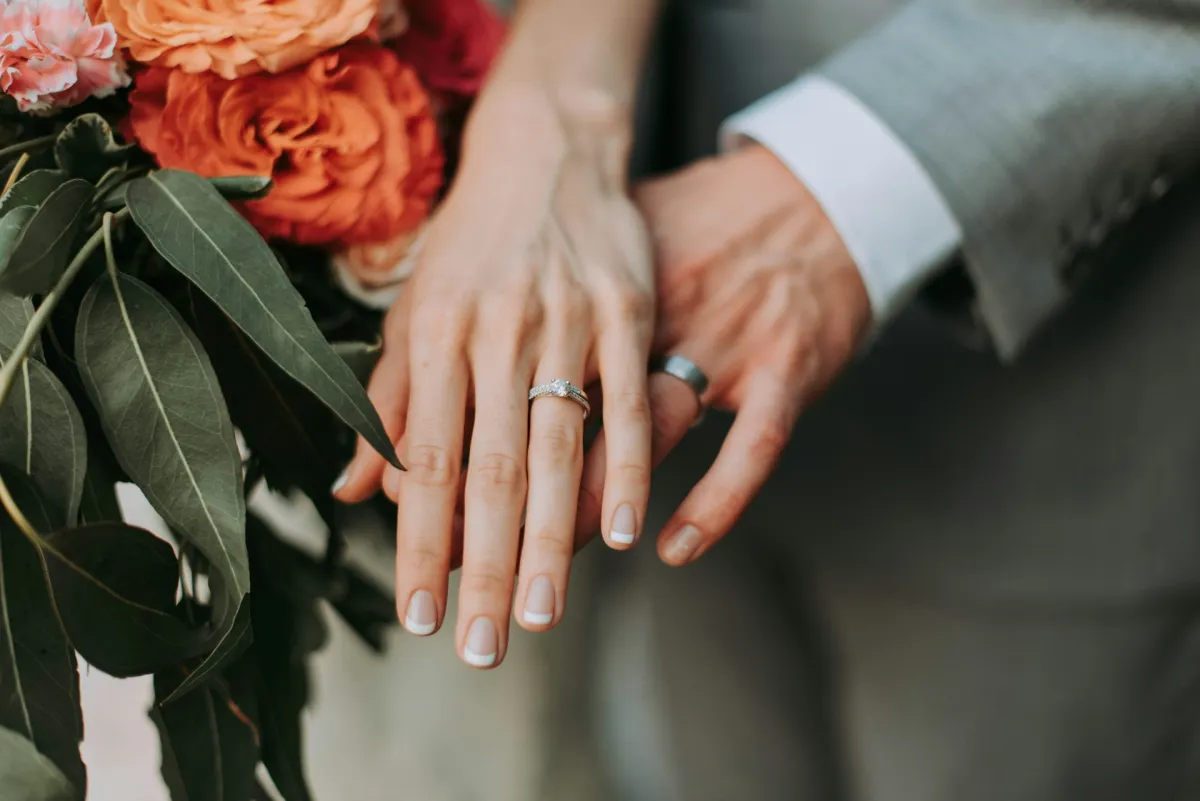
Most people choose a wedding ring by the colour of the metal, and rarely wonder why one gold behaves differently from another. Yet this knowledge is what lets you make a choice you will not regret after five years of wear. The question “yellow or white?” is not only about aesthetics, but about which metal and which character you will live with every day.
Why the colour of a ring is chemistry, not paint
All “gold” wedding rings are alloys. Pure 999 gold is too soft for jewellery: it deforms under mechanical stress, scratches and quickly loses its shape. That is why jewellers work with 585 fineness: 58.5% gold, the rest being the alloying metals. It is the composition of these metals that determines the colour and properties of the metal: in yellow gold it is silver and copper in a certain ratio; in white gold it is nickel or palladium, which decolourize the metal; in rose gold it is an increased copper content, which gives a warm pink-gold hue. The colour is not a coating or paint, but the chemistry of the alloy. Although there is one exception, and it concerns white gold specifically.
Gold wedding rings are a traditional choice that never goes out of fashion, regardless of current jewellery trends. Among Ukrainian makers who produce them by hand and work with all three colours of metal is Guzema Fine Jewelry.
Yellow, white and rose: how each metal behaves
585 yellow gold is the most stable option for everyday wear. It needs no additional coating, does not change colour over time and requires almost no maintenance. Scratches that appear with active wear can be polished out and disappear: the metal does not lose volume, it merely redistributes its surface layer. An old yellow gold ring looks like new after polishing, which is why yellow gold remains the first choice of couples who think long term.
White gold gets its colour not from the composition of the alloy, but from a rhodium plating applied after the piece is made. It gives the cool, platinum-like shine that distinguishes white gold from silver and attracts buyers. But the plating is not a permanent characteristic of the metal: over time it wears off, and the alloy’s natural yellowish tint shows through. Renewing the plating is easy, a standard jewellery procedure, but it will be needed once every few years. It is better to understand this before buying than to take the change of colour for a defect.
Rose gold is the youngest of the three colours in the jewellery tradition and the least predictable in wear. The higher copper content of the alloy gives the colour, but copper reacts to the skin’s pH: in some people the metal darkens slightly or leaves marks after prolonged contact. This is not a question of the quality of the piece, but a trait of the particular person and the particular alloy. Before buying rose gold it is worth wearing the piece for a few hours: the reaction is either there or it is not.
If a couple chooses different metals
Couples who choose different metal colours for their wedding rings often ask: does it look harmonious? The answer depends on the shape of the band. The same shape in a different colour of metal reads as a deliberate decision rather than a mismatch. A different shape and a different colour at once is harder on the eye. If in doubt, try the rings on together rather than each separately: the overall impression of the pair is always different.