

Archaeological finds changed the course of engineering work on fortifications
“Ukraine Incognita” has repeatedly told how the occupiers destroy Ukraine’s cultural and historical heritage sites. They destroy them in different ways. Partly these are crimes of so-called “archaeologists” who conduct illegal excavations in the seized territories, partly of developers, and partly of soldiers who build fortifications on monuments and burial mounds. In particular, as reported by our publication, the Russian army dug trenches on burial mounds in Vasylivka district, Zaporizhzhia Oblast, and as a result virtually half of the archaeological site “Lysovska Mohyla” has been destroyed.
The conduct of the Armed Forces of Ukraine soldiers is diametrically opposite. After all, they defend not only Ukrainian land and its people, but also its history and culture.
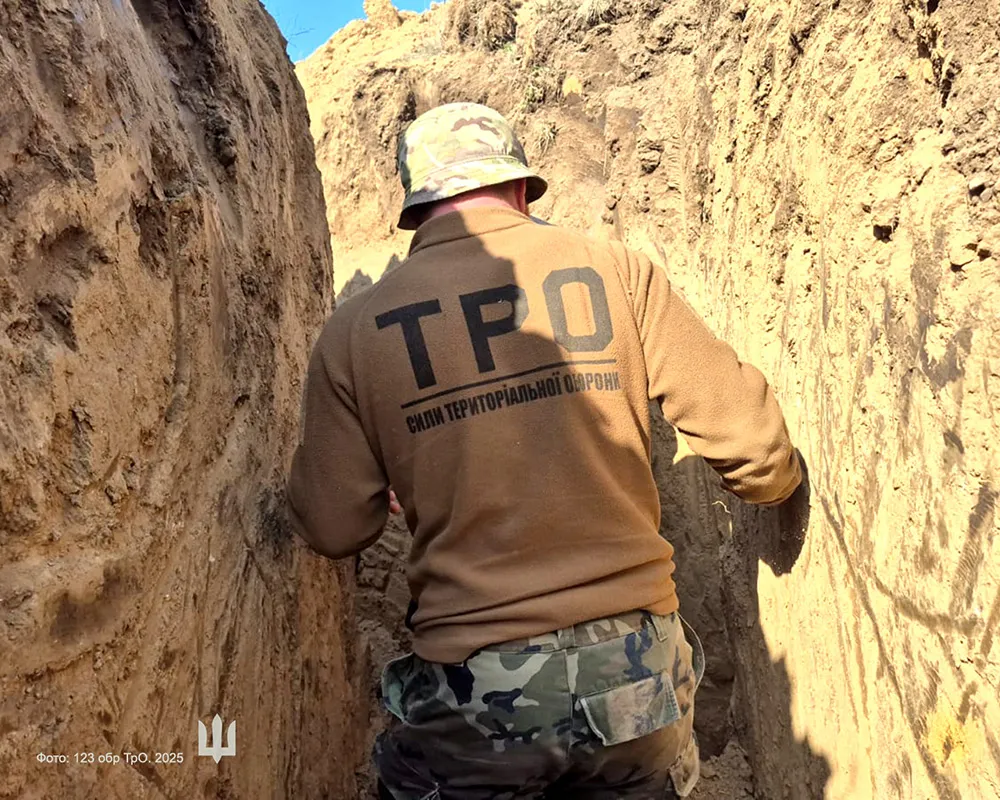
In particular, as reported by the official Facebook page of the 123rd Territorial Defence Brigade of the Armed Forces of Ukraine, because of an unexpected find of a previously unknown archaeological site, the brigade’s soldiers changed the course of engineering work on building fortifications.
The post says:
“Soldiers of the 123rd Territorial Defence Brigade came across an archaic burial ground.
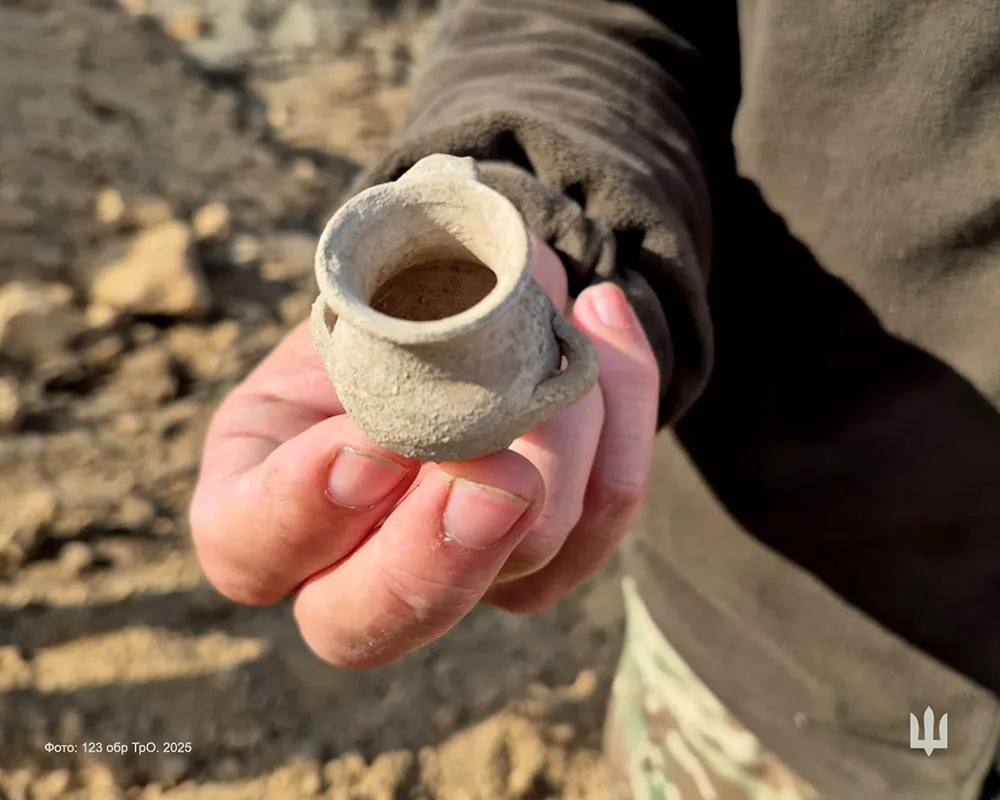
During the construction of fortifications in southern Ukraine, ordinary earthworks turned into a sensational archaeological find. Excavator driver Mykola discovered a small amphora. Intrigued, he turned to his comrade Yevhen, who is keen on history. Together they decided to hand the find over to the “Staroflotski Barracks” museum.
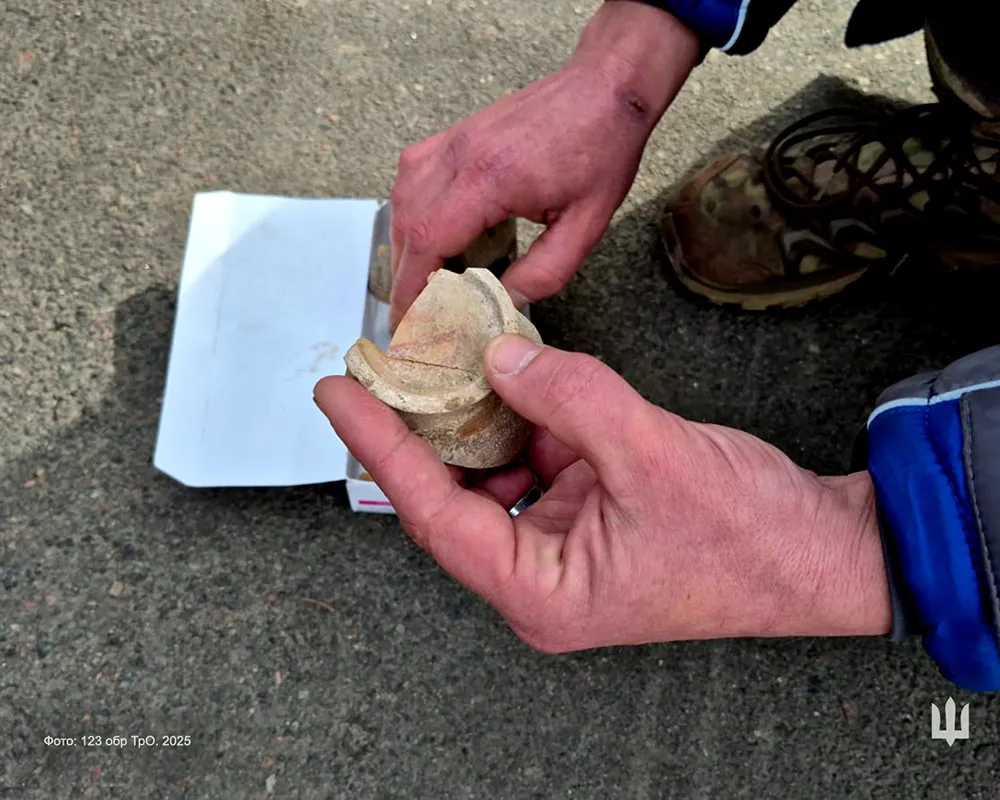
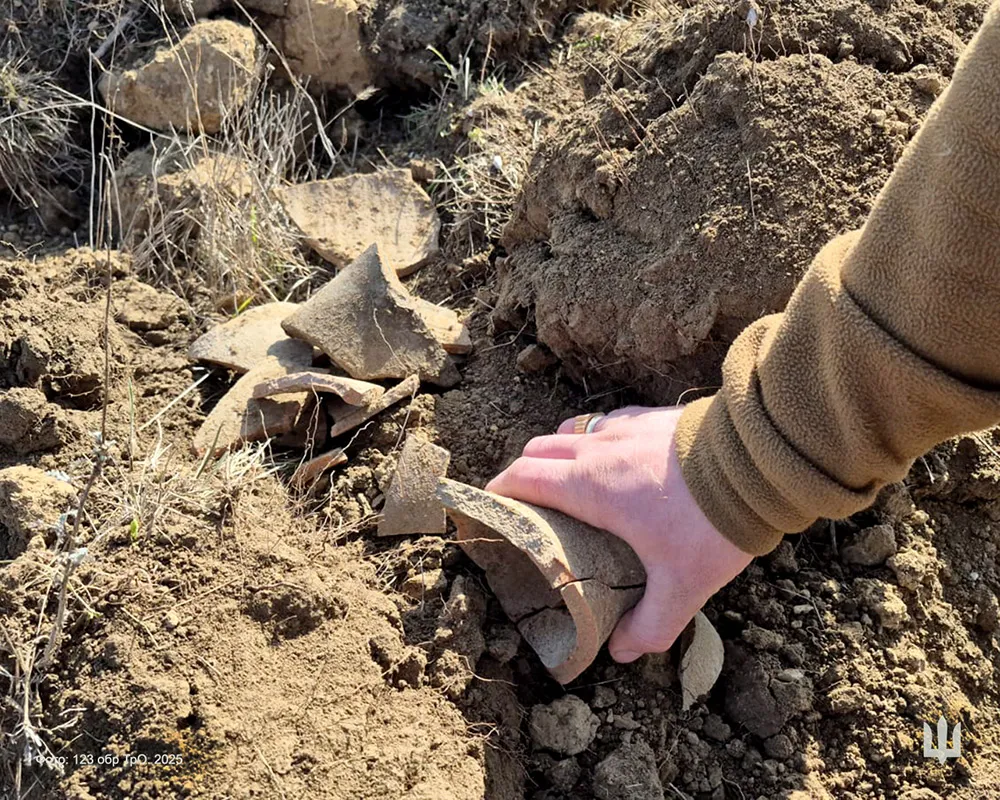
Museum experts, having analysed the find, determined that it is a Corinthian amphora, which was used for ritual purposes and placed in graves. The place where the soldiers were carrying out fortification work turned out to be an archaic burial ground dating from the 6th–5th centuries BC.
Another Ionian vessel that was found, an oinochoe, drew particular attention from the museum staff. This ancient Greek jug with one handle and three spouts was used for pouring wine at symposia, ritualized feasts in ancient Greece accompanied by boisterous revelry, an important part of men’s leisure.
“These are ritual items made specially for burials, brought from Greece. It is important that the vessels are whole and undamaged, which testifies to the high social status of those buried,” explained Oleksandr, a former archaeologist, a lecturer at the V. O. Sukhomlynskyi Mykolaiv National University and now a serviceman.
Together with the artefacts, servicemen of the civil-military cooperation service handed over to the museum the bone remains of the people buried there. Such finds are of great importance for studying the history of the region and make it possible to better understand the life and customs of the ancient inhabitants of our land.”
As we can see, the attitude to History is diametrically different.


