

Another Russian crime against cultural heritage: a monument in Ukrainian Modernist style destroyed in Sumy Oblast
Yesterday the Russian invaders committed yet another crime against Ukrainian cultural heritage. During shelling by the bearers of the Great Russian Culture of Tolstoevsky, the building of the local school in the village of Bilovody (Sumy Oblast), erected in the early 20th century in the unique style of Ukrainian Modernism, was destroyed. This was reported on his Facebook page by the cultural heritage researcher Maksym Nazarenko.
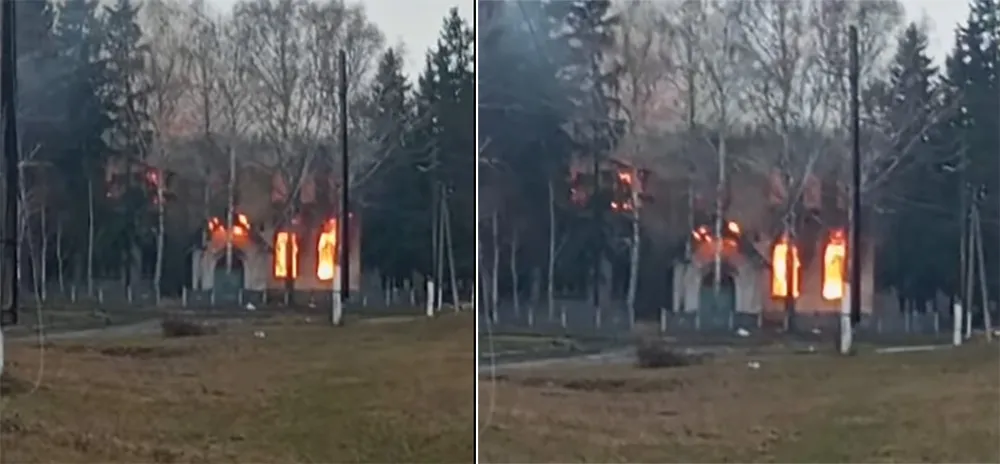
The school on fire after a strike by “Russian culture.” Still from a video by Liudmyla Minaieva
Ukrainian architectural Modernism is one of the brightest markers of our art and identity, which Moscow has systematically and thoroughly destroyed over the last century. If in the USSR the destruction was carried out with bulldozers, today it is done with bombs, shells and missiles. An ordinary village school, an entirely civilian institution, is by no means a military target. This strike by the “Tolstoevites” is not only yet another war crime of the Russian people against civilians but also a crime against culture and history.
In Maksym Nazarenko’s photographs we see what a wonderful heritage site the school in Bilovody was. Today only the remains of its walls are left.
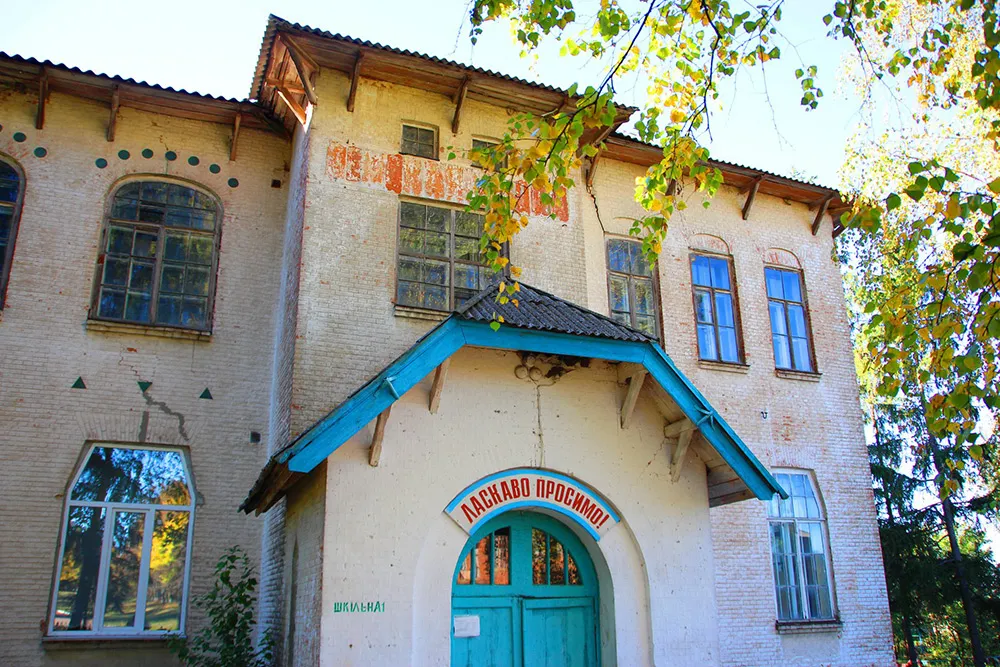
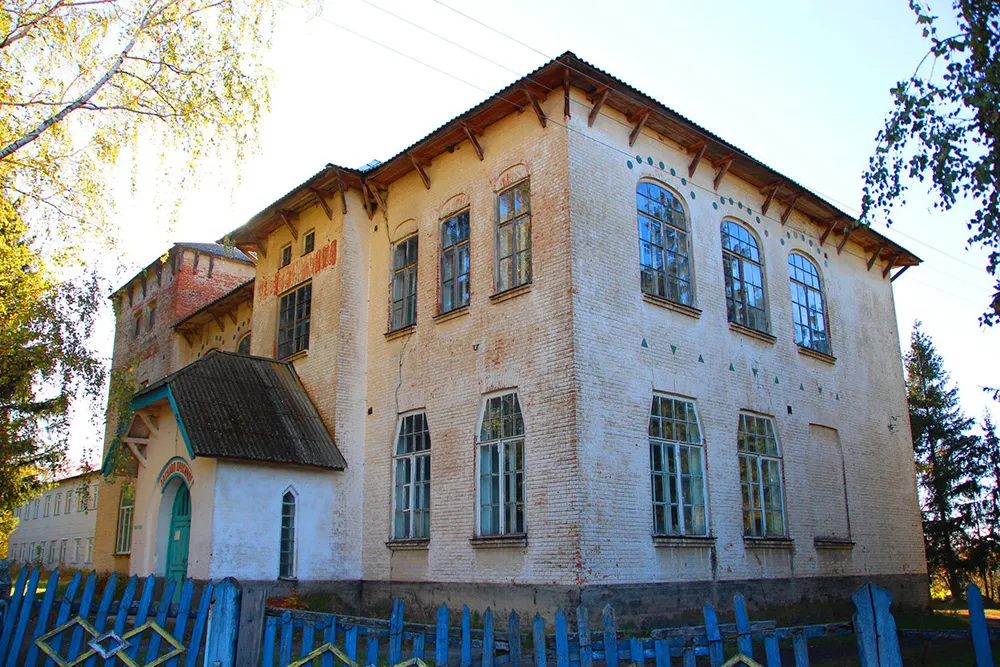
Let us recall that after the systematic extermination of masterpieces of Ukrainian Modernism in the USSR, extremely few such sites remain. In Kyiv Oblast, for instance, we have only nine sites in the Ukrainian architectural Modernist style, half of which are abandoned, in disrepair, or in a half-ruined state.
This is how human indifference destroys them even without the Russians. Overall we have already lost up to 70–80% of Ukrainian Modernism, which is why the NGO “Ukraine Incognita” submitted an application to the Ukrainian Cultural Foundation for the project “Ukrainian Architectural Modernism. Saving it from destruction.”
Yesterday’s destruction of the school in Bilovody proves that such a project is very timely now. We hope the experts will properly appreciate the urgency of the problem and of this project.


