

Chernelytsia: terrifying legends and an amazing church
Chernelytsia (earlier also Cherlenytsia) is a small town in Pokuttia, an urban-type settlement in Kolomyia district, Ivano-Frankivsk Oblast, 4 km from the Dniester and 50 km from Kolomyia. It is the administrative centre of the Chernelytsia settlement community. The place is crammed with fascinating monuments but, because of its geography, is practically ignored by tourists.
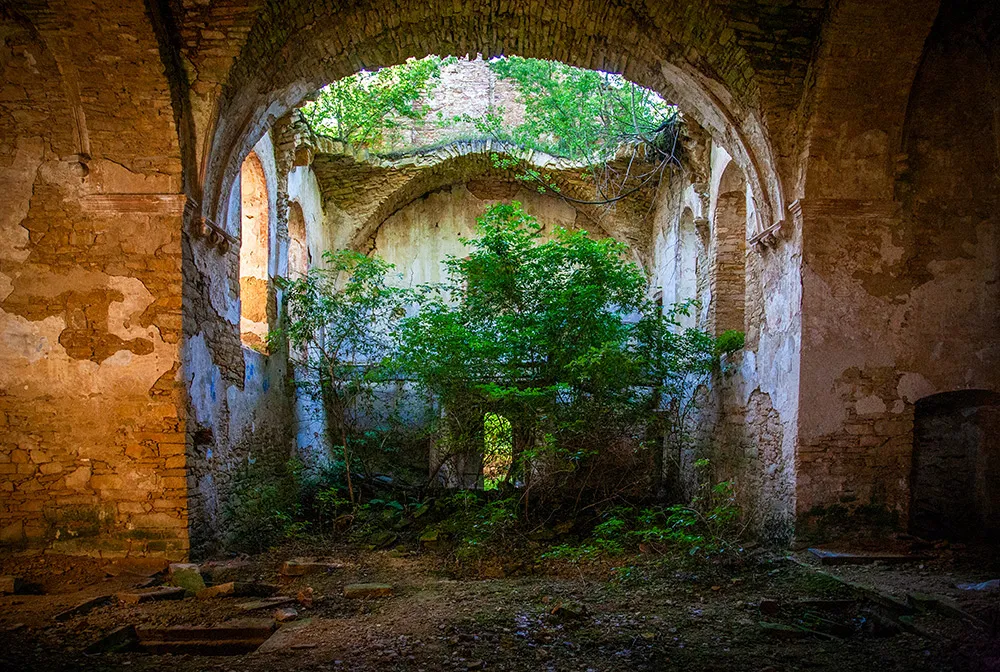
Ruins of the church
The first written mention of Chernelytsia dates from 1440. That year the young King Władysław of Varna undertook to hand over Cherlenytsia and 16 more villages in Pokuttia and Western Podillia to Teodoryk of Buczacz in exchange for a pair of horses and four gold-embroidered fur coats. Here the author suspects that the real value of these estates was higher; it simply did not make it into the documents. The courtiers most likely stuffed the difference into their pockets and simply cheated the fifteen-year-old “krul”.
The Teodoryk of Buczacz mentioned here, of the Abdank coat of arms, went down in history as the founder of the renowned noble family of the Jazłowieckis. Around 1436 he received the town of Yazlovets as a dowry for a certain Katarzyna, set up a residence there and afterwards signed documents as Teodoryk of Buczacz Jazłowiecki. His descendants were already simply the Jazłowieckis and owned Yazlovets until 1607, until this glorious family died out with the death of Hieronim Jazłowiecki.
Chernelytsia remained in the possession of the Jazłowieckis for more than two centuries, but, unlike the numerous monuments of Yazlovets itself, they left no material legacy here.
In the middle of the 17th century the town passed into the ownership of Michał Czartoryski and his wife Eufrozyna née Stanisławska.
Local legend links the origin of the toponym “Chernelytsia” to this couple (in fact it is known from earlier times, but never mind).
Local legend links the toponym Chernelytsia to the owners of the local castle, Prince Michał Grzegorz (Jerzy) Czartoryski and his second wife Eufrozyna née Stanisławska.
The story is trivial: while the old and unattractive Prince Michał Grzegorz (Jerzy) Czartoryski was fighting his foes, his young wife Eufrozyna née Stanisławska, not overly burdened by morals, quite predictably took a young lover.
When the princess, at the very moment she was indulging in carnal pleasures with her dear friend, was told that her lawful husband was already in the courtyard and burning with rage (well-meaning servants had managed to inform the cuckold), she allegedly turned black in the face from horror (hence Chorno-Lytsia, “Black-Face”) and threw herself from the high castle tower. The husband, they say, then buried her, black-faced, walling her up in the castle wall.
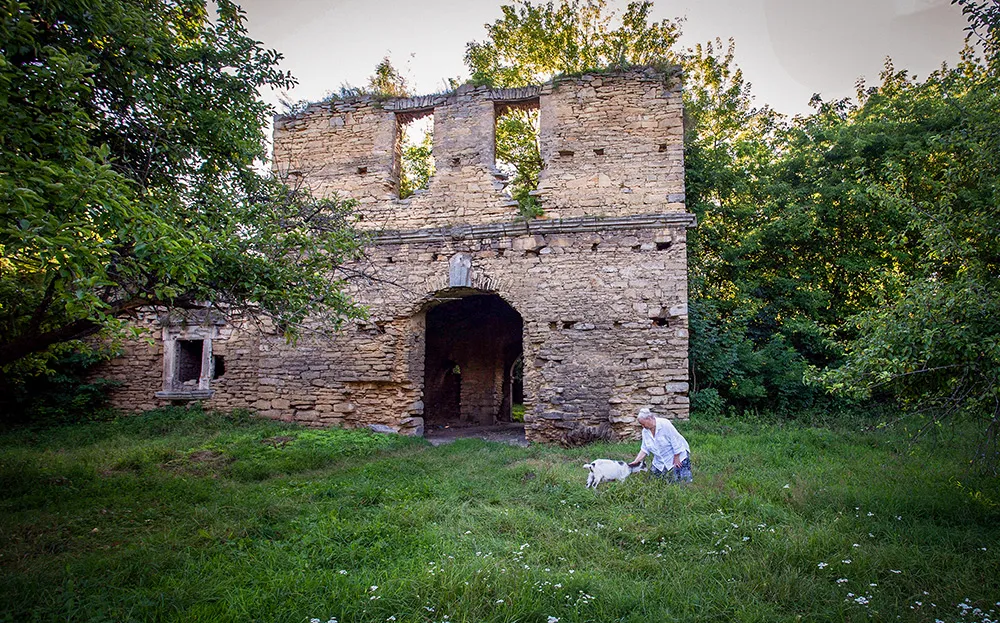
The castle
In memory of that Shakespearean story, first the castle and then the whole town began to be called “Chornolytsia”.
According to another version of the same legend, the adulteress did not jump from the tower. Besides, there were never any too-high towers here. She could hardly have killed herself, at most crippled herself. The cuckold, they say, ordered the “black-faced” adulteress to be walled alive into the castle wall. And then, as in the text above.
Recall that many castle legends feature just such a woman or girl walled up in the walls. Perhaps this is an echo of ancient “building sacrifices”, when the construction of a stronghold was preceded by a ritual in which a girl was walled up in the wall, who in the future was to become the mystical guardian of the castle.
As for the toponym.
In fact Chernelytsia (this toponym appears only in the 17th–18th centuries) is merely a somewhat distorted form of CherLenytsia, known since at least the 15th century, which derives not from the adjective “chornyi” (black) but from “cherlenyi” (crimson). As with neighbouring Chervonohorod on the opposite bank of the Dniester, the name is tied to outcrops of red sandstone. The fortified settlement was called Cherlenytsia.
For some time both Cherlenytsias existed simultaneously. In particular, 15th-century records mention both Great and Rotten Cherlenytsia. “Rotten” was the name of the settlement on the site of the old fortified settlement. It is last mentioned in documents of 1493.
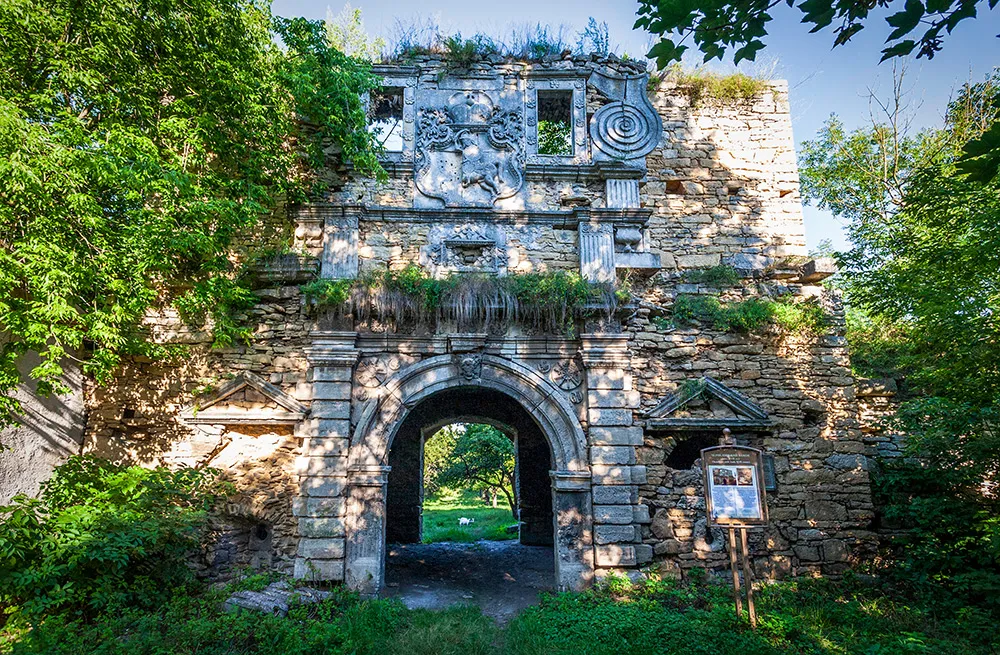
The castle gate, the “camouflage of shadows” and an information stand that very intrusively and inappropriately gets into the frame.
Two main monuments of Chernelytsia are associated with the couple mentioned above. In particular, in 1659 the completion of the castle, laid out back in the days of the Jazłowieckis, was finished, and somewhat later the Church of the Archangel Michael was built (dedicated to the heavenly patron of Prince Michał Czartoryski). Like all masonry churches of the time in these parts, it was of the defensive type.
The church was founded in 1661 and as early as 1664 it was handed over to Dominican nuns.
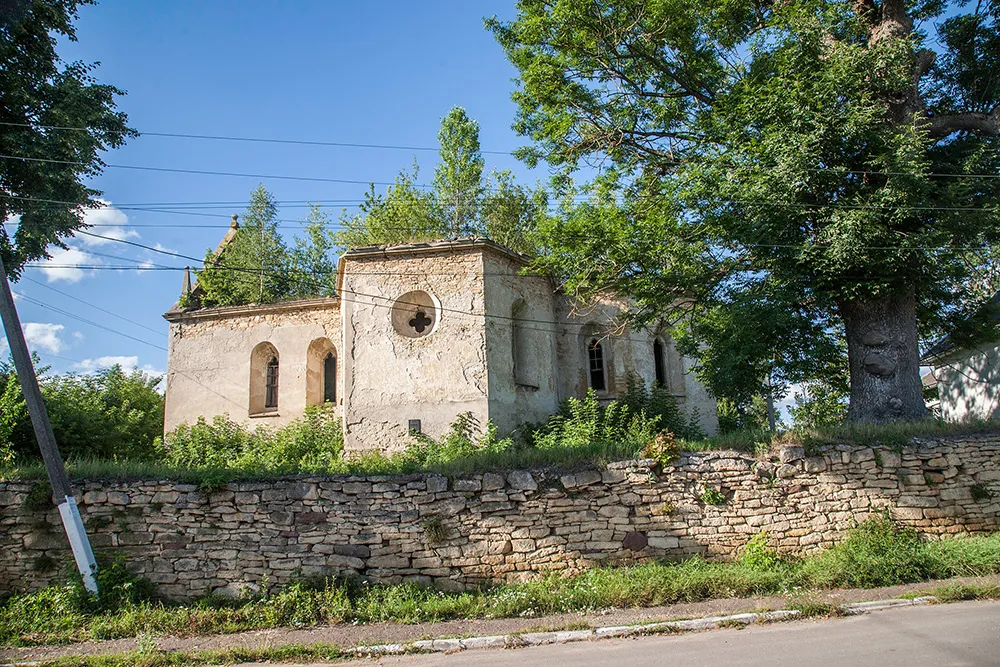
Ruins of the church
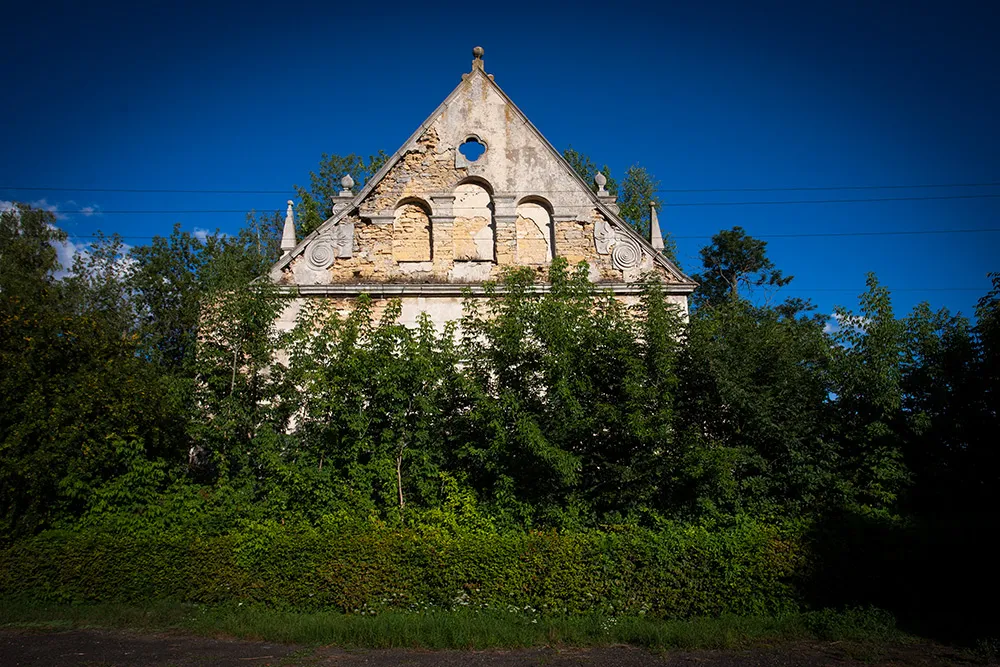
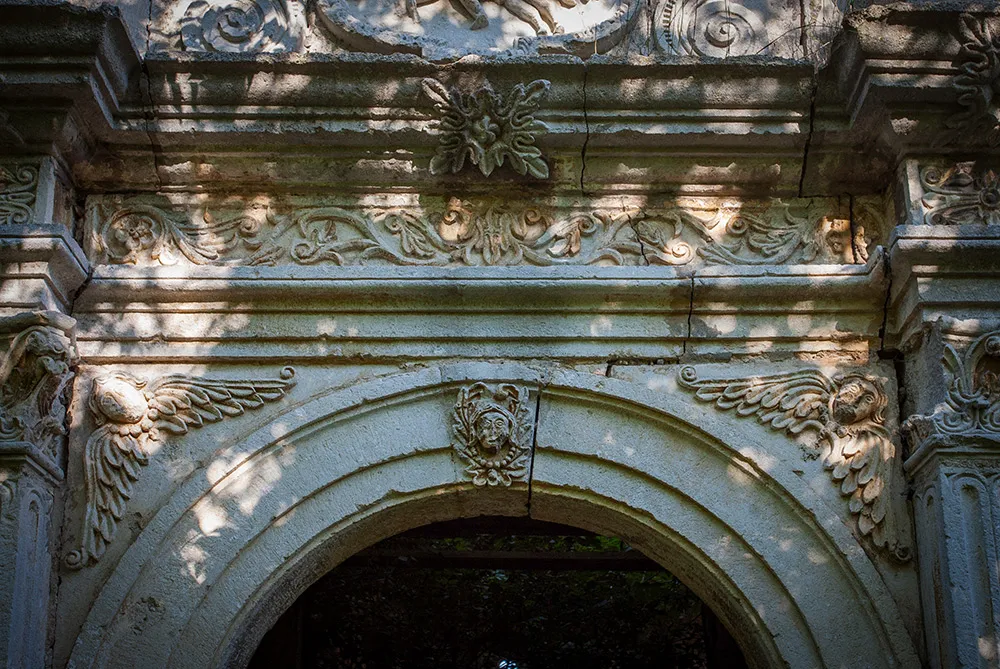
The church, cruciform in plan, was built in the Renaissance style, most probably to a design by the Jesuit Wojciech Rożewski. The pediment is decorated with lavish Baroque carving in the form of scrolls, arched niches, obelisks and stone vases.
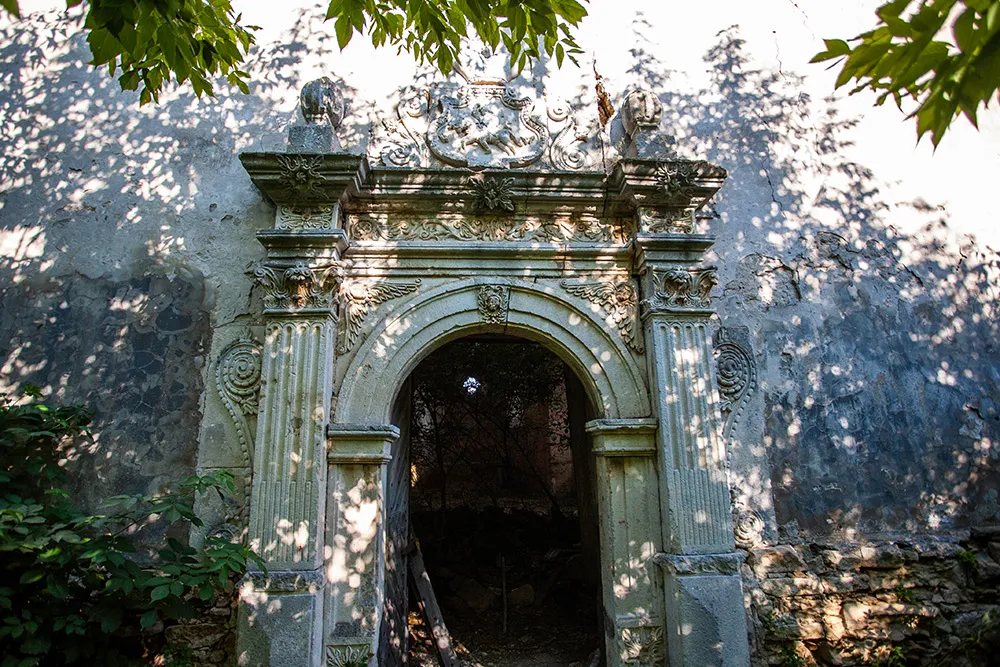
Its main adornment is a magnificent white-stone portal framing the main entrance. It is one of the most beautiful Renaissance portals in Ukraine. It is crowned by a huge coat of arms of the church’s founder Prince Michał Czartoryski, the “Pogoń”. Unfortunately, the photos do not convey that beauty; the “camouflage” of shadows gets in the way.
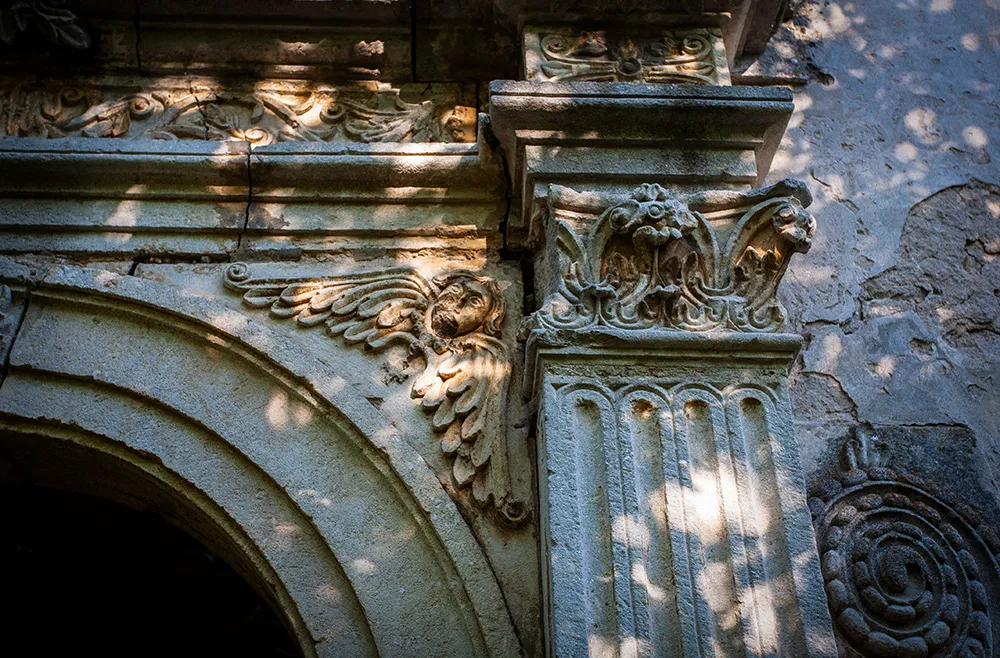
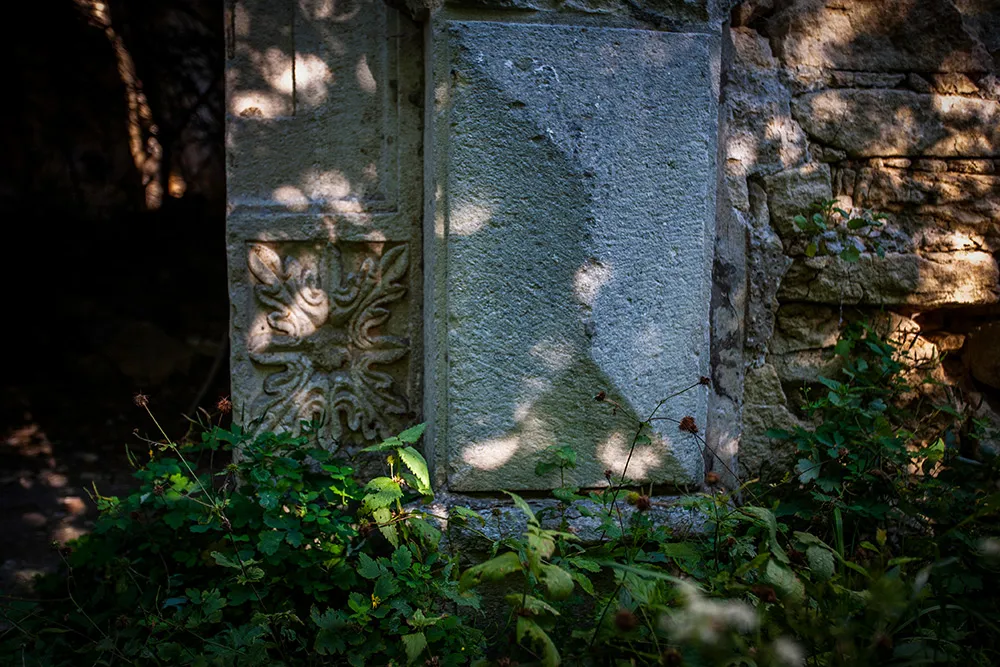
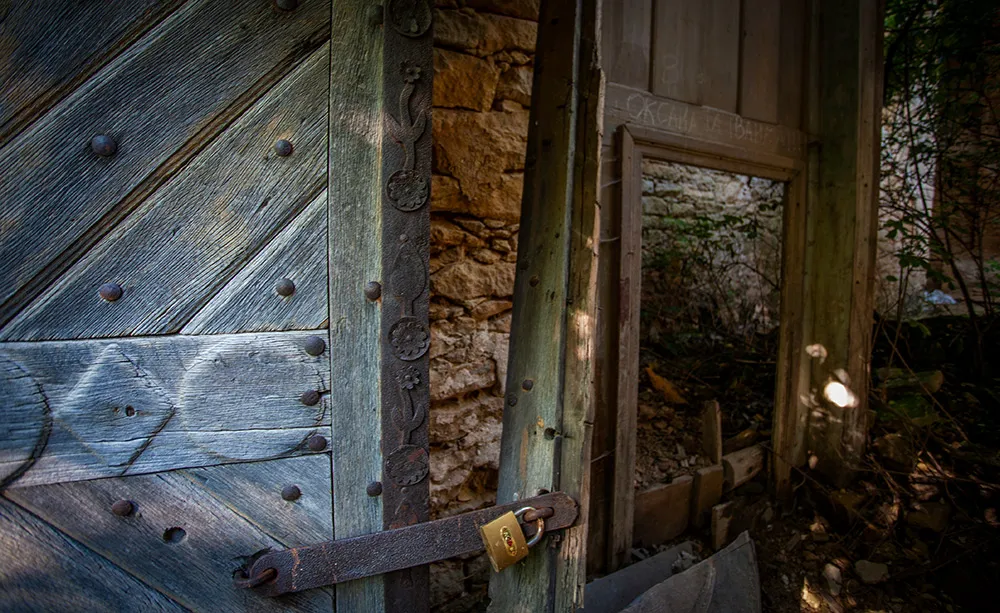
From the beginning the church was a monastery church and belonged to a small Dominican convent, for just 4 monks. The convent (monastery) was maintained by the subsequent landowners of Chernelytsia. In particular, in 1690 it was taken under the patronage of Franciszek Dydyński.
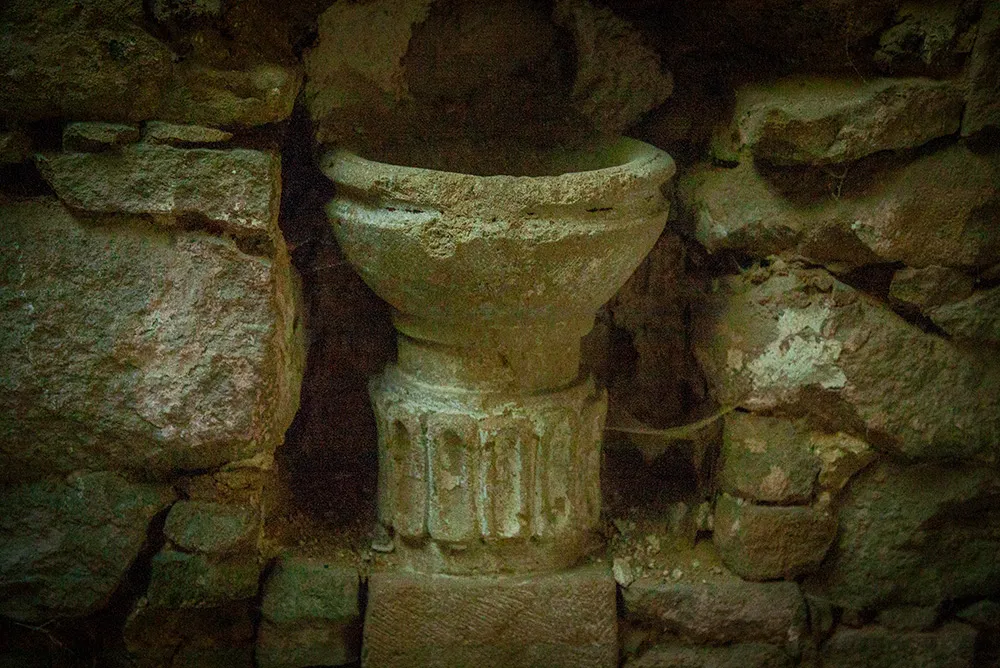
Holy water font by the entrance
It is also known that as of 1708 the church housed two valuable and highly revered copies of the icons of Our Lady of Częstochowa and Our Lady of Studynka.
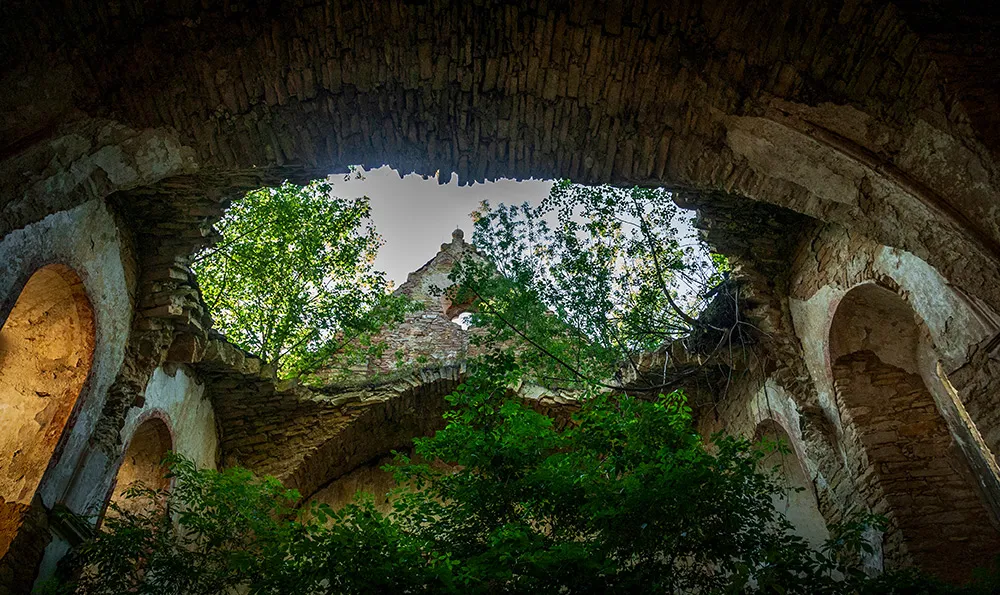
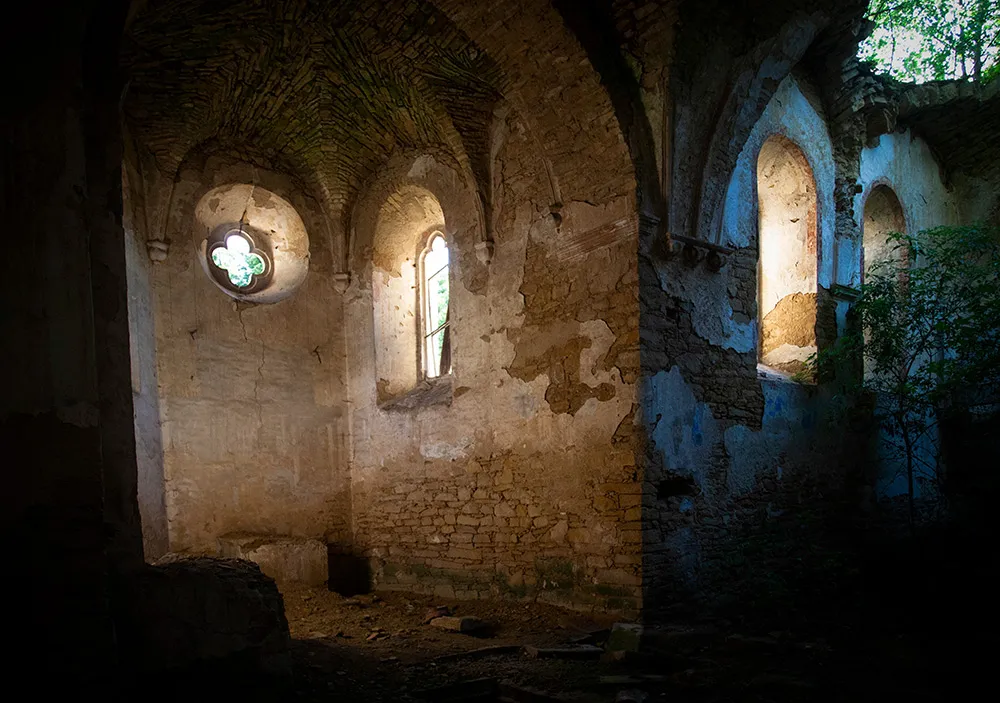
During the Russo-Turkish War of 1735–1739 the government of the Polish–Lithuanian Commonwealth held negotiations with the sultan on concluding an anti-Russian alliance. This became known in St. Petersburg. Therefore, in August 1739, in response, Russian troops besieged Stanisławów (now Ivano-Frankivsk). The “chmoni” (Muscovite rabble) could not take the city in three days (or even more). But they traditionally plundered the surroundings, including Chernelytsia.
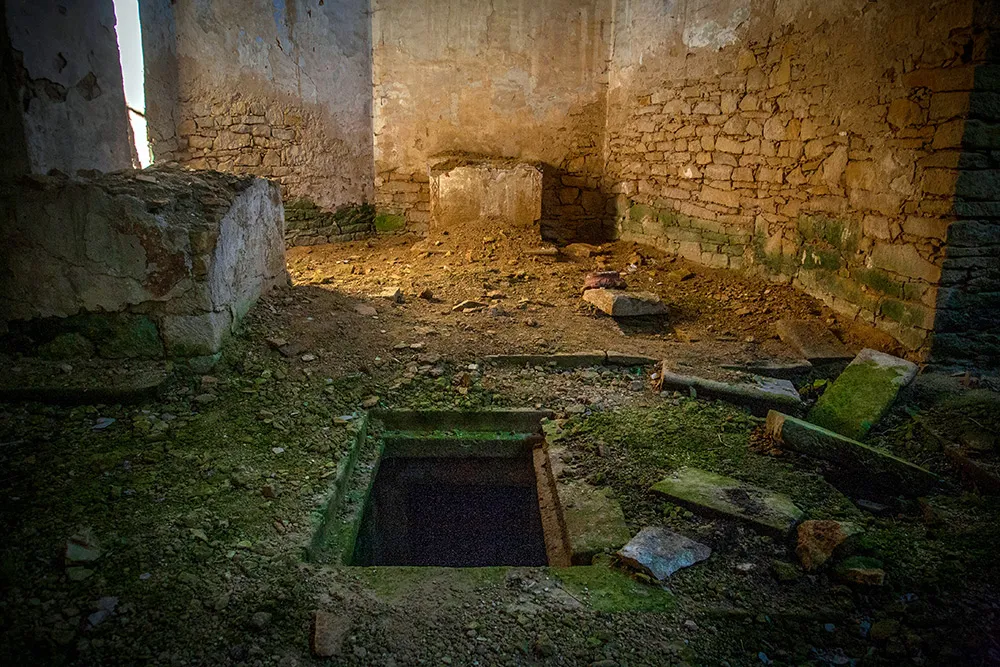
Opened and looted crypts
On 14 April 1787 the Austrian authorities issued a decree abolishing monasteries in the territory of the Austrian Empire. Monasteries, however, were closed gradually, especially in the provinces. The Dominican nuns remained in charge here until 1789.
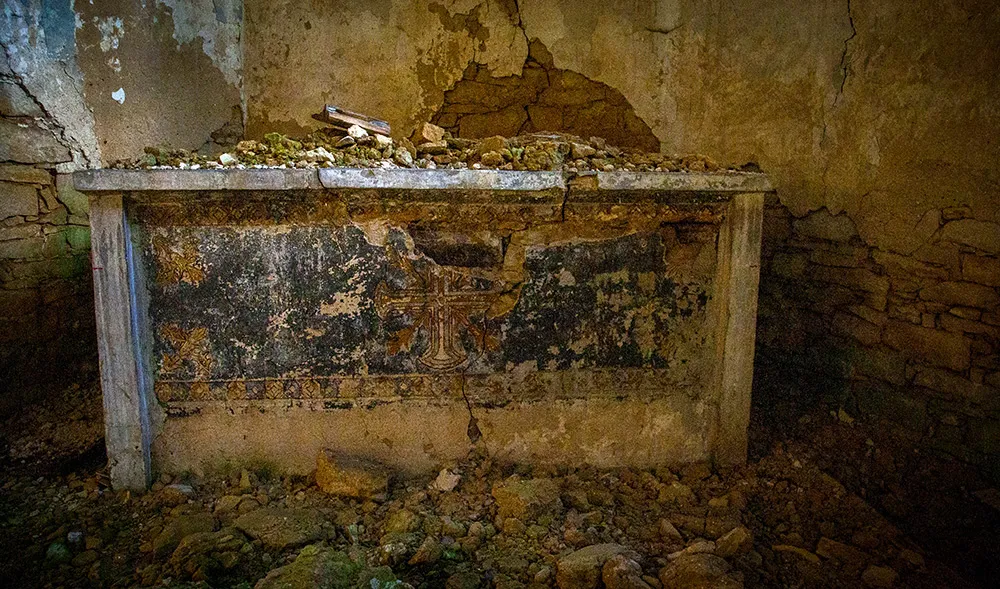
Altar
After the monastery was abolished, the church was reclassified as a parish church. Its name changed at that time as well. From then until its closure in the post-war period the church was dedicated to St. Anthony of Padua. This saint is extremely venerated in Podillia.
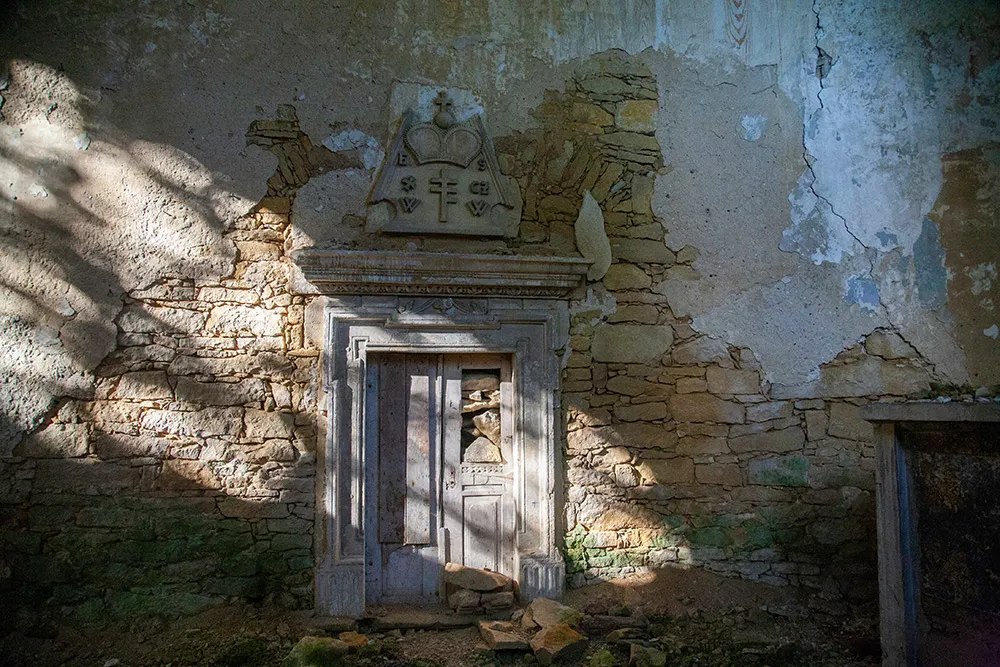
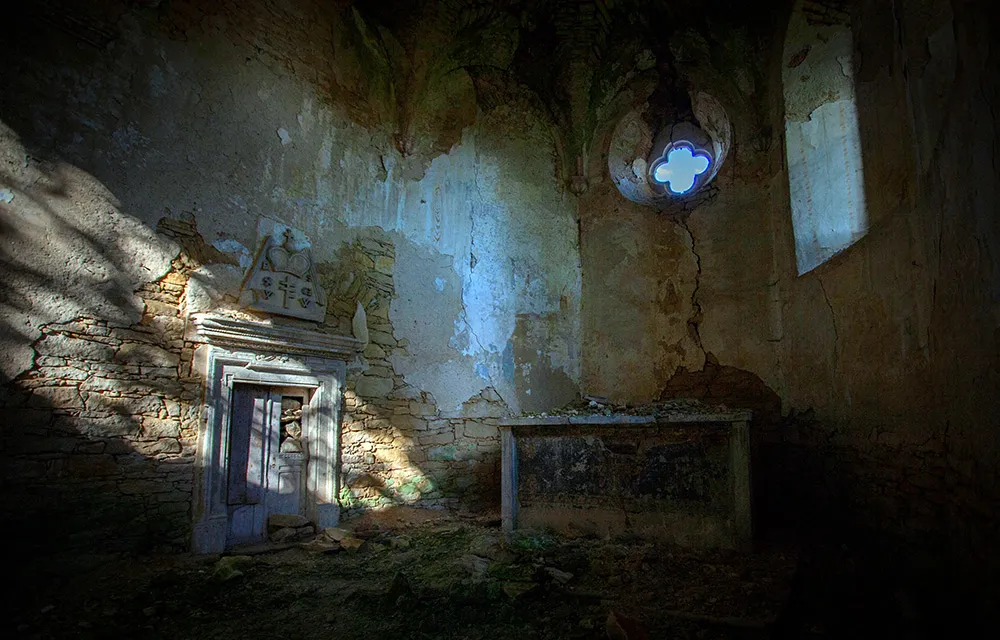
A very beautiful portal that decorates the side entrance from the inside. It is adorned with the “Pilawa” coat of arms, which belonged to Eufrozyna née Stanisławska (“Black-Face”). This is indicated by the letters “E” and “S” (Eufrozyna Stanisławska).
After the Second World War, during the expulsion of the Polish population to Poland, they took with them the main part of the church furnishings: icons, figures and decorative details. Under the “Soviets” a warehouse was traditionally set up in the church.
In 1961 the church was taken under state protection as a monument of history and architecture, and in 1985 a so-so restoration was carried out and even the shingle roof was renewed, which local schoolchildren successfully burned down in 2005. Through carelessness, we should note.
The fire destroyed the roof, part of the vaulting and almost all of the wall paintings. Since then one of the oldest Roman Catholic churches in Pokuttia has been gradually collapsing and falling into decay.
We will tell about the castle later
(To be continued)
Text and photos (as of 2020) by Dmytro Poliukhovych


