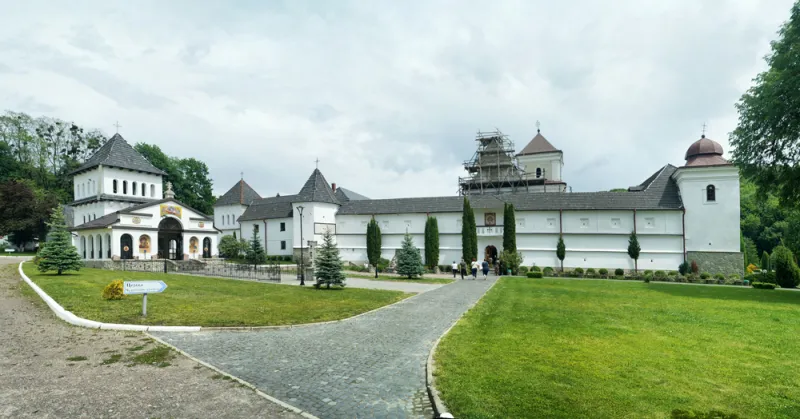
Hustynia. Former Cossack monastery

· 6 min read
Today Hustynia is a small village with a population of 150. It arose in 1600, when the monks Ioasaf and Afanasii from Mount Athos, with the blessing of the abbot of the Kyiv Pechersk Lavra, came here for seclusion and founded a men’s monastery on an island in the floodplain of the Udai River, amid dense forest (hence the name, from “hustyi”, dense). The monastery was consecrated in honour of the Holy Trinity.
Prince Mykhailo Wiśniowiecki took the monastery under his patronage. He gave the monks a substantial land grant: the island and the surrounding forests. The monastery began to develop quickly. Cossacks came here to live out their days, and Hustynia gradually turned into one of the largest Cossack monasteries.
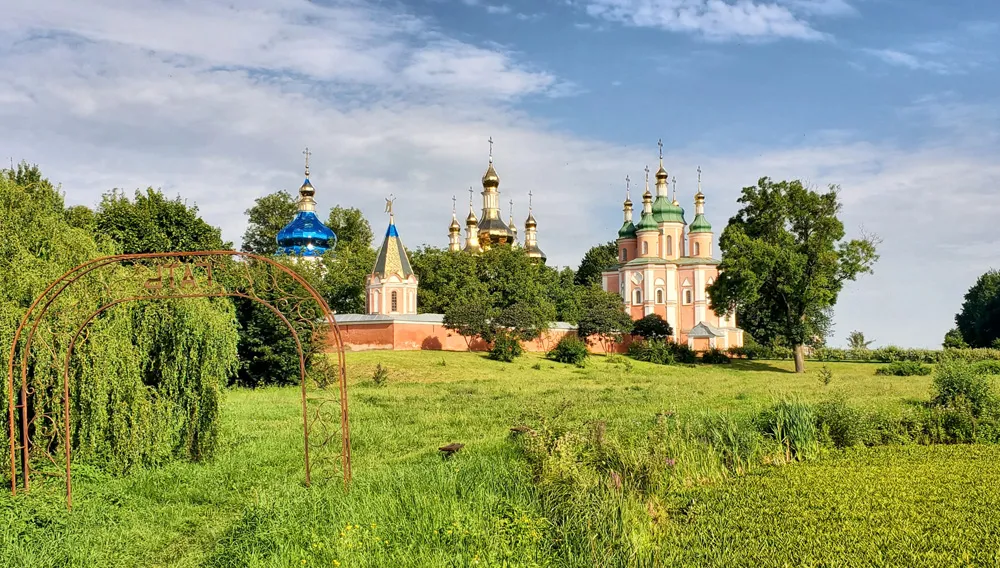
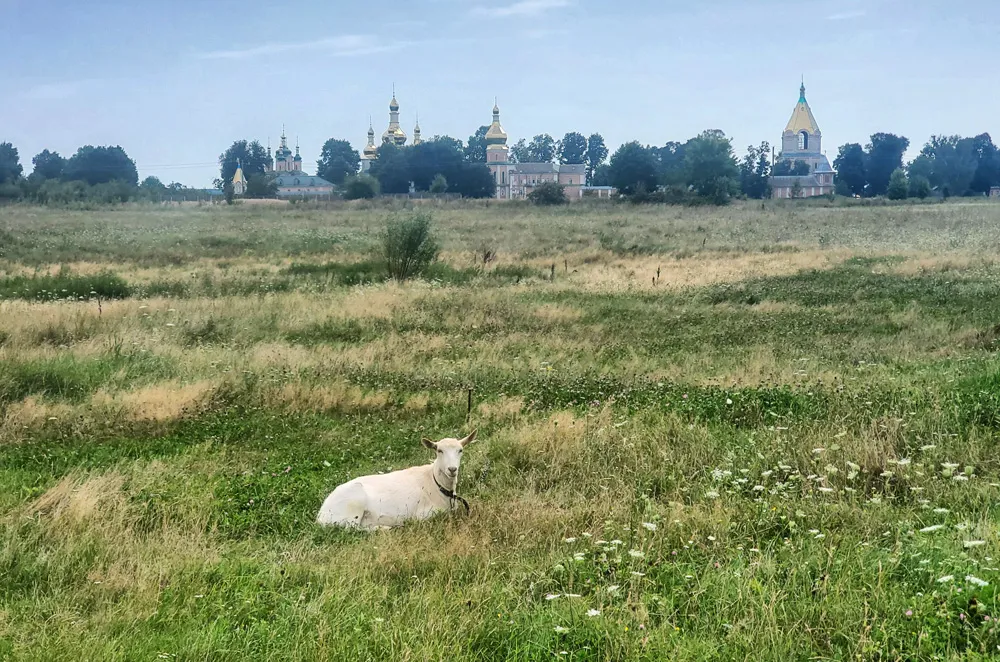
Photo, 2022
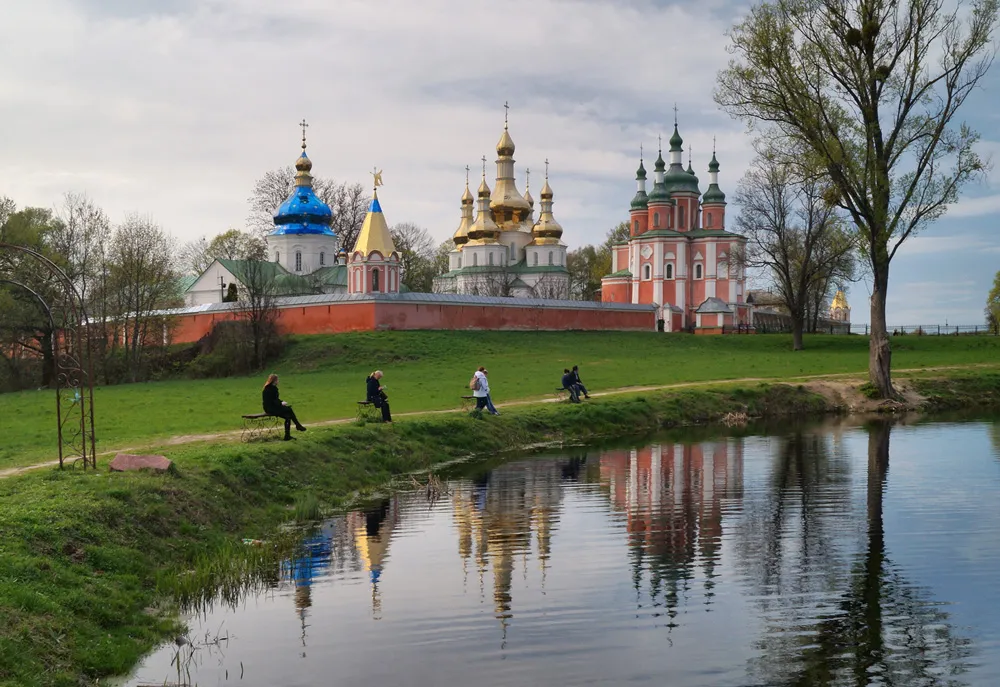
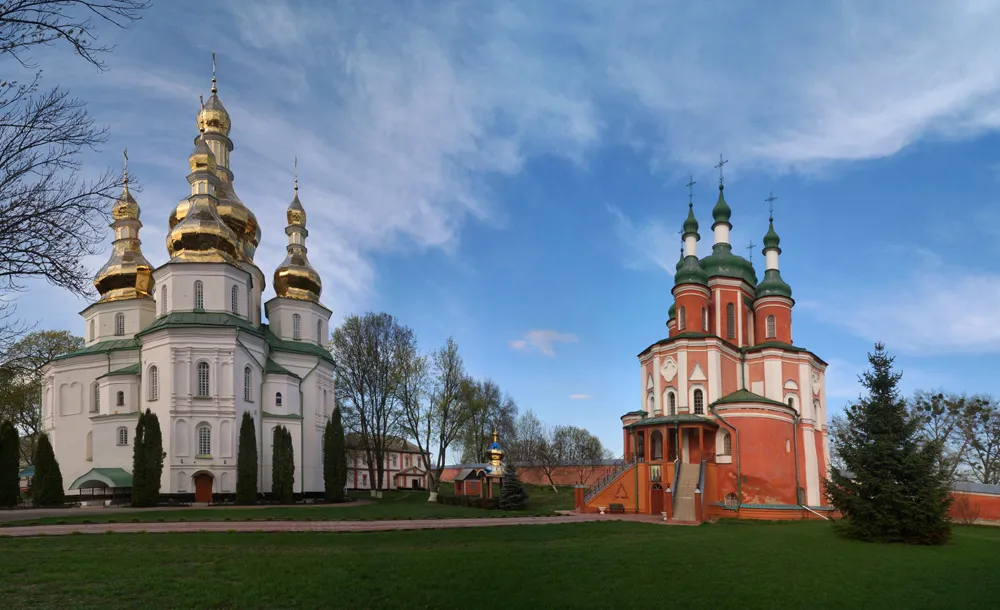
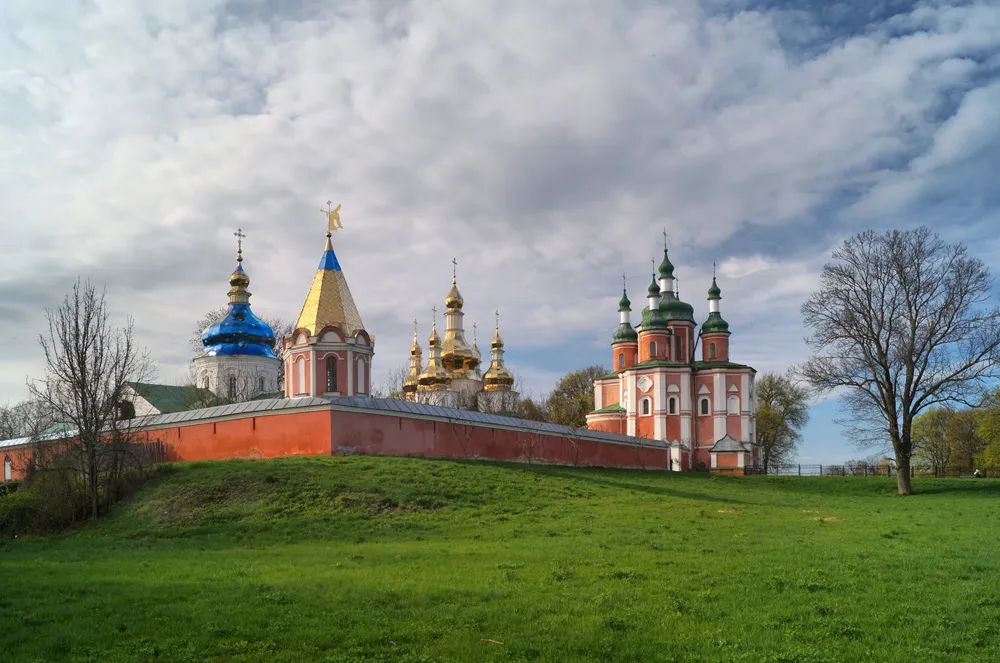
Photo, 2016
In 1623-1627 the Hustynia Chronicle was compiled at the monastery, an outstanding monument of Ukrainian historiography. This document sets out the history of Ukraine from the time of Kyivan Rus to 1640. The unknown author used Old Rus, Polish, Lithuanian, Byzantine and other known sources, and made marginal references to them. But the chronicle is not just a compilation from various sources. It is an original historical work that describes the internal state of Ukraine at that time. The chronicle became well known after the hieromonk Mykhailo Losytsky drew up the main copy of the chronicle in 1670 (in effect, he copied it out). The chronicle is written in a language close to the Ukrainian vernacular of the time.
At first all the monastery buildings were wooden. They burned down and were rebuilt many times. After the fire of 1671, construction of stone buildings finally began, among which one of the first to appear was the Trinity Cathedral, a unique monument of Ukrainian Baroque.
The construction of the Trinity Cathedral was financed by Hetman Ivan Samoilovych. The church was consecrated in 1675. It became one of the most beautiful five-domed churches of the Left Bank.
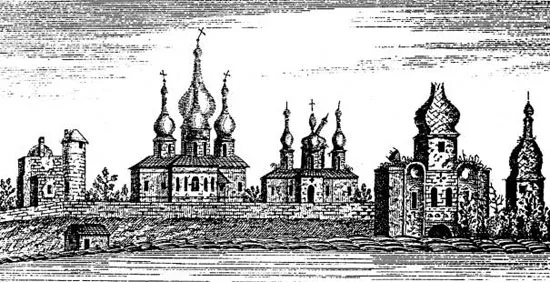
Hustynia Monastery in the early 19th century. Note the Baroque gate on the right
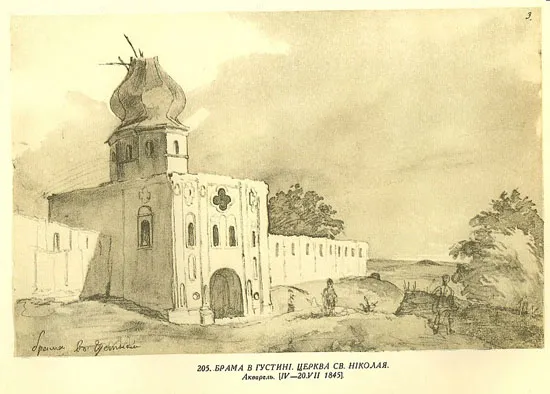
The Baroque gate in 1845. Drawing by Shevchenko.
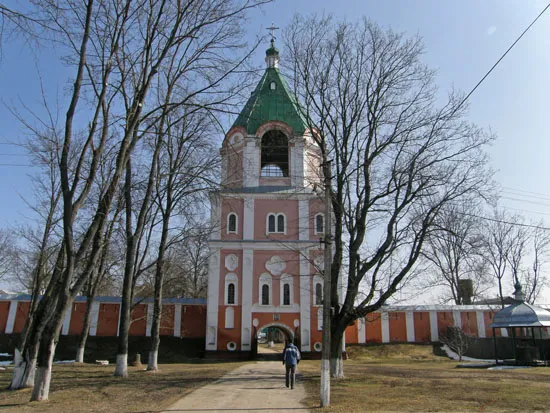
The same gate in 2010…
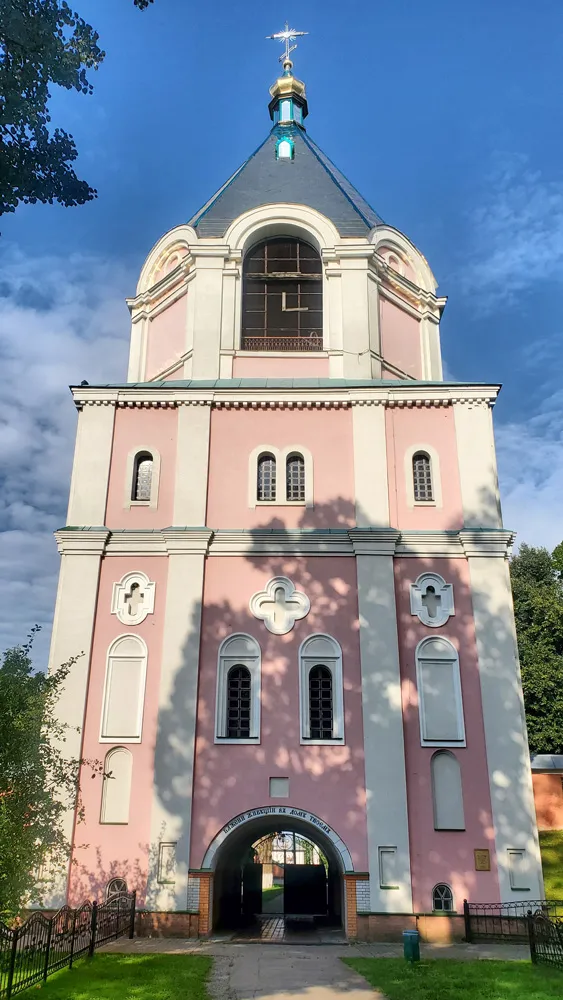
and in 2022. The golden top
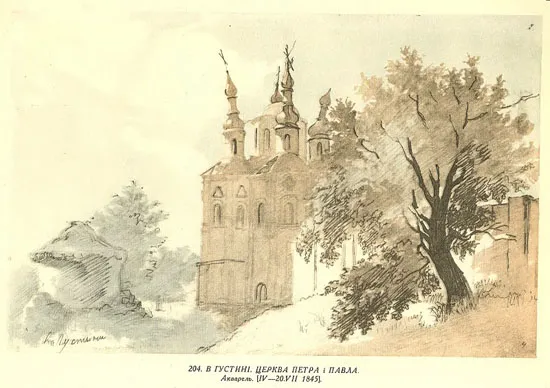
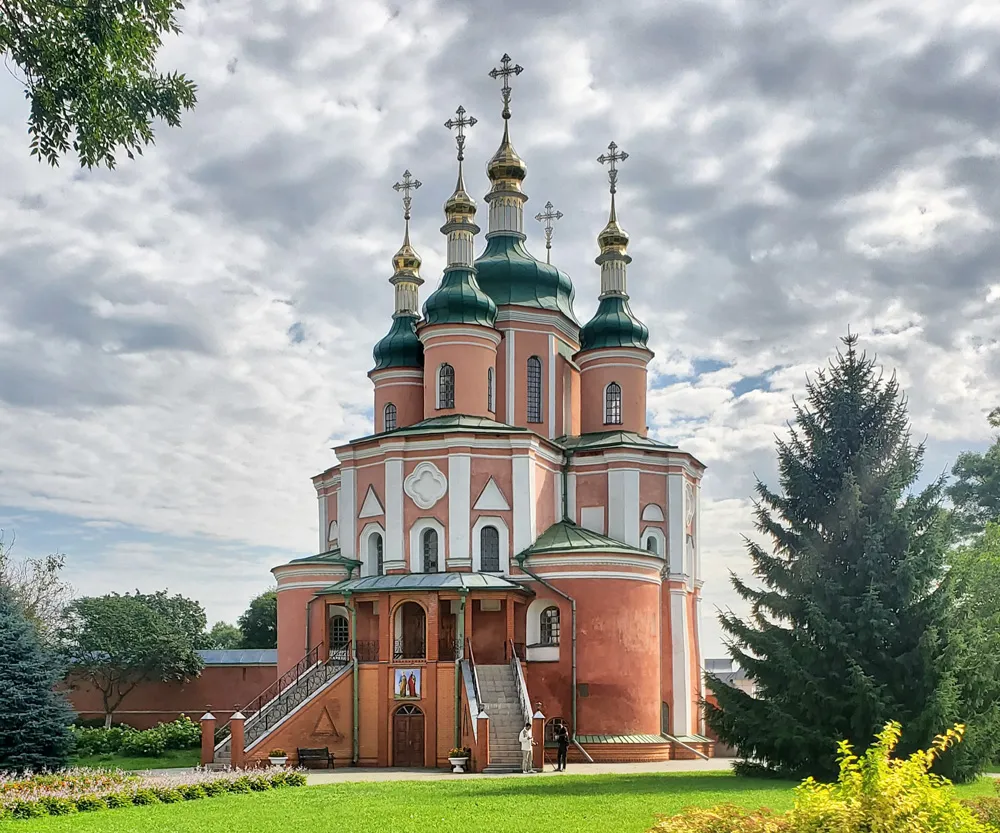
The Church of Sts. Peter and Paul in a Shevchenko watercolour and in a photo from 2022
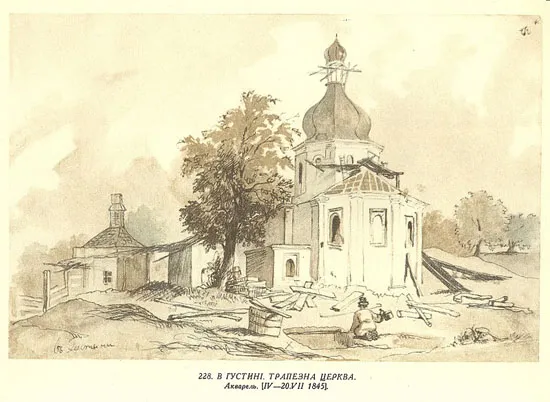
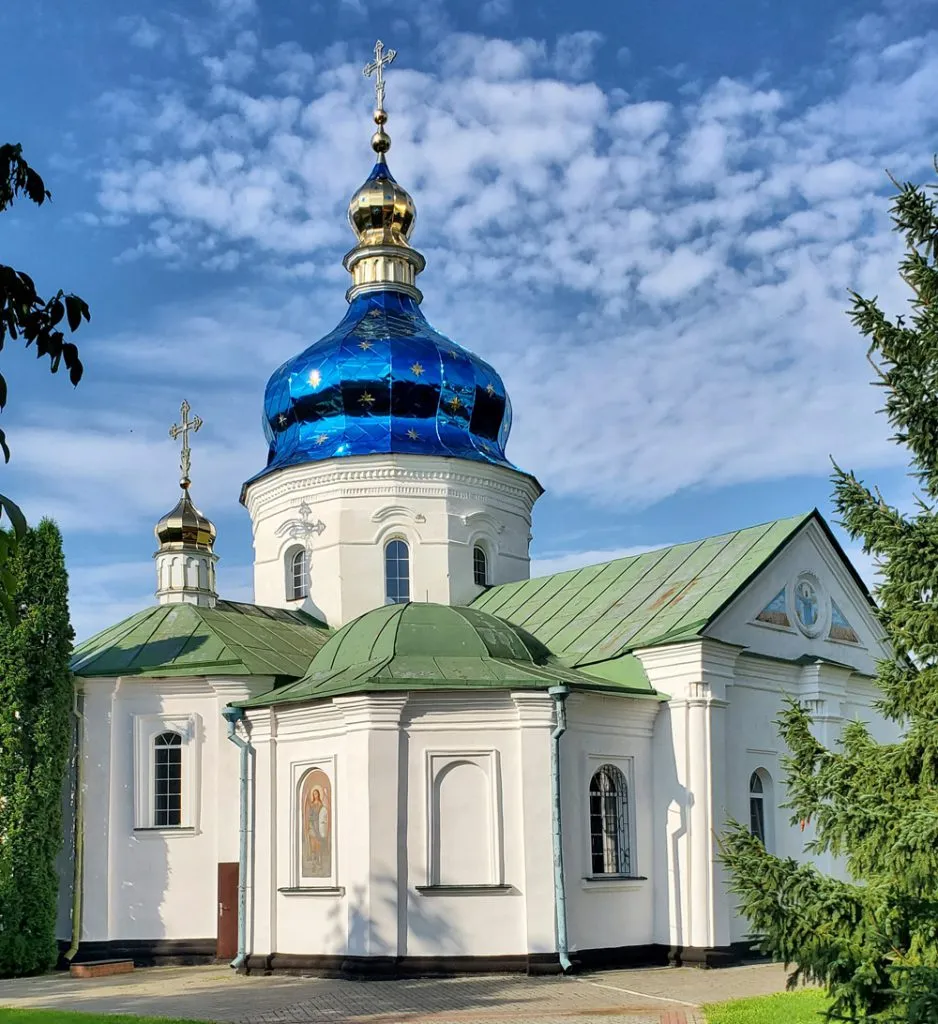
The Ascension (Dormition Refectory) Church in a Shevchenko watercolour and in a photo from 2022
The active rebuilding of the monastery continued in the 1690s. It was financed by the Pryluky colonel Dmytro Horlenko. At that time the monastery was surrounded by a high defensive wall, which was covered at the corners by corner towers. The wall had two-tiered arcades, passages on the inner side and narrow loopholes. In later years it was rebuilt many times and gradually lost its defensive capability (and the need for it disappeared as well). The monastery’s defensive walls have come down to the present day completely altered.
Three large, powerful gates were set into the system of walls. Over the western gate, at Dmytro Horlenko’s expense, the St. Nicholas Church was built. For a long time it was a typical single-domed Baroque building. That is how Taras Shevchenko drew it during his visit to the monastery in 1845. But in the second half of the 19th century the church was rebuilt beyond recognition. It turned into a typical Pskov-Novgorod-style three-tiered gate bell tower with a tall tented top. It is like that now, but despite this I have to say that the St. Nicholas Church is quite a fine building.
Over the eastern gate the same Horlenko built the Church of Sts. Peter and Paul. This building is now considered one of the most beautiful defensive churches in Ukraine. The lovely five-domed church seems so delicate and light that it is hard even to imagine that it is a fortress church that was meant to defend one of the monastery gates during enemy attacks.
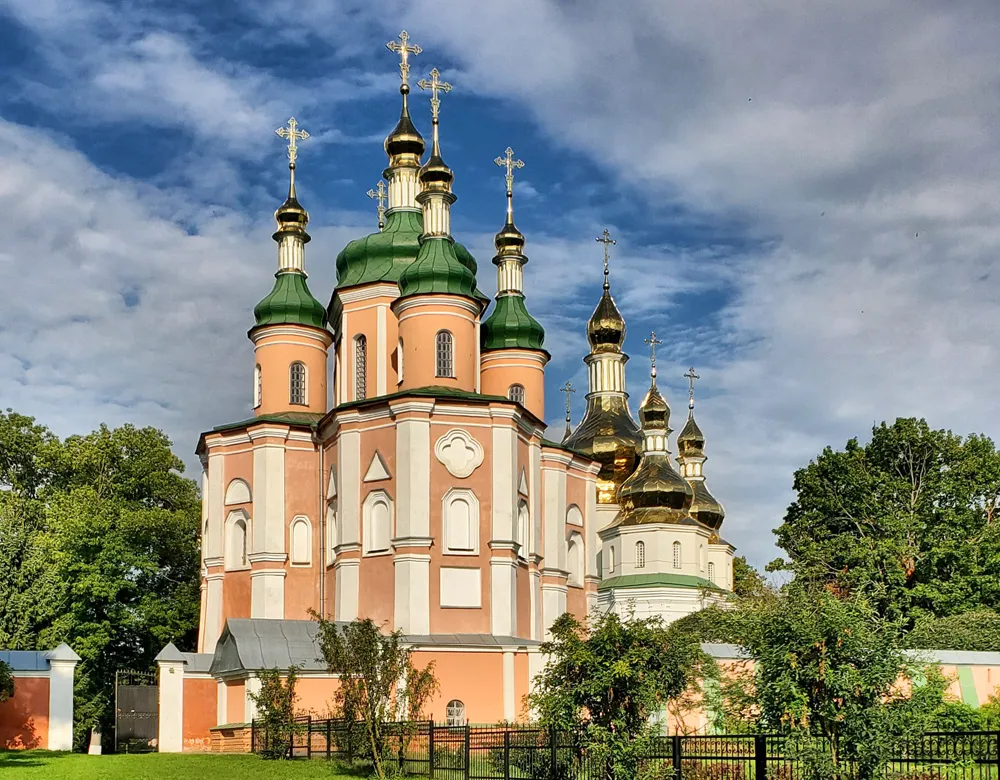
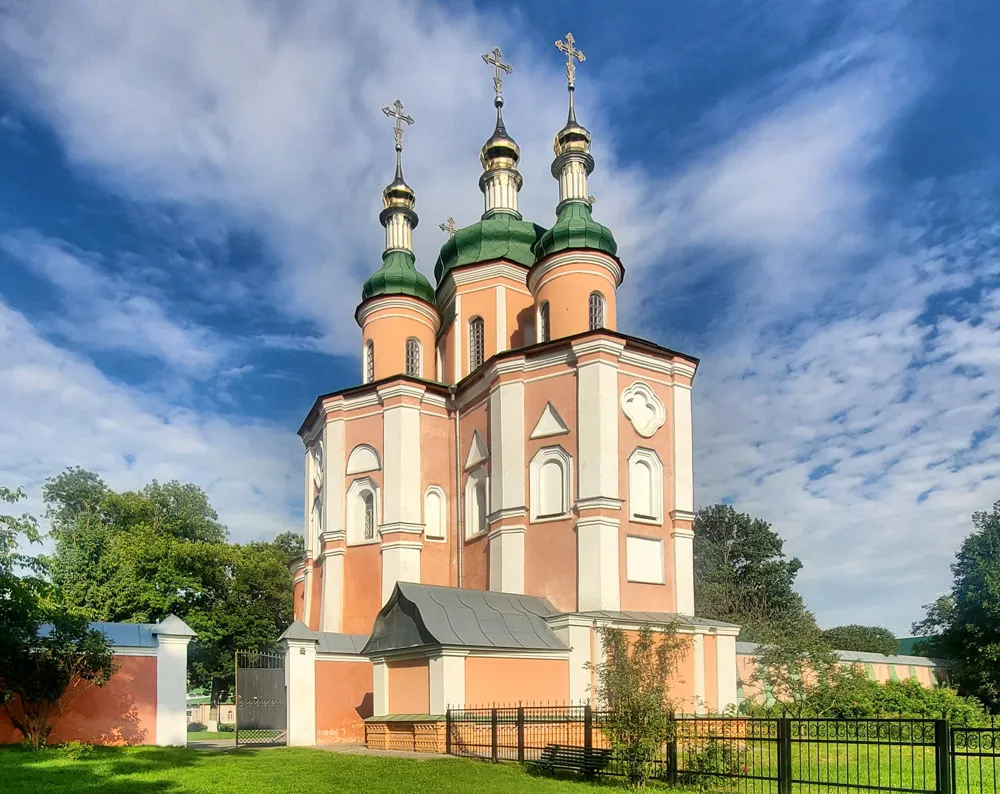
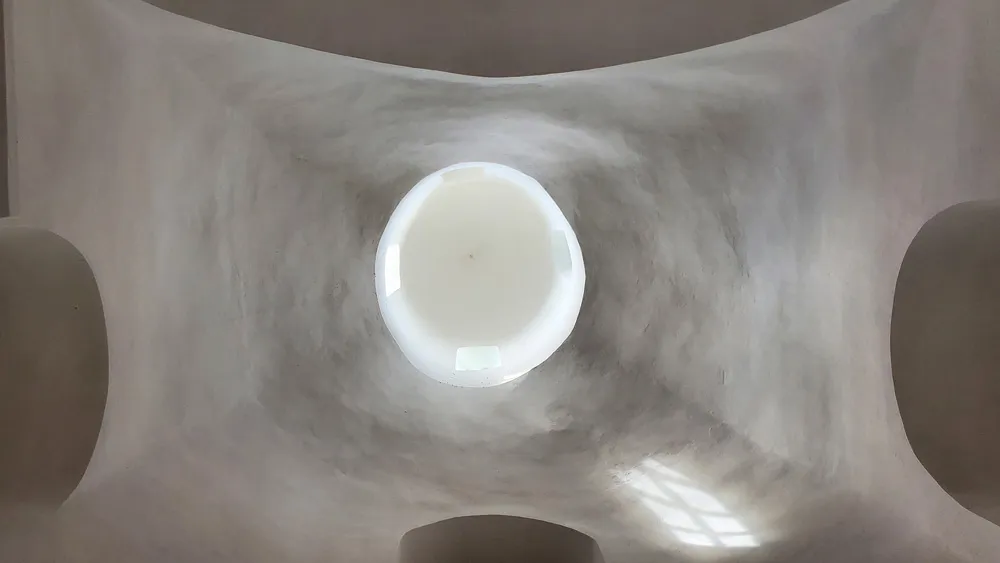
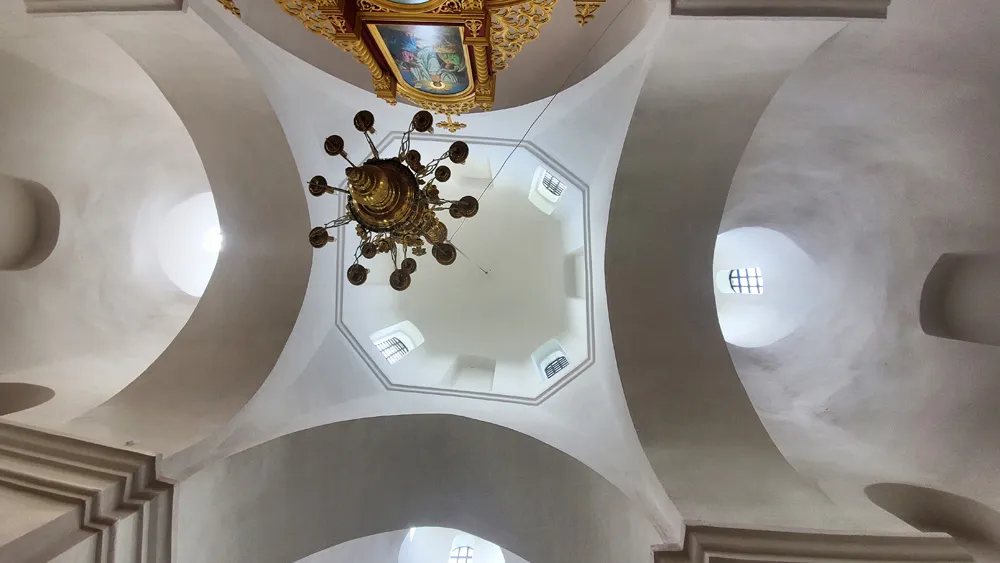
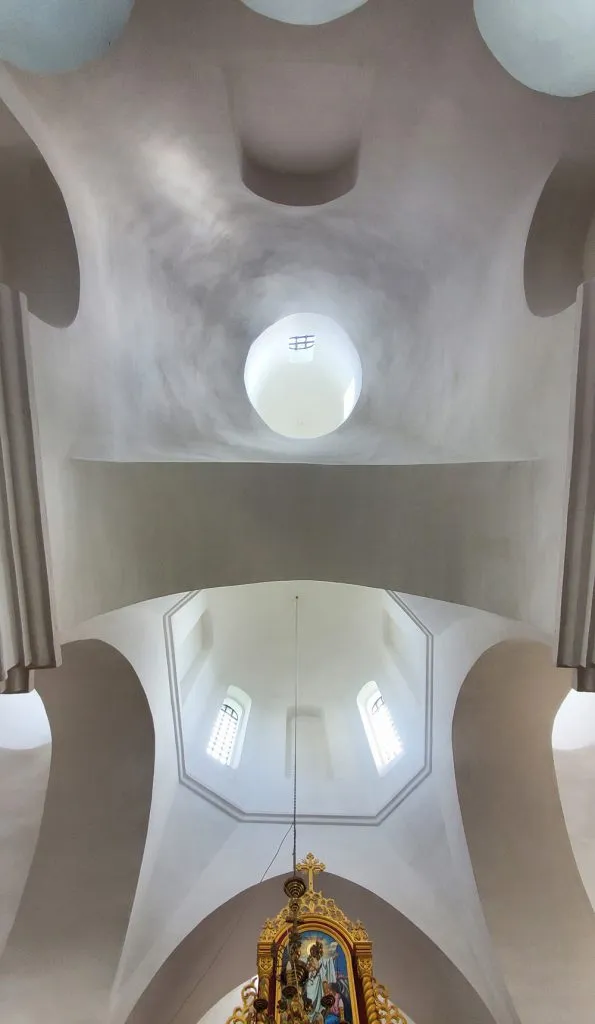
Church of Sts. Peter and Paul
Another shrine of the monastery is the Resurrection (Dormition) Church. Its construction began as early as 1636. But it is not known what it was like until Ivan Mazepa rebuilt it completely. It acquired its present appearance only in 1844.
Cells and a refectory chamber were attached to the church, so it was often called the Dormition Refectory Church. In 1845 the Governor-General of Little Russia, Mykola Repnin, was buried under the Resurrection Church. Later a crypt was built under the church, and it became the family burial vault of the Repnin-Volkonsky family.
Mykola Repnin-Volkonsky was descended from the Rurikids of Chernihiv. St. Michael of Chernihiv was his great-great-great-great-grandfather. But this does not at all explain why Mykola Hryhorovych systematically and repeatedly defended the interests of Ukraine and the Ukrainian Cossacks before the tsar and his government. He did not allow the Cossacks of Chernihiv and Poltava provinces to be resettled, he preserved their status, and it was he who defended the rights of the Left Bank Cossacks, not allowing them to be turned into peasants. He initiated Bantysh-Kamensky’s “History of Little Russia”, and he wrote to the tsar himself a “Brief Note on the Little Russian Cossacks”, in which he asserted that the Cossacks were autochthonous, that they themselves developed and settled the frontier lands while Russia was suffering under the Tatar yoke. Some historians claim that Repnin-Volkonsky sought the restoration of the regimental Cossack system and of the Hetmanate. The Russian autocrats could no longer tolerate that: in 1834 the prince was dismissed from the post of military governor-general. He was accused of separatism.
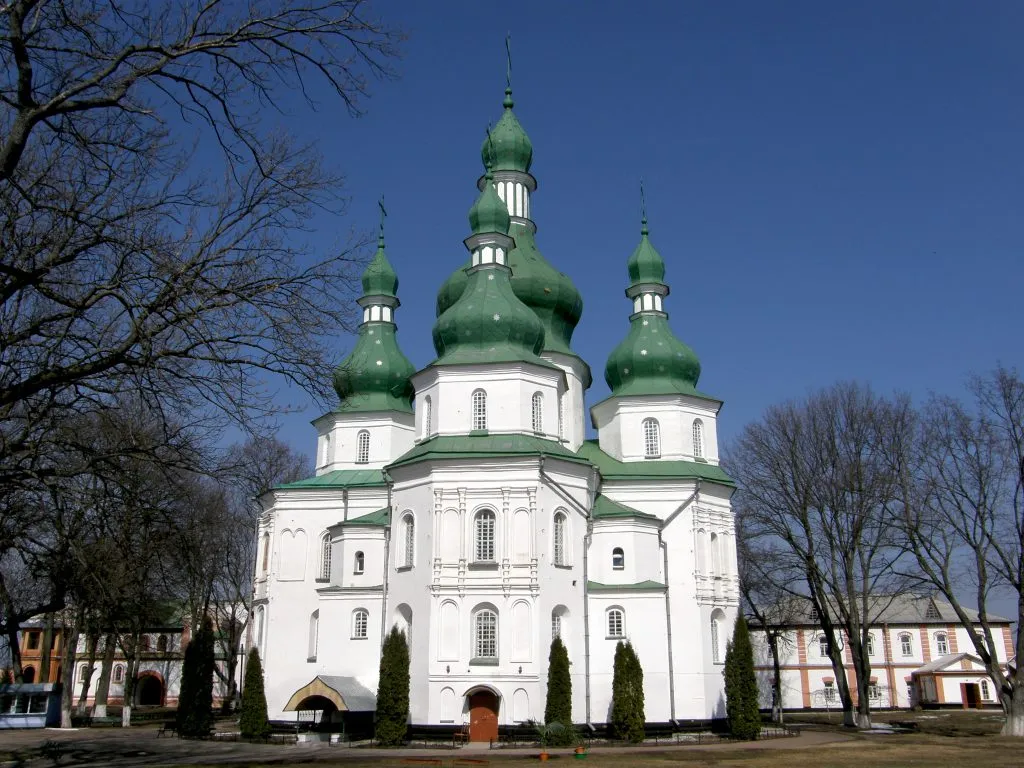
The Trinity Cathedral in 2013
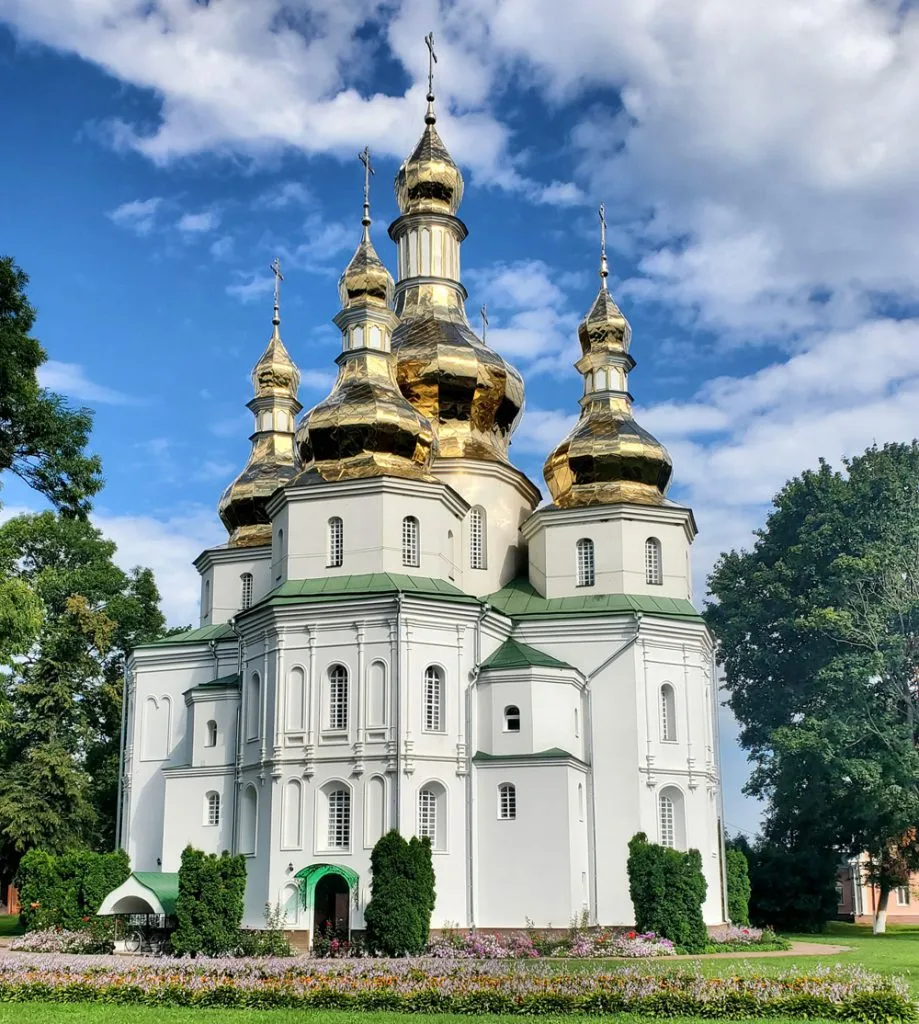
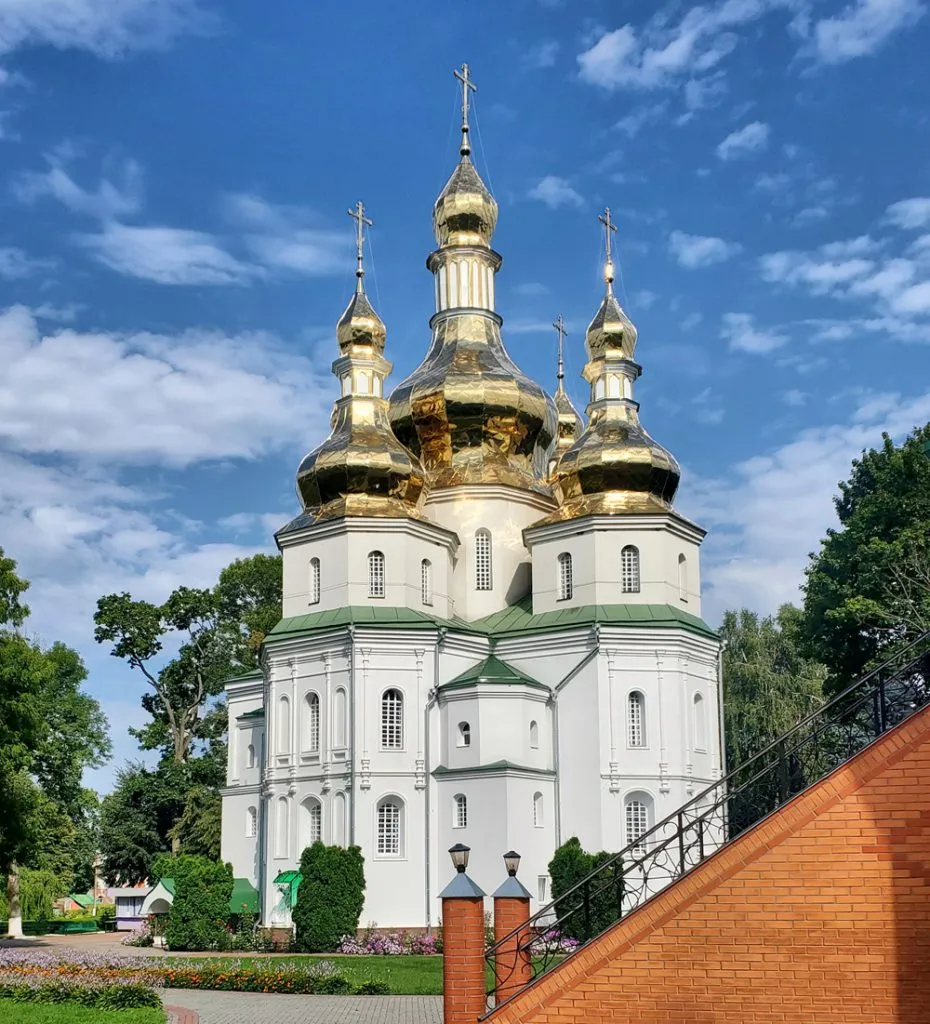
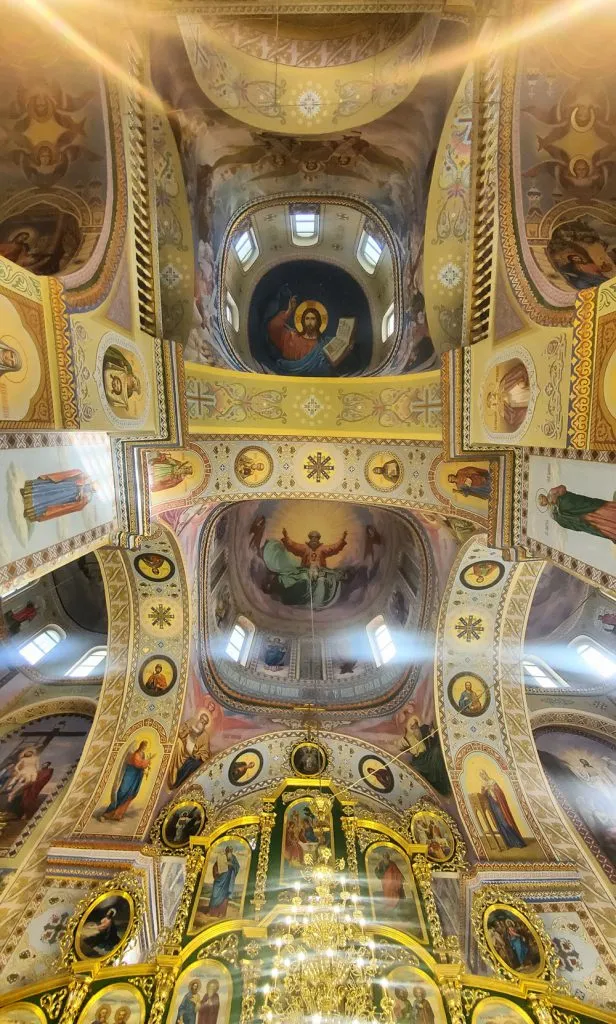
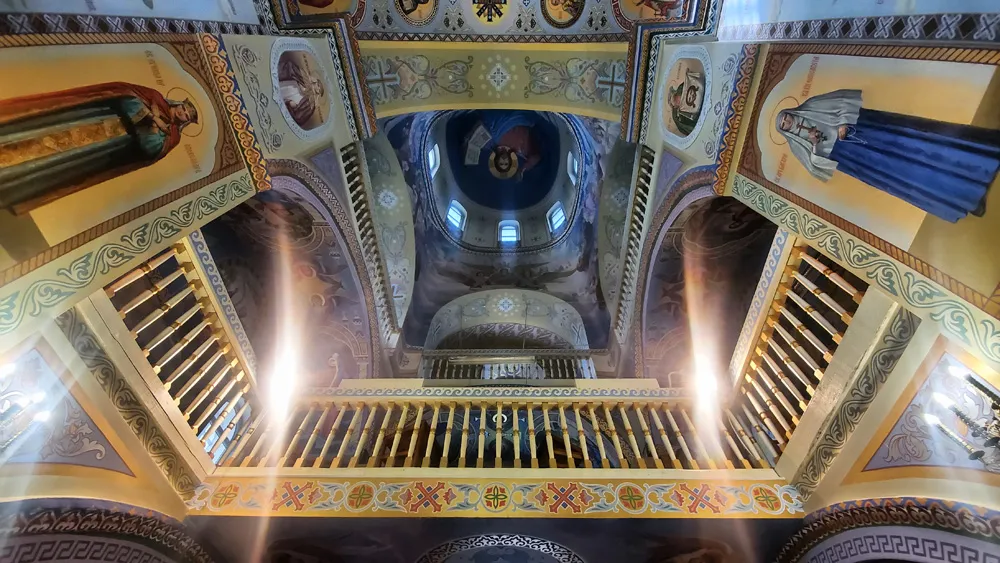
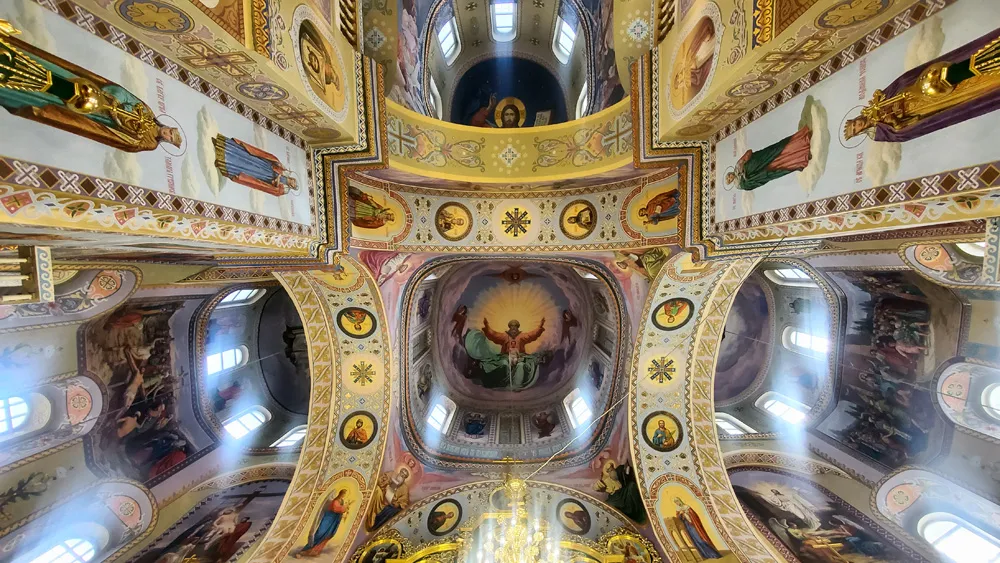
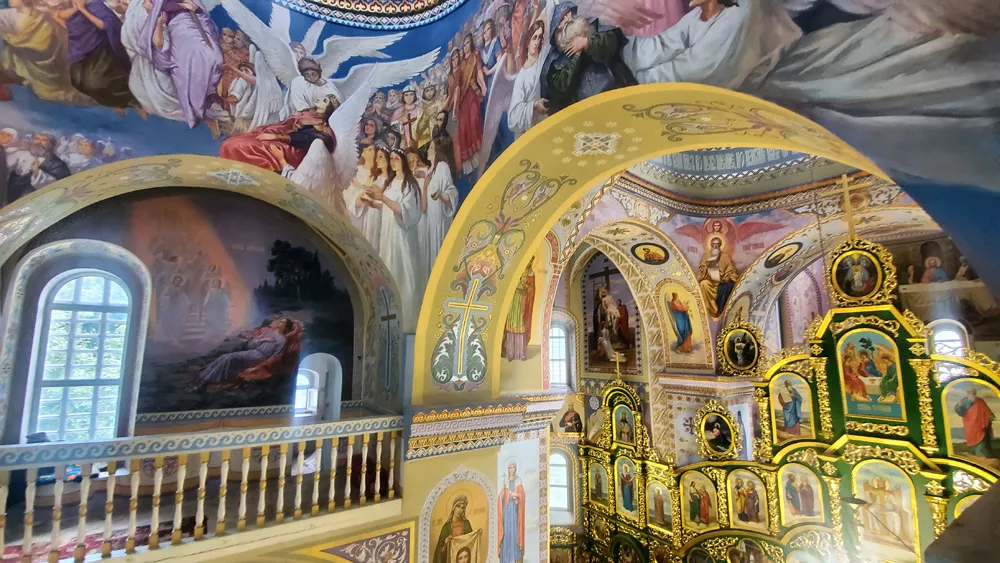
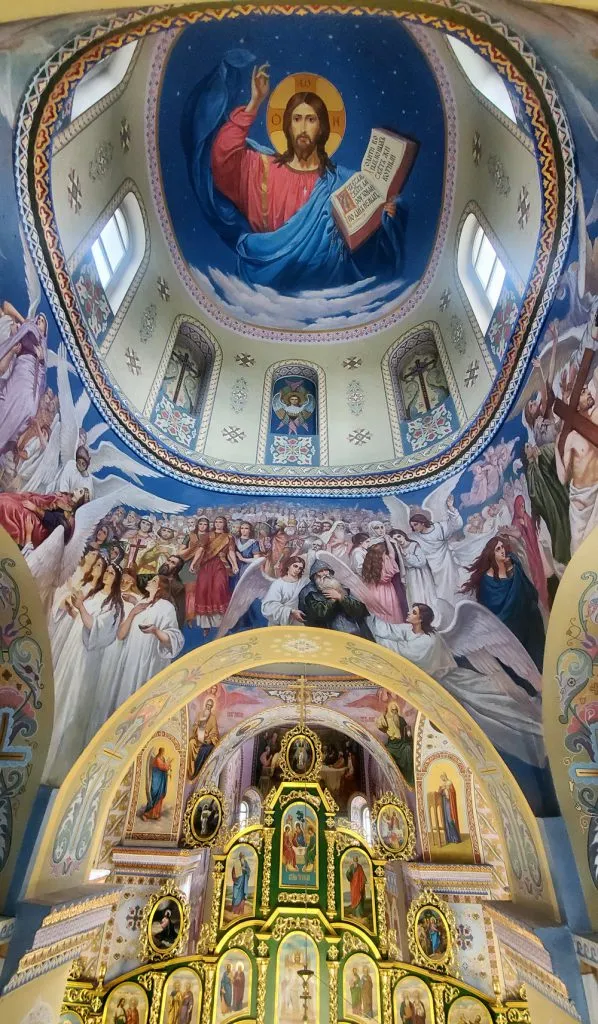
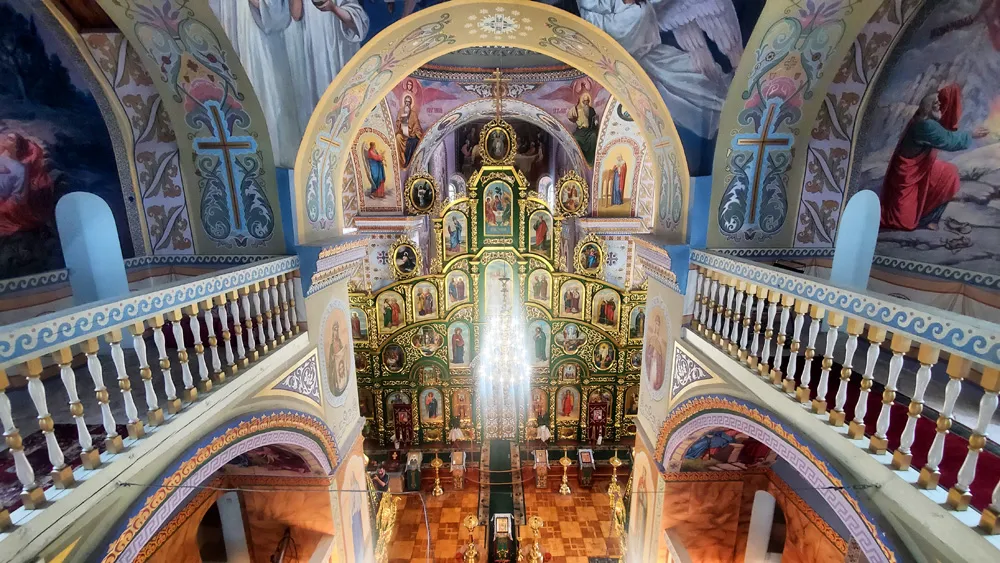
The Trinity Cathedral in 2022
Repnin-Volkonsky is believed to have been a member of a Masonic lodge and, interestingly, a member of a secret organisation of which we found only a single mention, the Society of United Slavs. The aim of this organisation was the destruction of the Russian Empire and the creation of a federal union of democratic republics.
On the territory of the Hustynia Monastery there is another church, of St. Barbara. It was built in 1719 and is part of the abbot’s house. Judging by archival photos of the monastery, the church has been greatly rebuilt.
The Hustynia Monastery is a unique architectural complex, wonderfully set into the surrounding landscape. In addition, it is perhaps the best-preserved Cossack monastery. Although the monastery’s fate was not an easy one, since it was closed twice for long periods. The first time was in 1793. It stood empty for more than half a century. The second time the monastery was closed was in 1920. The Soviet authorities set up in the monastery’s walls and churches first a colony for juvenile offenders and then a psychoneurological hospital, which remained here until 1991.
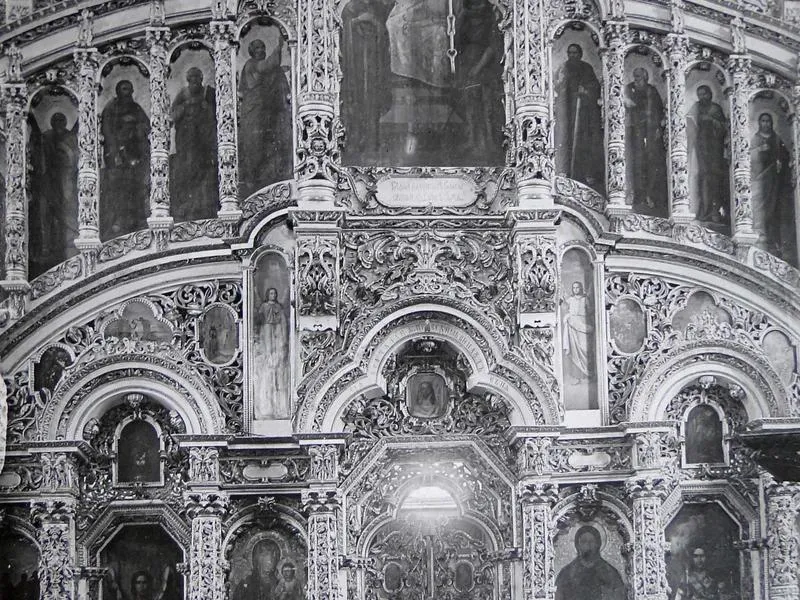
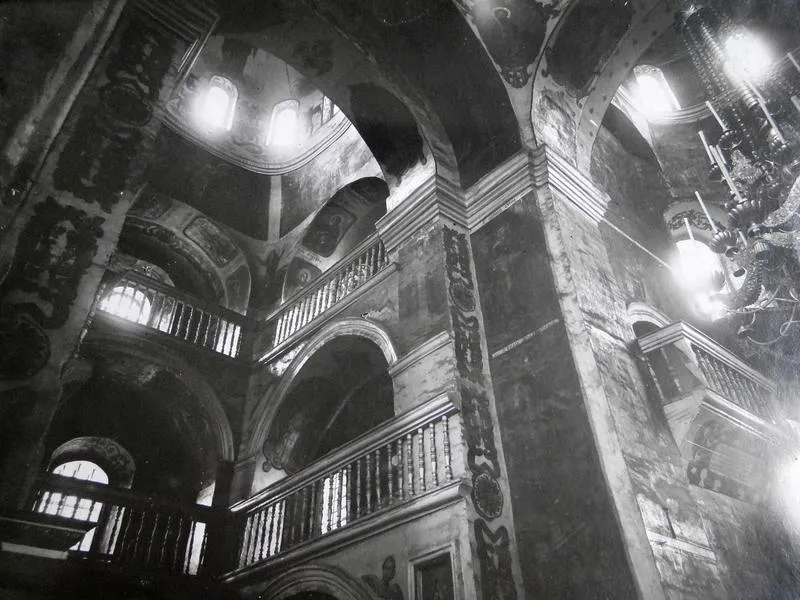
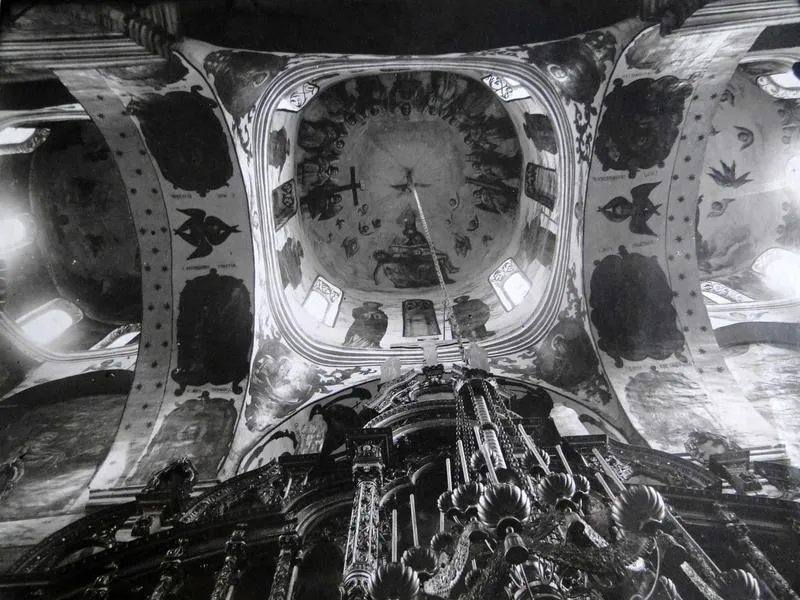
Baroque paintings of the Trinity Cathedral in a photo of 1930. Photo by Serhii Taranushenko, 1926.
Today the Hustynia Monastery is a women’s monastery of the UOC-MP. It was restored in the years of independence, often without observing architectural norms. Many buildings have been disfigured by new roof coverings; in particular, gold-coloured domes were stuck on the Trinity Cathedral, and a blue-and-gold one on the Dormition Church, absolutely unnatural and unhistorical. The management received no permits to replace the domes; this was done without authorisation. The Trinity Cathedral was “insulated”: a unique architectural masterpiece was clad in polystyrene foam, destroying the Baroque decoration of the windows in the process. In effect, this is a criminal offence, damaging an architectural monument of national significance.
The paintings of the Trinity Cathedral have also been completely distorted: instead of the unique Baroque paintings, the painters created relatively primitive pictures, bright but absolutely without any value, and with a Russian slant, at that. Interestingly, photographs of the church’s Baroque paintings have survived, but they were simply ignored.
Text and photos by Roman Malenkov