

Krylos. Ancient Halych

· 8 min read
Krylos is a village in Halych district of Ivano-Frankivsk Oblast, on whose territory in the Middle Ages stood Halych, the capital of the Galicia-Volhynia state.
The first chronicle mention of the Cathedral Church of the Mother of God in Halych, under the year 1187, is connected with the death and burial of Prince Yaroslav Volodymyrovych (Osmomysl), who in life “himself came to the church order and arranged the krylos well” (“к церковному чину сам приходя и строя добре крилос”), and with the hypothesis that the village’s present name derives from the name of the episcopal seat, “Krylos”. Thus written evidence records the existence in the 12th century, at the Dormition Cathedral, of a “krylos” (a so-called chapter).
The main capital church was also the place of enthronement of the princes of Halych. In 1215 the coronation of the Hungarian prince Coloman as King of Halych took place here.
The Halych Dormition Cathedral was not only the compositional and sacral centre of the princely town, next to which stood the princely and episcopal (later metropolitan) courts, but also served as a fortified citadel (Latin “ecclesia incastellata”, “a stronghold on the church”), as shown by the descriptions of events in 1219 and 1254.
The villages of Pidhorodia (now the left-bank part of the village) and Chetverky have been merged into Krylos. Source: Wikipedia.
Halych detinets
The Halych detinets is the core of Old Rus Halych, the capital of the Principality of Halych and later of Galicia-Volhynia.
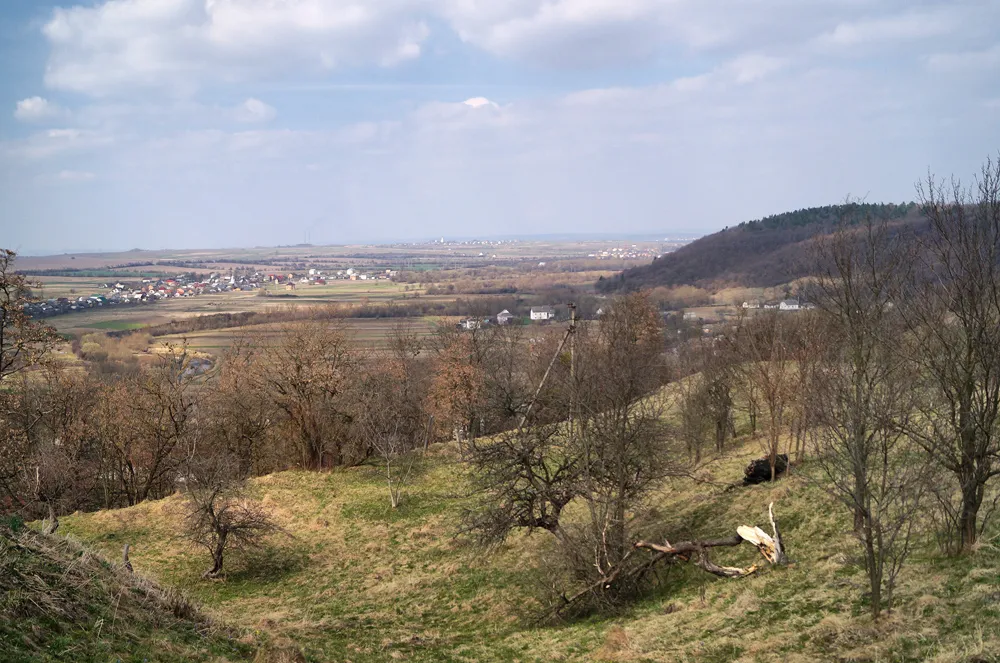
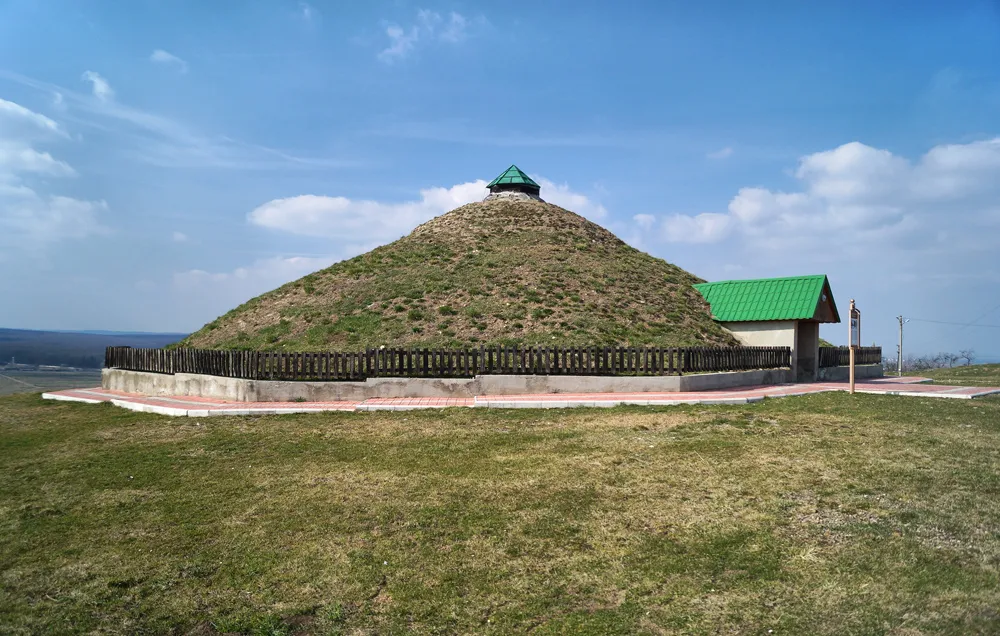
The hillfort of ancient Halych is located on the territory of the village of Krylos in Halych district of Ivano-Frankivsk Oblast[1]. It sits on a cape-like spur of the high bedrock bank of the Lukva River, a right tributary of the Dnister. On the south the cape was protected by the cliff of the bank and washed by the river, and on the east it was bounded by the steep, hard-to-pass ravine of the Mozolevyi stream, a right tributary of the Lukva. The height of the cape above the river is about 70 m. On this impregnable hill, from whose summit the surroundings can be observed well, stood a fortress that in the 12th-13th centuries occupied about 50 hectares.
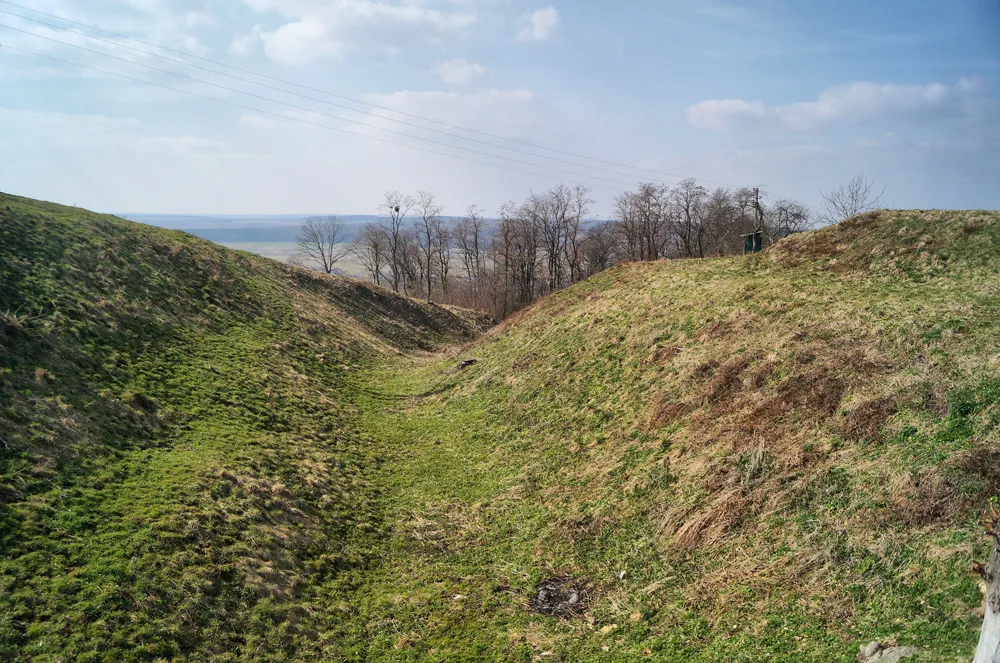
The cape, protected by natural obstacles, was additionally fortified with man-made structures. From the south, the landward side, it was defended by three powerful lines of ramparts and ditches. About 1,300 m from the tip of the cape a defensive line of triple ramparts and ditches was built, linking the steep bank of the Lukva with the ravine of the Mozolevyi stream and cutting off the cape on the landward side right at its base. The length of this line is about 600 metres. In the central part of the ramparts there is a gap, protected on the outside by earthen mounds, which are probably the remains of the town’s main gate.
About 500 metres to the north the cape was crossed by a second, arc-shaped line of fortifications, consisting of two powerful ramparts with a deep ditch between them. The maximum height of the rampart from the level of the hillfort’s inner platform is 10 metres, and from the bottom of the ditch 15 metres. The total length of the line is 624 m. Both ramparts, especially the outer one, have been considerably dug away in our time. In the eastern part of the defensive line there is a gap called Vorotyshche, through which the village’s main street runs today.
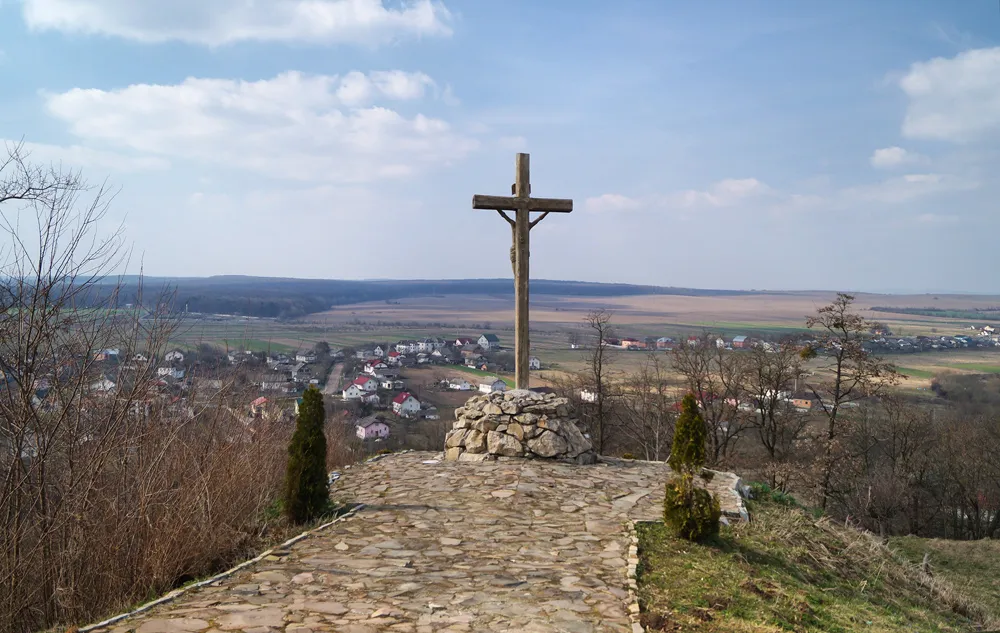
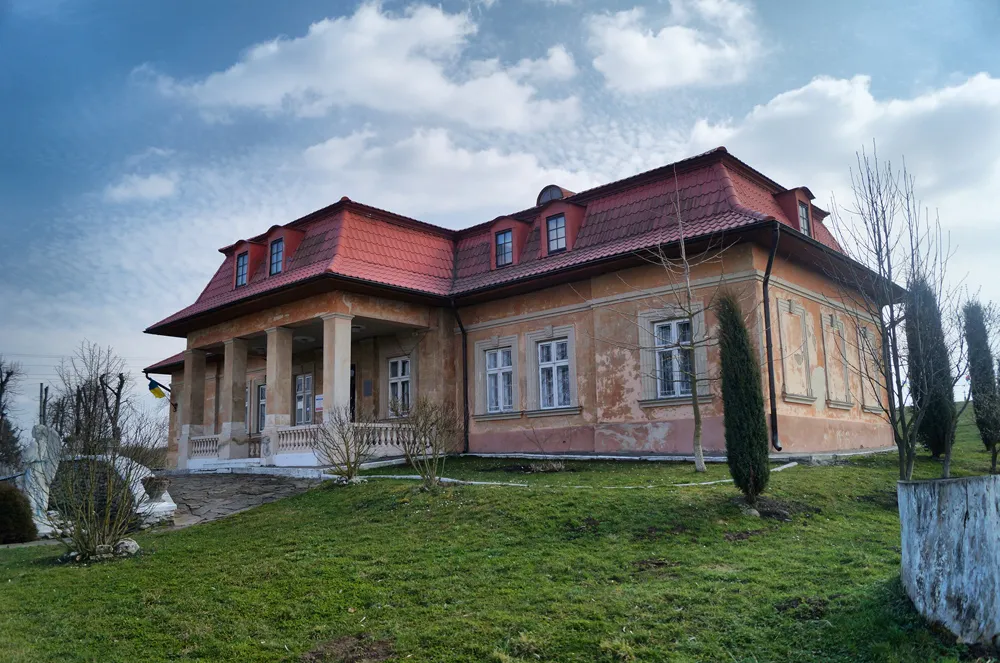
At the very tip of the cape, about 300 m from the second line of defence, there was a small triangular platform of about 150 by 200 m. Excavations have established that it was fortified around the perimeter by two ramparts built no earlier than the end of the 11th century. The platform has the local name Zolotyi Tik (Golden Threshing Floor), and a number of researchers believe that the princely court stood here[2], next to which was the Church of the Saviour. Objects found by archaeologists show that most of the inhabitants of Zolotyi Tik belonged to the privileged strata of the population. Several workshops that served the princely court were also found on the territory of Zolotyi Tik. Neighbouring Zolotyi Tik, on the middle platform, stood the Dormition Cathedral built by Prince Yaroslav Osmomysl in 1157, one of the largest in Rus.
Witold Aulich believed that all three fortified platforms belonging to the Halych hillfort were a fortress or detinets and served as a refuge for the inhabitants of the trade and craft suburb of “Pidmistechko”, which lay at the foot of Krylos hill, as well as for the population of other settlements surrounding the fortress: craft suburbs and boyar and monastic estates. According to other suggestions, the lower platform of the fortified territory of ancient Halych was a bypass town.
The natural impregnability of the hillfort was reinforced by artificial fortifications. In various places on the slope of the cape ramparts were raised, and wooden structures were built on them, of which a layer of burnt wood remains. The passability of the Mozolevyi stream was made harder still by raising the water level with a whole system of dams.
The most ancient dwellings on the territory of the Halych detinets are traced by archaeologists to the 8th century. The settlement here grew quickly in the following centuries owing to its location on the trade route between Kyiv and Poland and the start here of a branch of the trade route to Hungary through the “Rus Gates”. The system of Halych’s fortifications took shape at the turn of the 12th and 13th centuries. In the early 13th century the city survived several sieges during internecine wars. Halych was ravaged and partly destroyed by Batu’s invasion, but for some time continued to be the centre of the Halych eparchy. The final decline of ancient Halych is dated to the mid-14th century, owing to military invasion by Polish and Lithuanian feudal lords. Gradually the administrative centre moved to a new place 7 kilometres downstream of the Lukva near its confluence with the Dnister, where there had probably earlier been a landing of the old capital. This place became the core of a new city, which kept the name Halych. On the high bank of the Dnister the Halych Castle (Starosta’s Castle) was built.
Church of the Dormition of the Most Holy Mother of God
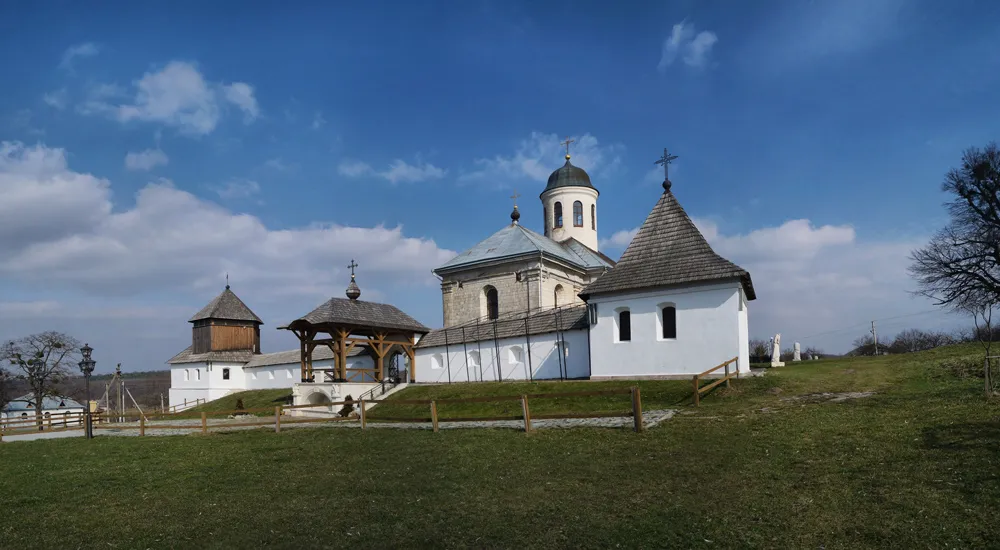
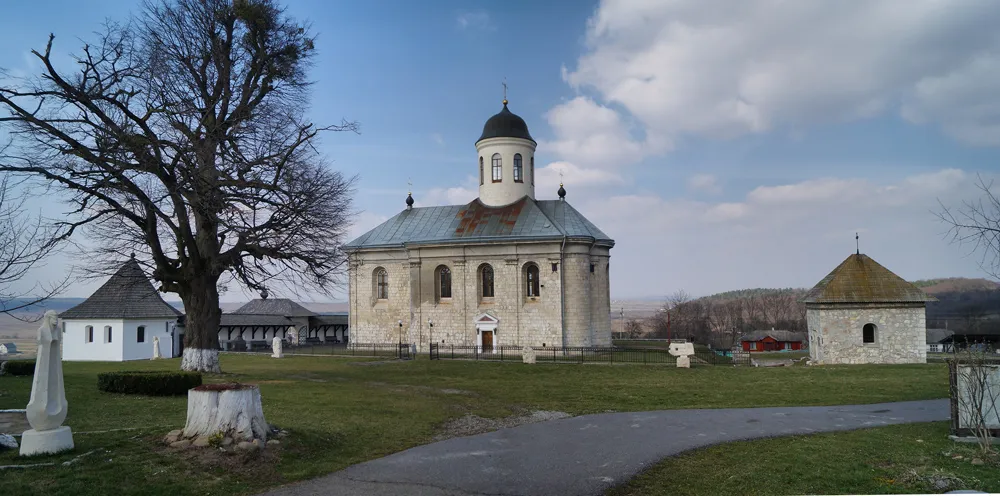
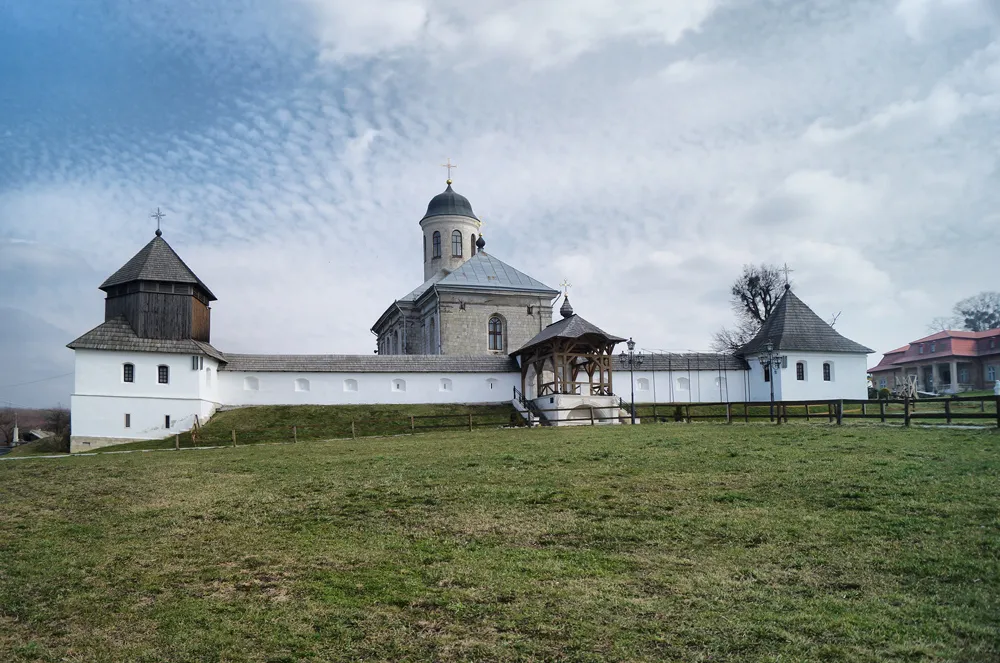
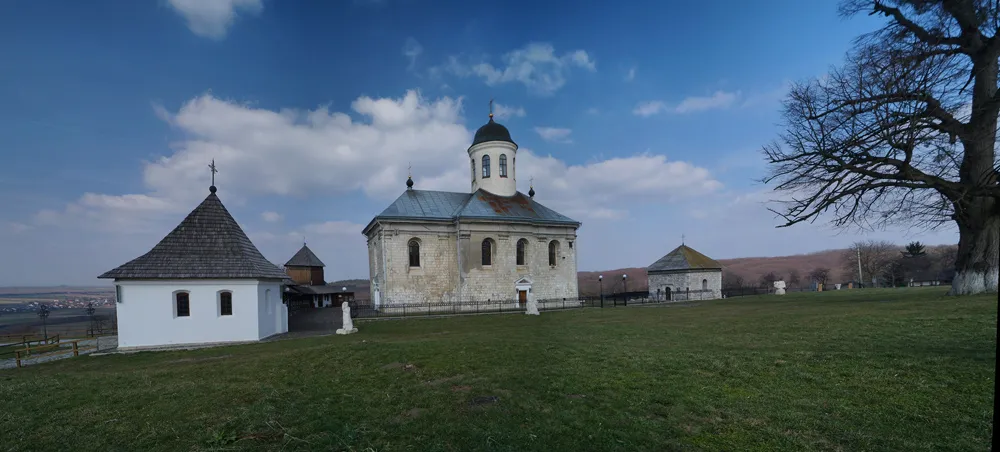
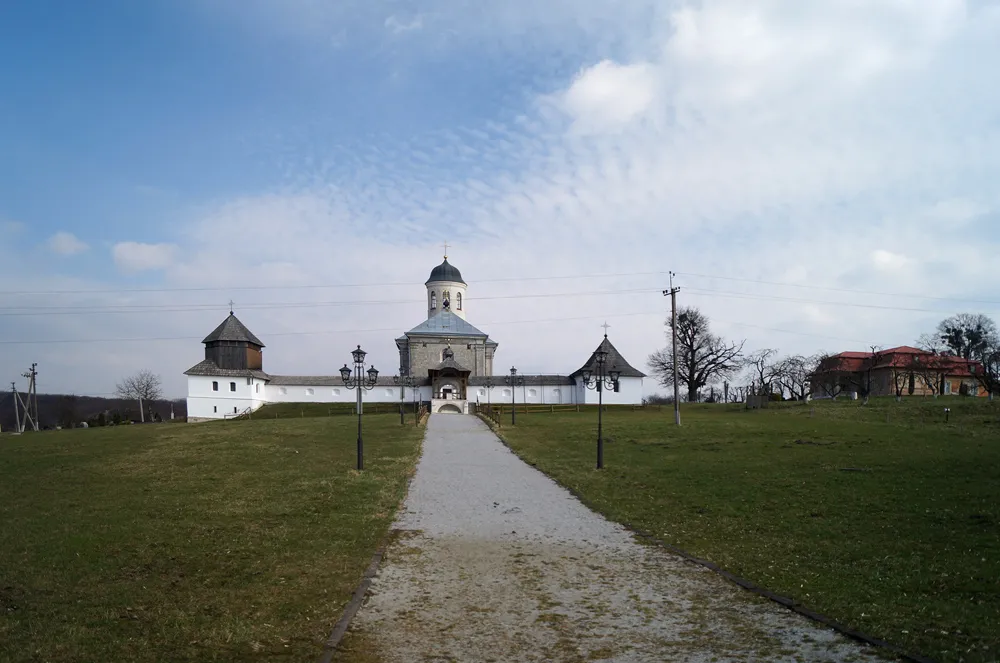
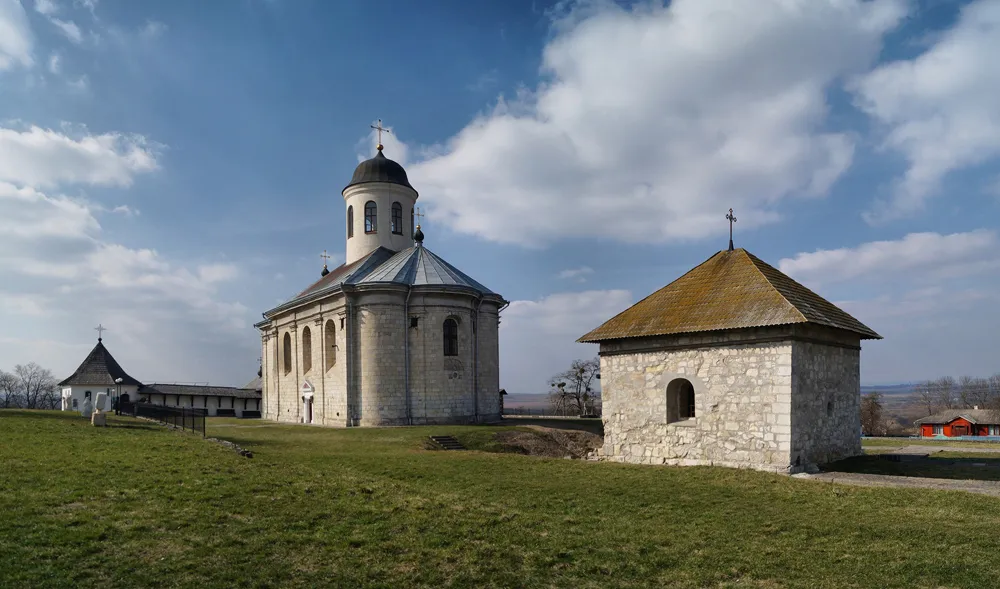
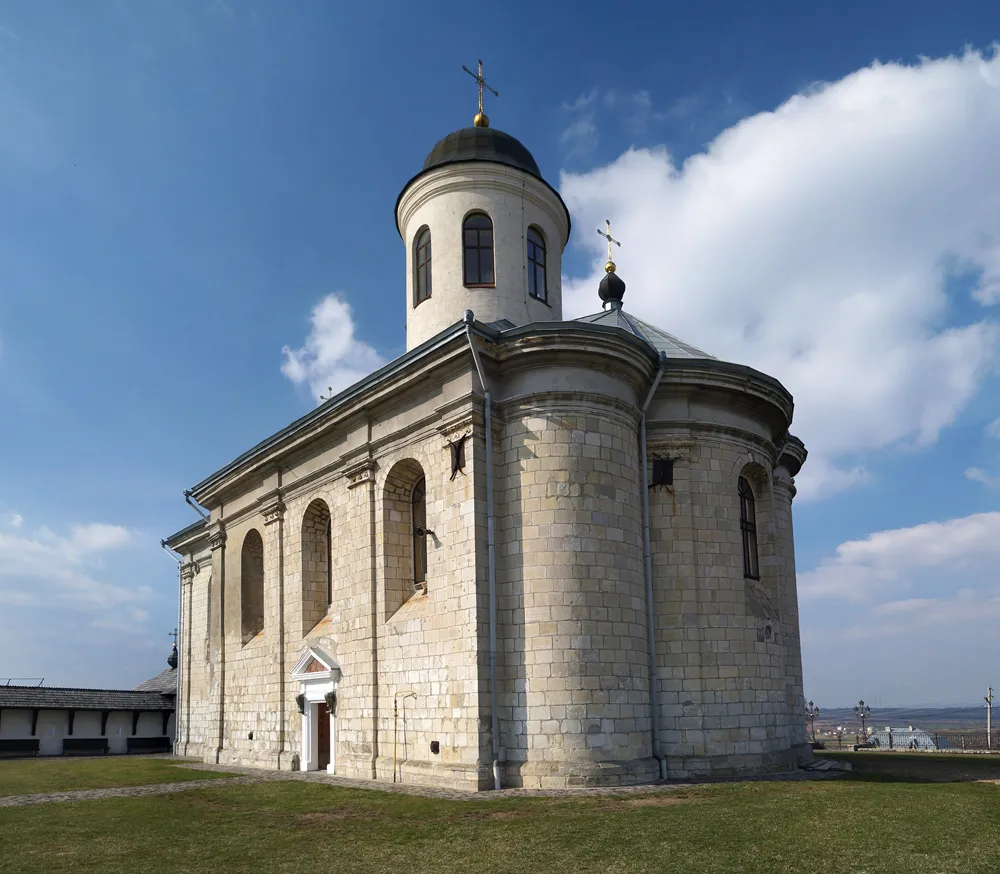
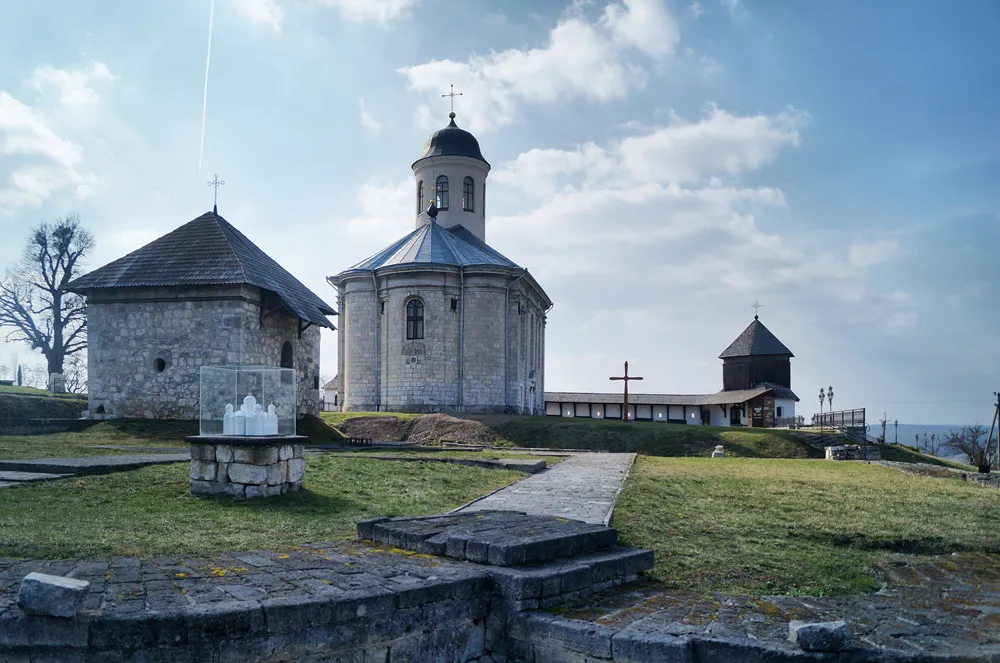
In the Altar Gospel that Bishop Yosyf Shumliansky donated to the church in 1679 there is a record of the terrible Turkish-Tatar attack on Galicia in 1676. It was then that the church was plundered and many residents of Krylos were killed or taken captive. The building itself and the fortifications built around it suffered. In 1699 restoration work began to renew the shrine. It was rebuilt of white stone in the Renaissance style in 1702. Bishop Yosyf Shumliansky not only restored the church but also built defensive fortifications around it, raising brick walls, corner towers and an entrance gate.
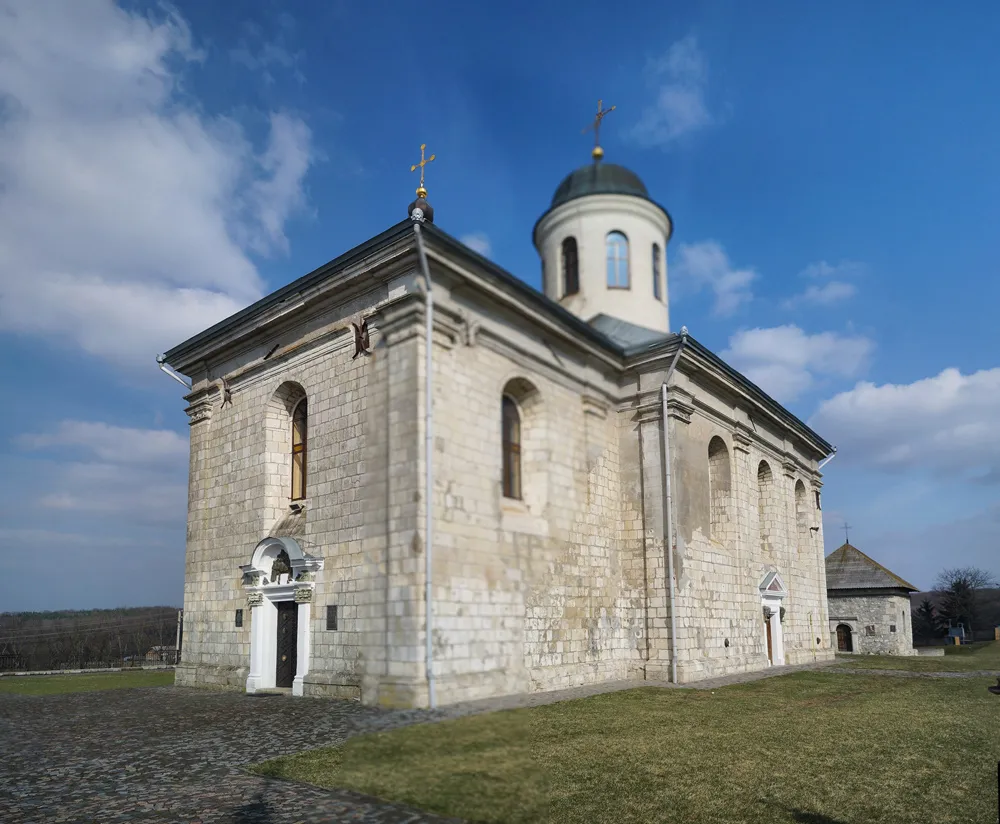
Of great artistic value is the west portal, flanked by two pilasters and crowned by a pediment whose tympanum is decorated with a stone-carved composition of the “Dormition of the Mother of God”. The north portal is decorated with stone-carved brackets and finished with a triangular pediment, in whose tympanum is placed the emblem of the church’s restorer, the bishop’s coat of arms with the letters I.Sh.Ye.L.H.K. – A-V, which stand for Yosyp Shumliansky, Bishop of Halych, Lviv and Kamianets-Podilskyi, 1702.
Interestingly, during the rebuilding of the church Y. Shumliansky found the tombstone over the burial vault of his famous ancestor, the founder of the Dormition Church. It was set up in 1991, not far from the central entrance to the shrine. The white-stone slab is inscribed: “Here lies Marko Shumlianskyi, hereditary lord of Great and Little Shumlany, founder of the Halych cathedral church, lived 85 years, passed away under the King of Poland” Sigismund Augustus, “in the year of the Lord АФЛЕ”.
On the white-stone ashlar blocks of which the church walls are built there are numerous graffiti, inscriptions scratched into the stone. Most of them date from the 12th-13th centuries. This indicates that these very blocks are remains of the cathedral Dormition church. By the time construction was completed at the end of the 16th century, the church was a four-pillar, three-nave, single-domed building measuring 25.8 x 13.4 m with three semicircular apses and a rectangular narthex to the west.
As is known from written sources, the church’s dome suffered considerable damage as early as the first half of the 18th century (possibly because of an earthquake). During the First World War, under artillery fire, the traditional crowning of the single-domed four-pillar church collapsed and the roof was replaced with a four-pitched one covered with sheet metal and topped with a signature turret. In this form the church stood until 2001, when its restoration began, after which the shrine became as it was in 1914. Interestingly, during the restoration of the church the foundations of the pillars that supported its dome were excavated. This yielded rich archaeological material. Numerous fragments of the wall structures of the 12th-century Dormition Cathedral, elements of the church’s stone decoration and fragments of fresco painting were found, which now supplement researchers’ idea of the exterior appearance and interior decoration of the cathedral.
The restored Dormition Church shines in the sun with gilded crosses. A wonderful adornment is its iconostasis, made by Anton Manastyrskyi, an outstanding master of Ukrainian painting of the early 20th century, and also the Krylos Miraculous Icon of the Mother of God. An original monument of the ancient Halych stone sculpture of the 12th century is the carving of a fairy-tale creature, a winged serpent-griffin, in the north wall of the church’s narthex.
Source: website of the Ancient Halych National Reserve
Photos by Roman Malenkov


