

Pervukhynka. Weber’s palace

· 3 min read
Everyone probably knows about the palace in Sharivka, one of the best-known tourist attractions in the Kharkiv region. Most will probably also name its owner, the famous industrial magnate and sugar manufacturer Leopold Koenig, who with his family was among the wealthiest industrialists of the empire until 1917, one of the top twenty. In neighbouring Huty stood one of Koenig’s sugar factories. But the manor, or rather the palace, which locals even call a castle, though connected with Koenig and his estates, did not in fact belong to him, although some claim it did. To run his industrial empire Koenig needed experienced people devoted to the cause. One of them was the manager of the Huty estate and sugar factory, a certain Weber (or Veiber), also, like Koenig, a German by origin; it is sometimes written that he was even a relative of Koenig. The estate belonged to Weber from 1875 and was called Weberovka, not Pervukhynka (more on that at the end of the post). Meanwhile, the sugar factory in Huty came to belong to Koenig from 1881. There is no disagreement about that. Sugar was not Koenig’s main business, so it is logical that before the industrialist acquired the factory Weber could have managed other activities of the enterprising German here as well.
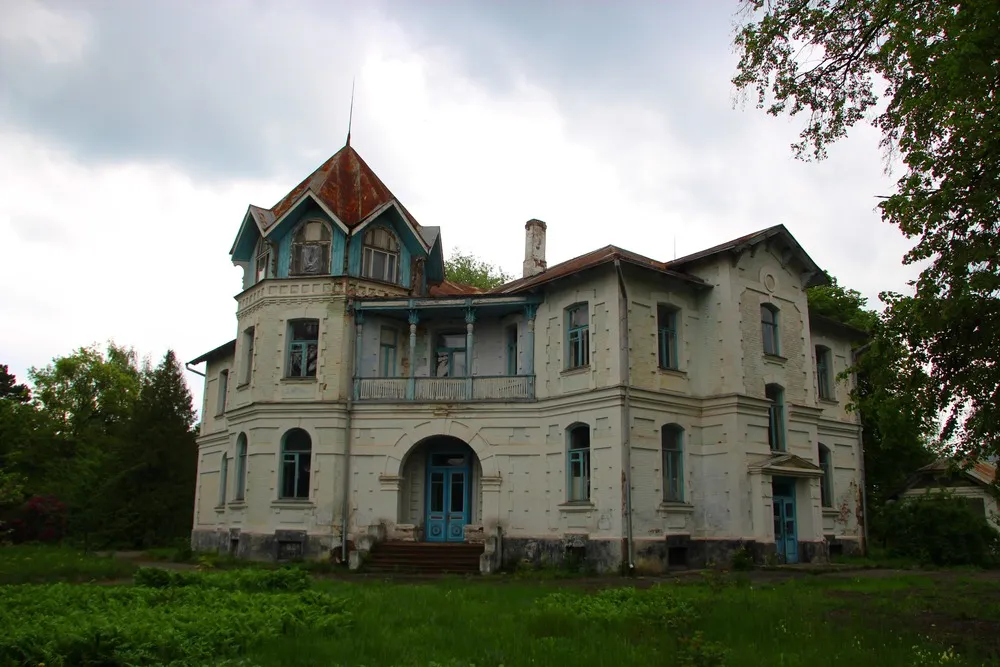
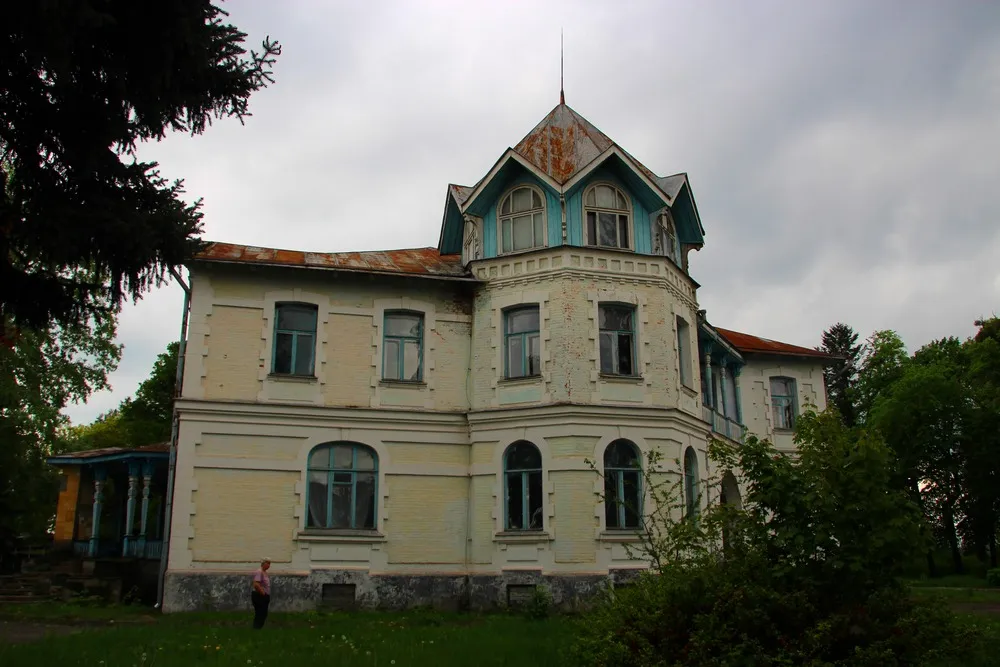
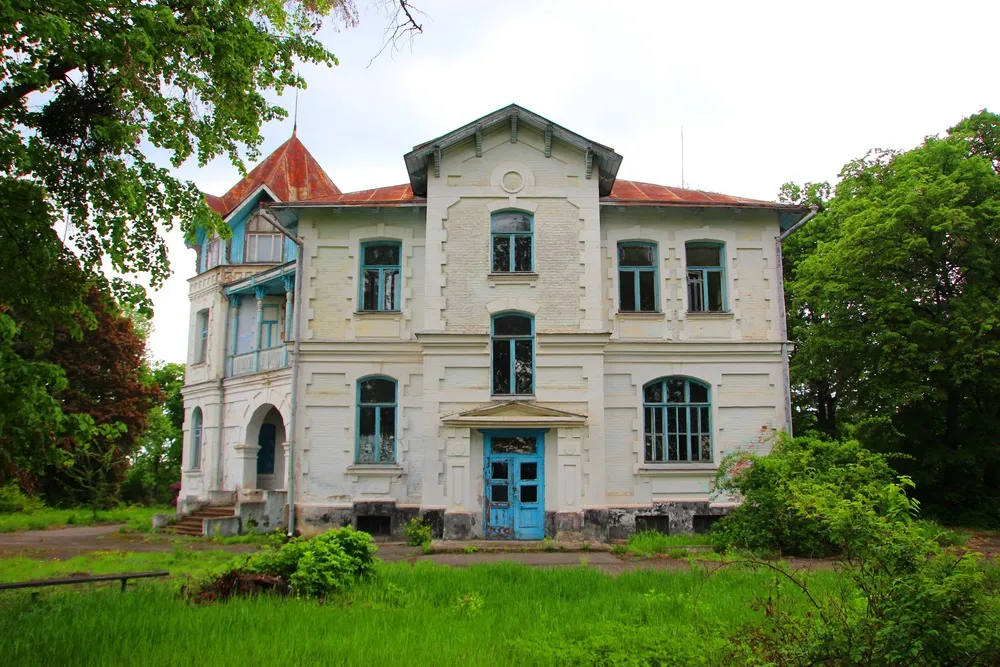
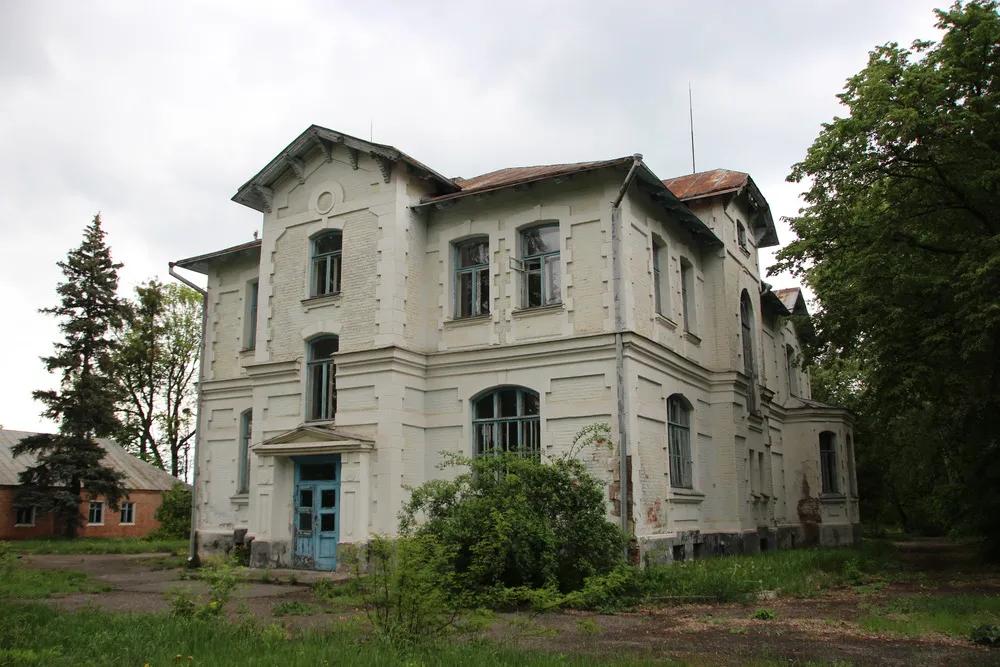
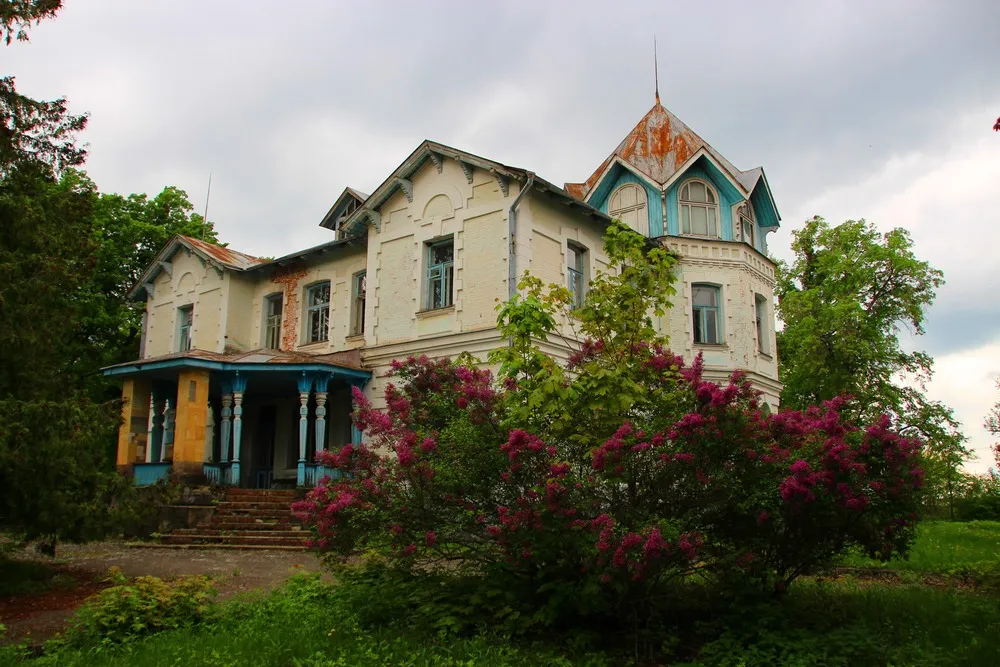
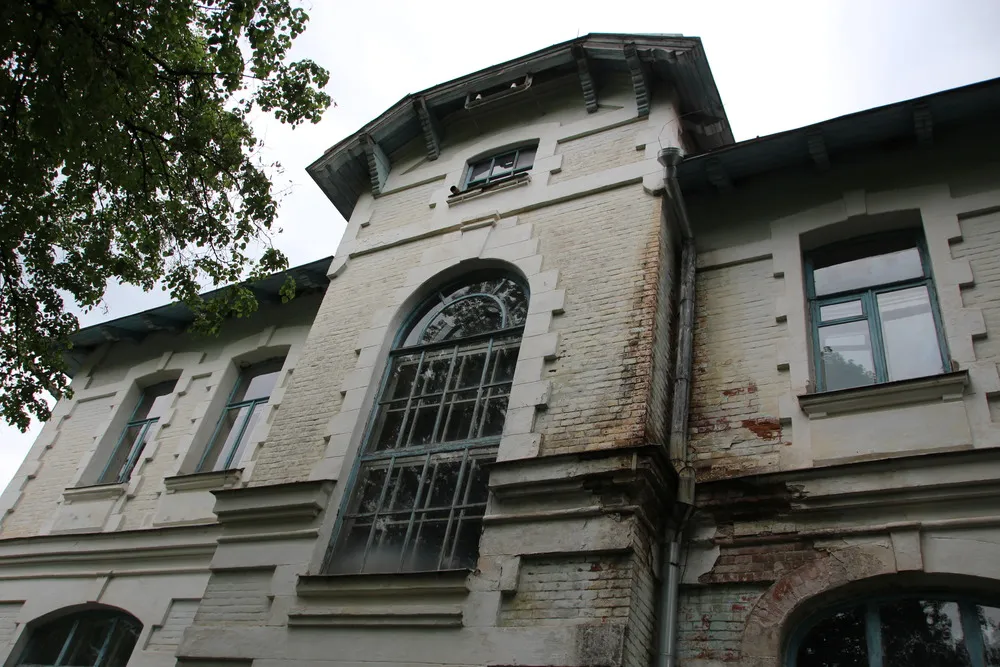
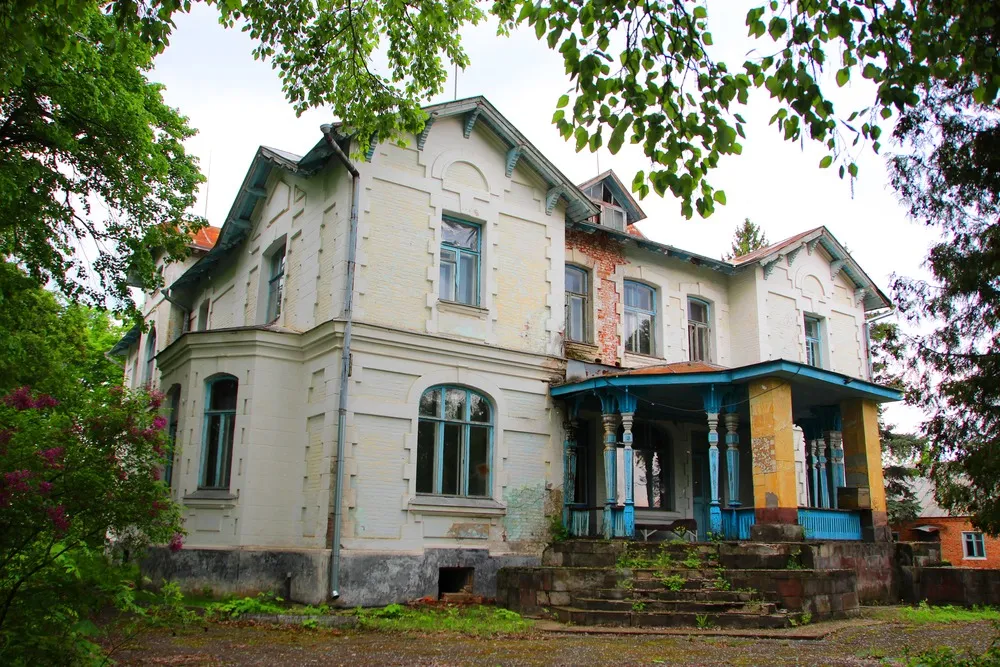
From 1911 the manor grounds housed a breeding station, in other words a centre for research work and breeding experiments in the fields. In the 1930s the manor housed an orphanage, and then a children’s health camp, “Romantyka”, was located here. Perhaps some will find it interesting that the well-known theatre and film actress Nina Ruslanova was a pupil of this very orphanage.
The manor is truly impressive and has survived much better than others. Not only the manor house has survived: the estate consists of a whole complex of buildings on 4 hectares, with a total area of 1,200 sq. m, and there are also summer structures, another 400 sq. m. The manor house itself has 15 rooms on three floors. The park around it has up to 20 species of trees, and century-old spruces still grow from those times. There are the remains of a fountain, most likely also authentic, though without its decorations and main bowl.
Among the curiosities there is also, I think, a brick water tower, although many write that it is a church (???). Yes, there is a cross on the door, and perhaps the structure is used, or was used, as a place of worship, but it is not a church, either architecturally or functionally.
By the way, about the name of the village. The village, like the sugar factory in Huty, was named after G. K. Pervukhin, who worked as a locomotive driver at the sugar factory and in 1917–1919 led the Red detachments in Huty to establish Soviet power, for which twice, in the intervals when power passed to the Ukrainians, he was imprisoned in the Bohodukhiv prison.
Somewhere the renaming was not finished…
P.S. The manor is currently privately owned and up for sale at $200,000, and that is already a reduced price; it was originally $300,000.
Text by Ihor Dorozhko, photos by Maksym Nazarenko.


