

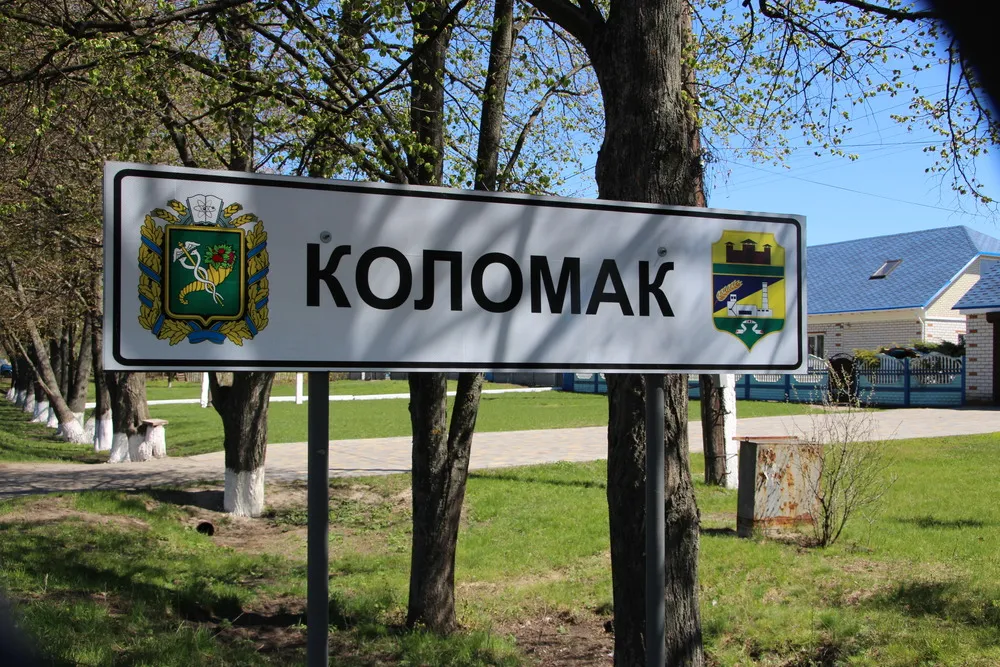
Kolomak

· 5 min read
Kolomak took its name from the Kolomak River, on whose bank the first settlers stopped. Probably the river was named by the Cumans, who settled in these places as early as the 9th-12th centuries. In Turkic “kolo mak” means a branching, marshy river, so this is quite likely.
Kolomak is first mentioned in records for 1571 as the hillfort of Kolomak. At the beginning of the second half of the 17th century settlers from Right-Bank Ukraine founded a stockade here and performed guard duty on the defensive line along the Siverskyi Donets and Kolomak rivers.
In 1675-1676 Kolomak was already a fortified town on the border of the Muscovite and Hetman states.
The town had four towers.
In 1680 Kolomak was a company town (sotnia) of the Okhtyrka Regiment, in which it remained until 1765. Since Kolomak was repeatedly attacked by Tatars, in 1680 the Kolomak sotnyk I. Mykhailov appealed to the tsar’s viceroy, Boyar Peter Sheremetev, asking permission to receive new residents from across the Dnieper and grant them privileges, which was done. At the end of the 17th century Kolomak was fortified with a fortress rampart and bastions.
In 1679-1731 the town was part of the Izium defensive line, with which it actually began.
In the settlement of Kolomak, after the hetman’s power passed from Samoilovych to Mazepa, an event took place in 1687 that in some way determined the further fate of the Hetmanate.
The Cossack council adopted the “Kolomak Articles” – contractual terms between the Cossack officers and the tsar’s government.
And although they were based on the earlier Ukrainian-Muscovite agreements, approved by Cossack councils under Demian Mnohohrishnyi and Ivan Samoilovych, which confirmed Cossack rights and privileges and preserved the 30,000-strong registered Cossack army, the changes to them significantly limited the political rights of the hetman and the Ukrainian government. Thus the hetman had no right, without a tsar’s decree, to dismiss officers from leading posts, nor the officers to depose the hetman; the hetman’s right to dispose of military lands was restricted; the hetman’s government was forbidden to maintain diplomatic relations with foreign states; the hetman undertook to send the Cossack army to war against the Crimean Khanate and Turkey; and a regiment of Muscovite musketeers was stationed in the hetman’s capital, Baturyn. A separate article of the agreement stressed the need for close state union of Ukraine with the Muscovite state. In effect, the Kolomak Articles became another step on the path of further limiting Ukraine’s state rights.
During the Great Northern War, after the defeat at Horodne, in February 1709 the enraged army of Charles XII plundered and burned Kolomak. Only two years passed before the rebuilding settlement was destroyed again, this time by Tatars.
In 1723 at another Cossack council here, on the initiative of acting hetman P. Polubotok and Myrhorod colonel D. Apostol, the Pacts of Hadiach were considered and petitions to Peter I in defence of Cossack rights and liberties were adopted.
As of 1729 the Kolomak fortress was a fortification on a peninsula surrounded by ponds, ramparts and moats. Inside the fortress were a small castle with a church, administrative buildings, a town church, a market, and also Cossack and burgher quarters.
As of 1779 Kolomak was a military sloboda of Valky county of Kharkiv Viceroyalty, which at that time had 1,782 residents, 95% of whom were “military inhabitants”.
After the liquidation of the Sloboda Cossack regiments Kolomak was part of Sloboda Ukraine Governorate (1765-1780), then of Kharkiv Viceroyalty (1780-1796), from 1797 again of Sloboda Ukraine, and from 1835 of Kharkiv Governorate; in the second half of the 19th century it was a volost centre.
No monuments remain in Kotomak, except that one can and must mention the Kotomak hillfort on the outskirts of the settlement, an archaeological monument of national significance. The hillfort appeared in the late 6th – early 5th century BC on the right bank of the Kolomak River; archaeologists carried out the first research here in 1924.
Scholars’ research has shown two cases of the hillfort being sacked, accompanied by fires, destruction and the death of residents. The first attack dates to the turn of the 6th-5th century BC, when the hillfort suffered raids by steppe Scythians, and the second – at the turn of the 6th-3rd century BC – an attack by the Sarmatians, which put an end to its existence. On the surface of the hillfort the remains of 205 building complexes of various purposes have been found, and the most interesting is the presence of wells on the territory. In addition, iron tools and items made of various materials were found. During excavations archaeologists found a mass burial of at least 60 residents. In the bones of some of them are bronze and iron arrowheads.
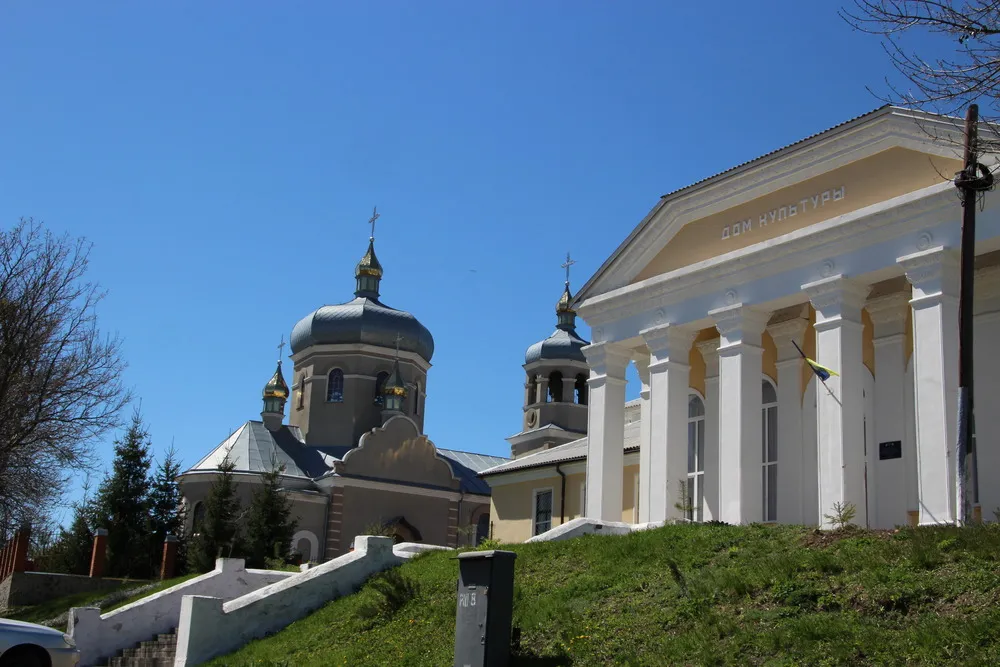
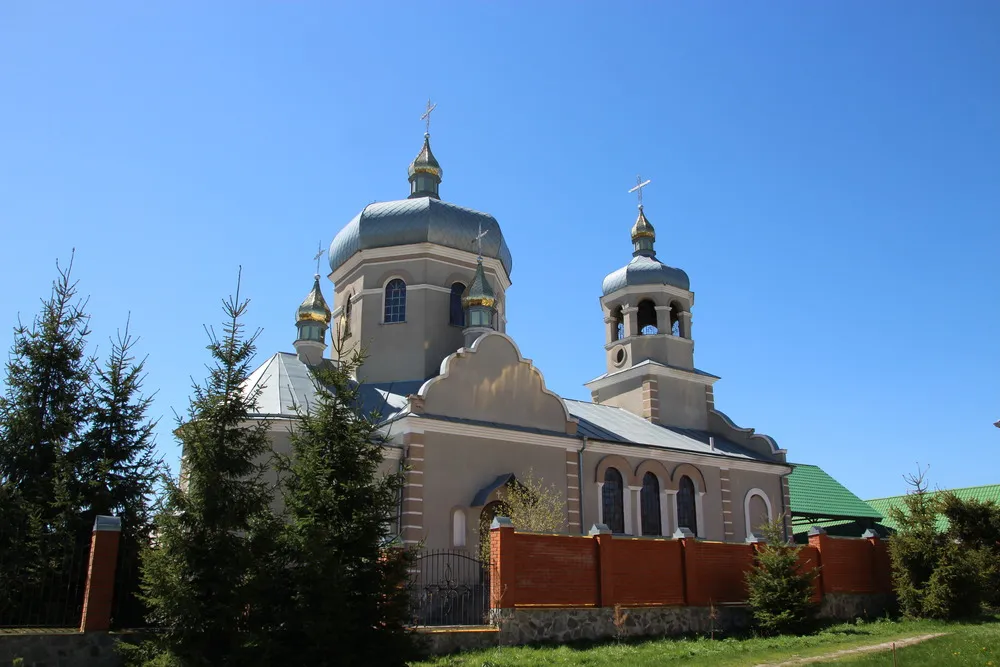
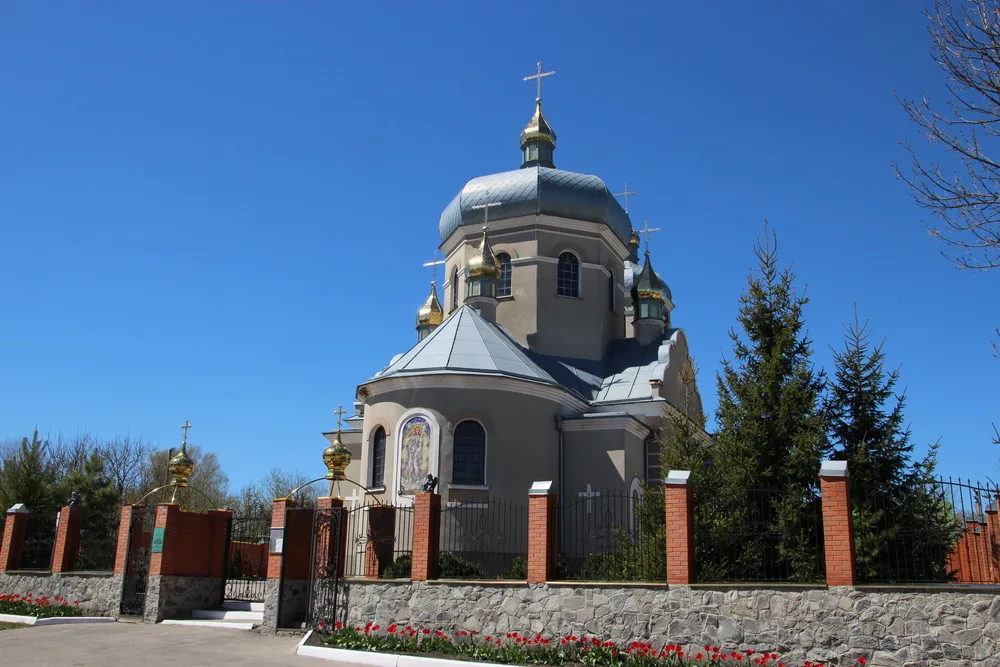
The church in the settlement is new. With the blessing of Metropolitan Nikodim of Kharkiv and Bohodukhiv, in 1995 the priest Mykola Andriiovych Filozof began building the new Holy Resurrection Church on the site of the one destroyed in 1952 (a club was built in its place).
That first church was built in 1779. The church was consecrated in 2004.
And in the 19th century Kolomak had three churches.
Besides the one mentioned, there were the St. Nicholas and Dormition churches.
The first St. Nicholas Church was built as early as 1680 by settlers from across the Dnieper, but by 1774 it was already mentioned as dilapidated. Attempts were made to repair it, but it burned down. Therefore a new, stone church was built in 1824 with the parishioners’ funds, from local brick from the brickworks of Myzail Shapoval. The volost head Petro Horokhovatskyi also paid much attention to the construction of this church.
About the Dormition Church it is known that the first was built at the same time as the fortress. In 1771 a new wooden one was built with the participation of parishioners, which in 1823 was placed on a stone foundation and covered with iron.
All three old churches have not survived to our time.
Text and photos by Ihor Dorozhok, Maksym Nazarenko and Oleh Hodyna.


