

Vasylivka. Ruins of the palace

· 6 min read
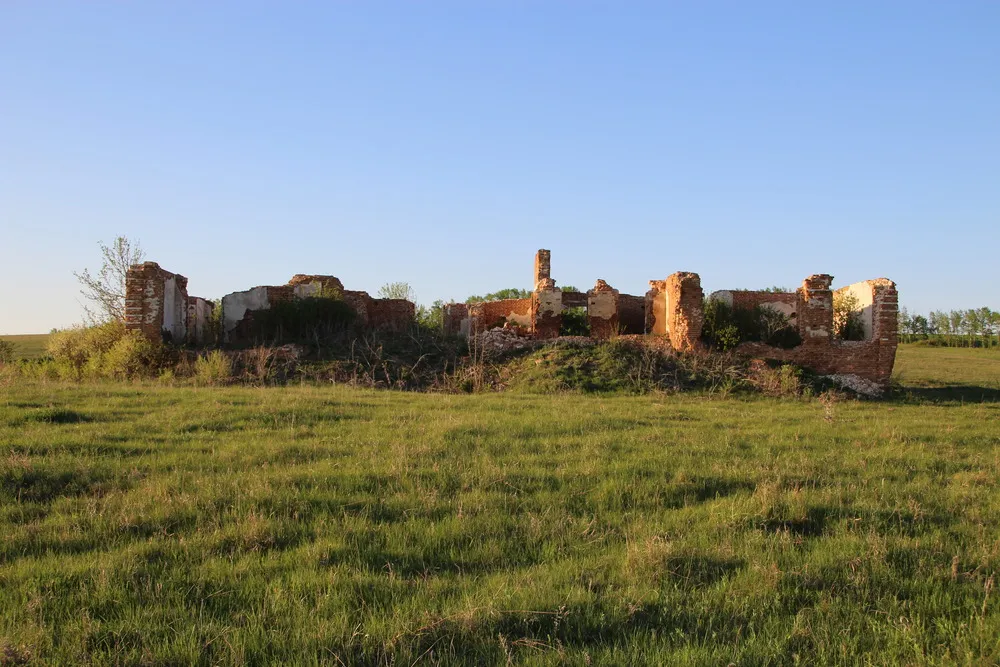
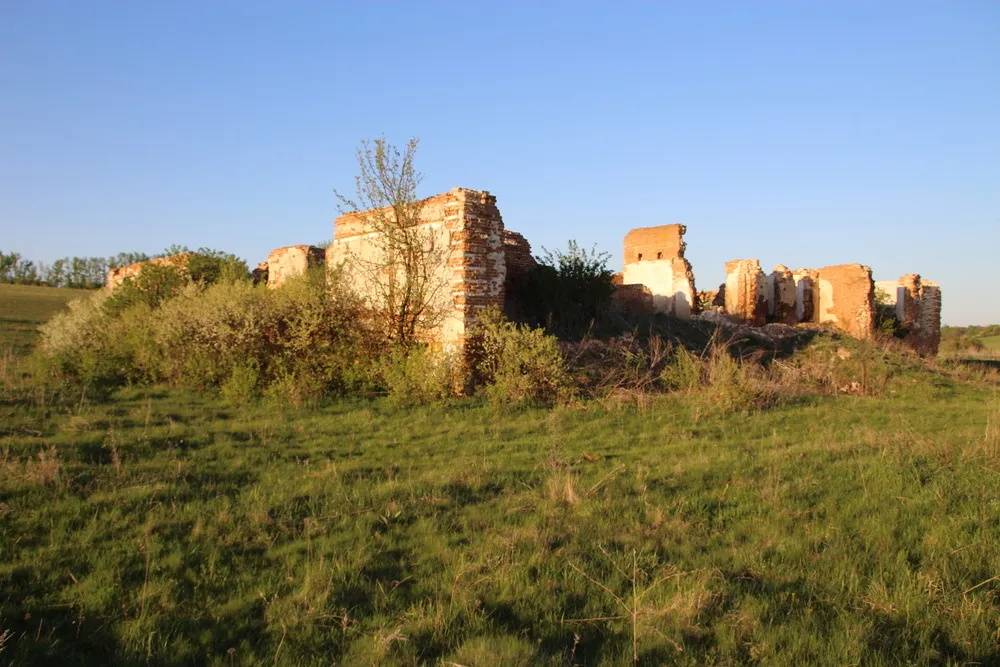
These ruins in Vasylivka, Vovchansk district, now bear no resemblance at all to the Classicist palace that stood proudly here in the 19th and early 20th centuries. Were it not for rare archive photographs, one could only guess what the manor of the Bekariukov noble family looked like. The ruins of the palace stand practically in a field, like an orphan, open to winds and rain. The state of these ruins may suggest that there is no hope of any restoration. Yet history must preserve the memory of the owners, all the more so as they were not such ordinary Plyushkins or Sobakeviches: even today’s schoolchildren owe the 45-minute length of lessons and the breaks between them to the last owner of the Vasylivka estate from this family.
The village was founded in 1640. The Bekariukovs, whose family descends from the nobleman Oleksii Uriupin of the Kostroma district, date from the mid-16th century. In Kharkiv Governorate they are mentioned from 1786, one Sub-lieutenant Ivan Ivanovych Bekariukov, and in documents of 1807 the owner of a distillery in Vasylivka is V. I. Bekariukov. After that there is more information about the family. Its members periodically held the post of marshal of the Vovchansk nobility, and owned Vasylivka, Ivanivka and Zakharivka (interestingly, the Bekariukov family had many Vasyls, Ivans and Zakhars). And this is the Kharkiv branch; there was also a Belgorod-Voronezh branch, which I will not talk about, but I will tell you about the Kharkiv one.
It is known that in the mid-19th century the estate had three Bekariukov brothers: Zakhar Ivanovych, Vasyl Ivanovych and Dmytro Ivanovych. Their father, Ivan Ivanovych, was a major general and head of the governorate militia in 1812. The first two brothers were buried with their mother in Ivanivka, beside the Transfiguration Church (neither the church nor the cemetery has survived). Zakhar Ivanovych held the post of chairman of the Kharkiv governorate zemstvo and planted a unique pine forest in the Belgorod region, and Vasyl Ivanovych was marshal of the Vovchansk nobility. And the third brother, Dmytro Dmytrovych, a military man and guards lieutenant, settled in Vasylivka, in the family manor.
Dmytro Ivanovych Bekariukov had five children, all of whom received an excellent education and were connected in one way or another with science and, let us say, with “intellectual” professions. Among them there was only one son, Dmytro Dmytrovych Bekariukov, who is considered the last owner of the Vasylivka estate from the family.
Nataliia Bekariukova is known for the fact that, as a doctor, first in the zemstvo and then, from 1902, in St. Petersburg, she did a great deal in the fight against typhus and cholera and carried out educational work, publishing books, scientific works and articles. Her husband was the well-known educator and historian Oleksii Gizetti, and her son was Oleksandr Gizetti, a literary critic and author of a number of books, who in his youth was imbued with revolutionary ideas and sincerely supported the events of 1917, but in the 1930s, like many others of noble origin, was accused of an attempt on Stalin’s life and sent to the camps.
Maria Bekariukova became an educator, like her husband Fedir Oldenburg, who taught at the Tver women’s teachers’ gymnasium.
Hanna Bekariukova’s son, Ivan Grevs, founded the excursion method in the teaching of history.
Olena Bekariukova married O. S. Lappo-Danilevsky, a well-known historian and future academician of the St. Petersburg Academy of Sciences. Their sons are also well known: Ivan Oleksandrovych Lappo-Danilevsky was a mathematician and corresponding member of the USSR Academy of Sciences, and Oleksandr Oleksandrovych Lappo-Danilevsky was an artist.
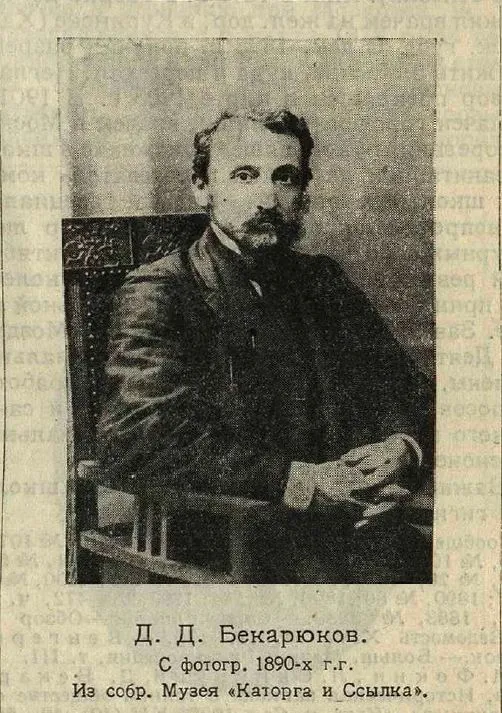
And so we come to Dmytro Dmytrovych Bekariukov. He was born in Vasylivka, in the family manor, in 1861. While still in his second year at the medical faculty of Kharkiv University he was expelled for protest sentiments and student unrest and placed under police supervision. After that he entered Kazan University and, once he had graduated, worked in Kharkiv as a zemstvo doctor. For revolutionary views accompanied by Marxist agitation he was exiled in 1890 to Akmolinsk. Three years later he returned and again worked as a doctor in Katerynoslav Governorate and in Tver. His rise began after Dmytro Dmytrovych moved to Moscow in 1898. There he eventually took a leading position in school sanitation, was regarded as the best specialist in school hygiene, and from 1907 chaired the Moscow organisation of school doctors. After the establishment of Soviet power, in the 1920s he took part in drawing up hygienic norms for schoolchildren’s workload, was a member of the main school sanitary council and of the academic council for physical culture, and in 1926 even received the title Hero of Labour. And this was a former landowner. Despite his noble origin, Dmytro Dmytrovych held an authoritative position in Soviet Russia. But who knows what would have happened next had the scholar not passed away in 1934. It was the year 1934…
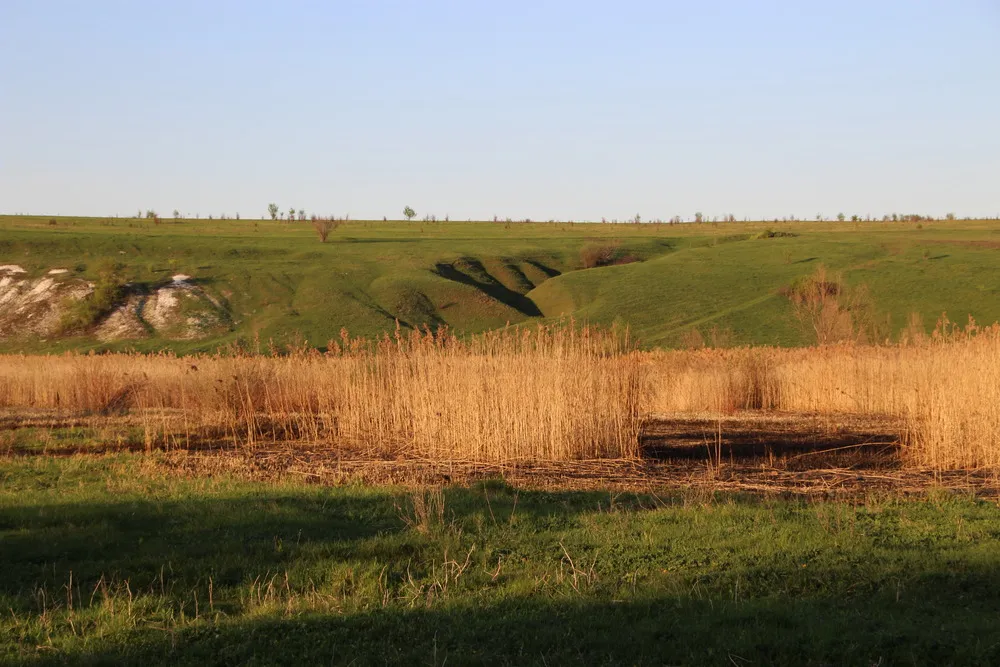
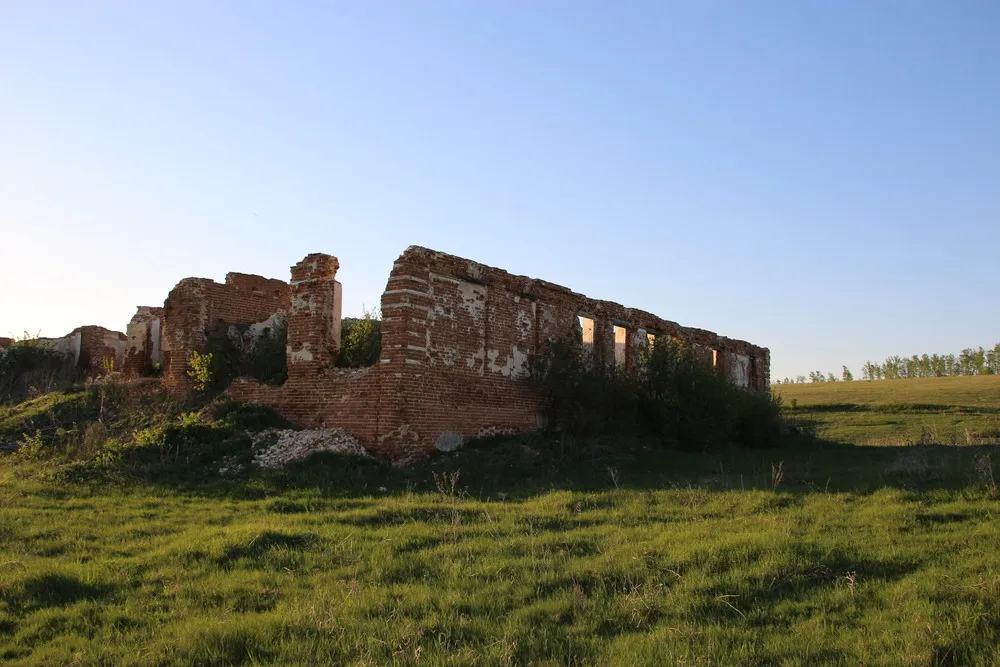
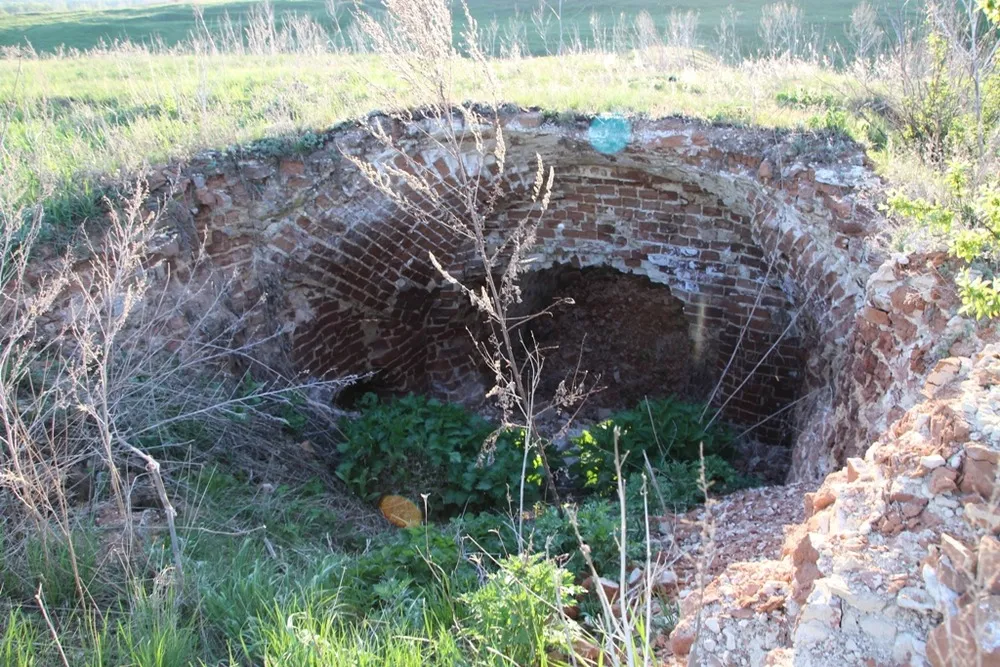
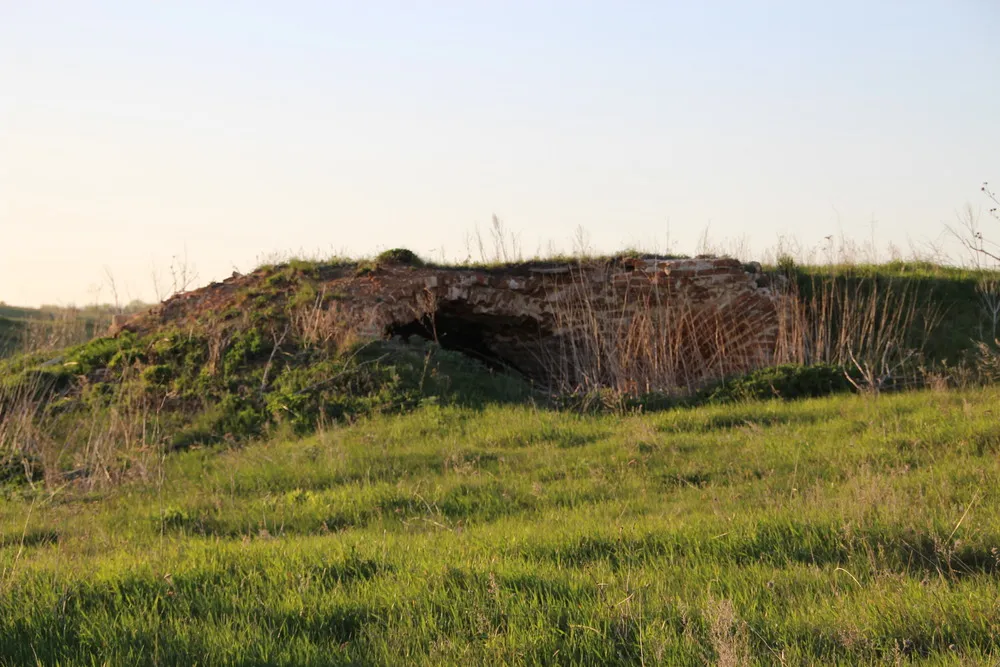
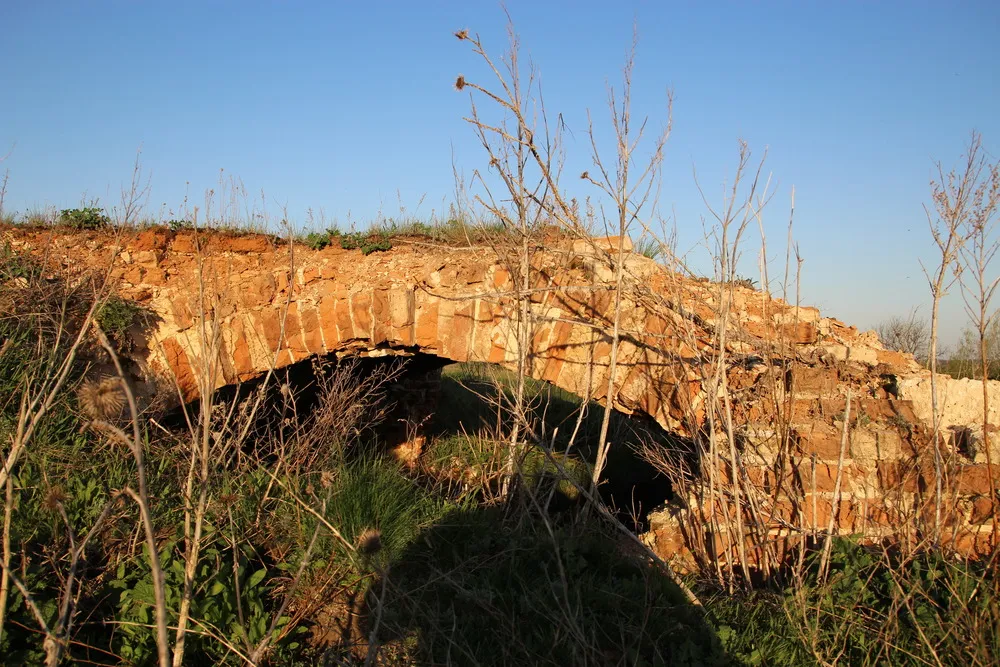
As for the manor, of which only ruins remain: the sisters scattered after marrying. Dmytro Dmytrovych, living and working in Moscow, also did not look after the estate, so at the beginning of the 20th century he sold it to Ye. Delarue, the last owner. In 1912 the estate was visited by Hryhorii Lukomskyi, who described it, dating the building of the manor to the early 19th century.
“The house and outbuildings stand on the top of a hill above the village, in such a way that, as one approaches the estate, not only is the garden not visible, but it is even hard to imagine where it could be located.
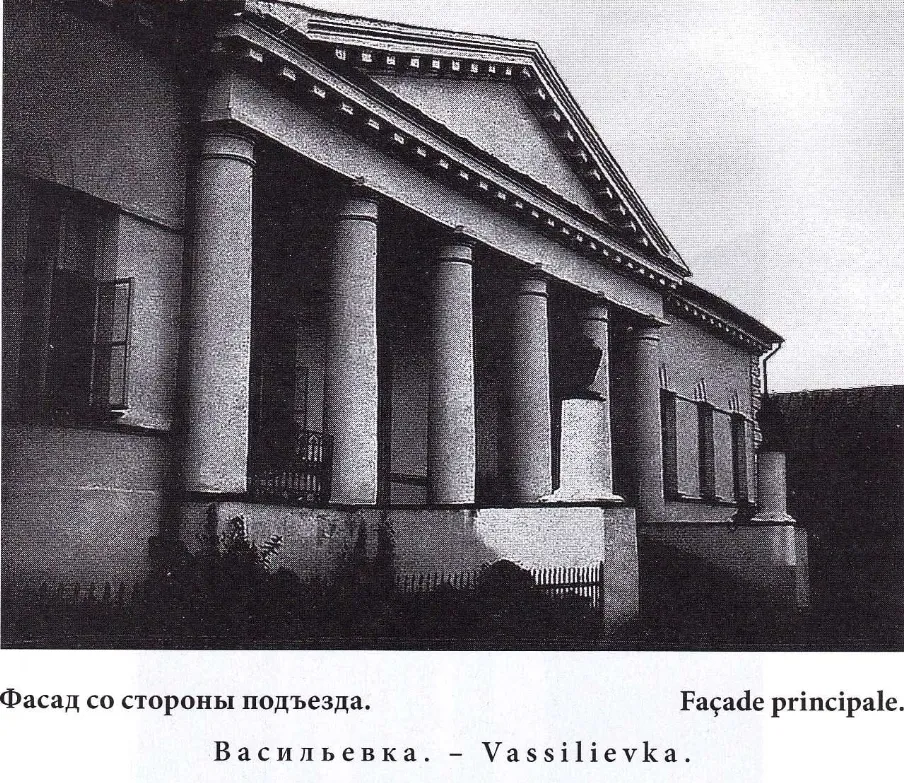
Behind the house is a slope, and on it spreads a wonderful old garden with avenues of lime trees. Having passed through the village, which is rather dreary, one can see the whole estate from afar: in the middle a house, low but with a portico and imposing architecture, and in front of it, on both sides, service wings extend forward, also adorned with posts and even columns.
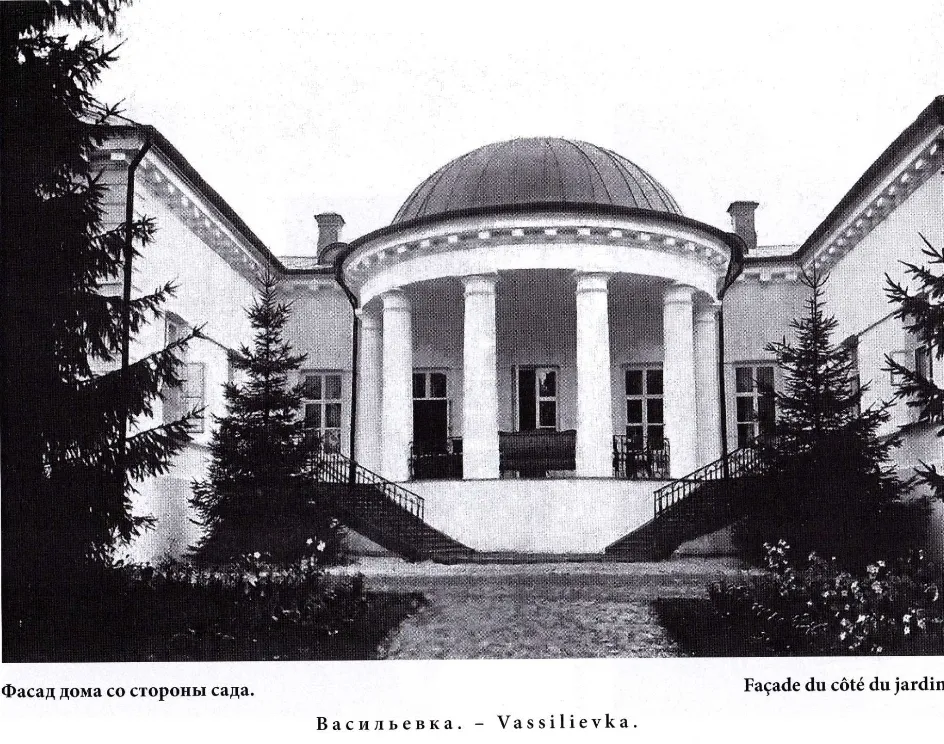
Here the façade is adorned with a loggia, very convenient for the landowner to receive peasants; in front of the portico there are very pretty and curious lanterns on pedestals thrust far forward. From the stairs all the outbuildings are visible: the farm, so to speak, in view of the landowner’s vigilant eye. The picture that opens from the loggia is beautiful and typical. Between the shafts of the columns the posts and pediments of barns, sheds and the steward’s house show white. At the side of the house there are beautiful, slender porticoes of four Doric columns, the side entrances to the house. The façade facing the unexpectedly shady garden strikes with its magnificence.
Approaching the house from the entrance side, it is hard to suppose that its opposite side will be treated so beautifully. Although all the dimensions of the house are very small, the proportions are well chosen, and the rotunda, tactfully placed, by no means seems “squeezed” by the wings. Particularly fine in the house are the stoves, tall and typical of the 1820s, that is, of the time when the house was built.”
Now you can see what is left of the manor… And some 40 to 45 years ago a village club was housed in it. According to local accounts, a hoard was found on the estate in the 1970s, and so they began quietly to carry the manor off piece by piece. “People” and time did their work.
Text by Ihor Dorozhok, photos by Maksym Nazarenko.


