

Oleksandrivka

· 4 min read
The village of Oleksandrivka in the Zolochiv district of Kharkiv region has not been very lucky with renamings. And it is not even a matter of the names themselves, but of the number of times it was renamed.
The village appeared in the second half of the 18th century under the name Klynova-Novoselivka. Klynova because a gully of the same name lies nearby, and Novoselivka for an obvious reason: a new settlement was wedged in between the long-established Liutivka and Odnorobivka. Unlike other settlements, at first it was filled exclusively with serfs, whom landowners brought here from Okhtyrka, Bohodukhiv and even Kursk, and only later were retired soldiers added to them. In the 19th century the name was shortened to simply Klynova; at least on Schubert’s maps the village is marked precisely so. And in those times an unofficial name also stuck: Lypatrivka. This is what the local peasants called the village, because from about the 1830s it was owned by a lady-in-waiting from St Petersburg, Kleopatra Khorvat, who by her second marriage was the wife of Count Petr Kleinmichel, the man who built the Nicholas Railway. The landowner herself, who had 6,675 desiatinas of land, an estate in Liutivka as well, and peasants in the Kharkiv and Belgorod governorates, very rarely visited the estate, about once a year, yet the locals called it by Kleopatra’s name, though in a somewhat peculiar way of their own. We will come back to the Kleinmichels later.
The reform of 1861 gave the serfs their freedom. How could a village of former serfs fail to be renamed in honour of the “benefactor” Alexander II, as Oleksandrivka? And after this the name began to get tossed about. From 1920 the Bolsheviks renamed the village Konhresivka, in honour of the Congress of the Third Comintern, though not for long: in 1943 the Comintern was dissolved, and so the name Oleksandrivka was restored. Then again Konhresivka and Oleksandrivka, from the late 1990s Konhresivka again, and from 2009 to this day it is Oleksandrivka, although the locals (perhaps just in case) still call it Konhresivka.
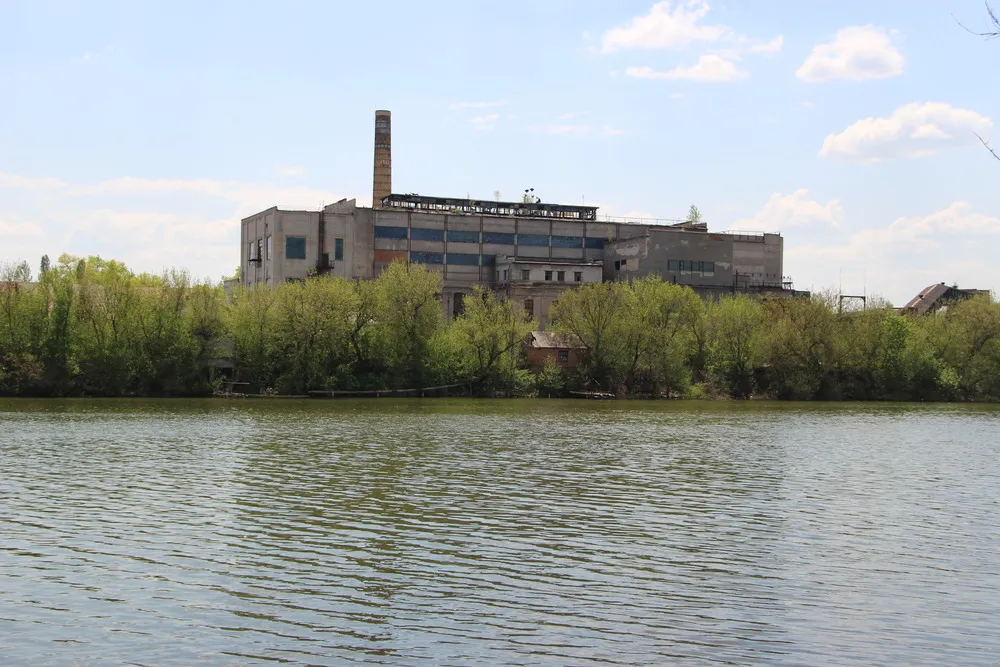
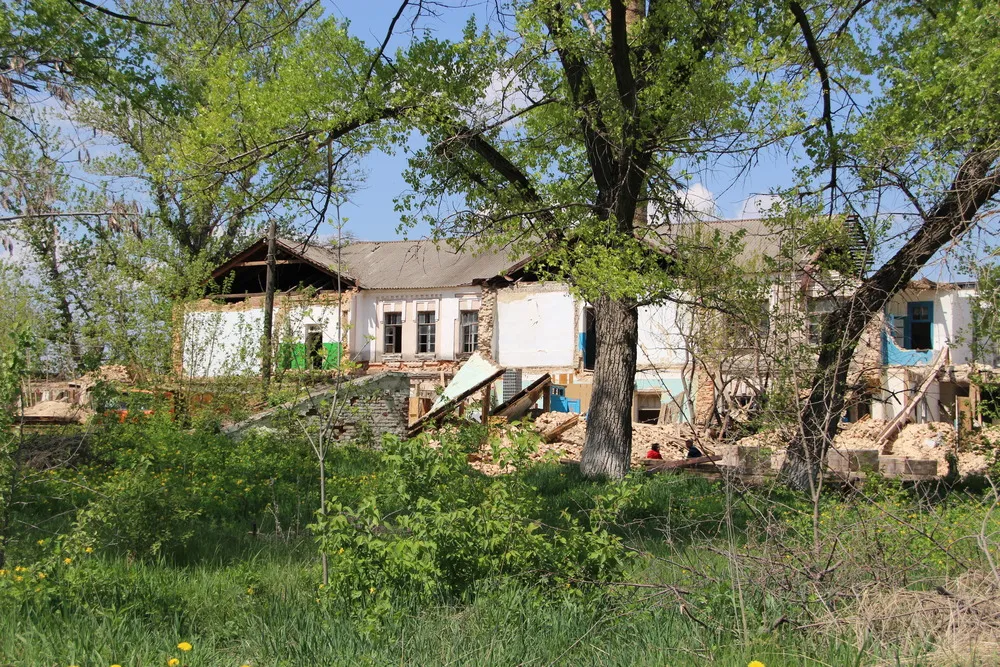
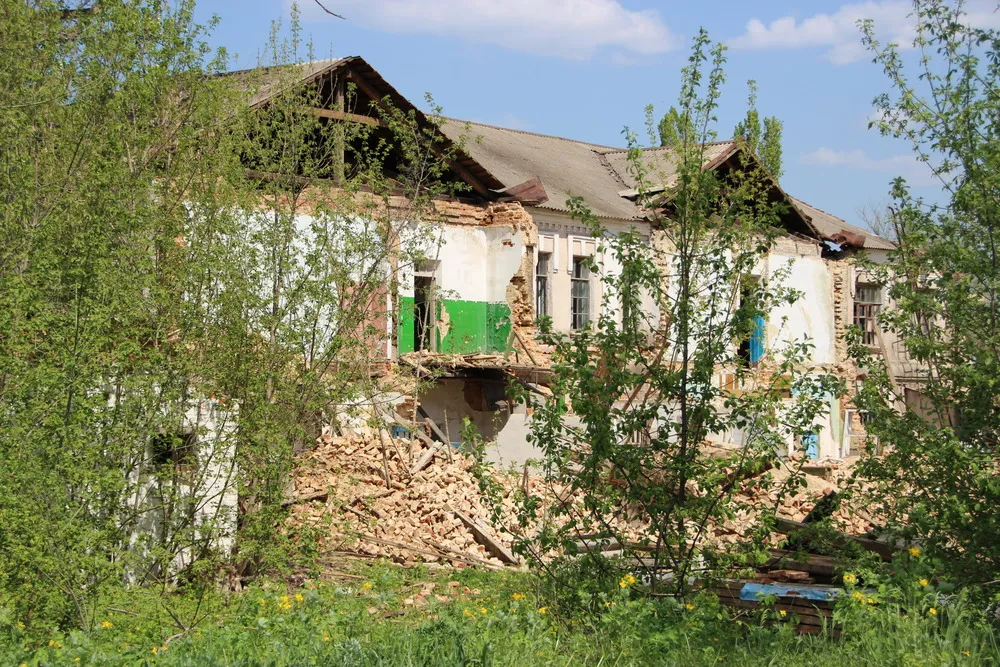
At the end of the 19th century the estates in Liutivka and Oleksandrivka were owned by the grandson of the aforementioned Kleopatra, Count Mykola Volodymyrovych Kleinmichel (1877–1918), marshal of the nobility of Bohodukhiv uyezd, master of ceremonies of the Imperial Court, and in the last years of his life even the last Moscow vice-governor (though only for half a year). To run his estates he bought up the surrounding lands, as a result of which Oleksandrivka became the geographical centre of the landowner’s holdings. So it is no surprise that it was in Oleksandrivka that the count decided to build a sugar factory, which he did in 1905. This date marks the beginning of the history of the Liutivka sugar factory, although until 1913 the count continued to build and improve it. Auxiliary and administrative buildings were built at the same time: the manager’s house (1914), a hostel for workers and a library (1916), and a water tower. A wall was erected around the factory and partly around the historic part of the village.
In 1918 all property, including the factory, was nationalised. Kleinmichel himself was at that time in Yevpatoriia, away from the stormy events; he had an estate there too. The count was a supporter of the monarchy, and an absolutely naive man at that. When Soviet power was established in Yevpatoriia, his house was searched. And although the count might still have got off lightly, he began to persuade the Red Army men of the need to preserve the monarchy and to argue its importance for the state. This was a fatal mistake: the same evening Mykola Kleinmichel was shot.
From 1920 to 1924 the factory did not operate, and after repairs it was started again, now as the Konhresivka factory. During the Second World War the equipment was evacuated from the factory to Bashkiria, and almost all the buildings themselves were destroyed. After the war the factory was restored and merged with the Krupska “millionaire” state farm into a sugar combine. In the years of independence the factory worked for quite a long time compared with others. From the early 2000s the owners began to change constantly, the factory was feverish, being declared bankrupt and then resuming operation. Finally, in 2012 it stopped work for good, and in 2017 the equipment was cut up for scrap metal.
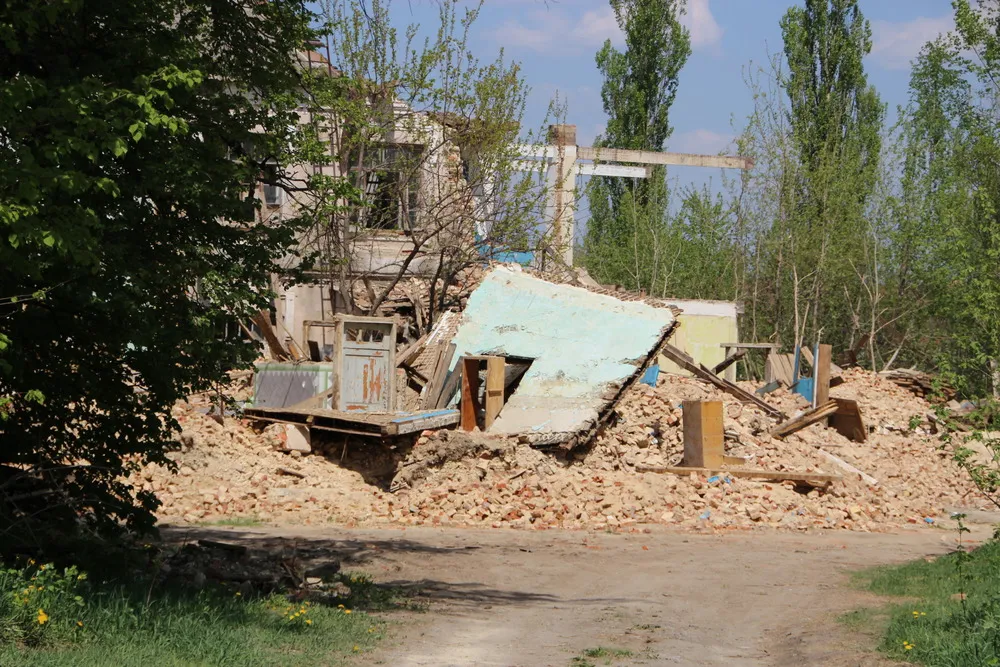
Little of the buildings has survived; the destruction began as early as the mid-1990s, when part of the interior of the manager’s house was destroyed, including the cast-iron staircase from the first to the second floor. In the 2000s the water tower was demolished, and then the old pre-revolutionary manor park was cut down; now there is a new Church of Alexander Nevsky (built in 2010).
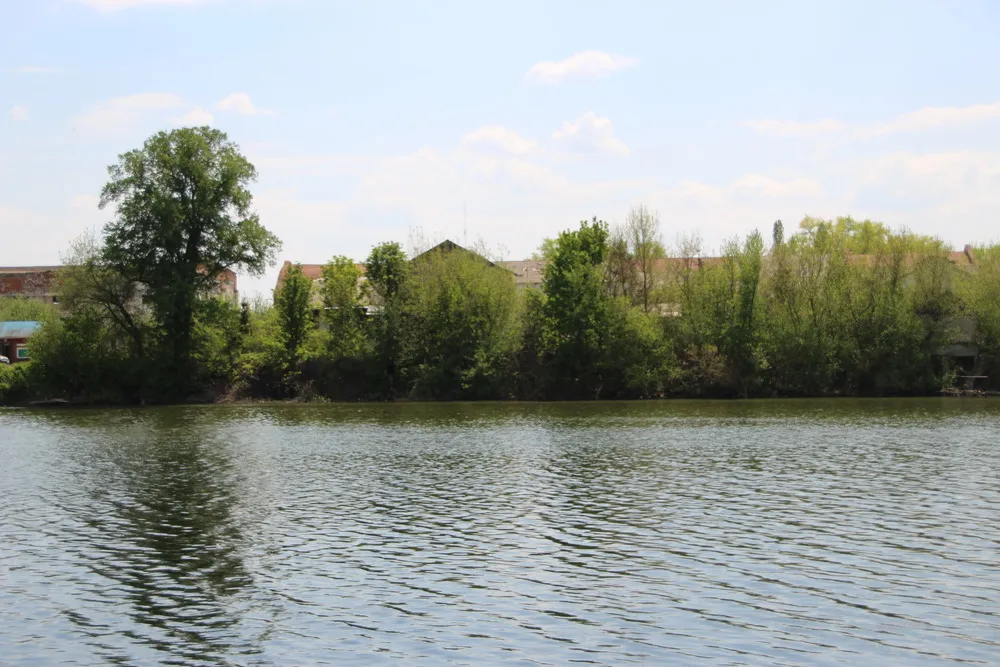
The century-old wall above the pond has partly survived. And the pond by the sugar factory still bears the name Sugar Pond.
Text by Ihor Dorozhko, photos by Maksym Nazarenko.


