

Nova Zburivka

· 2 min read
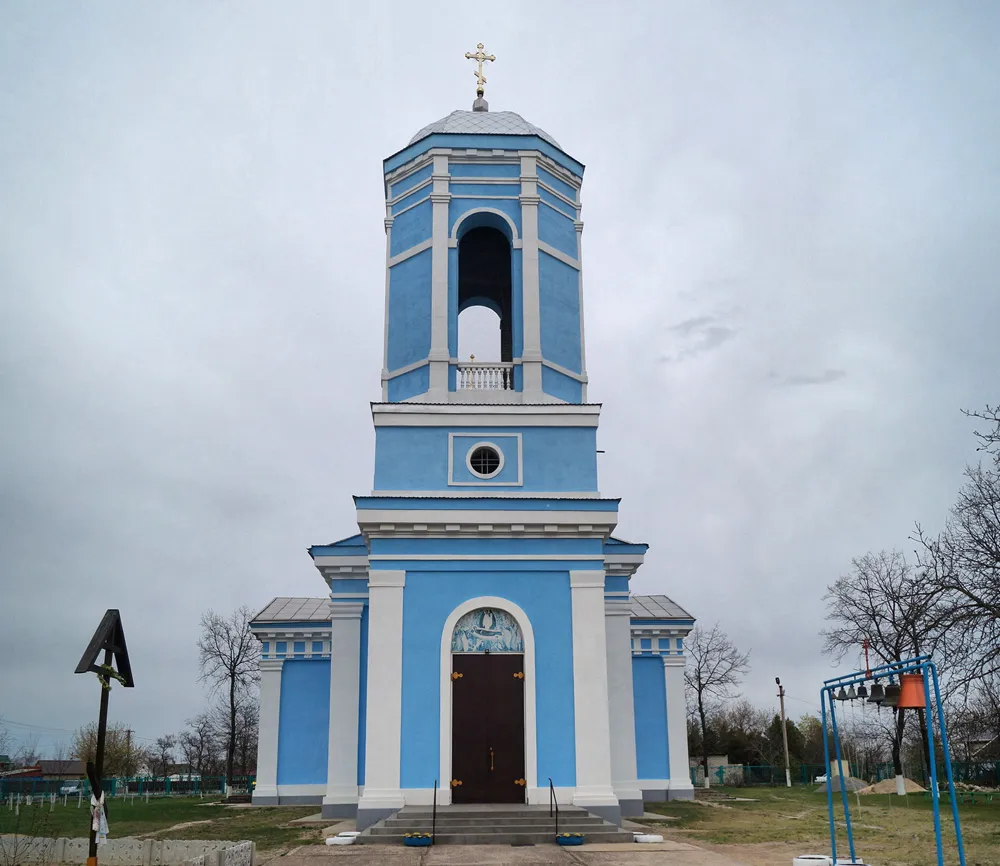
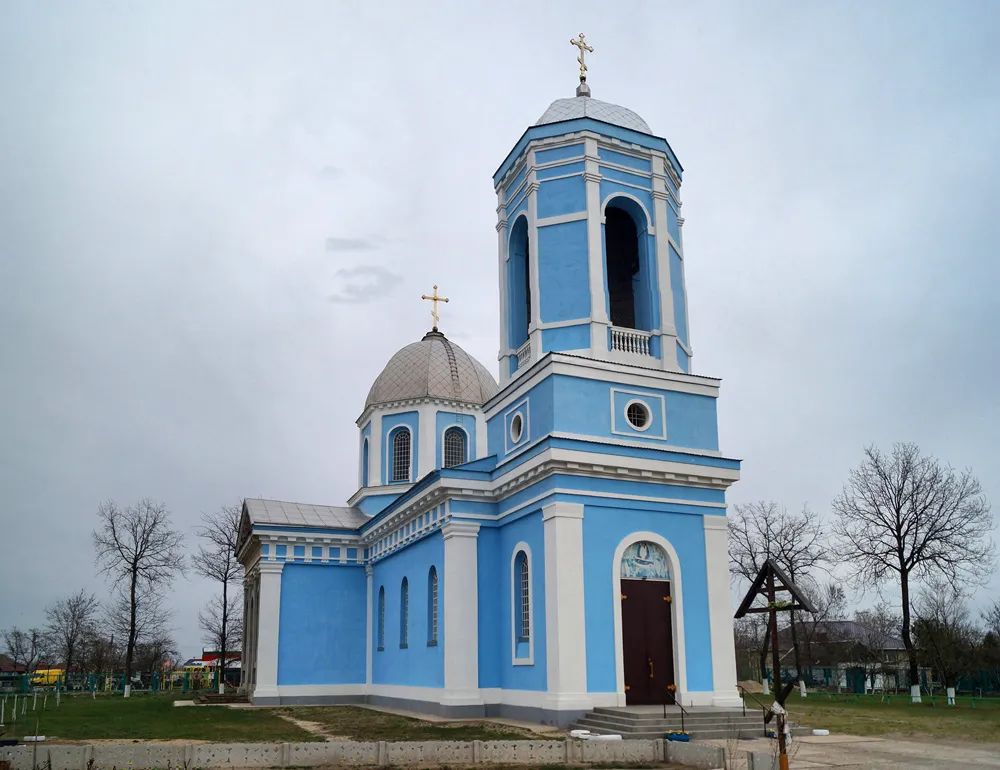
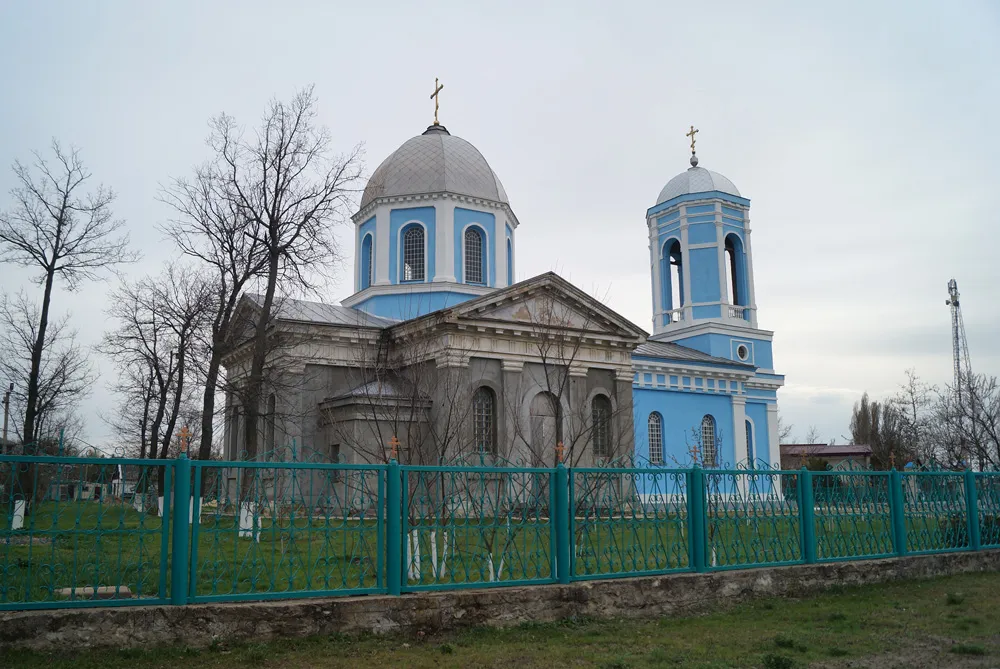
About 5 km south of Hola Prystan lies the village of Nova Zburivka. The Dormition Church, built in 1869 in the style of simplified Classicism, has survived here. The church has a large dome and a bell tower. In Soviet times the church was closed and converted into a cinema, called “Kosmos”. In the early 1990s the church was returned to the parishioners.
This is what Wikipedia writes about Nova Zburivka:
The history of the village’s origin is connected with the Russo-Turkish wars of the second half of the 18th century. In 1774 a fortification was built near the Zburivka estuary, which connects the Dnipro and Zburivka estuaries. From 1783 settlers from other parts of Russia, primarily state peasants, settled around the fortification. At the end of the 18th century, when the fortification began to lose its military significance, part of the inhabitants moved half a verst to the south-east and founded a village called Nova Zburivka.
The first written mentions of this settlement date from 1801. From 1810 fugitive serfs from the Poltava Governorate arrived here.
The people of Nova Zburivka lived in large families. The main occupation was agriculture. They sowed wheat, barley and oats. Livestock breeding developed, above all sheep farming.
Nova and Stara Zburivka were long regarded as the homeland of sailors, river men and fishermen. These villages had over 60 ship owners, who recruited crews from fellow villagers. Some people of Nova Zburivka continued to work as chumaks. They went to Crimea for salt, selling it in Hola Prystan at 30 kopecks a pood, and in Kharkiv at 1 rouble.
Trade in grain, cattle, salt, fish, watermelons, as well as manufactured goods and ironware reached considerable development. Nova Zburivka was regarded as a significant trading centre of the Dnipro uyezd. Besides bazaars, two annual fairs were held here from 1874.
As of 1886, the village, the centre of the Zburivka volost of the Dnipro uyezd of the Taurida Governorate, had 3,740 inhabitants and 566 households, and there were an Orthodox church, a school, 5 shops, 3 cooperages and a bazaar.
Photos by Roman Malenkov


