Southern cities of Ukraine (long before the empire). On maps

· 5 min read
I continue telling stories about interesting maps of Ukrainian lands.
I can see from the comments that you have missed it and want me to return to historical research soon.
I hope that will happen soon. Meanwhile, I am sharing what I have saved)
All the more so as all of this is relevant, all of it is about our South, where it is hottest right now.
This is a map of Asia; Ukrainian territories are almost not marked on it, because they are assigned to Europe.
But some of our cities are labelled as important sea trade routes, and therefore they are marked on it too.
In particular, these are the settlements of Crimea, Kherson, Mykolaiv, Adzhybei (Odesa), Akkerman (Bilhorod-Dnistrovskyi) and Izmail.
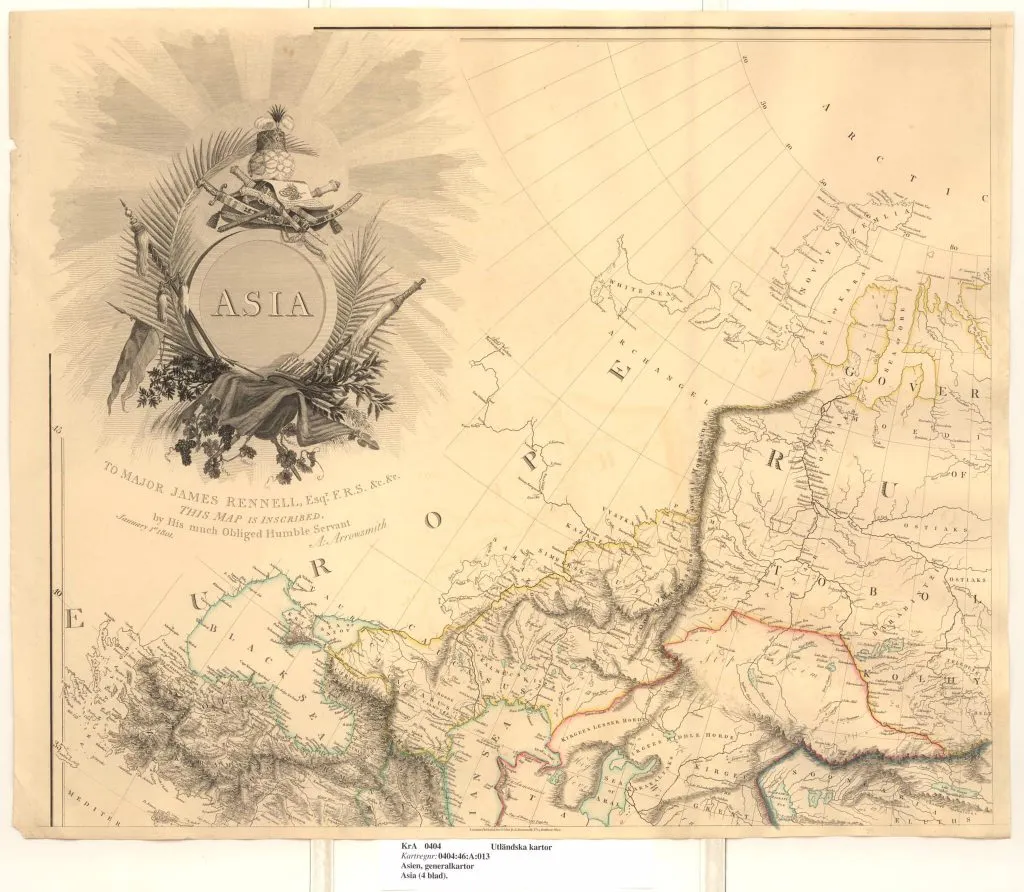
It was created precisely to promote the development of trade, in 1801, by Aaron Arrowsmith (1750-1823). He was the best cartographer of his generation, and from 1790 until the end of his life he personally produced some of the most beautiful and elegant maps of the era.
This large and extremely detailed antique map of Asia, marking routes for explorers and merchants, was a significant advance compared with other maps of the period. It is dedicated to James Rennell, who was Surveyor General of the dominions of the East India Company in Bengal. The information published in his “Bengal Atlas” in 1779 appears here.
Description:
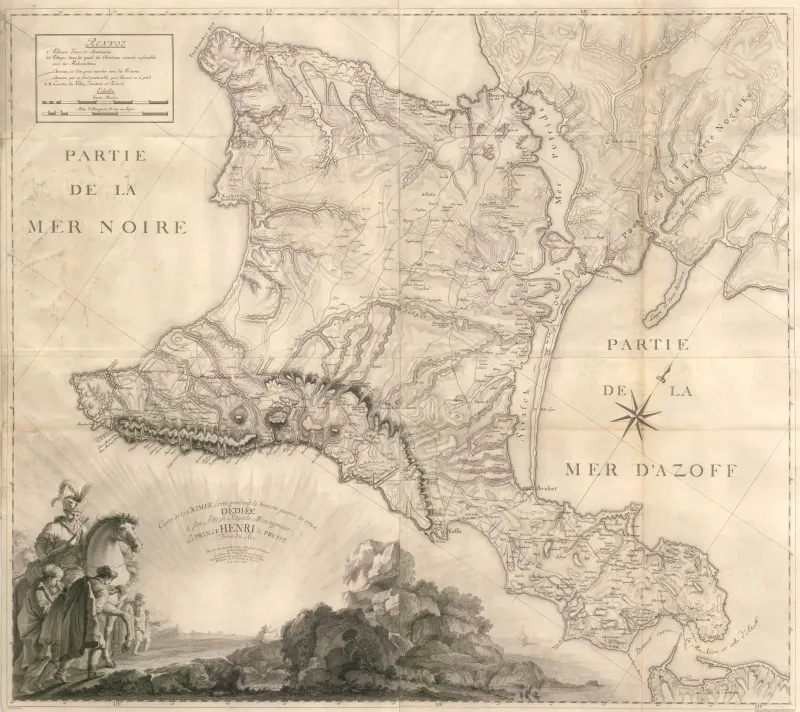
I will not write about the primordial dense settlement of the Crimean territories, since it is obvious from the parts of the story given earlier. But Kherson and especially Mykolaiv, marked on the map, are interesting to us as territories where life historically flourished and which always made use of their advantageous geographical position.
It is known that it was here that a settlement of the Cimmerians was located, which some historians call the first of its kind on Ukrainian lands: an ancient port city of the Cimmerians (Bilozerka culture, 12th-10th centuries BC).
And in the 14th century Grand Duke Vytautas outlined the southern borders of our state (which the Cossacks later cited to confirm their rights to these lands) when he built along the Black Sea a system of fortifications, fortresses, towers and customs houses.
In recent years archaeologists have been working regularly at the hillfort in Mykolaiv, finding every year more and more confirmation that it can be considered the first city on our lands.
In June 2009, during research, a stone foundation of a second bridge across the moat was recorded in the fill of the hillfort’s citadel moat. This find confirms that the city was not just a settlement of craftsmen, farmers and herders, but a regional centre of the late 2nd millennium BC with a complex social organisation. During the 2021 archaeological season, “masonry with an interesting architectural structure”, a tower, a cluster of stones that may be a new dwelling or a fortification, and the oldest bridge across a fortress moat in Eastern Europe were discovered.
Until then it had traditionally been believed that the first to appear on the territory of Ukraine, in the 6th-5th centuries BC, were the ancient city-states of the Northern Black Sea region: Tyras, Olbia, Chersonesos Taurica, Theodosia and Panticapaeum, which left a noticeable mark both on the trade of the time and on history.
So it is no surprise that the foundation of historical research in Mykolaiv was laid by the cabinet of rare things of the Black Sea Depot of Maps, founded as early as 1803. It is justly considered the first museum institution in Ukraine. Symbolically, the Sevastopol Cossacks helped to collect items for the museum. The museum’s fairly large collection also included objects of the Cossack era.
Even more interesting is the inscription “Adjibei”, which is not hard to locate at the site of the modern Ukrainian city of Odesa.
Another myth of Muscovite historians, imposed for many years in order to tie the Black Sea cities to the Empire by any means (like the story of Odesa allegedly being founded on an empty place), has in recent years been utterly demolished by professional scholarly publications. Not only old maps but a whole complex of sources confirm the existence on this site of Adzhybei (Katsiubiiv, Kotsiubei, Hadzhybei, Kachybei, Khadzhybei – whatever interpretations of the name we encounter, until it was renamed Odesa).
The first written mention of the port of Kaczubyeiow (Katsiubiiv) dates back to 1415 (in the work of the historian Jan Długosz (1415-1480)). And in 1442 the Podillia starost Teodoryk Buczacki was granted holdings between the Buh and the Dniester for building fortifications in Chornohorod (Czamigrad), Karaul (Caravul) and Khadzhybei (Caxzibeiow).
In the notes of 1862 by the ethnographer P. Reviakin, who lived near Bila Tserkva and had as his friend and guide a local lore expert, Grandfather Omelko, the telling words of this old and wise man were preserved: “Why do we call Odesa Odesa, when in truth it is Hadzhubei”.
It is characteristic that in 1802 the administrative borders of the lands were changed and the Kherson Governorate was established, which included the territory from the Dniester to Chyhyryn. And in 1859 census data for this region were collected (which mostly recorded the language the respondents used).
It turned out that Ukrainians (whom the political motives of those years forced to be called “Little Russians”) made up an absolute majority. The statistical description indicates that there were 597,180 of them in the Kherson, Oleksandriia, Ananiv, Yelysavethrad, Odesa and Tyraspol districts (not counting the urban population, which was not broken down, but in which Ukrainians, obviously, also made up the majority of the 244,700 counted). In second place were Moldovans – 109,660. In third, Jews – 83,190. Muscovites (whom the political motives of those years forced to be called “Great Russians”) numbered only 64,600. That was close to the number of Germans invited here – 47,410, for example. That is, even then the Muscovites were chance and few guests on our lands. And unlike the Germans, who helped the region’s economy, they were invited here by no one.
Just like now.
So only imperial propaganda could make Ukrainians forget their past, their true history.
This example once again confirms how much needs to be reconsidered in our people’s worldview in order to finally get rid of myths and perceive history as it was – without clichés and narratives imposed from outside.
Written on 01.11.2021.
TITEL: Asia (4 blad). Datering: 1801. Persons: Aaron Arrowsmith, James Rennell.
Author: Ihor Poluiektov