

Bakota: the flooded capital of silence (photo report)
Bakota is not just a very picturesque place on the Dniester. It is a vanished village that has become a symbol of loss and revival. Life once bustled here, and today silence reigns, attracting tourists, pilgrims and those seeking peace (or adventure).
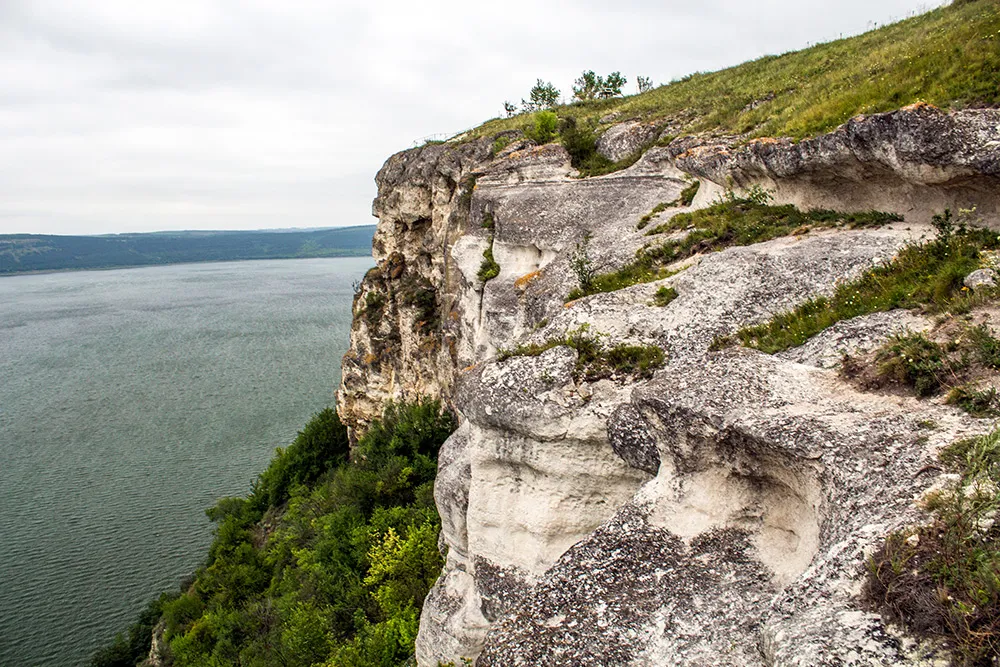
Photo: Dmytro Poliukhovych (2017)
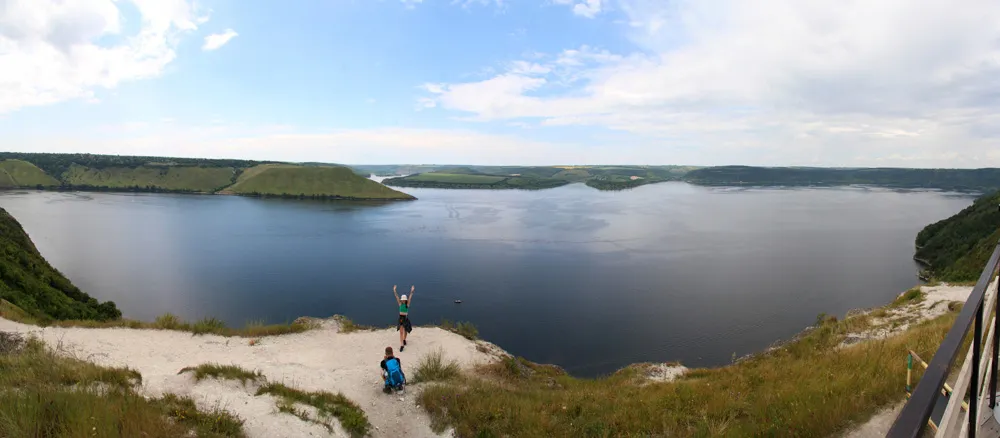
Photo: Roman Malenkov
Bakota is also an illustration of the saying “Thus passes the glory of the world”. It was once one of the largest and most prominent cities of Rus. In the chronicles it is mentioned as early as 1240 as the administrative centre of the Lower Dniester region. In the 13th–16th centuries it was the capital of Lower Rus, where water and overland trade routes met. After that the capital became a village. A village that no longer exists.
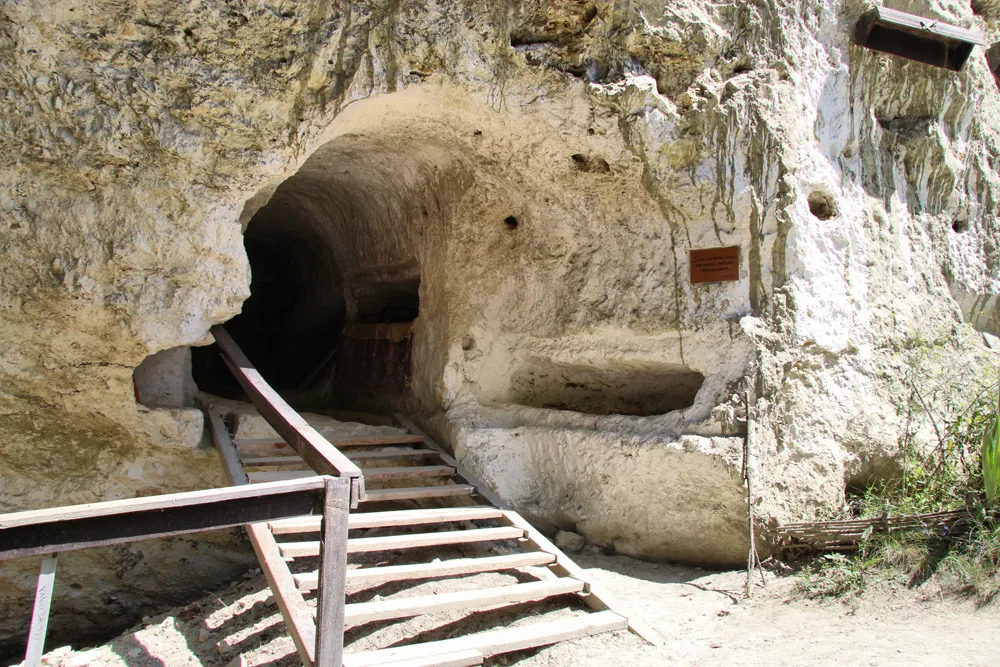
The cave monastery. Photo: Roman Malenkov
An interesting fact. Even in the 16th century, when Bakota had degraded to the level of a so-so small town, its greatness was still remembered in Europe. On the map of Poland and Hungary by the outstanding cartographer Sebastian Münster (Basel, 1560), only three towns are marked in Podillia: Bakota, Rov (Bar) and Horodok (the one on the Smotrych).
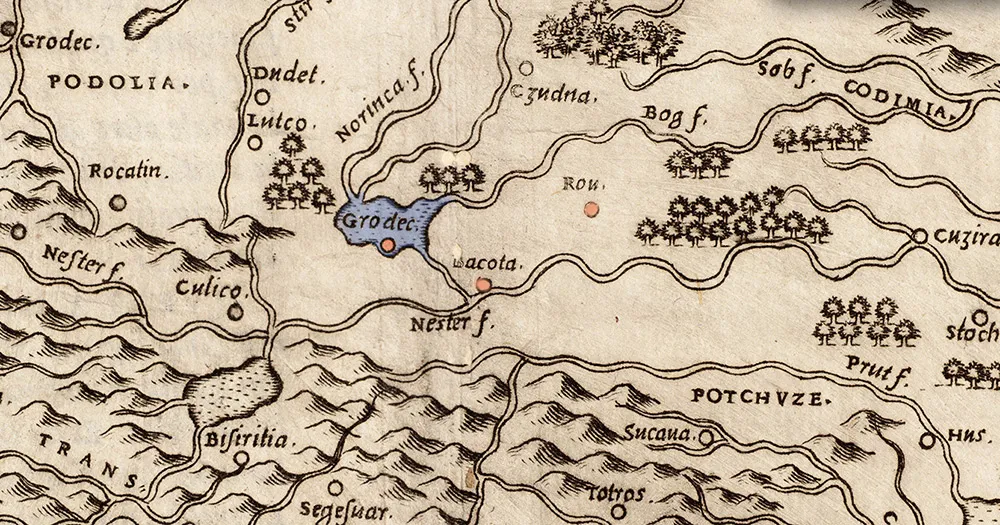
A fragment of Münster’s map. We also see a huge mythical lake with the poetic name Amadoka
History that went under water
In 1981 Bakota was flooded during the construction of the Dniester Hydroelectric Station. The people were evicted, and their homes, orchards and vineyards were destroyed. 28 villages vanished from the map, and a reservoir appeared in their place.
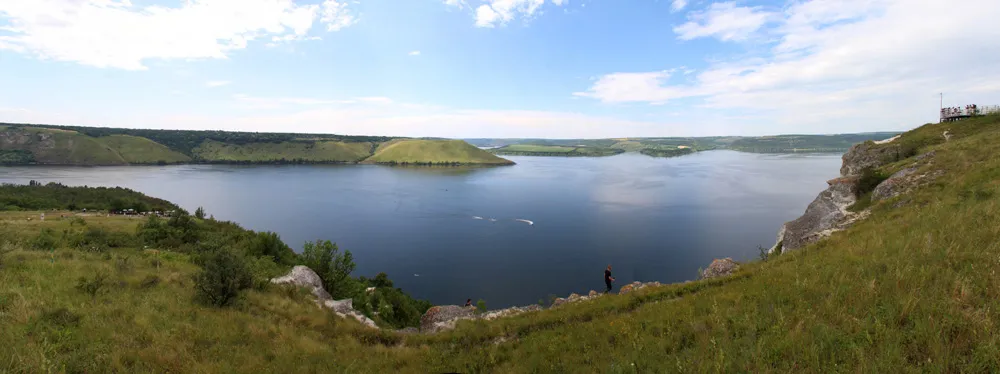
Ancient Bakota once stood here. Photo: Roman Malenkov.
For many this became a personal tragedy: family homes had to be demolished by their own hands in order to receive a pittance in compensation.
A monastery without monks
On the White Hill, where a pagan sanctuary once stood, the Bakota St. Michael’s Cave Monastery arose in the 12th–13th centuries. The monastery survived an earthquake, religious persecution and Soviet destruction — but kept its spiritual strength. Today there is no priest here, no confessional division — only silence, icons and faith.
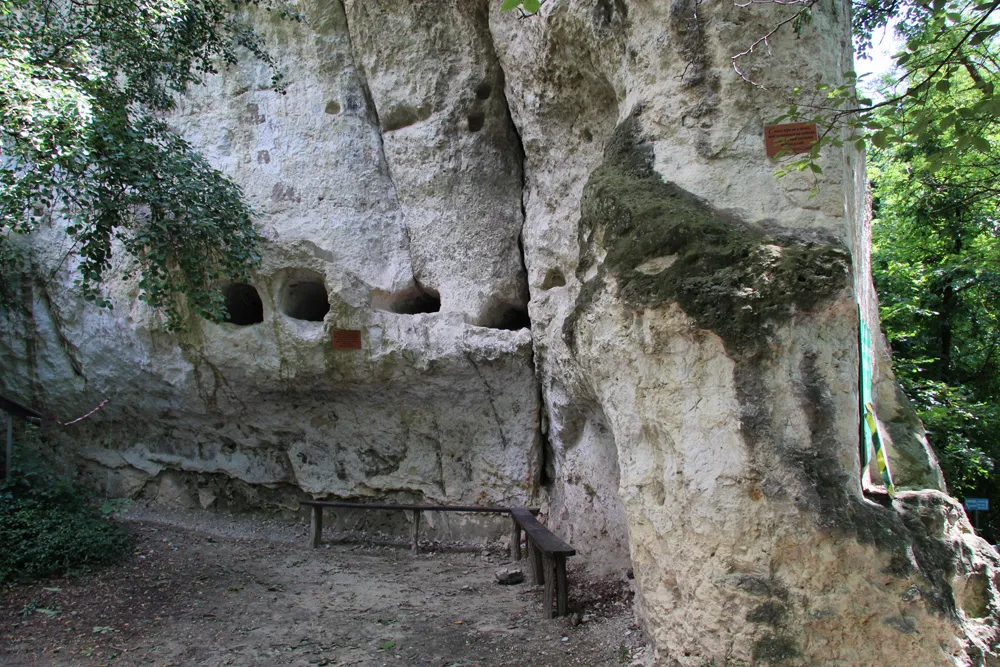
The monastery. Photo: Roman Malenkov
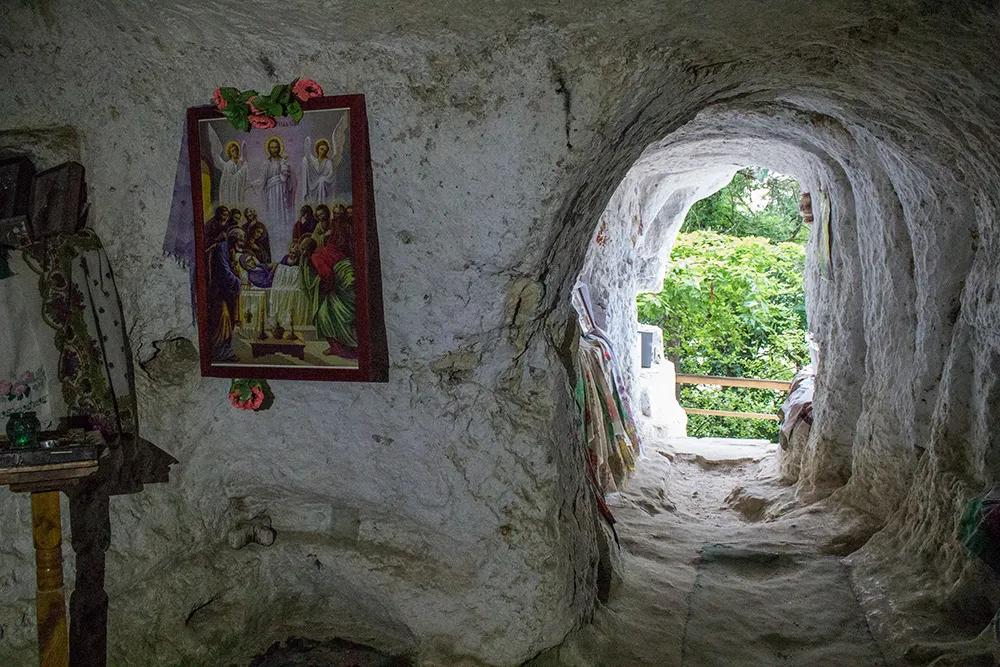
Photo: Dmytro Poliukhovych (2017)
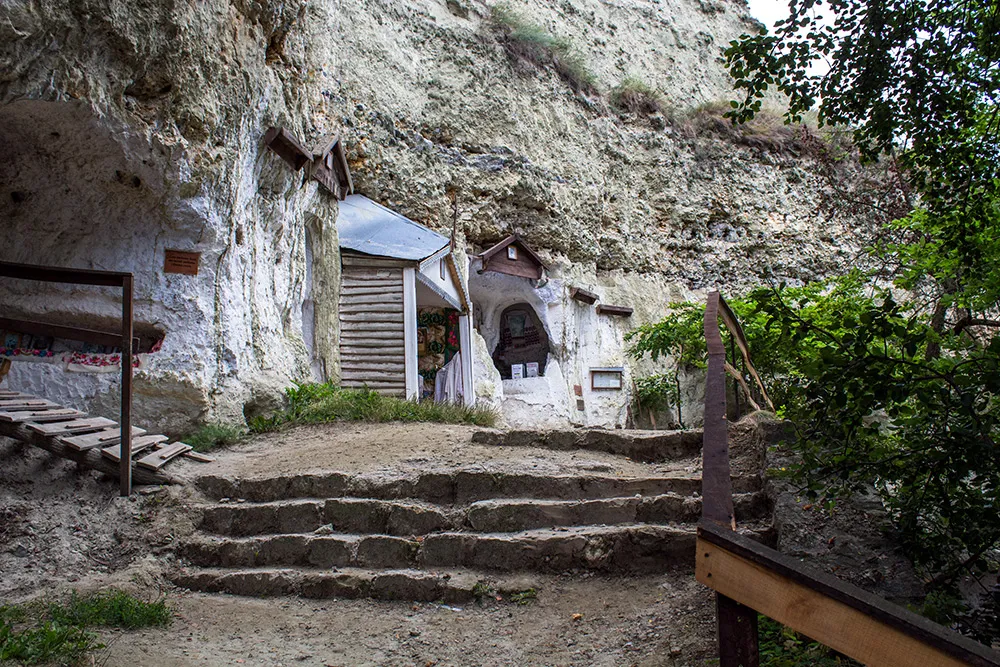
Photo: Dmytro Poliukhovych (2017)
Interestingly, the Bakota St. Michael’s Cave Monastery has an “inverted” structure. Traditionally, in cave monasteries the church is located above the cells. In Bakota the situation is the opposite. The cave church is below, and the cells are above it.
Sea and mountains
For the last 20 years or so Bakota has been extremely popular among tourists. God knows in how many video clips it appears, and how many travel bloggers have devoted their attention to it.
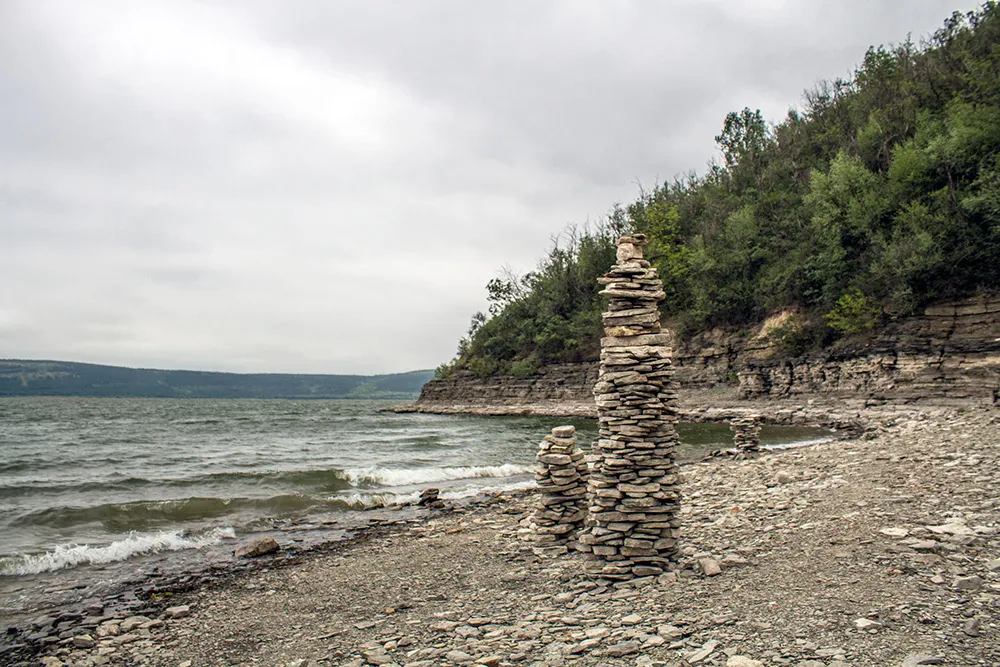
Photo: Dmytro Poliukhovych (2017)
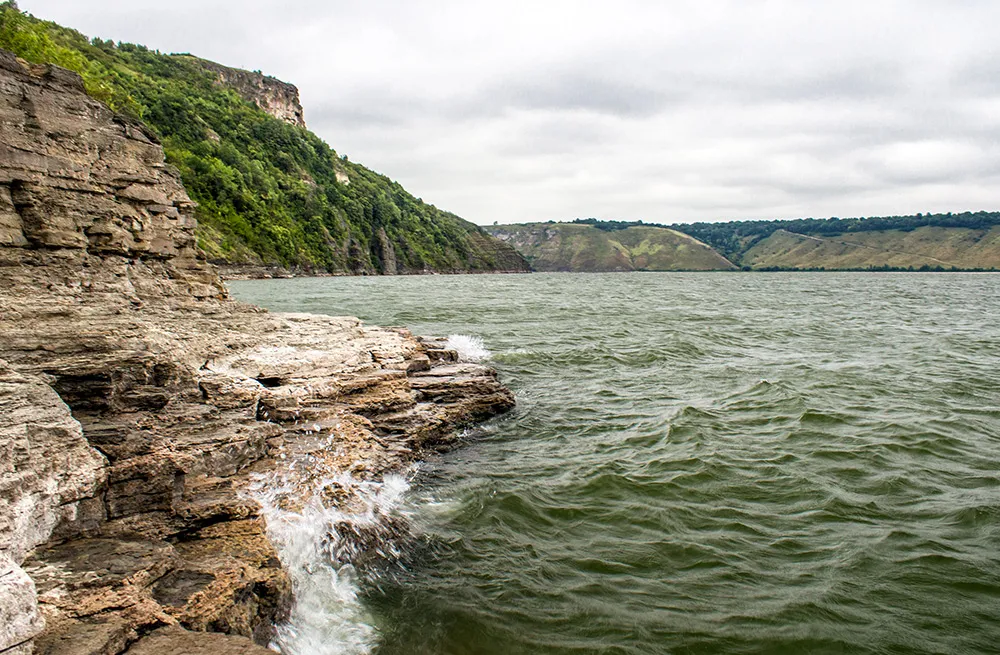
Photo: Dmytro Poliukhovych (2017)
Because everyone loves the sea and mountains. In Bakota there is both. The cliffs of the Dniester Canyon – why not mountains (especially when looking from below), and the Bakota Bay is almost a sea. Only a freshwater one. True, the beaches have no smooth pebbles, but sharp crushed stone. You can’t run barefoot…
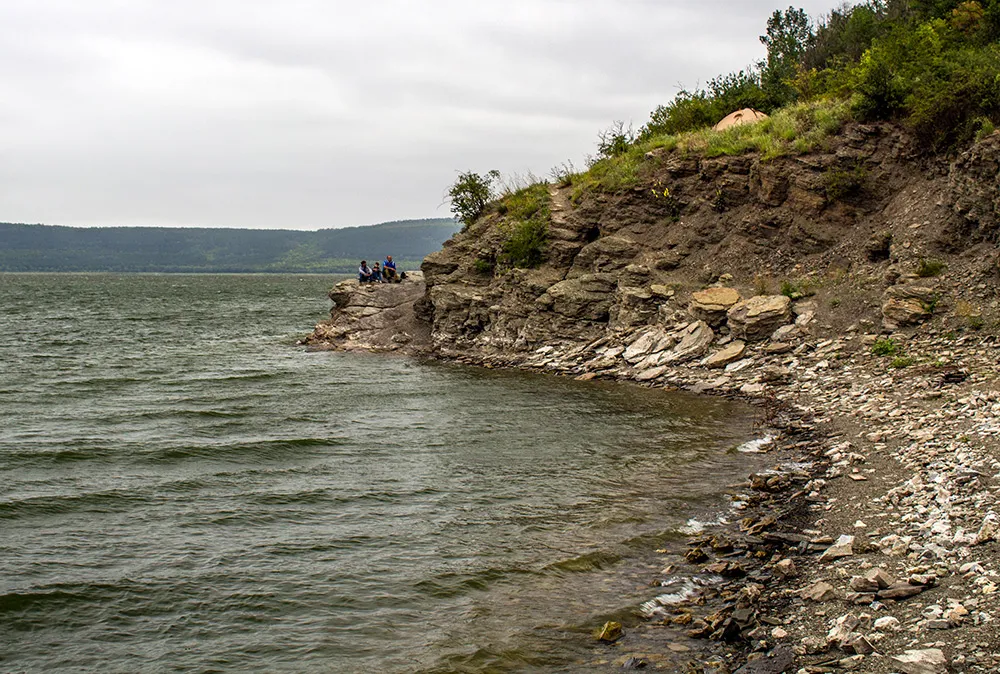
Photo: Dmytro Poliukhovych (2017)


