

Bozhykivtsi. Colonna-Czesnowski palace

· 2 min read
Bozhykivtsi is a village in Derazhnia district. About a thousand people live here.
The village is first mentioned in a royal charter (“grant”) of the Polish king Władysław of 1436, when he gave the village to Piotr Odrowąż, and later in a register of 1493 and in a charter of King Sigismund of 1539.
The wooden church in Bozhykivtsi was built in 1777 in the name of St. Paraskeva, but the parish existed even earlier, as can be seen from documents kept at the church (in the parish registers of 1732). In 1901 the parishioners in Bozhykivtsi numbered 496 men and 500 women. The village of Hoholi was assigned to the Bozhykivtsi parish.
From 1887 a church parish school existed in Bozhykivtsi. At first it had one class, later it expanded to three. The landowner Zdzisław Wacławowicz Colonna-Czesnowski owned 1,121 desiatinas of land.
The landowner came from France; his wife was Polish. He had three folwarks. In 1901 he built a manor house, in which a school is still housed today. The landowner’s possessions included a mill, a brickworks, a smithy and a stable. A small plant (a distillery) built in 1909 produced spirits. Later a starch factory operated on this site; it was closed in the 2000s and completely destroyed.
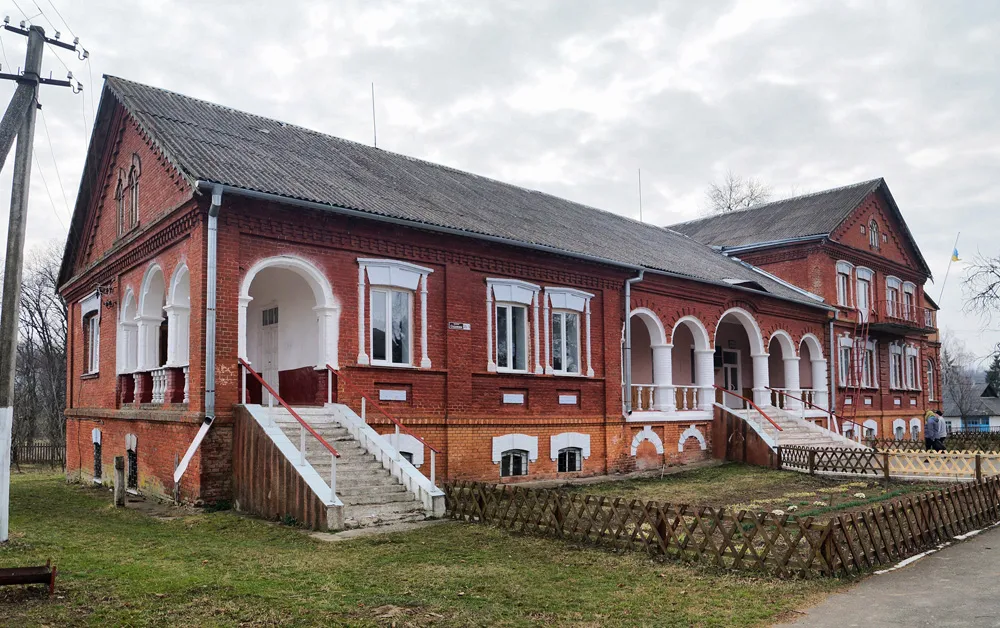
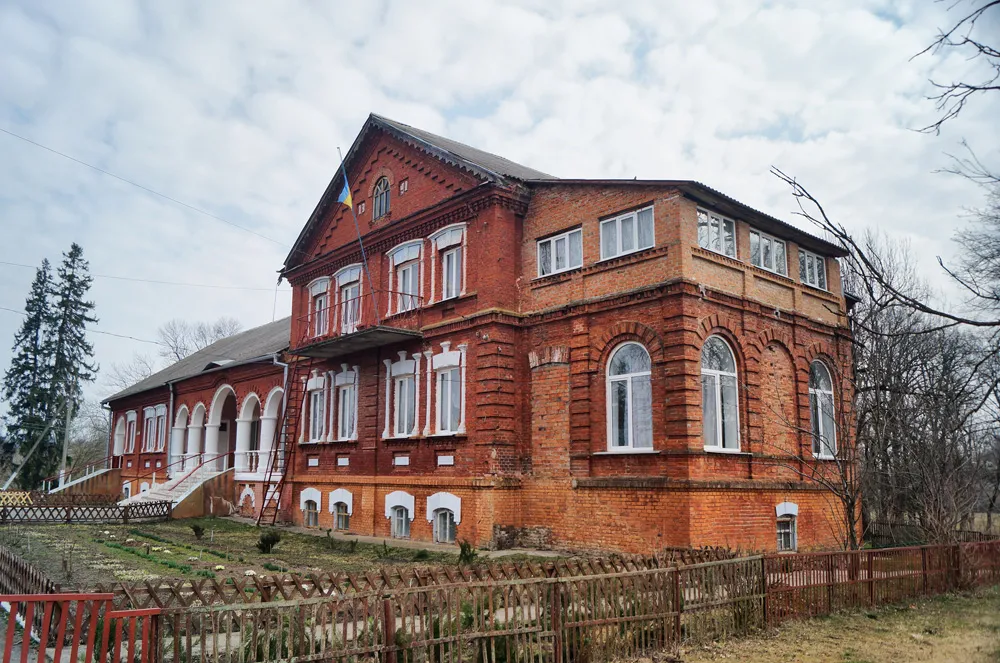
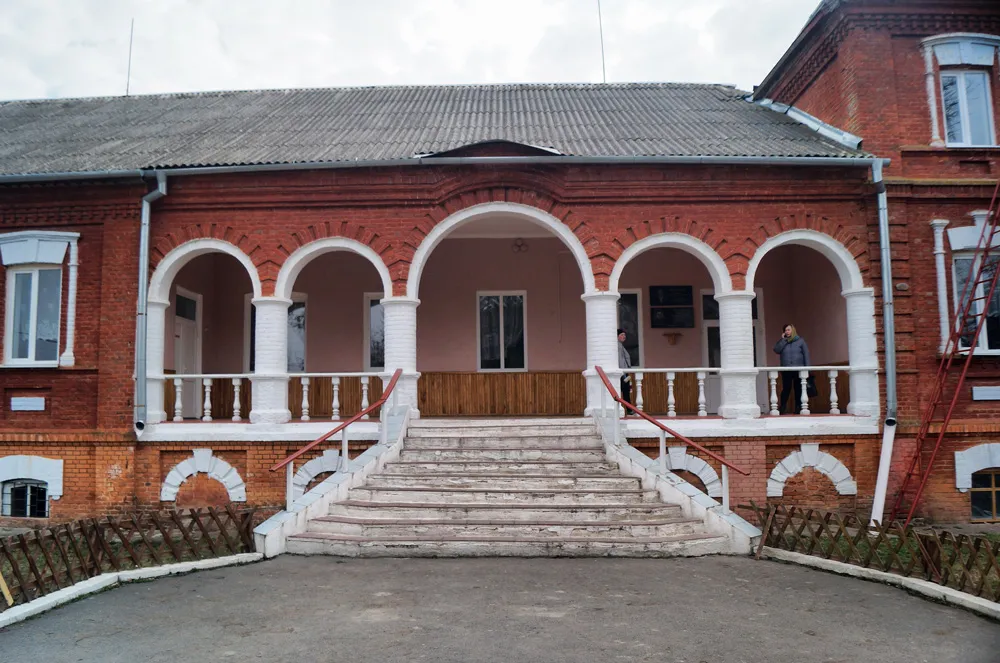
Colonna-Czesnowski manor
The manor belonged to the nobleman Zdzisław Colonna-Czesnowski, a descendant of two ancient families – the Italian Colonna and the Polish Czesnowski. The Italian Colonna family played a significant role in medieval Rome. Its members held the highest military and state posts. Egidio Colonna was the teacher of Pope Philip the Fair (1247—1316), Prospero Colonna (1452—1523) was a commander of imperial and papal troops, and Pompeo Colonna was a cardinal from 1530 and viceroy of Naples.
Around the estate were three folwarks with 1,121 desiatinas of land in Bozhykivtsi, a distillery, a mill, a brickworks, a smithy and a stable.
After the revolution of 1917 the landowner and his family left for Poland. The estate passed to the new authorities. A school was placed in the manor house, a kindergarten in the outbuilding and a village club in the farm building. The distillery built in 1909 was turned into a starch factory.
The manor was built in 1901 of exposed red brick; it is spacious, with an arcade of galleries. The manor is surrounded by a park with an outbuilding for servants and a farm building.
Text from Wikipedia, photos by Roman Malenkov


