

Minkivtsi. The Kosielski manor

· 5 min read
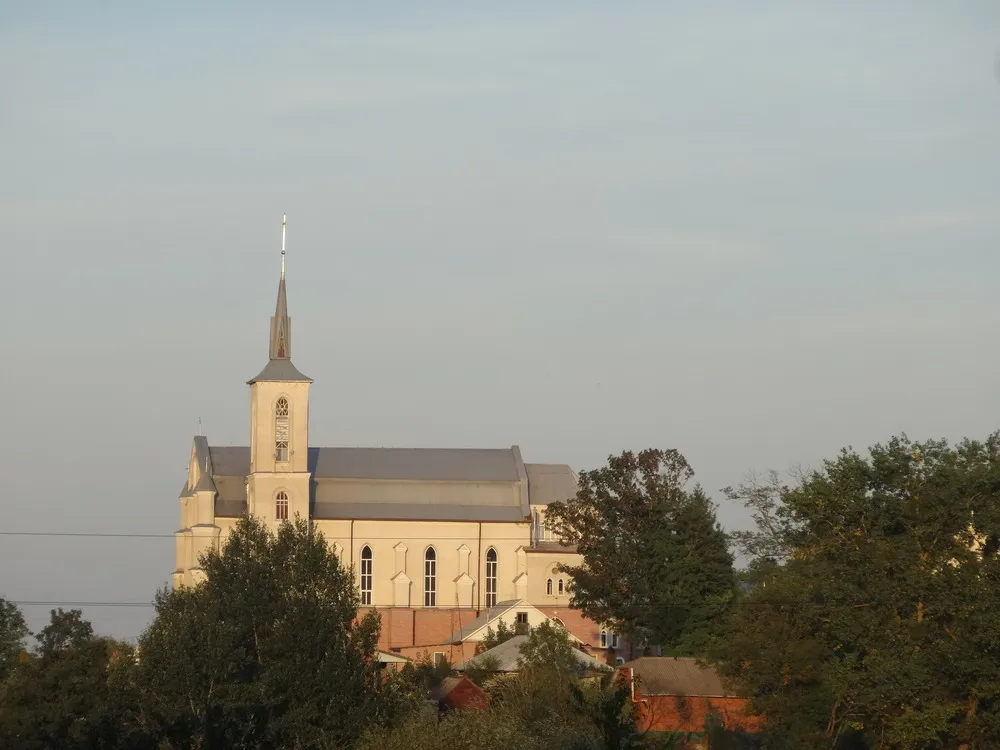
Minkivtsi was the last, thirteenth settlement on the itinerary of this remarkably eventful day. Behind us lay Derazhnia, villages of the district, and we had even touched a little on the Vinkivtsi area. Our strength was nearly gone, everyone dreamed of a bed (even without undressing), and on top of that dusk had begun to fall. And on a hill rose a church: a new one, of the Sacred Heart of the Lord Jesus, built in the 1990s–2000s. We no longer felt like walking to it. Nor was it our goal. Somewhere next to it hid an older building, more than 100 years older, a small chapel-church.
I recalled a phrase from a famous dialogue that has become a catchphrase: “Do you see the ground squirrel? No. Neither do I. But it is there.” So it is here. In the photo only the new church is visible. The church really is huge for a village. Though the village is not small, with more than a thousand residents, most of them Roman Catholics. Every Sunday up to 200–350 people come to services, including from nearby villages. There are Orthodox believers too, but in the absence of a church of their own, services for them are also held in the church.
There had always been many Latin-rite believers in the village, but there was no church. So the local landlord Kosielski, himself a Pole and a Catholic, took up the matter and, together with the parishioners, in 1851 founded a filial chapel of the parish of St. Kilian near the cemetery, which was destroyed by the Russian authorities in 1868. In 1905 a new one was built on its site, and it served the faithful until the end of the 20th century, except for a short period after the Second World War. At the chapel (since the time of the previous one) there was a church school where teaching was in Polish.
Construction of the new large church began in 1990, on the initiative of Fr. Jan Olszanski. He had served in Minkivtsi for a third of a century, since 1959, when he was practically forcibly resettled to the village by the Soviet authorities. The pastor never got to serve in the new church. In 1991 the Roman Catholic hierarchy was restored in Ukraine, and Pope John Paul II appointed Fr. Jan Olszanski bishop of the Kamianets-Podilskyi diocese. Services in the new Church of the Sacred Heart of the Lord Jesus began in 2001.
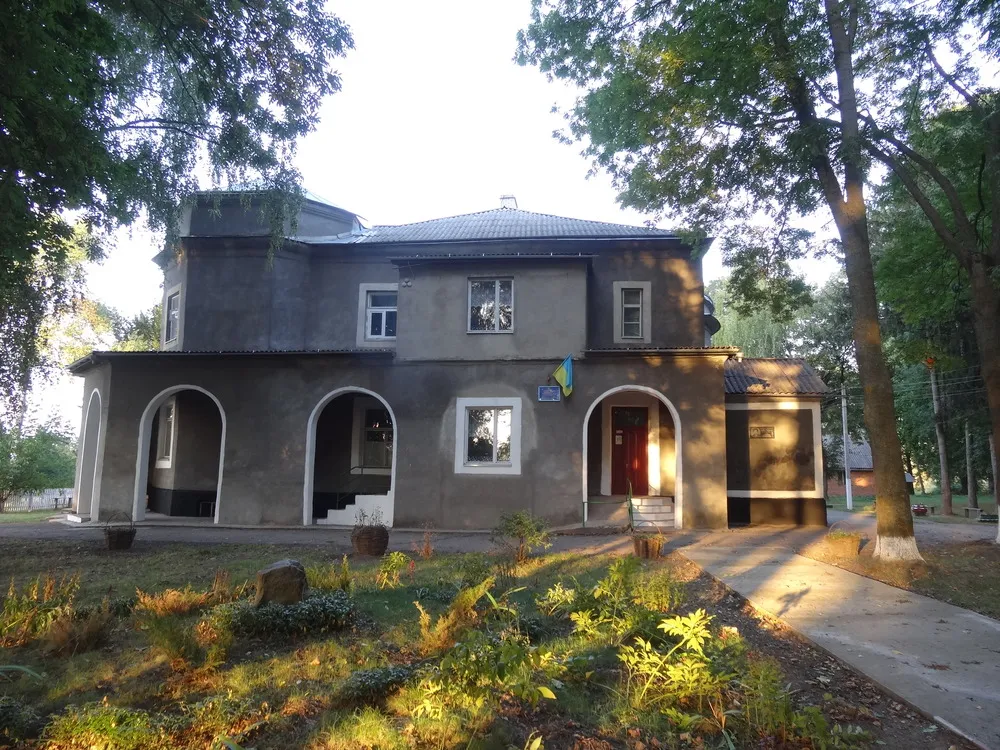
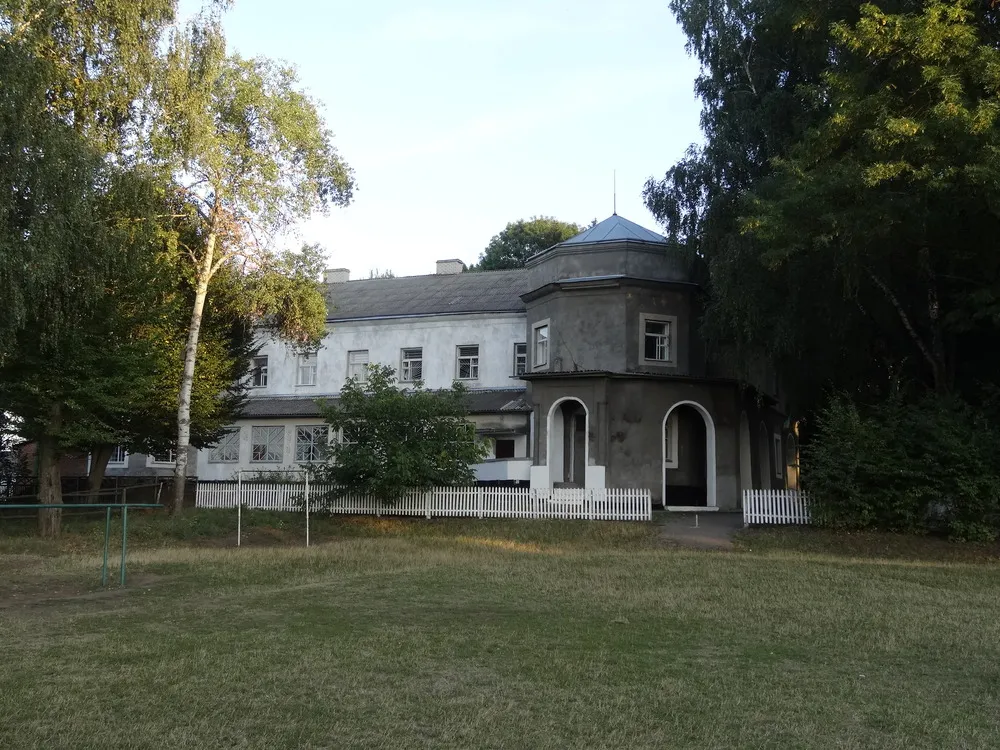
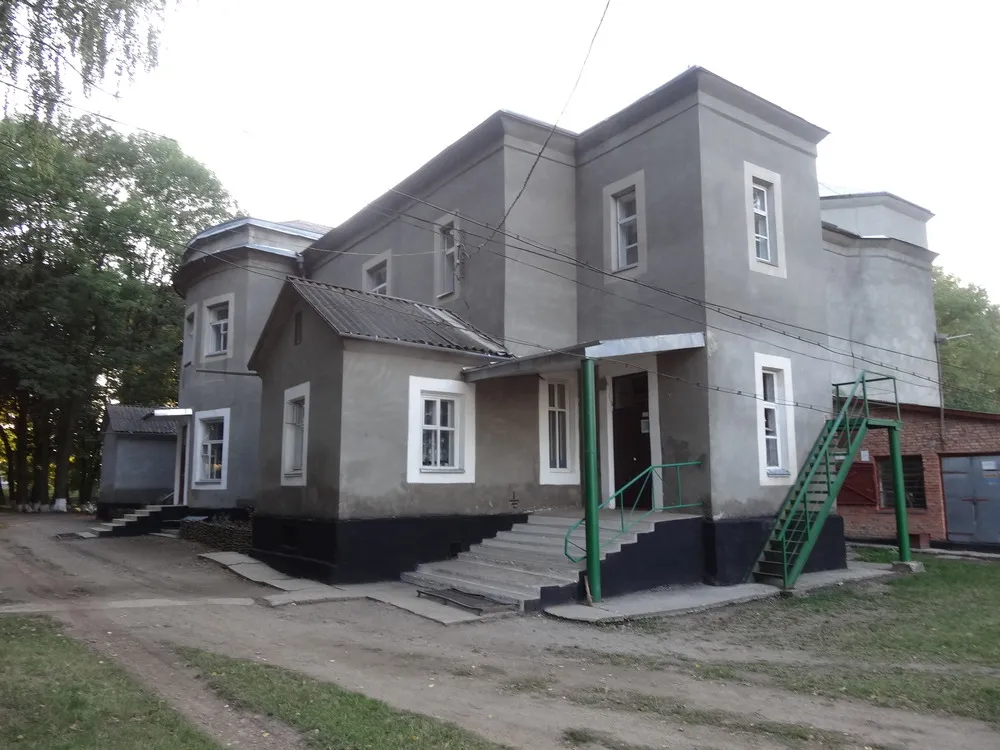
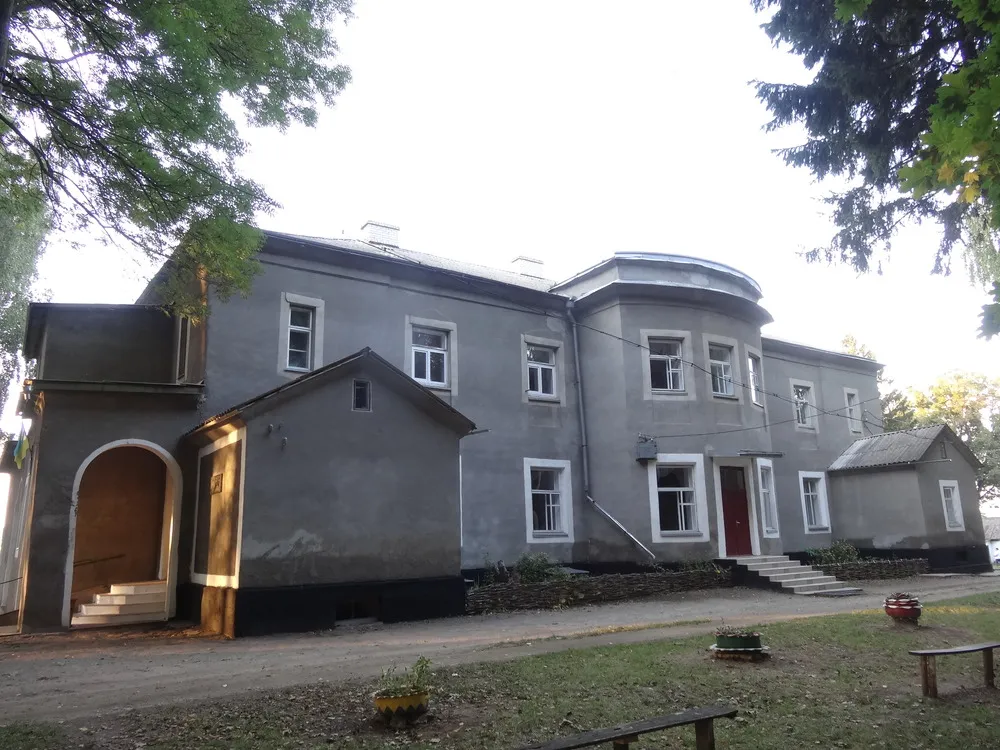
As for the Kosielski manor, we managed to see it, though only from outside. It is a two-storey brick palace of quite interesting forms, with varied façades and corner towers (or rather parts of them, since their upper parts with spires have been gone since the 1970s, and so are the balconies, removed for the safety of schoolchildren; yes, there is a school there now), in the Romanesque style. Despite a number of reconstructions (the latest in 2002), the palace still looks attractive. And it was even more attractive if you look at the archive photo on the village school’s website.
As for the history of the estate, the information on the web is quite ambiguous and contradictory. Some speak of construction at the end of the 18th century, some at the beginning of the 19th, some in the middle of the 19th. However, it is known that Vincent Kosielski bought Minkivtsi from Princess Maria of Württemberg in 1816. So who built the palace? Was it here before the Kosielskis bought the village? Or was it already built by the Kosielskis? Or did the Kosielskis rebuild the palace so much that it no longer looked like the original?
In 1835 Vincent Kosielski married a second time, to Antonina Skibniewska, a member of one of the richest Podillia families, mentioned in other posts. However, Minkivtsi was inherited by Ludwik Kosielski, Vincent’s son from his first marriage, marshal of the nobility of the Letychiv county. The Kosielskis owned the estate for several generations, until 1917. Among other things, from 1909 the Kosielskis also had a distillery producing 80 buckets of spirit a day. Interestingly, it did not suffer destruction during the events of 1917–1919, and the Minkivtsi spirit plant built on its basis operated until recently. There is a story that the last owner, Karol Kosielski, did come to the village in 1919 and even spent a night in his former palace, but fled again in the morning.
We did not get inside; everything was already locked. However, they write that something authentic has remained there too: on the ceiling, remains of stucco and patterns, fragments of wooden wall decoration, staircases, part of the parquet, floor tiles in the hall, stoves; the layout of some rooms is unusual, round and semicircular (probably in the tower rooms), sometimes with arched vaults in the middle of rooms. The basement premises feel powerful; here there used to be a kitchen, a pantry and, hmm… even a prison (!?).
As mentioned above, the former palace houses the local village school. This did not happen at once, but from 1956. Before that there was an agricultural technical school, a machine-tractor station and a village club. Around the school is an old park laid out by the Kwaśniewskis, in which a few centuries-old lindens, maples and ash trees have survived to this day.
And quite recently, in 2021, Minkivtsi opened its own museum in the building of the house of culture: the “Museum of Podillia Embroidery and Everyday Life,” with up to 500 exhibits. I have to say just one thing here: WELL DONE!
Text and photos by Ihor Dorozhko


