Lisovody. Żurowski Palace and old cemetery

· 4 min read
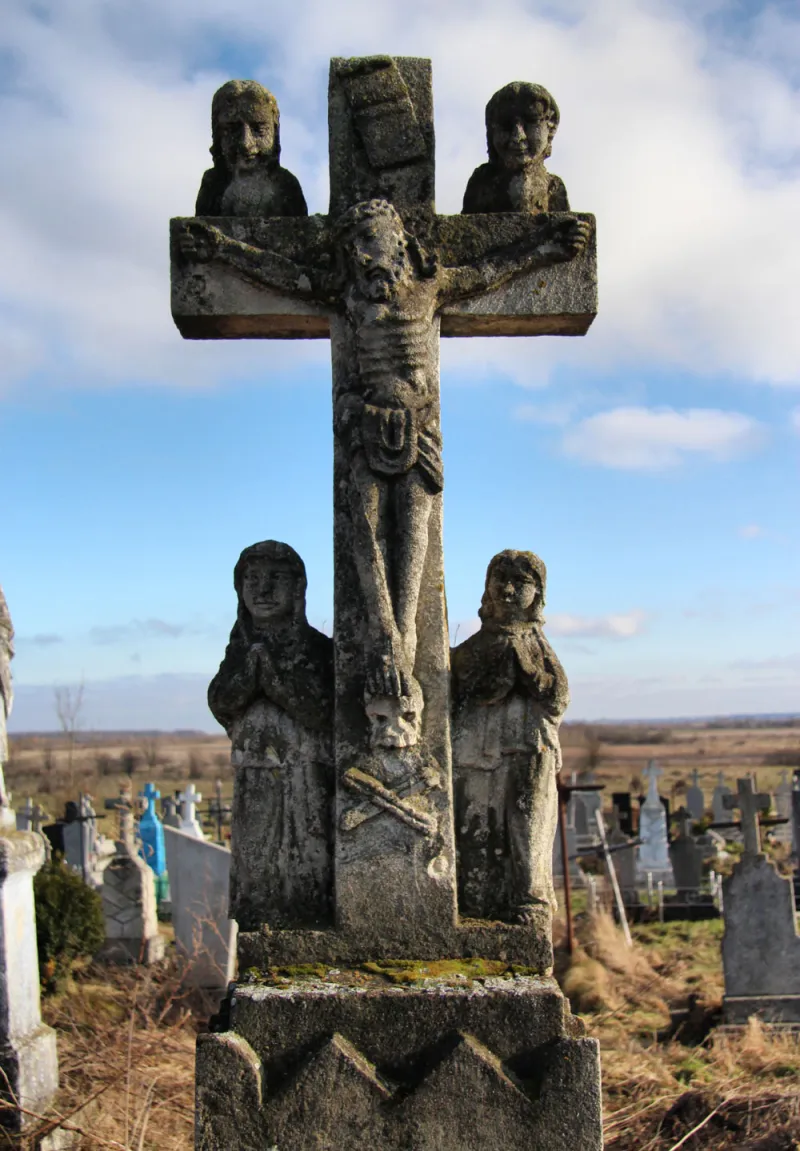
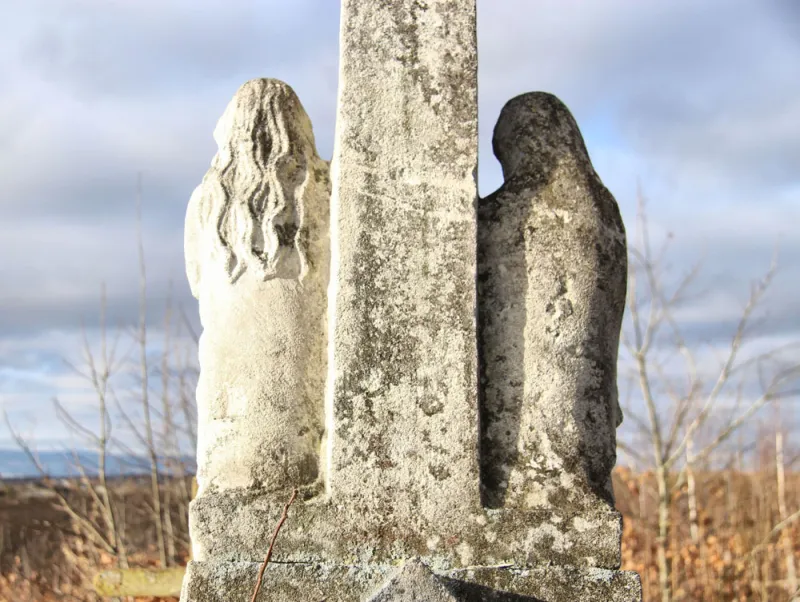
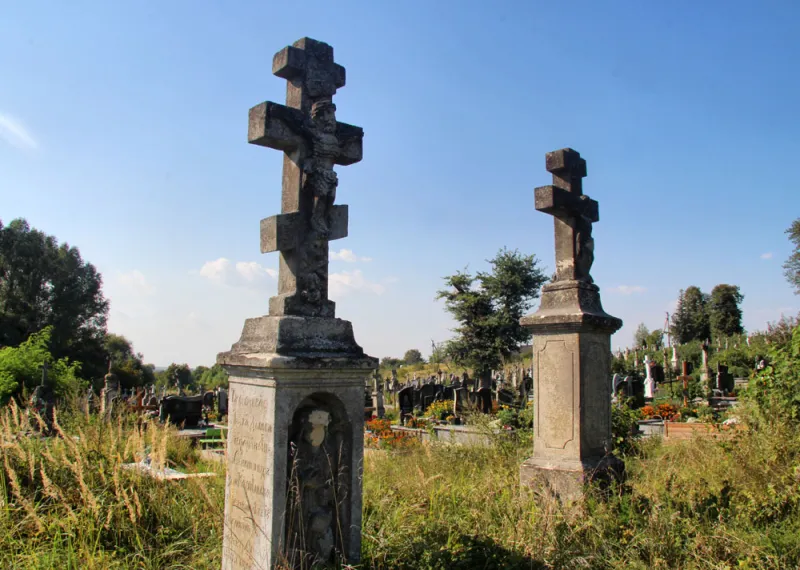
Let us note right away that the most valuable monument of Lisovody, a village in Horodok district, Khmelnytskyi Oblast, is, in our opinion, an old Ukrainian cemetery with stone crosses that is mentioned nowhere. Photos of this cemetery were sent to us by Anna Spivak. She pointed out that in Lisovody some of the streets are named after hundreds (Cossack companies).
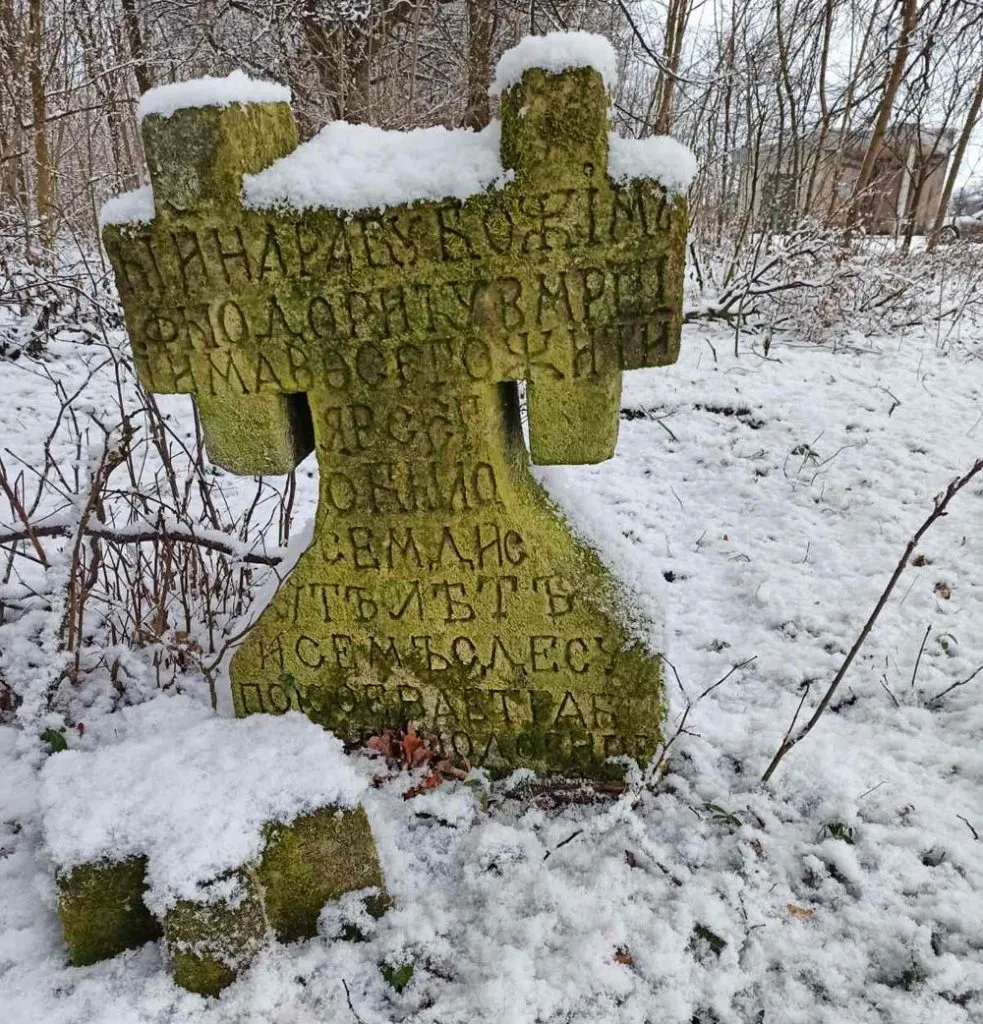
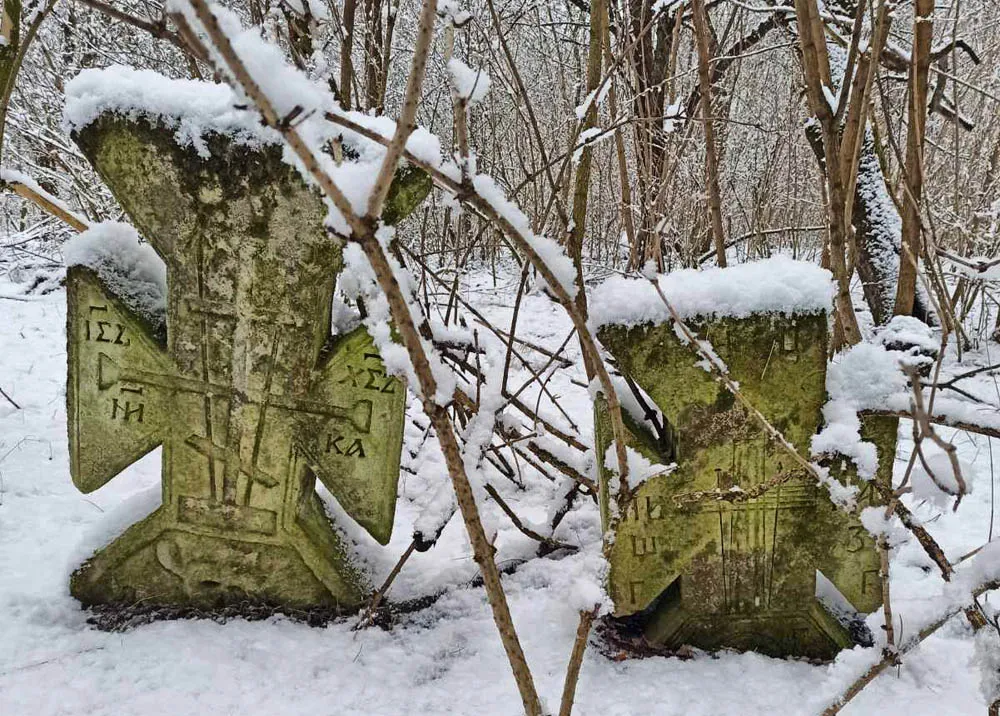
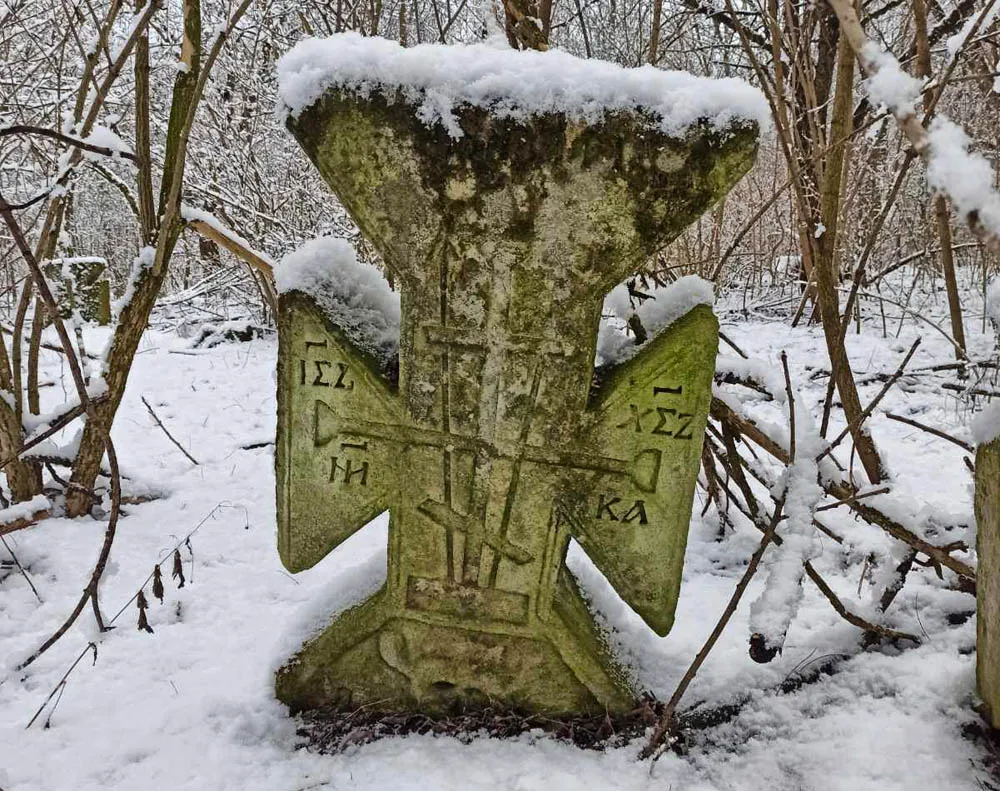
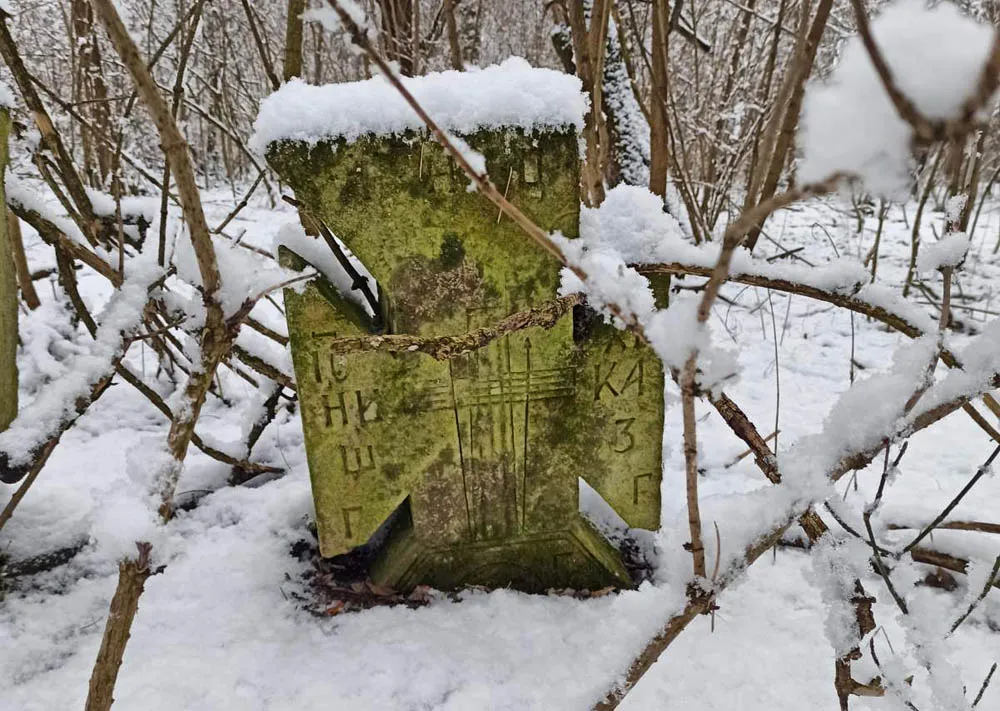
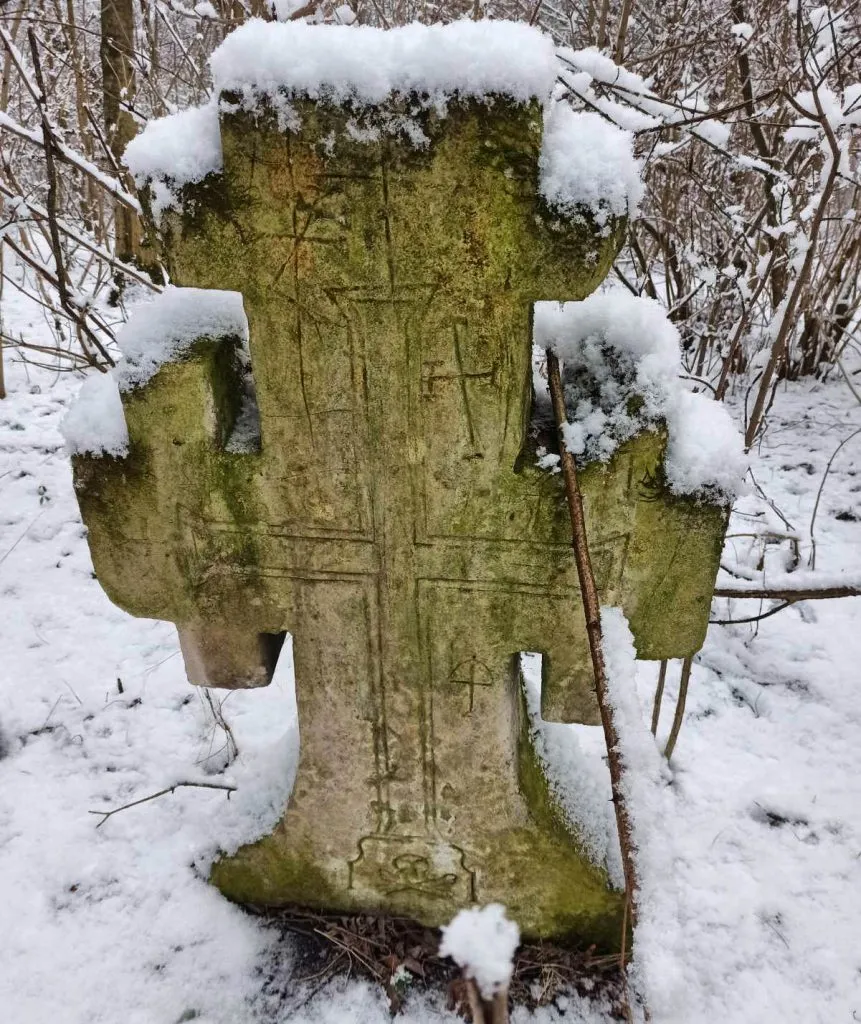
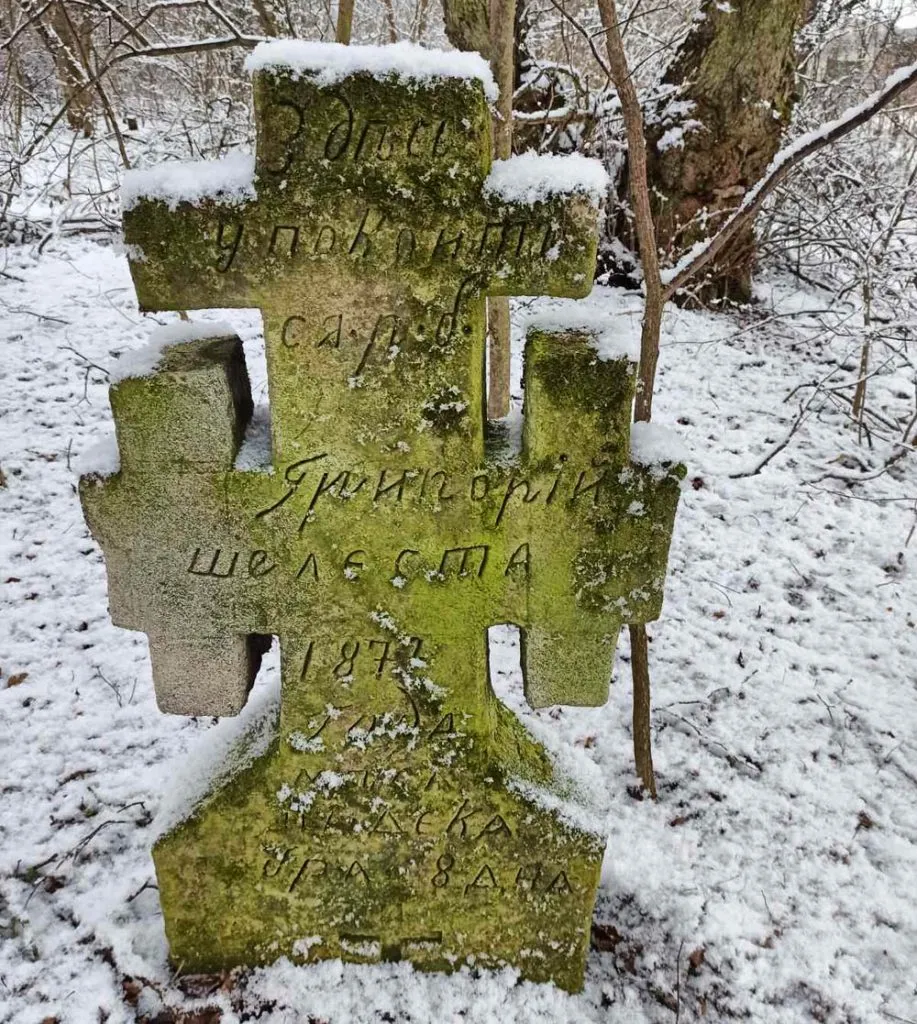
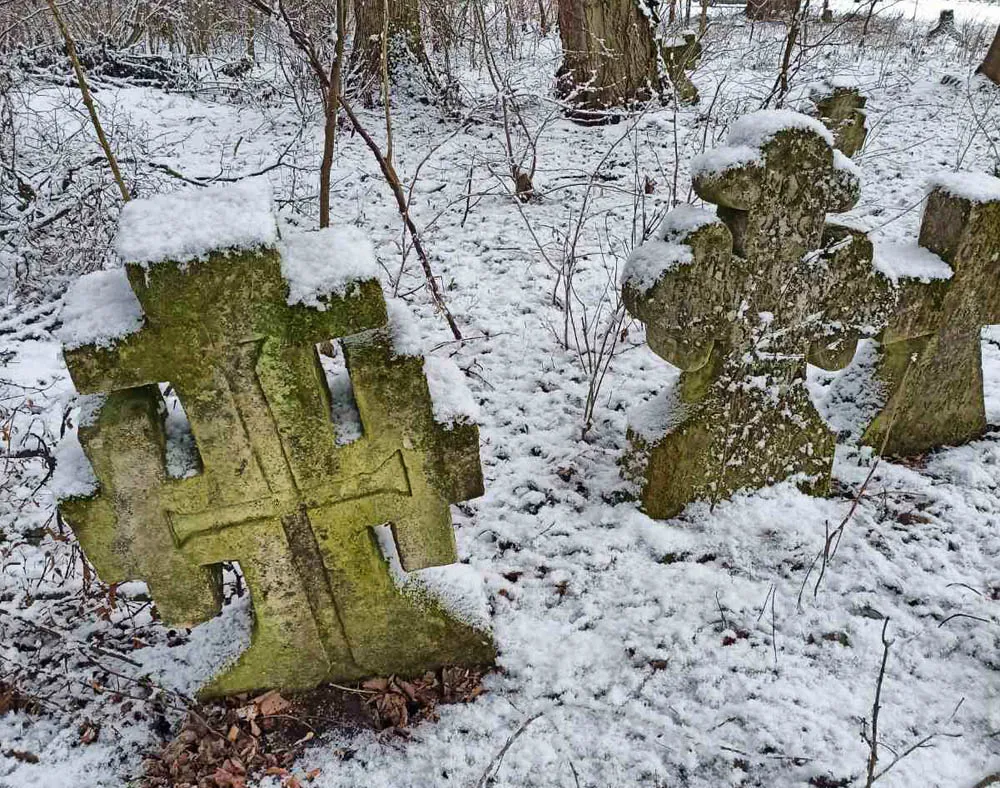
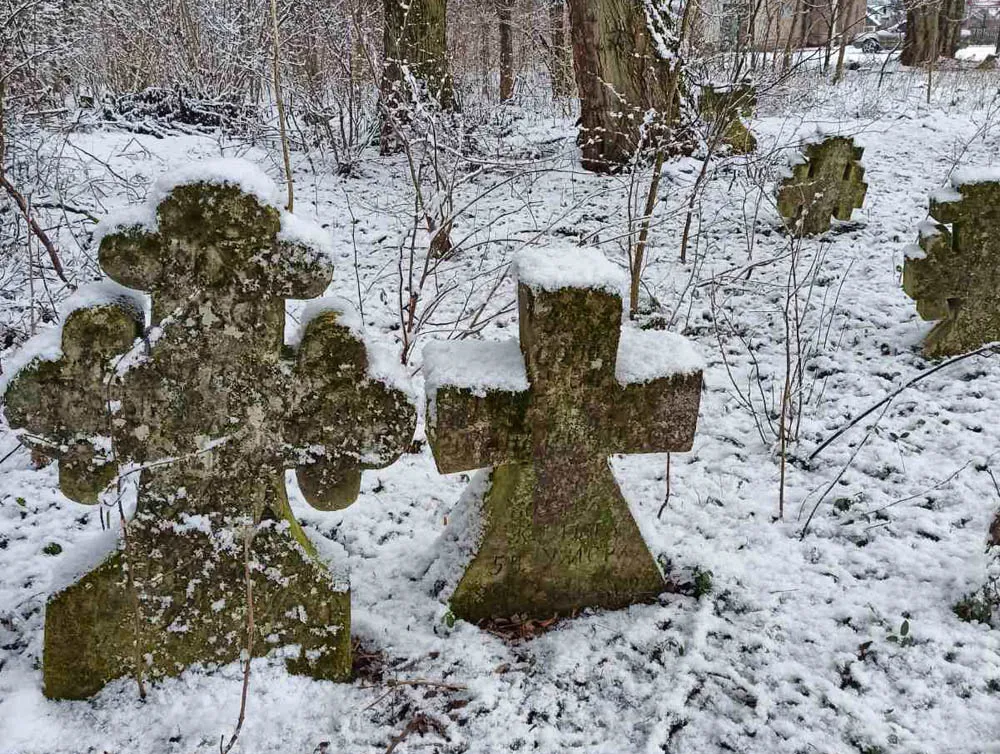
Photos by Anna Spivak
The first written mention of the settlement dates from 1559. At that time it had three lan farmsteads. By 1583 there were already 6 lan farmsteads and 2 craftsmen.
In the administrative division of the 16th century it belonged to Kamianets county.
In the 16th century the villagers were serfs of the Wilkowski feudal lords. Later Lisovody was owned by the Stadnicki and Raciborowski families. The latter derived large incomes from the manor farms located in Lisovody and other villages of Kamianets county. A palace and a number of farm buildings were built in the village. For many decades the palace, one of the finest buildings in Western Podillia, towered over the village. In the first quarter of the 19th century Lisovody passed into the ownership of another feudal lord. By then it was a substantial settlement, with some 550 male serfs alone. In the 1840s, of the total arable land (2,842 desiatinas) the landowner held 1,477 desiatinas of the best land, while the 230 peasant households had 1,365 desiatinas. Only 82 peasant households had full allotments (about 8 desiatinas), 7 households had no field land, and 7 had neither land nor their own dwelling. On their scraps of land the peasants gathered low yields: fourfold to fivefold (40–50 poods). Draught and foot households performed on average 133 days of corvée a year, and also served 12 so-called driven days, guard duty and carting duty; women grew vegetables for the manor, spun thread for linen and pounded millet. Every draught and foot household had to give the lord poultry and eggs, and those who kept apiaries also handed over a beehive tithe. Source: Wikipedia. There you can read much more about the history of Lisovody.
In 1869 the Church of the Intercession was built in Lisovody.
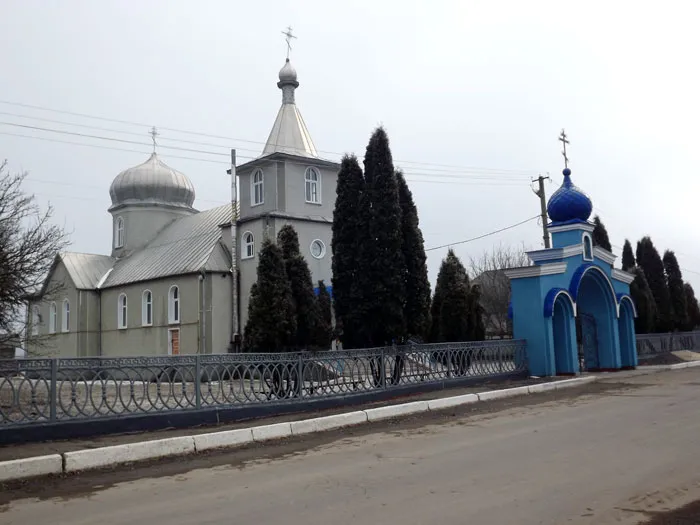
Photo source: zbruc.eu
But the best-known monument of Lisovody is the half-ruined Żurowski Palace; we also give the information about it from Wikipedia. Photos from Maksym Rits’s project “Heritage”.
Lisovody originally belonged to the Herburt family. In 1675 Zuzanna née Herburt married Franciszek Stadnicki, and so Lisovody passed to the Stadnickis. The builder was Ludwik Raciborowski, marshal of the nobility of Kamianets county. Ludwik was married twice, first to Anna Grabianka, and later to Aleksandra Brostowska, with whom he had two daughters and one son.
The palace was built at the end of the 18th century. It was a two-storey house with a porch. The porch was supported by four columns crowned with a triangular pediment. The palace was covered with a tall, smooth, four-sloped shingle roof. The rear side, facing the park, was taller than the front, as it stood on a high plinth, on top of which was an extensive terrace. In the middle of the rear side was a three-sided projection (risalit).
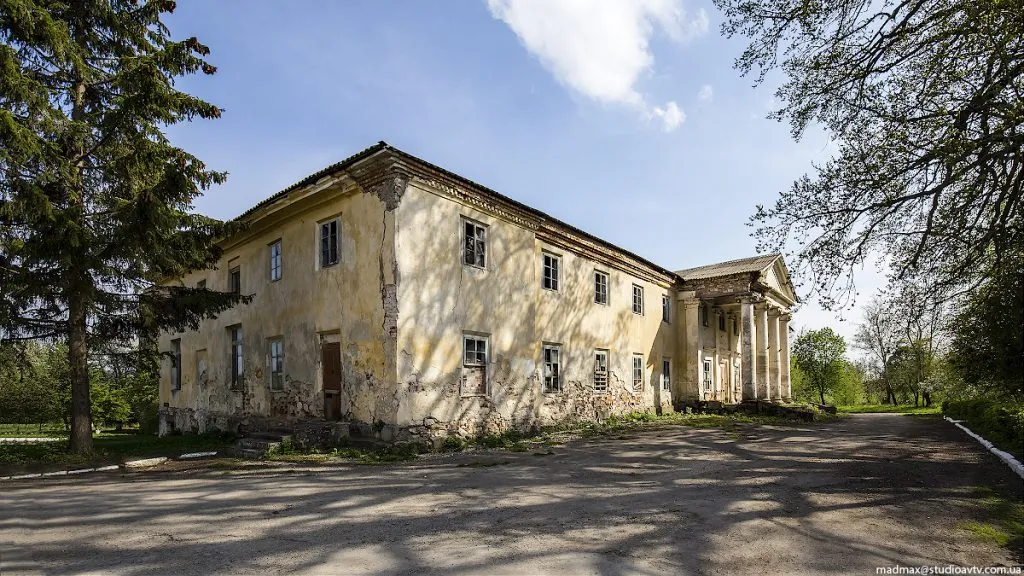
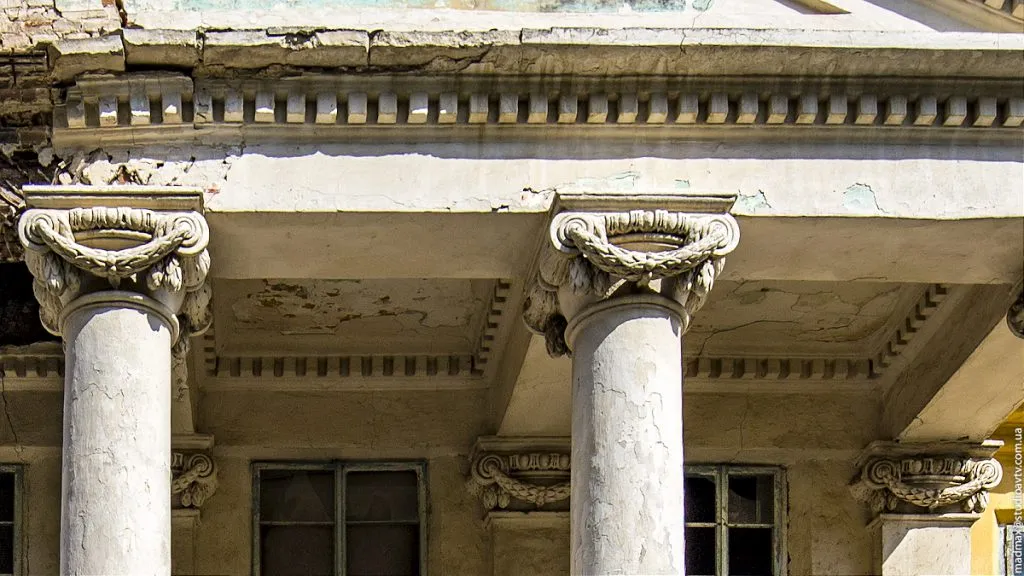
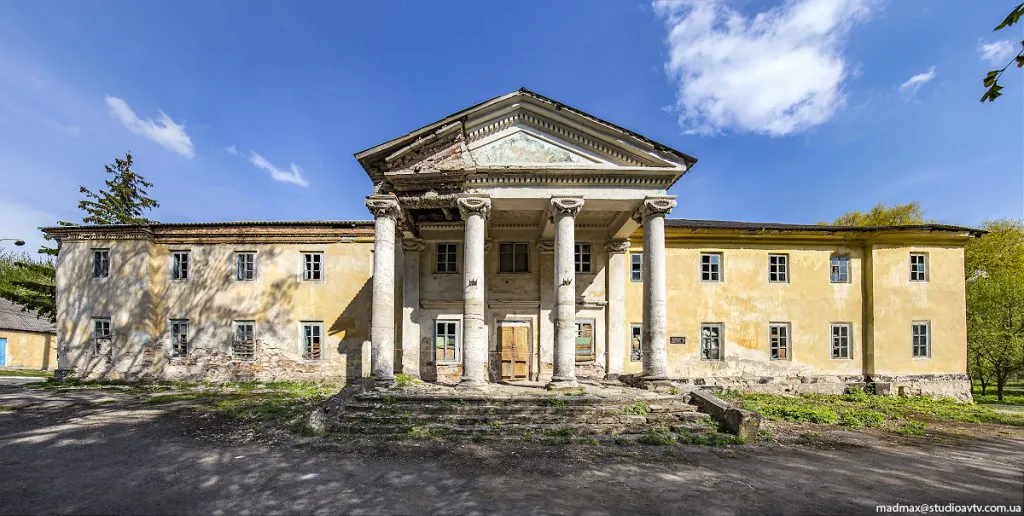
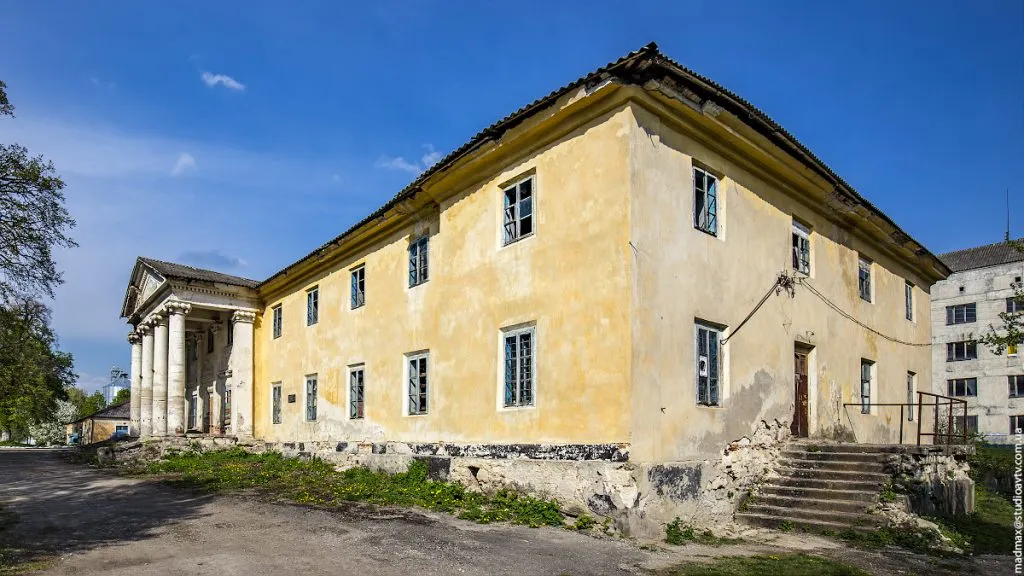
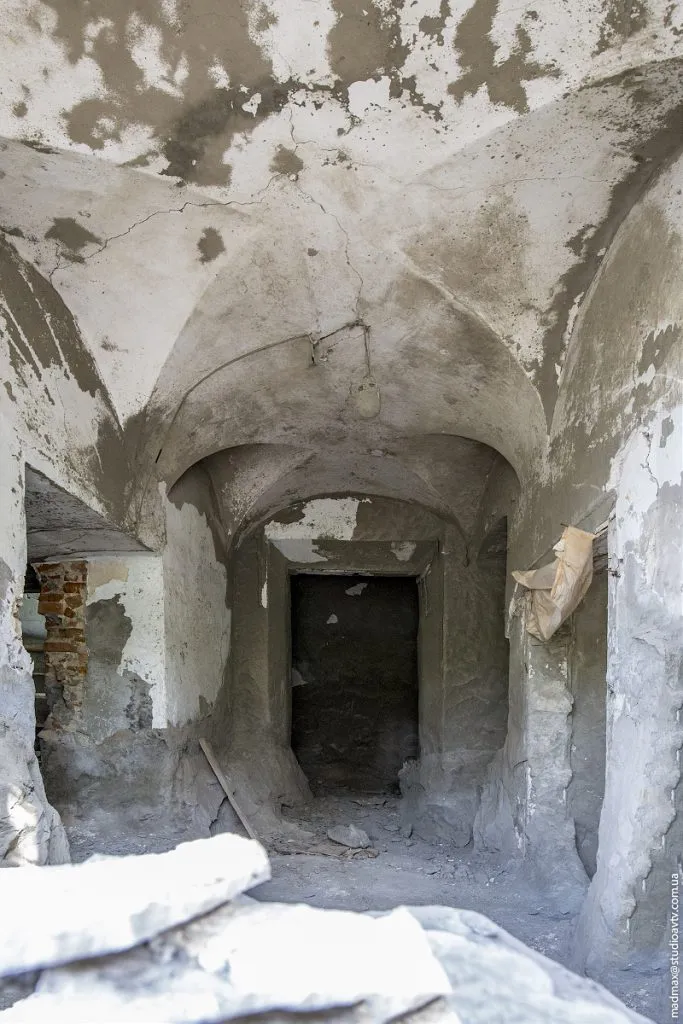
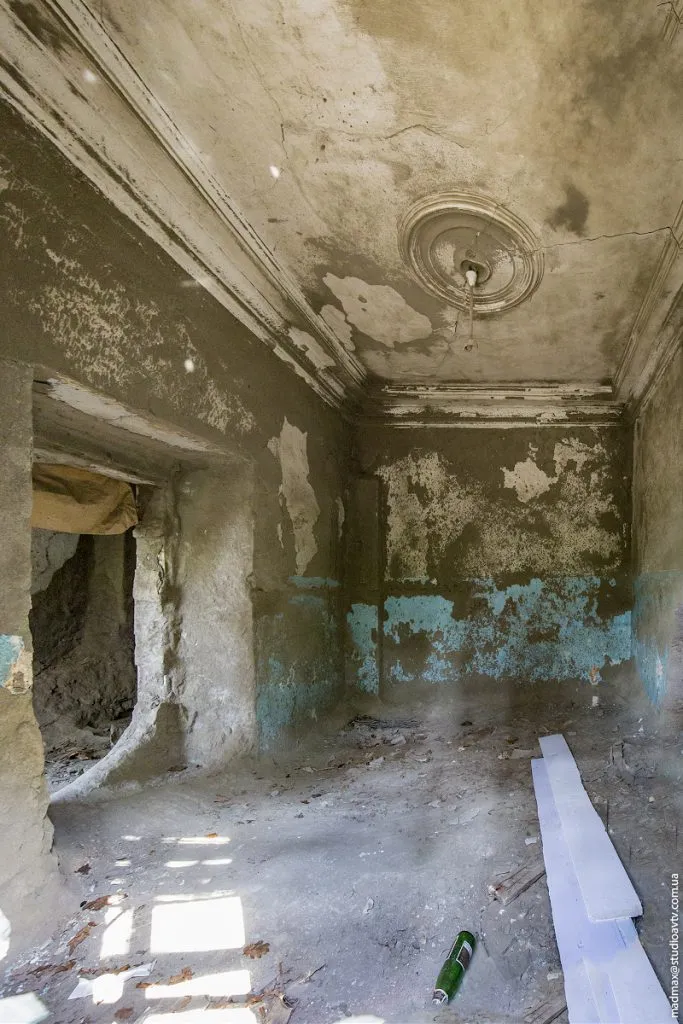
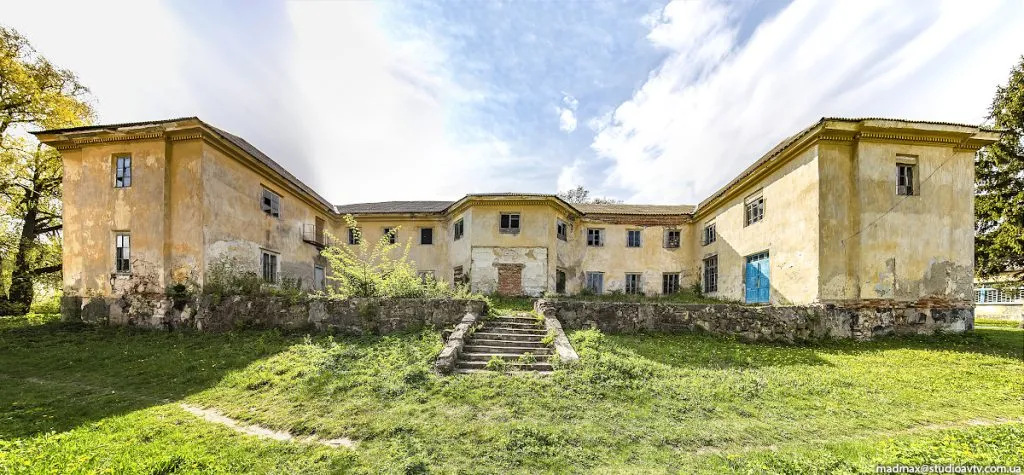
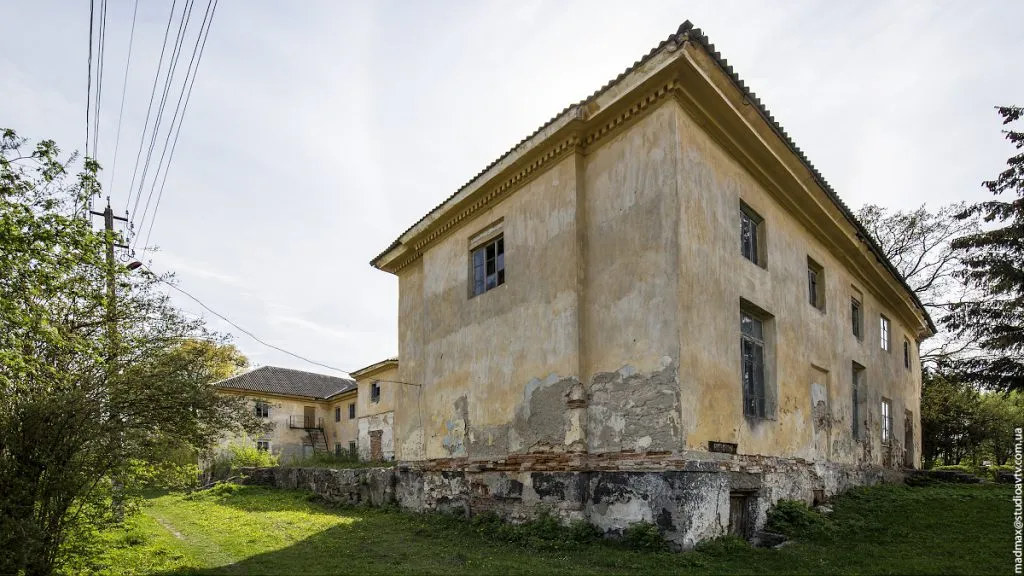
Photos by Maksym Rits. Many more photos of the palace on his page
Little is known about its interiors: all the reception rooms were quite large, the floors were parquet, and the building was heated by fireplaces and tiled stoves. To the right of the hall was the library, followed by a bedroom and a dressing room. On the left were a small salon and another bedroom. The large salon was octagonal in plan, with oak parquet and white walls. Beyond were the living rooms of the palace’s owners, and on the other side a large dining room. In the northeast wing there was only a large ballroom.
The palace is in a neglected state on the grounds of a vocational school in Lisovody.
There was also a crystal goblet here, given by the Polish king Stanisław August to the Kyiv voivode Józef Stempkowski, and a gold cup by the Danzig master J. G. Schlaubitz; all this was inherited by Cecylia Żurowska. In 1987 the goblet was donated to a museum in the Polish city of Jasna Góra. The cup is now in Ottawa, with the heirs of the Żurowskis.
At the beginning of the 20th century the Żurowski family’s life moved to Makiv, and they came to Lisovody only from time to time.