

Seven-armed crosses and slab burials: the mysteries of the old cemetery in Kytaihorod
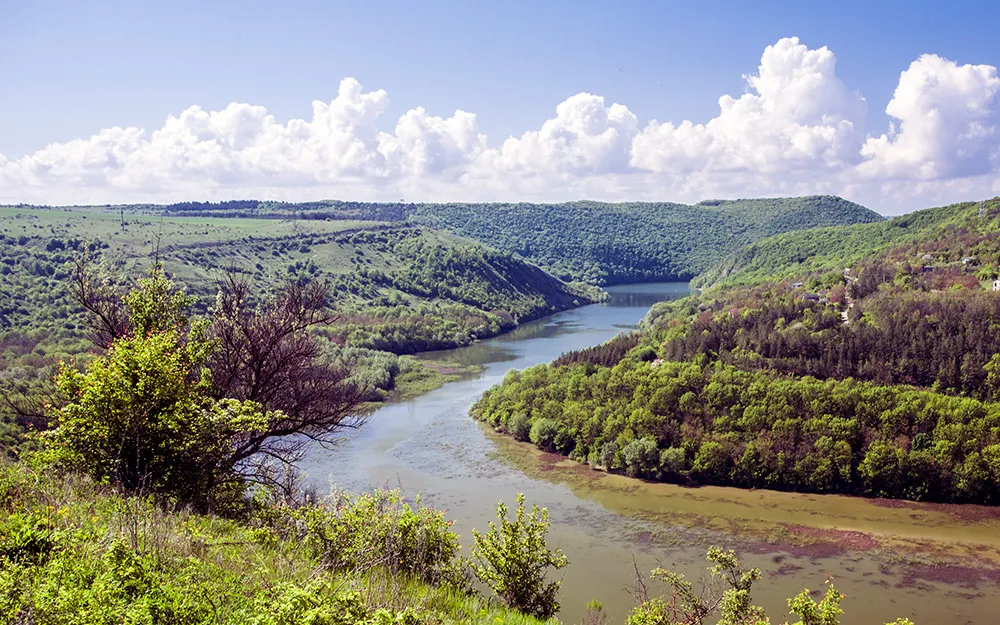
Kytaihorod, near Kamianets-Podilskyi, is famous above all for the extremely picturesque canyon of the Ternava River (a left tributary of the Dniester) and its Silurian outcrops. Besides that, there is a whole series of historical monuments.
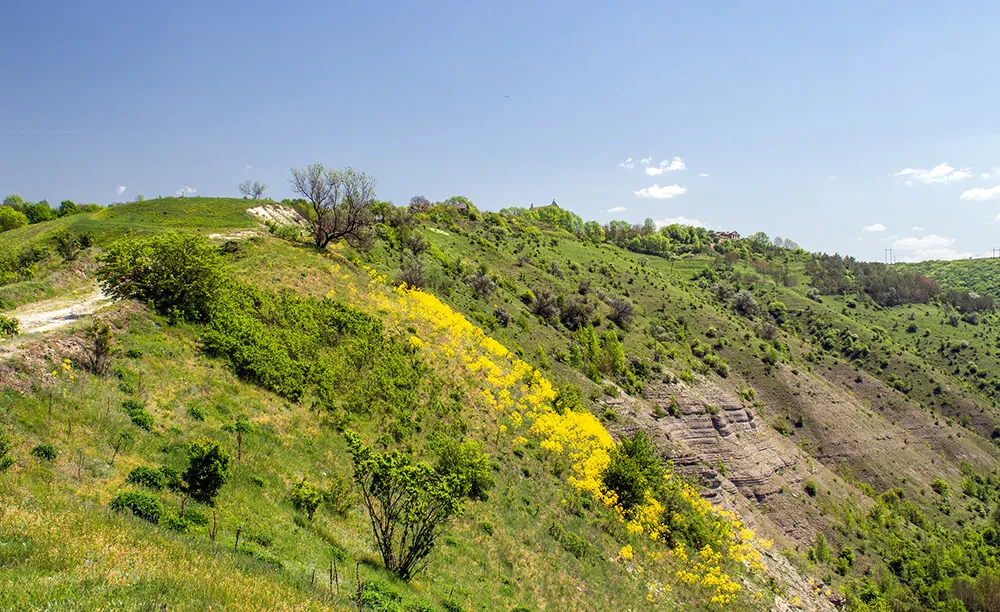
Silurian outcrop
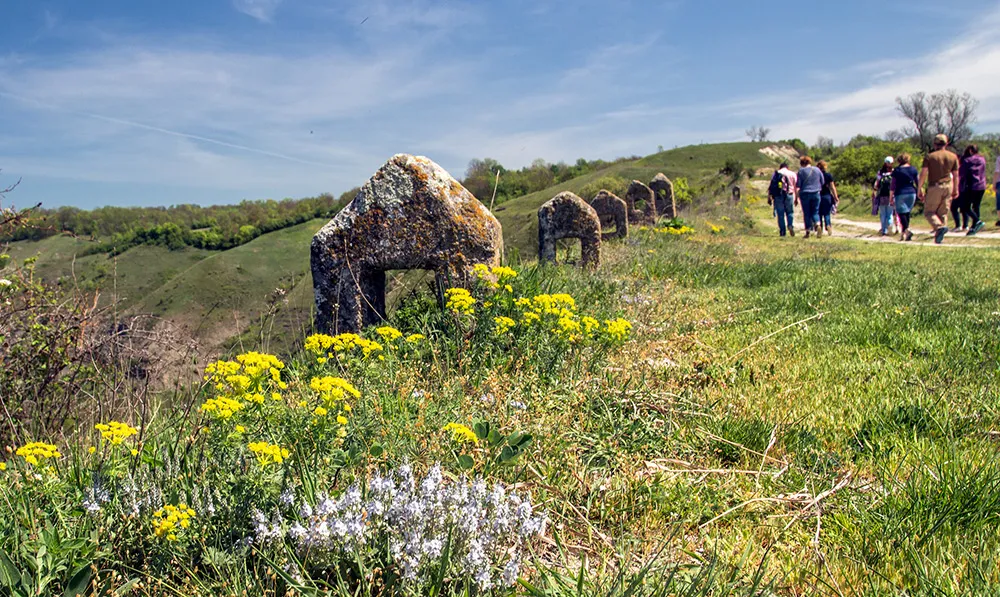
The famous pillars…
Among the latter, the least known and perhaps the most interesting is the old Orthodox cemetery. The reason is simple: travellers usually hurry to the canyon, paying no attention to anything on the way. The ancient necropolis lies practically at the very entrance to Kytaihorod, and is also hidden behind a memorial to fellow villagers who died in the Second World War (you cannot see it from the road).
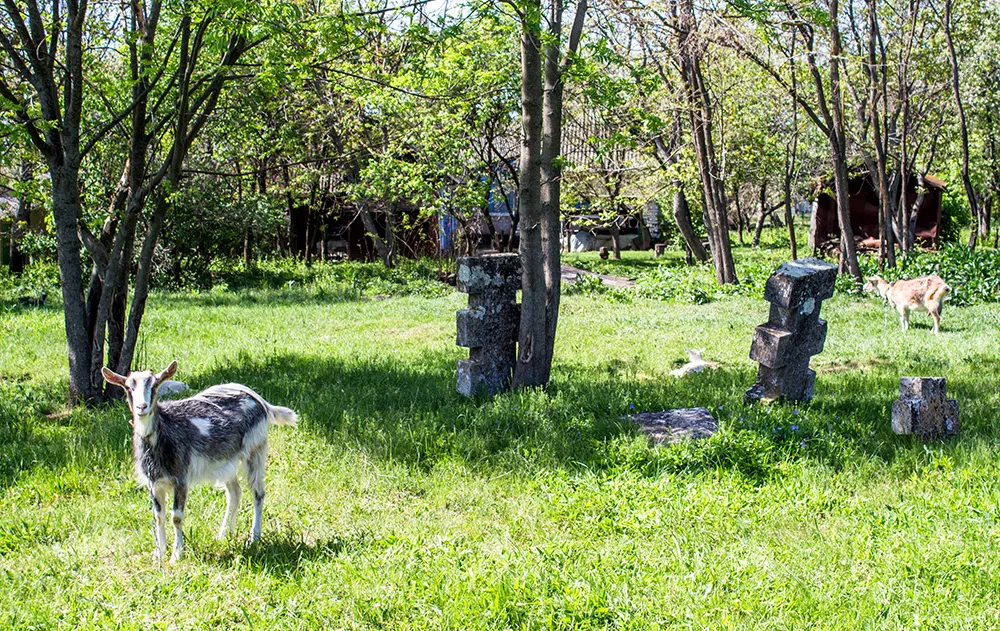
The Kytaihorod cemetery is one of the most interesting in the region and fully deserves to be called “unique”. This word is something that provincial amateur local historians and inept staff of “innovative” little town museums in former district centres like to stick in wherever it is needed and where it is not. But in this case the proud epithet “unique” is truly appropriate. Moreover, the necropolis is unique in a whole number of respects.
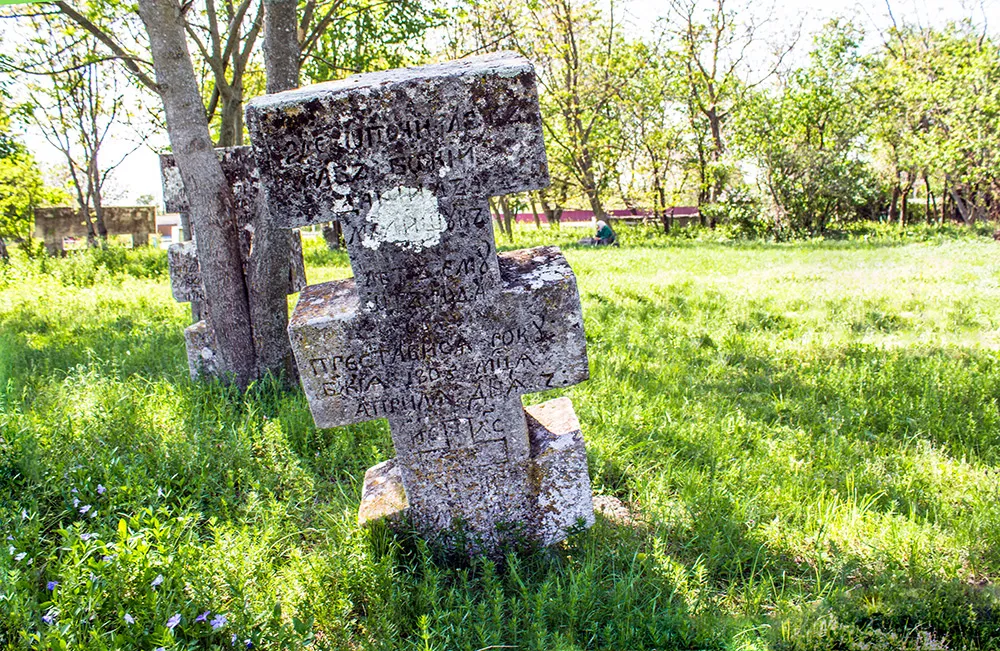
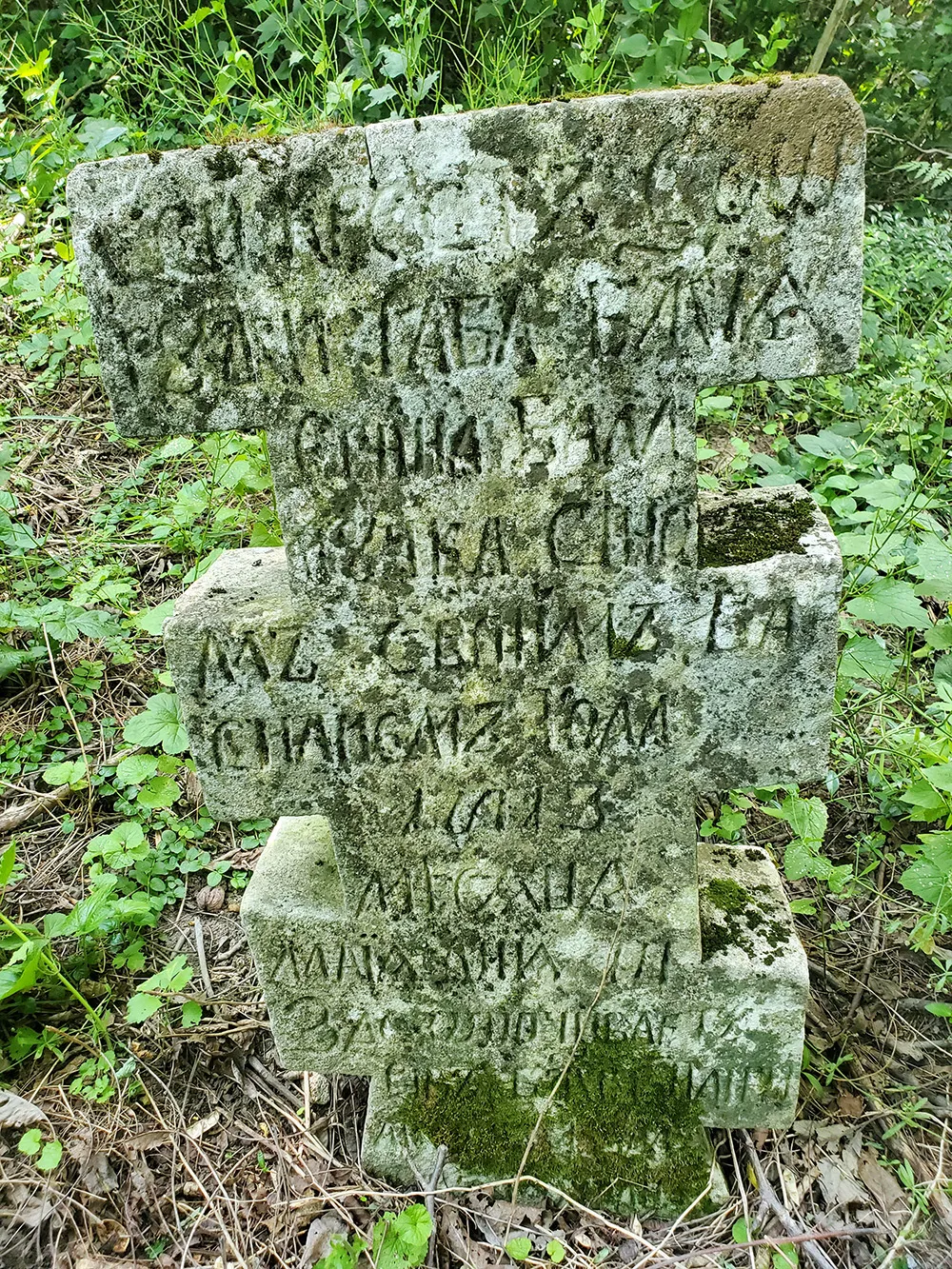
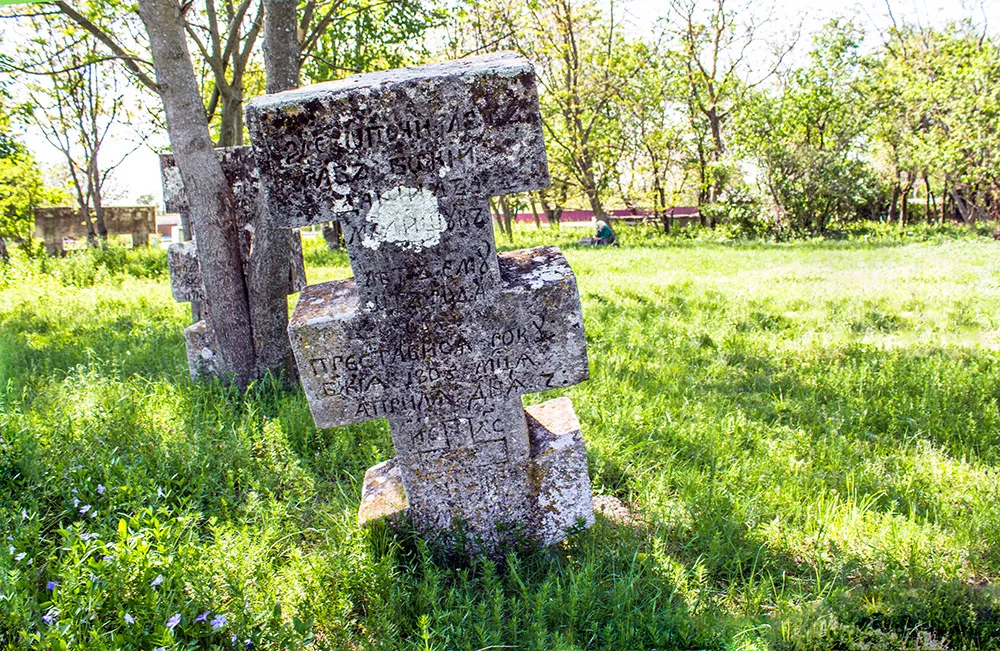
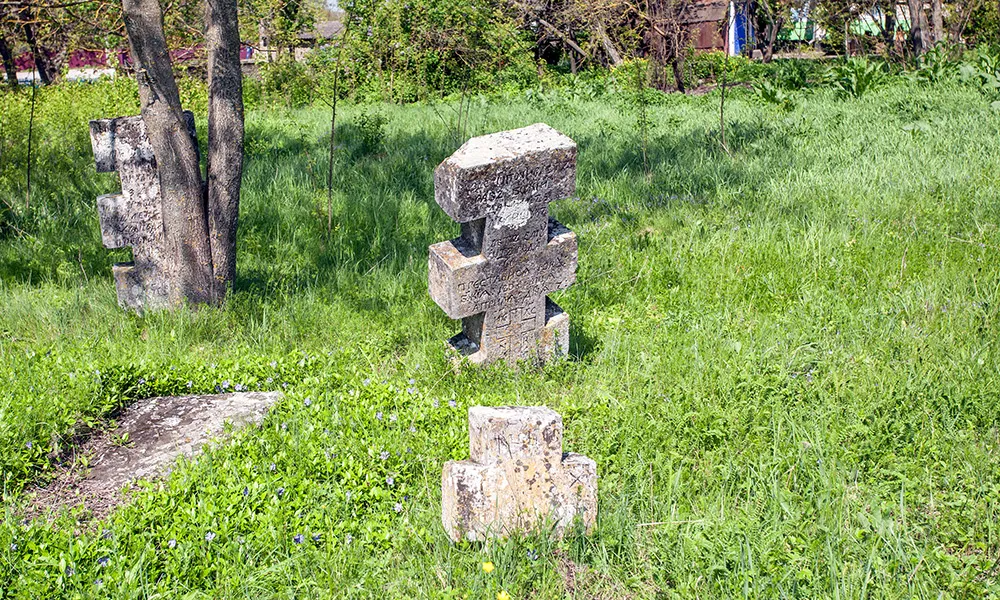
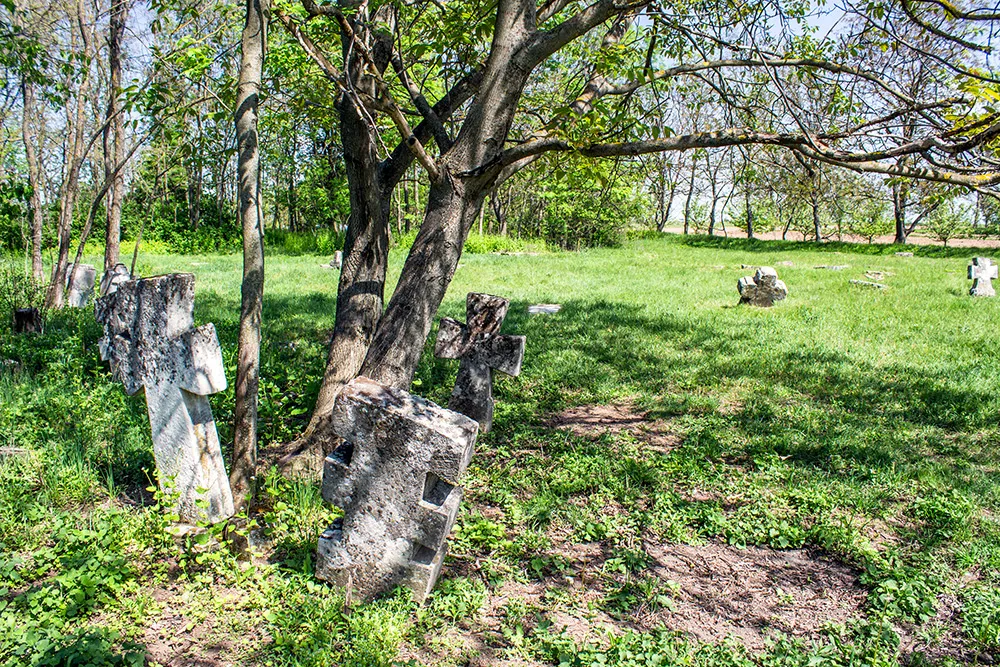
First, there are unique stone crosses of an extremely rare seven-armed form. In fact, similar ones are not known anywhere else. All of them date from 1803–1813.
Something slightly similar exists near Horodenka on the other bank of the Dniester. This is a “plague cross” of 1770 standing outside a cemetery, erected over the burial of victims of the plague epidemic of 1770–1771 (photo by historian Volodymyr Burdeniuk). It also has a seven-armed cross. But its upper and lower (slanted) arms are much shorter, whereas in Kytaihorod they are of equal length.
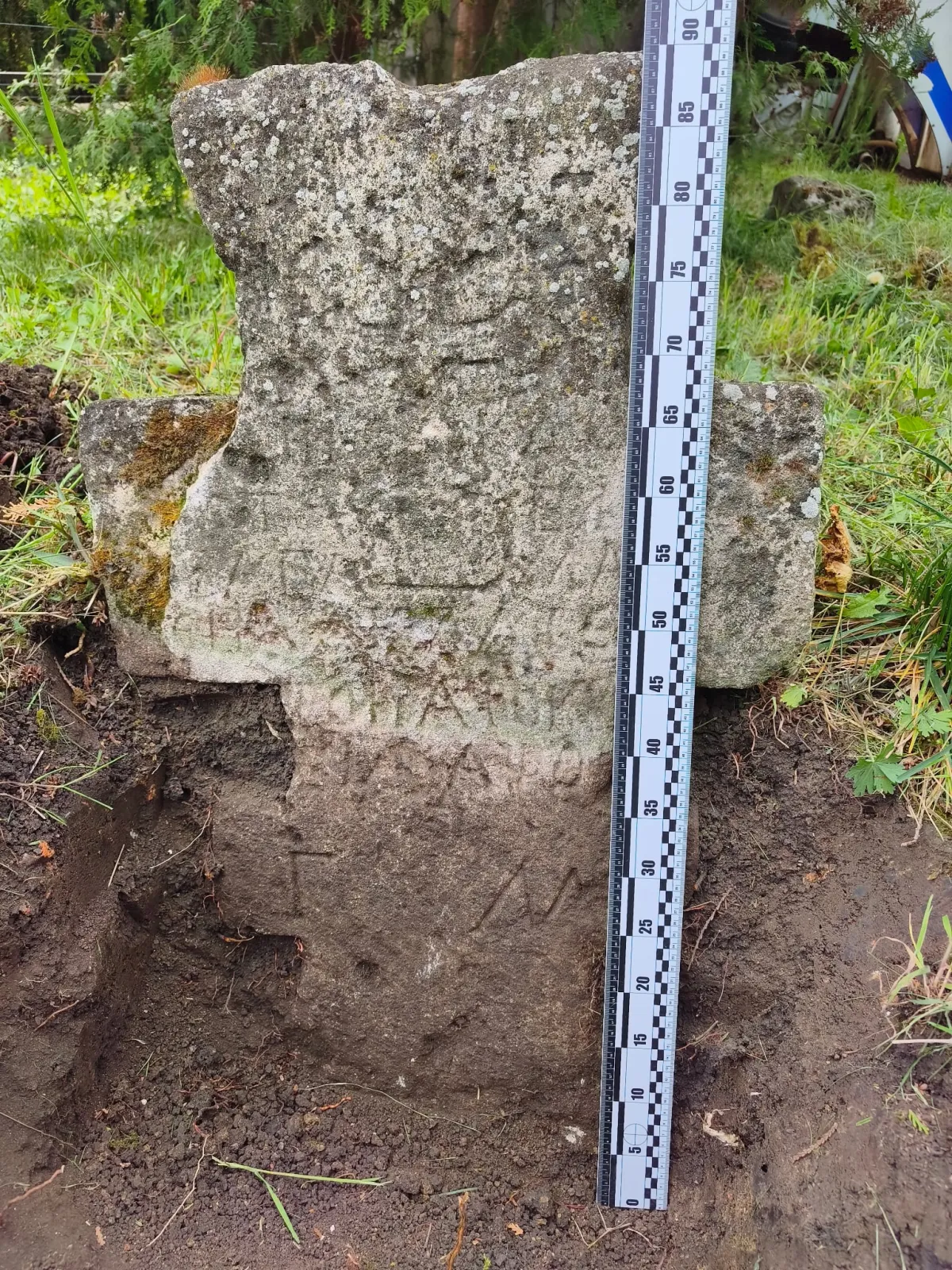
The “plague cross” of 1770 near Horodenka.
The fact that the burials date from the first years of the 19th century and possibly even the end of the 18th is also a great rarity: the absolute majority of old Christian cemeteries in this corner of Podillia date only from the mid-19th century.
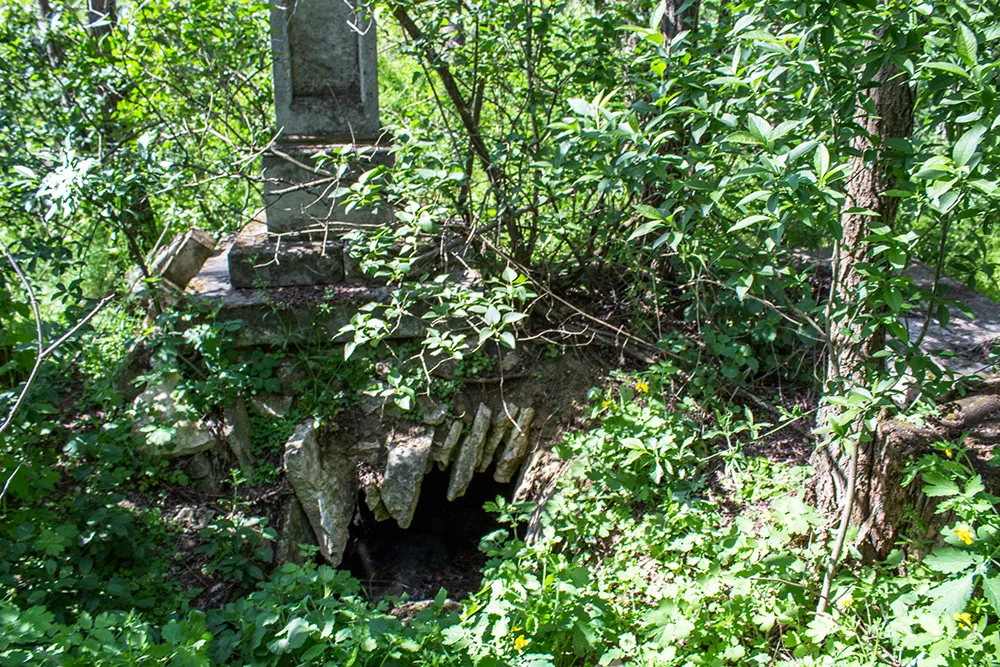
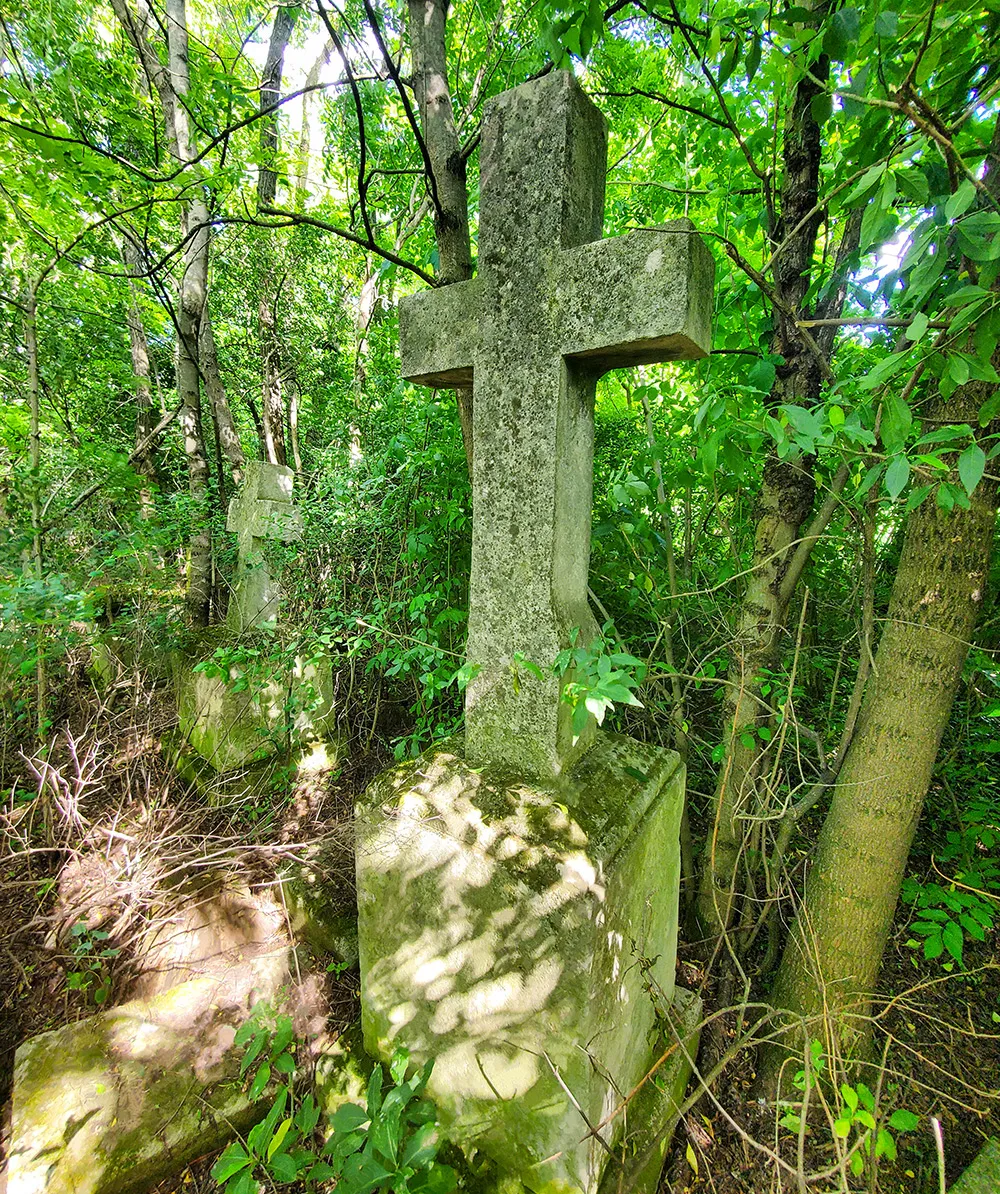
Second, there is a whole series of so-called slab burials. This is when the grave was covered on top with a huge horizontal stone slab on which a cross and an epitaph were carved. Such burials are fairly common in Podillia and date from the end of the 18th century to roughly the 1830s, after which the tradition faded away. In Kytaihorod, however, slab burials were practised even when this “cemetery fashion” had disappeared in neighbouring villages and towns. The youngest slab burial found here by Ukraine Incognita is dated 1868!
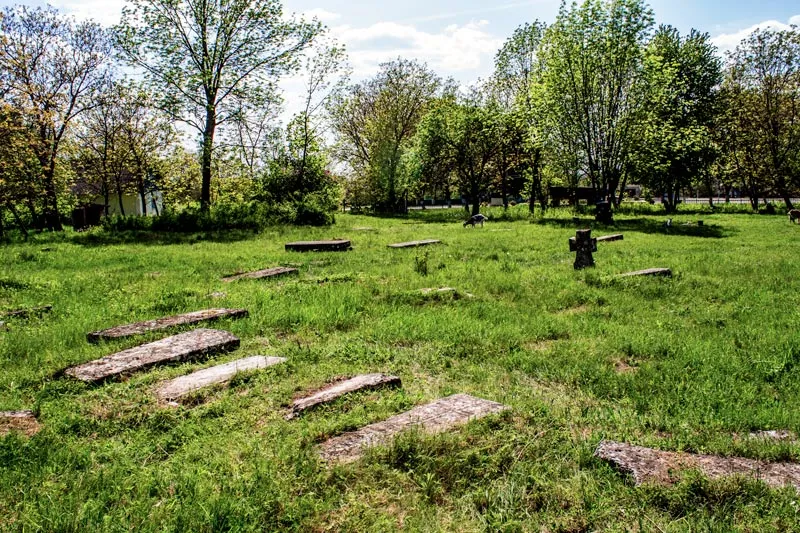
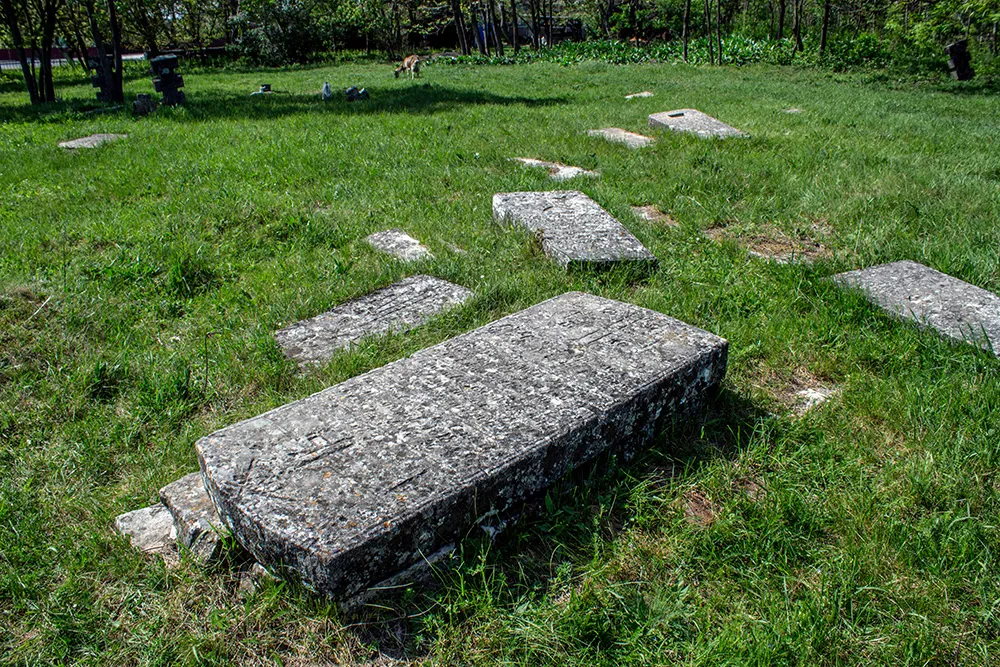
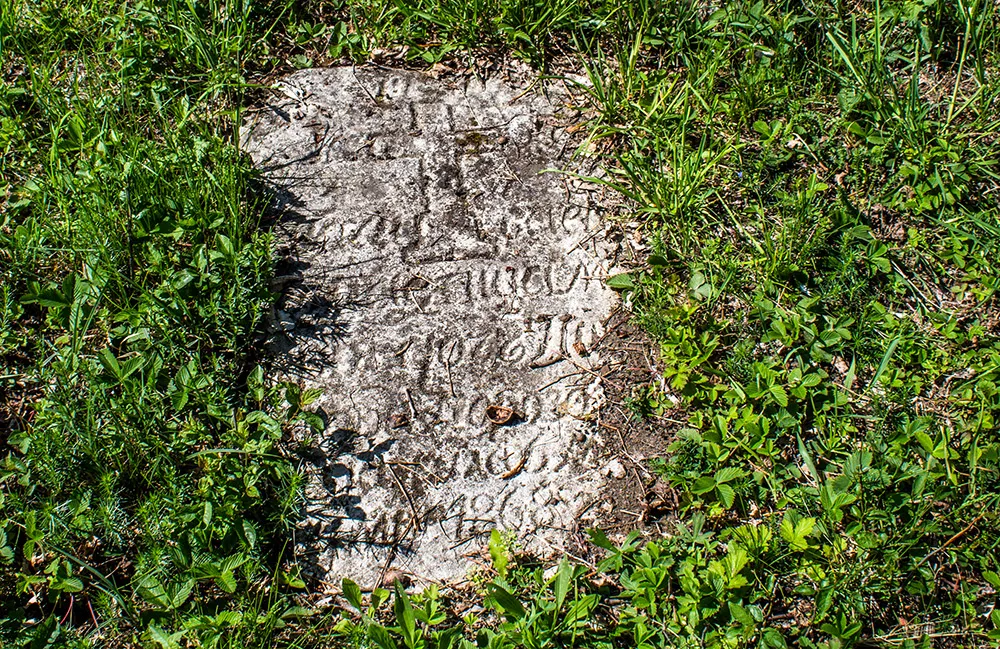
It is interesting that in Kytaihorod we see several types of burial at once:
- Traditional ones — under stone crosses.
- Slab burials.
- In underground crypts.
There is one more peculiarity. In this part of Podillia, from the mid-18th century to the 1930s (in places even to the 1950s), the most common type of flat stone cross gravestone is the so-called “cross-ended crosses” (khreshchati khresty), where the upper and side arms take the form of separate crosses. Surprisingly, crosses of this type are absent in Kytaihorod (at least we have not found any).
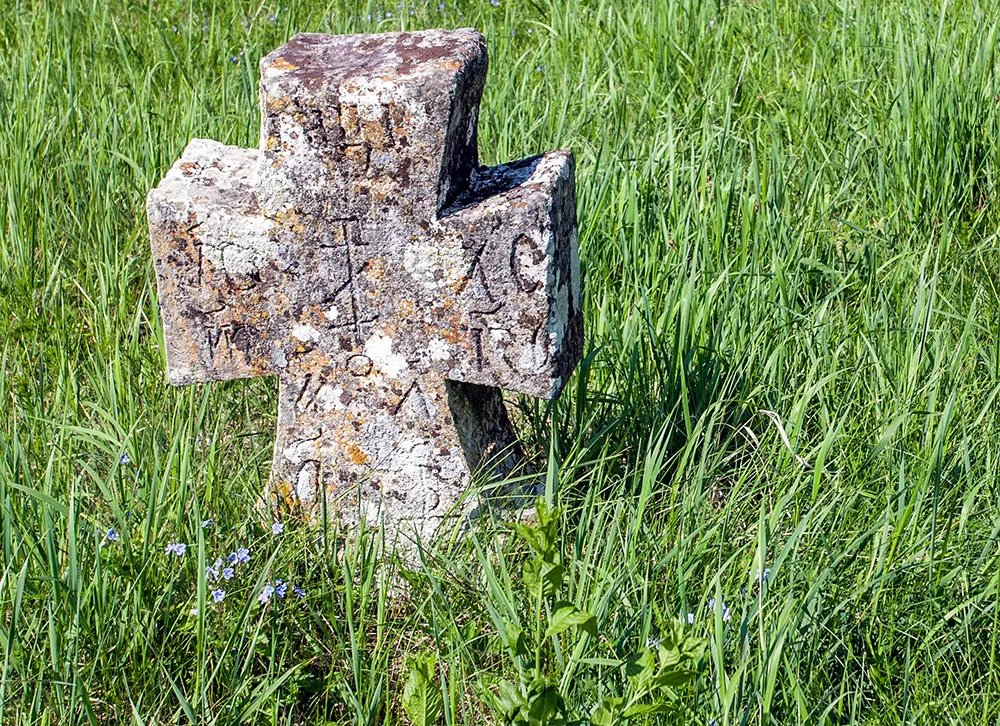
There is another necropolis in Kytaihorod with 17th-century crosses, but at the request of historians we will not disclose its location.
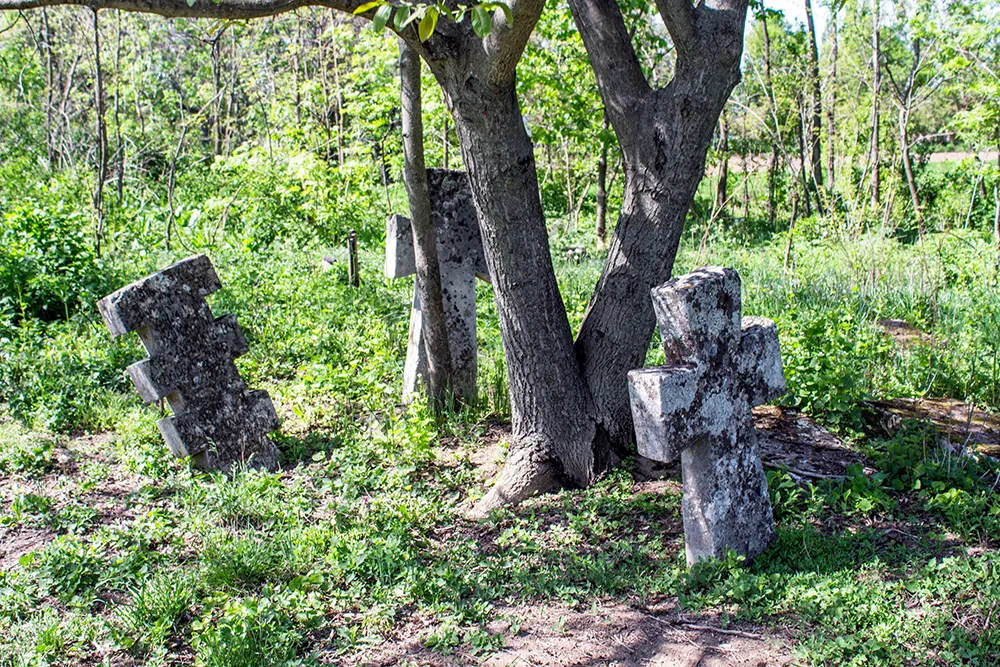
Overall, we strongly recommend that all tourists, besides the canyon, visit the old necropolis we have described.
Text: Dmytro Poliukhovych
Photos: Roman Malenkov and Dmytro Poliukhovych


