

Khmelnytskyi region may lose the most beautiful Neo-Gothic church in the oblast

· 3 min read
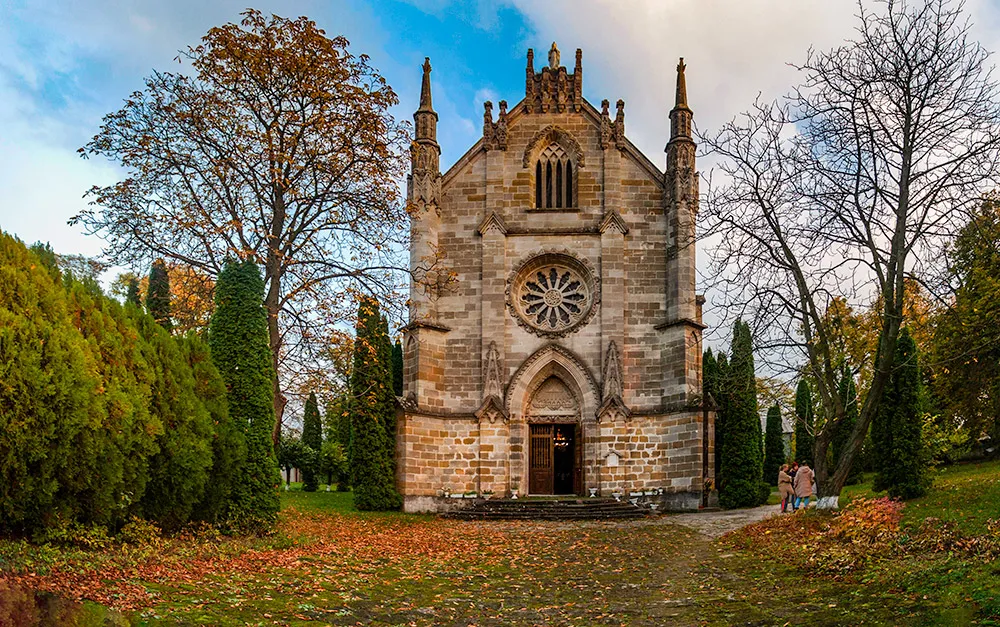
St. Joseph the Betrothed Church
Because of an unprofessional renovation initiated by the local religious community, Ukraine may lose a unique architectural monument of national significance, the Neo-Gothic Church of St. Joseph the Betrothed in the village of Pidlisnyi Mukariv. It is the most beautiful Neo-Gothic church in Khmelnytskyi Oblast and one of the most beautiful in Ukraine.
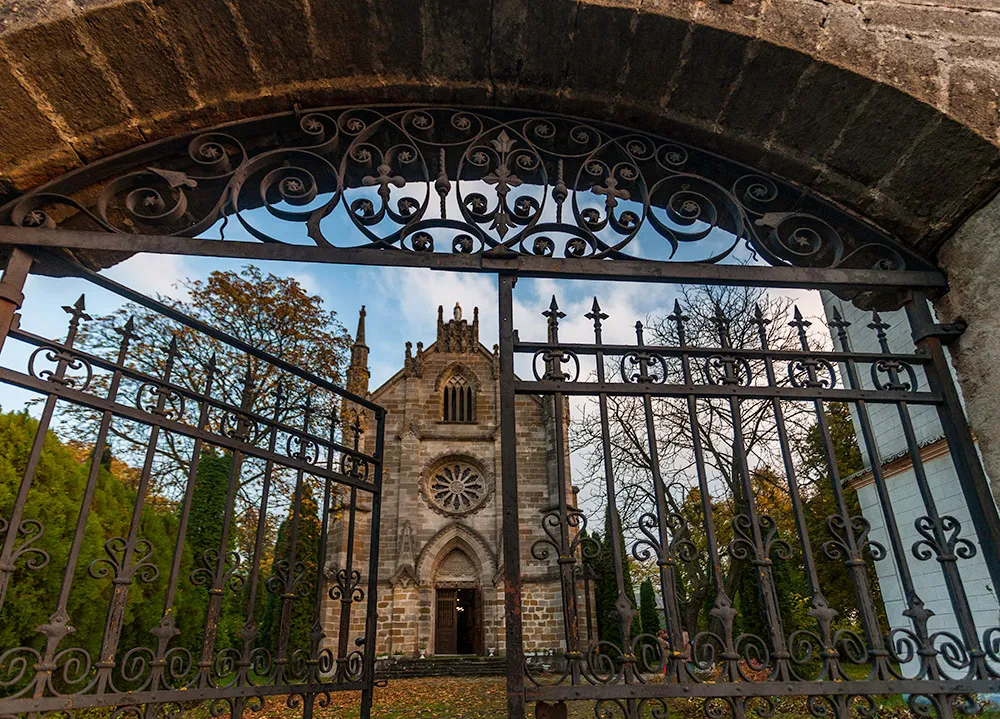
St. Joseph the Betrothed Church in the village of Pidlisnyi Mukariv
As the director of the Maliivtsi Historical and Cultural Museum, Anastasiia Donets, told “Ukraine Incognita”, the local religious community (Roman Catholic Church) decided on its own initiative, without any project and without the involvement of restoration architects, to waterproof the foundations. In effect, they destroyed these foundations. Everything was disturbed: the old drainage and water-removal system; the masonry was coated with unacceptable mixtures; and the old, perfectly good blind area (pavement around the walls) was thrown out.

Illegal works. Photo by Anastasiia Donets
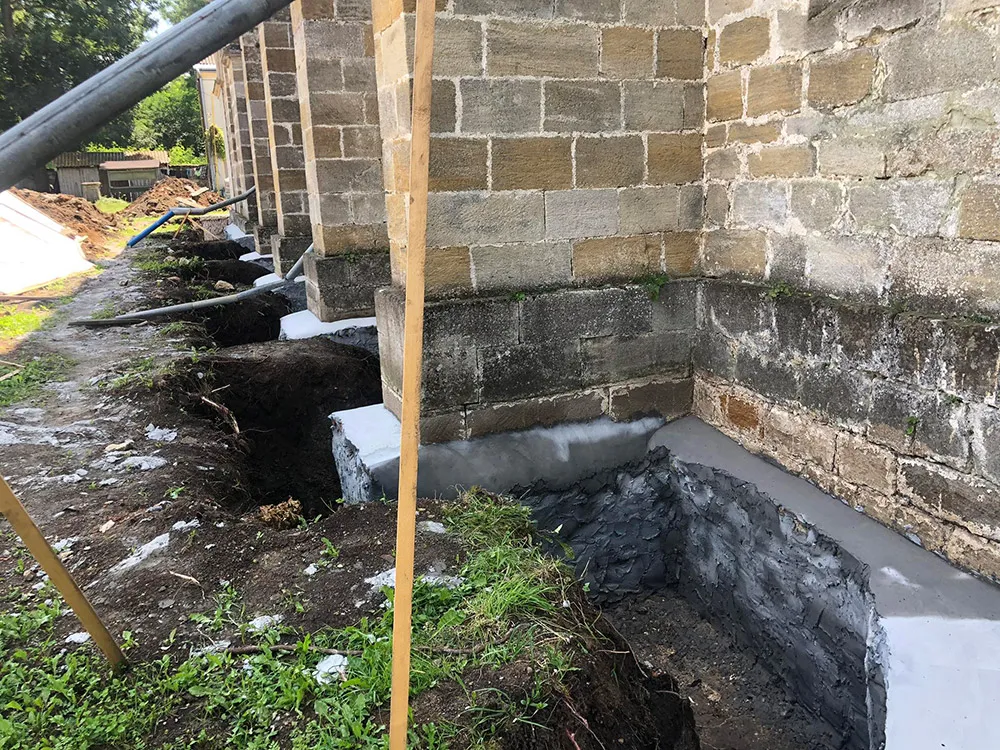
Illegal works. Photo by Anastasiia Donets
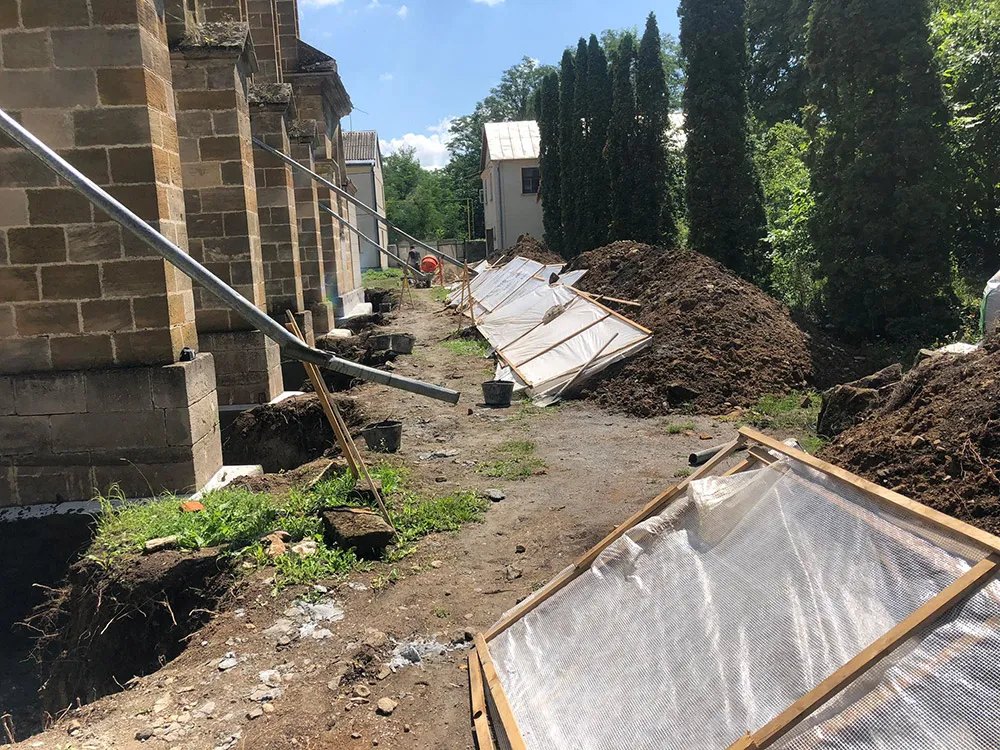
Illegal works. Photo by Anastasiia Donets
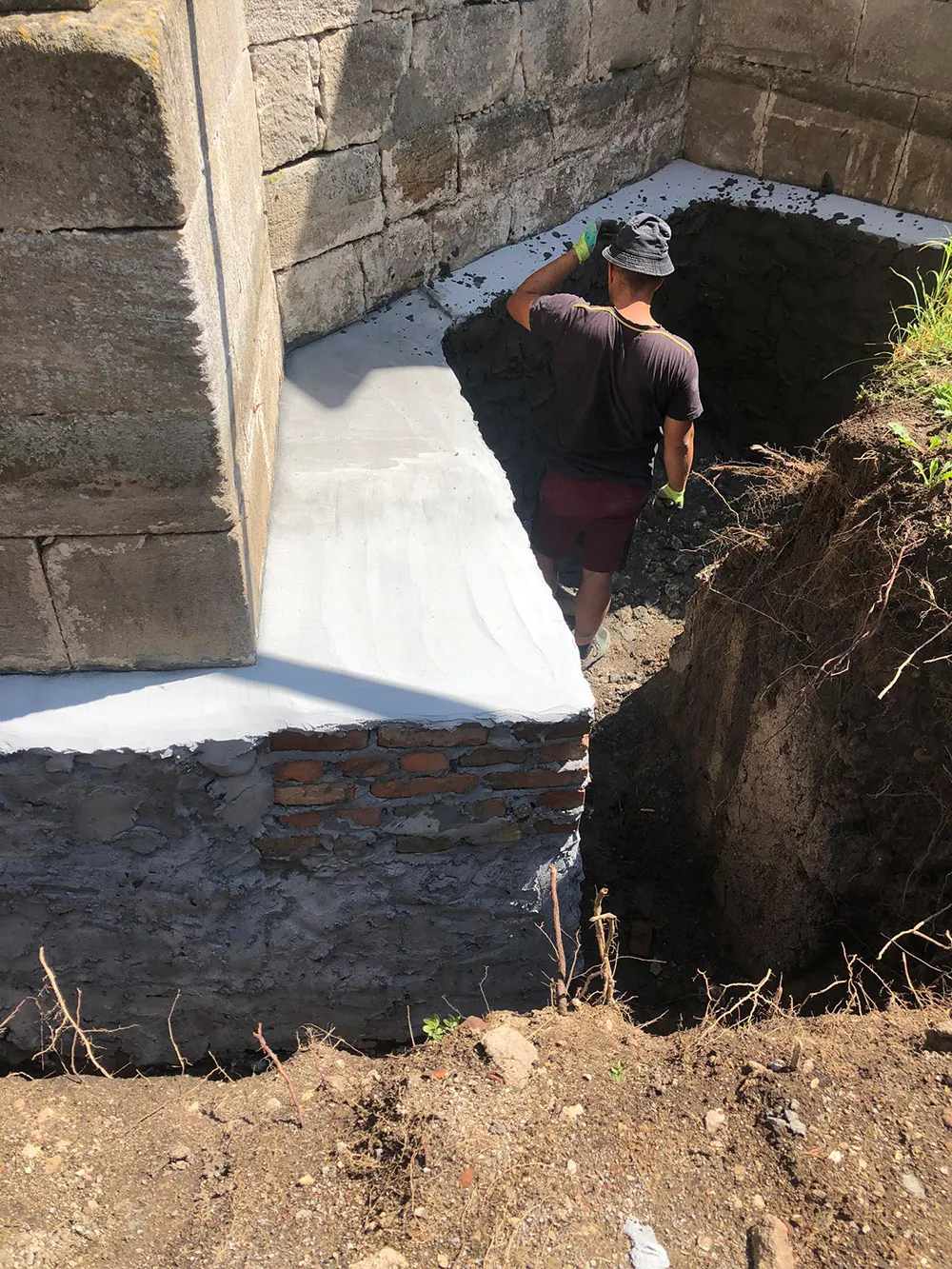
Illegal works. Photo by Anastasiia Donets
The purpose of these works, apart from spending money allocated by a “patron” as yet unknown, is unclear. The church had been in perfect condition even before. Besides, a very important aspect must be taken into account. The masonry of the foundations was laid on lime mortar, which has a feature little known to modern builders. After hardening, such mortar acquires the strength of stone. But when such masonry is hermetically sealed with cement, the lime binder begins to turn to dust, which threatens the collapse of the foundations and of the whole building. All the more so with the water-removal system destroyed.
But that is not all! According to Anastasiia Donets, large-scale earthworks next to a monument of national significance were carried out without the slightest archaeological supervision, as current legislation requires. In the heaps of soil Ms. Anastasiia found a good many human remains.

Human remains. Still from a video by Anastasiia Donets
It must be borne in mind that in 1872 the church was built on the site of older predecessors, from the 17th century (destroyed by the Turks) and the 18th century. So these may be not only burials of the late 19th and early 20th centuries but much older ones. It cannot be ruled out that there may be secret burials of victims of Muscovite repression here. In one of the skulls, in particular, a characteristic bullet mark, typical precisely of those executed by the communists, is clearly visible.
According to Ms. Donets, the Department of Culture of the Khmelnytskyi Oblast Military Administration has already issued an order banning the construction work, and it has been halted, but the question remains open of who will now compensate for the damage and correct what has already been done, and how.
“The church survived two wars and a revolution, it survived the atheist bacchanalia, and we cannot allow it to be destroyed today,” Anastasiia Donets summed up in a conversation with a correspondent of “Ukraine Incognita”.
On the whole, everything that is happening is fully described by the well-known aphorism: “We wanted the best, but it turned out as always.”


