

The “underground street” of Horodok in Podillia and a hiding place without treasure
Dmytro Poliukhovych, a member of the Ukraine Incognita NGO team, surveyed a section of old cellars in the town of Horodok in the Khmelnytskyi region.
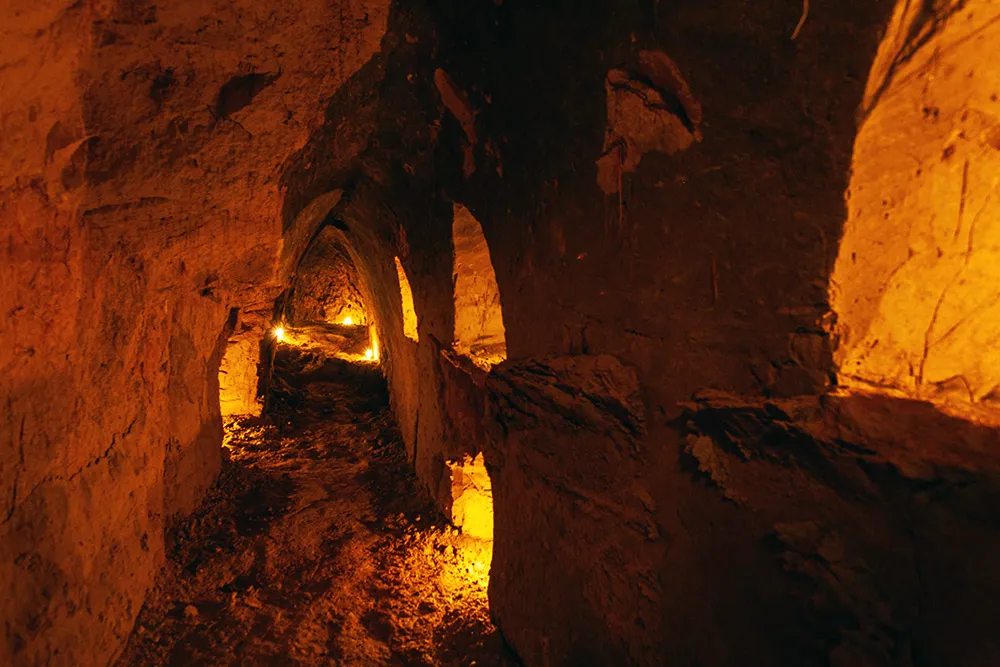
A fragment of the surveyed cellar. Photo by Dmytro Poliukhovych
Horodok has long been famous for its underground passages, of which the historic part of the town has as many as a good cheese has holes.
Let us note right away that Horodok’s underground is nothing unique. On the contrary! Other Ukrainian towns have complete analogues, so similar that you could not tell them from Horodok’s: for instance, in Kupyn, Horodok’s neighbour, or in Uman.
These are the most mythologized, mysterious and, at the same time, practically unexplored monuments.
Most of the legends concern the gigantic size of the underground passages. In the Cherkasy region, for example, in almost every former small town they will certainly tell you how, during the Koliivshchyna, the local lord fled from the haidamaks through tunnels in a golden carriage drawn by six horses. The carriage must be golden! Well, why not?
They say that Horodok too has tunnels a horse can walk through. And not just anywhere, but all the way to Kamianets, Medzhybizh and even Khotyn! The one to Khotyn, which lies across the Dniester, is especially funny.
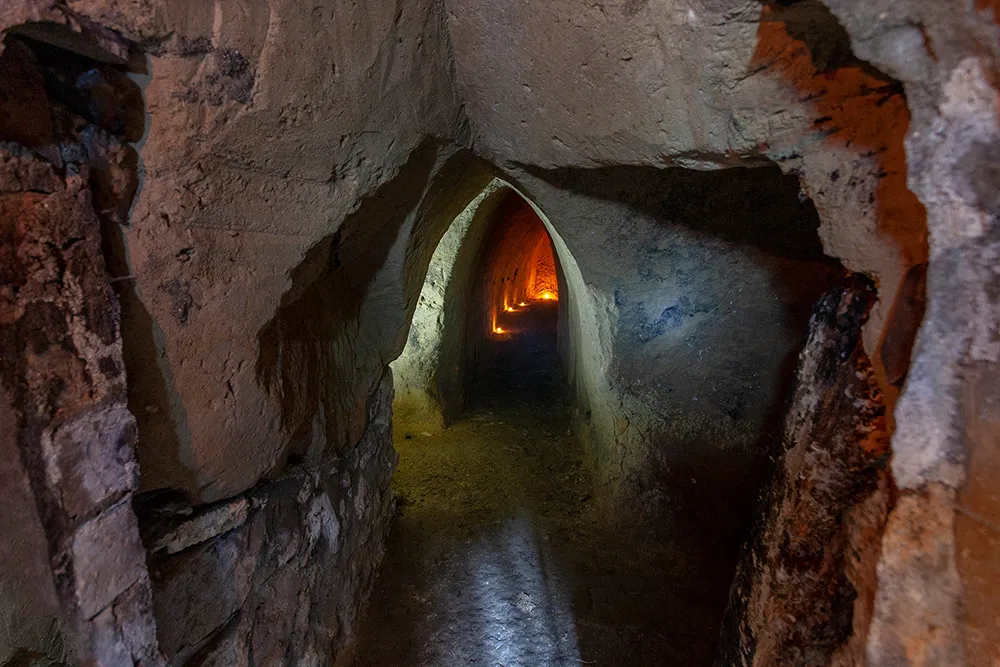
Horodok. Another section of cellars. Photo: Dmytro Poliukhovych
In the town itself everyone knows about the underground labyrinth. How could they not? You only need to stroll through Horodok’s historic centre, which is entirely covered with traces of tunnel collapses. The traces vary: from peculiar depressions in the middle of the pavement where the ground has barely sunk, to freshly filled pits where large sinkholes opened. Yet not everything always ends so harmlessly.
Old-timers remember well how in the early 1980s a whole wing of the local district department store, built in the postwar years, collapsed. When machinery was brought in to clear the rubble, the heavy excavator itself almost went underground. The ruins “decorated” the town centre for several years, while people waited for everything down there in the depths to settle once and for all. The sharp-tongued Podolians immediately dubbed the area near the ruins “Beirut”. At that time fierce fighting was under way in the real Beirut between the Israeli army and pro-Soviet terrorist groups, and the news showed the ruined city almost daily.
The department store’s misfortunes did not end there. In the early 2000s its façade also collapsed into the underground!
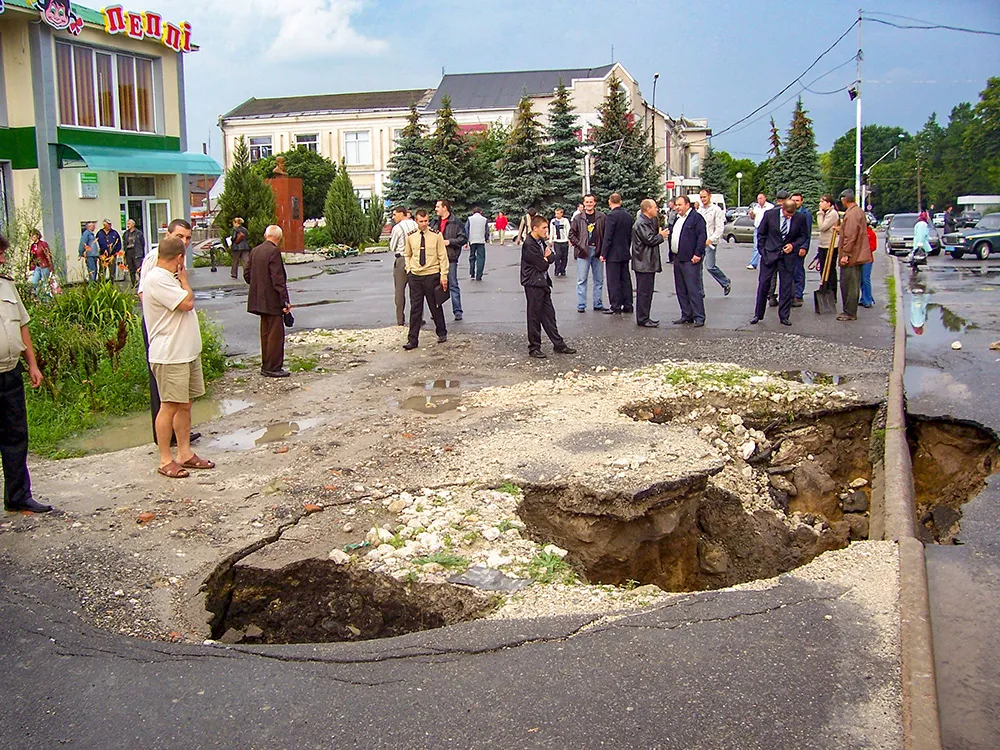
A sinkhole in the middle of the square. Photo: Ihor Oliinyk
In 2006 huge sinkholes opened right in the middle of Horodok’s main square, one even on a fairly busy road. By a miracle there were no casualties.
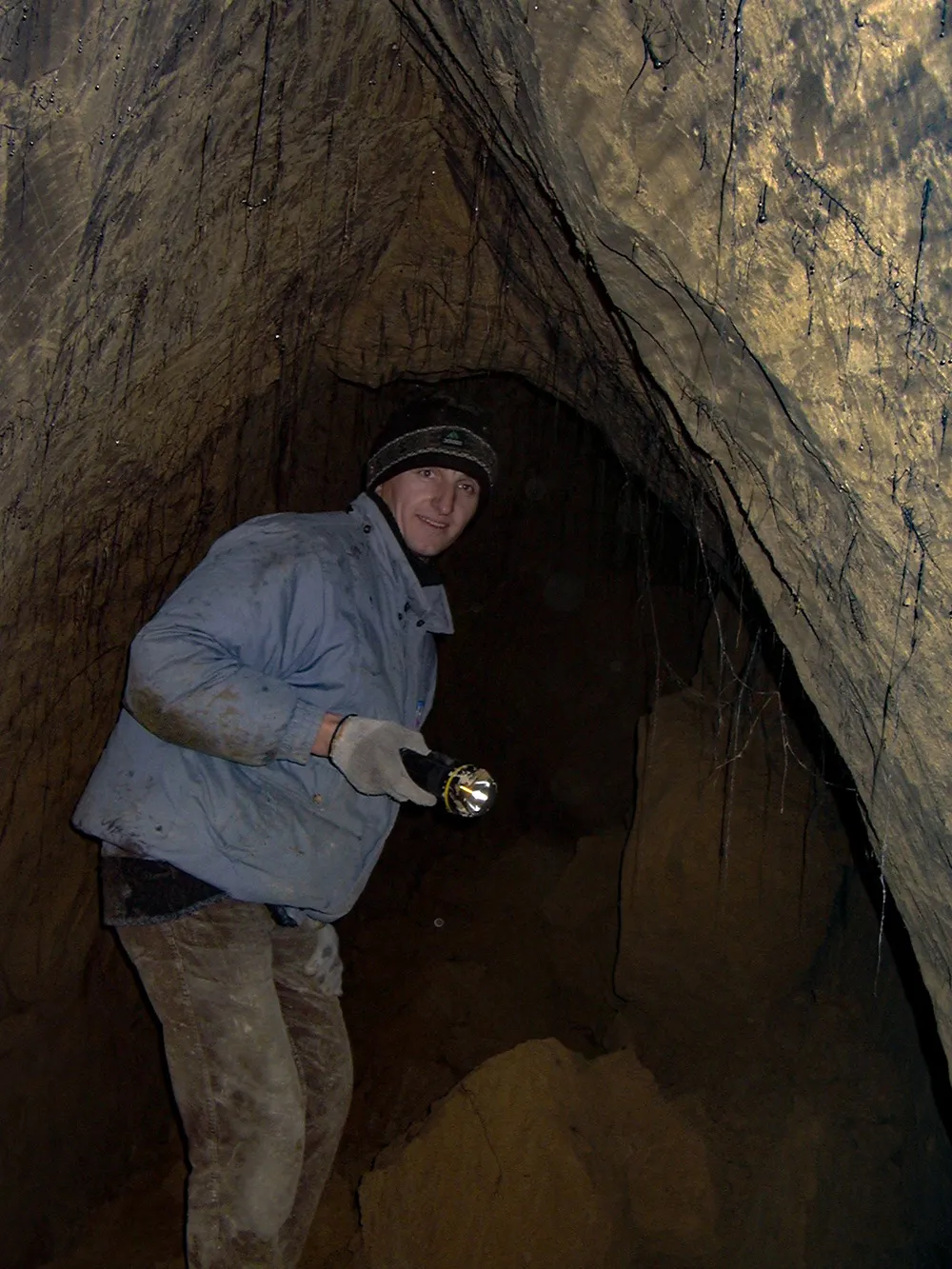
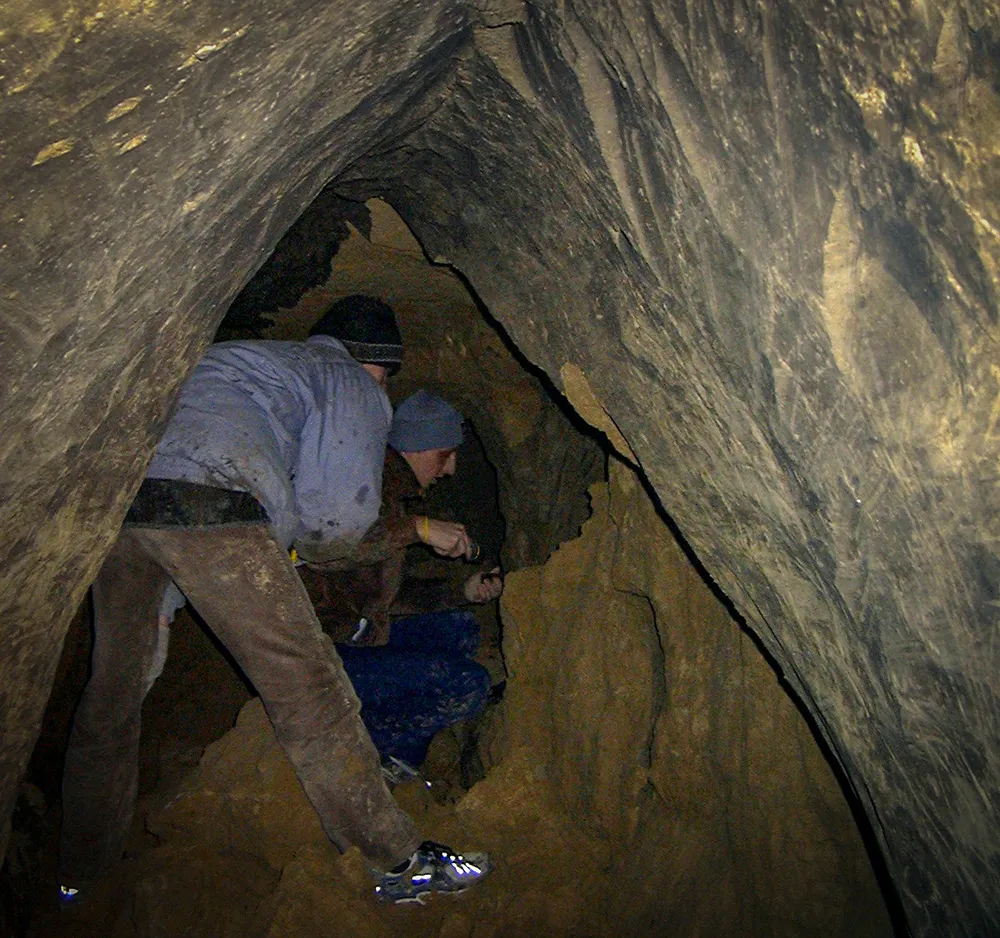
The underground beneath the square. Photo by the Zahurskyi brothers. 2006
The extraordinary incident had a positive side as well. Thanks to it, the local historians and researchers of local lore, the brothers Oleksandr and Vadym Zahurskyi, were able to explore a considerable part of the underground labyrinth and to make a schematic plan of this section and a series of photographs. Thanks to these inquisitive and brave researchers, most of the town’s residents were finally able to see what the legendary Horodok underground looks like from the inside.
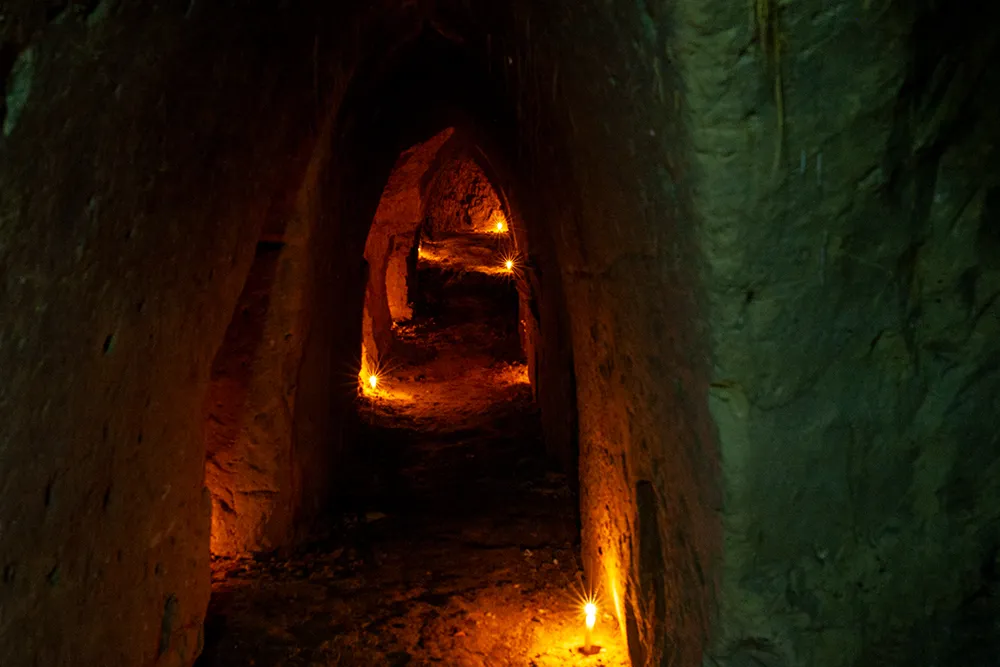
Photo: Dmytro Poliukhovych
The recently surveyed cellar consists of a main corridor 19 metres long and five smaller side branches, each roughly 2 to 4 metres long. Another corridor of the same size as the main one leads off to the side, but it is blocked by a collapse, so we were unable to explore it.
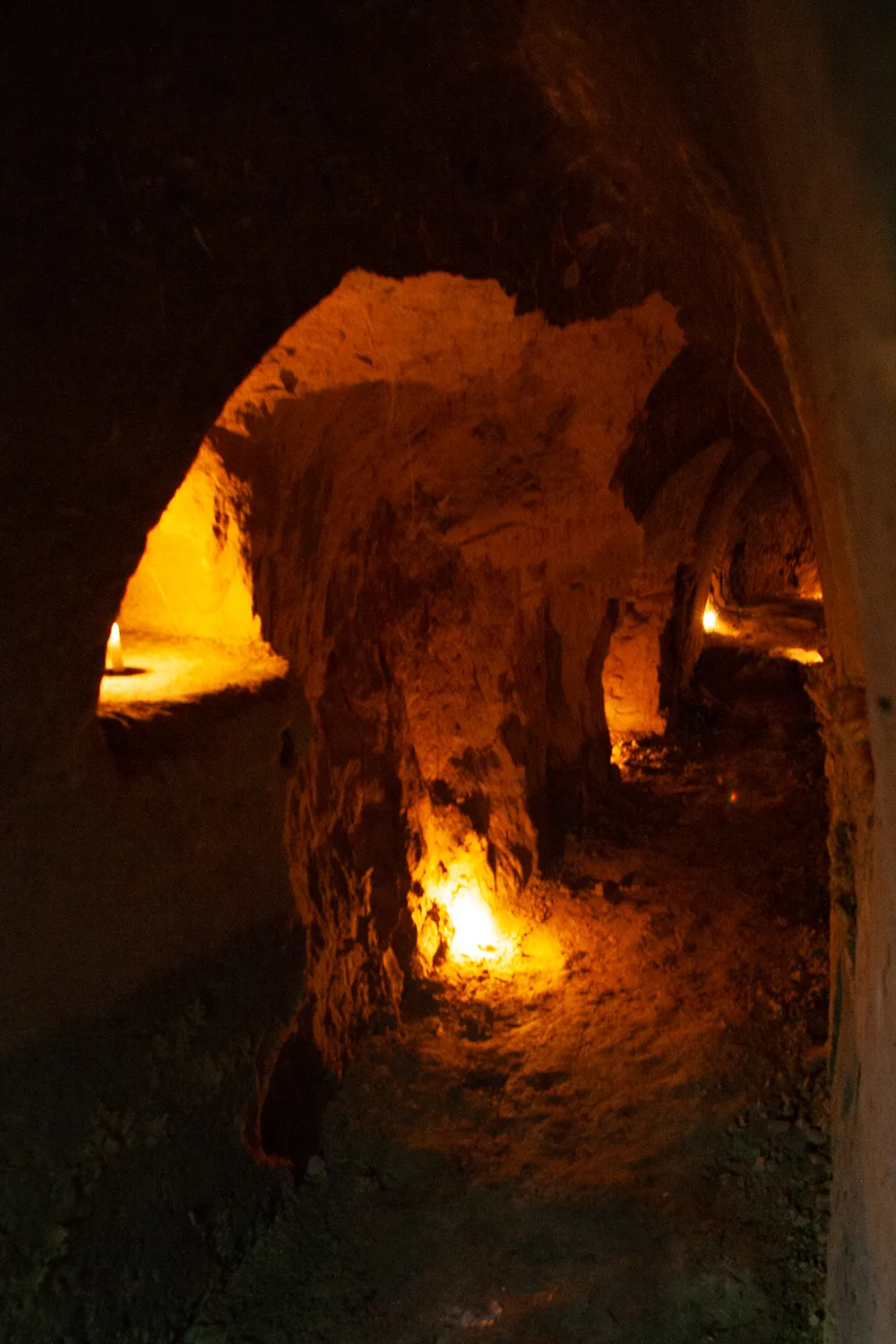
Photo: Dmytro Poliukhovych
By analogy with similar twin underground passages in Uman (even the side niches are identical), which were explored in 2018 by an expedition led by Dr Pavlo Nechytailo (Candidate of Historical Sciences), the fragment of the surveyed underground in Horodok can also be dated to the 17th–18th centuries. All the more so since ceramics from the second half of the 17th century were found on the surface near the entrance.
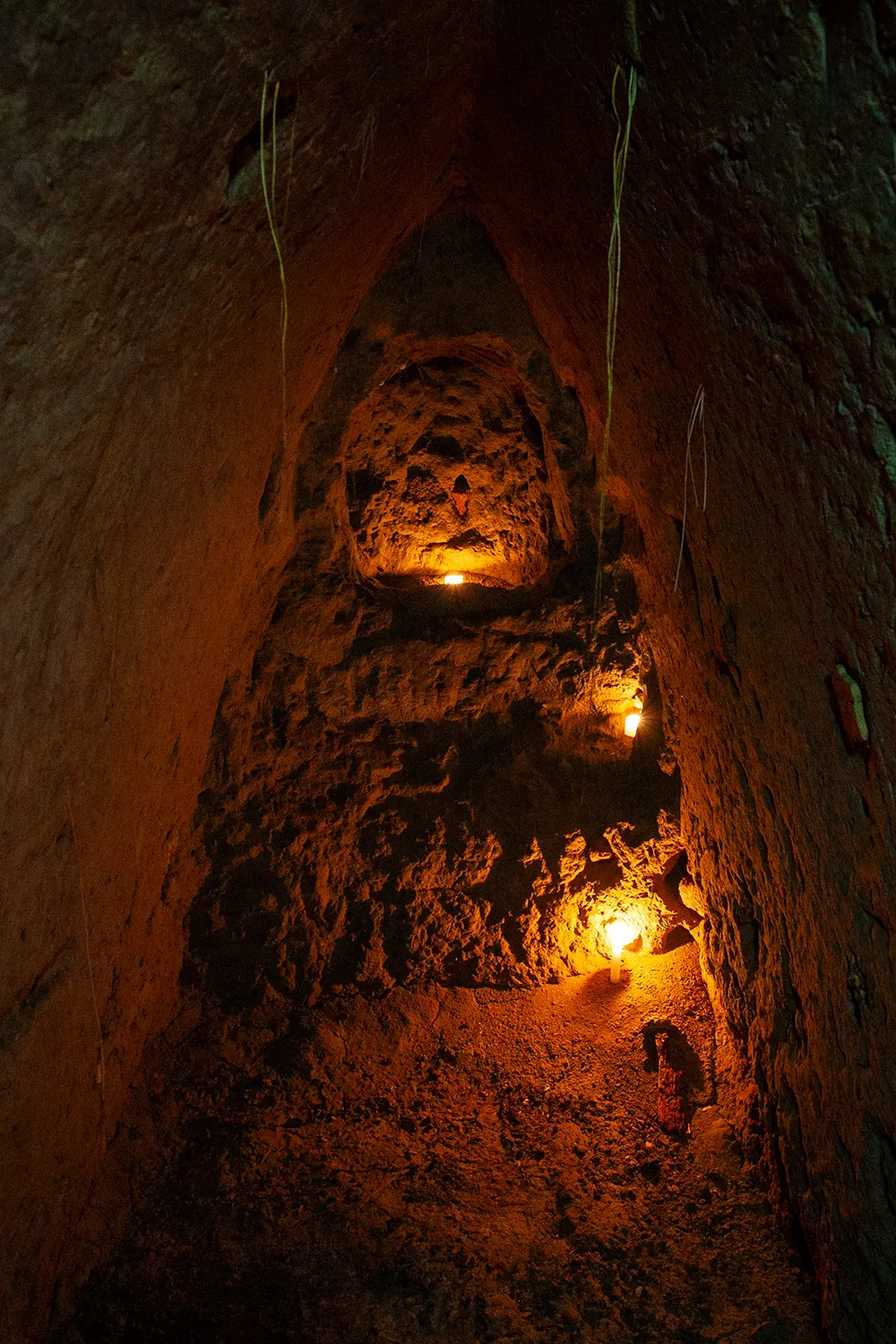
A side branch with a small niche. Photo: Dmytro Poliukhovych
Among the interesting finds in the surveyed cellar, we should single out a cross scratched into the clay near one of the niches. Judging by the layer of soot, it was scratched almost at the same time as the tunnels themselves were cut into the clay layer.
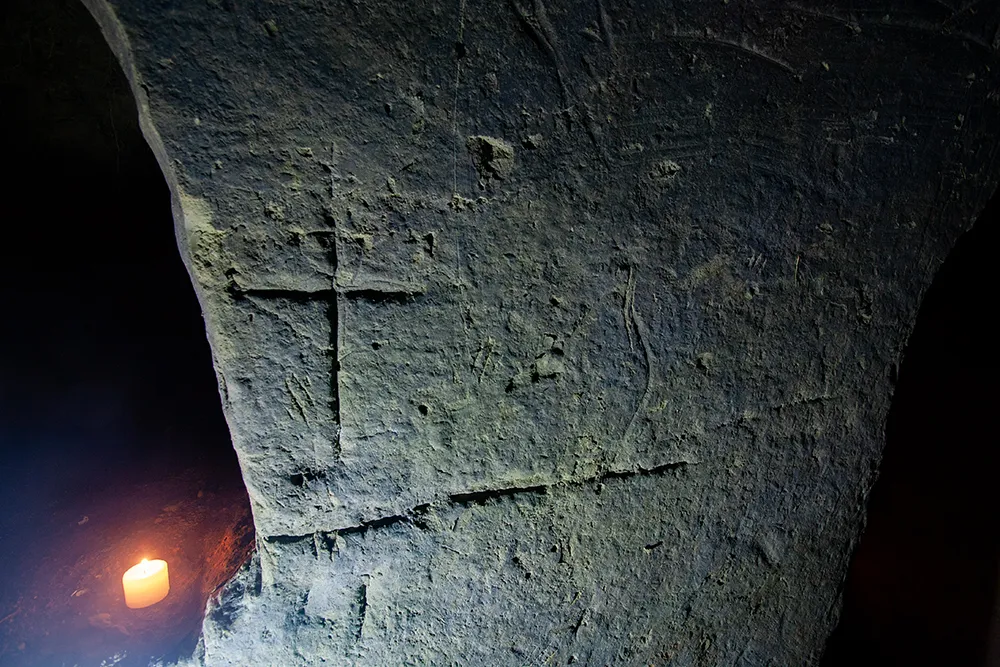
Photo: Dmytro Poliukhovych
In one of the ventilation shafts a small niche-hiding place was also found. In the days when such cellars were lit by candle, it was impossible to see this hiding place. It is visible only when lit with the directed beam of a torch. The hiding place is exactly at the level of an arm pushed into the ventilation shaft (about 20 cm in diameter). The side niche in that shaft is small, just big enough for a pouch. The latter, unfortunately, was missing. How we wanted to find a treasure!
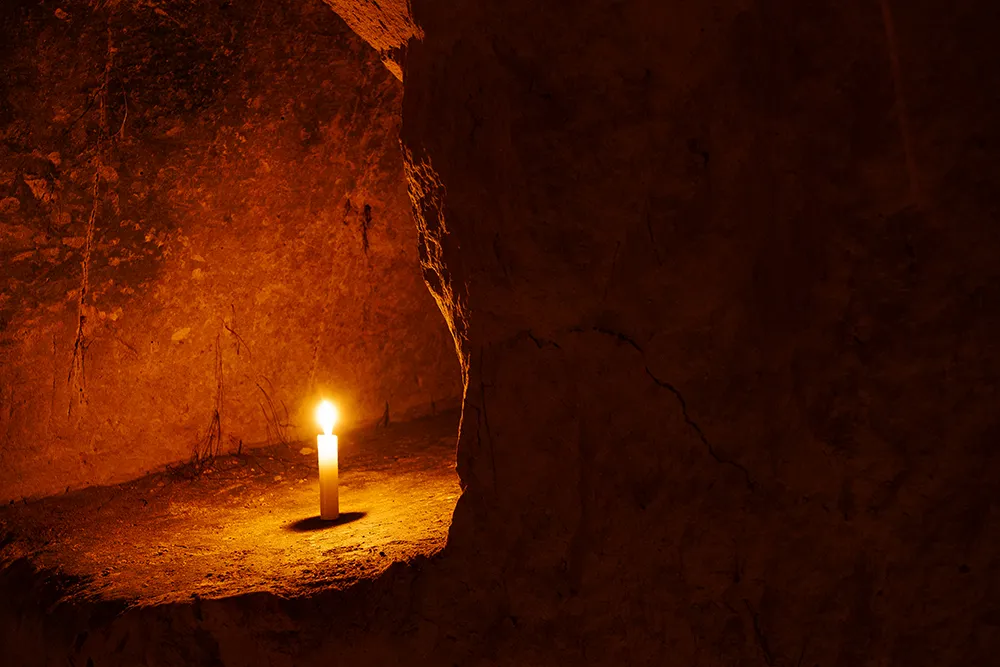
Photo: Dmytro Poliukhovych
The cellar lies under one of the houses on the right bank of the Smotrych. It stands right in the heart of the Old Town, some hundred metres from the site of the former “old” market square. The latter was moved in the 18th century to the left bank of the Smotrych and named the “New Market”.
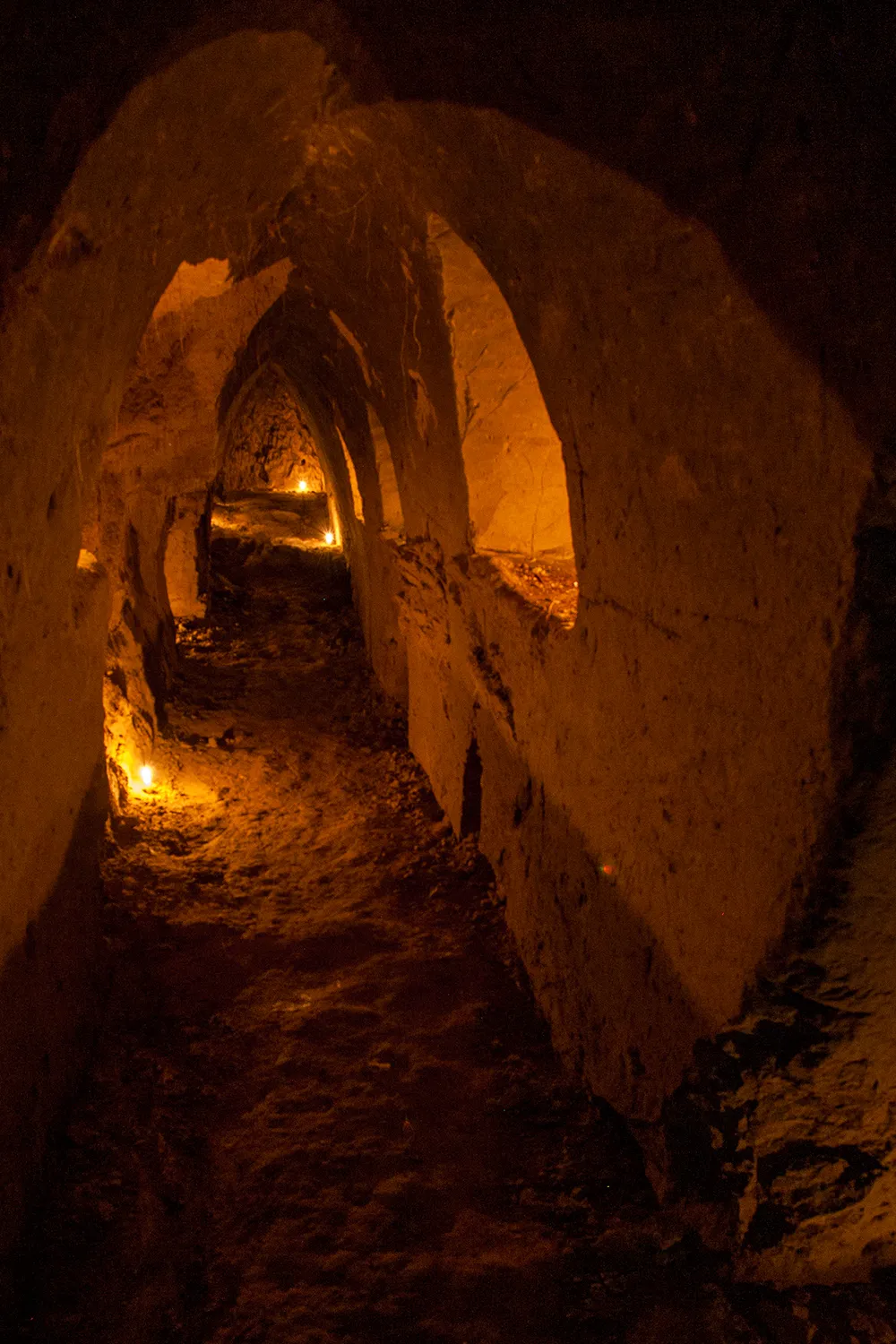
Photo: Dmytro Poliukhovych
The first 4 metres, as well as the first 2 side branches, are used by the owners of the house to store food. According to the owner, who bought the house only recently, she has never ventured further than 5 metres.
Photo: Dmytro Poliukhovych
The filled-in underground passage probably connected this cellar with the neighbouring one. Such a system of linked cellars was once called an “Underground Street” and traditionally led to the local castle. In the event of a sudden enemy attack, one could escape to a safe place along such an “underground street”.
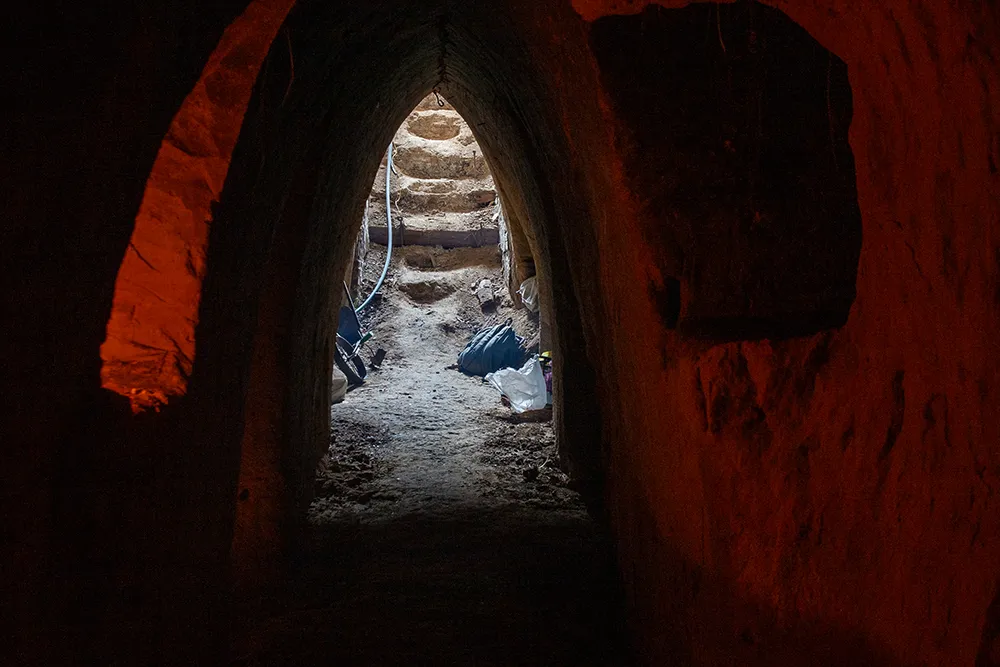
Photo: Dmytro Poliukhovych
Horodok Castle, let us note, stood some 300 metres from the surveyed cellar.
Interestingly, the location of Horodok Castle, whose walls were dismantled as early as the late 18th century, was pinpointed only in 2021, as a result of archaeological research by an expedition led by Dr Pavlo Nechytailo. It is important to stress that this research was carried out on the initiative and with the funding of the local community, an extremely rare case in modern Ukraine. The commissioning party was the Department of Culture, Nationalities, Religions and Tourism of the Horodok City Council. Horodok can rightly be considered one of the most history-friendly towns in Ukraine.
Dmytro Poliukhovych


