

Hrytsiv. The Grocholski palace

· 7 min read
Hrytsiv is first mentioned in a historical act of 1547, when it belonged to the Zbarazkyi princes and was held in pledge (in mortgage) for 200 kopas of money (600 roubles) by Bohokhval Ivanovych Labunskyi. On 29 October 1547, by order of King Sigismund Augustus, the Kremenets starosta Shchasnyi (Felix) Herczyk, Petro Mykhailovych Semashko and Ivan Khrebtovych awarded B. I. Labunskyi temporary use of Hrytsiv, against the wishes of his brother Vasyl Labunskyi, who wanted to have this estate.
After the death of B. I. Labunskyi, the pledge holder of Hrytsiv, or perhaps even during his lifetime, Hrytsiv ceased to be his temporary possession and passed completely into the hands of its real owner – Prince Mykola Andriiovych Zbarazkyi, because Bohokhval’s sons, Mykhailo and Khrystofor Labunskyi, according to the act mentioned below, were strangers to Hrytsiv.
From the Zbarazkyi princes Hrytsiv passed into the possession of the Ostrozkyi princes, namely Prince Kostiantyn Kostiantynovych Ostrozkyi, Voivode of Kyiv.
In 1570 his estates were divided between his sons, Prince Janusz, Castellan of Kraków, owner of Starokostiantyniv, and Oleksandr, Voivode of Volhynia, owner of the Polonne estate complex, which included Hrytsiv. This deed of partition mentions the estates of Hrytsiv and the village of Onyshkivtsi.
From the Ostrozkyi princes, after their extinction in 1620, Hrytsiv passed to their relatives, the Zagłowski princes, and from them around 1673 it briefly came to the Wiśniowiecki princes, and then to the Lubomirski princes.
From the Lubomirski princes Hrytsiv briefly, at the very beginning of the 18th century, passed into the hands of the Voivode of Sieradz, Jan Z. Ivanovych Odrowąż-Pieniążek, a count of the Holy Roman Empire, as can be seen from the act of 26 January 1702. It speaks of the Union being forcibly introduced in Hrytsiv, which met strong resistance from the local, from time immemorial Orthodox, inhabitants, as stated in a complaint by Yosyf Karasevych against the nobles Stefan and Andrii Kromno-Petrovski, who managed the Hrytsiv estate and who, together with the peasants, drove him out of the town.
From this it is clear that around 1702, when Hrytsiv came to Count Odrowąż-Pieniążek, a man of the Roman Catholic faith, the Union began to be introduced here in Hrytsiv.
Soon Hrytsiv passed from the Odrowąż-Pieniążek princes again into the hands of the Lubomirski princes. In the sacristy of the Hrytsiv church two erections (appointment deeds) signed by Prince Lubomirski have survived, given on 27 April 1752 to Stefan Horetskyi, priest of the Hrytsiv St. Nicholas Church, in the Hrytsiv castle.
In the second half of 1752 the town of Hrytsiv together with the adjacent villages was bought by the landowner Michał Gref-Grocholski from Prince Stanisław Lubomirski (from then until the Great October Socialist Revolution Hrytsiv belonged to the Gref-Grocholski family). The nobleman Michał Grocholski (born a count in 1704) of Grabów, coat of arms Syrokomla, judge of the Bratslav Voivodeship land court, was married to Anna Radzimińska. After Michał, Hrytsiv went to his son Marcin Grocholski (1727–1807), Voivode of Bratslav, married to Cecylia Myczko-Chłopicka. Marcin bequeathed Hrytsiv to the youngest of his four sons – Ludwik (1784–1869), married to Maria Bohorowska.
The son of Michał Grocholski, Marcin Michałowicz, inherited his father’s estate and, besides that, acquired new estates. At that time he held the post of castellan, and later became Voivode of Bratslav. In 1782 he built a luxurious Rococo palace in Hrytsiv and surrounded it with a large garden.
The Grocholskis were the last owners of Hrytsiv. They paid much attention to building the church and the manorial palace, but did not care about those by whose hands all this was created – the serfs, and after 1861 the dependent peasants. The Grocholskis did not release a kopeck for the construction of a new school, which was housed in an ordinary peasant hut. There was not even an ordinary wooden floor.” Only in 1871 was a one-class village school opened in Hrytsiv, and in 1907 it was turned into a two-class school with three teachers. In 1912 it had only 106 boys and 37 girls, while the population of Hrytsiv in 1905 was 4,489 people (524 households). For the maintenance of the school in 1912, 1,236 roubles were allotted from the treasury, 164 roubles from the zemstvo, and 300 roubles from the community.
After the death of Mieczysław, Hrytsiv passed to the youngest of the sons – Volodymyr Grocholski.
The Grocholski family was very well known in Ukraine, and the return of the names of outstanding personalities to the fold of multinational Ukrainian culture has become possible only in recent decades. Among such personalities we rightly count Volodymyr Grocholski – a count and public figure.
Born in Hrytsiv, Volodymyr studied at the famous gymnasium in Mitau (now Jelgava, Latvia), then at Dorpat University (Tartu, Estonia) and at the St. Volodymyr University in Kyiv, receiving a legal education. After graduating from Kyiv University he lived and worked in Kyiv and Hrytsiv. His fields of activity were agriculture and public and political life. His name stands among the founders of agricultural societies in Starokostiantyniv and Lutsk. He was vice-chairman of the Kyiv Agricultural Society. The peak of his public activity came in 1905, when he was elected a deputy of the First State Duma. After its dissolution Volodymyr Grocholski returned to Kyiv, where he founded the first Polish newspaper in Ukraine, “Dziennik Kijowski”. Its first issue was printed on 1 February 1906. In 1909, because of illness, Volodymyr Grocholski was forced to give up work and went abroad for treatment. Volodymyr Grocholski died on 3 July 1914 and is buried in Hrytsiv.
Since Volodymyr was unmarried, the last landowner of Hrytsiv became his brother Stefan, who also had no children. With him the line of the Grocholski landowners died out.
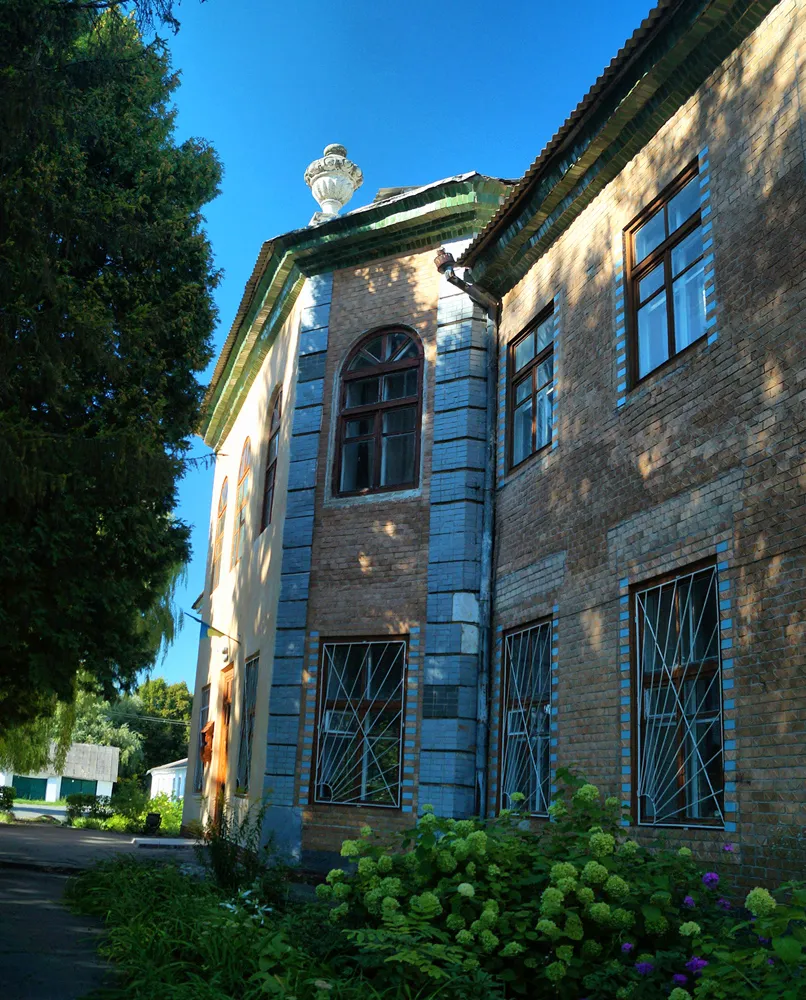
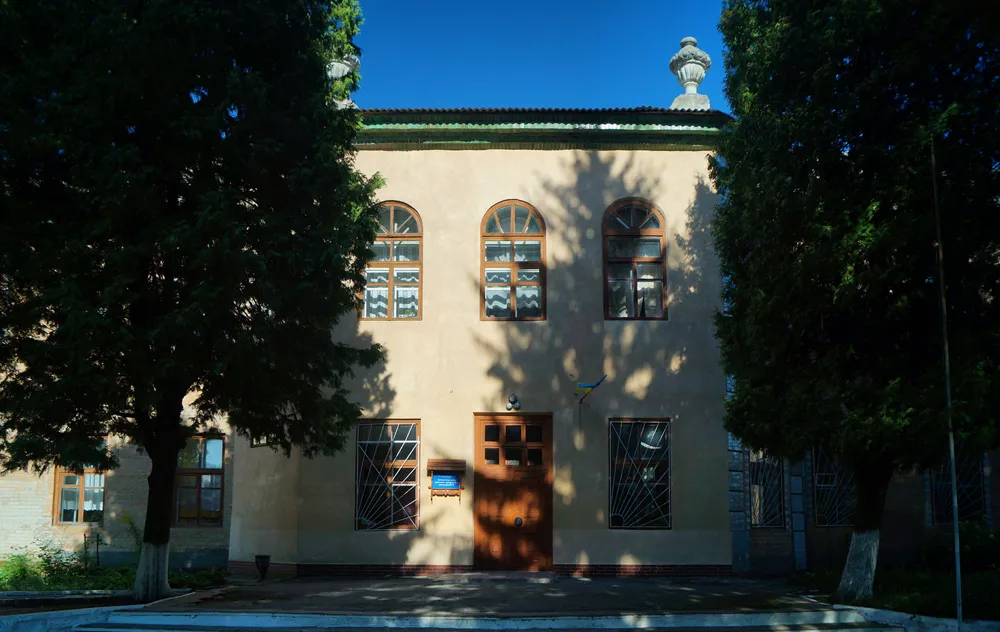
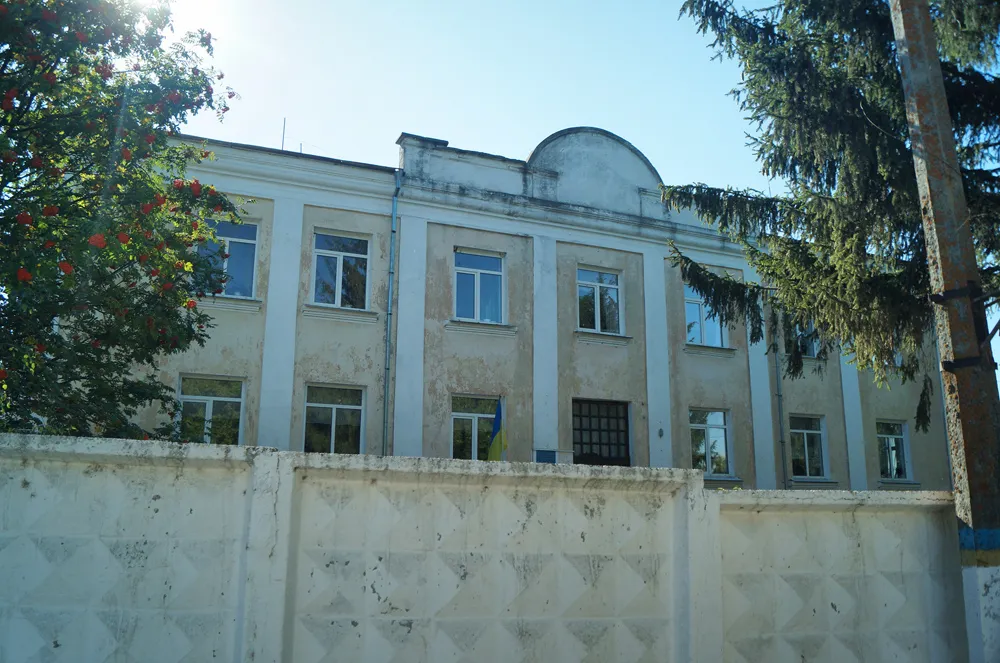
The estate of the last owner of the town of Hrytsiv
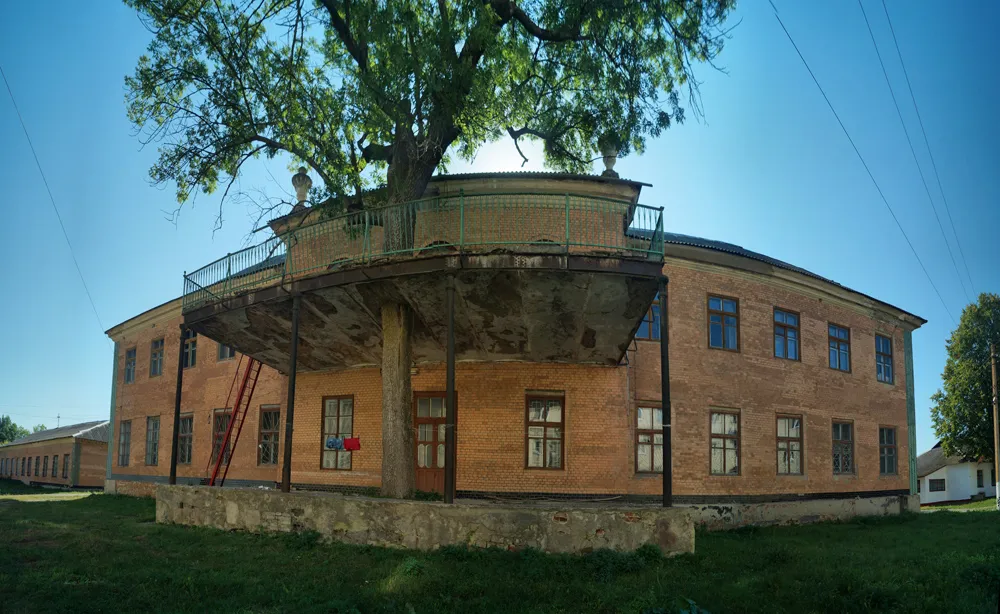
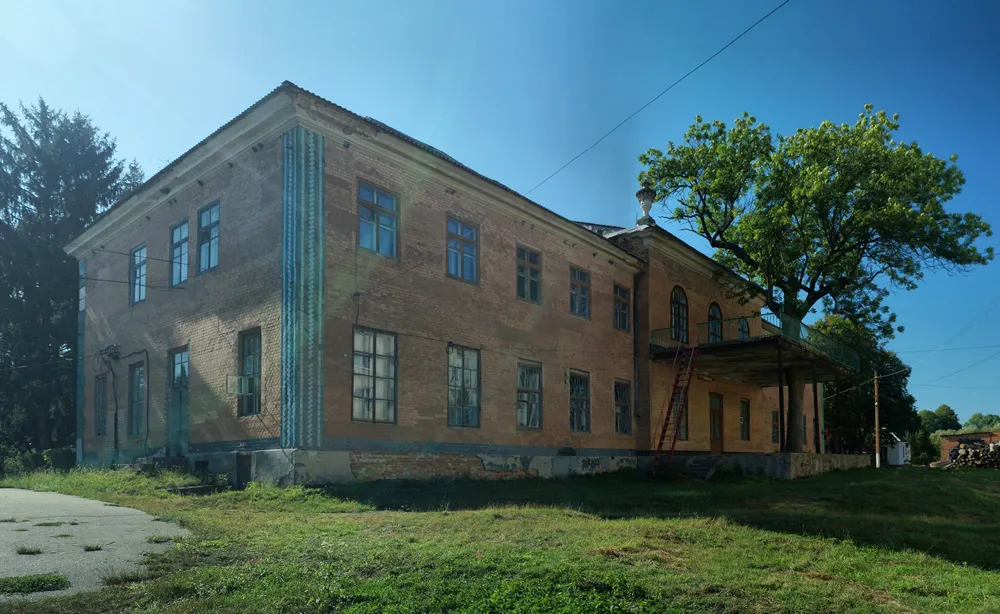
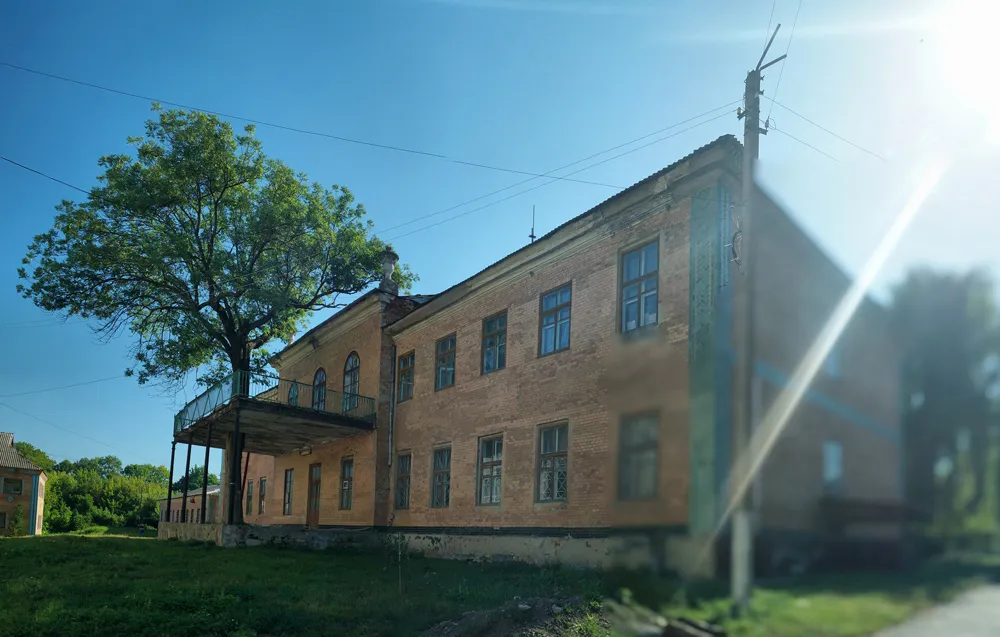
Michał Grocholski began building a manor on the site where the Zbarazkyi castle once stood. Its design has survived in the old collections of Stanisław August, held in the print room of Warsaw University. According to the design, the construction was carried out in part: the main block of the palace was to be linked by sloping galleries with two side pavilions. But the elements of the Palladian style – the galleries – were not built. The palace itself was built, according to the design, in a somewhat simplified form. Completion of the construction was probably prevented by the death of the founder. Michał’s son Marcin managed to finish what had been begun in 1782, giving up many of the ideas.
According to the design, the two-storey block of the palace had the form of a rectangle with a high hipped roof. The main façade in its central part is clearly outlined by a projecting bay (risalit) with chamfered and emphasised vertical bands and corners. On the ground floor the risalit has a door and rectangular windows, and on the second floor five tall French windows (porte-fenêtre) set in shallow niches at the top.
The risalit is crowned by a wide profiled cornice, a low attic wall with rich carving of two cartouches with the coats of arms Syrokomla and Korczak of the Grocholskis and Chłopickis, as well as a count’s crown. Stone vases are placed at the edges of the attic wall. The risalit was covered with a broken mansard roof with a vase in the centre.
Exceptionally beautiful, with rich stucco, was the main hall on the second floor, from whose ceiling a crystal chandelier hung. The mahogany furniture was made by local craftsmen.
The library had historical and cultural value in the palace, containing heraldic and historical literature and family archives. The gallery of Polish painting, a collection of porcelain figurines, crystal and old silver items were of artistic value.
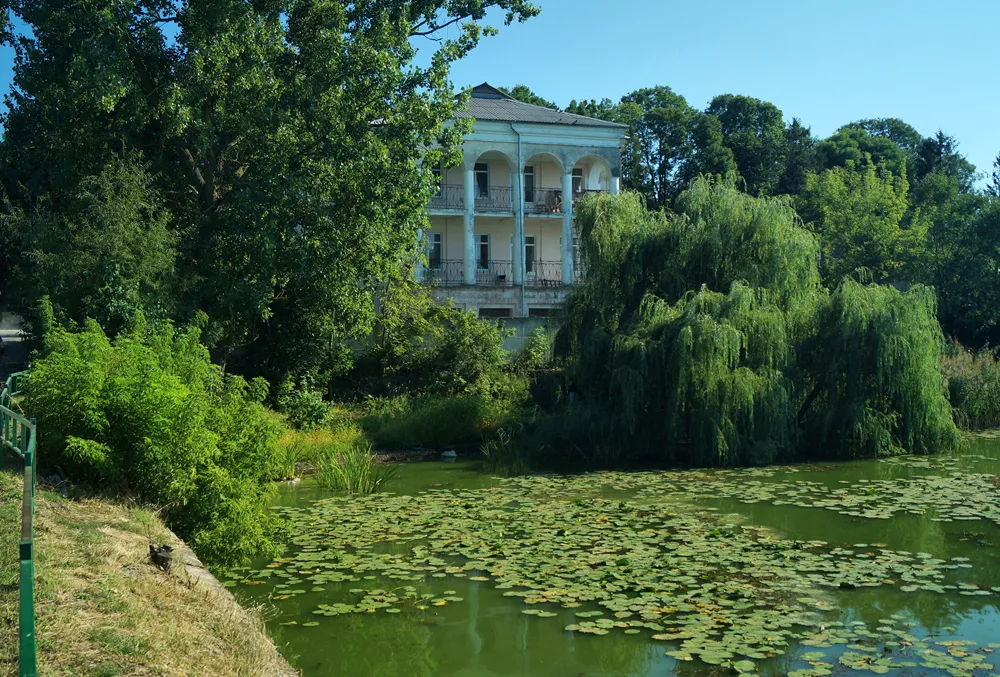
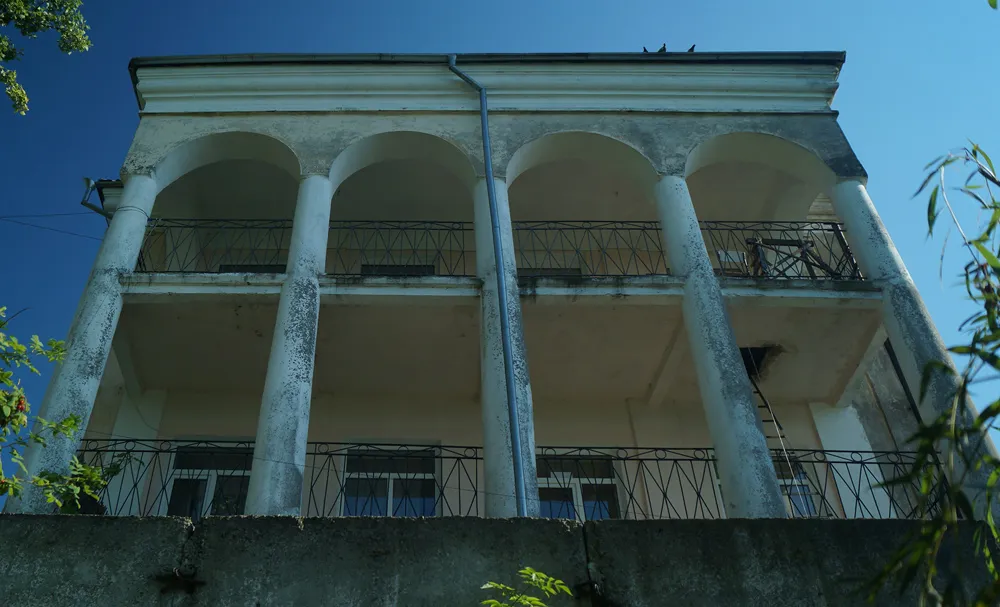
Near the palace, on the right side, Ludwik Grocholski built in the 19th century a manor chapel in the Neo-Gothic style to a design by Kostiantyn Froel-Platter. It was square, as tall as the palace, with turrets projecting at all the corners, covered with pointed helmets. The main façade ended in its upper part with a bell-tower with a spired cross.
The chapel interior was decorated by a white marble sculpture standing at the altar – the Immaculate Conception of the Most Holy Virgin Mary by the well-known Volhynian sculptor Oskar Sosnowski.
Opposite the palace, on the other side of the large grass parterre, stood an entrance gate made of two pylons several metres high and two lower gates with wickets. Both pylons were decorated on both sides with paired columns, and at the top, on wide cornices, with sculptural figures.
The manor fence consisted of wooden pickets set into masonry plastered stone posts with stone balls. The gate was approached by a bridge thrown across a moat left from the castle’s old defensive ramparts and ditches.
The landscape park (about 20 hectares) lay alongside the park façade, running down a hillock to a pond formed by the Khomora River.
Text: Valentyna Hrabarchuk, Hrytsiv Settlement Library.
Photos: Roman Malenkov.


