

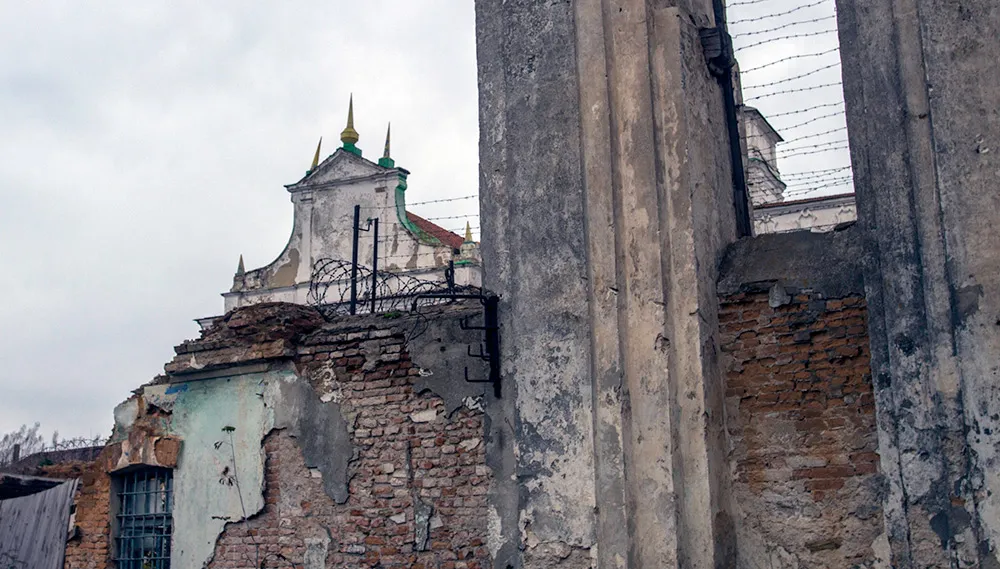
St. Bernard behind barbed wire

· 3 min read
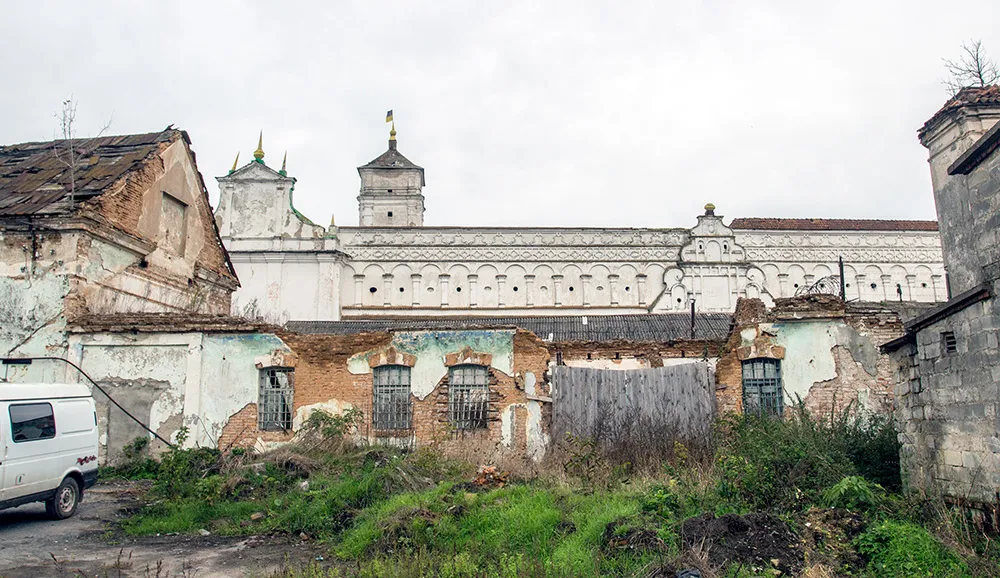
The Bernardine monastery in Iziaslav stands on a high hill rising above the banks of the Horyn and is an architectural dominant and one of the main symbols of the town. Built as a fortress, it was one of the key nodes in the defensive perimeter of Zaslav.
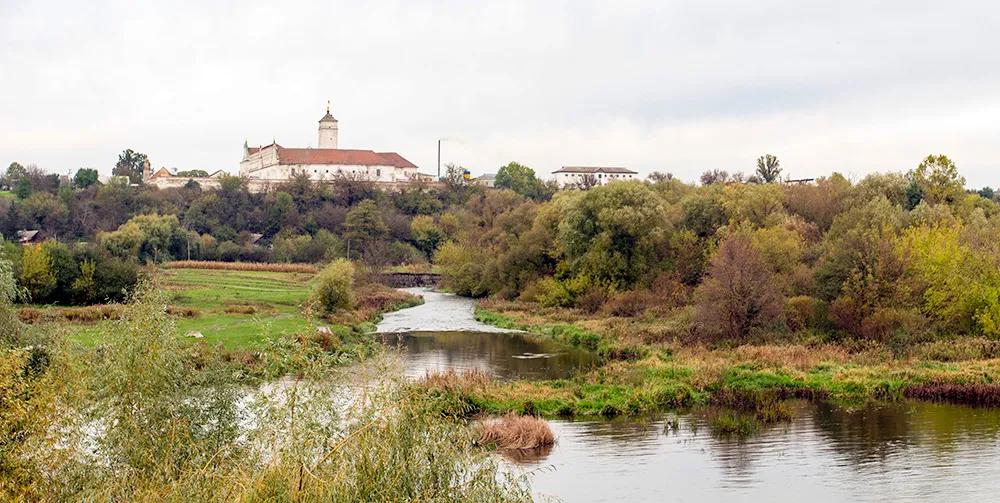
The monastery is a vivid illustration of the era of religious tolerance that set in in the Polish–Lithuanian Commonwealth after the decisions of the Warsaw Confederation (1573). At the time the plot of land for the monastery was allocated, the lord of Zaslav, Prince Janusz Zasławski, was a Calvinist, and his wife Aleksandra Sanguszko belonged to the Antitrinitarians (that is, those who denied the dogma of the Holy Trinity). Prince Aleksander Zasławski, who completed the construction of the monastery, was a Roman Catholic but had a considerable conflict with the Bernardines… Such a striking combination.
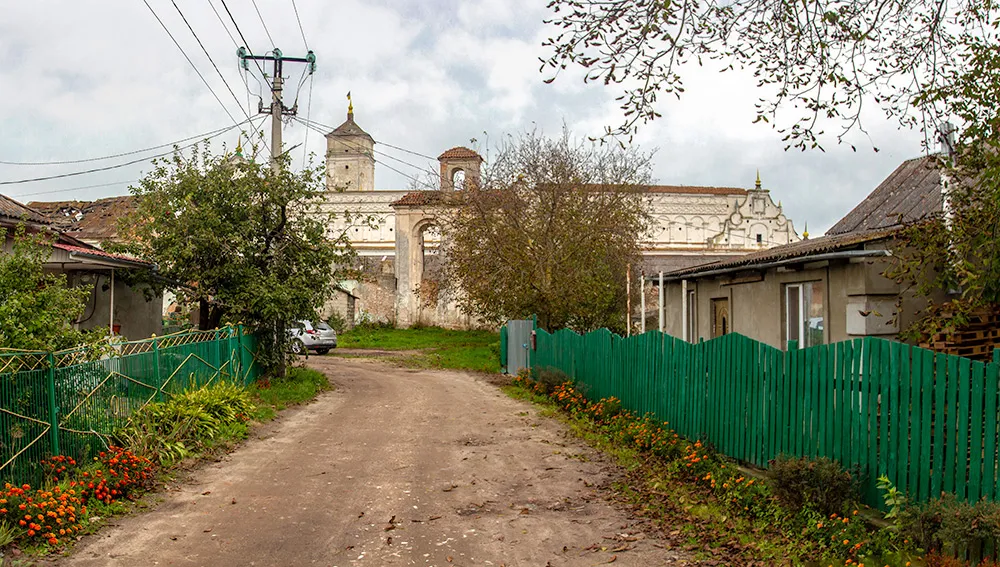
It is also worth noting that an abandoned Orthodox chapel, together with the icon of Our Lady of Zaslav, which had long belonged to the treasury of the Zasławski princes, was handed over for the construction of the monastery. It is quite likely that the Roman Catholic shrine arose on the site of the former Orthodox Monastery of the Holy Trinity, which by that time, for unknown reasons, had already fallen into decline.
The monastery complex was built in the Mannerist style, which many researchers regard not as a separate style but merely as an early stage of the Baroque. Most probably the architect was Jakub Madlain, a native of Graubünden, a land on the Italian–Swiss border. Construction of the complex continued until 1630.
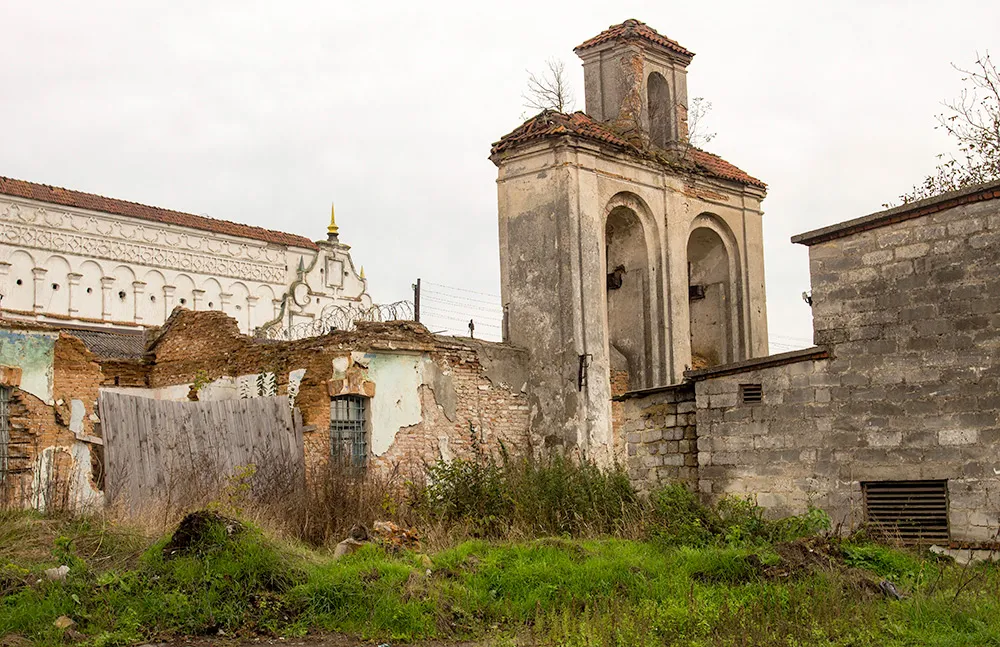
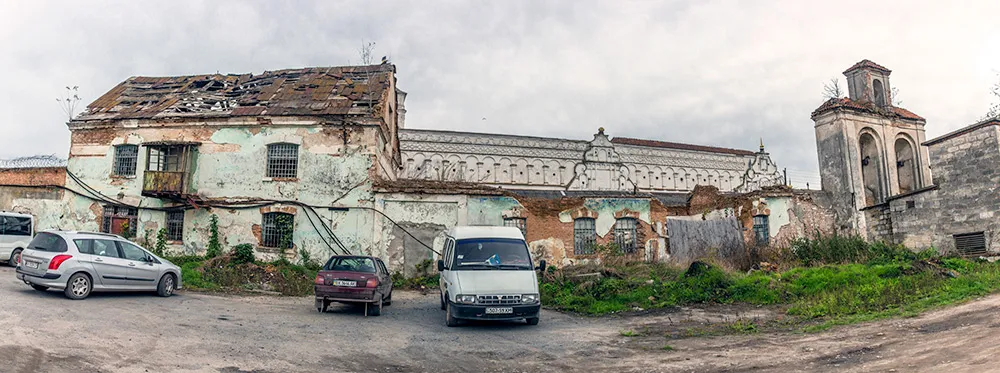
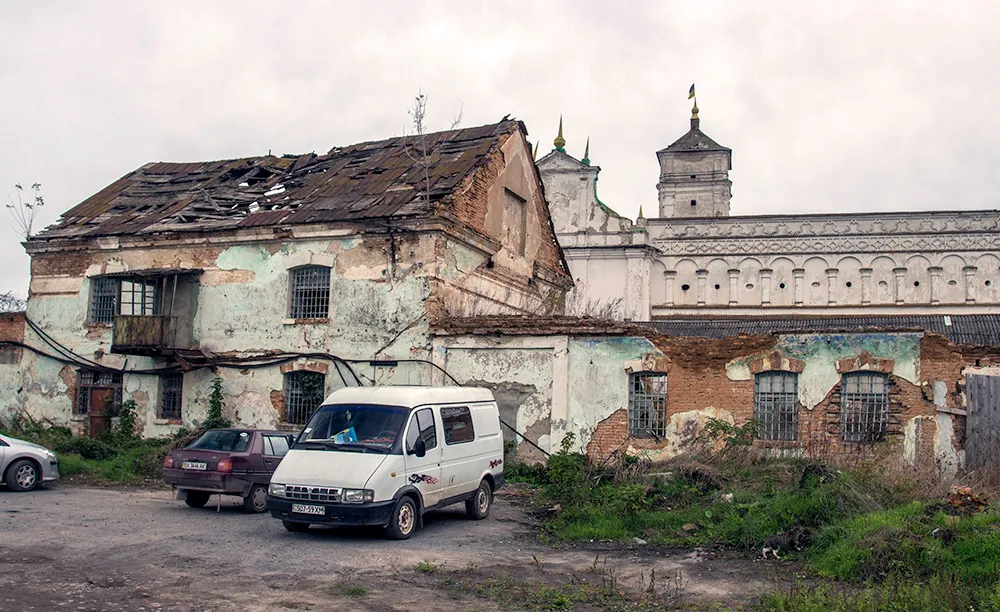
During the uprising led by Bohdan Khmelnytskyi the monastery was plundered and destroyed. Its main shrine survived, however: the image of Our Lady of Zaslav, which had been taken in advance to the Bernardine monastery in Rzeszów. After that the cloister stood in ruins for almost eight decades. Only in 1726 did its reconstruction begin, at the expense of the town’s lord Paweł Karol Sanguszko. It was long, took place in several stages and lasted until 1780.
From the 1920s the monastery complex was occupied by the Soviet occupiers. The monastery buildings housed the Shepetivka BUPR (a “house of forced labour”, as the Communists called prisons that used prisoners’ labour) and the Special Department of the Cheka-GPU of the 2nd Chernihiv Cavalry Division of Red Cossacks named after the German Communist Party. During the Second World War the Nazis used the monastery complex as a Gestapo base and a prison.
In the post-war years a labour colony operated here, holding about 200 children of “enemies of the people”. Until 1958 the head of the supervision service of the Iziaslav children’s labour colony was Oleksii Dievtiatilov, one of the perpetrators of the mass shootings of Polish prisoners of war in the Putyvl camps in 1940.
In 1960 the prison for minors was converted into correctional institution MKh 324/58, which soon became known as one of the harshest criminal prisons in the USSR. Many political prisoners were also held there. Today it is the Castle Correctional Colony No. 58 (names in the criminal world: the Monastery, the White Swan). After the abolition of the death penalty in Ukraine, a sector was created here for holding more than a hundred prisoners sentenced to life imprisonment.
More details about Iziaslav in my article on the RISU website


