

The grave that shakes Moscow: a symbolic battle for Sahaidachny’s legacy. NaUKMA versus researchers
For centuries the main focus of Kyiv’s urban life was Kontraktova Square. This matched world practice: one need only recall the Agora of Athens or the Roman Forum. The heart of Market (later Kontraktova) Square was the Epiphany Monastery, founded with the participation of Hetman Petro Sahaidachny and the Kyiv Brotherhood. Its main shrine was the wooden Epiphany Cathedral Church, laid down by the hetman himself.
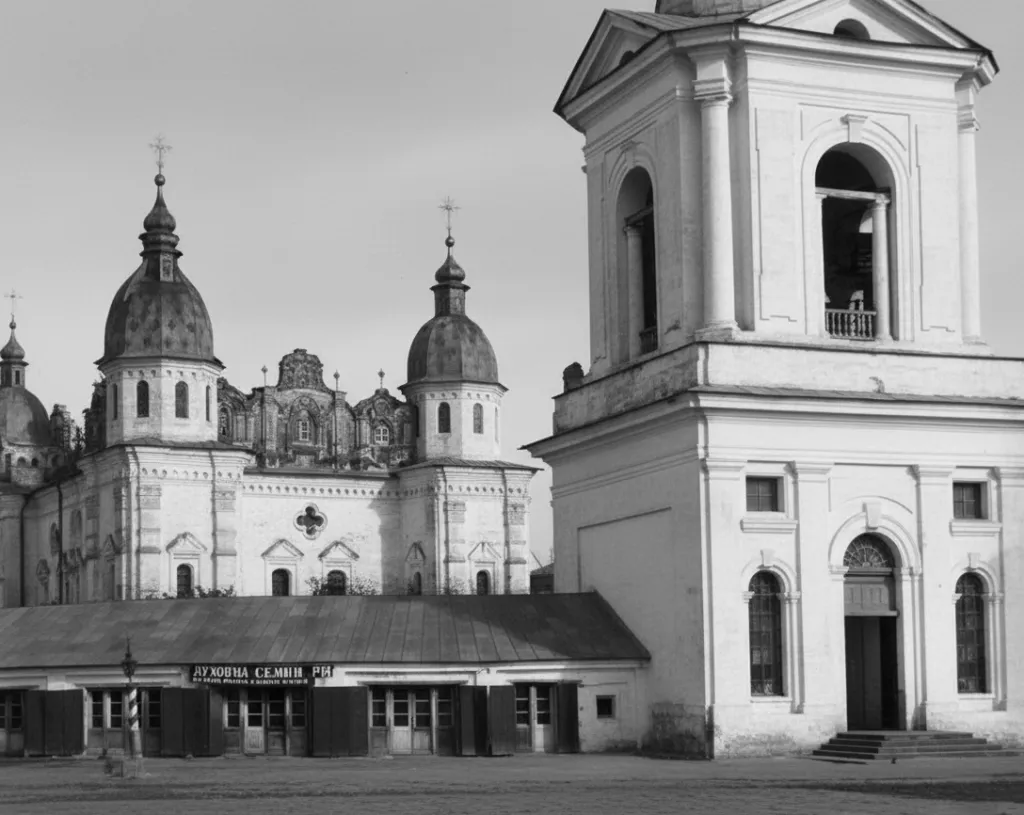
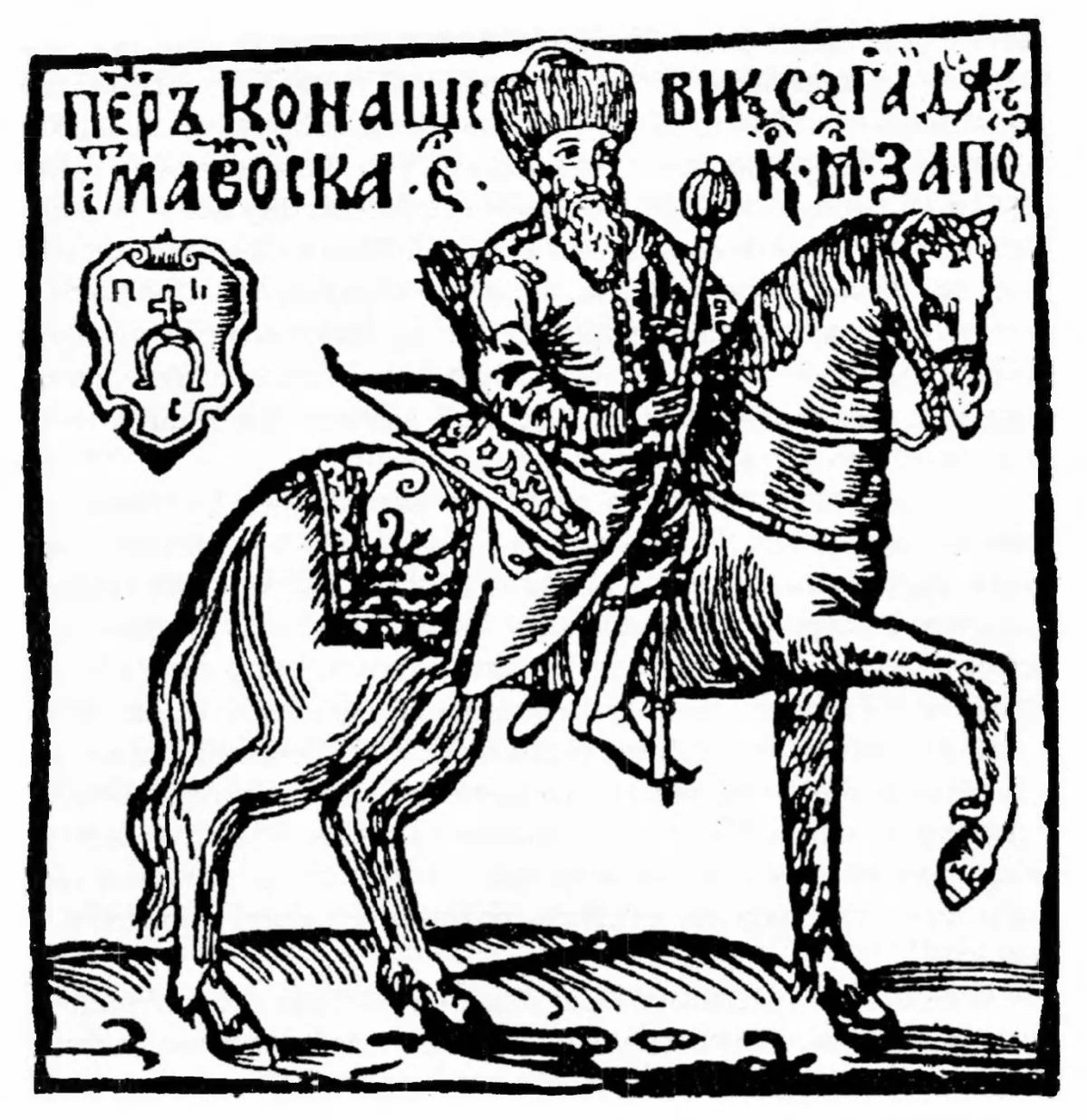
Having been gravely wounded in the Battle of Khotyn, Petro Sahaidachny died soon afterwards. The famed hetman was buried on Sunday, 28 April 1622. It was the most magnificent funeral Kyiv saw in the 17th century. He was accompanied on his last journey by his comrades-in-arms, the higher clergy and almost the whole city.
The hetman was buried in the then still wooden Epiphany Cathedral of the Kyiv Brotherhood Monastery, which for a long time afterwards was called the “Sahaidachny Monastery”. Later a grand brick cathedral rose on the site of the wooden church, built in 1690–1693 at the expense of Hetman Ivan Mazepa. The grave of the founder-hetman remained in the church.
But in 1936 the Communists destroyed the church. Where exactly the grave now lies is unknown. Today one can see only a symbolic cenotaph.
It is worth stressing here that the graves of rulers and leaders (tsars, princes, emperors, gurus and so on) have always played an important role for peoples. They often turned into sacred centres where generations could feel a connection with the past, recall heroic deeds and form a shared identity. Such burials were always a kind of “bridge” between the living and their glorious ancestors.
The graves of Great Leaders often acquired the status of shrines. They were believed to protect the people, and visiting such places had a sacred character. From the pyramids of Egypt to the grave of Shevchenko, it was always more than just a burial. They are symbols that shaped historical memory, unity and the cultural continuity of peoples.
A vivid example: in the USSR the birthday and the death day of Taras Shevchenko were a “canonical” commemorative date, with the laying of flowers, the reciting of poems and the choral singing of “Testament”. But 22 May, the day the Kobzar’s body was laid in Ukrainian soil, was taboo. Moscow furiously hated that date, when Ukrainians gained their own Most Important Grave, and tried by every means to erase any mention of that day from popular memory.
It is the same with the burials of the hetmans: they have all been destroyed. Taras Shevchenko once wrote about this with pain in “Haidamaky”:
“Remember the righteous hetmans:
Where are their graves? Where lies
The remains of glorious Bohdan?
Where stands even a humble grave
Of Ostrianytsia?
Where is Nalyvaiko’s? There is none!
They burned him, living and dead.”
In Ukraine there is only one “almost known” hetman’s grave: the burial place of Petro Sahaidachny on the grounds of NaUKMA. But even here we have a sad designation: “somewhere here”, as its exact location has yet to be found.
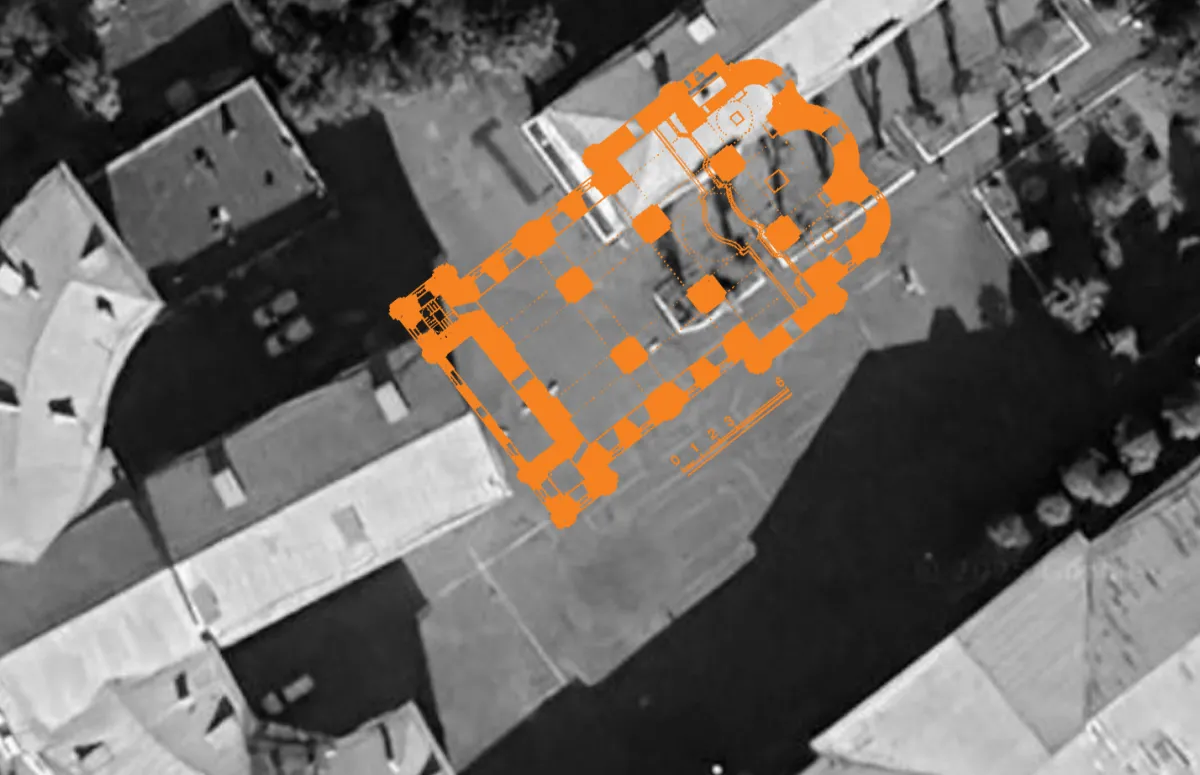
In autumn 2023, on the territory of the Kyiv-Mohyla Academy, the municipal institution “Centre for the Conservation of Archaeological Objects”, together with the Institute of Archaeology of the National Academy of Sciences of Ukraine and the Academy, carried out exploratory archaeological research in order to pinpoint the foundations of the monument “Remains of the Epiphany Cathedral of the Kyiv Brotherhood Monastery”.
Commenting to the media on its start, Mr Serhii Kvit stated, among other things:
“There are great hopes, for example, of finding the grave of Sahaidachny.”
That is, the head of NaUKMA publicly stressed the desirability of finding the burial of the famous hetman.
The 2023 excavations made it possible to clarify the location of the church’s foundations and to study their structure. A unique architectural element was uncovered: a well-preserved corner of the cathedral building, located between the south wall and the transept, whose configuration can be precisely identified on the plan of the structure published in 1848.
The archaeological research showed that the cathedral’s walls survive to a height of 1.5 metres.
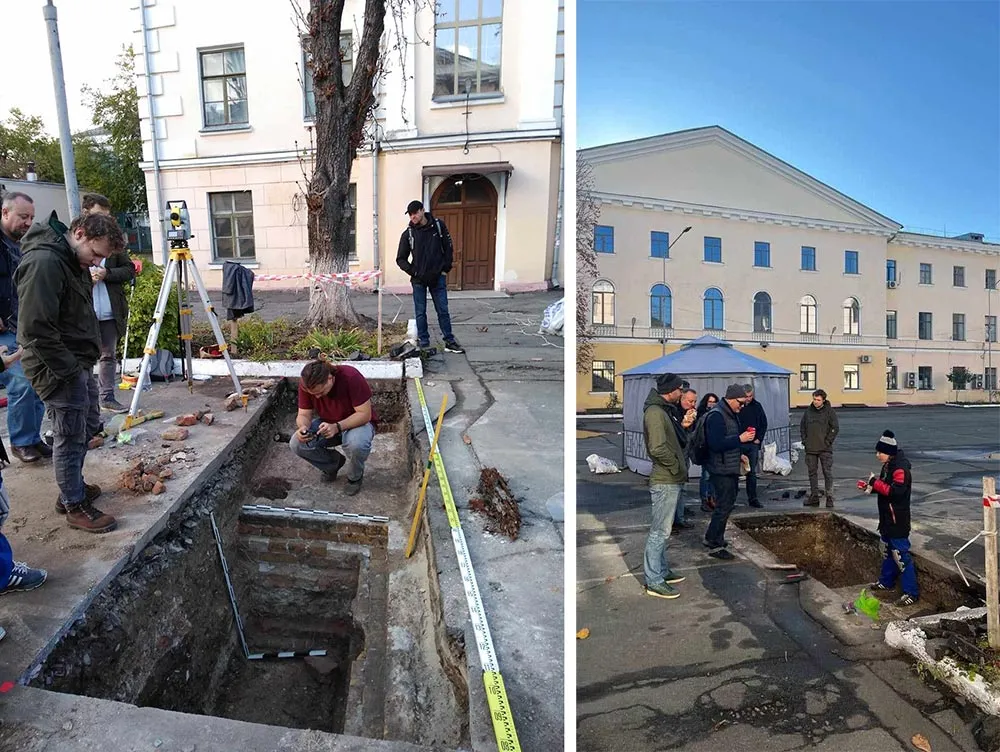
One of the most important tasks of the research was, building on the information obtained, to try to find the grave of the famous hetman. Finding the grave of Petro Konashevych-Sahaidachny precisely in our days is an extraordinarily ideologically and politically important task. It is not only the recovery of an important page of our historical heritage. The return to the descendants of a hetman at the gleam of whose mace Moscow shuddered in terror, precisely during the war against the Russian invaders, is more than symbolic. Finding the burial place of the hetman-commander, at whose very name the Muscovites trembled with fear, is also a blow to Russia’s “spiritual bonds” (skrepy) no less than the sinking of the cruiser “Moskva”.
The research was to continue, in particular a continuation was planned for June–December 2024, but the unclear position of Serhii Kvit, President of the National University of Kyiv-Mohyla Academy, stood in the way. This is very strange, since the latter is extremely fond of mentioning the great hetman. In particular, last October, during the commemoration of Petro Konashevych-Sahaidachny, he emphasised:
“Kyiv is the second Jerusalem. First of all, it symbolises justice. And now we have gathered to recall historical justice: what Sahaidachny began to do in the 17th century must obviously be completed in the 21st.”.
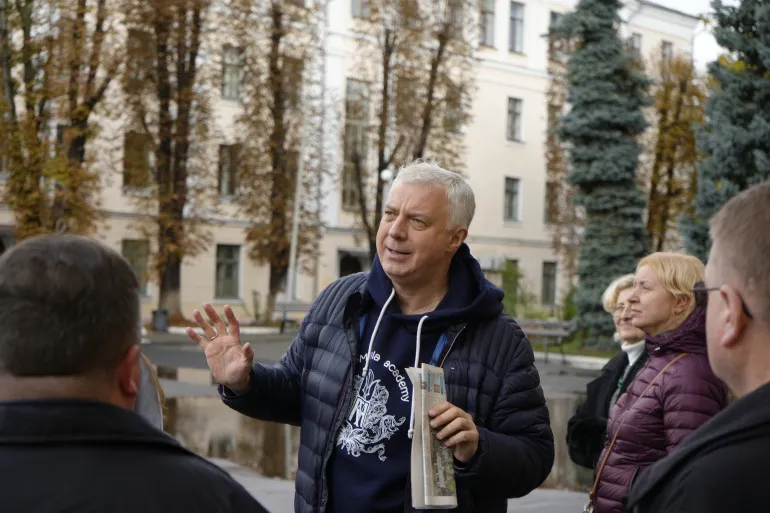
On the official website of the UINP this photo illustrates the text: “The President of the Kyiv-Mohyla Academy, Serhii Kvit, gave a short tour for the university’s guests, outlined various theories about the fate of the actual burial place of Petro Sahaidachny and spoke about the university’s traditions of honouring his memory.”
Despite the apparent regard for Sahaidachny as one of the “fathers” of the Academy, the NaUKMA leadership suddenly blocked archaeological work for 2024 and has firmly blocked it ever since. What is more, at the end of August 2024, on Mr Kvit’s orders, the place where the 2023 excavations were carried out was hastily asphalted over. Probably so that nobody would dig around in Mohyla soil with their spades and little brushes.
It is telling that even in Soviet times, in such cases, the outlines of the historic structure hidden below were at least marked out on the asphalt or paving. But in Serhii Kvit’s domain even this was not done. Moreover, the “Mohyla” maintenance staff, evidently on Mr Kvit’s instructions, dismantled the information stand with data on the cathedral and the results of the archaeological research!
It is worth stressing that studying the foundations of the Epiphany Cathedral is not only about the search for Sahaidachny’s grave, but also an opportunity to uncover the building remains of a famous sacred structure, as well as other archaeological objects and cultural layers that conceal the history of both the Brotherhood Monastery and still older, princely times.
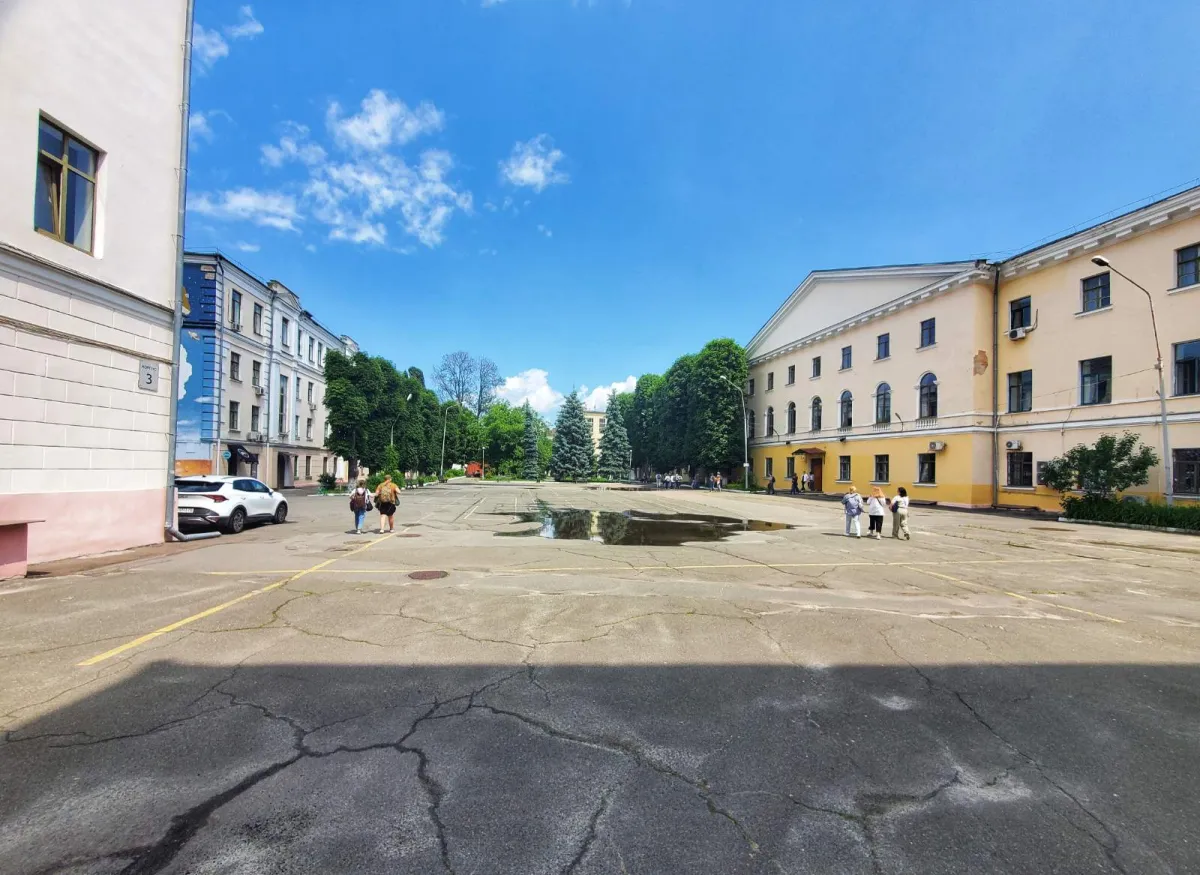
The study, preservation and subsequent landscaping and museumification of the authentic remains of the Epiphany Cathedral is of great national importance, since it concerns restoring the memory of an important Ukrainian shrine connected with two of the greatest hetmans at once, Petro Sahaidachny and Ivan Mazepa. Moreover, this monument is deeply connected with Ukrainian history and cultural traditions and is one of the benchmarks and most important pillars of national self-awareness. A site that has been studied, preserved, conserved, partially reconstructed and museumified should become a bright and very important monument and a source of pride for every Ukrainian.
But Serhii Kvit, for a number of considerations understandable only to him, has lowered the barrier in front of the researchers and buried a socially important and ambitious project.
The situation is extremely strange and, above all, absolutely unique. Usually there is only one obstacle to archaeological research: money. Large-scale excavations cost considerable sums. Besides the work of the scholars themselves (which also costs something), one has to pay for dozens, even hundreds, of diggers, equipment and so on.
In the case of the research on the remains of the Epiphany Cathedral, the money for archaeological work has been allocated in full. The scholars can and very much want to work. But for some reason Mr Kvit does not.
The claim that Mr Serhii Kvit is concerned that a pit in the middle of “Mohylianka” could threaten the life and health of students and lecturers seems hollow.
Before the archaeological research planned for 2024 began, all the wishes of the NaUKMA leadership regarding safety were taken into account. In particular, at the volunteers’ expense, a design for an enclosed pavilion to cover the site of the permanent excavation was commissioned and developed, and all the materials needed to build this temporary structure, which fully secured the excavation site, were purchased.
The construction of such a pavilion, incidentally, was also provided for in the 2024 Archaeological Research Programme, in particular in item 10 of the first section, “Preparatory stage”, signed by Mr Serhii Kvit himself!
Note that NaUKMA, headed by Mr Serhii Kvit, is not the owner of the land that conceals the remains of the ancient monument. The plot is municipally owned. The Academy uses it under a State Act on the right of permanent land use.
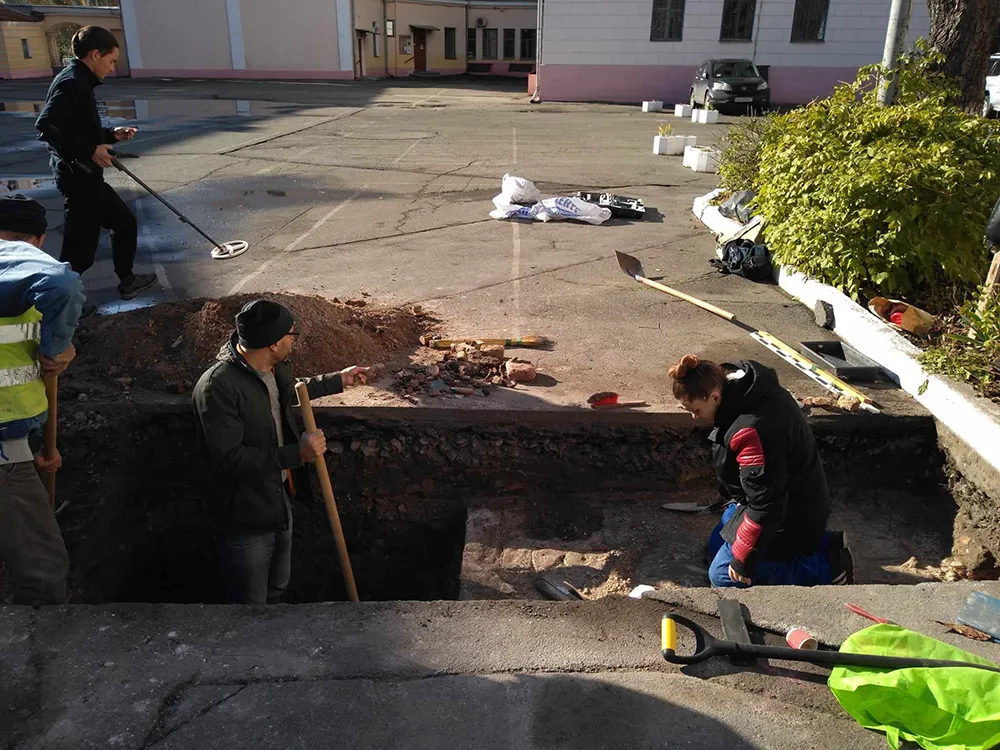
And here there is a very important detail: when the plot in question was handed over to the Academy for permanent use, this territory had long since, from the late Soviet era, ALREADY been recognised as an archaeological monument of local significance, the “Cultural layer of Podil” of the 9th–18th centuries (decision of the Kyiv City Council Executive Committee of 17.11.1987 No. 1112). Despite this, in 2010, during earthworks on the NaUKMA grounds, construction machinery cut trenches directly into the foundations of the Epiphany Cathedral. For modern Ukraine the situation is, sadly, trivial. But it is one thing when it happens somewhere in the provinces and the vandals are ignoramuses who have not the slightest idea of the value of cultural layers and the importance of the landmark they have defaced. Here, however, the offender and triumphant vandal is an organisation that presents itself as one of the leading intellectual centres of Ukraine and the forge of its elite…
Later, in 2023, by order of the Ministry of Culture and Information Policy of Ukraine (No. 360 of 05.07.2023), on the submission of the Department for the Protection of Cultural Heritage of the Kyiv City State Administration, the remains of the Epiphany Cathedral were entered in the State Register of Immovable Monuments of Ukraine. Under the law, NaUKMA should have concluded a protection agreement for this monument… But one of the leading intellectual centres of Ukraine, a beacon of its culture and so on, and so on, and so on, has still not done so. For some reason…
Mr Kvit’s organisation likes to emphasise that NaUKMA traces its lineage back to the Kyiv-Mohyla Collegium, speaking of succession, continuity and tradition… The best proof of this should have been the study, preservation and landscaping of the remains of the Epiphany Cathedral, once the main shrine of the Collegium and the Academy… But for some reason NaUKMA stubbornly does not want to do this. And the reason, it seems, is quite trivial: the new campus that is to appear in place of the 2nd building of the Mohylianka.
Officially it is not about building “from scratch” but about a large-scale reconstruction with an extension to the old Soviet structure, which will in effect change the building’s appearance and function. The project provides for increasing the height (initially adding one or two storeys was planned) to accommodate new lecture rooms and laboratories. Function: the renovated building is to become a modern educational hub adapted to inclusive standards (installing lifts, which did not exist before) and so on. Of course, all this must also be innovative and promote sustainable development. Everything “feng shui”, in a word…
The expected results of the archaeological research will, with a very high degree of probability, bury Mr Serhii Kvit’s ambitious plans to wedge a modern, innovative, inclusive and so on campus hub in among the historic buildings of the old Mohylianka… Accordingly, the views of titled experts were set in motion, claiming that those archaeological studies are not so important after all. This was publicly stated during the discussion of the “Mohylianka Campus” project on the NaUKMA website by, among others, Candidate of Historical Sciences Oleh Bilynskyi, head of the NaUKMA Department of Archaeology, and Maksym Yaremenko, professor of the NaUKMA Department of History and Doctor of Historical Sciences.
Oleh Bilynskyi’s comment boils down to several conclusions:
- new construction on the site of the 2nd building does not require a comprehensive archaeological study, and may be limited to separate fragments;
- the search for the grave/burial of Hetman Petro Konashevych-Sahaidachny is a dubious scholarly task, in which the author “does not see any important scholarly question”, putting forward his own version of the hetman’s burial in the cathedral;
- the conclusion that “any excavation is destruction, and the best way of conservation is simply not to touch it”.
On the basis of what was said, one can conclude that the author knows about the planned construction within the protection zone of the Epiphany Cathedral monument, deliberately insists there is no need for archaeological study, and in general expresses his professional “credo”: not to study archaeological monuments for the sake of preservation.
Given that the head of the NaUKMA Department of Archaeology is a direct subordinate of Mr Serhii Kvit, it is hard to believe in the impartiality of this expert’s conclusions.
The comment of the head of the NaUKMA Department of History, Professor Maksym Yaremenko, is no less interesting. In an extensive survey of historiographical works, the author raises rhetorical questions about the scholarly reliability of Sahaidachny’s burial, the unknown location of the Epiphany Church and the relationship between its old and new structures, and the absence of data on the burial in 18th-century sources. In the end, without answers to these questions, the author considers a search for the grave across the entire territory of the university’s first campus to be “not a scholarly task”.
Next Mr Yaremenko mentions a publication (without a reference) containing testimony about Sahaidachny’s grave by Professor Kudriavtsev in the 1920s.
As the former dean of the NaUKMA Faculty of Humanities, Doctor of Historical Sciences Professor Vitalii Shcherbak, and the founding director of the NaUKMA Museum, Candidate of Historical Sciences Tetiana Liuta, believe:
“Obviously this refers to the article by Volodymyr Burega, “An unknown study by Professor P.P. Kudriavtsev of the Kyiv Theological Academy on the burials in the cathedral of the Kyiv Brotherhood Monastery”.
In this article the author published the manuscript of KTA Professor P.P. Kudriavtsev, “On some burials under the floor of the Great Church of the Brotherhood Monastery”, in which he described the events of 1878–1879, when an eyewitness, whom he does not name, passed him information about burials in the crypt of the cathedral. The author pointed to the presence of two burials: on the right (opposite the icon of the Mother of God), a sarcophagus with decayed remains and a mitre, evidently of Paisios Ligarides, Metropolitan of Gaza; and on the left (not on the right, as Yaremenko writes), a brick sarcophagus which visitors did not open and which Kudriavtsev calls the burial of Hetman Sahaidachny”.
In the opinion of Vitalii Shcherbak and Tetiana Liuta, the destruction of the cathedral surely had some effect on the condition of these remains, but it is beyond any doubt that the burials mentioned were in the crypt of the cathedral as of 1878–1879, and not elsewhere.
Given that the cathedral’s crypt most likely survived, as shown by preliminary archaeological data from the test pits dug in 2023, the question is only one of modern archaeological research of this famous monument of the Ukrainian people.
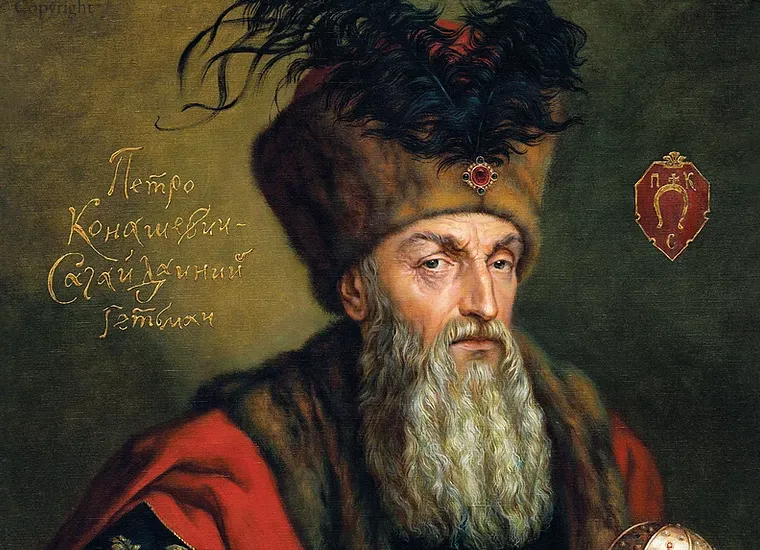
Vitalii Shcherbak and Tetiana Liuta also recalled that the well-known guidebook by Kost Sherotskyi likewise gives the burial place of Hetman Sahaidachny: “here under the floor by the south wall, halfway along it, the burial place of Hetman Sahaidachny is pointed out” (in Russian in the original).
Thus the remark of the historian Maksym Yaremenko that “to this day, however, there is no evidential data about a specific place that would deserve a search for the hetman’s burial” is a simple deception and a justification of the criminal intention to build a new campus, planned by his direct superior Serhii Kvit.
Serhii Kvit’s apparent reverence for Hetman Sahaidachny, without whom the “Mohylianka” would never have appeared, seems to be turning into an open policy of forgetting a name that stands in the way of the NaUKMA head’s ambitious building plans.
A vivid example: on 8 April this year the NGO “Velykyi Lokh Foundation” sent Serhii Kvit a letter asking him to approve a festive moleben on 15 April 2026, conducted by a clergyman of the Orthodox Church of Ukraine, in honour of the Vyshhorod Icon of the Mother of God and the day of memory of the holy and devout Hetman Petro Konashevych-Sahaidachny, defender of the Orthodox faith.
The moleben was to take place at the site of the monument of history, archaeology and architecture, the “remains of the Epiphany Cathedral”, where archaeological research was carried out in 2023.
Because of Mr Serhii Kvit’s position, this event never took place…
In general, the position of an institution conceived as the main centre for educating the elite, on historical heritage and the politics of memory, looks extremely strange. For what are empty words about patriotism, respect for history and so on worth when actions show the exact opposite?


