

Vasyl Symyrenko was Kyiv’s best patron of the arts. But today he is almost forgotten

· 5 min read
The article was published by RBC-Ukraine
The capital has no street, or even a memorial plaque, in the philanthropist’s honour
Vasyl Symyrenko was one of the most outstanding patrons of the arts in Kyiv, who lived at the turn of the 19th and 20th centuries. With his money the first Ukrainian-language daily newspapers began to be printed. He gave financial help to Mykhailo Drahomanov, Mykhailo Kotsiubynskyi, Pavlo Chubynskyi and other eminent people. Yet hardly anyone remembers the philanthropist now.
In a column for TRAVEL RBC-Ukraine, local historian and traveller Roman Malenkov tells who this representative of the famous Symyrenko family was and what he did for Kyiv.
“The most sincere Ukrainian down to the depths of his pocket”
“The most outstanding, most sincere Ukrainian among the so-called bourgeois, who was devoted to the Ukrainian cause not only to the depths of his sincere soul, but also to the depths of his pocket” – these are the words Yevhen Chykalenko said about Vasyl Symyrenko.
One of Ukraine’s greatest philanthropists, Vasyl Symyrenko, is almost forgotten by Ukrainians. No memorial plaques, streets or museums are dedicated to him. And when you say that Kyiv has no Vasyl Symyrenko Street, everyone takes you for an ignoramus and says there is a Symyrenko Street. But that is the street of the famous scientist and plant breeder Lev Symyrenko.
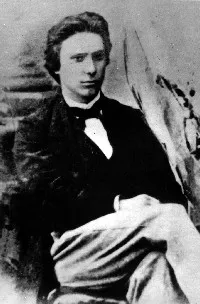
Photo: Vasyl Symyrenko (wikipedia.org)
Nechui-Levytskyi, Vasyl Symyrenko, Yevhen Chykalenko are great Ukrainians who lived in Kyiv. But the capital has no streets named after them. Looking at the map of Kyiv, many will say: there is a Nechui-Levytskyi Street. However, few people notice that it is one of the most neglected streets of the city, located in the private housing sector in Solomianka.
And where are the streets of the outstanding Cossack leaders? Danylo Nechai, Ivan Chornota, Martyn Nebaba, Stanislav Morozenko, Semen Palii, Ivan Pidkova, Taras Triasylo – it is precisely these incredible commanders who allow us to be proud of Ukraine. But it seems that this history is a matter of indifference to many.
From the family of the first “sugar kings”. Who Vasyl Symyrenko was
Fedir Symyrenko was a serf, but he managed to buy his own freedom, began trading and… in 1834 built the first sugar-refining plant in the Russian Empire. He was the first of the “sugar kings” – after him came the Kharytonenkos and the Tereshchenkos.
Fedir’s sons, Platon and Vasyl, continued their father’s work. They were well-known pomologists, founded rational horticulture and became famous for it far beyond Ukraine. But let us dwell in more detail not on the outstanding Symyrenko family, but on one of its representatives, Vasyl Fedorovych.
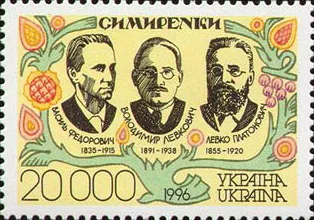
Vasyl Symyrenko on a 1996 postage stamp (left) (wikipedia.org)
In 1873 Vasyl Symyrenko bought an old, half-ruined sugar factory in the village of Sydorivka near Korsun.
Having restored the plant and introduced his own patented technological developments (Vasyl had an engineering education), and having broadened the range of production (besides sugar, marmalade and pastila were made there), Symyrenko made the enterprise extremely profitable and became a millionaire.
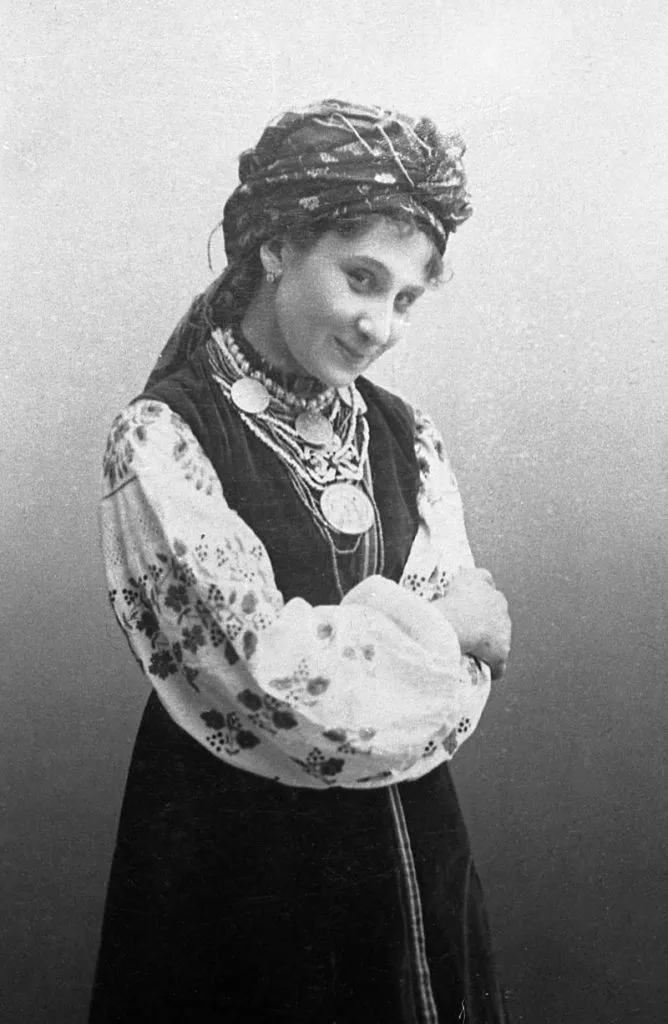
Photo: Maria Zankovetska worked for a time in the theatre troupe created by Symyrenko (wikipedia.org)
Continuing the work of his early-deceased brother Platon, Vasyl began to engage in philanthropy. In his Sydorivka he created a theatre troupe. Mykhailo Starytskyi and Maria Zankovetska worked in it for a time.
In Sydorivka he built two schools, a crafts school and an agricultural school. Teaching in them was conducted exclusively in Ukrainian. Vasyl also began to finance book printing – with his money quite a few Ukrainian-language books were published, including two editions of Shevchenko’s “Kobzar”.
In Kyiv Symyrenko incredibly expanded the scope of his philanthropy
Vasyl moved to Kyiv, where he bought a plot and, to a design by the architect Nikolaiev, built a luxurious mansion (9 Desiatynna Street).
Here he incredibly expanded the scope of his philanthropy. He gave 35,000 rubles for the journal “Kyivska Starovyna” (Kyiv Antiquity), and then also covered its deficit every year. In the thematic and chronological range of historical questions it covered, this publication had no analogues among professional periodicals in Ukraine.
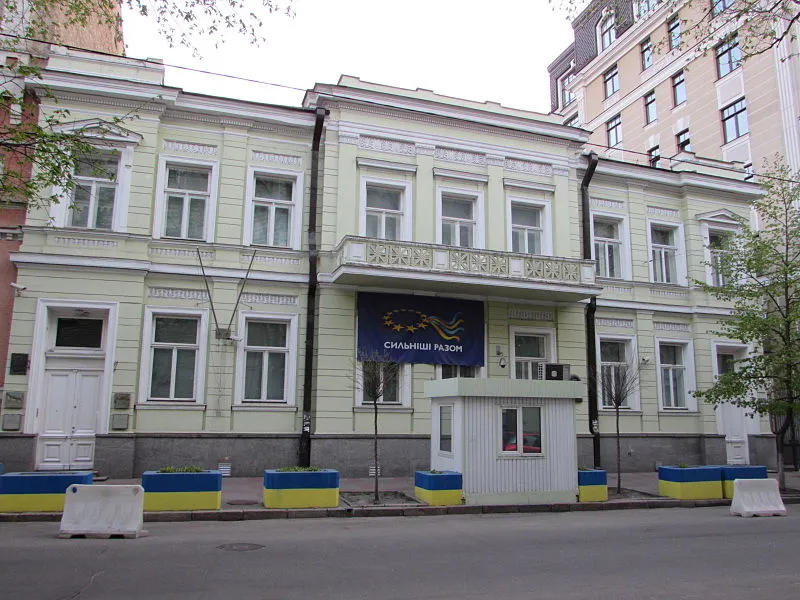
Photo: In Kyiv Vasyl Symyrenko bought a plot and, to a design by the architect Nikolaiev, built a luxurious mansion at 9 Desiatynna Street. The British Embassy is now located here (wikipedia.org)
With Symyrenko’s money the first Ukrainian-language daily newspapers “Hromadske Slovo” and “Rada” began to be printed, as well as the journals “Ukraina” and “Literaturno-naukovyi Visnyk”. Symyrenko gave great help to foreign publications about Ukraine, “Ukrainische Rundschau” and “Ruthenische Revue”, and financed Mykola Lysenko’s choir.
Financial help from Vasyl Symyrenko was received by Mykhailo Drahomanov, to whom he gave money for a printing house. Also by Mykhailo Kotsiubynskyi, Illia Shrah, Oleksandr Kistiakivskyi, Pavlo Chubynskyi and Petro Nishchynskyi. Vasyl Fedorovych allocated 100,000 gold rubles to the Shevchenko Scientific Society for the purchase of a residence building in Lviv.
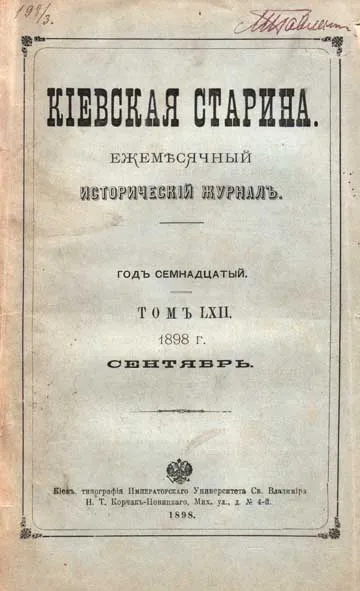
Photo: The journal “Kyivska Starovyna” was published from 1882. Attempts to revive the publication in the Ukrainian SSR in the 1970s failed. After the collapse of the USSR the journal’s printing was resumed. In the photo, the title page of the journal in 1898 (wikipedia.org)
The list of Symyrenko’s charitable deeds is endless. He even gave 500 rubles to terrorists – they carried out a successful assassination and killed the Russian executioner, Minister of the Interior Plehve, the first author of the idea of a “little victorious war” to cover up the impoverishment of the country.
Having no children, Vasyl Fedorovych bequeathed his huge inheritance, more than 10 million gold rubles, to the development of Ukrainian science and culture. A board of trustees was specially created, which included Volodymyr Antonovych, Mykola Lysenko, Levko Symyrenko, Volodymyr Leontovych, Mykhailo Hrushevskyi and the same Yevhen Chykalenko.
After his death, Vasyl Symyrenko’s mansion, in accordance with his will, passed into the ownership of the Ukrainian Scientific Society. Today the building houses the residence of the British ambassador.
In my opinion, one of the main streets of our capital should bear Vasyl Symyrenko’s name. But there is none, and it is not on the lists of possible renamings. That is how it is.
Author: Roman Malenkov


