

Belz. Beauty without a road

· 5 min read
Andrii Bondarenko has already written about the fascinating town of Belz on our pages. In as many as five parts.
Belz, part 1: the history of an ancient town
Belz, part 2: The Little Castle
Belz, part 3: Dominican monasteries for men and women
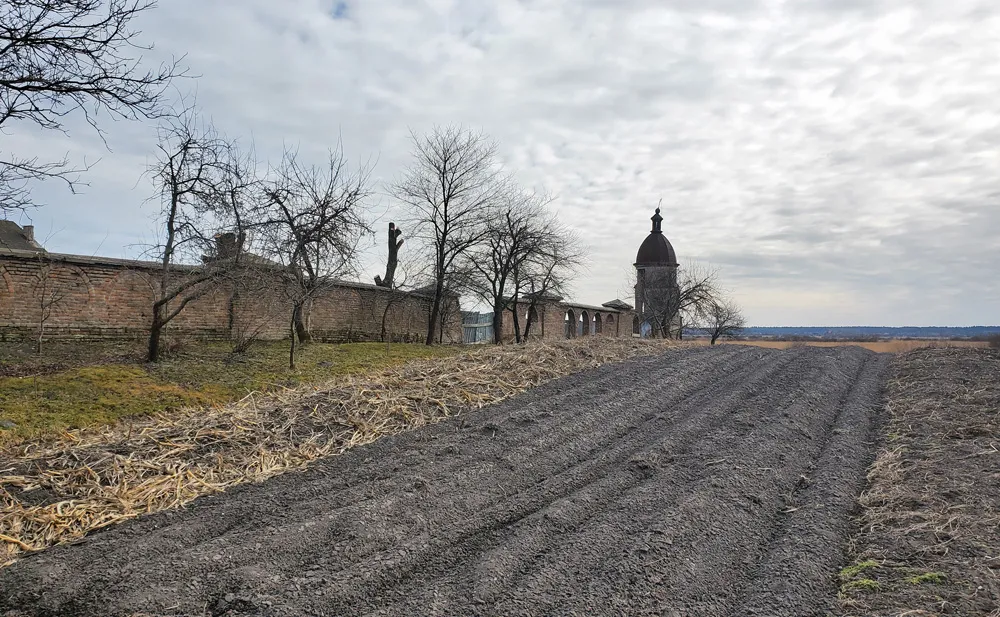
In terms of the number of remarkable monuments, the town of Belz, home to just over two thousand people, is one of Ukraine’s record holders. That is, if you count per capita. The monuments of Belz are united in a historical and cultural reserve, which was created back in 2001, but one cannot say that this institution has done much or that the town is well looked after. Most of the incredible monuments of Belz, the former princely capital, are in poor condition, some in a state of semi-ruin or ruin. A huge problem is the road to this little town, which in fact does not exist. We drove here (in March 2022) from Chervonohrad on a dirt road of not the best quality. From Rava-Ruska, we were told, the road is no better. It is strange, since this is almost the border with Poland. In peacetime there could be hundreds of tourists here, both Ukrainian and Polish. But today Belz leaves a double impression after a visit: of grandeur and of decline.
P.S. We want to note that there is not enough money for the restoration and repair of the monuments of Belz, but for some reason there was enough to stick golden domes, one large and one slightly smaller, in place of the original Neo-Gothic roof on the former Church of the Blessed Virgin Mary, now the Church of St. Nicholas (OCU). In our opinion this is a crime.
Photos by Roman Malenkov.
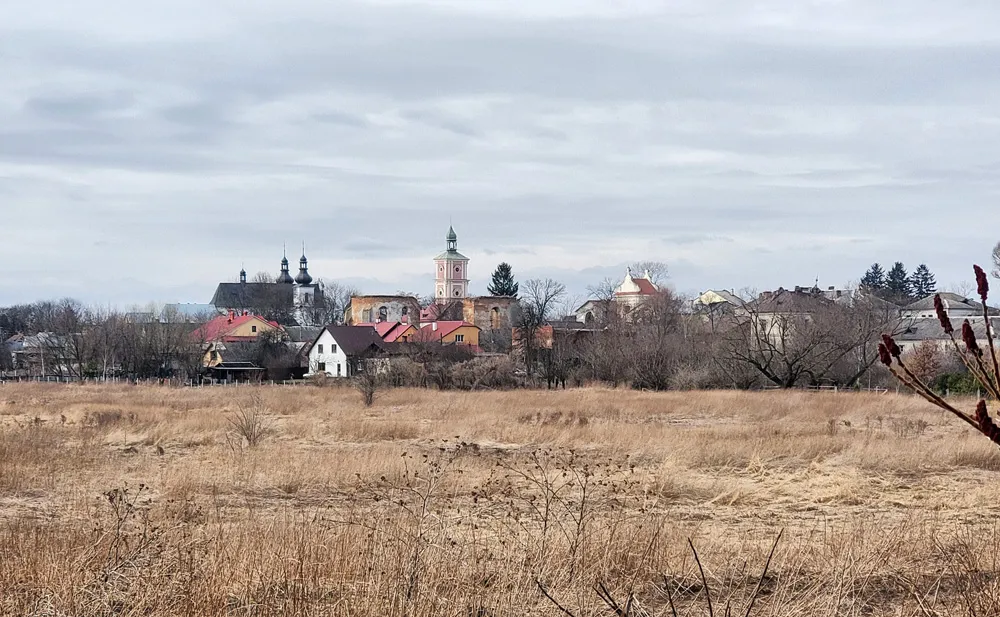
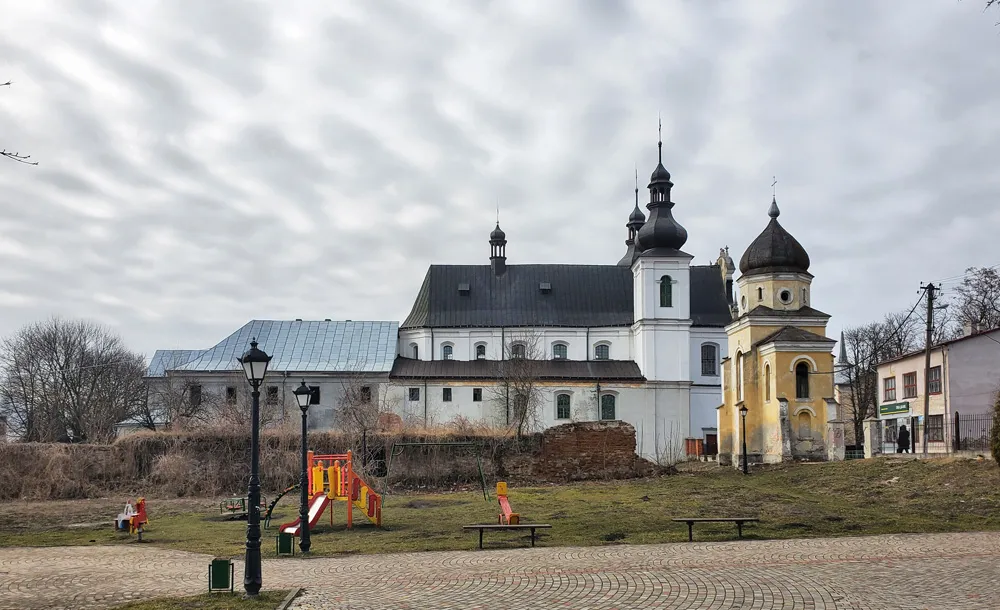
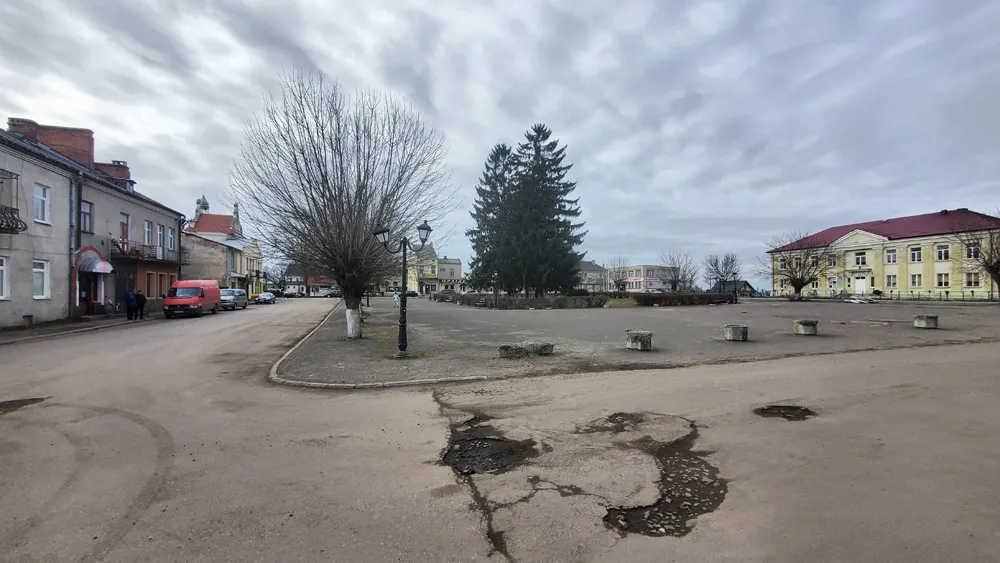
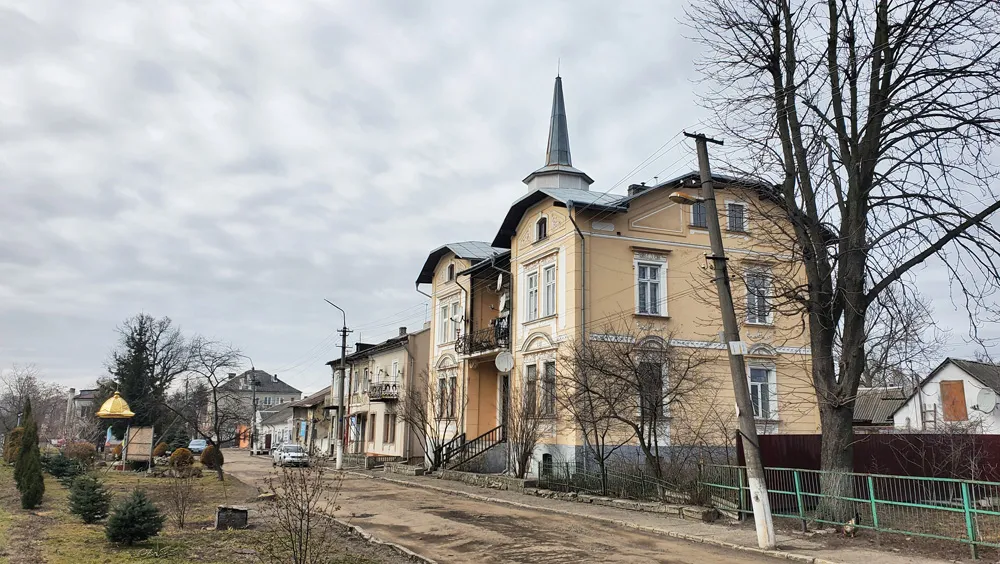
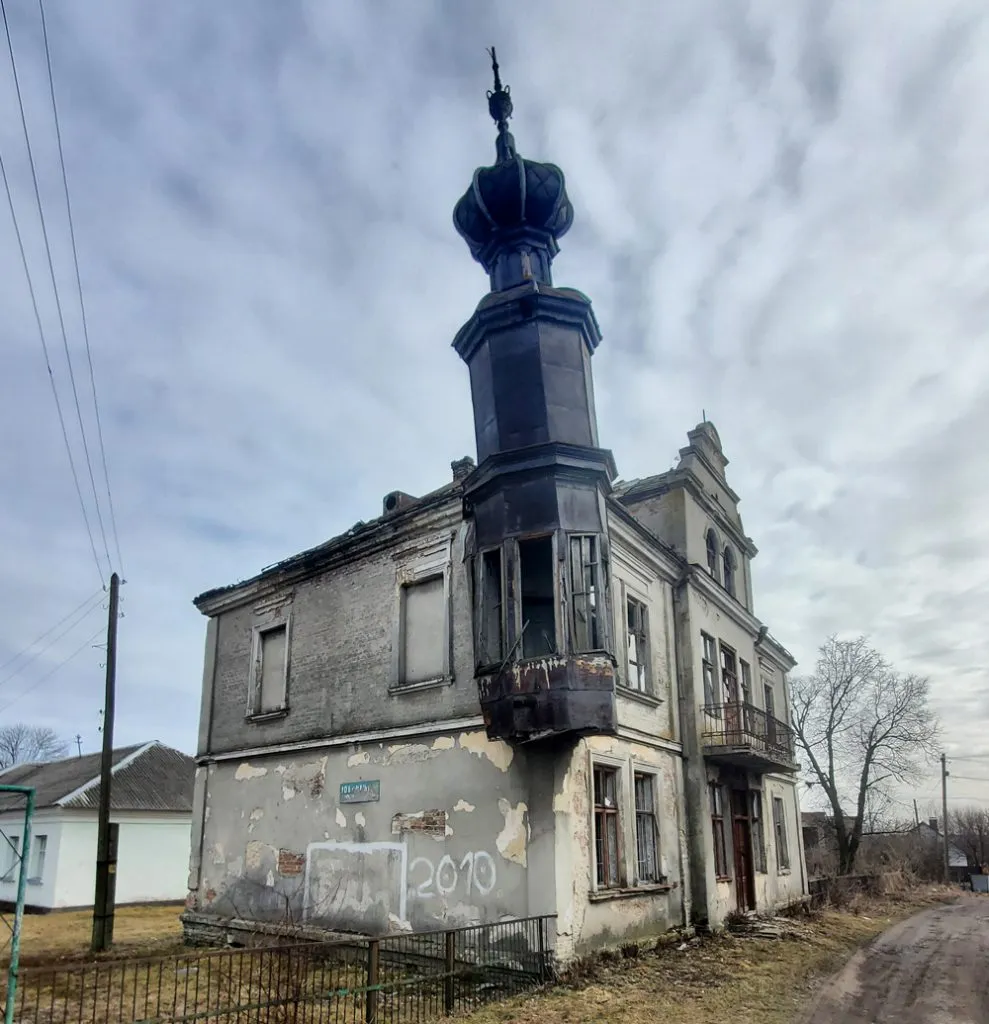
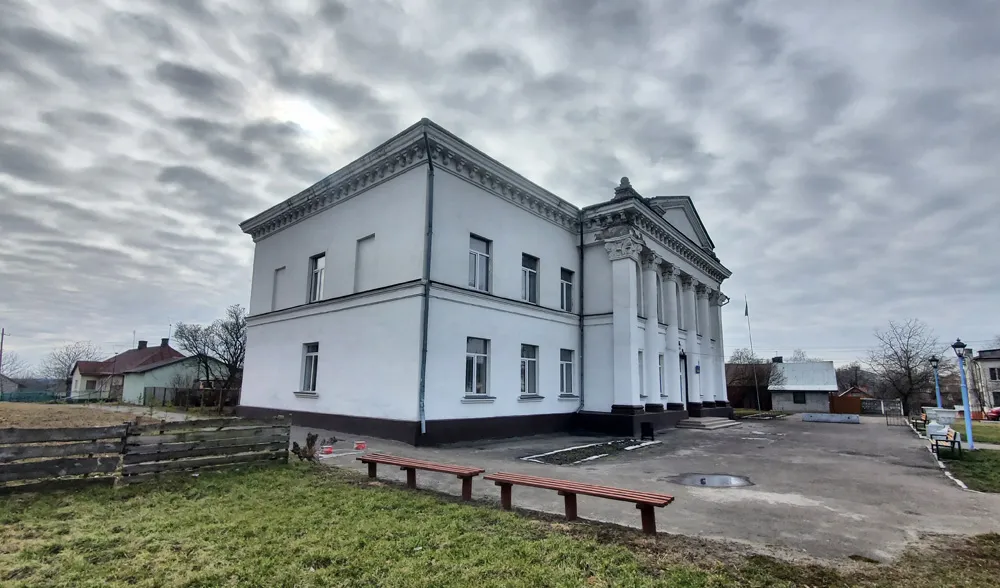
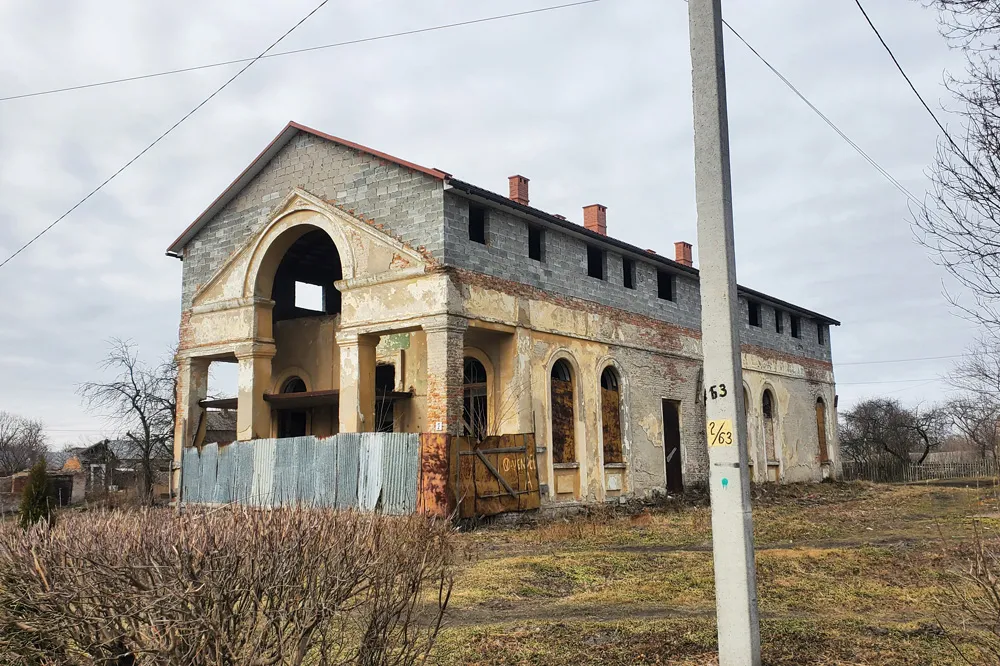
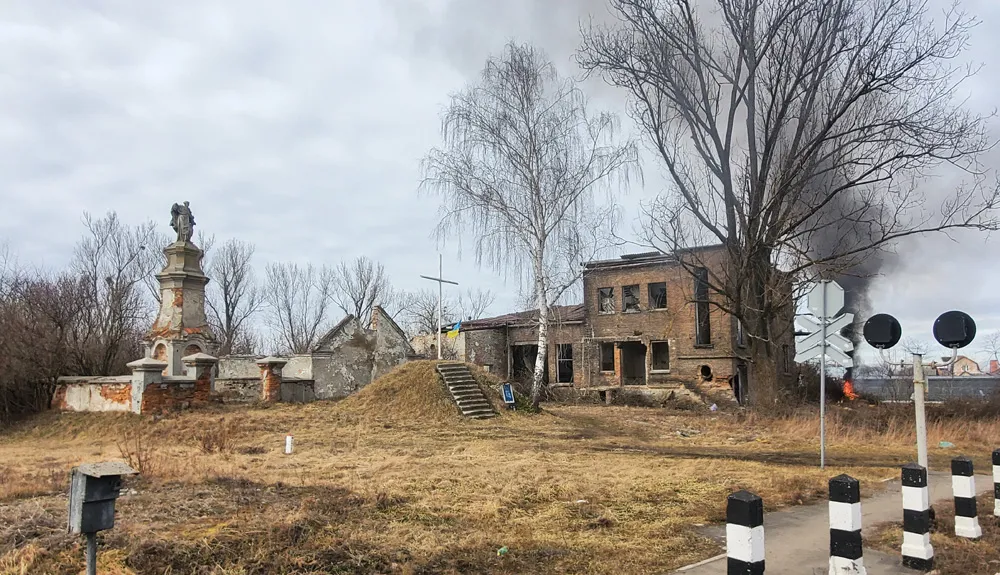
The centre of Belz. The last photo shows the entrance to Belz from the Chervonohrad side
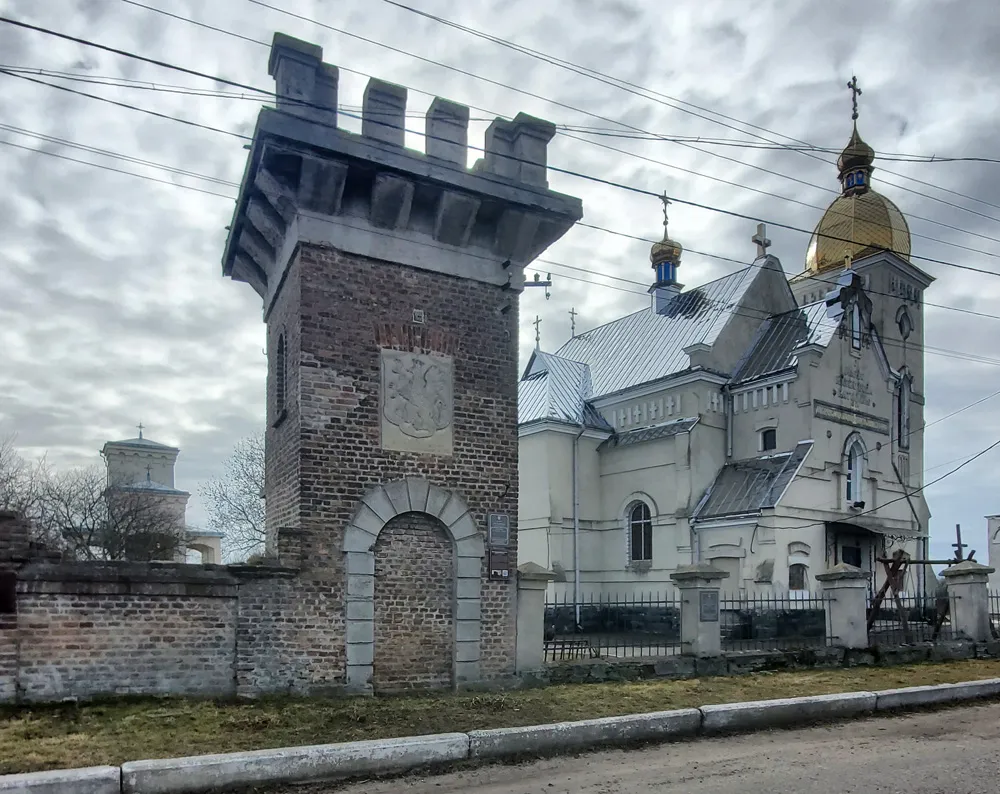
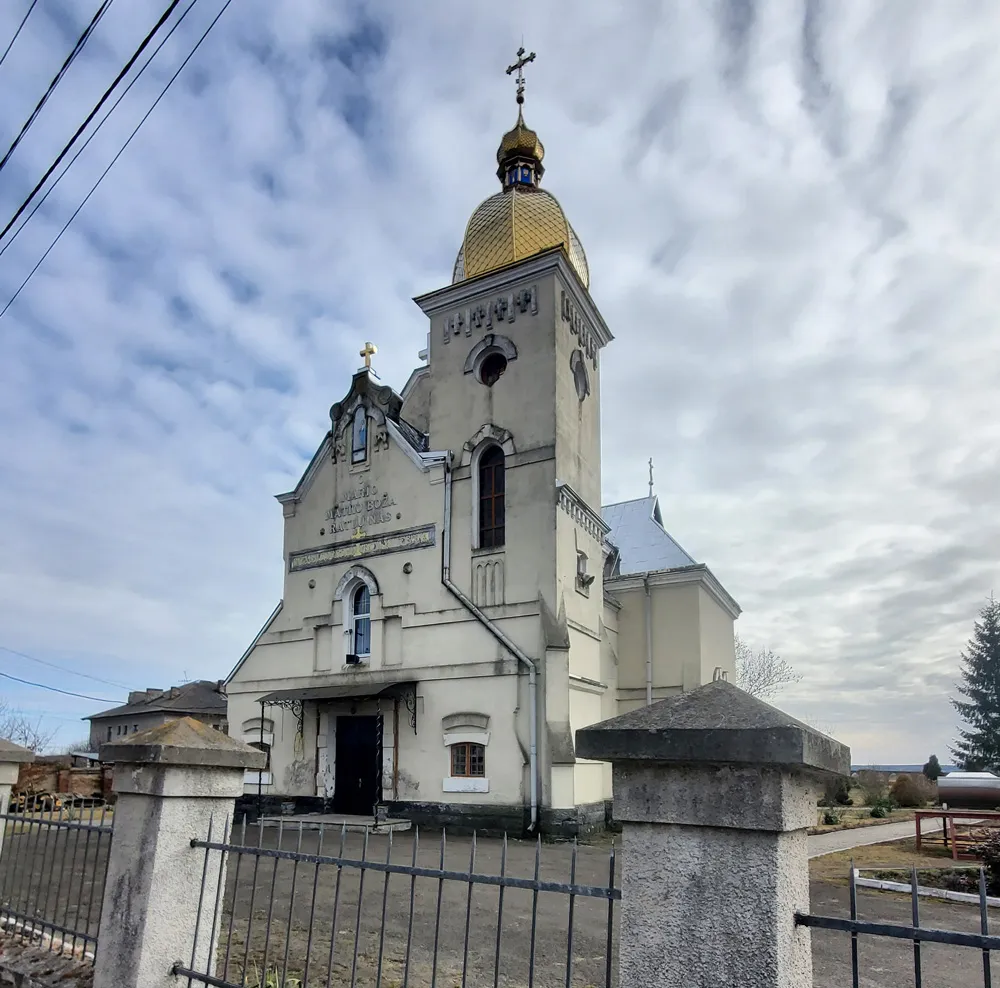
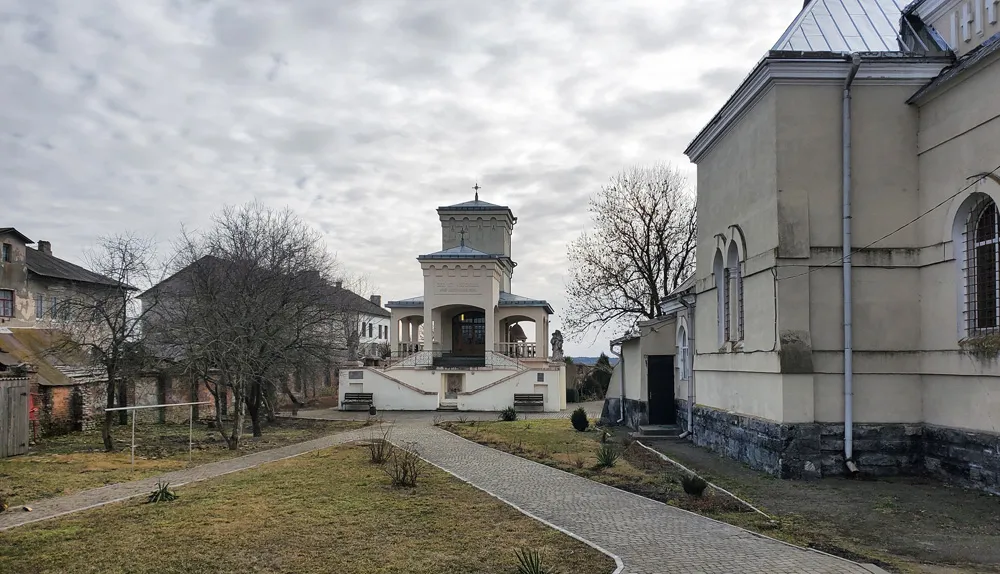
The Church of St. Nicholas (former Church of the Blessed Virgin Mary) is an active church in the town of Belz; the parish belongs to the OCU.
The church was built from 1906 to 1911 and was named after St. Veronica. The architect of the new brick church was Kalikst Krzyżanowski. The building is in the Art Nouveau style with elements of Gothic. The facade is asymmetrical, with the tower to the right of the entrance. Cannonballs are set into the facade, and above them is the inscription “O Mario Matko Boza Ratuj Nas” (O Mary, Mother of God, save us). In the interwar period the church was used as a garrison church.
In 1933-1938, to a design by the architect Witold Rawski, the construction of the entire church complex was completed. In particular, in 1935 a new field altar of St. Valentine appeared, where a new copy of the icon is now kept. The field altar was built in the Functionalist style. In 1933 a bell tower in the Art Nouveau style with elements of Romanticism was built. It is two-tiered, of brick, crowned with a crown, which makes it resemble a chess rook. On the facade is one of the historical coats of arms of Belz, the image of a griffin. The tower is quite well preserved.
The church gate appeared in 1935. In form it is a three-arched structure. It bears another coat of arms of Belz, a gunner with a cannon, and the Latin inscription “Belz constant fidelis” (Belz is always faithful). The gate, like the bell tower, has not been restored, but is well preserved. The Way of the Cross was built last, in 1938. It consists of brick walls with 14 stations. The two rear corners are accented with corner chapels. From 1939, when Belz, like the whole of Poland, was occupied by the Third Reich and the USSR, a German border observation post was located here, since the new border of the Third Reich with the Soviet Union ran along the Solokiia River next to the church. From 1951, when Belz passed from the Polish Republic to the Ukrainian SSR, a Soviet border garrison was stationed here. Since 1991 the church has been transferred to the Orthodox community, and since then it has been named after St. Nicholas.
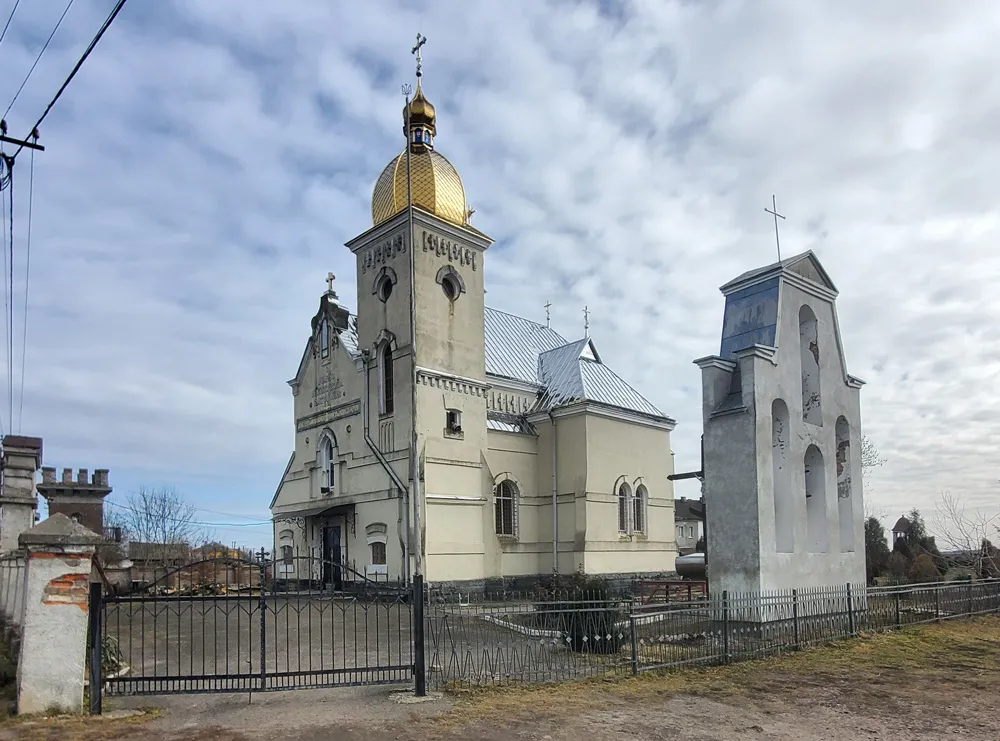
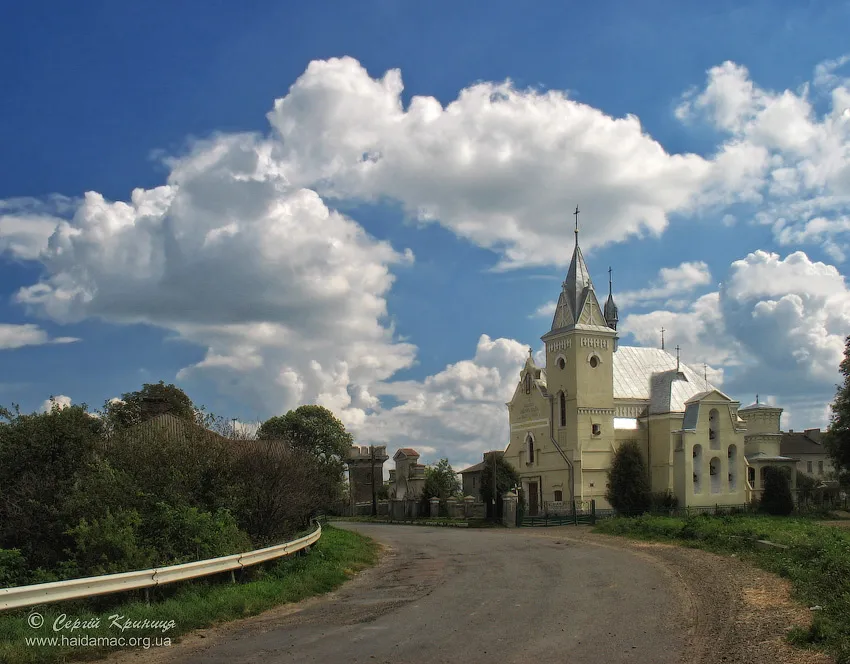
In the photo by Serhii Krynytsia (the lower photo) we see how the church looked quite recently. The upper photo shows the church after the “repair” (photo from 2022). The building has simply been disfigured.
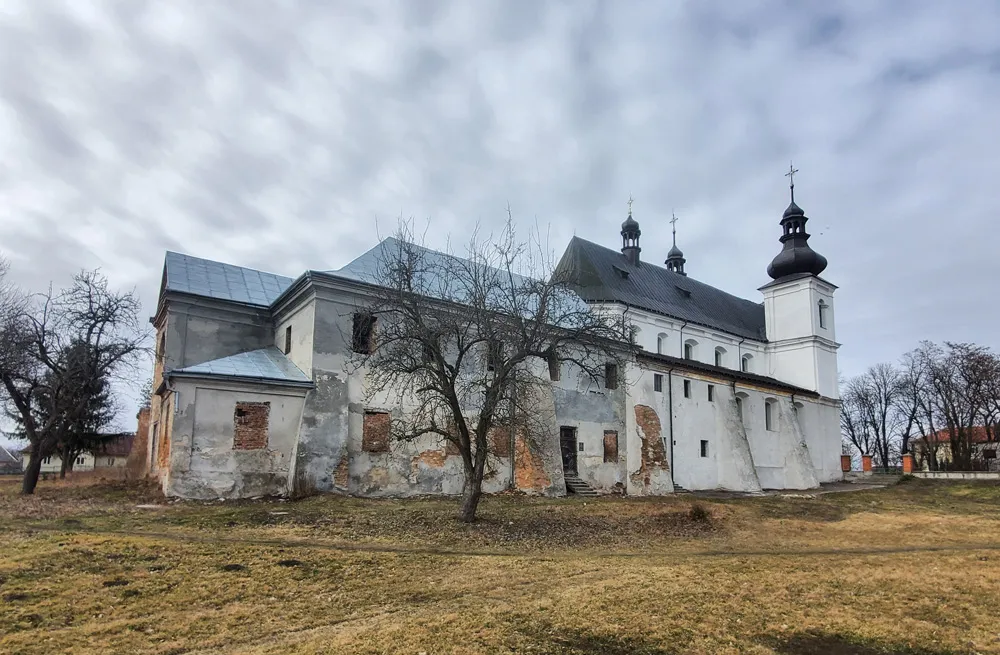
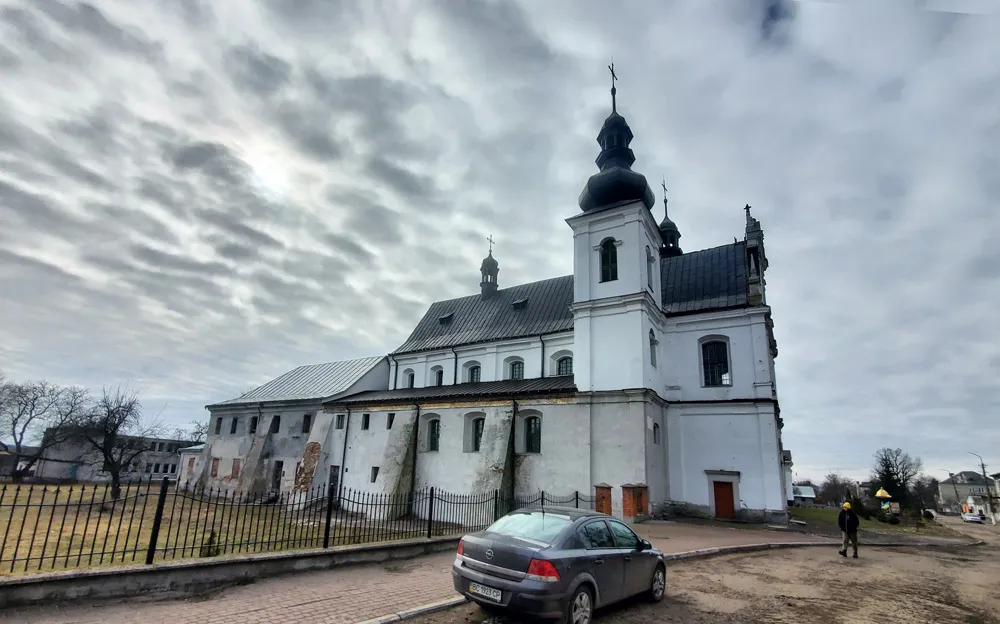
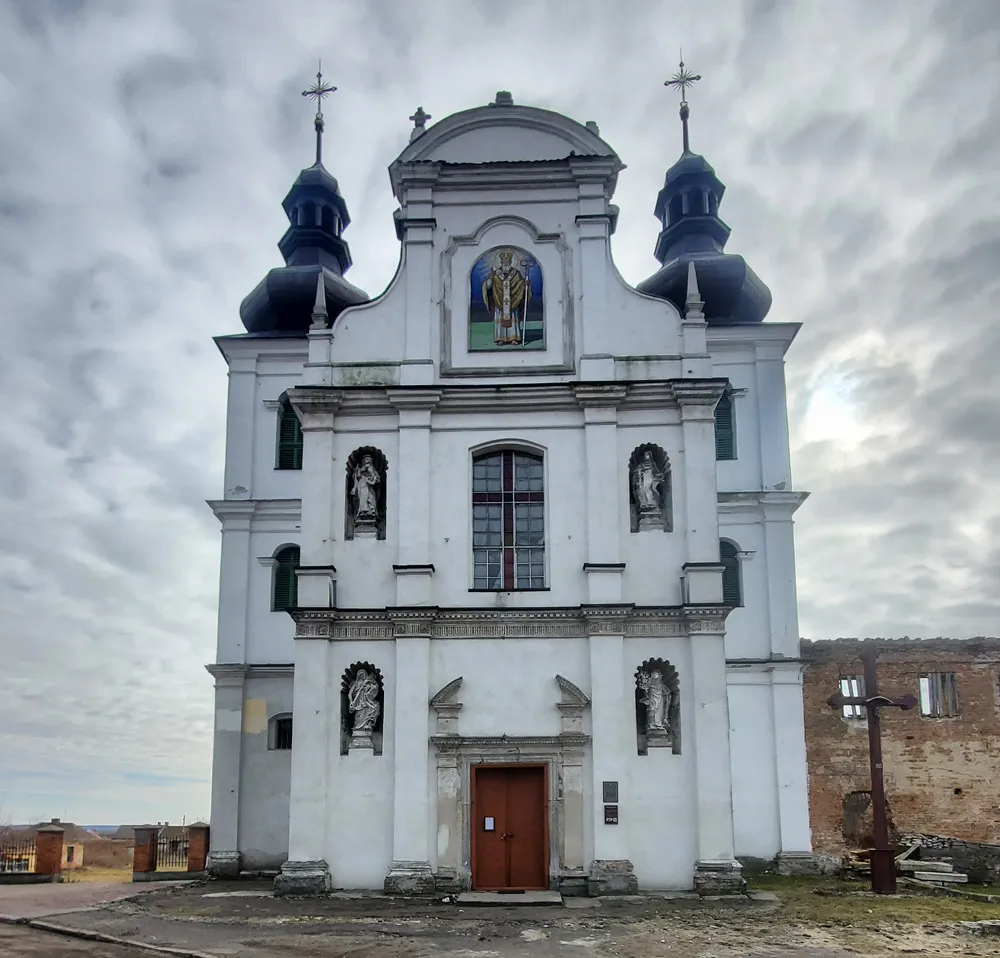
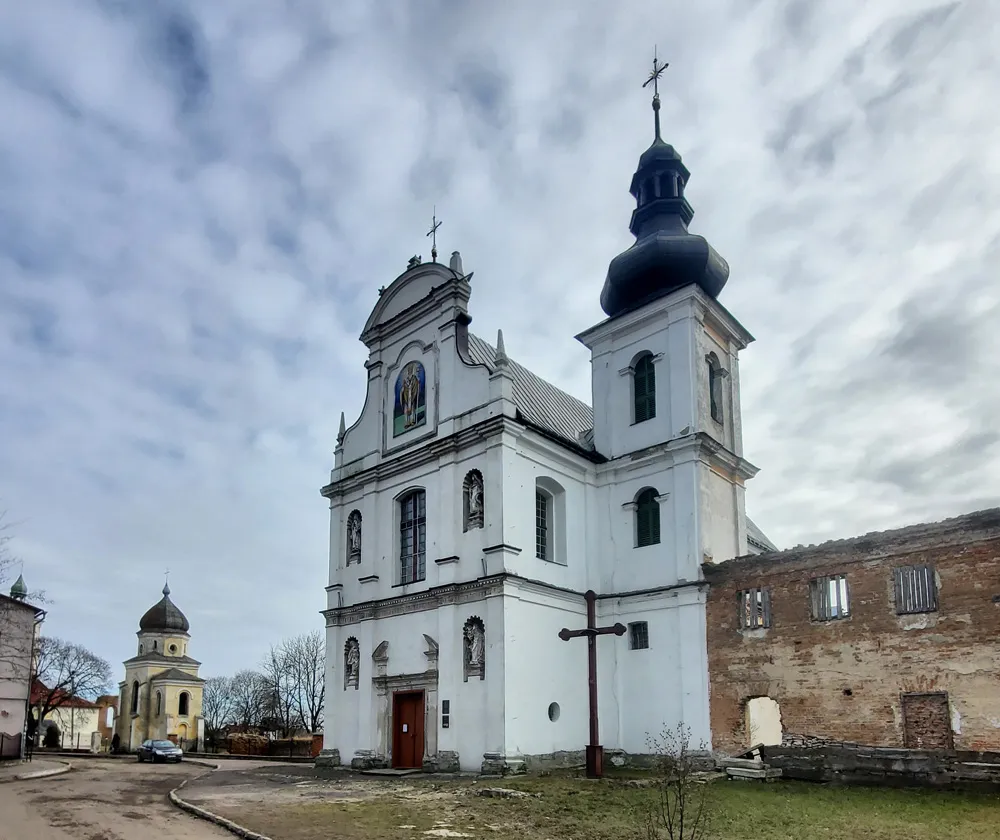
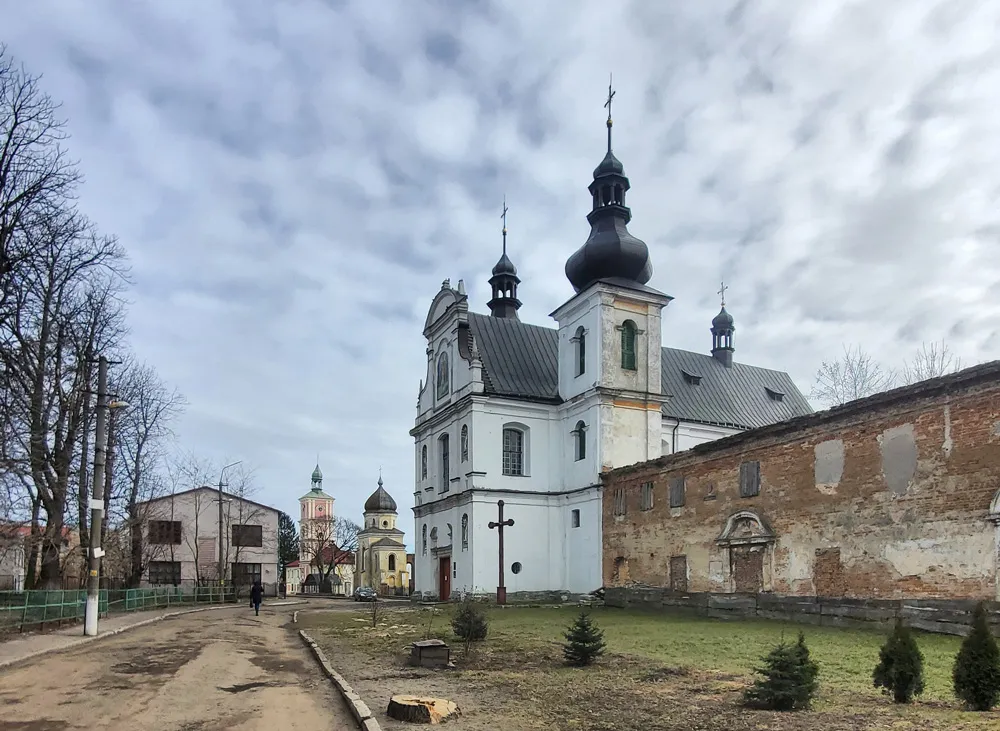
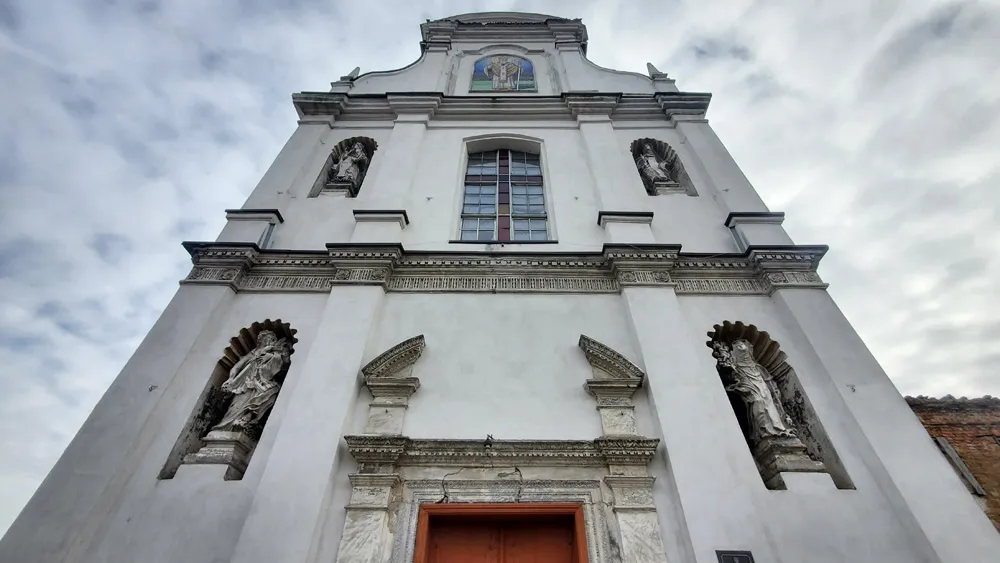
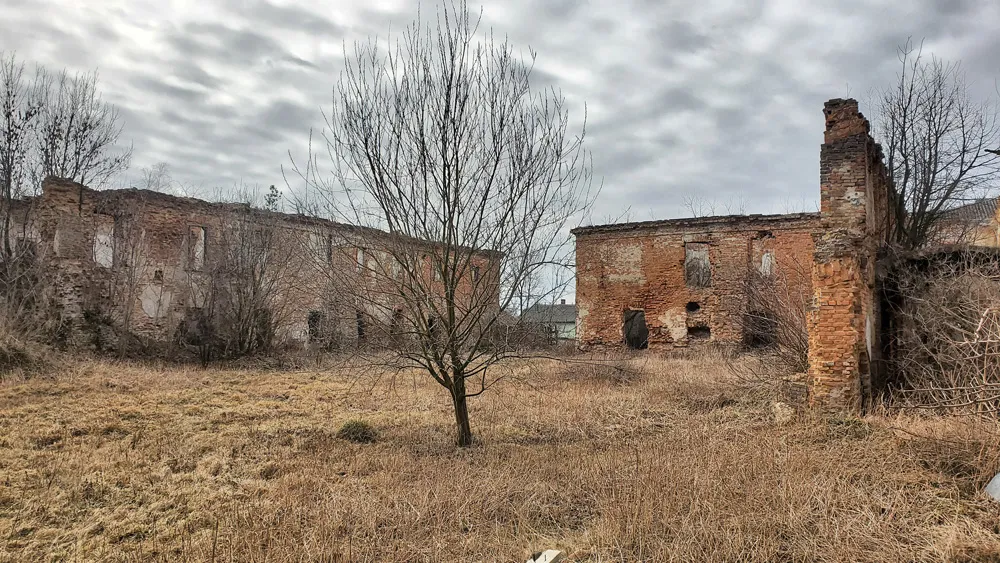
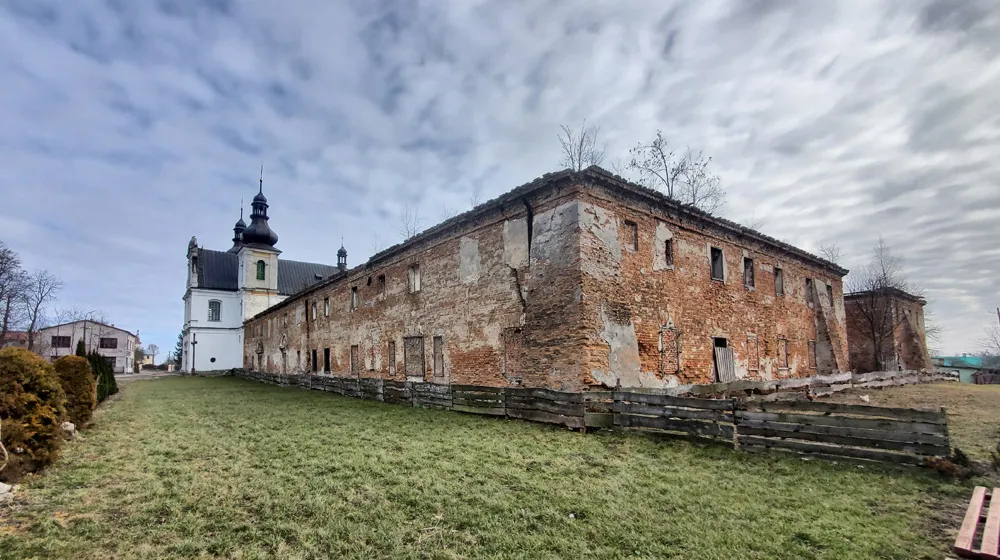
The Church of St. Nicholas, the former Church of the Immaculate Conception of the Most Holy Virgin Mary (the Most Pure Mother of God) and the convent of the Dominican sisters, are sacred buildings in Belz (Lviv Oblast, Ukraine). A monument of masonry architecture of the Baroque era (1653). An active church of the UGCC. Nearby stood, until the fire of 1739, the cathedral Church of St. Nicholas.
The founder was Zofia Chodkiewicz, wife of the castellan of Vilnius. The buildings were originally wooden and burned down during the Tatar attack of 1647.
The lord of Morshyn, Aleksander Stanisław Bełżecki, recorded an endowment for the women’s Dominican convent of the Roman Catholic Church in Belz, which was secured, in particular, on his estates in Morshyn and Dovhe. In 1684 the nuns (the vicaress Katarzyna Buszowska, the subprioress Wiktoria Prusinowska and 3 councillors) agreed that his widow Zofia would transfer the “record” to the convent from the villages of Dovhe and Morshyn, which had been ceded to the starost of Kisha, Kazimierz Łabęcki, to other estates of A. S. Bełżecki.
After Galicia became part of the Habsburg Empire, the church was handed over to the Greek Catholic community of the town. The iconostasis and individual icons of the dismantled wooden Church of the Holy Spirit were moved to it.
In 1944, after the deportation of Ukrainians to the Ukrainian SSR, Belz ended up on the Polish side of the so-called Curzon Line, and the church was again converted into a Roman Catholic church. After the deportation of the Poles in 1951 the church was closed. Under the Soviets all the church furnishings and the extraordinarily rich parish archive, which the historian Teofil Kostruba had used to write his studies on Belz, were lost.
The bell tower dates from 1906; the architect was Filemon Levytskyi.
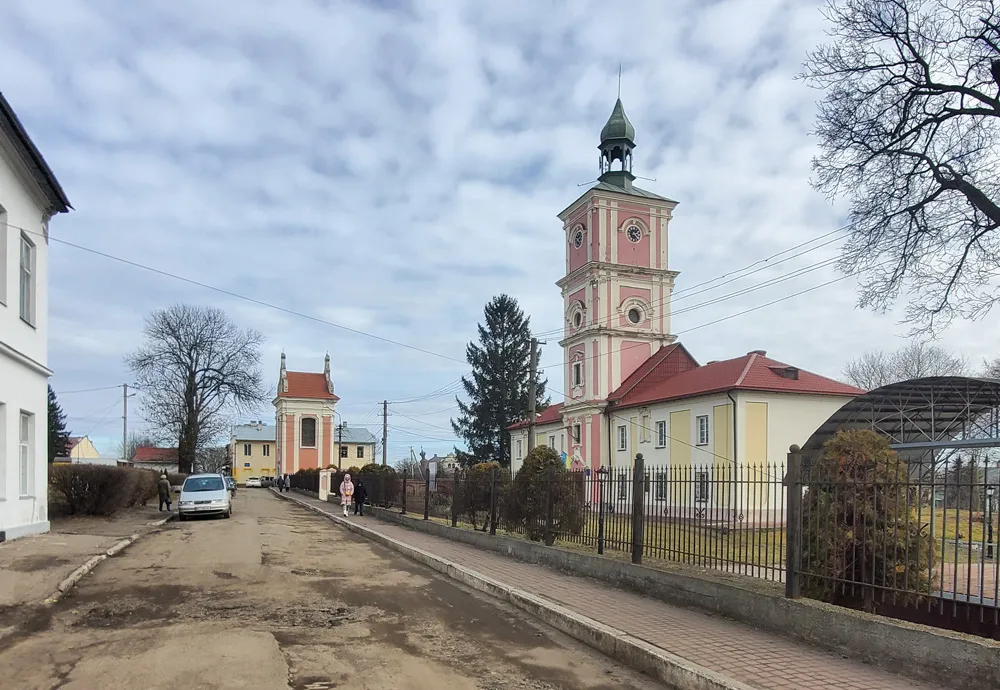
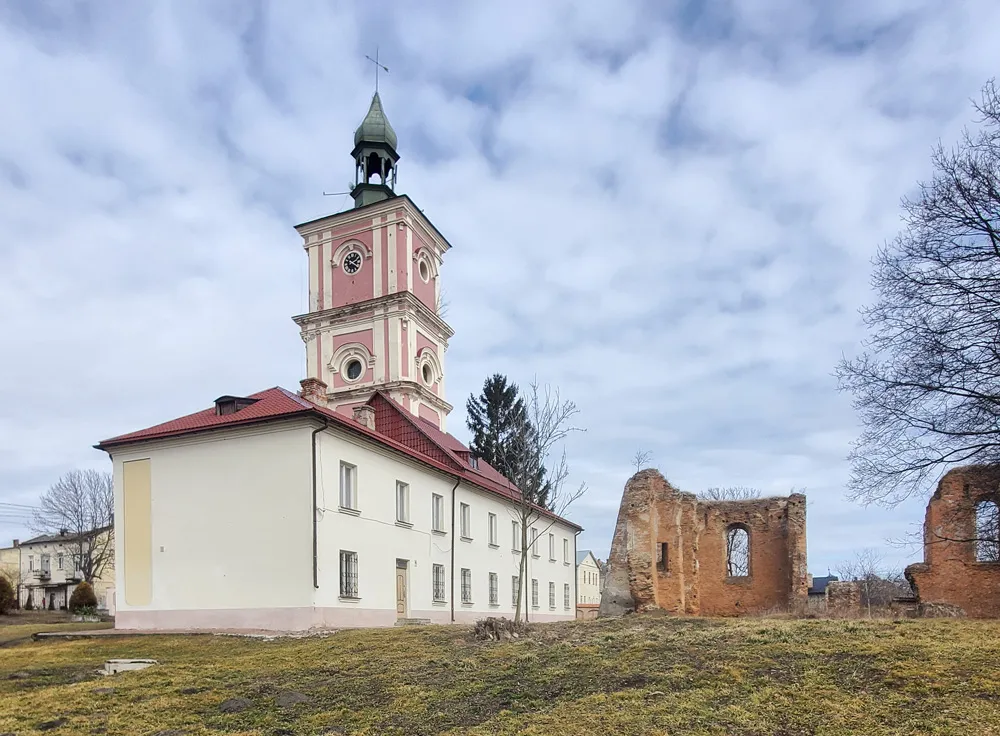
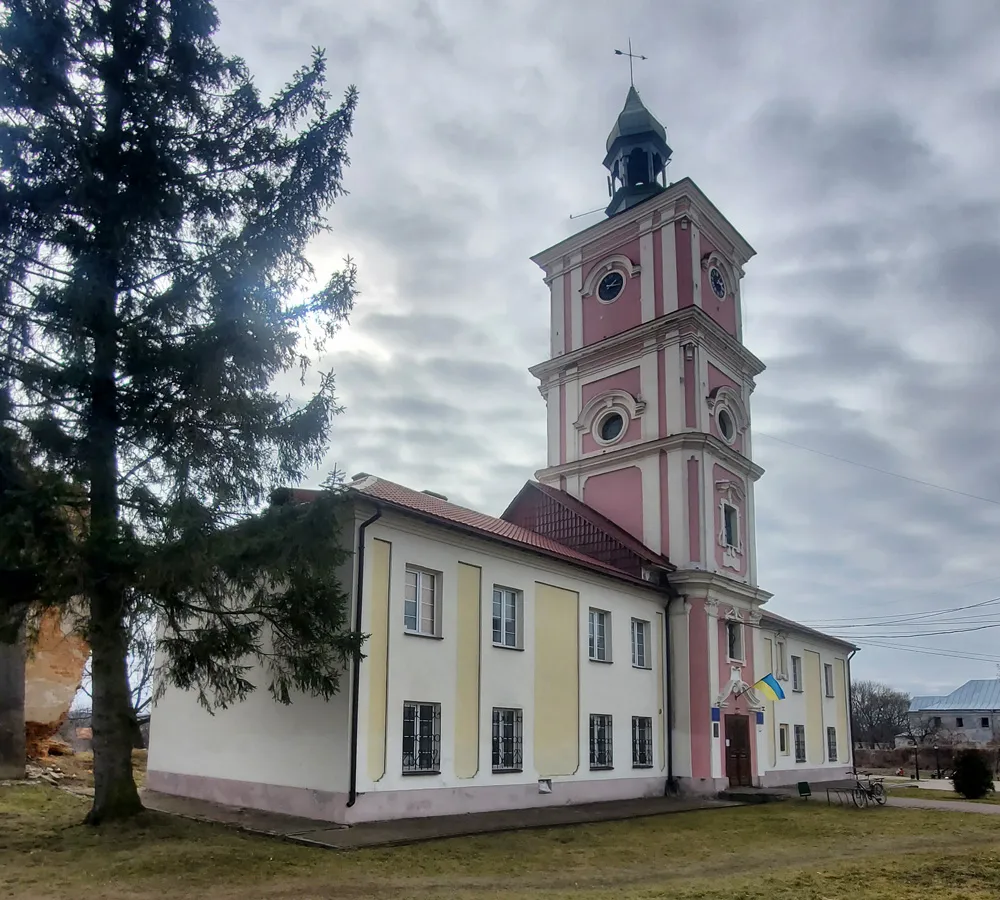
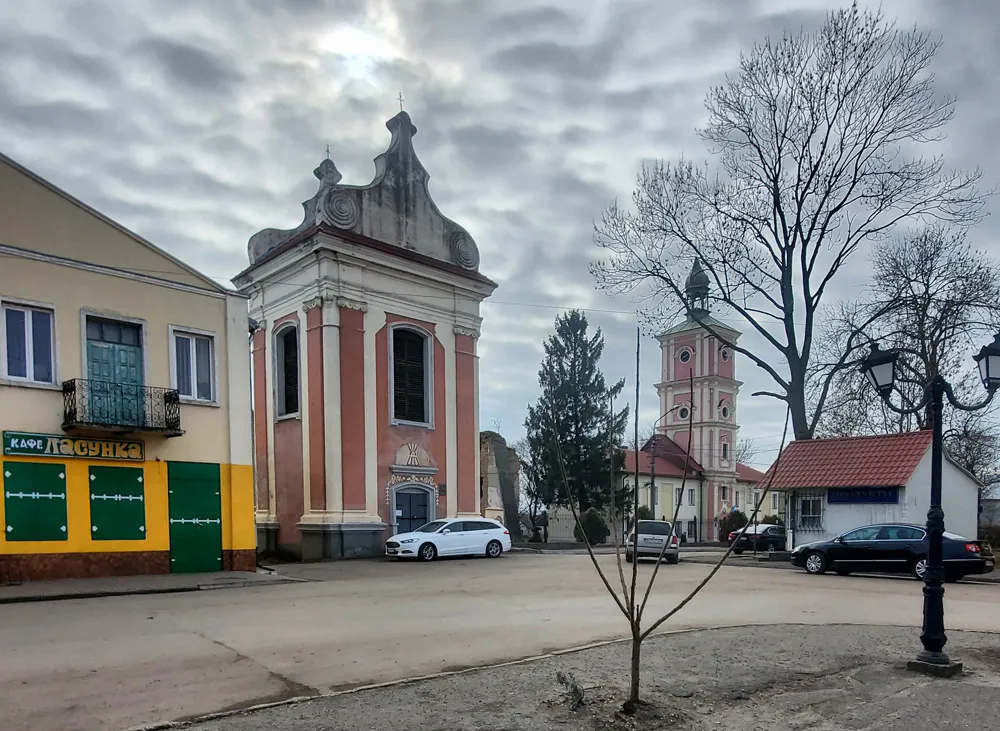
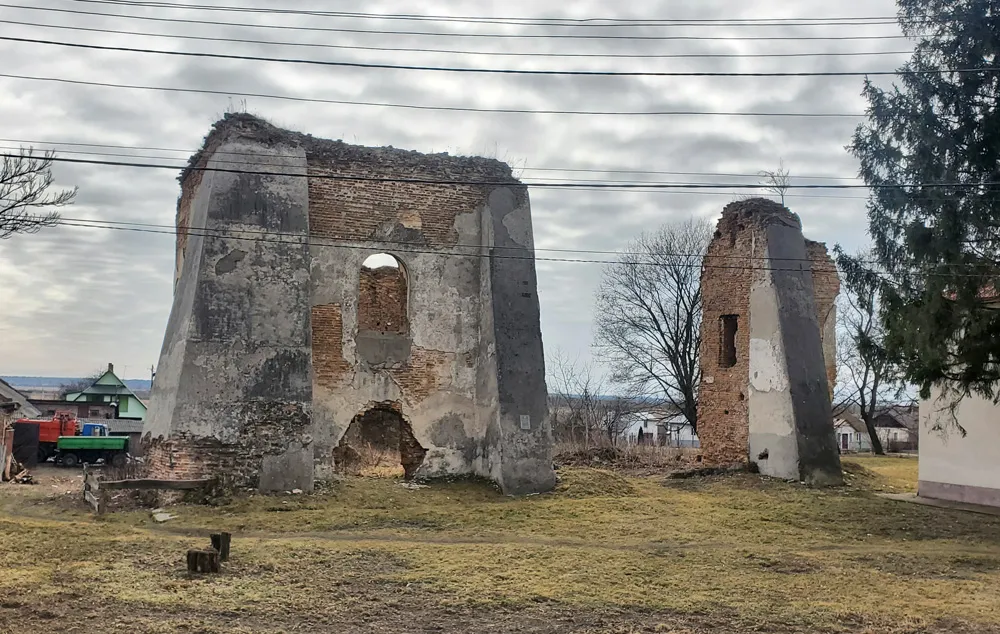
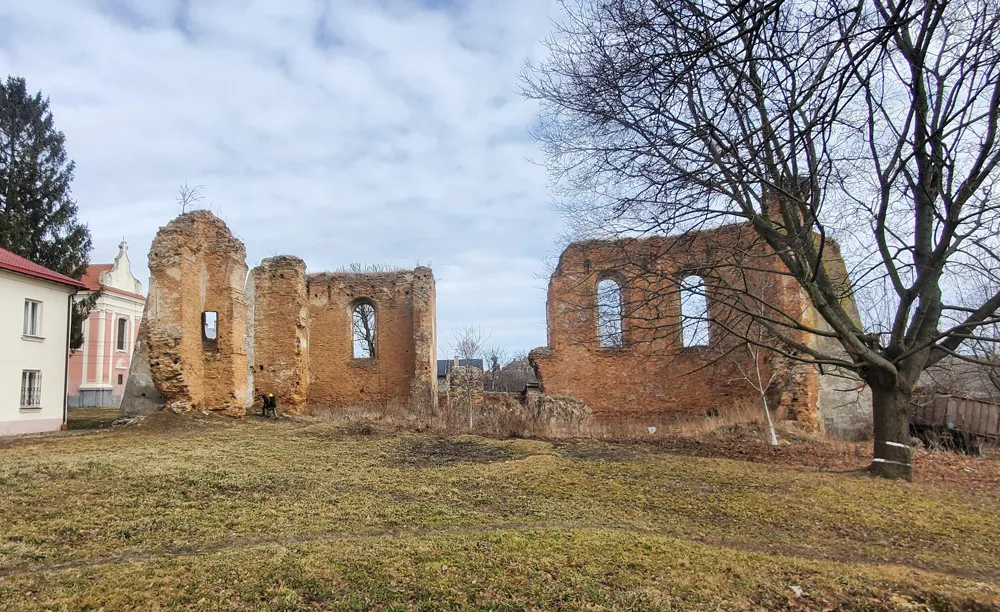
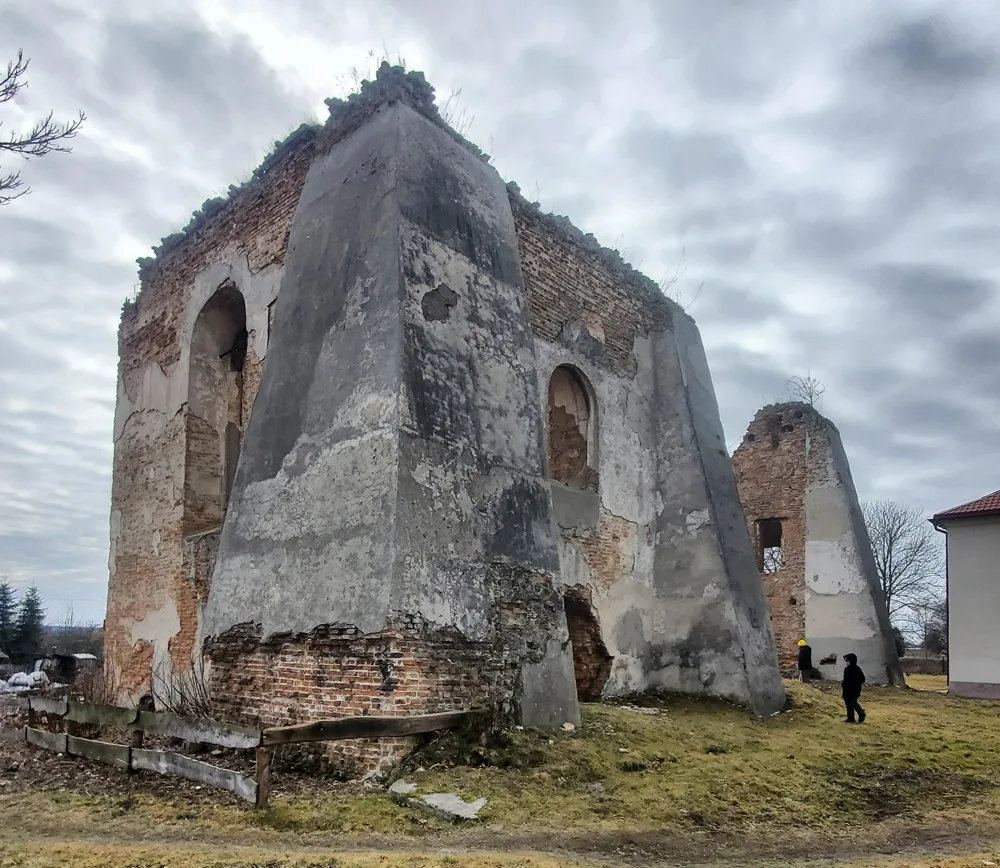
The former Dominican monastery. The main church stands in ruins. The monastery’s bell tower is now the bell tower of the town hall.


