Pidhirtsi. The castle, the monastery and the churches

· 8 min read
Almost everyone in the former USSR has seen it. Though perhaps they did not suspect that it stands in Ukraine. In the film “D’Artagnan and the Three Musketeers” it was made into the Louvre. Parts of the “Marlezon Ballet” were filmed right here, and it was here that D’Artagnan delivered the diamond studs from the Duke of Buckingham. The film became a real blockbuster. Tens (and perhaps hundreds) of millions of viewers sympathised with the film’s heroes and were sure it was medieval France. And only a few knew that the “film” Louvre was in fact a tuberculosis hospital-sanatorium in the Galician village of Pidhirtsi… A paradox… Such a thing was possible only in that strange country…
Such a thing was possible only in that strange country.
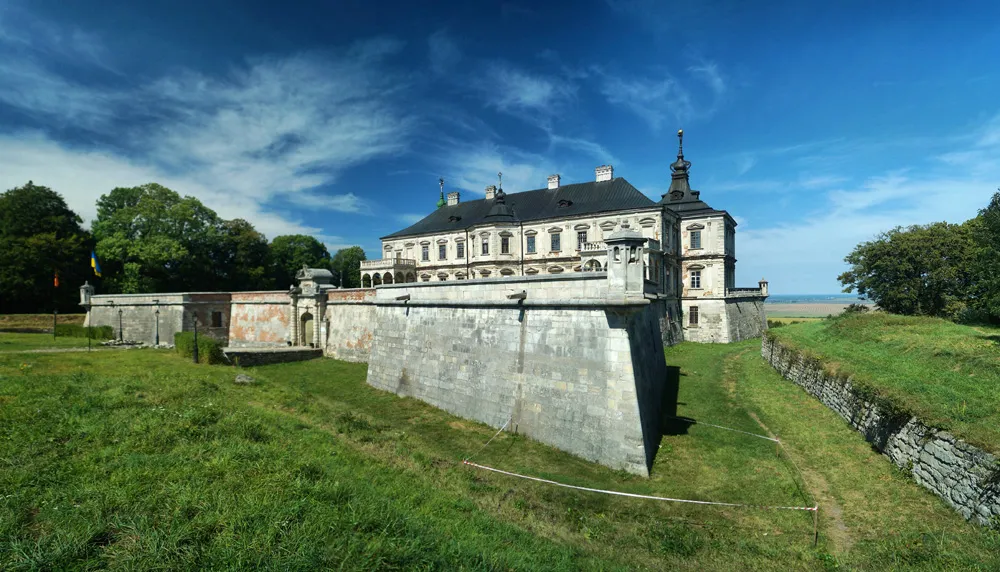
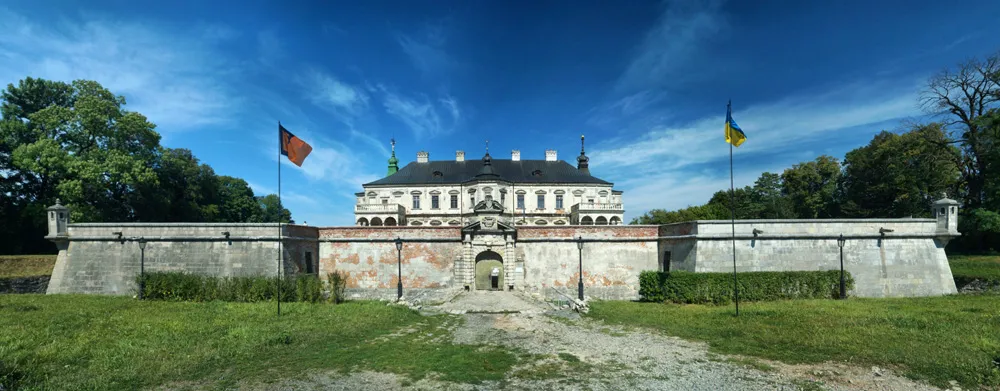
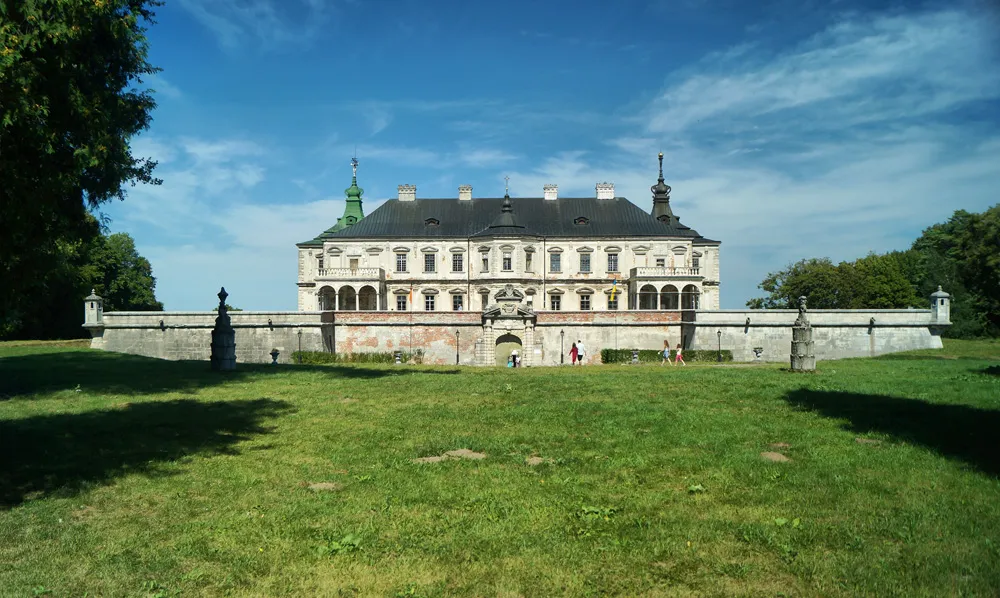
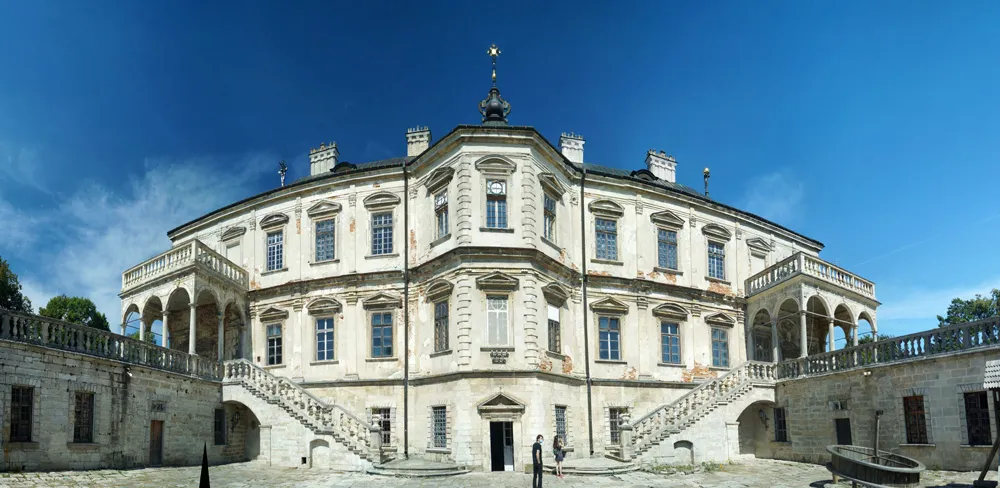
The castle in Pidhirtsi. 2021
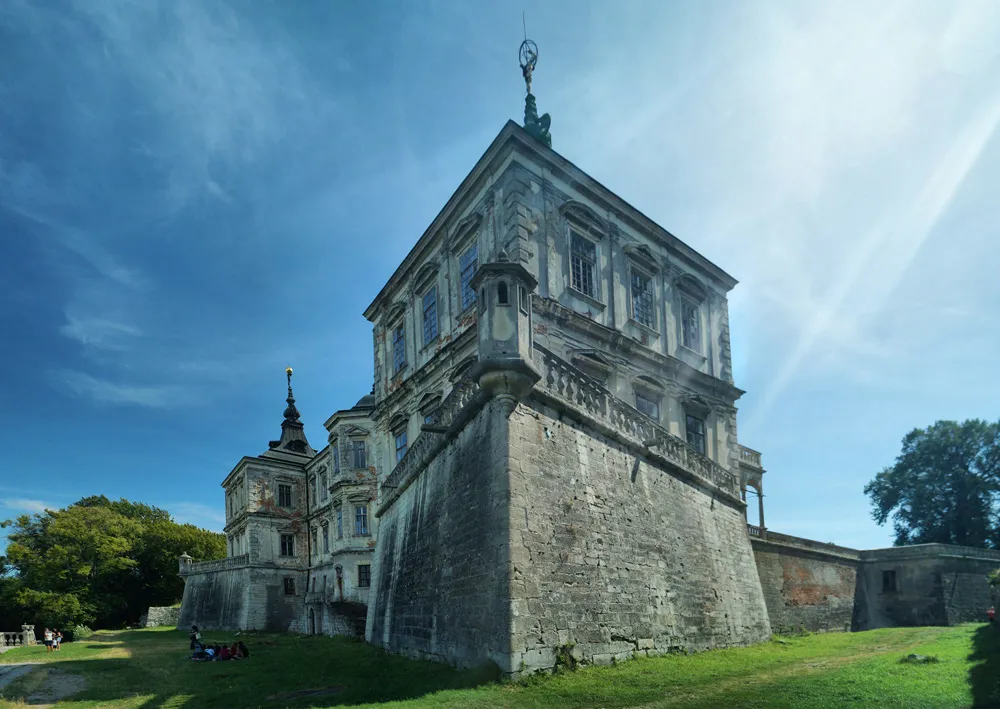
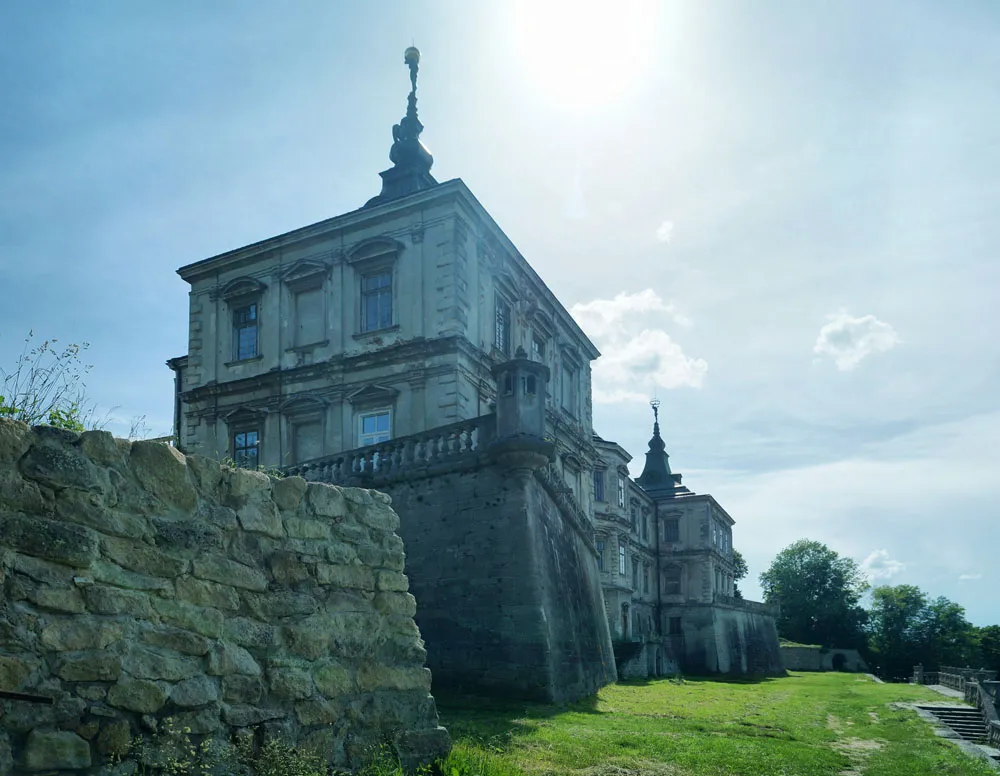
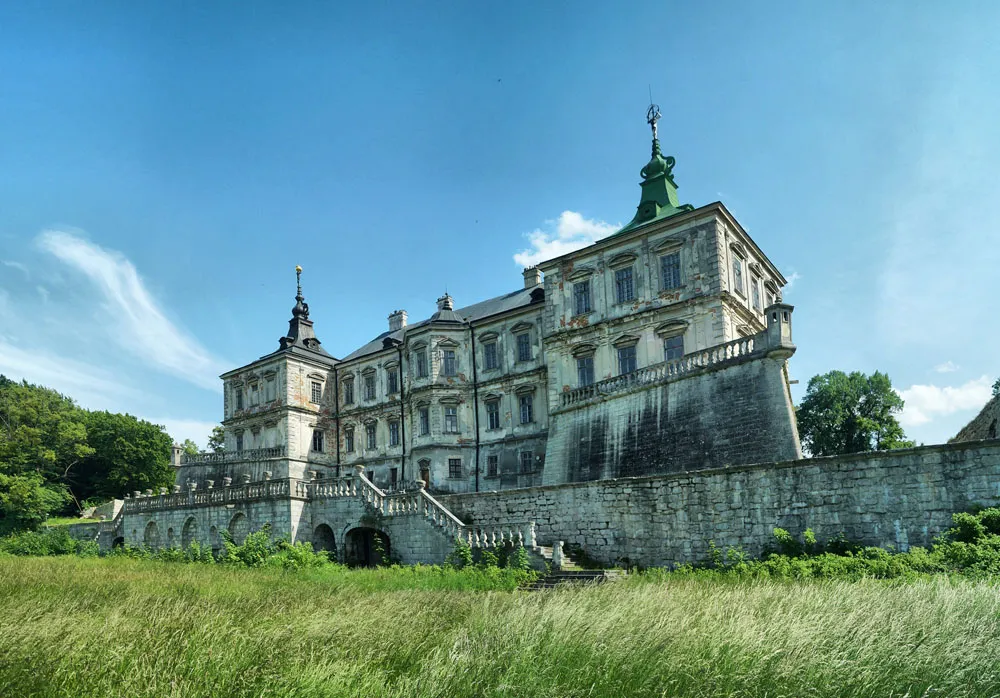
At the moment Pidhirtsi Castle is in far from the best condition. It is closed to visitors for reconstruction. According to local residents, the reconstruction has been going on for a very long time, yet the castle keeps crumbling. The state has supposedly allocated money, but it can never reach the castle. Some of the castle structures are in a dilapidated state: almost nothing is left of the northern defensive wall (the first line of defence), the outer staircase is half-ruined, the watchtower of the northern bastion will soon begin to resemble the Leaning Tower of Pisa, and trees are already growing through the stones and the stone-faced defensive moats, accelerating the destruction. Pidhirtsi Castle was probably in a worse state than now only after it was taken by Khmelnytskyi’s Cossacks and after the fire of 1956. Local residents say the fire started through negligence and lasted several weeks. In that time all the “innards” of the castle burned out completely: the luxurious parquet floors, the frescoes, the interior decoration of the halls.
We wrote the previous paragraph a very long time ago. In 2020 something real was finally begun on the restoration of the castle. Some time later it was opened to visitors. The work is still far from complete, but now tourists have an idea of where the Koniecpolskis lived.
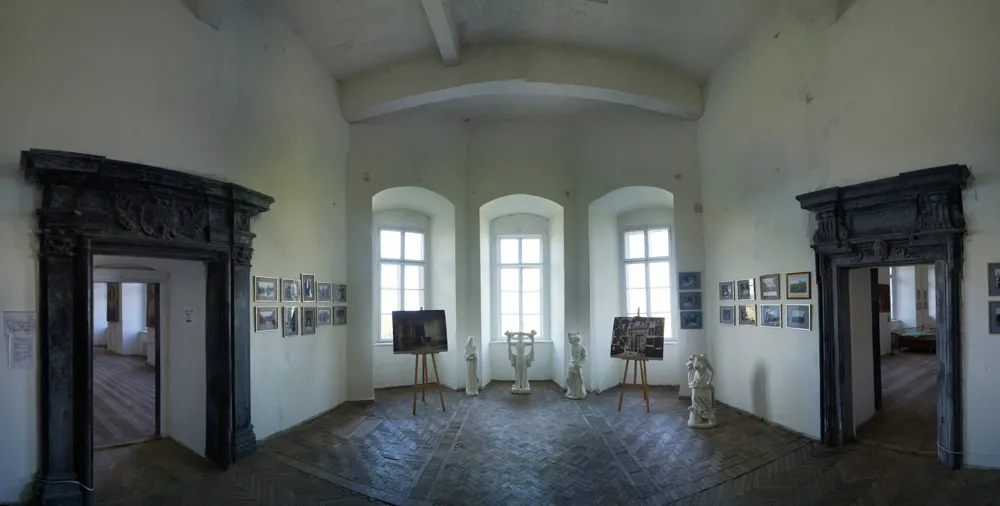
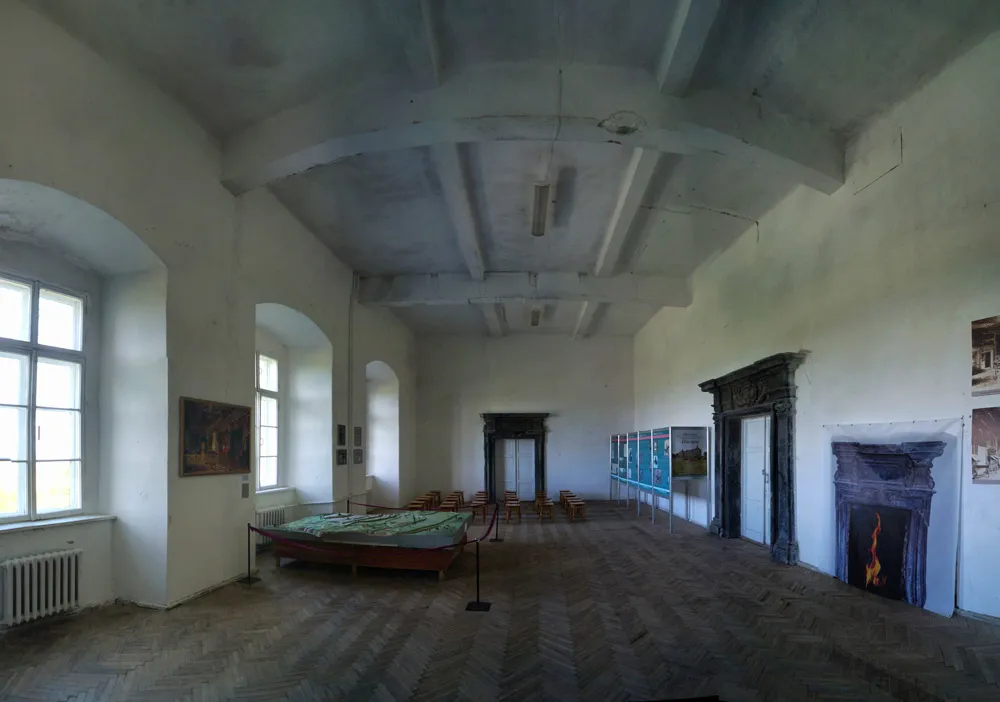
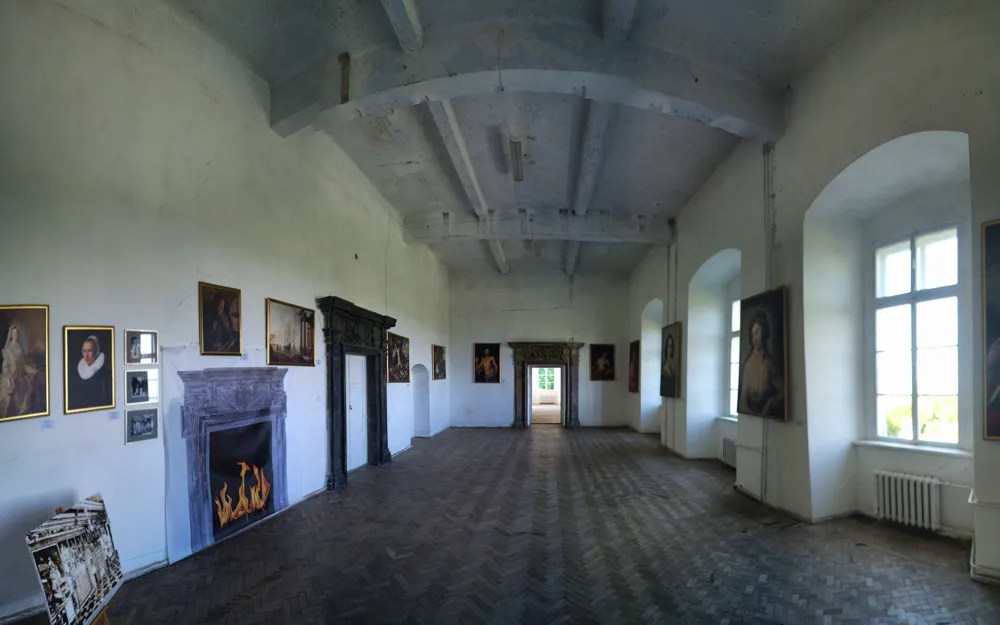
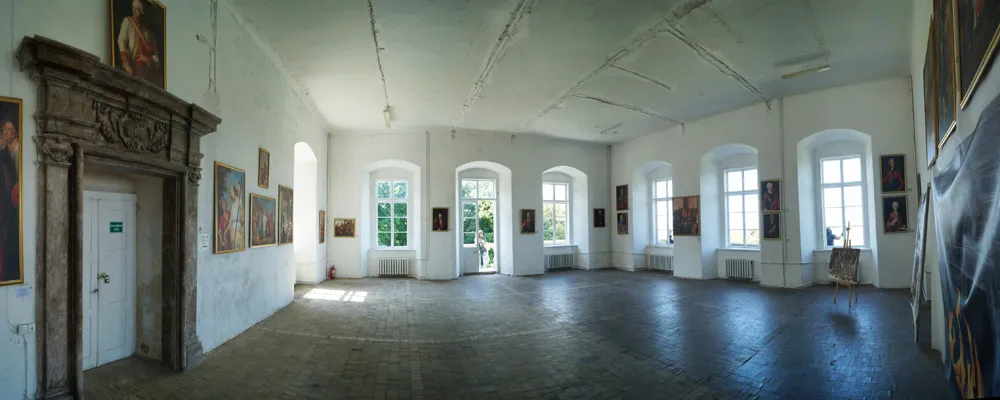
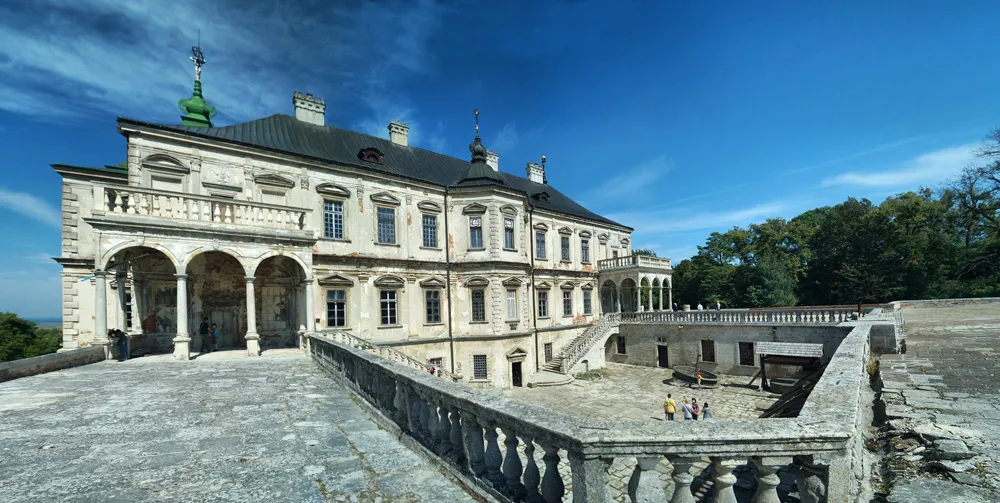
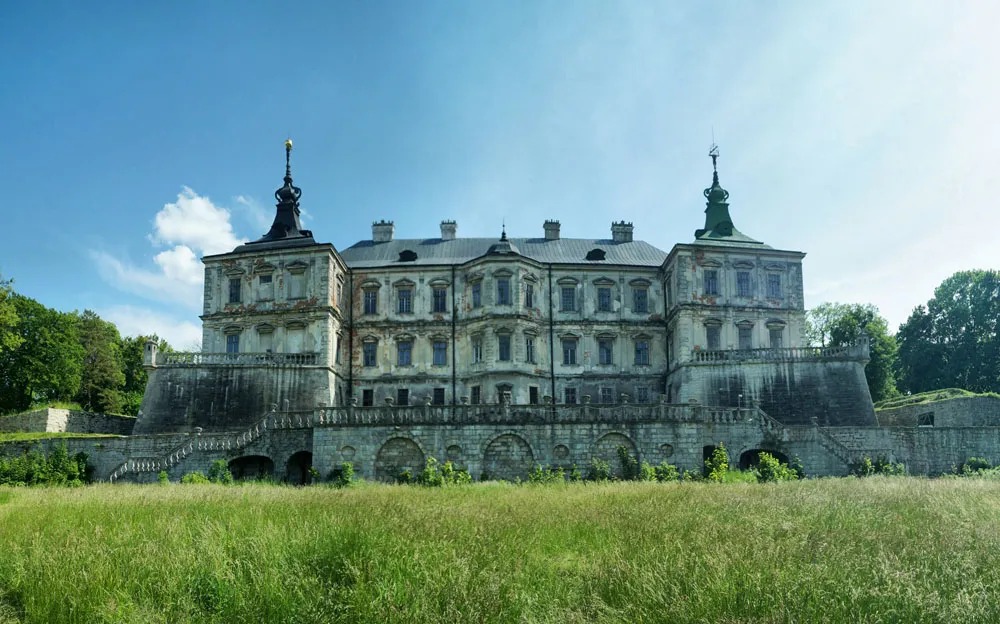
But despite the decay, the palace-and-castle complex in Pidhirtsi captivates with its beauty and grandeur, which for now “camouflage” all the troubles and seem to carry visitors back to the turbulent 17th century, when the famous architects Andrea dell’Aqua and Guillaume Le Vasseur de Beauplan, commissioned by the then Grand Crown Hetman Stanisław Koniecpolski, created this architectural masterpiece. This happened between 1635 and 1640.
Everyone marvels at the huge dachas and villas of modern oligarchs. But probably they never dreamed of a villa like the one Koniecpolski built for himself. Over the gates of Pidhirtsi Castle there was once a Latin inscription: “The crown of martial toil is victory, victory is triumph, triumph is rest” – one more confirmation that the castle was intended above all for rest.
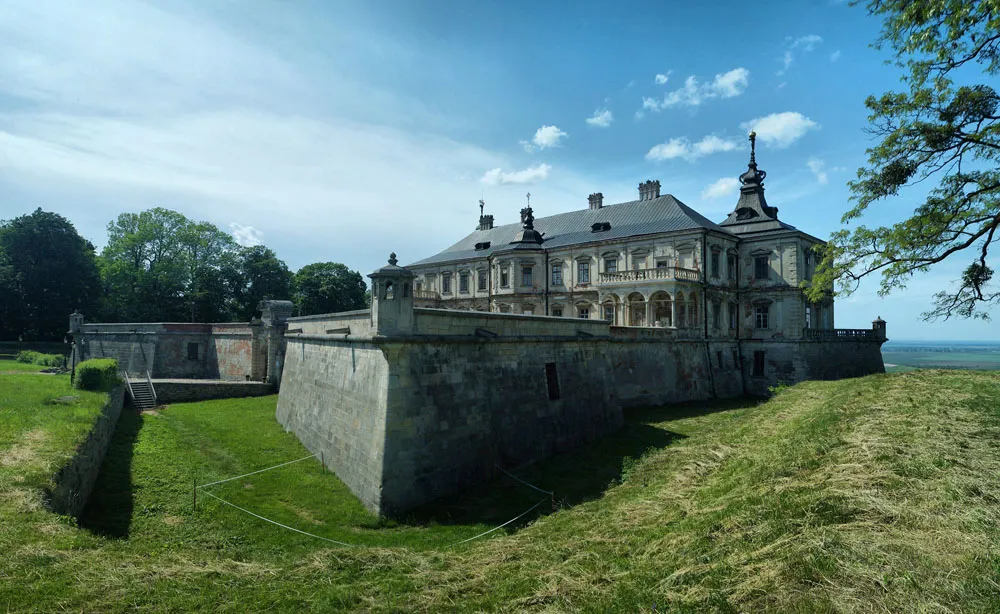
Pidhirtsi Castle was built on one of the spurs of the Podilia Upland, bordered on its northern side by a low, marshy plain of Little Polissia. The castle was designed as an example of an imposing palace combined with bastion fortifications and was in its day considered one of the finest palace-and-castle complexes in Europe. It is square, each side about 100 metres long. At its corners are pentagonal bastions. Stone and brick were used in construction.
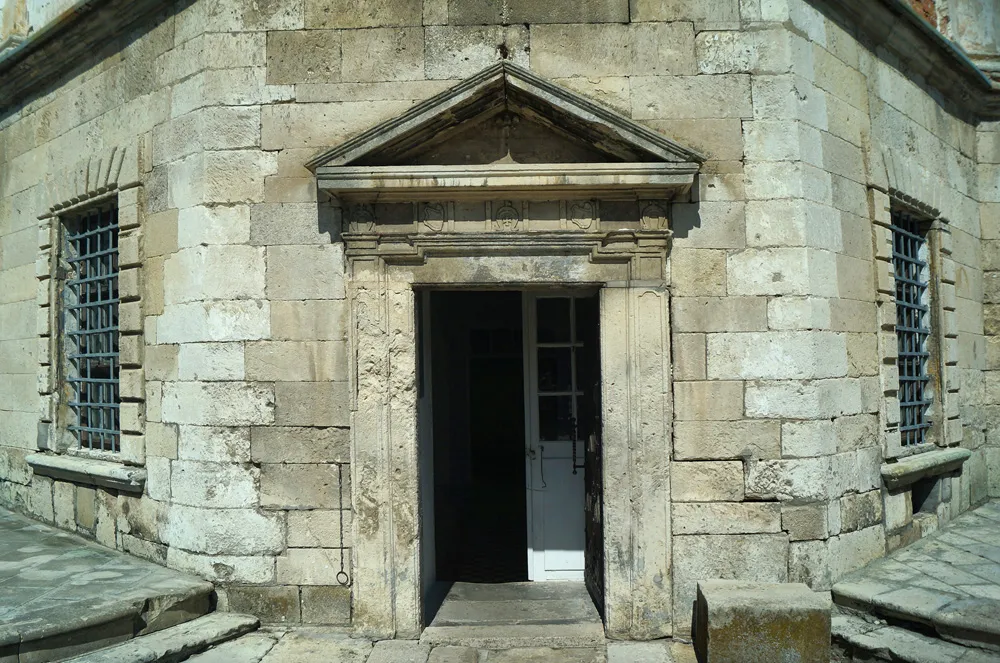
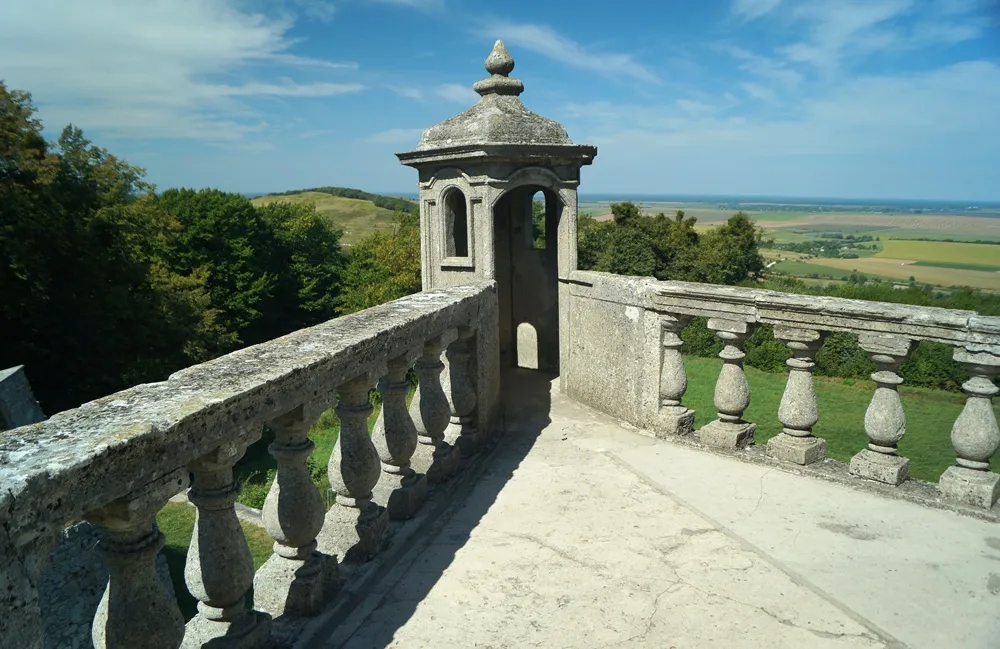
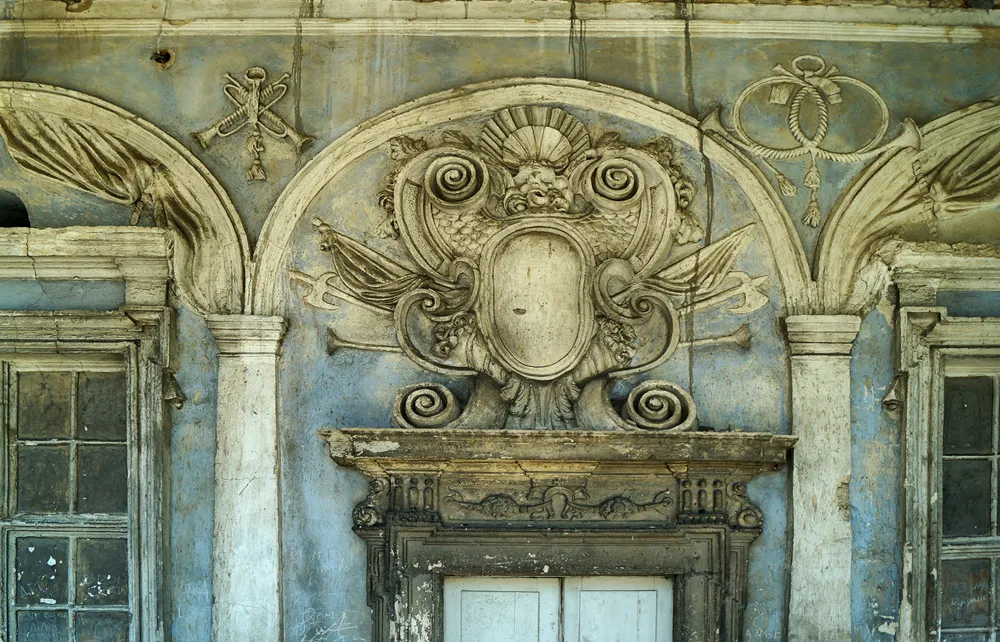
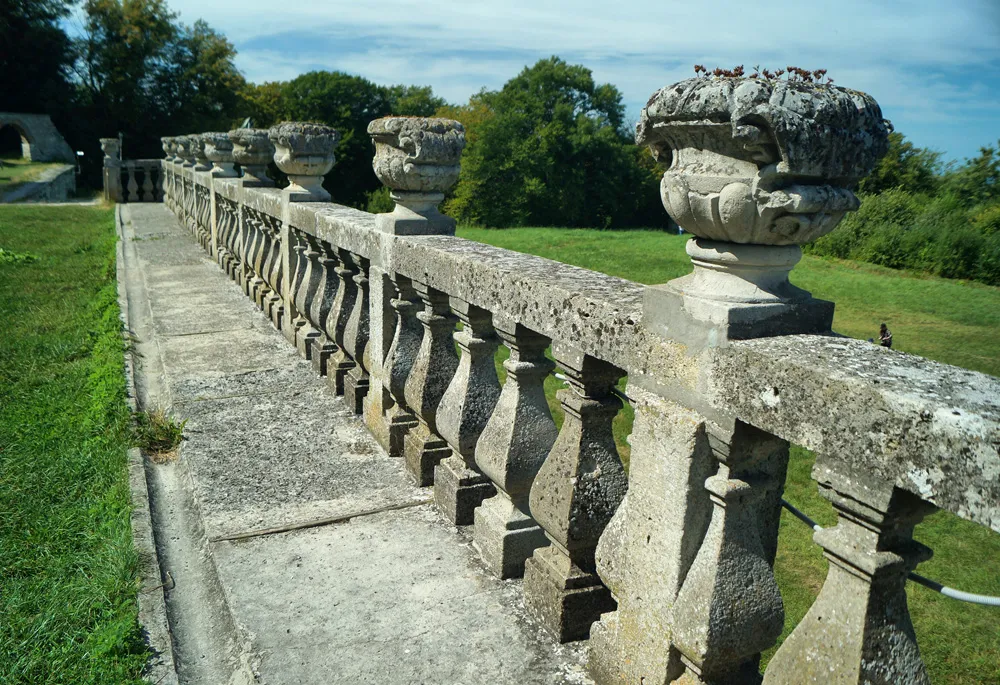
The palace acquired an almost modern appearance (I do not mean the present ruin and decay) in the first half of the 18th century, when additional rooms were built between the three-storey pavilions and the tower on the two-storey palace building. It was then that the palace was covered with a single roof. In the 18th century the main castle gate was guarded by the guns of a ravelin, which unfortunately has not survived.
The spacious interior halls of the palace were somewhat spoilt by Soviet builders, who converted it into a tuberculosis hospital. A considerable part of the halls was divided by partitions into separate hospital wards. But that happened already in the 1960s. Before the arrival of Soviet power in Galicia the castle belonged in turn to well-known Polish families: the Koniecpolskis, Sobieskis, Potockis, Rzewuskis and Sanguszkos. All of them influenced its development and history in one way or another, especially the famous Polish magnate Wacław Rzewuski, who owned Pidhirtsi Castle from 1720 and turned it into a huge, luxurious museum. It was Wacław who built an inn not far from the palace, which has survived completely to this day.
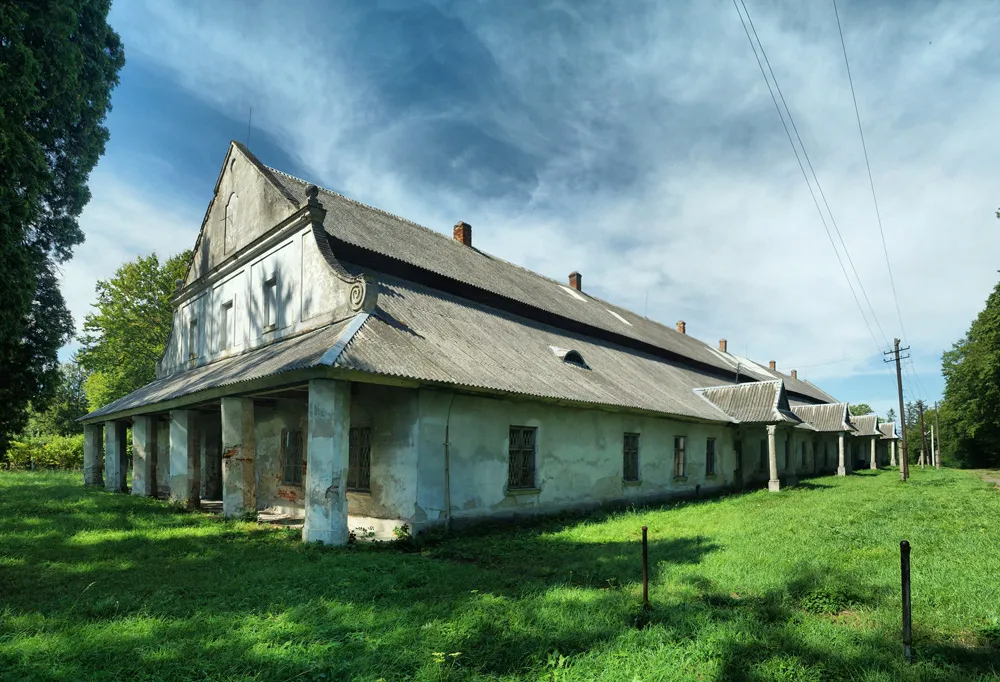
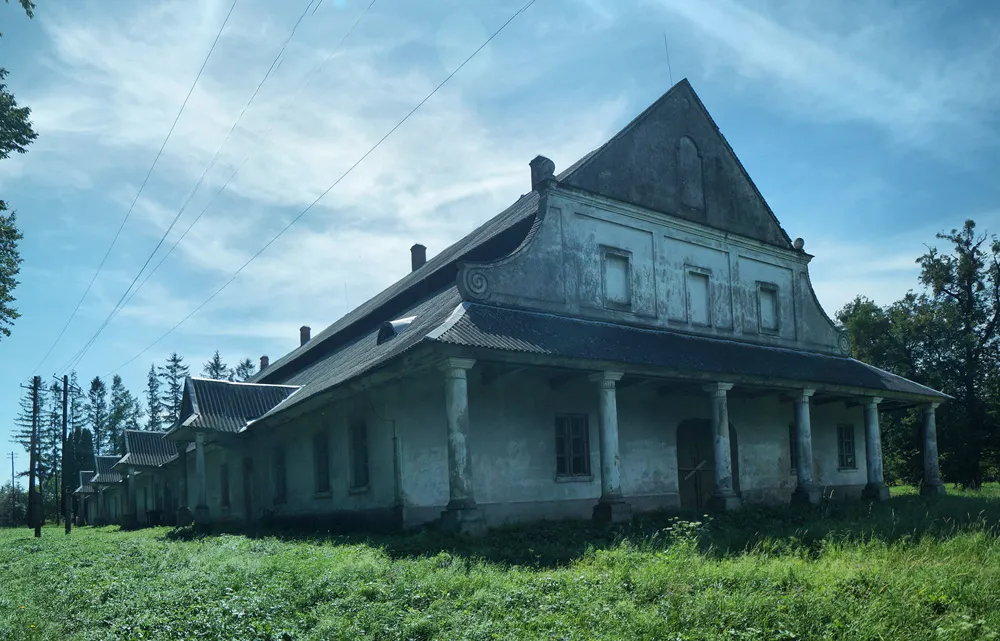
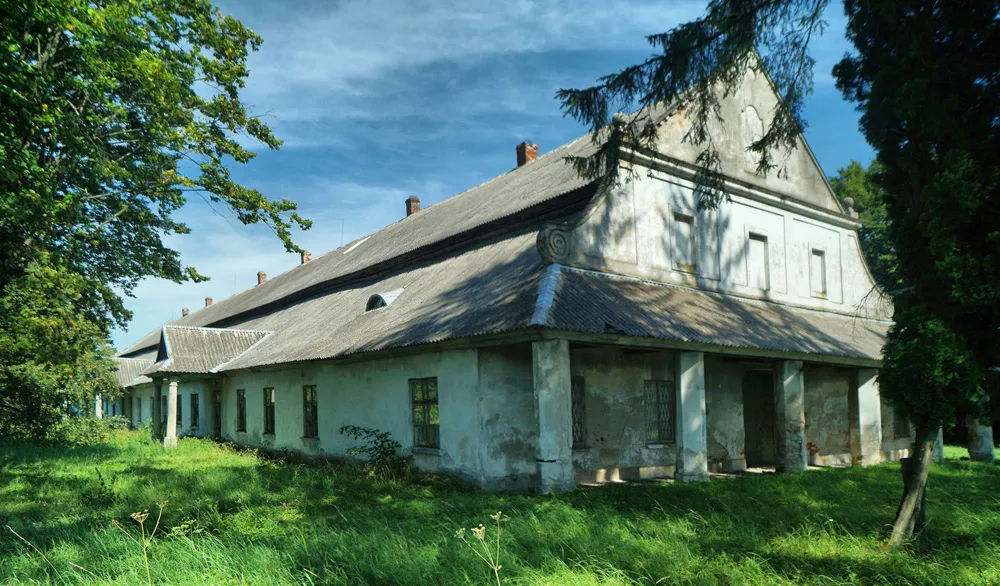
The inn
The palace amazed with the richness of its decoration and the splendour of its halls. Pompous receptions, celebrations and military parades were often held there, no worse than in the “film” Louvre. European monarchs visited Pidhirtsi Castle more than once: the Polish kings Władysław IV and John III Sobieski, the Austrian emperor Franz Joseph, the German Kaiser Wilhelm.
But all that is in the past…
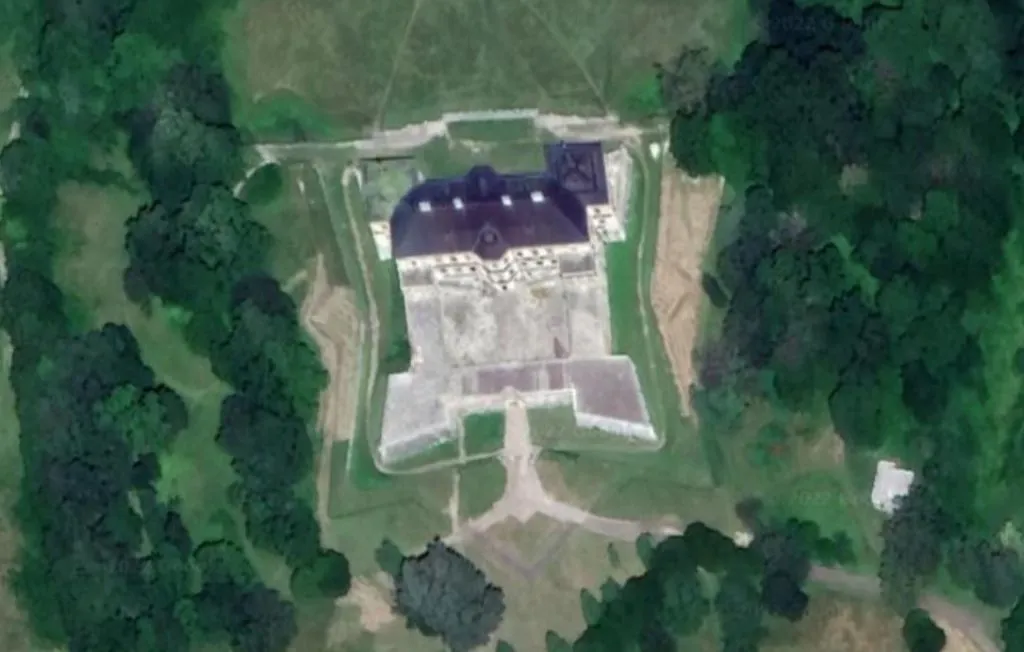
Pidhirtsi Castle. A view from space
Beginning in 1787, when Seweryn Rzewuski became the owner of Pidhirtsi, the castle slowly fell into ruin and decay. The last owner of the castle, until 1939, was Prince Sanguszko, who kept a private museum in it. With the arrival of Soviet power in Galicia in 1940 a state museum was created in Pidhirtsi Castle, whose collections were looted by the Nazis during the occupation. After the war the museum resumed work, but was soon closed again. The castle was handed to the Ministry of Health, after which a tuberculosis hospital was set up in it.
Now practically nothing is left in Pidhirtsi Castle of its former riches. Something collapsed, something was stolen, and something burned in the fire of 1956. Although it is said that most of the works of art that were in the palace are kept in the holdings of the Lviv Art Gallery and may return to Pidhirtsi after the castle is restored and turned into a “super-museum”. But the current authorities are not in much of a hurry with this transformation. So one of the finest palace-and-castle complexes in Ukraine stands closed to visitors and continues slowly to fall apart.
The component parts of the architectural ensemble of Pidhirtsi Castle are the inn (18th century), the church (18th century) and the park.
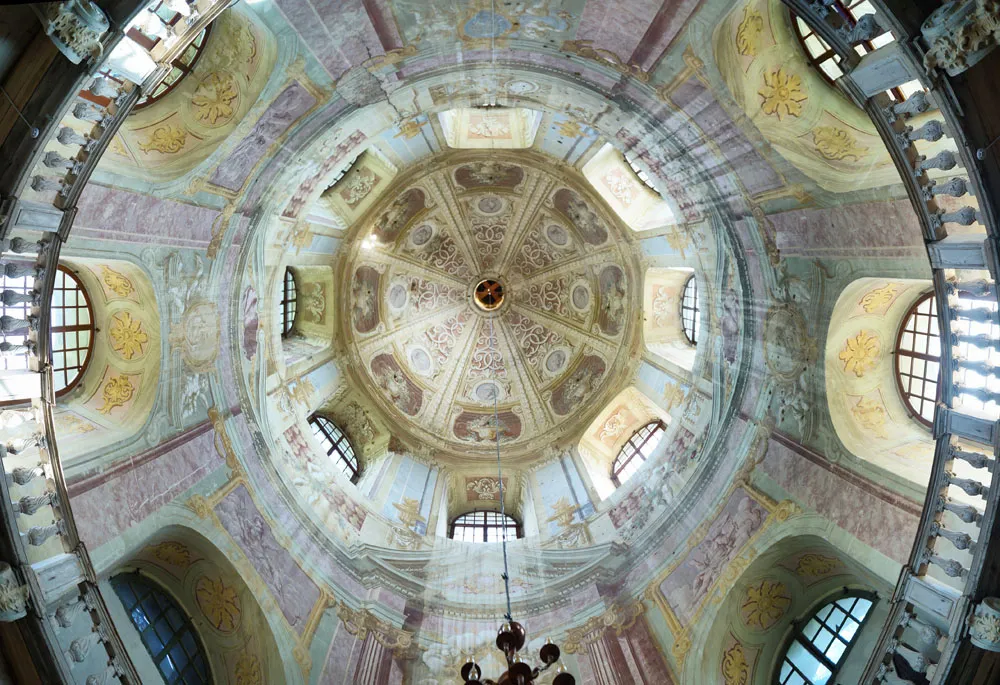
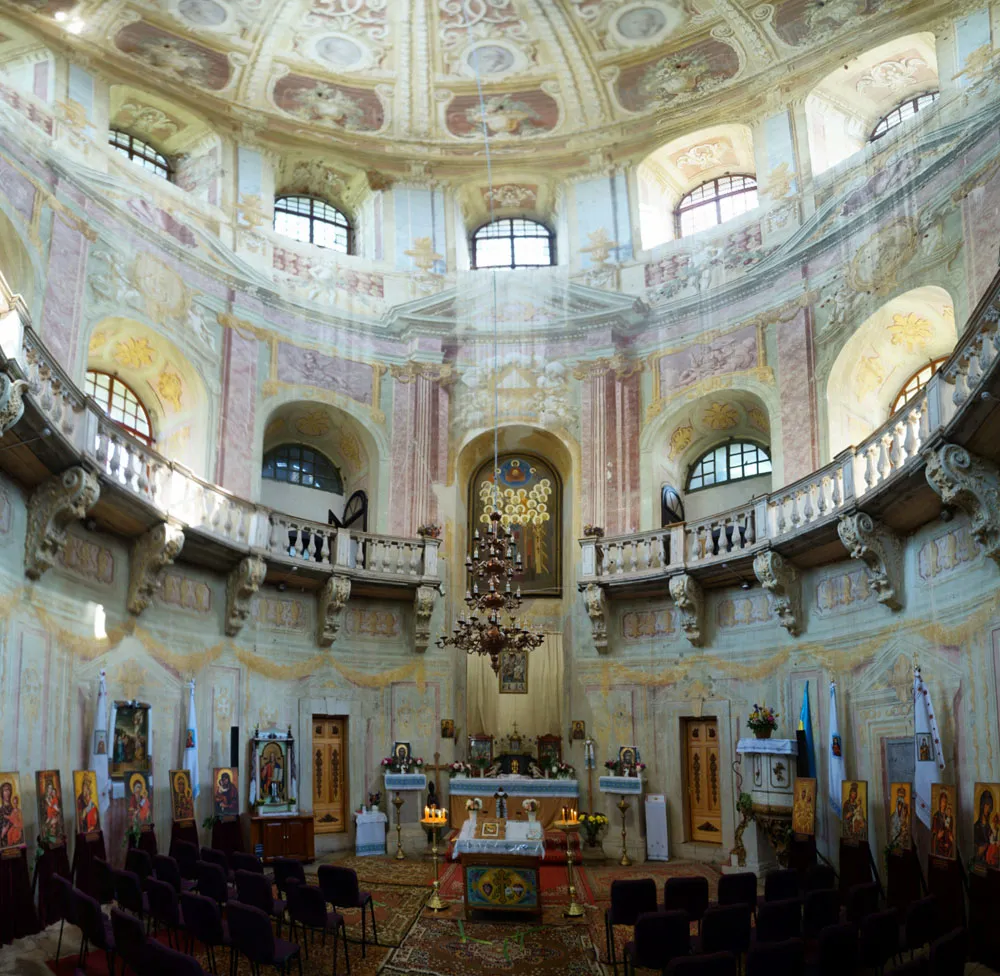
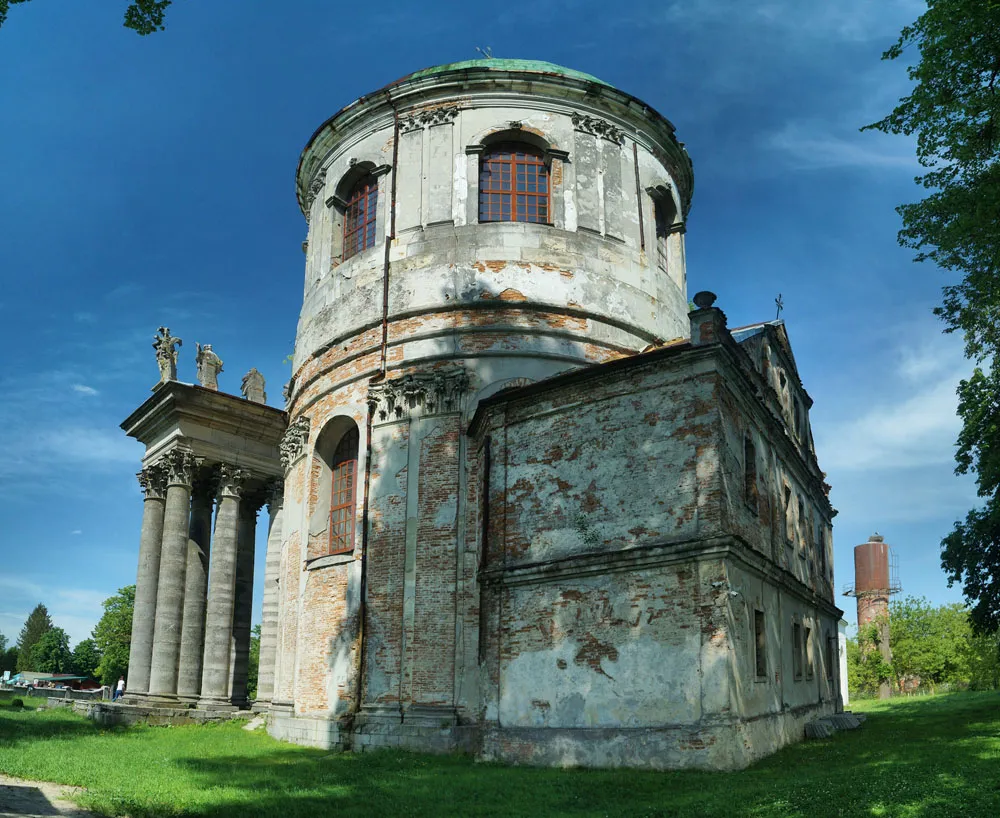
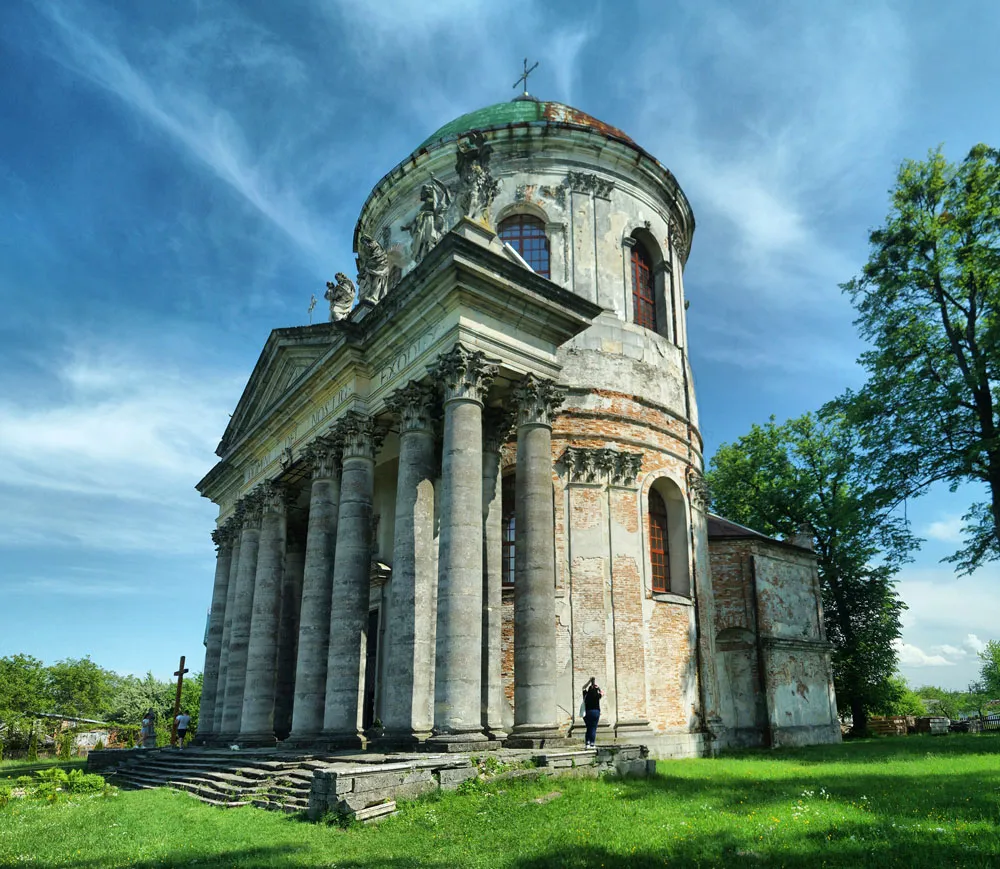
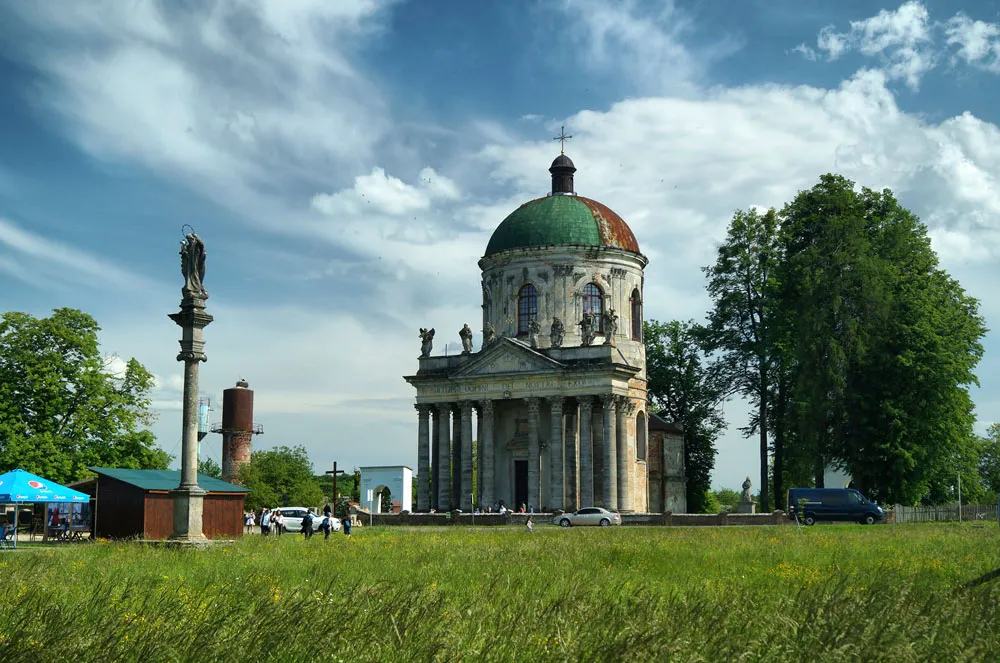
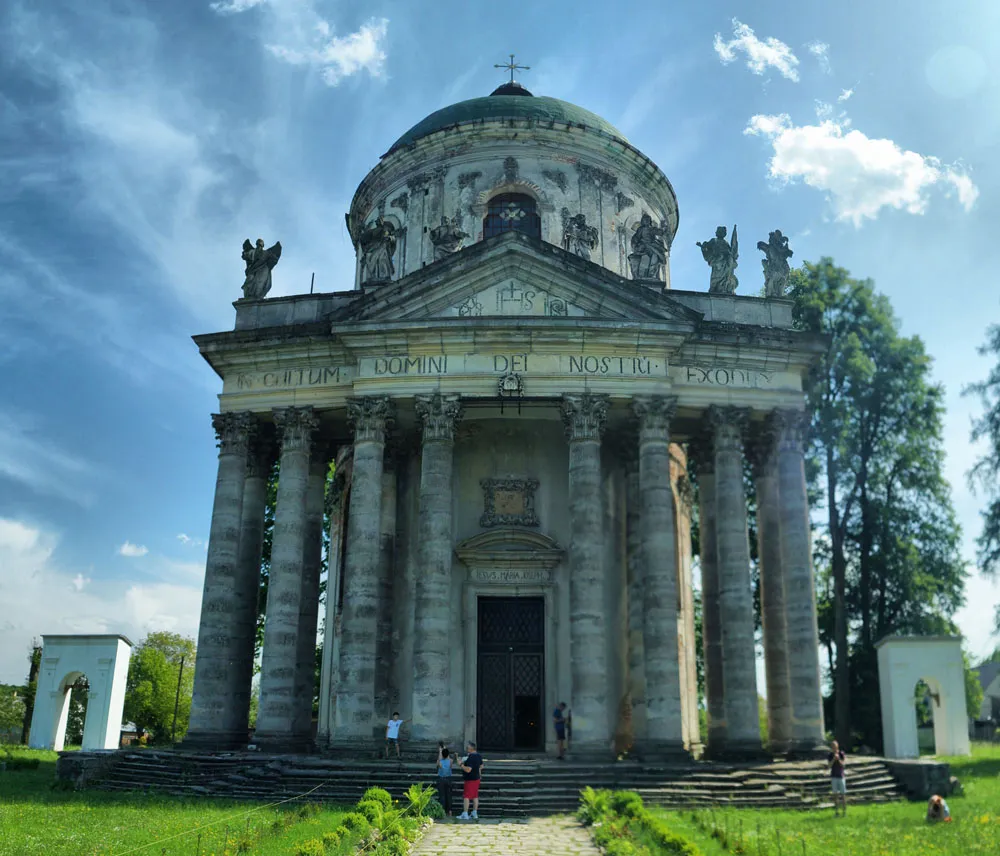
The inn and the Church of the Exaltation of the Cross
The one-storey Baroque inn was built for the lord’s servants, but at the same time it functioned as an inn with a hotel and taverns. It is one of the few structures of this type that have survived in Ukraine to our time.
Opposite the castle gate (300 metres from it), in 1788 the Church of the Exaltation of the Cross was built at the expense of Wacław Rzewuski to a design by the architect Romanus. This Baroque structure underlines the grandeur of the palace complex. Although the author of these lines immediately formed a distorted impression of the size of the church – it seemed to me much smaller than it really is. In reality it is a voluminous rotunda, overloaded with sculptural decoration, with an internal diameter of 12 metres and a height of about 30 metres. The portico of the main façade of the church has fourteen columns. It is crowned by eight sculptural figures of saints (the sculptors were S. Fesinger and Leblas), made of white stone.
The park surrounding the castle on all sides is a monument of landscape garden art of national significance and is the oldest in Ukraine. It was laid out in the 17th century. The park was built in the “Italian” style. It was a real masterpiece of park architecture.
In its day the Pidhirtsi park made a huge impression on visitors. Now this perhaps the only “Italian” park in Ukraine, like the castle, is in desolation and looks more like a gloomy, fantastical forest that could successfully serve as the set of a mystical film (like “Sleepy Hollow” with Johnny Depp).
Now this perhaps the only Italian park in Ukraine, like the castle, is in desolation and looks more like a gloomy, fantastical forest that could successfully serve as the set of a mystical film (like Sleepy Hollow with Johnny Depp).
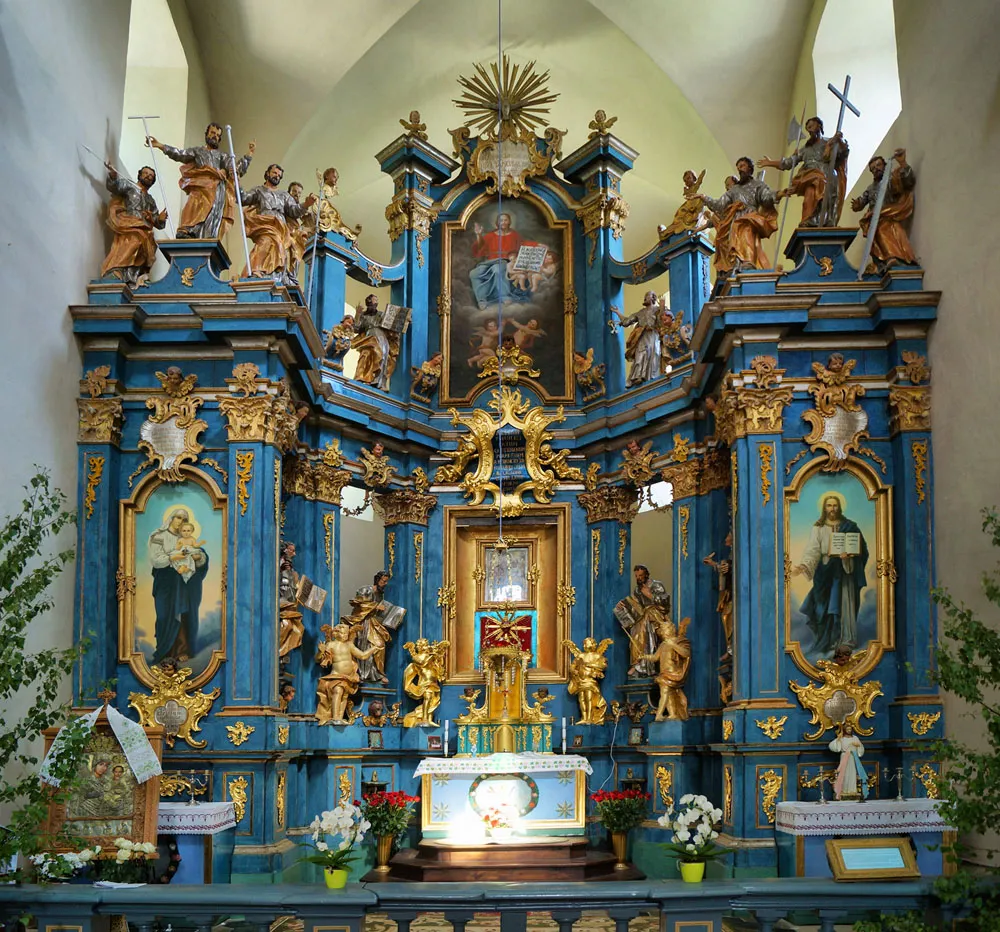
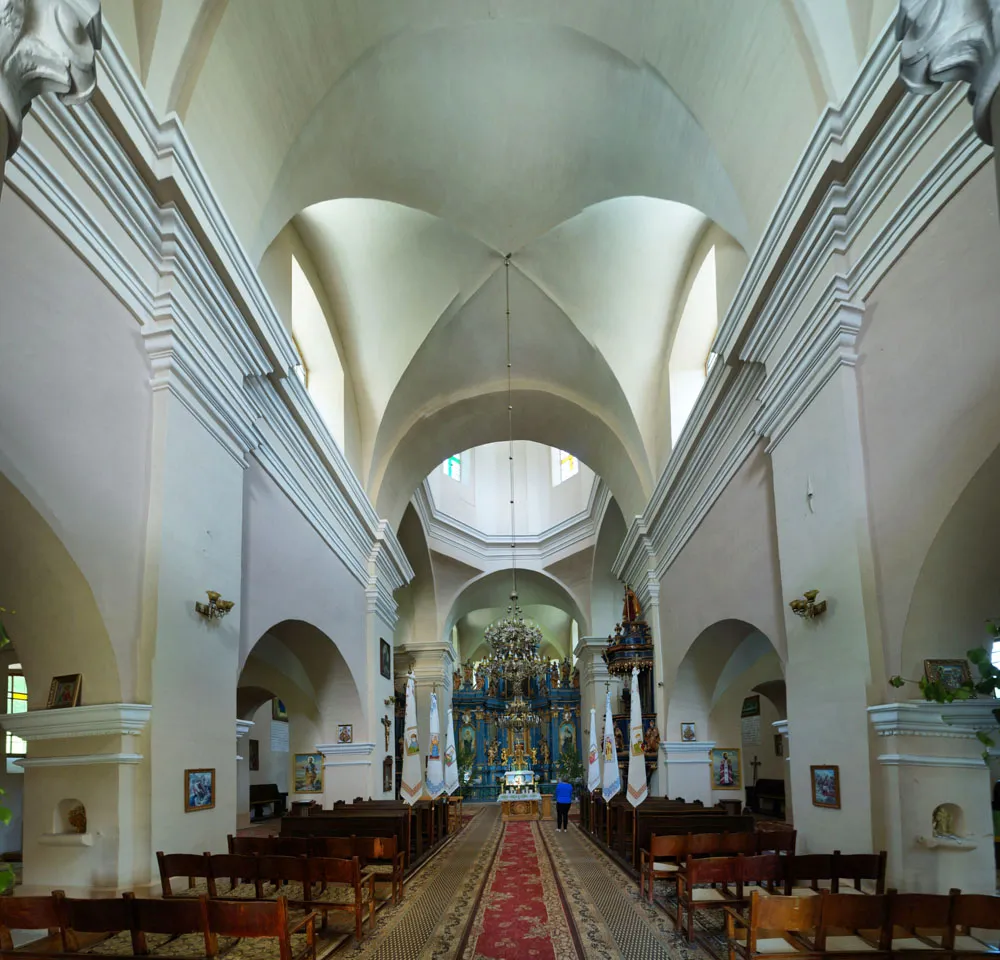
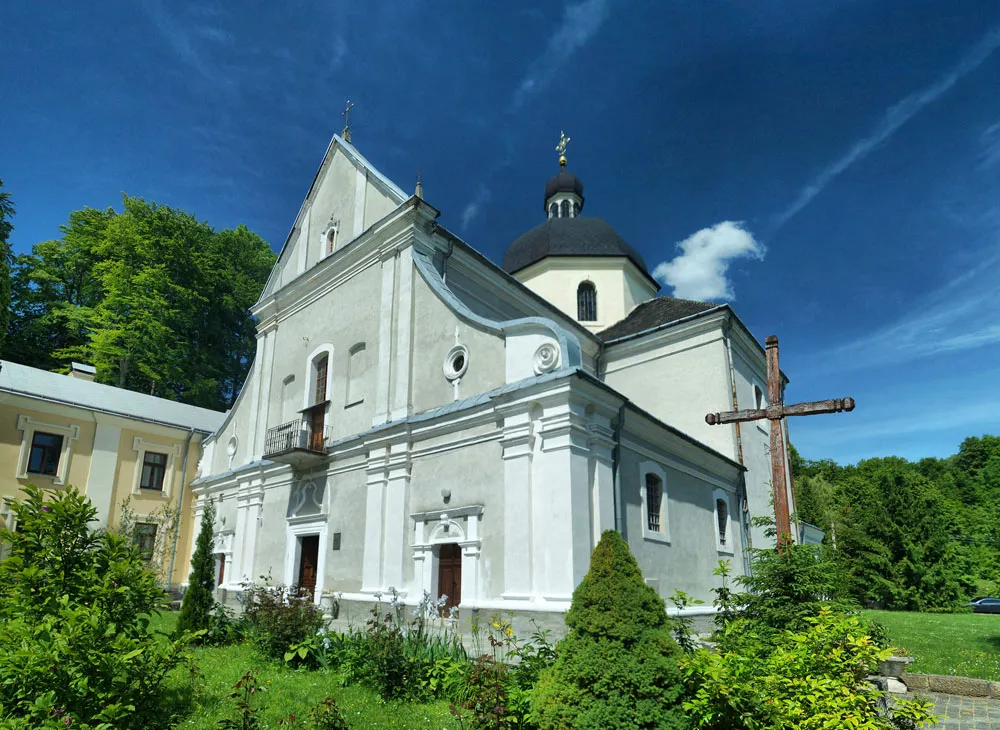
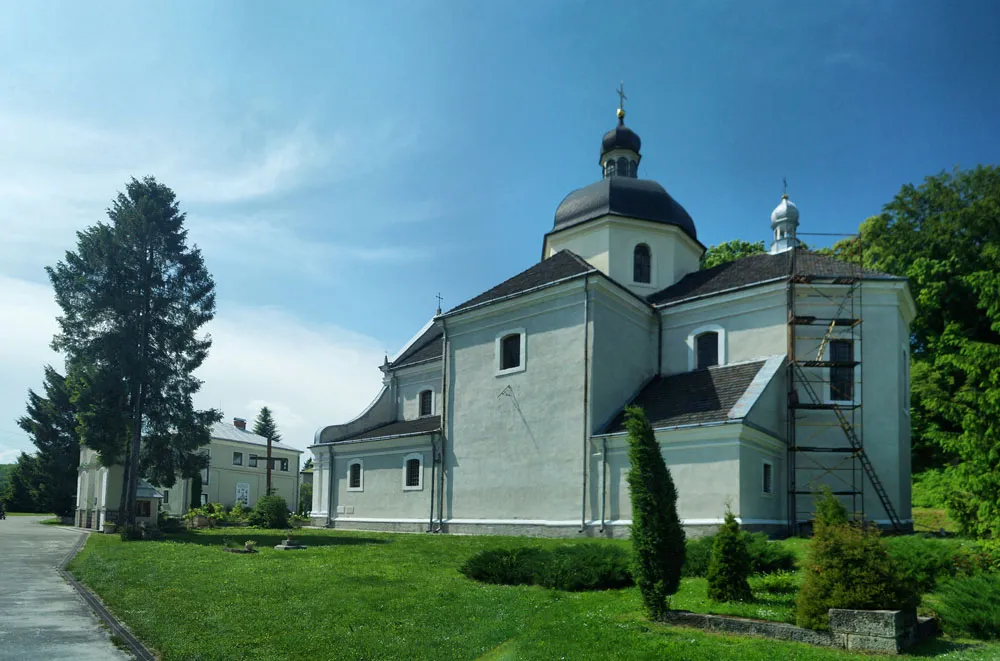
Church of the Annunciation of the Basilian monastery
Besides the castle complex, in Pidhirtsi the Basilian monastery is worth attention, hidden in a dense forest to the left of the Zolochiv-Pidhirtsi road; next to it lies the hillfort of the chronicle town of Plisnesk (7th-13th centuries), destroyed by the Tatar-Mongols, as well as an old cemetery beside a heap of ashes left on the site of a monument of wooden architecture – the Church of St. Michael (18th century – 2005).
The full name of the Basilian monastery (incidentally, in the Lviv region every monastery is a Basilian one) is the Annunciation Monastery of the Order of St. Basil the Great. It was built in 1706-1750 on the site of an ancient Rus monastery destroyed in 1241 by the Tatar-Mongols. The monastery stands on a sizeable territory in a deep, cosy hollow overgrown with dense forest (I would never have found it by myself), and consists of three parts: the church, the cell building and the bell tower. For historians the “Chronicle of the Pidhirtsi Monastery”, kept from 1662 to 1699, is of great value, while for tourists the more interesting feature of the monastery is rather the old sundial placed on the southern façade of the church. In Soviet times the monastery was a branch of the tuberculosis hospital; only in 1991 was it handed to the Basilian monks, who in a short time fully restored the shrine. Now thousands of believers visit the monastery.
Now thousands of believers visit the monastery.
Photos and text by Roman Malenkov