Churches of the village of Poliany

· 4 min read
The village is first mentioned in 1453. Until 1946 it was called Rykiv.
There are two versions of the origin of the village’s then name, Rykiv. The first: the village was named after its then owner, Ryk. The second: in the wooded area near the village there lived many wild animals, and the village got its name from their roar (“ryk”).
In or near the village there was a castle, destroyed by the Tatars as early as the 17th century. No walls have survived to this day, but local residents still remember where this castle may have stood. Information about the castle is shown on an old map in Polish.
A count’s palace stood on the site of the school, and an orchard was planted nearby; it has survived to the present day and villagers still call it the “Lords’ Orchard”. According to some accounts, an underground passage linked the count’s palace and the church, but it is not known for certain whether it has survived.
The village formerly belonged to: in the 16th–17th centuries, the Sieniawski family; from 1631, the Centner family; from 1639, J. Sobieski; from 1711, Prince K. Sobieski; from the early 19th century, the Radziwiłłs.
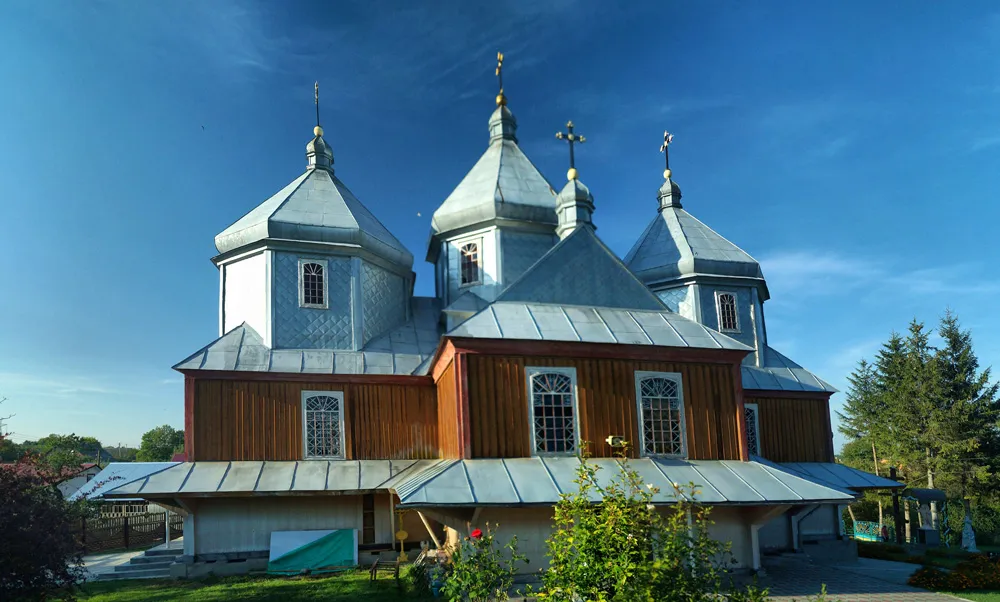
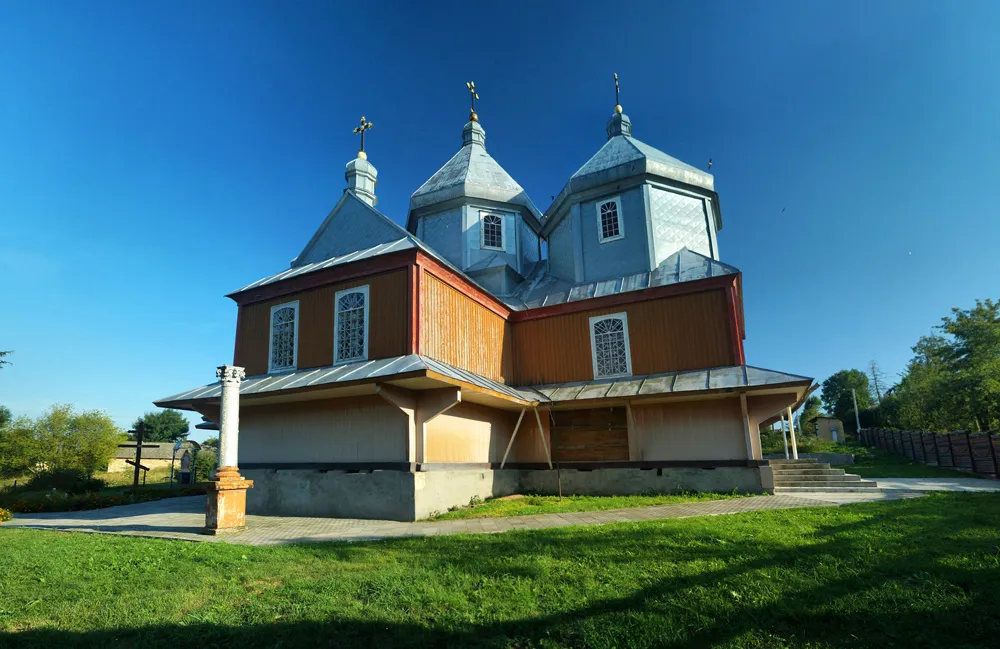
Church of the Resurrection of the Lord
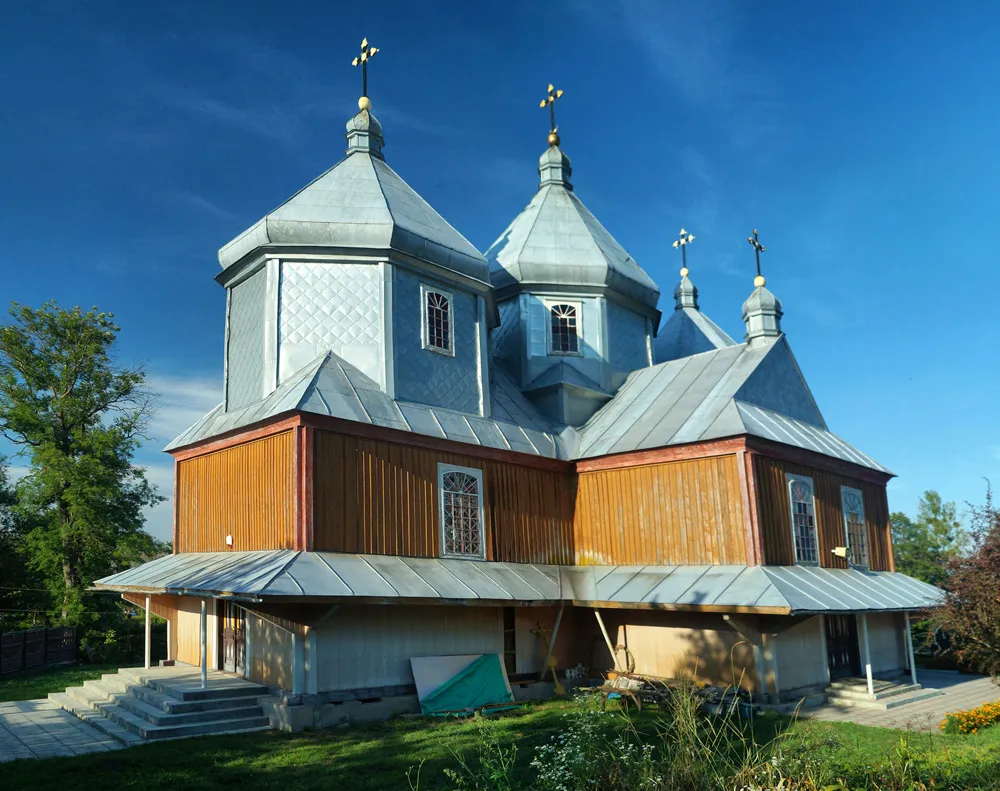
The village of Poliany has a wooden Church of the Resurrection of the Lord. It was built in 1903 on the site of an old church (built in 1675), during the ministry of Fr. Teofil Petrovskyi. The design of the church belongs to the famous architect Vasyl Nahirnyi.
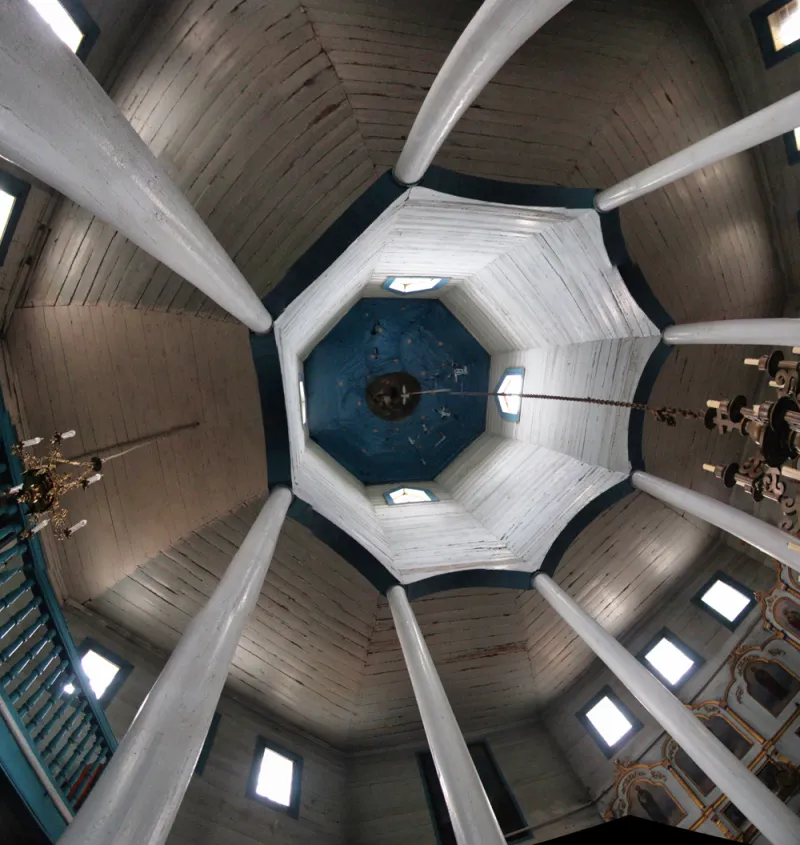
The church is the only surviving wooden church painted by the famous monumental artist Modest Sosenko. The murals were made in 1911–1913. He was assisted by Iryna Velychkovska (Shukhevych) and Yulian Butsmaniuk.
Modest Sosenko painted the central dome, the iconostasis and the side altars. In the central nave, between the windows, the four Evangelists are depicted. Side altars: the right one shows the “Resurrection of the Lord”, the left one the “Protection of the Most Holy Mother of God”.
At present the murals in the church urgently need professional restoration.
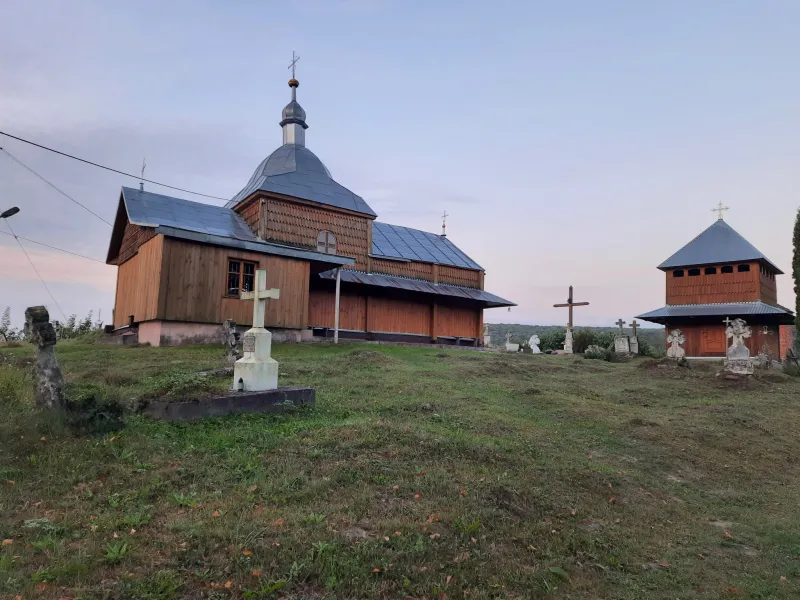
A bell tower was built next to the church in 1927. The wooden bell tower of that time had three bells. During the German occupation in the Second World War, villagers took these bells down and buried them in three different places, since at that time the German occupation authorities commonly confiscated church bells and melted them down for weapons. For signalling, instead of bells the villagers used metal rails, which they struck with a metal rod.
Immediately after the arrival of the Soviet occupation authorities, the property of the Church of Saints Peter and Paul, namely the figures of the Apostles Peter and Paul, the Immaculate Conception of the Virgin Mary and the Most Sacred Heart of Jesus, was moved to the Church of the Resurrection of Christ. Both churches were closed and services in them were forbidden. In the 1970s the occupation authorities in the village planned to hand over to museums all the valuable exhibits that were then in the Church of the Resurrection of Christ. On the very eve of the confiscation, the villagers secretly took from the church the most valuable property: icons, books, statues and items for conducting services, to hide them in their homes.
Services in the church were resumed only in 1990. Since then its rectors have been: Fr. Stepan Zhyhalo (rector in the village of Snovychi, who served in Poliany), Fr. Mykhailo Liakhovych and Fr. Nazarii Chornyi.
The church belongs to the Orthodox Church of Ukraine.
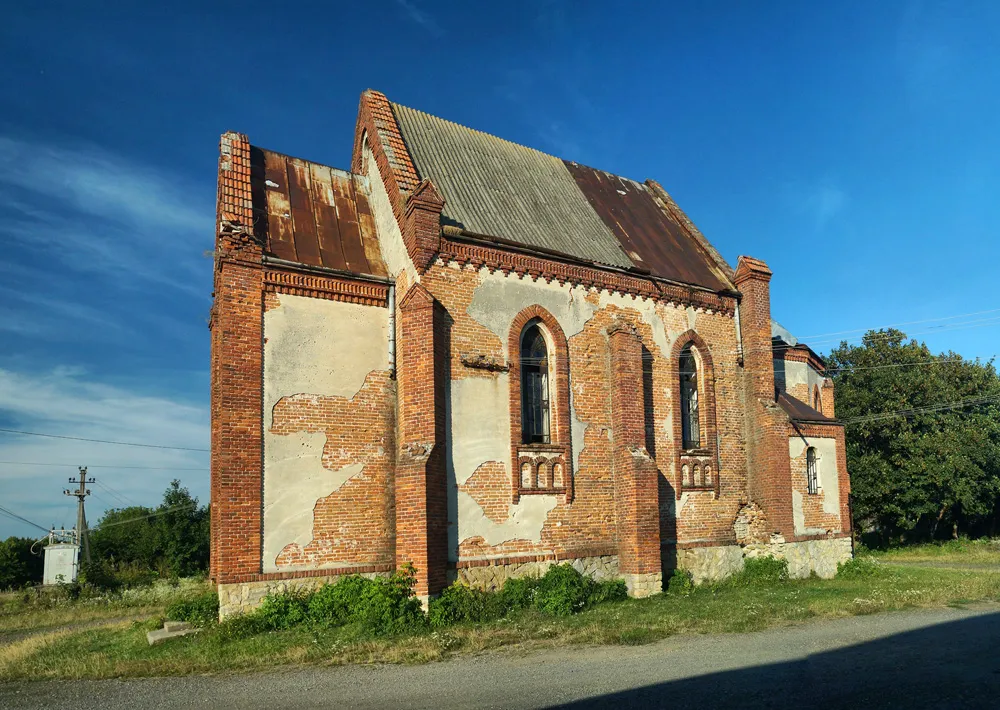
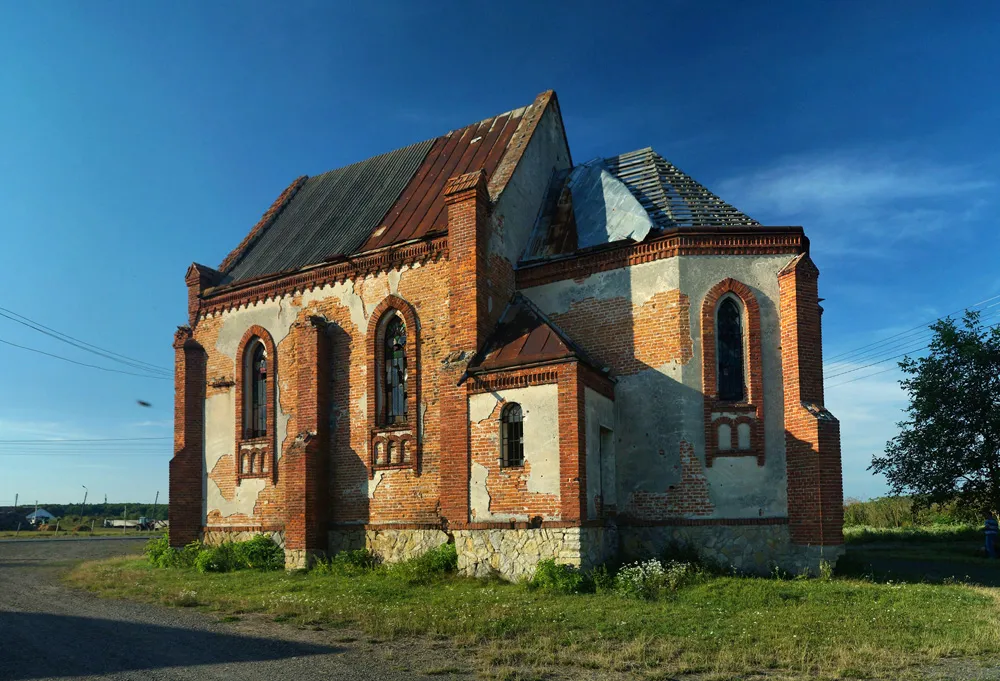
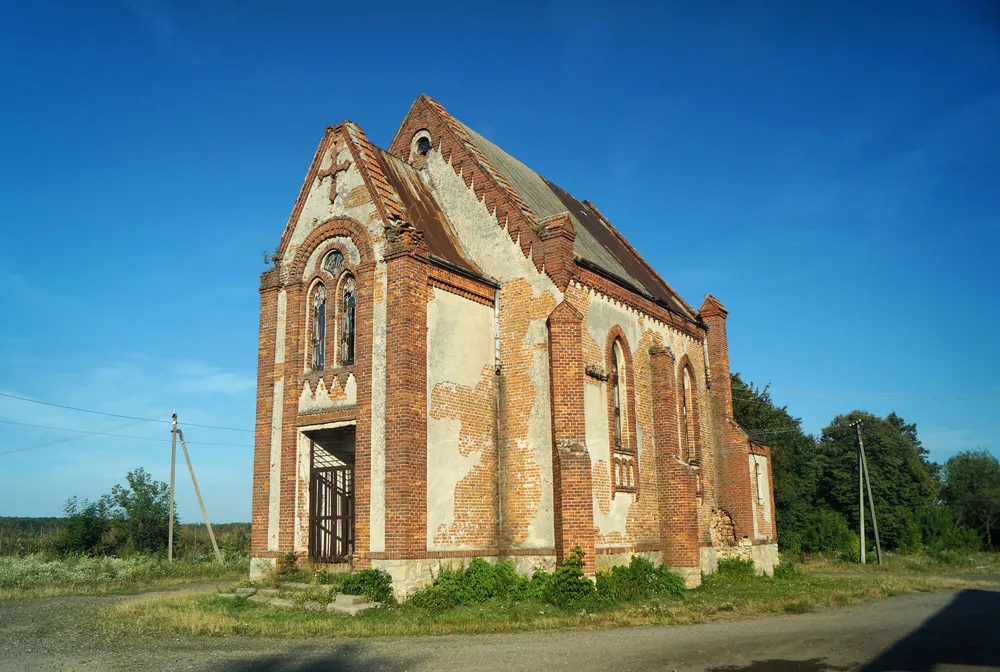
Church of Saints Peter and Paul (Roman Catholic)
The church was built in 1901.
At the end of the 19th century the Roman Catholic population of Rykiv belonged to the parish in Pomoriany. Later, with the support of the village’s owners Franciszek Górski and Walerian Walski, this church was built. The design of the building belongs to the architect Julian Zachariewicz.
In 1920 about 70 Polish families were resettled in the village, and in 1923 (1924) a full parish began to function in the church. Not far from the church there was an old cemetery, which has survived to this day (not far from the church, on the grounds of a grain warehouse).
In 1944, with the arrival of Soviet power, the priest Bronisław Jakubowski left the village, taking with him only a chasuble and a chalice. The rest of the church’s property was kept in the Church of the Resurrection of the Lord in the village.
Immediately after the start of the Soviet occupation, the authorities closed the church and turned it into a warehouse. For this purpose the building was divided into three floors by inserting floor slabs.
Text from Wikipedia, photos by Roman Malenkov