

Archaeologists explore a monastery near the Maliivtsi waterfall (photo report)
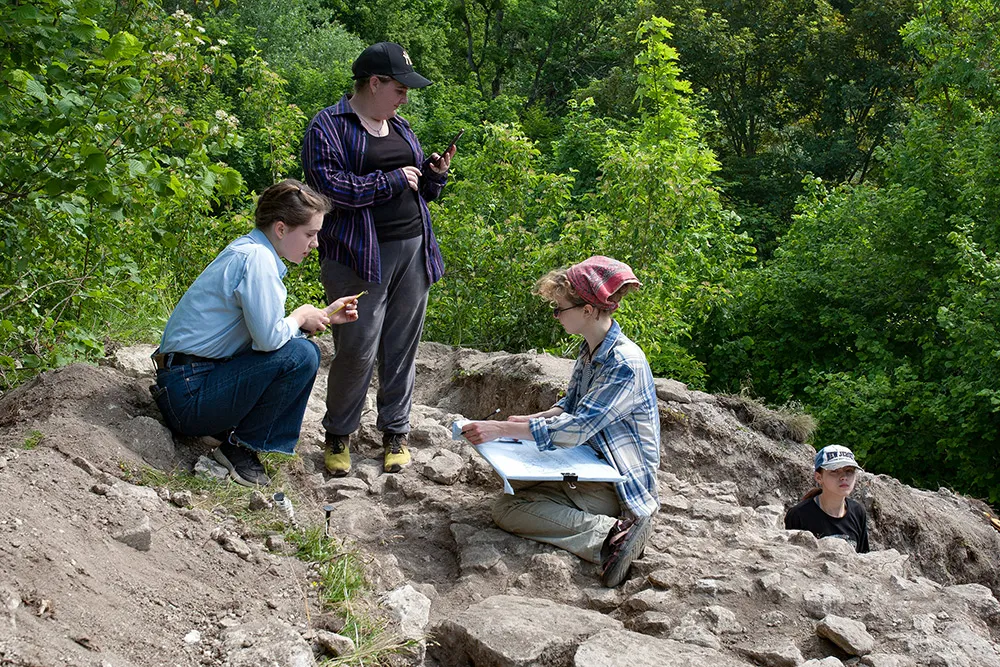
These days, archaeological excavations are under way in Maliivtsi in Khmelnytskyi Oblast. Scholars are studying the site of an ancient rock monastery that stood near the famous Maliivtsi waterfall. The “waterfall” rock itself is also part of the ancient cave sacred complex. One can still see a church carved into the travertine there, with a small chapel at its base.
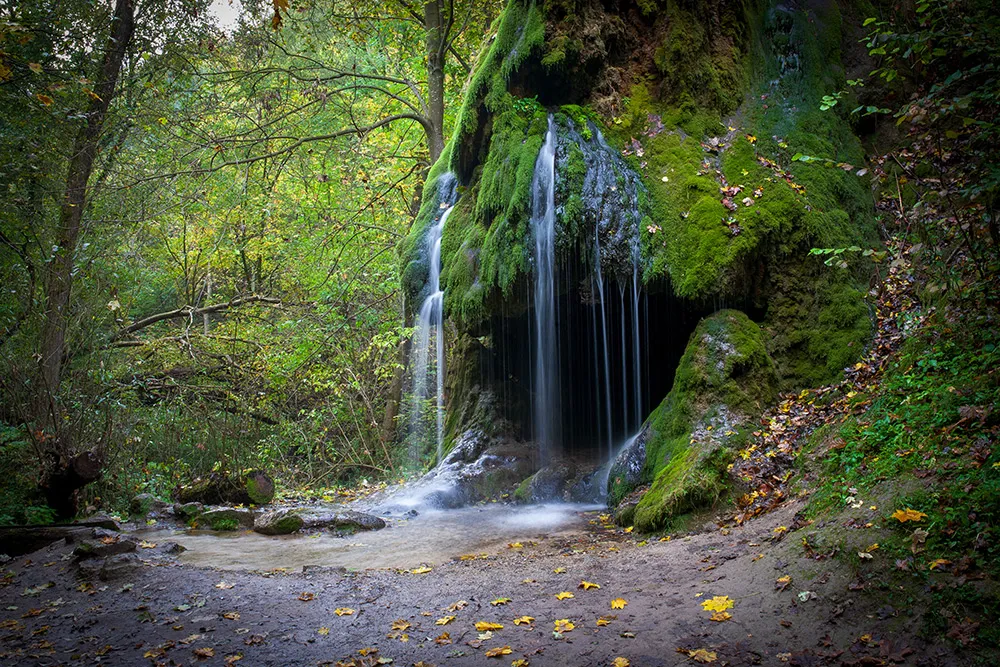
This cave once held the monastery chapel
Moreover, the Maliivtsi Regional Historical and Cultural Museum, on whose initiative the research is taking place, is an old friend of the NGO “Ukraine Incognita” team. Accordingly, as soon as we learned that archaeological excavations were under way in Maliivtsi, we hurried to the scene to see how they were going. All the more so because the expedition is headed by Pavlo Nechytailo, Candidate of Historical Sciences and head of the Kamianets-Podilskyi Architectural and Archaeological Expedition of the “Protective Archaeological Service” research centre of the Institute of Archaeology of the National Academy of Sciences of Ukraine. He, too, is an old friend of “Ukraine Incognita”.
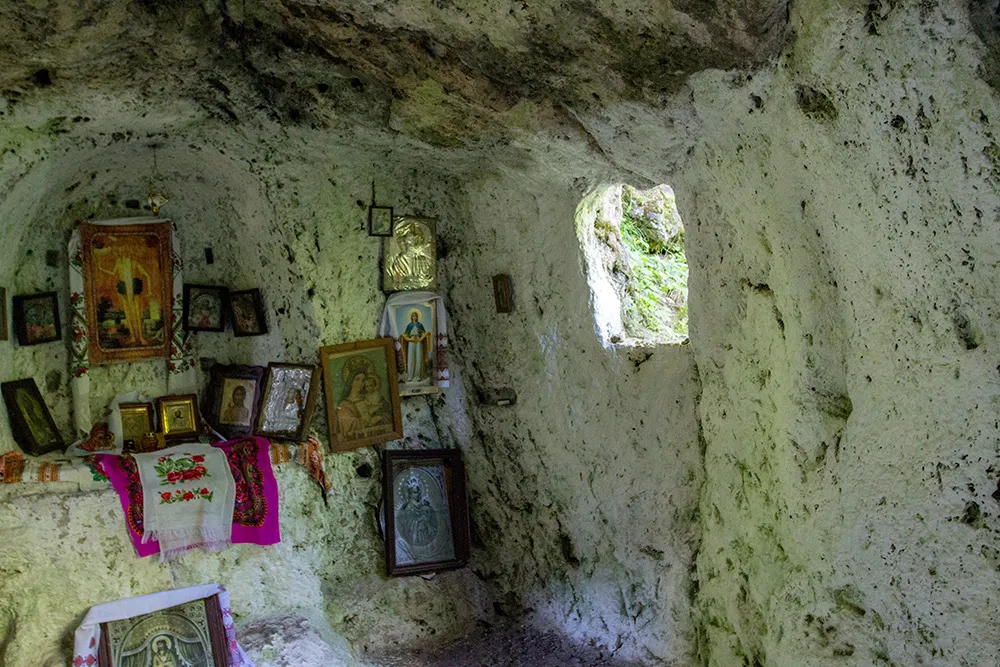
The cave church
“We dreamed of this research almost from the first days of our museum’s existence,” says museum director Anastasiia Donets. “And we worked for several years to make this dream come true. We had to resolve a whole range of organizational, bureaucratic and, above all, financial tasks.”

Anastasiia Donets
Before continuing the story, a brief historical note. After all, one needs to understand what site we are talking about.
The cave monastery existed in Maliivtsi through several historical periods. Its earliest history may reach back to the times of Kyivan Rus. When the caves were carved into the soft travertine is unknown. So are the size and number of the caves: a large part of the rock, together with the caves, was destroyed under the Communists, who turned it into a quarry.
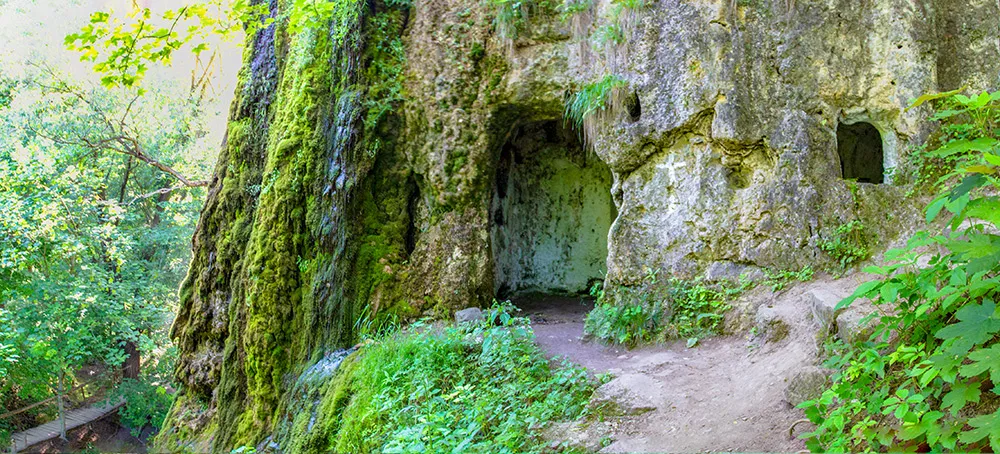
After the monastery was ruined in the 17th century (whether during the Khmelnytskyi Uprising or the Turkish invasion is unknown), it was restored in 1708 as a Uniate monastery of the Order of St. Basil the Great. Already under the Basilians the rock with the caves was turned into an artificial waterfall.
In his book “Podole, Wolyn, Ukraina. Obrazy miejsc i czasów” (Vilnius, 1841), Aleksander Przezdziecki describes the grounds of the abandoned monastery thus: “From these springs a cascade 48 feet high falls into the garden, a dripping veil over two caves hewn in the rock, with altars and statues of saints.”
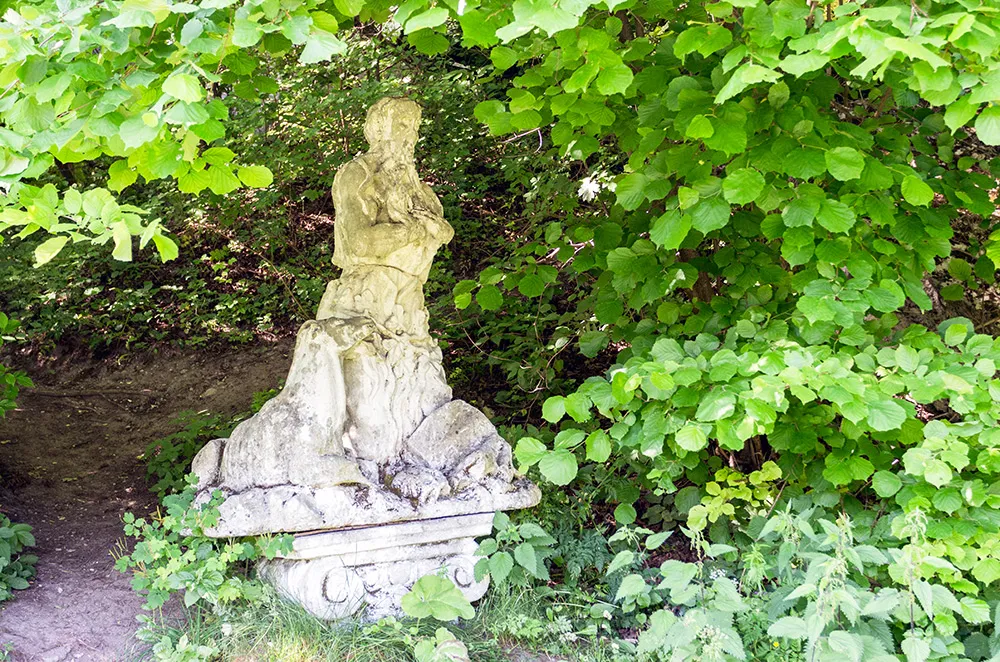
The figure of St. Onuphrius, which once stood in the lower grotto
As the quotation shows, by the first half of the 19th century the waterfall already existed, and the caves still preserved sacred figures.
In the “lower” cave, which historians believe was used by the monks as a chapel, a figure of St. Onuphrius once stood, according to researchers (A. Przezdziecki, Yukhym Sitsinskyi) and old-timers. Today it has been placed above the rock near the spring that feeds the waterfall.
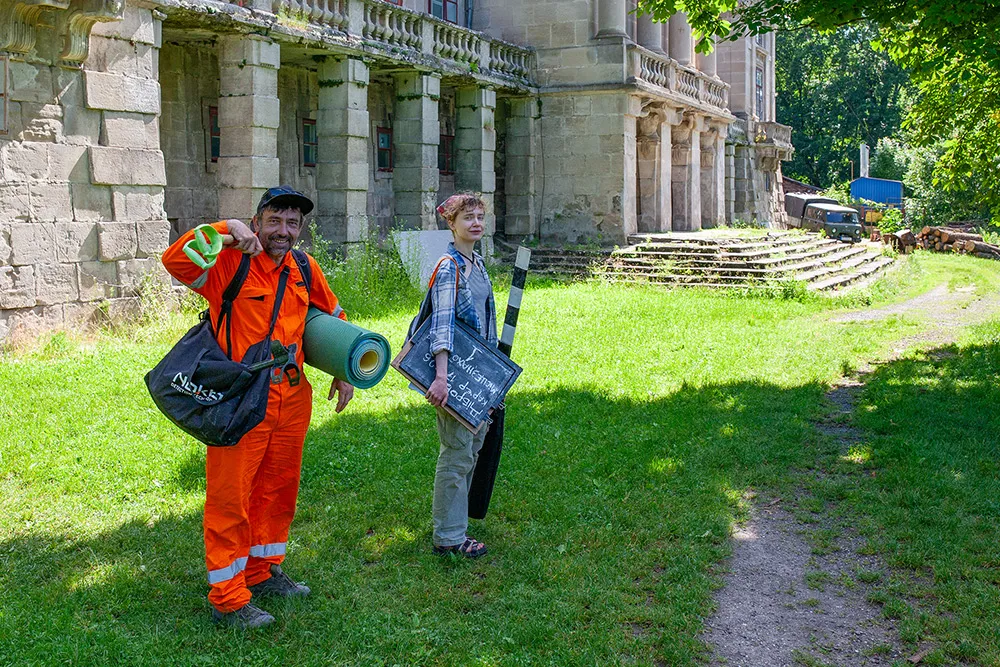
Archaeologist Pavlo Nechytailo and the expedition’s draughtswoman-artist Sofiia Saletska head to the excavation past the Orlowski Palace (1788)
After the monastery was abolished by the Russians, its church was used as a parish church. Most of the monastery buildings stood empty and fell into decay. The church and bell tower were destroyed in the 1930s. However, the monastery complex did not disappear at once: as late as the turn of the 1960s and 1970s, remains of the monastery buildings could still be seen here.
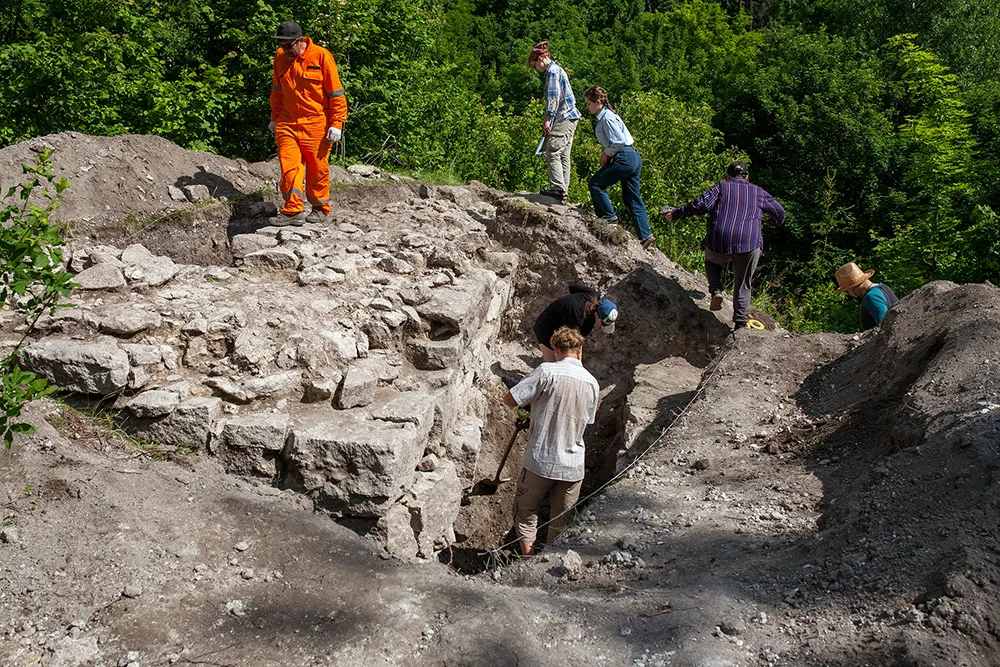
The aim of the archaeological research was to find the remains of the monastery bell tower in order to study them and subsequently turn them into a museum exhibit.
Where it roughly stood was learned by scholars thanks to Dmytro Babiuk, a researcher at the Maliivtsi museum, who found in the archives a photograph giving a general view of the monastery as of the early 20th century. Unfortunately, the monastery was photographed from afar, so it was impossible to establish the exact location of its structures.
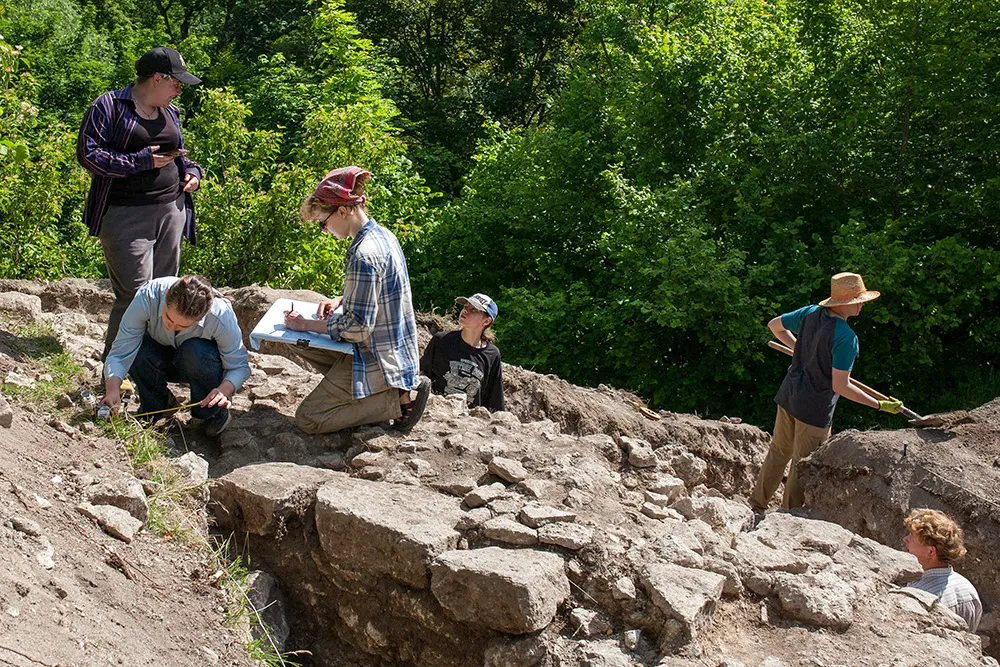
Yet the archaeologists were lucky: the foundation of the bell tower was found as early as the digging of the first test pit.
Nor was there a lack of surprises:
“We did not expect to see such powerful remains,” says Pavlo Nechytailo. “This looks more like the base of a defensive tower. The walls are almost two metres thick (1.7+, to be precise), and the construction technique is characteristic of defensive structures, going back to ancient Roman times. That is when the middle of a base made of huge blocks is then filled with rubble of smaller stones. This technique was used in both the Middle Ages and the Early Modern period.”
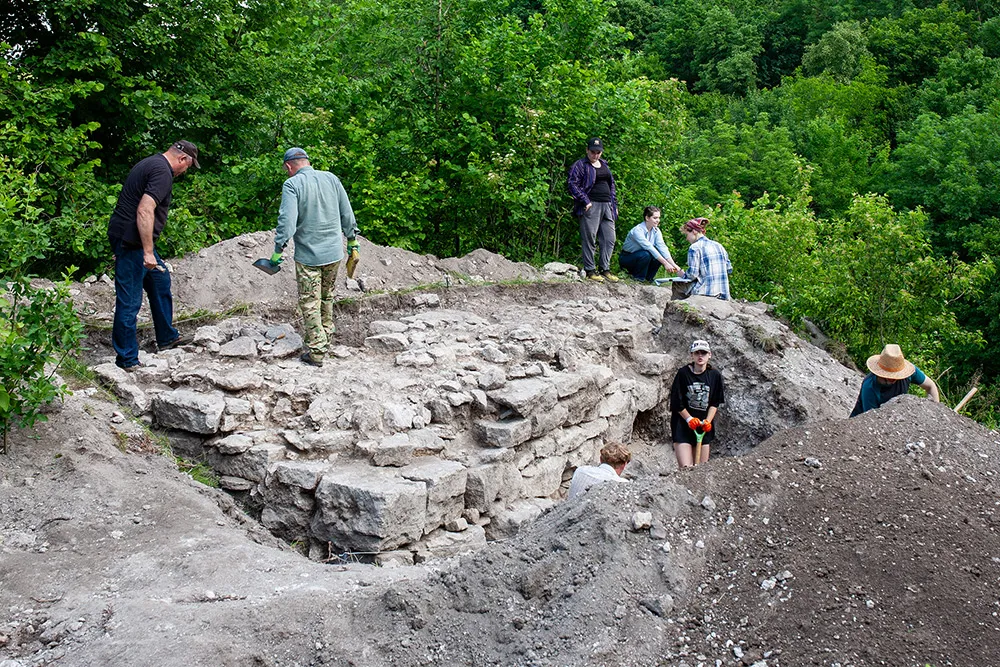
On the other hand, this is not surprising — at that time almost all masonry sacred buildings (regardless of denomination) were built at the same time as defensive structures.
According to historians, the base of the bell tower dates from the late 17th to early 18th century.
Next to the base of the bell tower, the foundation of some unknown structure was found:
“Most likely it is older than the bell tower,” says Pavlo Nechytailo. “But we will deal with this mystery during next year’s excavations.”
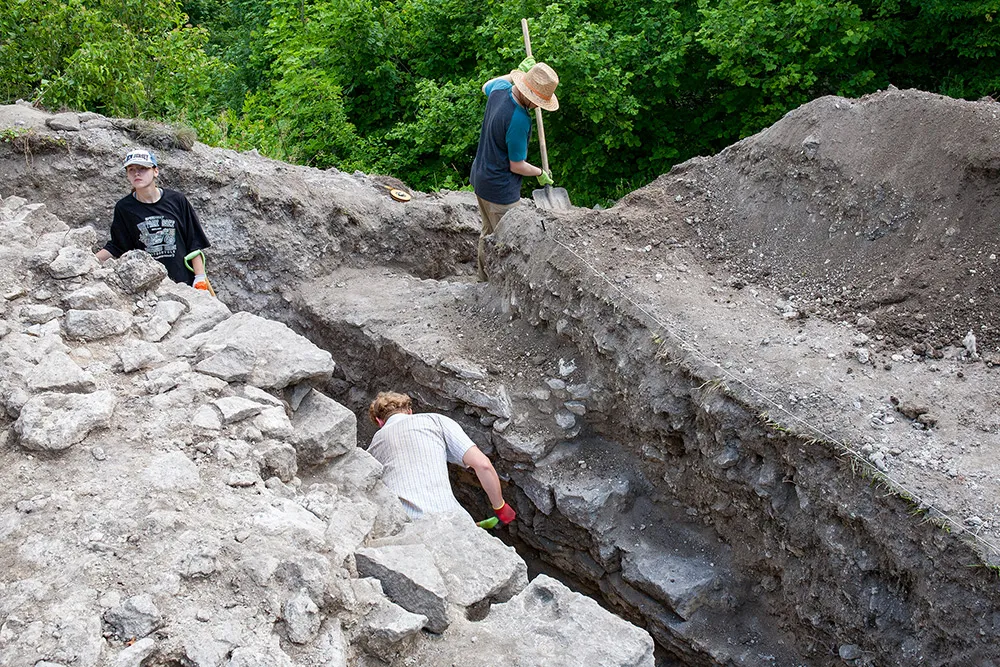
The foundation that remains unexplained (right)
On the east side of the bell tower remains, the archaeologists found a sizeable layer of knocked-off plaster. Importantly, with traces of painting!
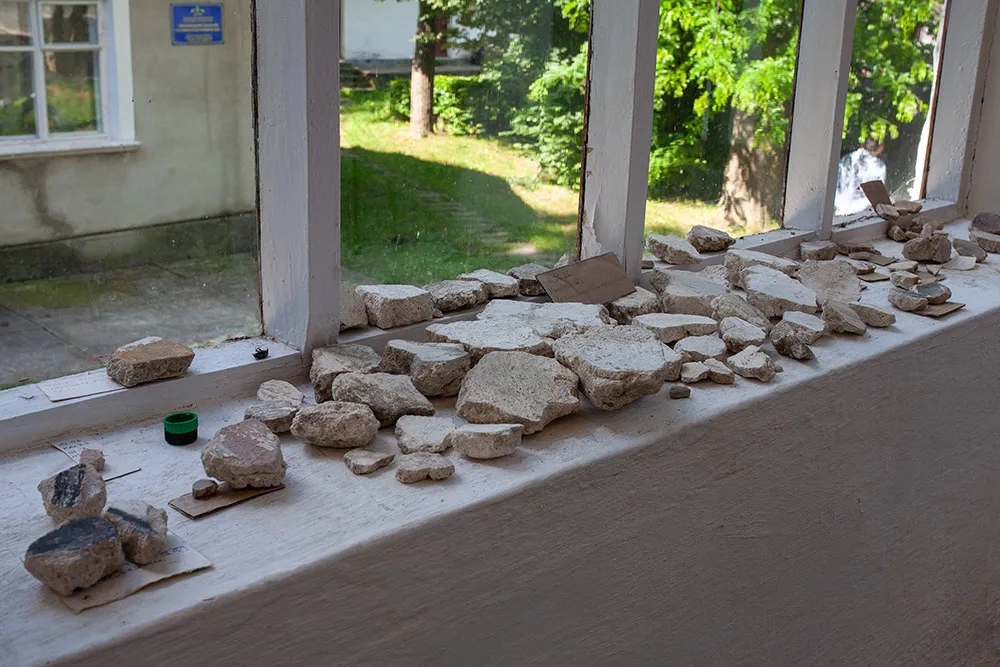
Remains of plaster
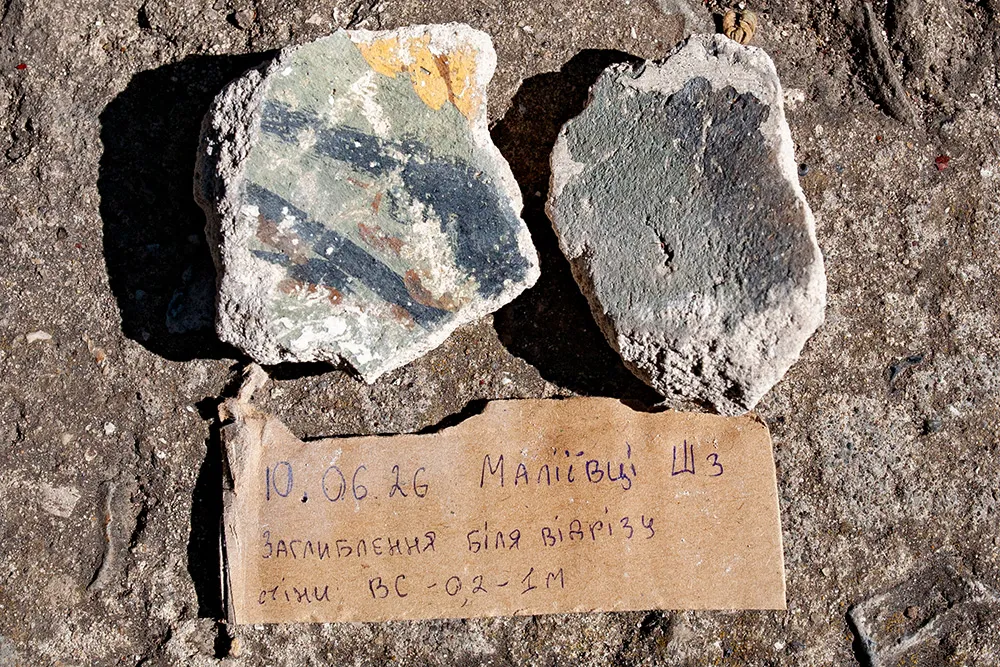
Painted plaster
Pavlo Nechytailo suggests that this may be the result of repairs to the church when it went from being a monastery and Uniate church to a parish church of the Russian Church: “With a high degree of probability one can put forward the version that the old Uniate paintings turned out to be non-canonical for Russian Orthodoxy. So the plaster with paintings was knocked off and used as backfill for the bell tower walls.”
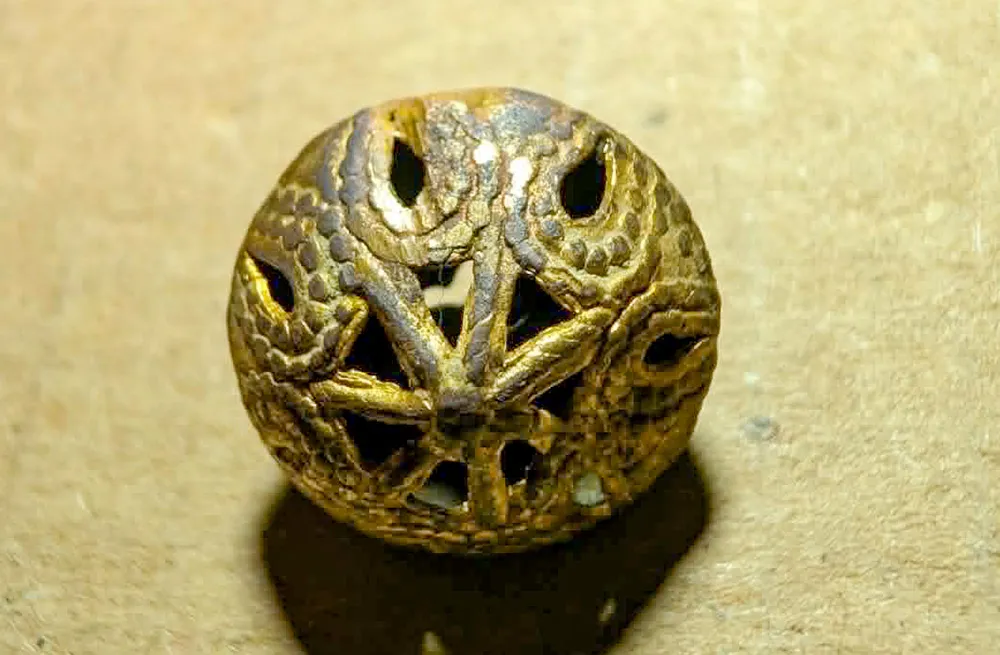
A button…
The archaeologists also recorded two main cultural layers. One belongs to the Orthodox monastery of the second half of the 17th century, and the upper one to the 18th century and the Uniate period of the monastery’s history.
In addition, fragments of Old Rus pottery were found during the excavations: “This pottery confirms my hypothesis that the Maliivtsi monastery is one of the oldest in Podillia,” says Pavlo Nechytailo. “Evidently it dates to the 12th–13th centuries, like the Bakota one.”
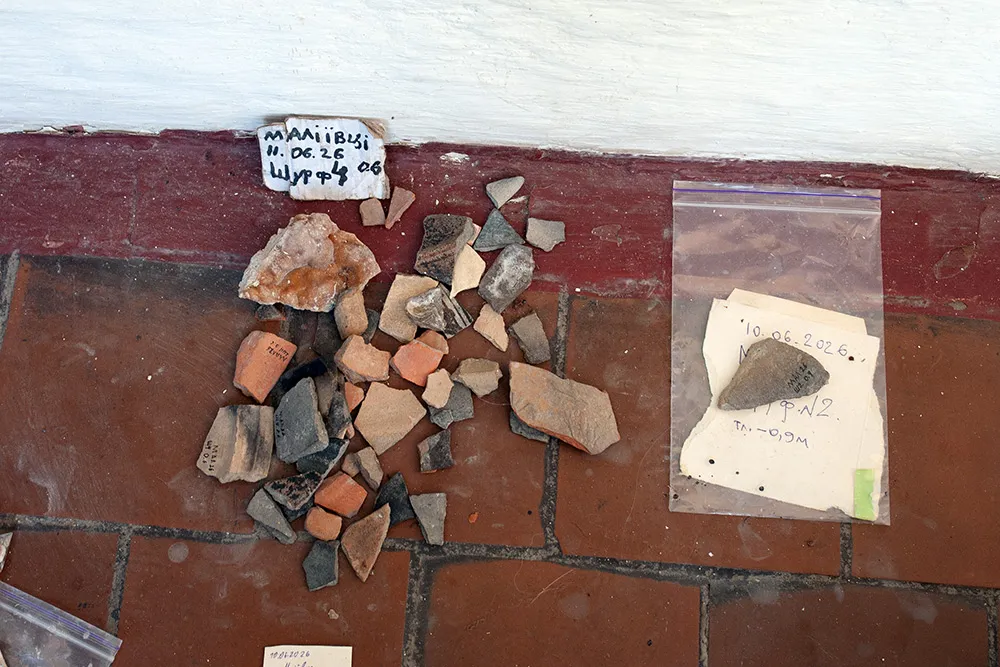
Pottery shards..
The average reader, who after watching films about Lara Croft and Indiana Jones is firmly convinced that the main thing in archaeology is to find “gold”, will not quite understand why the archaeologists made such a fuss around that plaster. In fact it really is a sensation: “Fresco painting is very rarely found precisely during archaeological excavations,” explains Pavlo Nechytailo. “Usually it is found in surviving monuments. As, for example, during recent research near St. Sophia Cathedral in Kyiv, when fragments of frescoes of the Old Rus period were found during excavations. In Podillia, finds of fresco painting were made during research of the Bakota monastery by Volodymyr Antonovych in the late 19th century.”
The archaeologists also found small shards of Trypillia culture pottery. The latter is ubiquitous in Podillia, like Ustym Karmaliuk, and few archaeological studies go without “gifts” from the Trypillians. However, whether the monastery site is connected with that period or the fragments were brought later with soil is hard to say today.
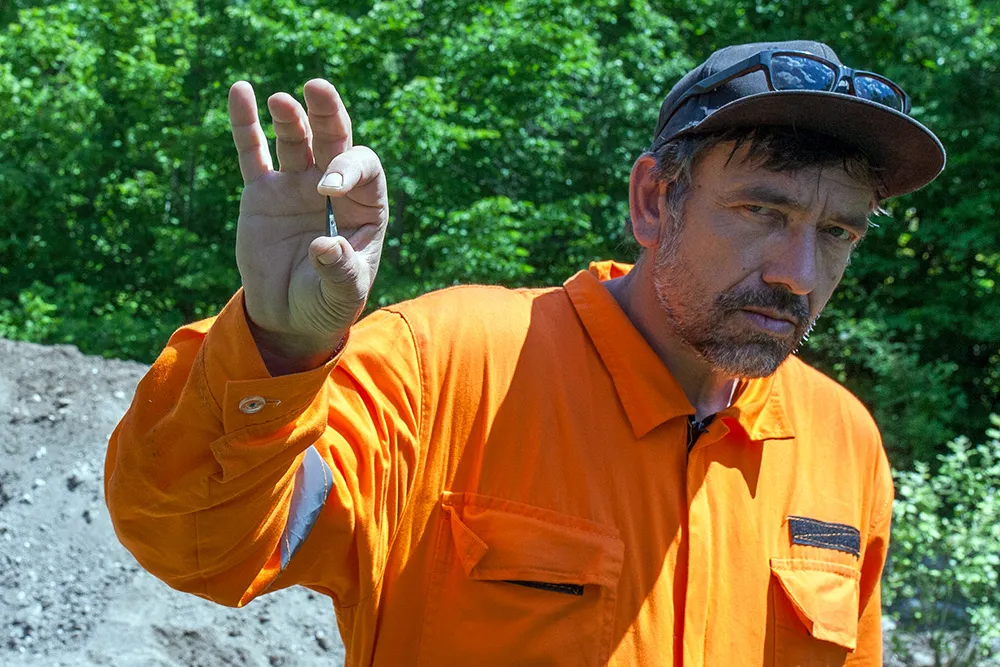
The very serious and stern Pavlo Nechytailo shows a Scythian arrowhead… An expedition is no time to smile!
Right while the “Ukraine Incognita” correspondent was in Maliivtsi, another interesting find was made. It was announced by triumphant shouts from the students who found it. At a depth of 2.2 metres, right at the base of the bell tower, a Scythian bronze arrowhead was dug up.
So far this is the only Scythian artifact, and how it may be connected with this particular site is hard to say. However, there is nothing strange in the Scythians “surfacing” here. After all, several burial mounds of that time are known in the surroundings of Maliivtsi.
The excavations in Maliivtsi are carried out as part of the field practice of students of the Khmelnytskyi Humanitarian and Pedagogical Academy. The practice is supervised by archaeologist Serhii Semenchuk, Candidate of Historical Sciences and associate professor at the academy’s Department of Social Disciplines.
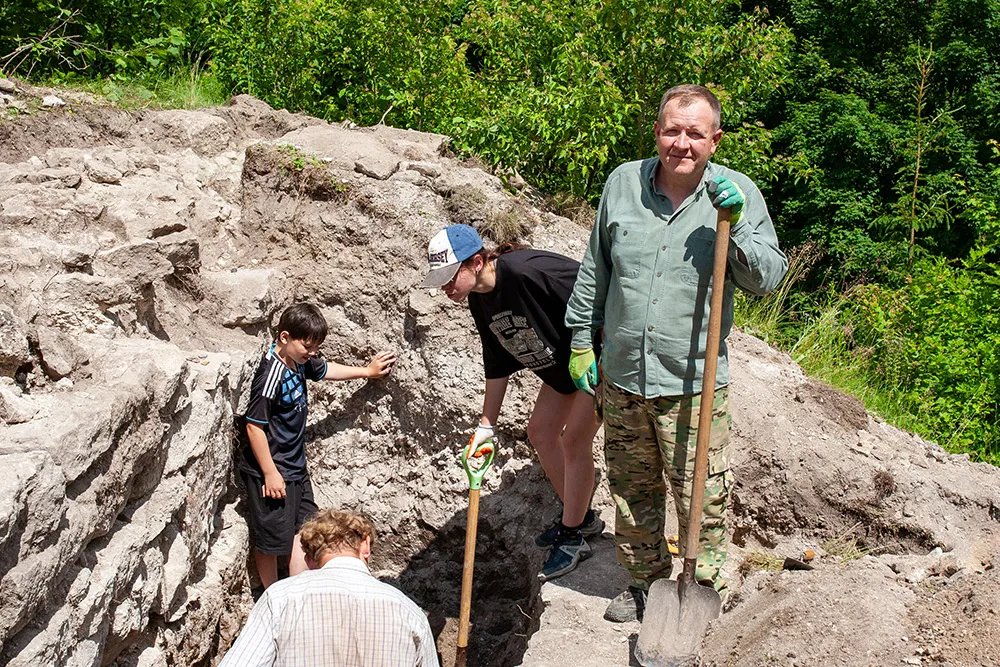
Serhii Semenchuk
“This practice is extremely important for our students,” says Serhii Semenchuk. “For future history teachers it is very important to touch our past in person like this, with their own hands. In this respect the research in Maliivtsi is extremely interesting, because it covers almost all periods from princely times to the 19th century. Accordingly, our students have a happy opportunity to find and hold in their own hands diverse artifacts of different times falling within this span. And, as has just turned out, the times of the glorious Scythians are added to it as well. By the way, those triumphant shouts that just rang out over the excavation vividly testify to their emotions. For everyone who took part in this expedition, the past is now not only dead lines in a textbook but a living heritage,” Serhii Semenchuk sums up.
In addition, the head of the student practice stressed one more important circumstance: “It is important that this expedition took place despite the full-scale invasion,” says the instructor. “The Russians want to take our history from us and replace it with their deceitful falsifications. Our students, by contrast, with their work contribute to preserving and studying the true history of Ukraine.”
The expedition will work until 21 June. We will learn the final conclusions of the excavations only after the results have been scientifically processed.
Text and photos: Dmytro Poliukhovych


