Bilorichytsia (Veisbakhivka)

· 6 min read
The village of Bilorichytsia in the Pryluky region has quite an interesting history.
Until 1945 the village was called Veisbakhivka; evidently, right after the end of the Second World War the Soviet authorities decided to change everything that had a German name, even if in such a way, simply translating it into another language.
In fact, the village, mentioned as early as 1629, was bought in 1717 (or 1727, that date exists too) by Johann Bernhard Weissbach (1665-1735), a native of Bohemia. Weissbach held the title of count of the Holy Roman Empire and devoted his whole life to military affairs. He began his career in the Austrian army, and in 1707 accepted an offer to serve Russia. He began as a colonel in Peter I’s dragoons. He distinguished himself in the Swedish war and within two years became a major general. After that he was left to defend the borders against raids by the Crimean Tatars; in 1715-1716 he was with the Russian corps in Ukraine, and on receiving the rank of lieutenant general in 1718 he headed the Ukrainian Corps. From 1720 he was commander of the troops in Little Russia, and from 1723 a member of the Military Collegium. In 1725 Catherine I gave Weissbach the rank of general of cavalry, or general-in-chief. In 1731 he was appointed governor-general of Kyiv (until 1735). And finally, in 1735, while preparing a campaign to Crimea, he died. This happened not on the battlefield; as they write, he died of an inflammation of the stomach.
Naturally, being almost constantly on Ukrainian lands, the count acquired villages for himself. So it was with the khutir of Kryvenky, which Weissbach renamed Veisbakhivka. It should be said that in this period, especially as governor of Kyiv, the “Bohemian count”, as he was called, bought up land quite actively; he is considered the second largest landowner in Ukraine after Menshikov, owning 1,245 peasant households. These were mostly lands confiscated from Cossack officers, including 500 households with peasants given to the count in 1722 by the tsar after they were taken from Pylyp Orlyk.
Then the owners of the village changed. First an officer of the Izmailovsky Regiment, O. Hampf, and in the mid-19th century Colonel Ivan Mykhailovych Korbe (1800-1868) of the Life Guards Uhlan Regiment, who later rose to major general. Taras Shevchenko met with him several times.
In 1850 Veisbakhivka and the village of Voronky (we will mention it again) were bought by Arkadii Vasylovych Kochubei (a representative of one of the most famous Cossack families) and transferred to the ownership of his son Mykola Arkadiiovych (1827-1865), who in 1858 married Princess Olena Volkonska. Olena Serhiivna (1835-1916) was the daughter of the famous Decembrist Serhii Hryhorovych Volkonskyi (1788-1865) and was born in Transbaikalia, at the time when her father was serving a 20-year sentence in exile.
Arkadii Vasylovych Kochubei was Olena Serhiivna’s second husband, and Kochubei himself was marrying for the third time. Her first husband was Dmytro Vasylovych Molchanov, but he died young, leaving 22-year-old Olena Serhiivna a widow with a 4-year-old son, Serhii (1853-1905). By Kochubei, who already had a daughter, Olena Serhiivna bore another son, Mykhailo (1863-1935).
And again she had no luck: Kochubei also died, at the age of 38.
Olena Serhiivna did not give up and married for the third time, this time the manager of the Kochubei estates, the landowner Oleksandr Oleksiiovych Rakhmanov, and bore him two daughters, Maria (1871-1952) and Olena (1875-1946). Interestingly, both were born in Kyiv, and Maria, it turns out, was born out of wedlock, since the marriage took place in 1873.
In the 1870s Oleksandr-Eduard Yuliiovych Yahn (1848-1822), an architect and artist, arrived at Voronky. Himself from a dynasty of Penza doctors, he chose a different, creative path. He graduated from the Moscow School of Painting and Architecture and then from the Roman Academy of Arts. Why exactly he came to the provinces, history does not say. Yahn already had works in both Italy and France. Be that as it may, at Voronky he became infatuated with Olena Serhiivna, who was 13 years older than him. She broke off her marriage to Rakhmanov, and since the church did not allow a fourth marriage, the “young” couple settled in Veisbakhivka together with Olena Serhiivna’s daughters. One source writes that the couple had a daughter, Oleksandra, who bore the surname Rakhmanova. We cannot say this for certain.
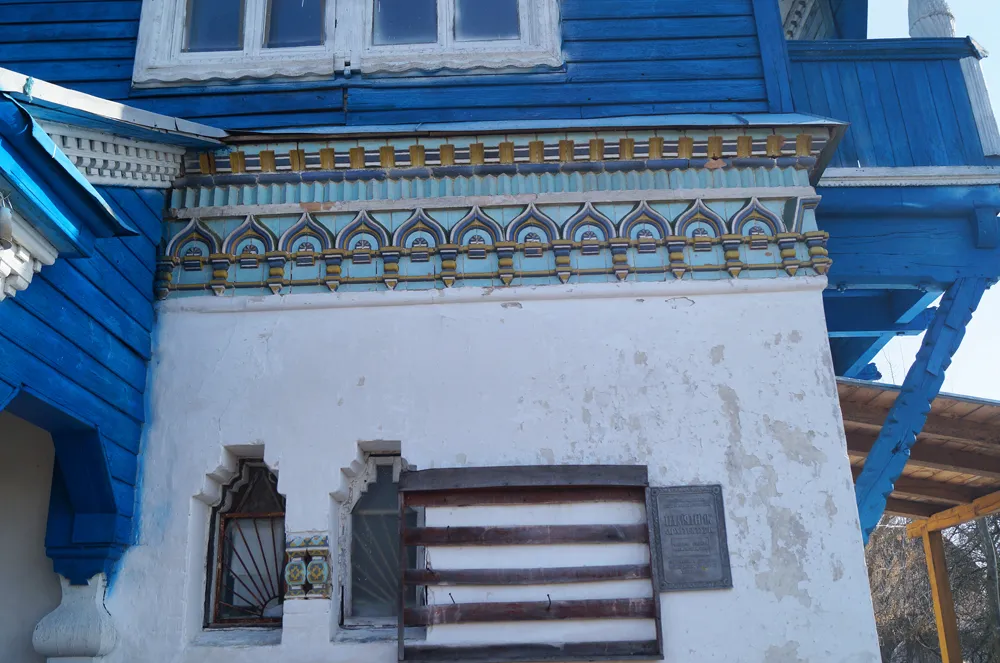
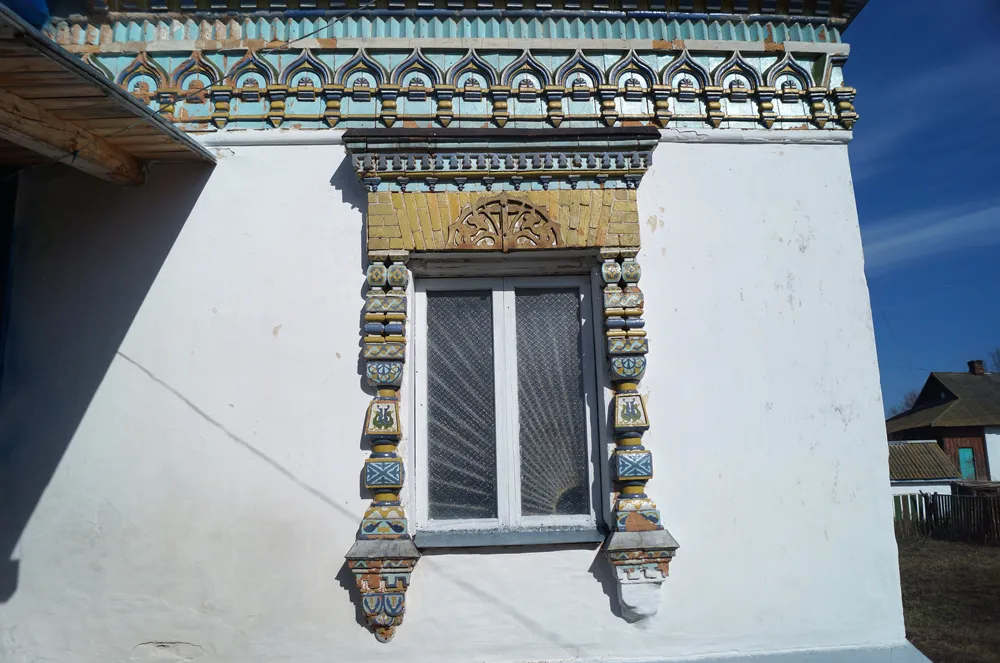
Oleksandr Yahn immediately set to work. In Veisbakhivka he built a brick factory and created art and production workshops where ceramic tiles were made; to his design a fairy-tale church-mausoleum was built at Voronky over the graves of Olena Serhiivna’s father and mother, unfortunately no longer existing – it was destroyed in Soviet times, and the church was magnificent. Going back, let us say that Serhii Hryhorovych Volkonskyi, after serving his exile, in 1859 settled with his wife at Voronky, at the home of his then son-in-law Mykola Kochubei. They died and were buried at Voronky, the mother in 1863, the father in 1865.
For the Kochubeis, to Yahn’s design, a chapel-mausoleum was also built in Yaroslavets, a house for M. M. Kochubei at Voronky, and manor houses in the Poltava, Sumy and Kyiv regions.
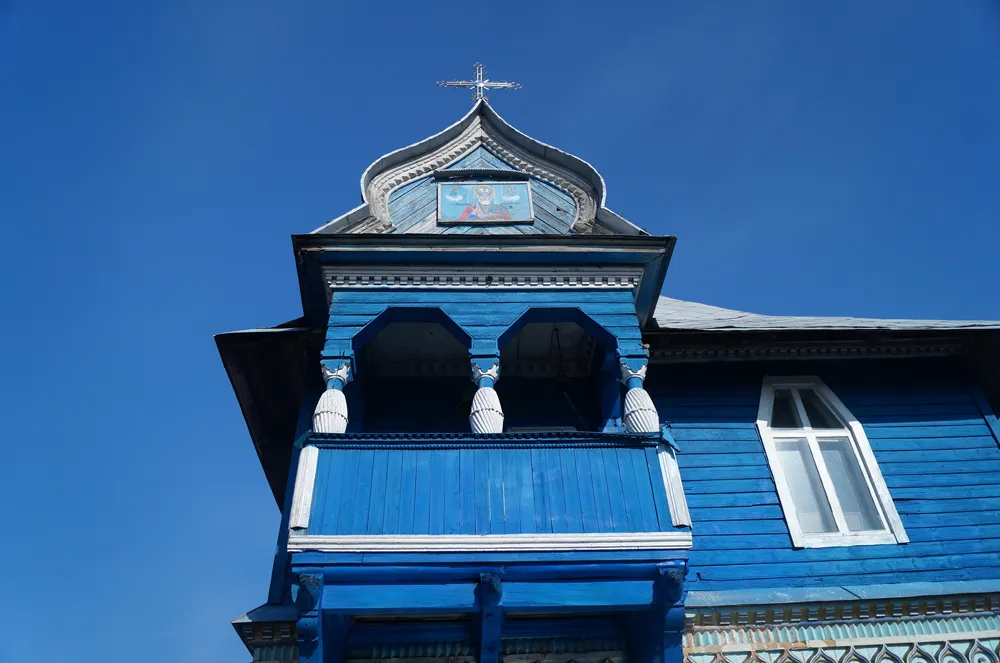
In Veisbakhivka itself a total reconstruction of the estate took place. A whole complex of new buildings was built. At this time a new three-storey palace (1886), an outbuilding (1878), a hotel, a bakery and a church appeared. A distinctive feature was that majolica and terracotta were lavishly used in the finishing of the buildings; it is no wonder Yahn was called a master of artistic ceramics. And inside, Yahn’s old fellow student, the artist V. M. Sokolov (1841-1921), did his best, painting the interiors.
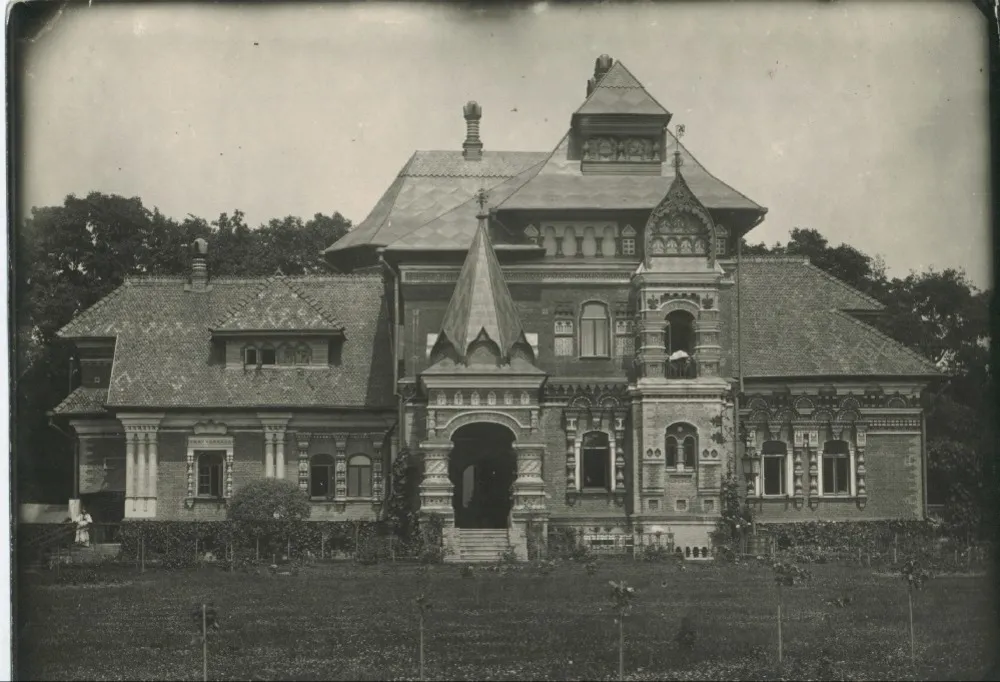
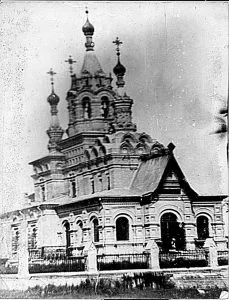
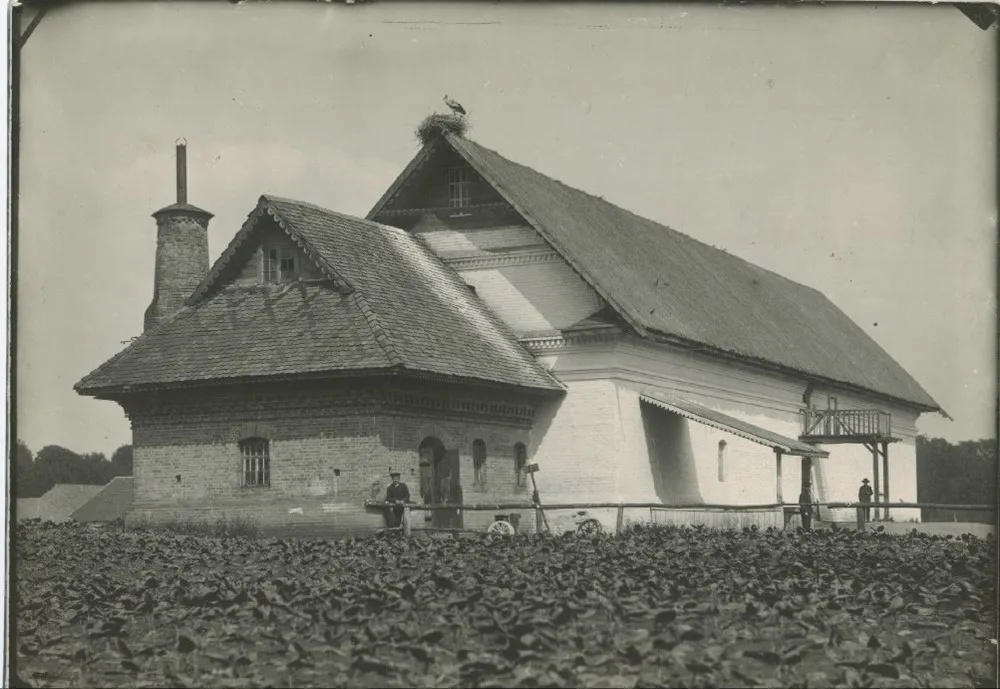
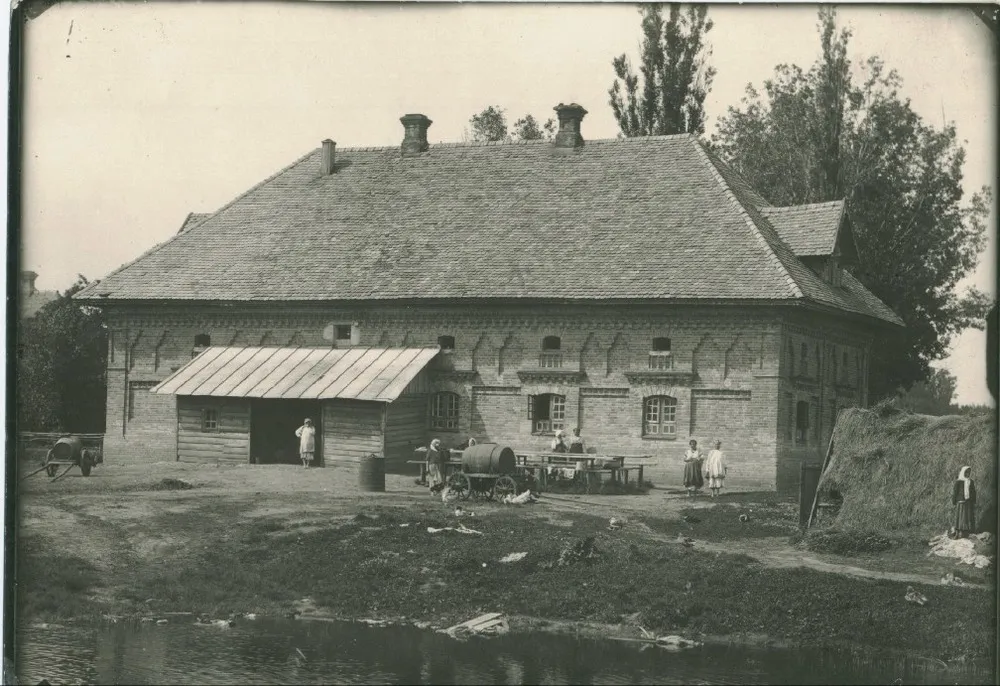
The estate in archive photos.
The park was also redesigned, essentially laid out anew, with a new one added as well (of the park beyond the village only a couple of pines remain); fruit orchards were planted; two ponds were dug, on which artificial islands were built.
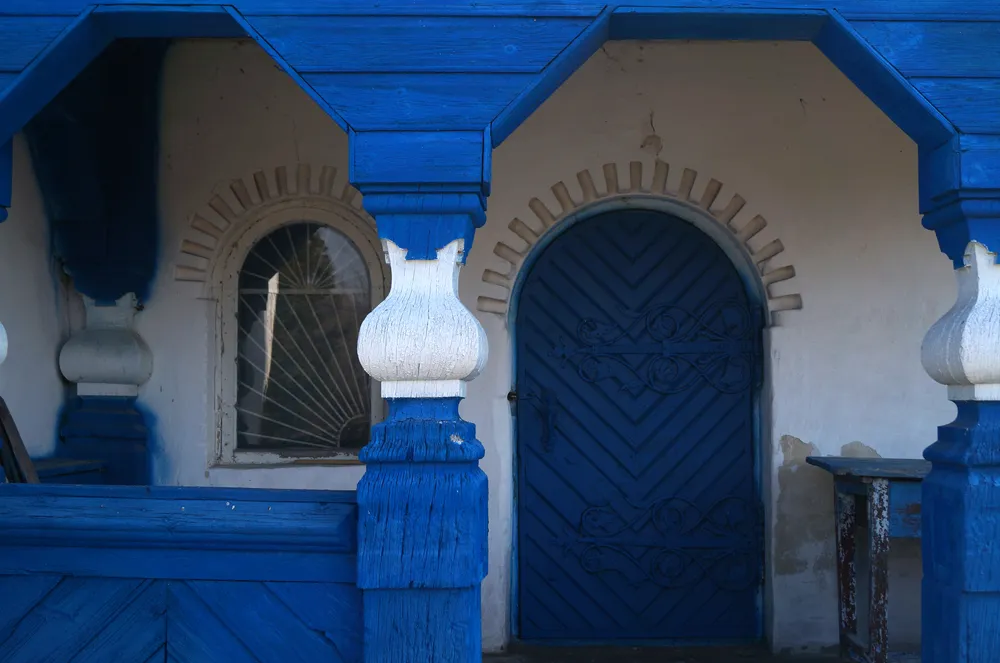
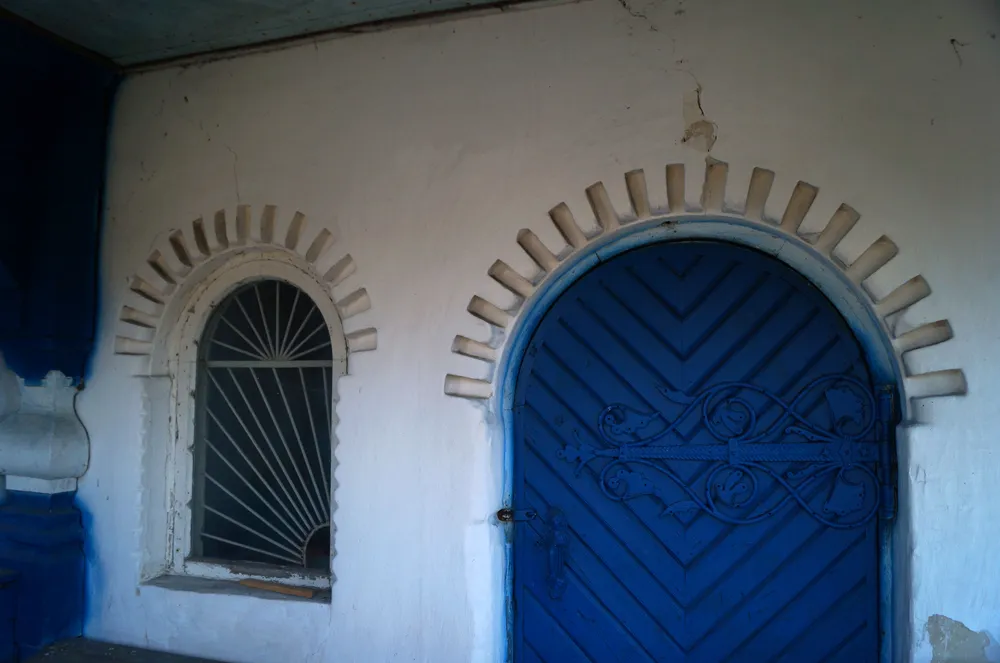
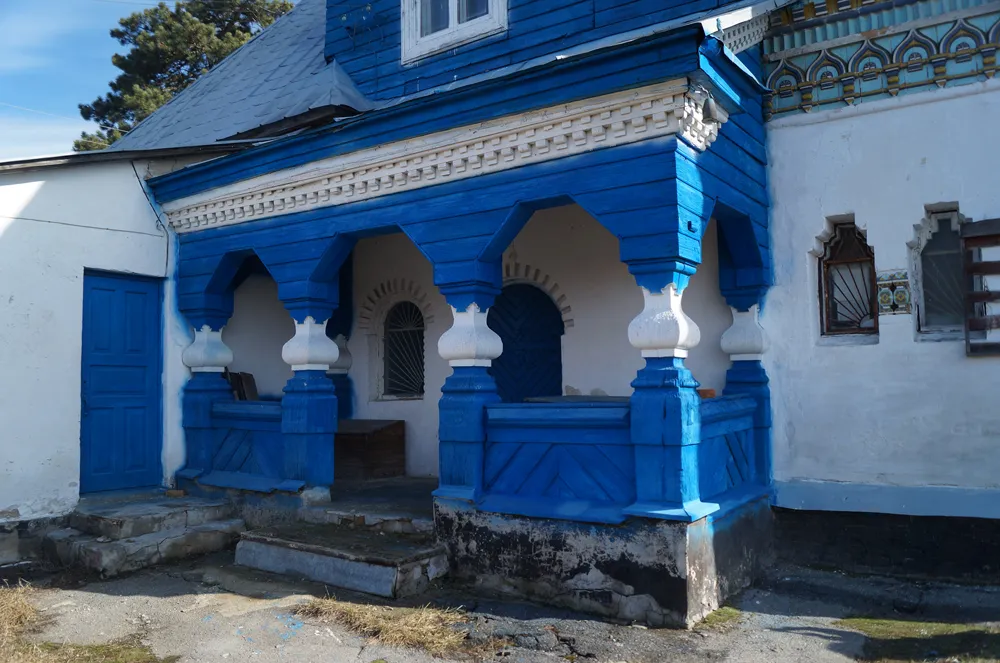
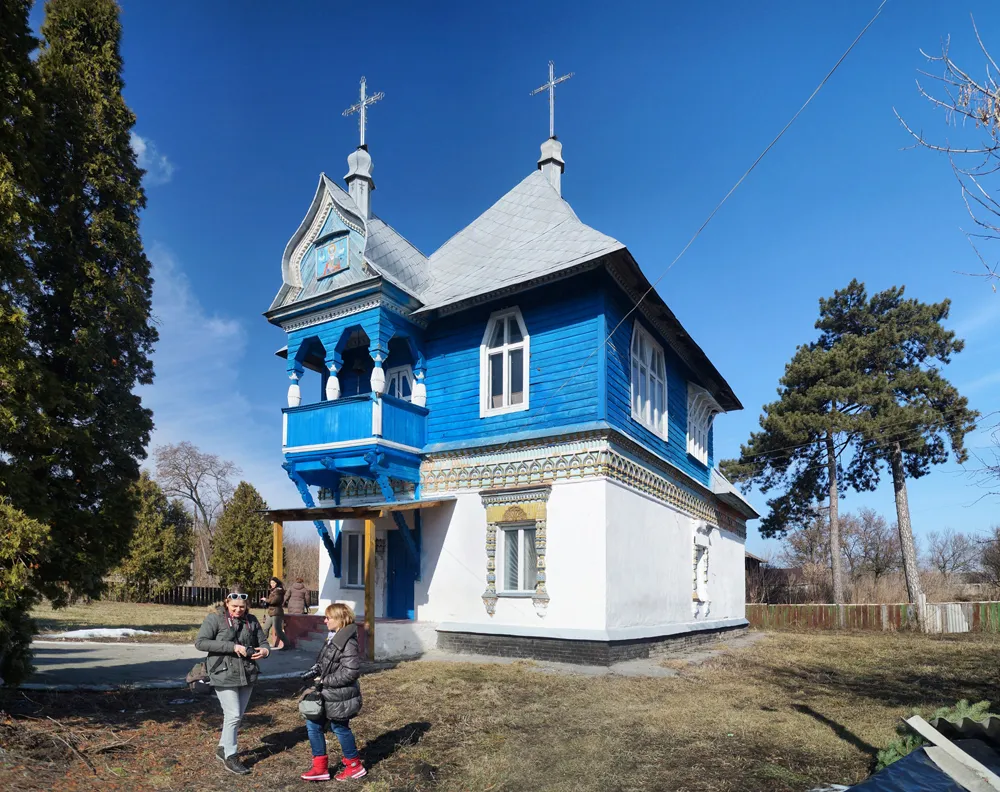
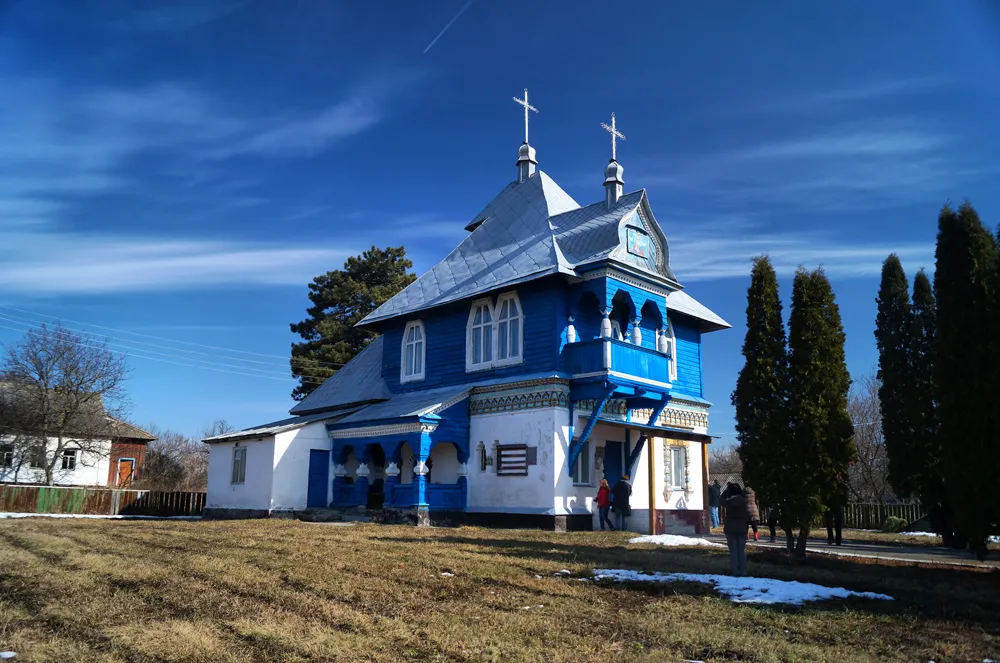
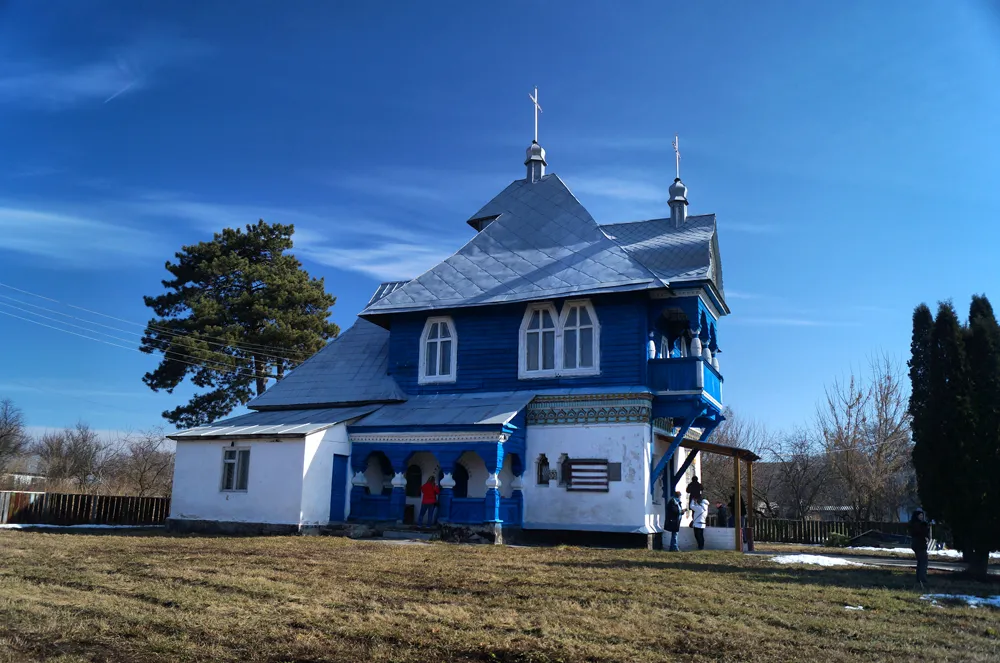
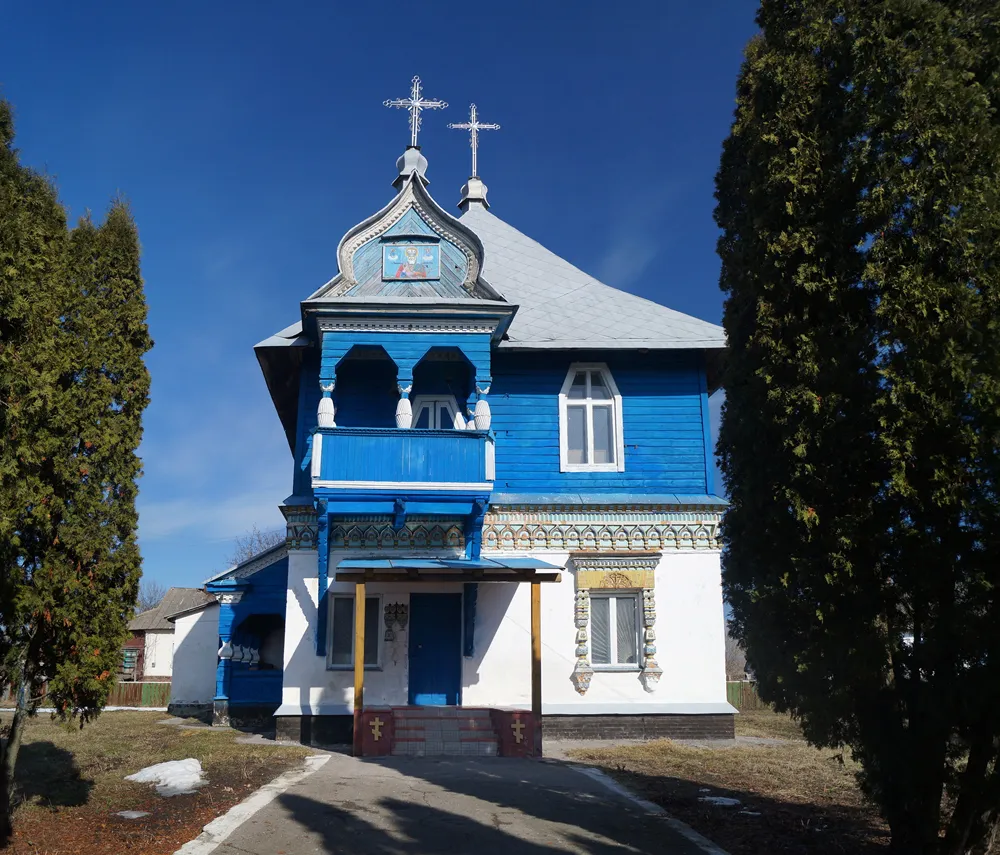
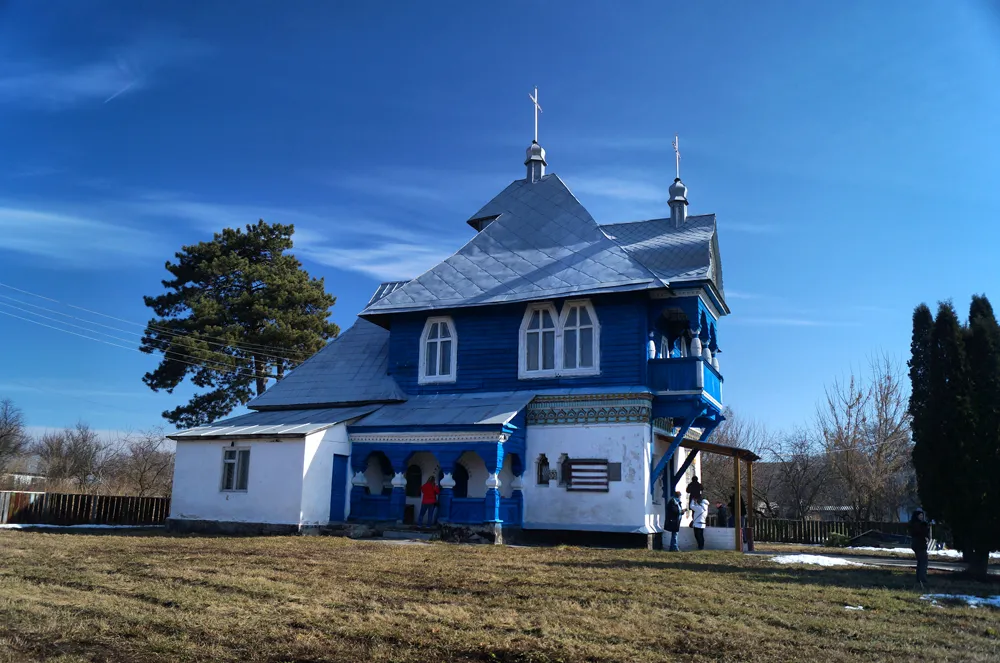
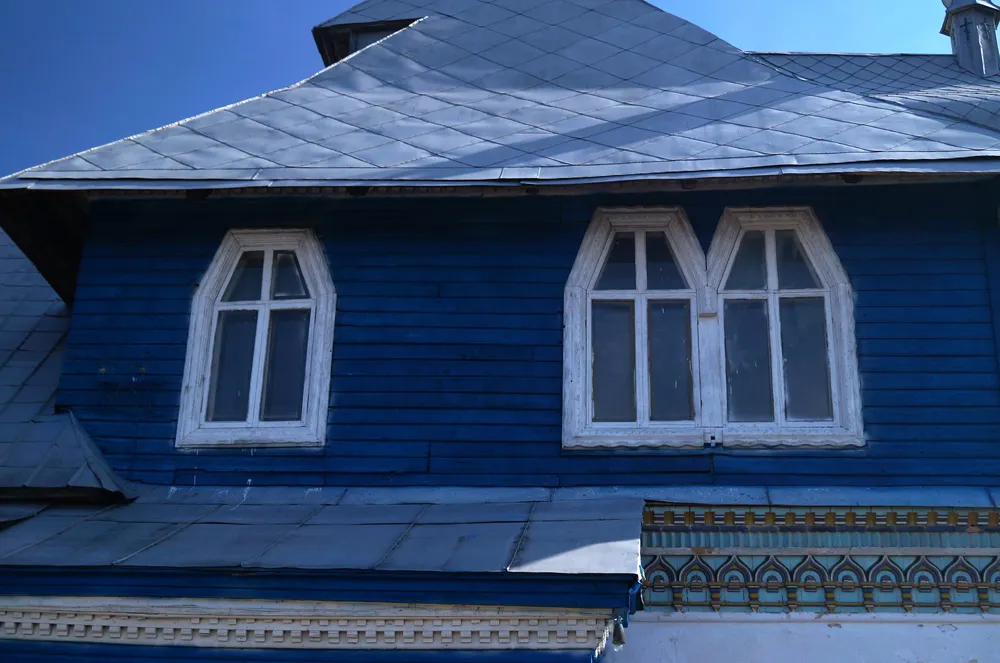
Unfortunately, of the buildings only the outbuilding has survived to our time, which now houses the Holy Nicholas Church. Some buildings began to be dismantled even in the interwar period. The palace suffered greatly, was practically destroyed during the war, and after it what remained was dismantled. And the church was finally dismantled under Khrushchev, in 1962.
Although Yahn is considered one of the founders of Ukrainian Art Nouveau, the buildings of Veisbakhivka are nevertheless eclecticism, and an eclecticism that combines Ukrainian and Russian motifs.
It is also known of Yahn that he planned the roof and interior decoration of the Moscow Upper Trading Rows (1889-1893, now GUM), and in 1902 majolica decor was made from Yahn’s sketches for the decoration of a church near the town of Shipka in Bulgaria; he also designed the building of the Saratov Conservatory.
Yahn and Sokolov lived in Veisbakhivka until their deaths, died a year apart, and are buried in the village, although the crypts no longer remain.
Somewhere in the village there is still an old wooden zemstvo school house, if it has not been dismantled yet.
Text by Ihor Dorozhko, photos by Roman Malenkov.