

Busha. Ancient necropolises and the Haidamaka Ravine

· 3 min read
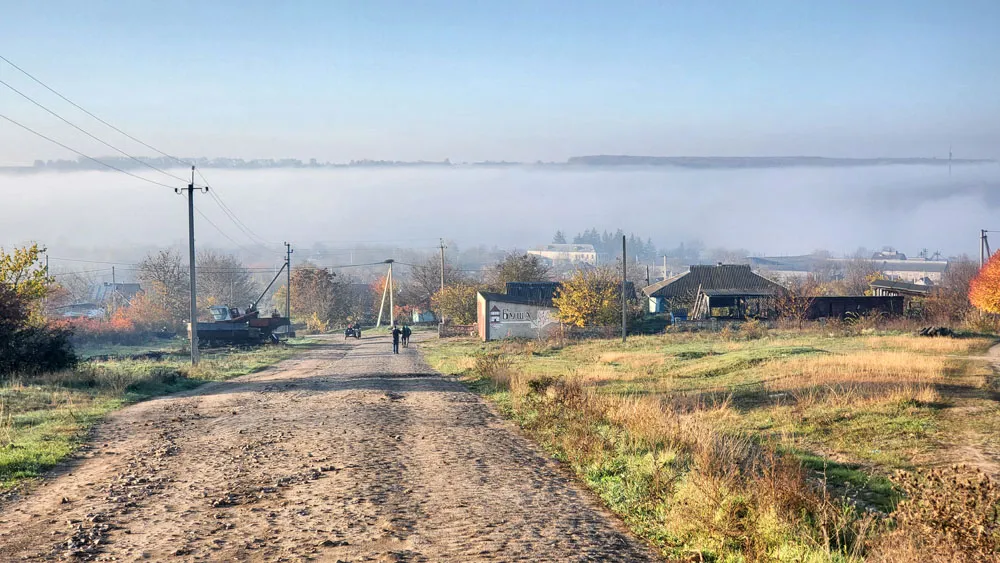
We have already written about the incredible village of Busha, but back then we somehow missed some incredible locations situated in Busha itself and next to it: two old cemeteries and a fairy-tale ravine called the Haidamaka Ravine.
Haidamaka Ravine
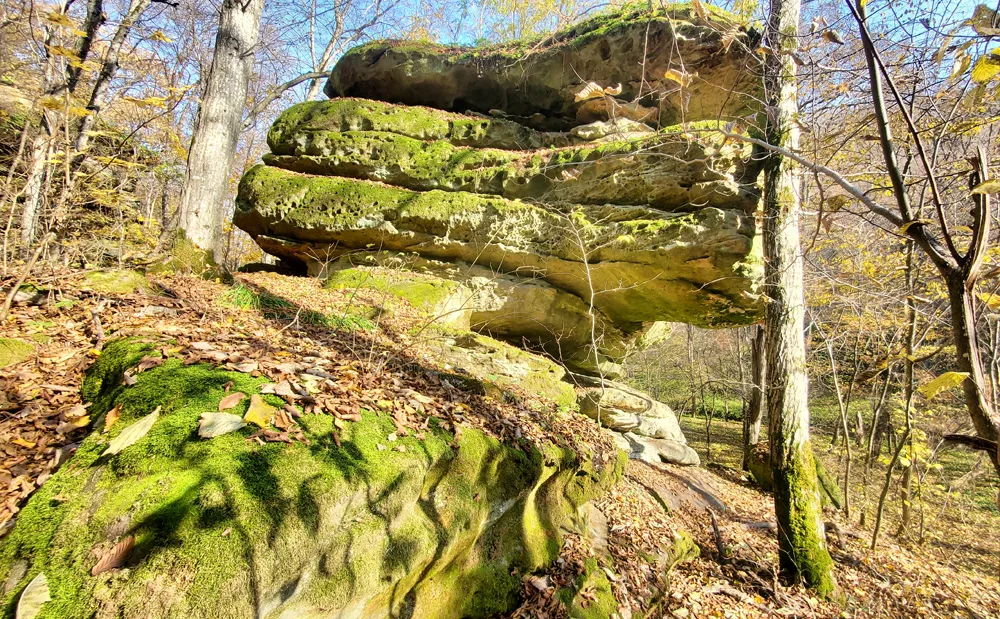
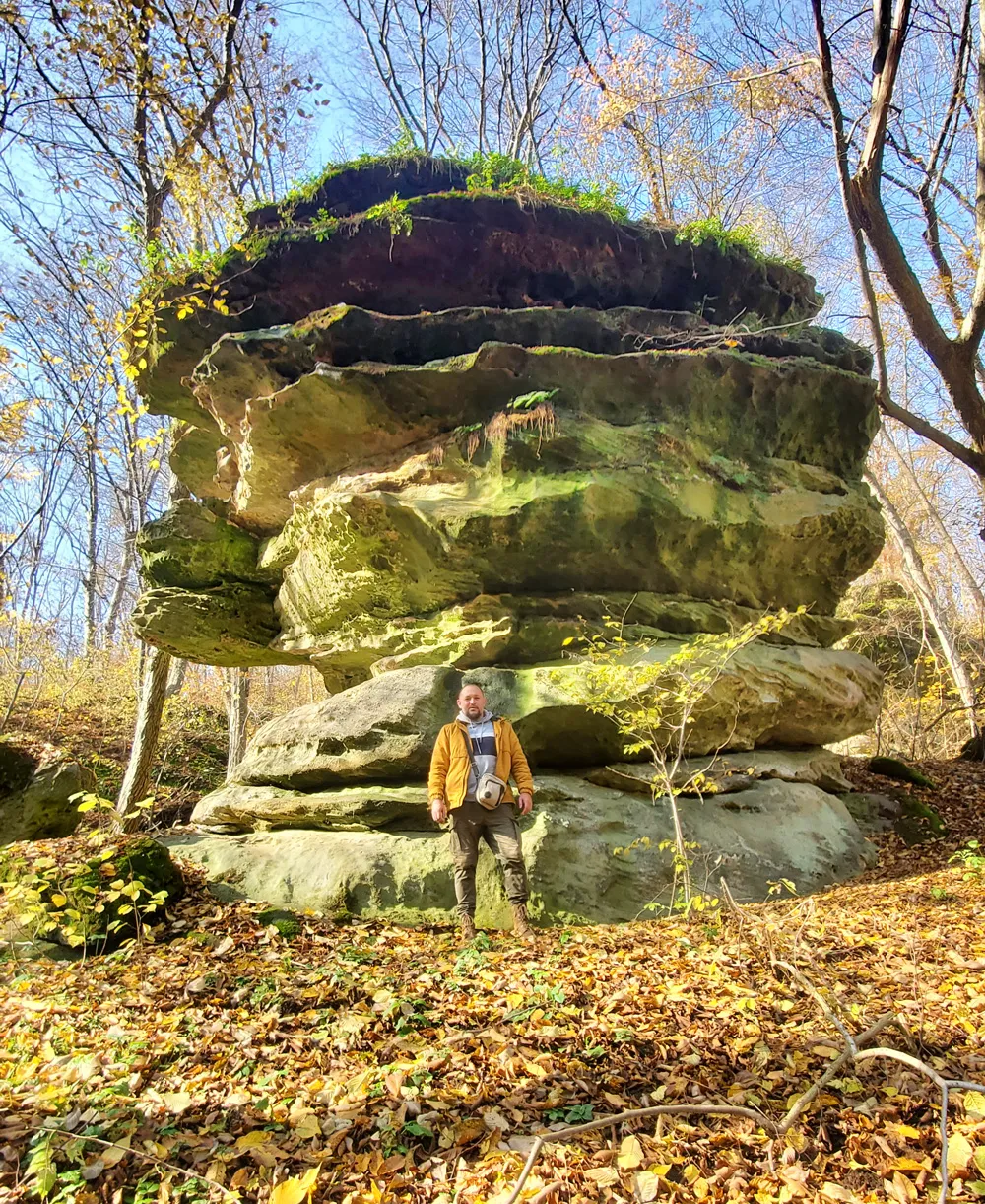
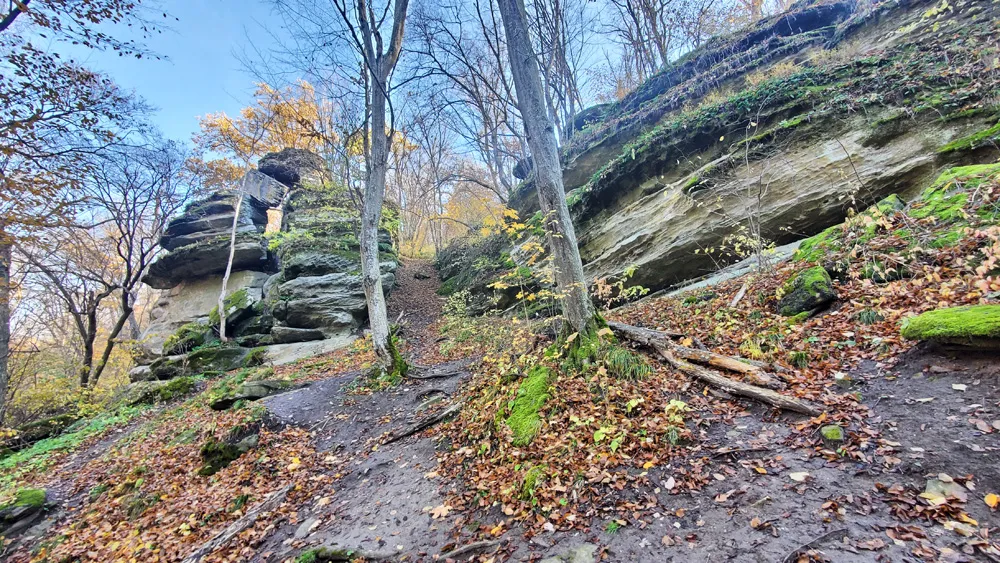
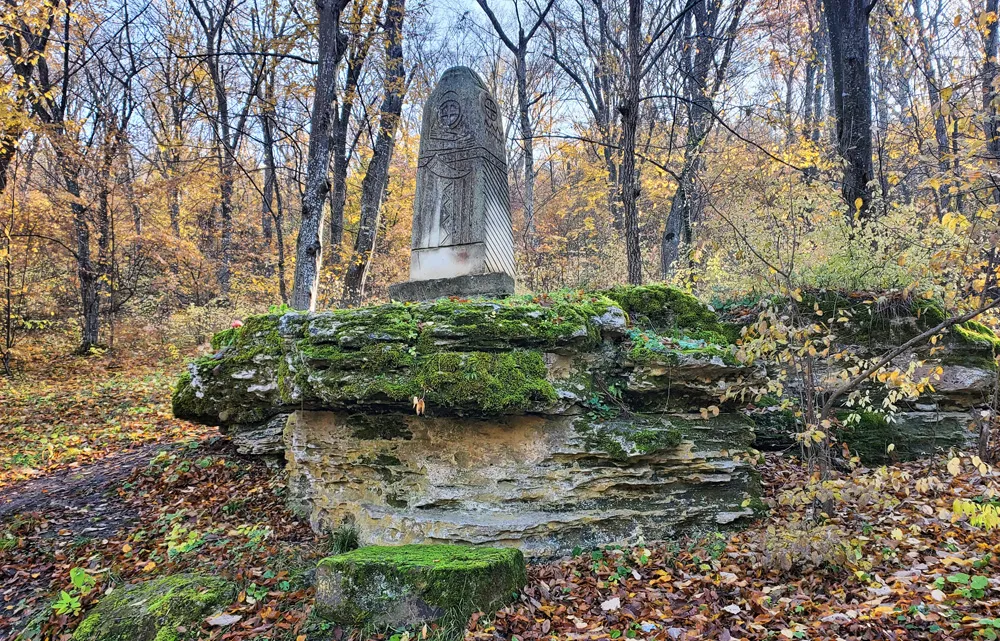
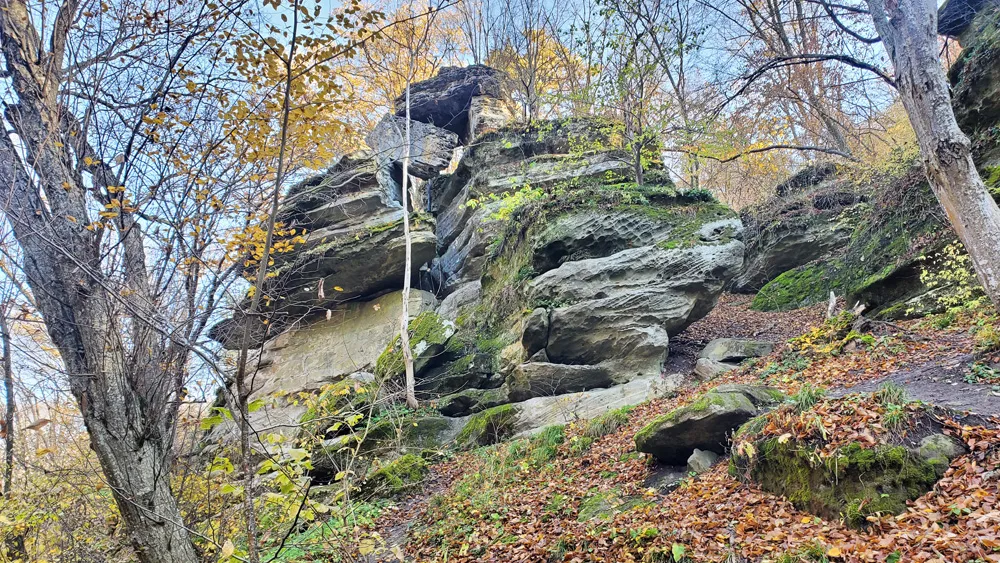
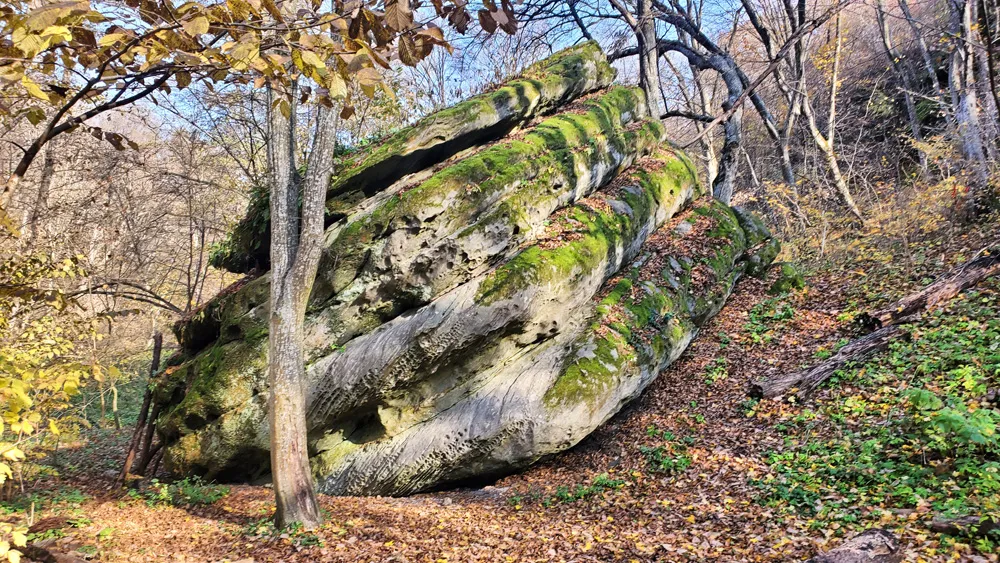
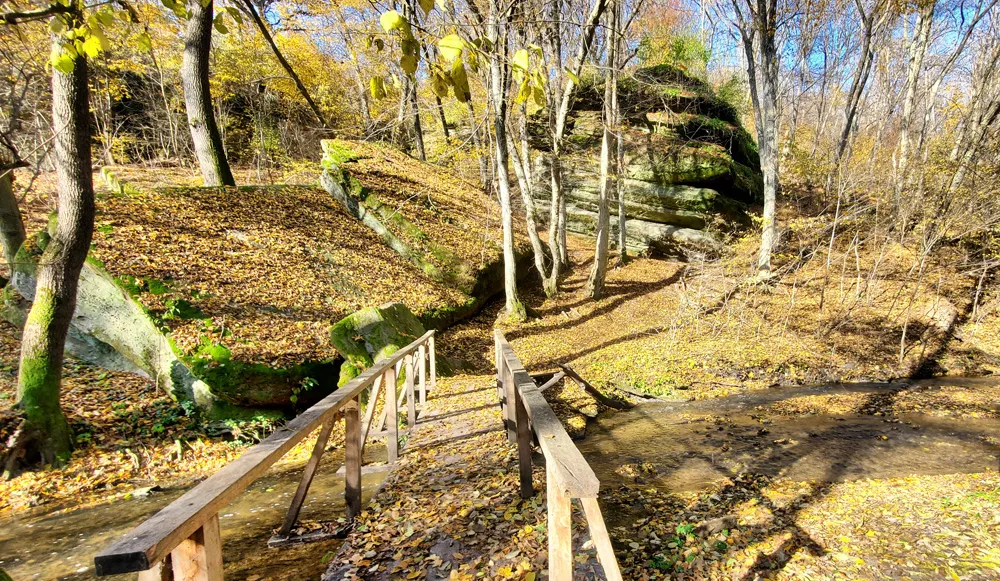
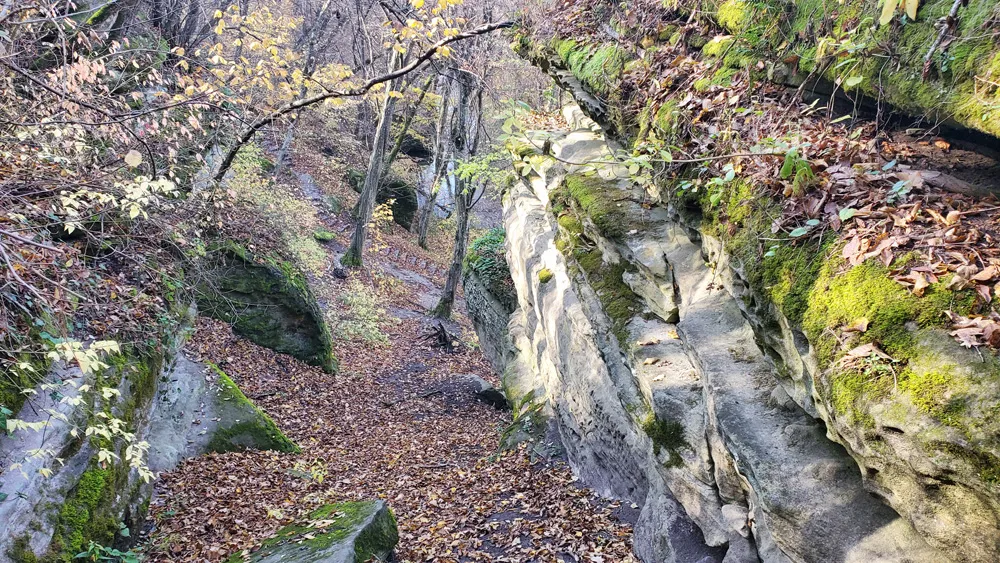
To my mind it is not quite a ravine: in places this tract looks like a stone canyon. It is a realm of rocks formed by the Bushanka River, which cut a deep valley through limestone and sandstone. Some rocks are quite tall, about ten metres high, and there are fantastical rocks that local residents have given their own names: the Mushroom, the Ram, the Haidamaka. As for the name of the ravine, it is easy to understand: the haidamakas hid here and from here raided the landlords, or so folk legends say.
The Haidamaka Ravine is not a very well-known location compared, for example, with the rocks of Urych or the Dovbush Rocks, but it is certainly no less interesting, especially if you come here at the end of October. Without rain. When the trees are almost bare, everything around is covered with fiery yellow and reddish leaves, and the textured layered rocks stand naked and beautiful. They say that in summer this ravine is quite different, overgrown and less interesting, and full of mosquitoes besides. Probably, if the trees near the most interesting rocks were cut down, everything would be much more attractive. It would be better to lay out a route with plenty of viewing platforms: nowadays everyone comes for beautiful photos, and they are hard to take in the thickets. And with proper promotion, the Haidamaka Ravine would become a national tourist star.
Cossack cemetery
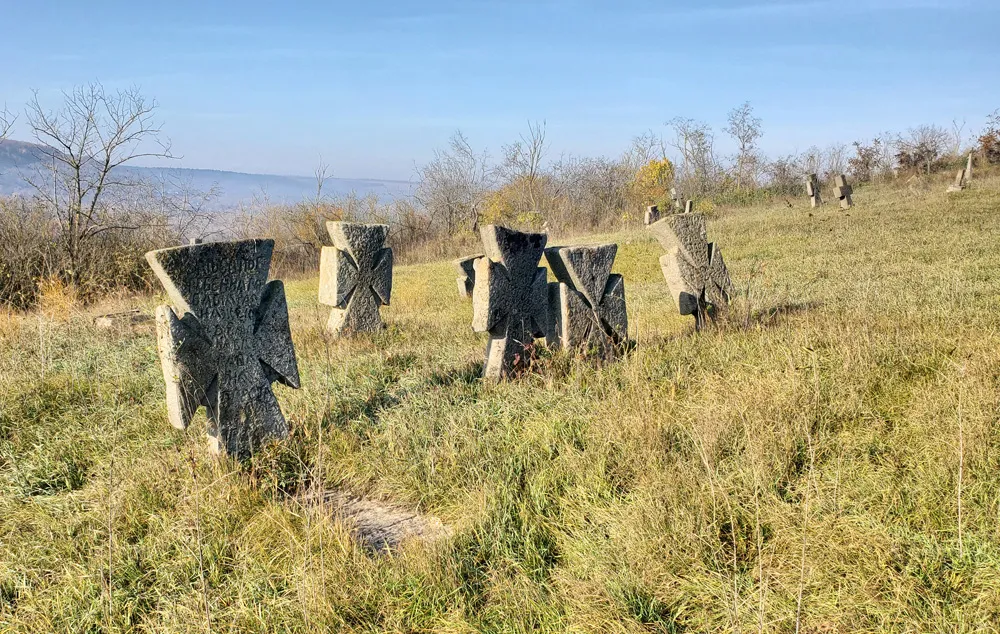
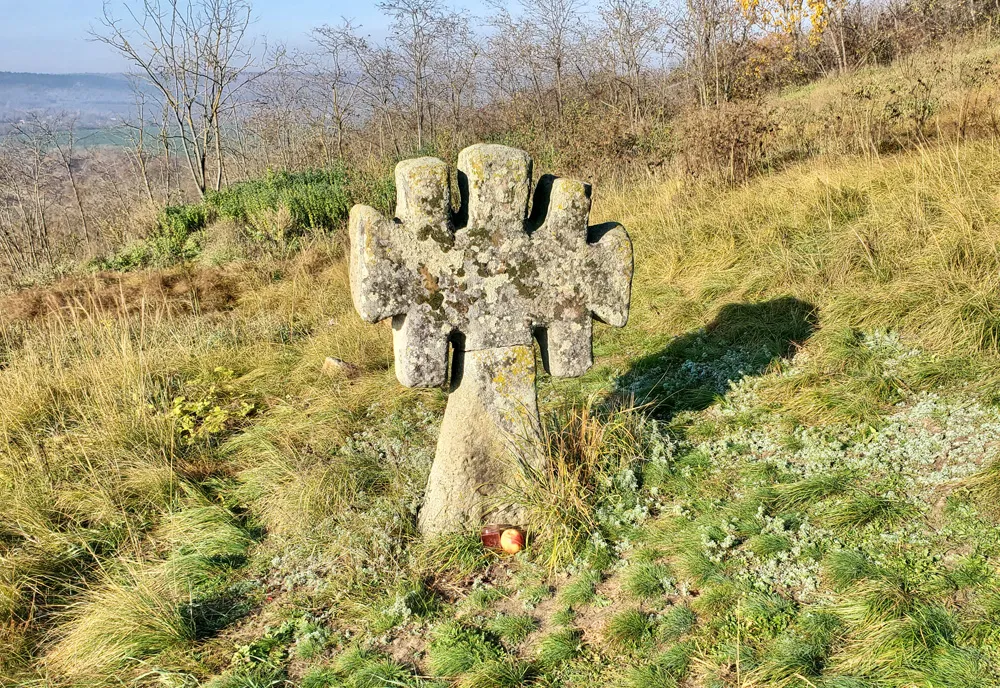
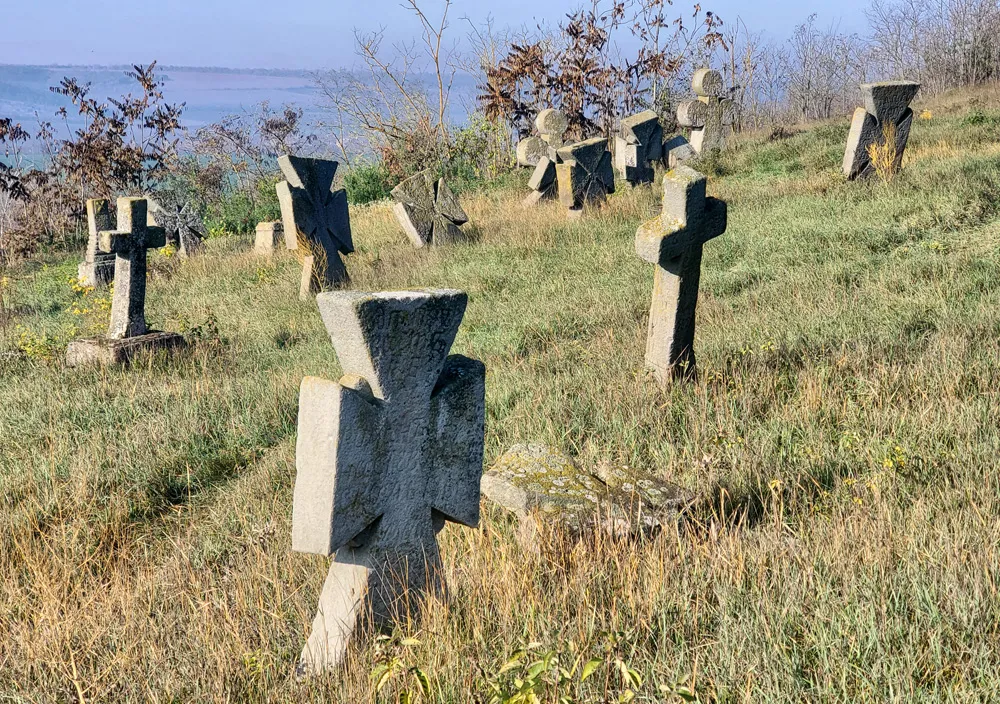
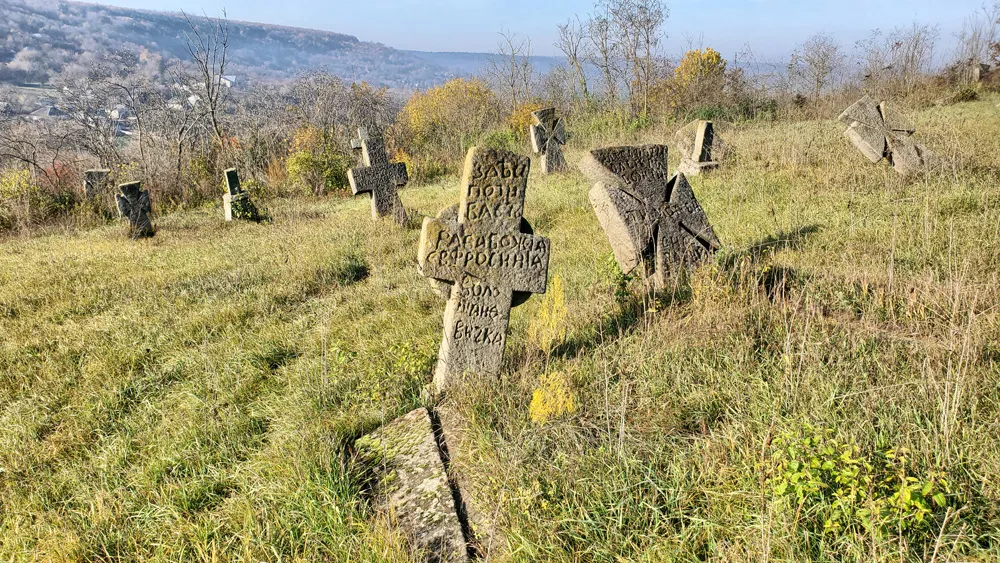
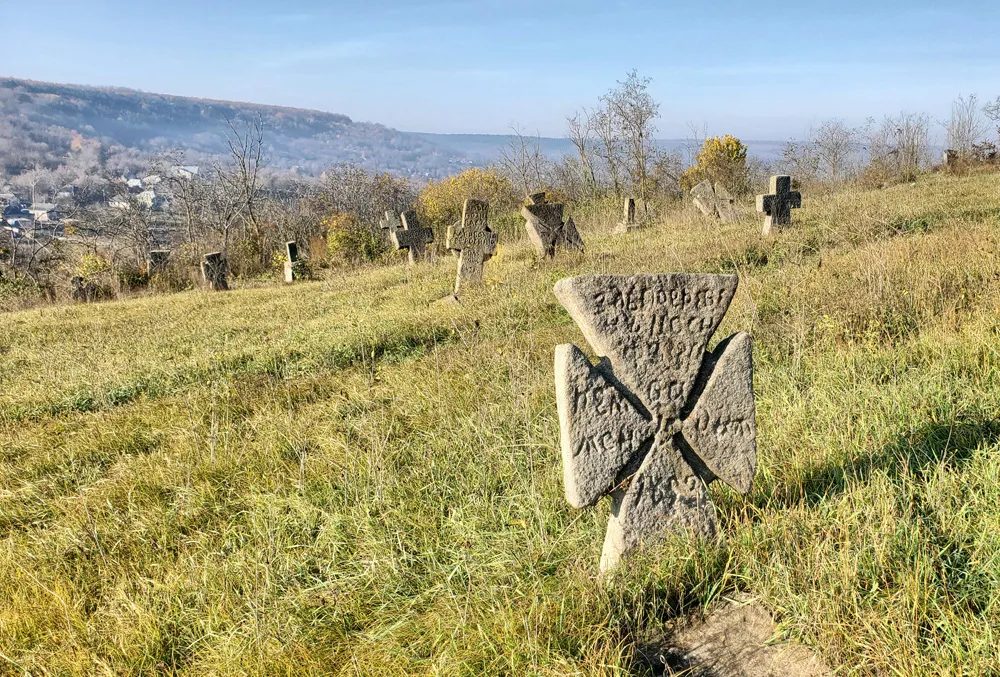
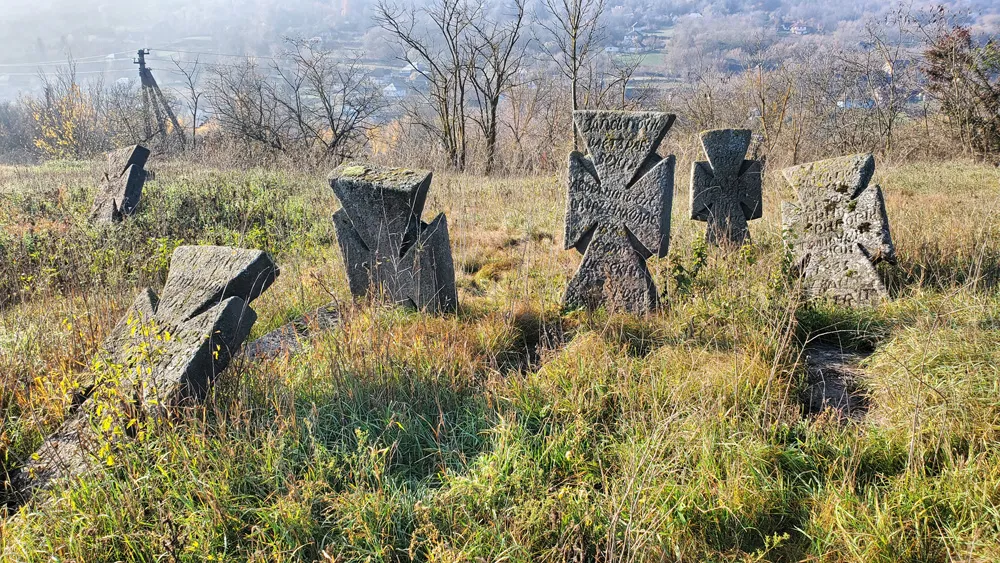
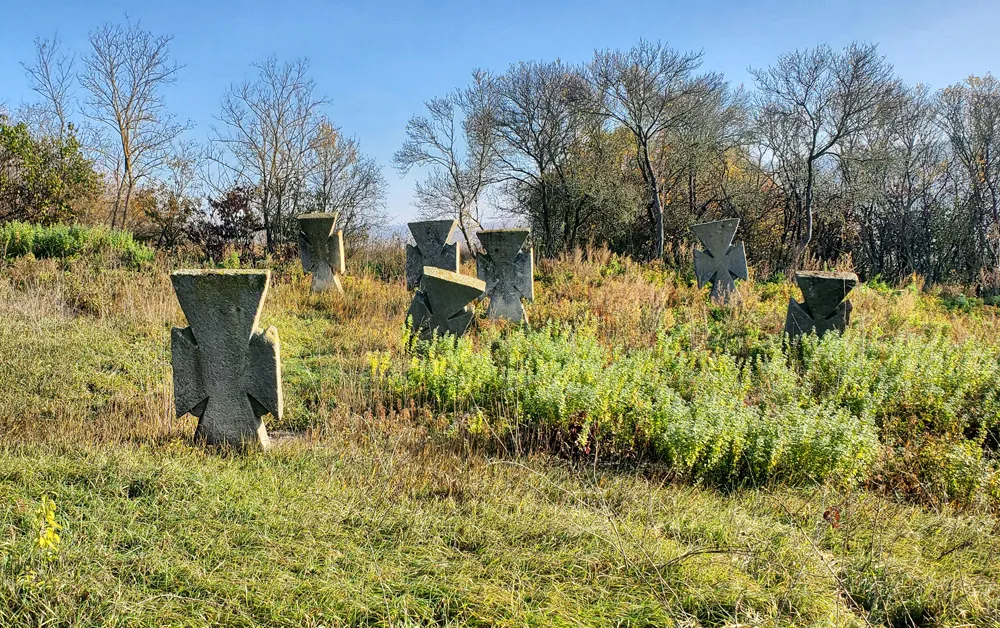
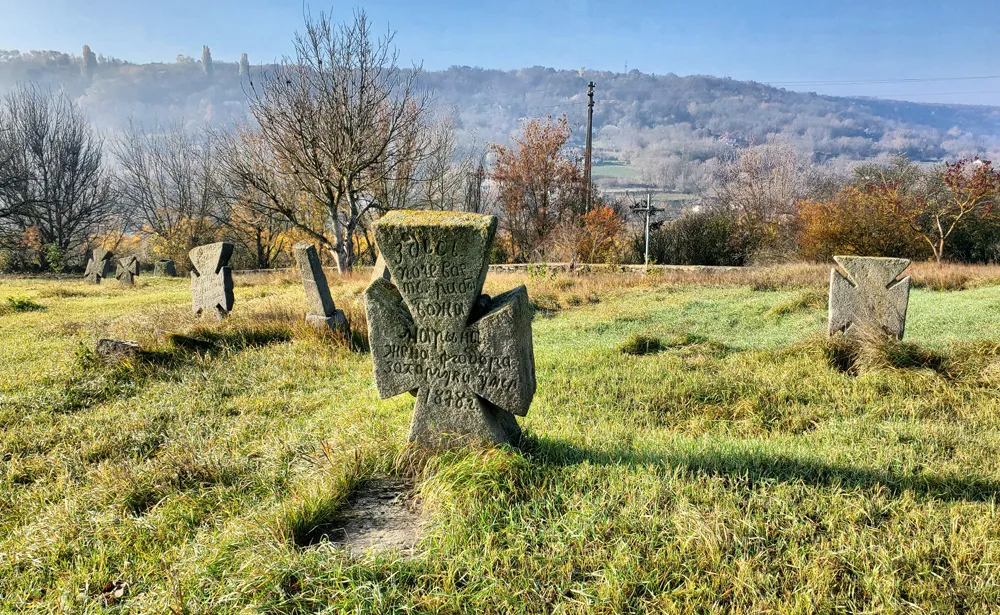
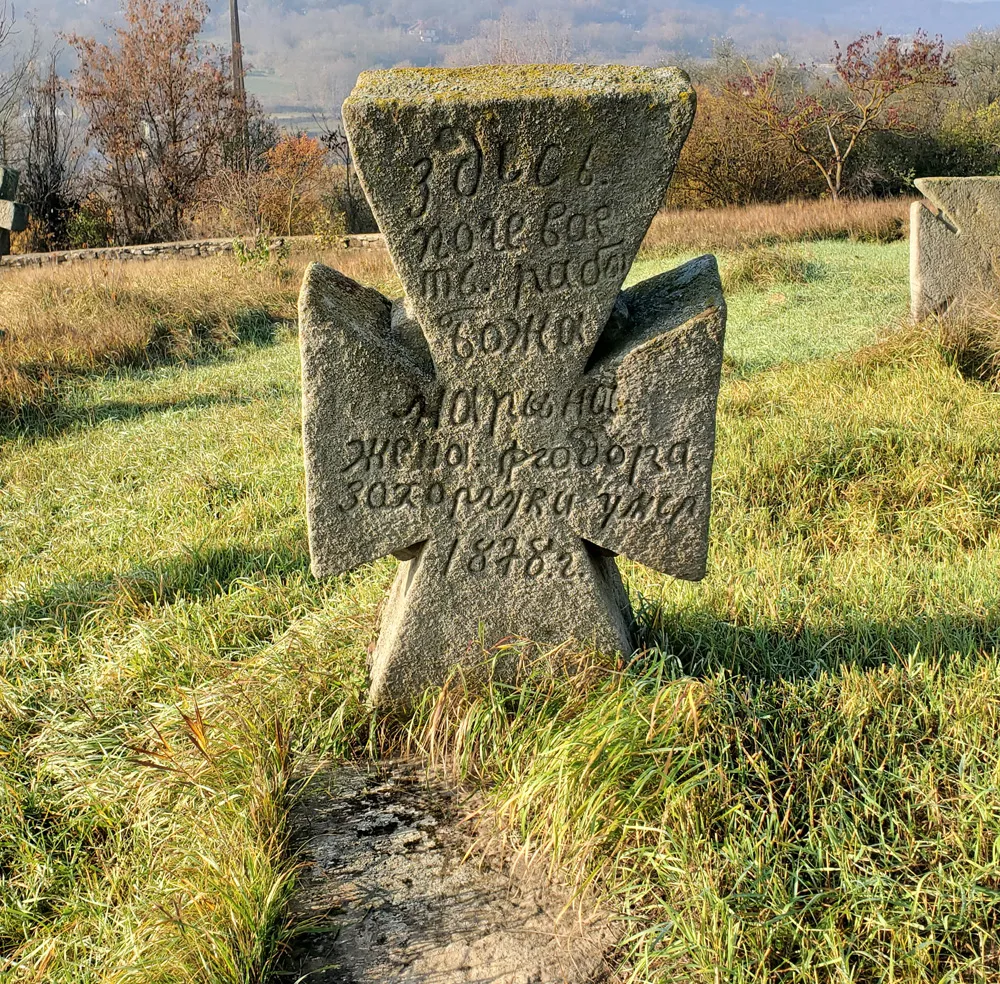
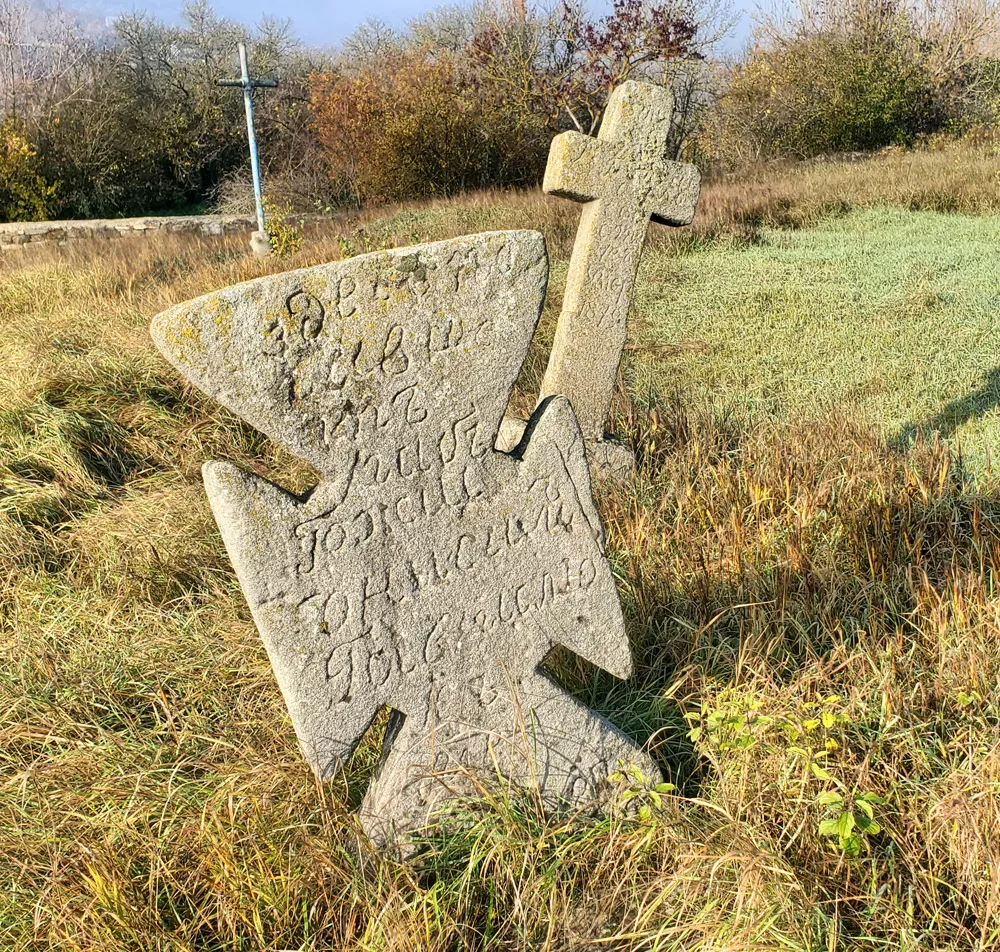
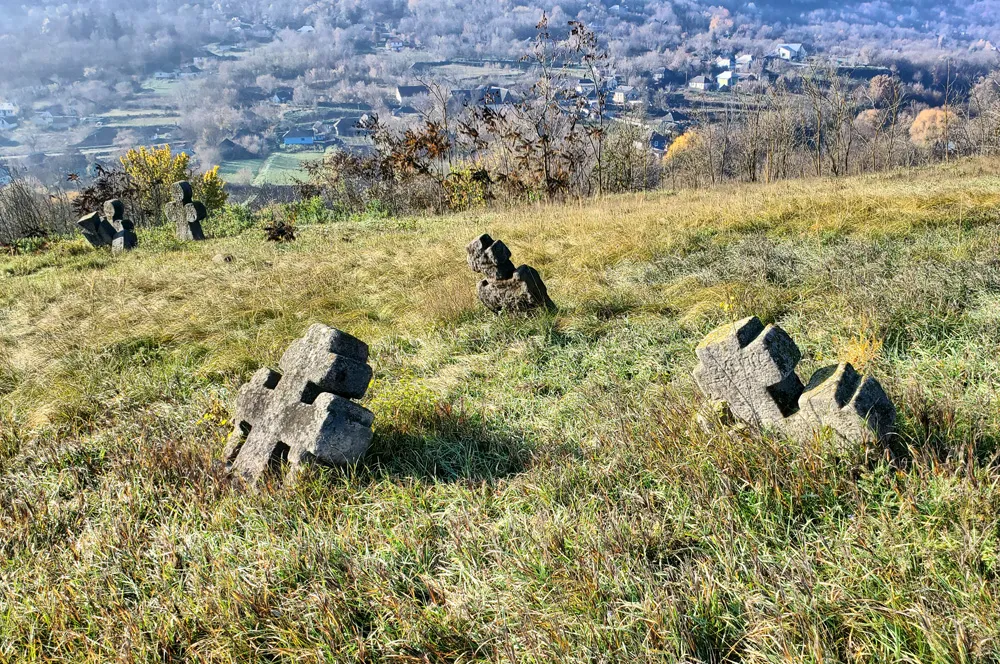
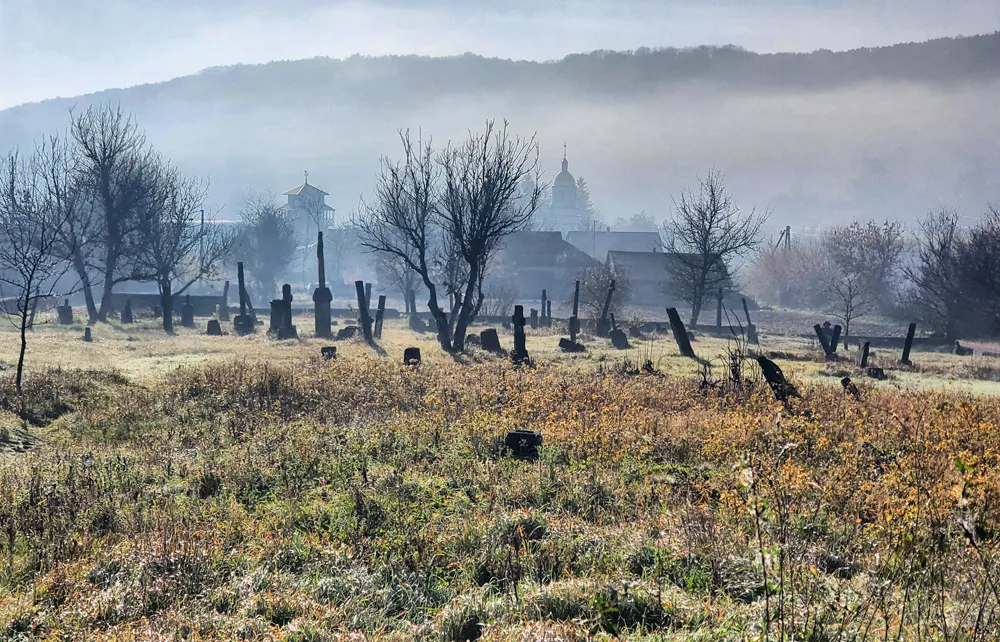
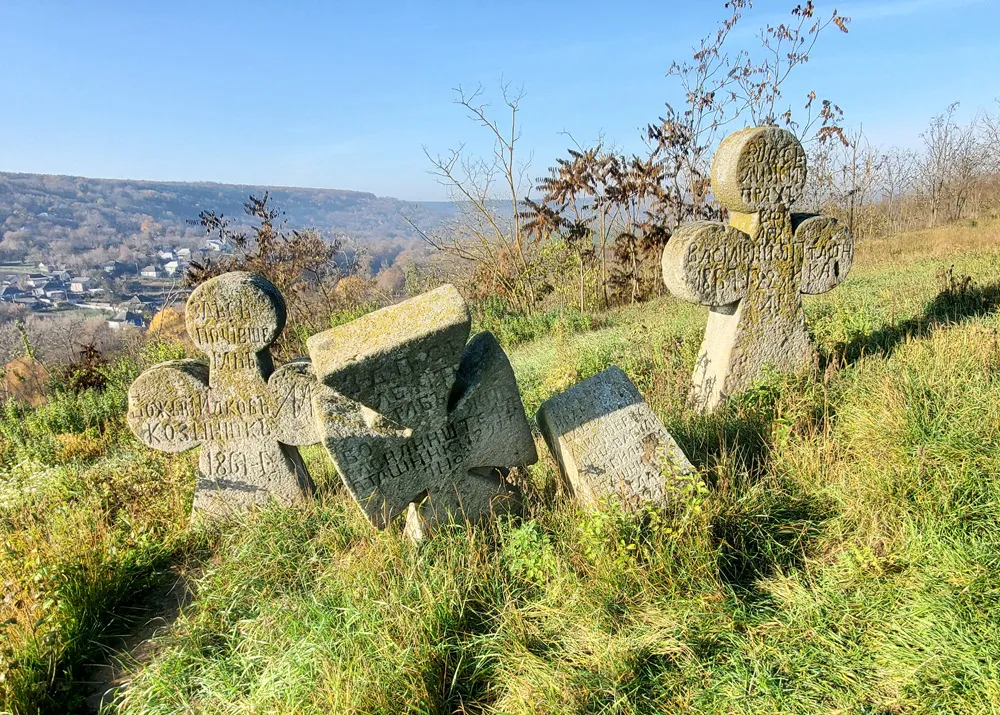
A huge cemetery with stone crosses. It is traditionally called Cossack, although most of the burials in it date from the 19th century and those buried there are peasants. Still, they say that Cossacks who defended the castle in Busha in 1654 were buried here. The epitaphs on their crosses crumbled long ago, and often the crosses vanished too; then the graves of their descendants appeared and the Cossack cemetery turned into a village one. But it is probably right to call it Cossack, in memory of the Cossacks.
This is one of the few cemeteries in Ukraine included in the State Register of Monuments; 99% of ancient necropolises are not in the Register. The crosses of the cemetery are carved from sandstone by local craftsmen. They have various forms that are now considered archaic. A considerable part of the gravestones are carved in the shape of the Cossack cross, which derives from the knightly, or Templar, cross. This form can be seen in Ukraine from the Dnipro to the Carpathians (and maybe further, we just have not looked there yet). This cemetery is an incredible place. It radiates positive energy, so you can wander among the crosses for a long time. It is some kind of nonsense: a necropolis, burials and positive energy. But it is so at almost all ancient Ukrainian necropolises. People say that it is from the prayers and good memories of those who rest there that the place becomes filled with positive energy, while the old grief of the bitterness of loss is no longer felt in such cemeteries.
Cemetery of the late 19th to early 20th century
There is one more cemetery in Busha that can be called old: it is already more than a century old. It is at the northern exit from the village, in the thickets, next to the modern cemetery. Here are its coordinates
48.348236, 28.125773
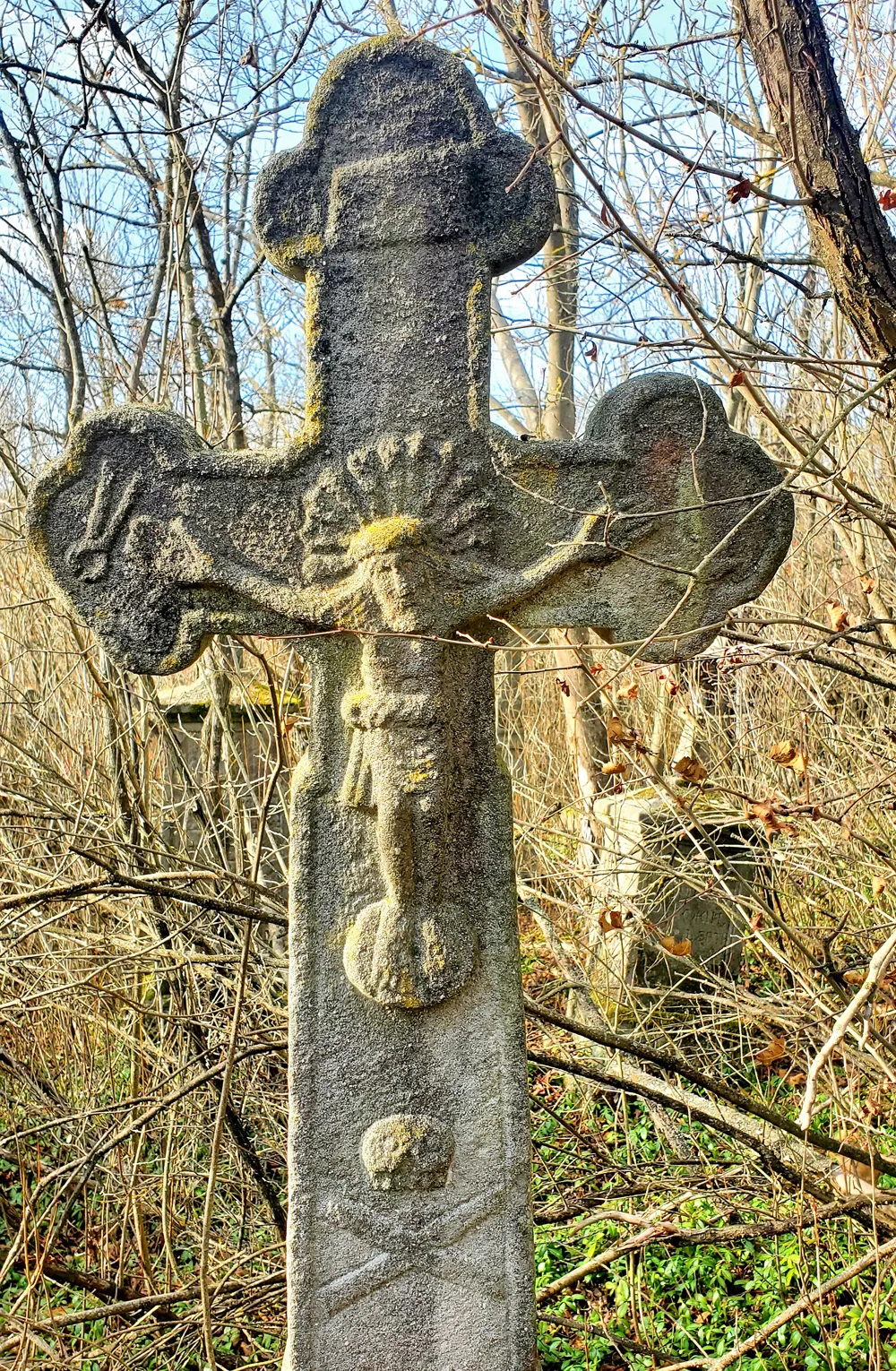
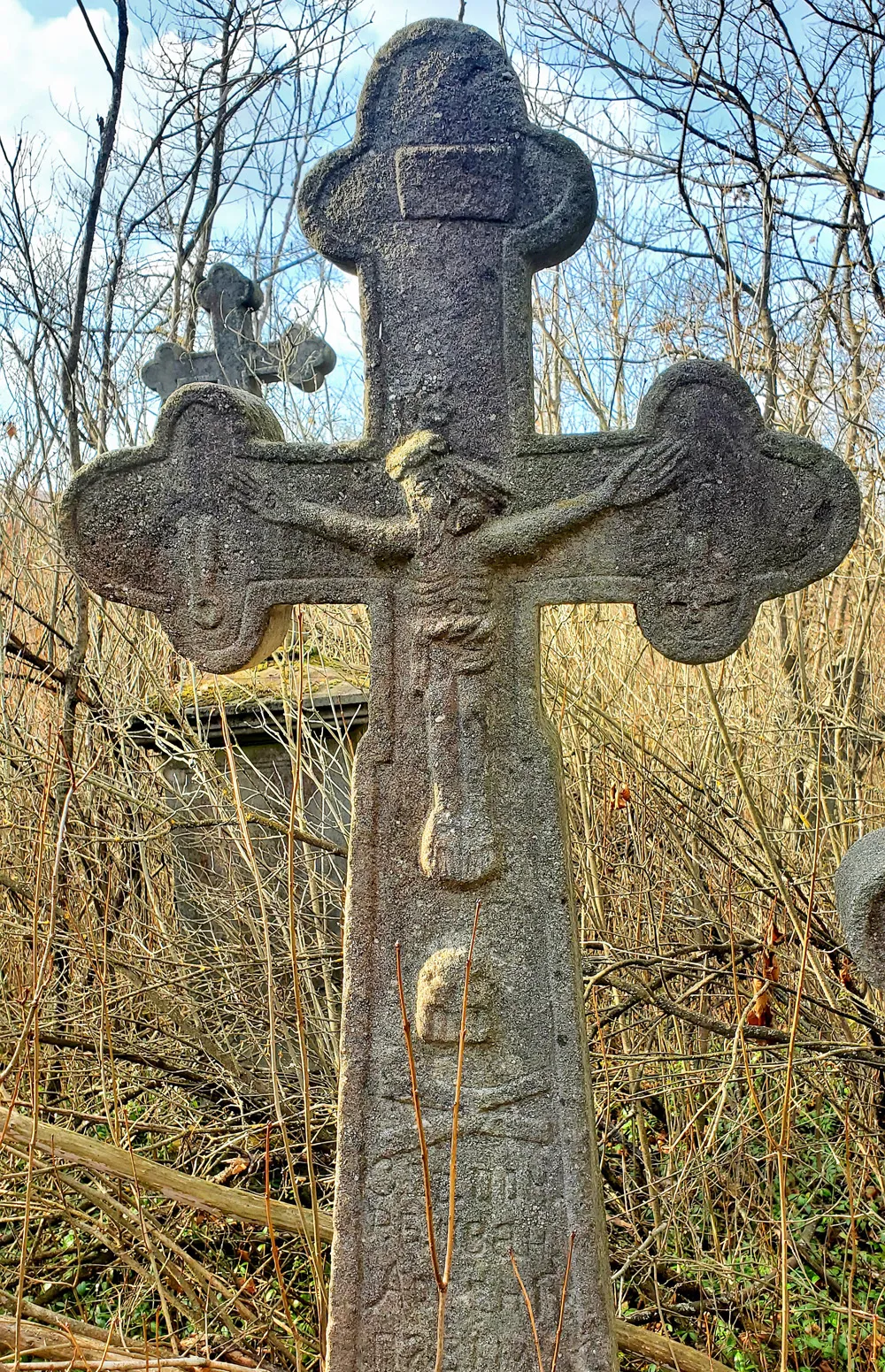
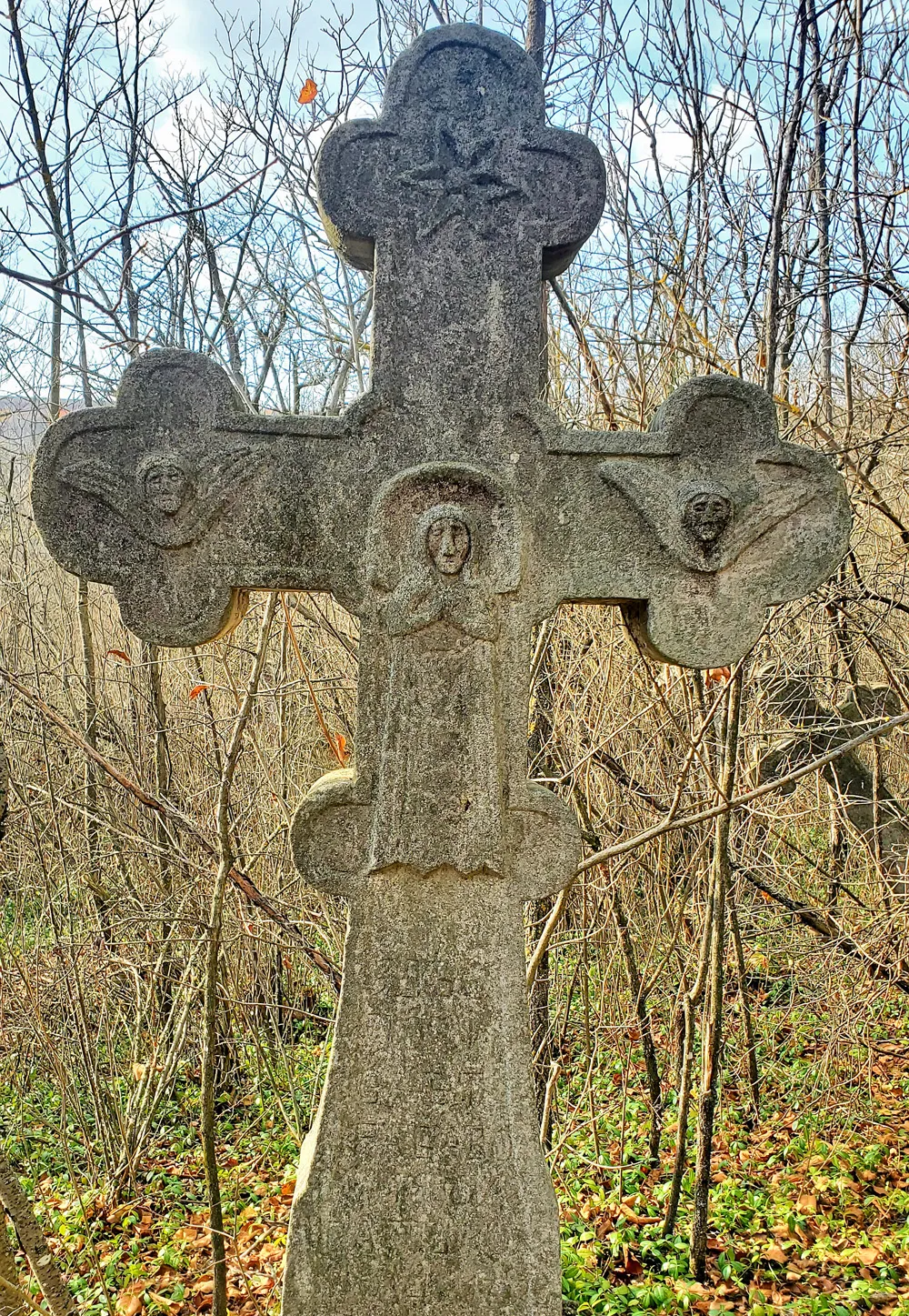
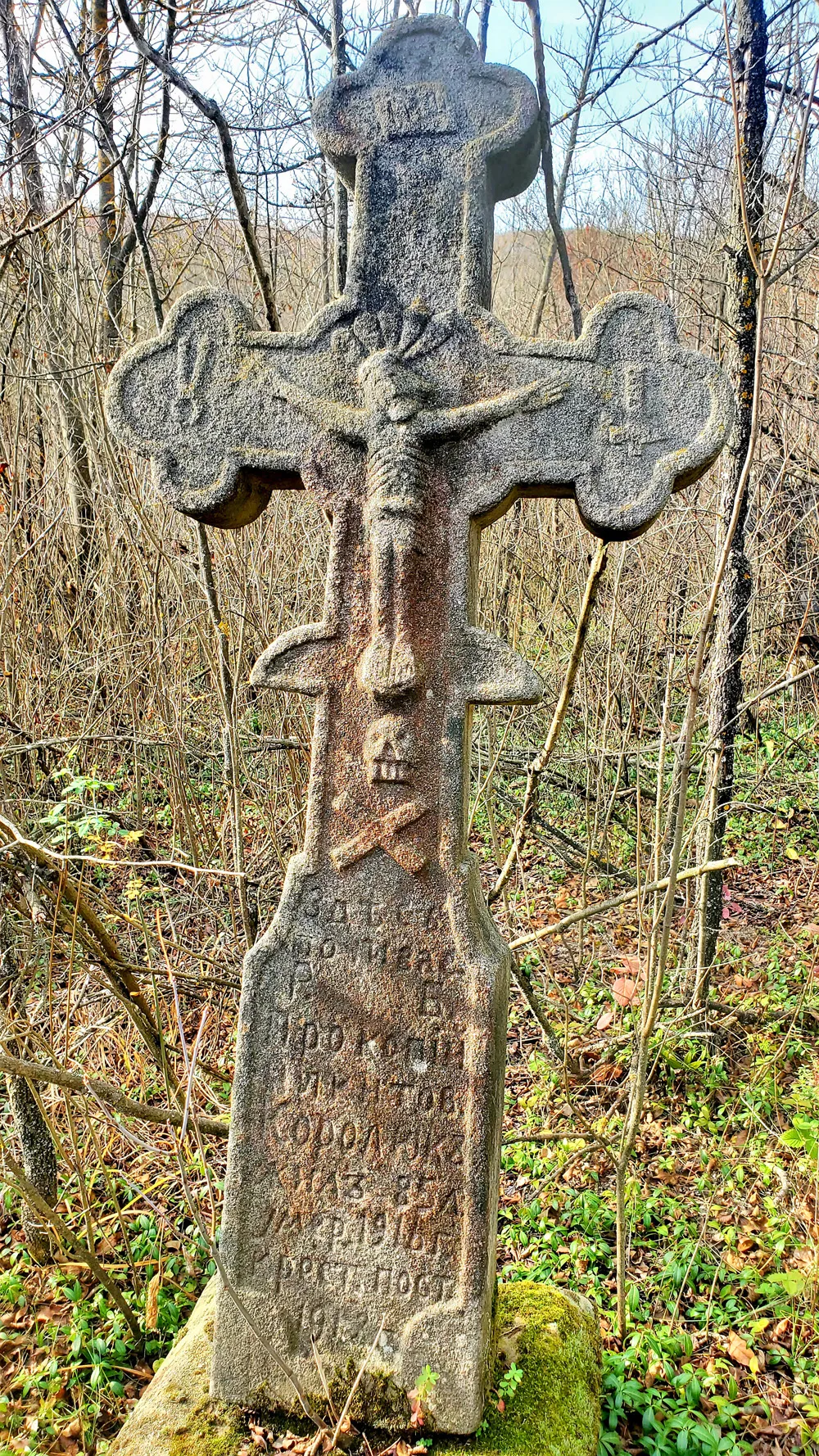
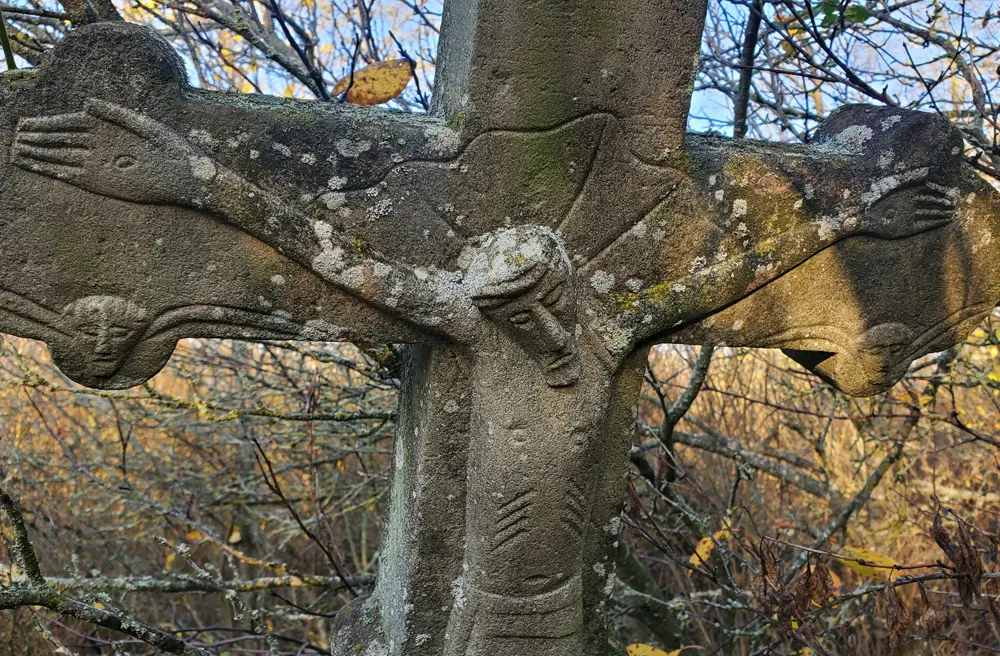
This cemetery also has stone crosses, but of a different form: stone crucifixes, characteristic of this region, a splendid example of rural primitivism (that is a style of art). If you have time, visit this cemetery too, to add a piece to the colourful mosaic of the fairy-tale village of Busha.
Text and photos by Roman Malenkov.
Many more photos: see our photo gallery


