

Ancient brick, Baron Heismar and Professor Vynohradskyi
The author of this study was inspired by a brick. Not an ordinary one, but one with ancient stamps.
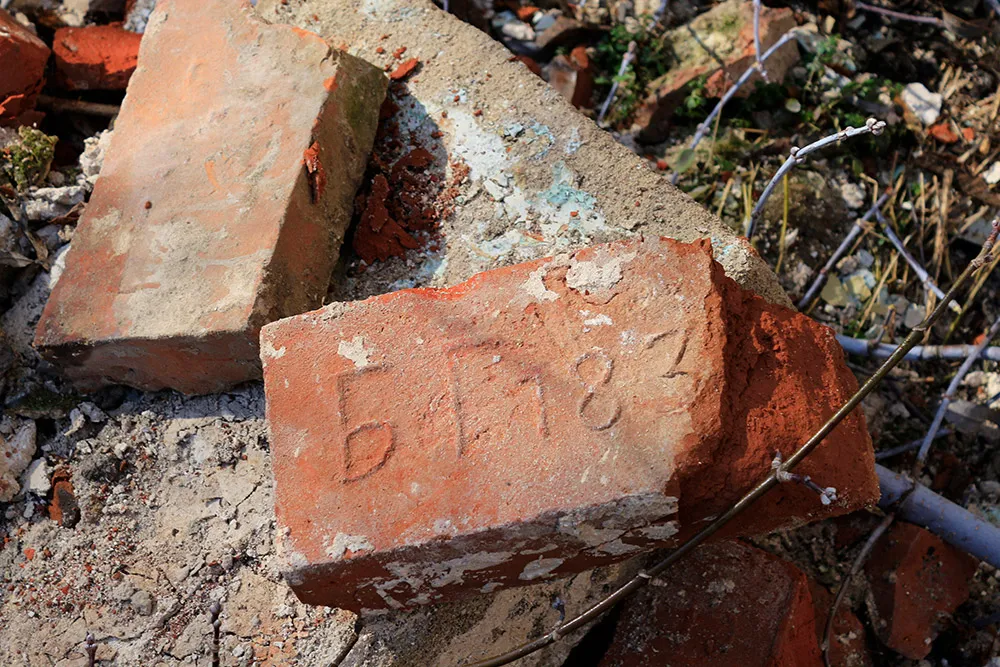
Old brick in the ruins of the sugar factory in Horodok
So we have bricks with the letters “BH” and the dates 1836 and 1840. On the latter the four is upside down, but reversed or mirrored digits and letters are a common phenomenon in archaic stamps.
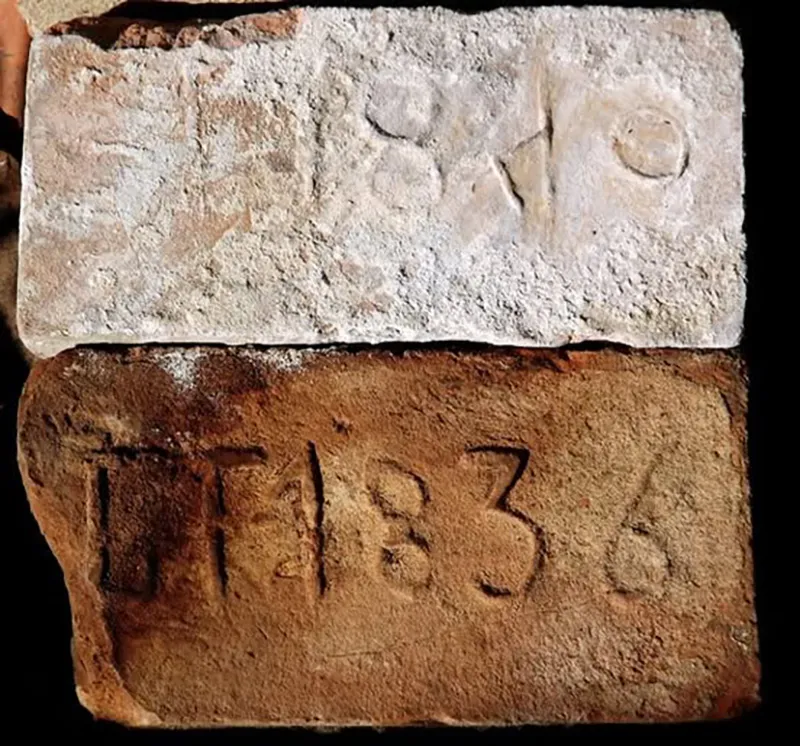
Stamps “BH 1936” and “BH 1840”
Archaic stamps are also characterized by a great many variants. Not all of them are photographed, but the same letters “BH” vary from fanciful ones with various flourishes to practically schematic ones. There are also numerous variants in the size of the letters and digits. The reason is simple: the dies for applying the stamps were cut on wooden boards. These wore out quickly and new ones had to be made.
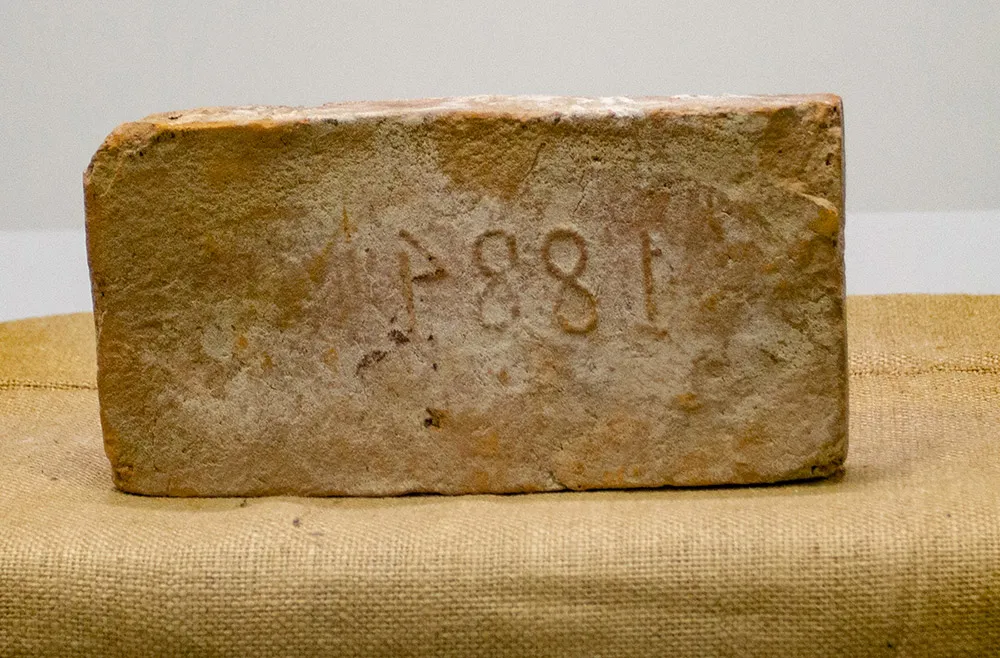
A mirror-image dated stamp. Found by the author in the ruins of an old house in Horodok. Donated to the “G-MUSEUM”
The most unique mark, “BH 1840”, is not a stamp at all. It was scratched with a nail or a scraper! It is clearly visible that the “scratcher” was illiterate. He thoughtlessly copied the image from a stamping board (probably a spoiled one). And copied it in mirror image! This find, like the other old bricks found by the author, has been donated to the Horodok Local History Museum (“G-museum”).
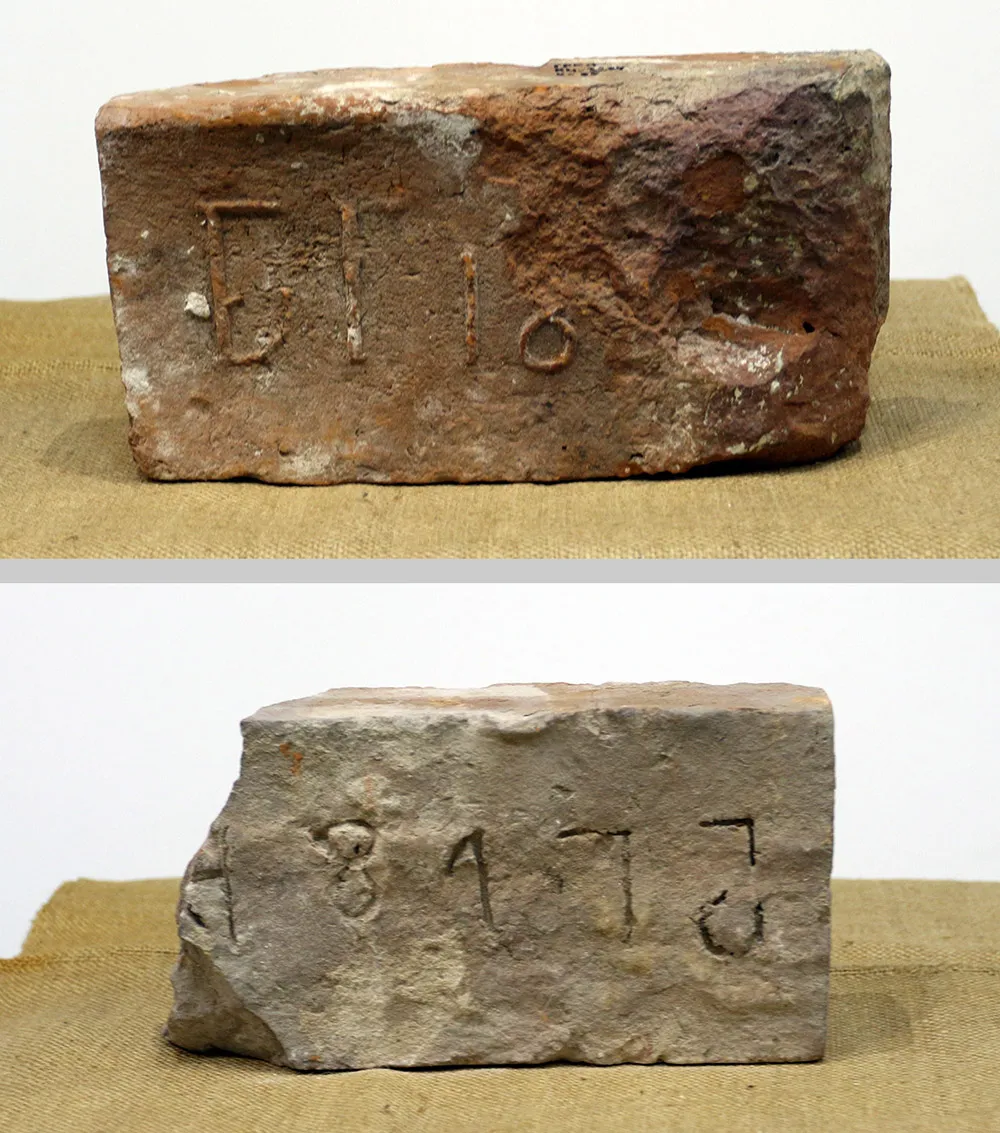
A scratched pseudo-stamp. Found by the author in the ruins of the sugar factory. Kept in the “G-MUSEUM”
Quite interesting is the variant of the “BH 1836” stamp with an inverted digit “6”. A cat also left its mark on History there.
A funny story is connected with this find. Like the other bricks marked “BH”, it was found in the ruins of the old sugar factory. The author had to trudge with this brick through the whole town. Passers-by were horrified and shied away… Because the brick in the hand was complemented by the appropriate clothing. After all, you can’t go wandering through ruins in a tuxedo…
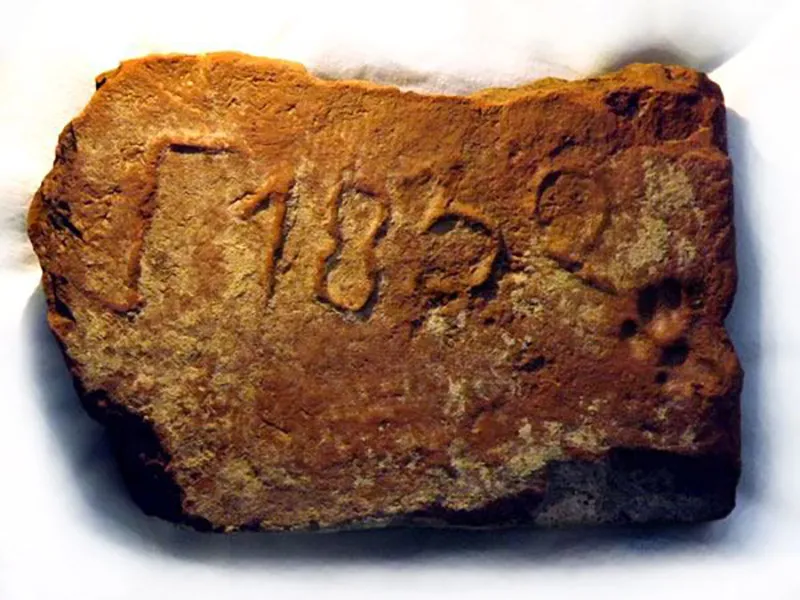
A brick with an inverted digit “6”. Donated by the author to the “G-MUSEUM”
A week later some woman met my mother in the street: “Your son is so poor, he is already handing in bricks (back then bricks were bought up here). Maybe he’d better collect bottles instead? They’re not so heavy…”
That was the preamble
The Wikipedia article devoted to the Horodok sugar factory says: “In 1837 the Prussian industrialist Baron Heismar decided to build a sugar factory in the town of Horodok in the Kamianets-Podilskyi uyezd of the Podolia Governorate of the Russian Empire; it was built on the western outskirts of the settlement and began operating in 1839.”
The stamps on the bricks considerably supplement this information. Most likely construction of the factory really did begin in 1837. But the main mass of bricks in the factory ruins is dated 1836. Considering that the brick technology of the time required considerable time (hand moulding, drying in the sun, or better under a shed, and only then firing), stocks of building materials had to be laid in well in advance. That is, the decision itself was taken in 1836 at the latest, if not in 1835.
Moreover, bricks with the dates 1837, 1838 and 1839 are completely unknown. Of course one can regard bricks such as the one with the cat’s paw prints as dated 1839 (with a mirrored digit “9”), but all such stamps were clearly impressed with a single board and there are extremely few of them. Bricks dated 1840 are merely evidence of the further expansion of the sugar factory.
The sugar factory built by Baron Heismar was one of the oldest in Ukraine. Older is the sugar factory in Buchak near Kaniv, which arose in 1822 at the expense of Prince Józef Poniatowski.
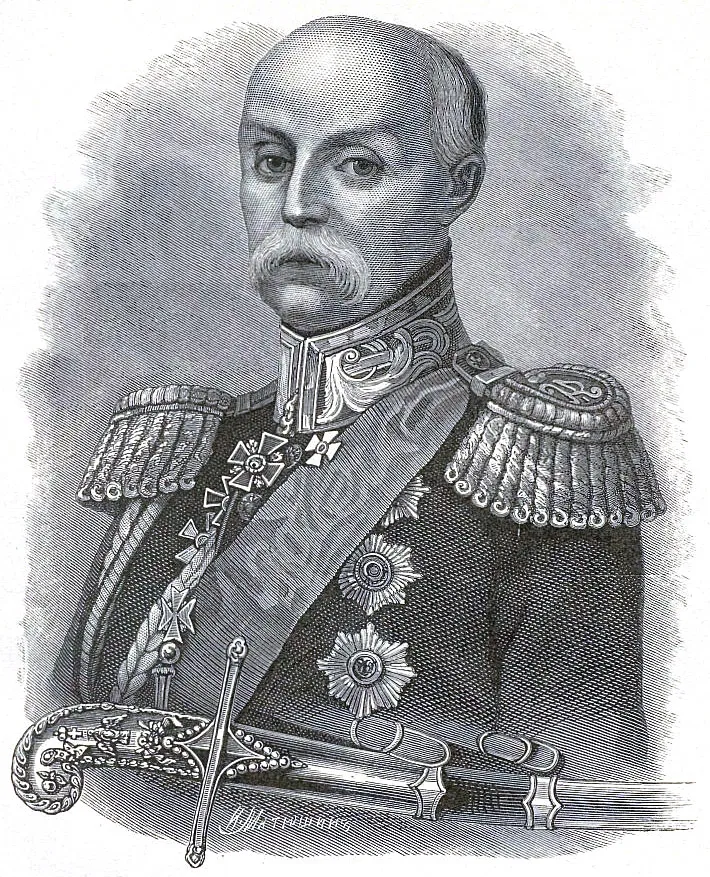
General F. Heismar
Baron Friedrich Heismar (Friedrich Caspar von Geismar; 1783–1848) is the most controversial figure among the landowners of Horodok in Podillia. On the one hand he was a Russian general, which today is a stigma. On the other hand he fought the Turks, who then still posed a threat to Europe. But at the same time he was also a brutal punisher who suppressed the uprising of the Chernihiv Regiment and the Polish uprising of 1831 (from the Poles, I note, he got a fair thrashing himself).
He began managing Horodok after his discharge from the army. At that time Emperor Nicholas I had fallen into Slavophilism and began purging the army and officialdom of Germans.
Yet it was for Horodok that Baron Heismar did the most of all the town’s owners. And his short tenure from 1830 to 1848 is rightly considered the “golden age” of Horodok under the tsars.
Besides the sugar factory he set up a brewery and introduced herds of fine-fleeced sheep and Dutch dairy cows (that is, he developed the estate not through ruthless exploitation of serfs but through improved efficiency of farming).
Caring for the residents, he built a hospital, an almshouse and a school for them. He invested handsomely in repairs of churches, both Orthodox and Catholic.
At the expense of the German baron the Church of Alexander Nevsky was also built for the Orthodox part of the town’s population. Most likely General Heismar chose this particular “saint” first of all because the Russian church presented him as a “warrior saint”. The Lutheran Heismar is unlikely to have delved deeply into the nuances of the Russian priests’ church politics.
When a great fire broke out in Horodok, he donated money to all the victims to rebuild their homes.
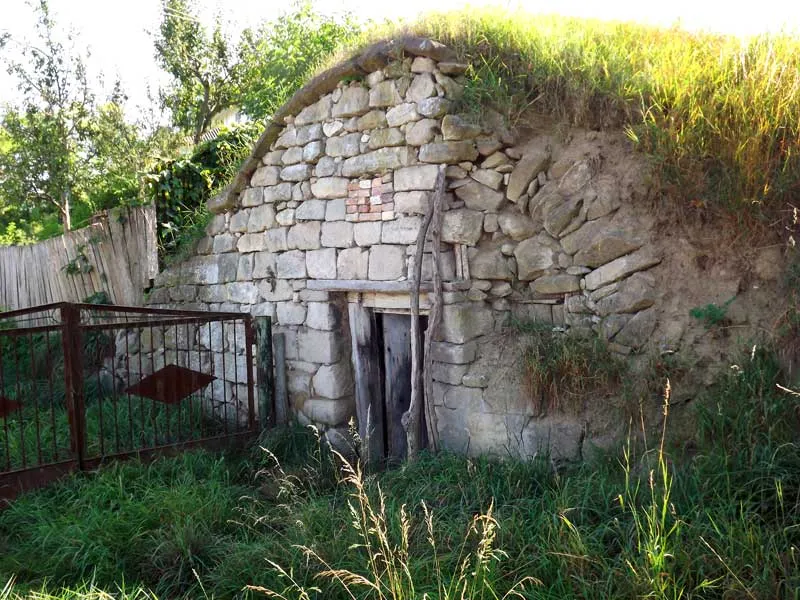
The underground forge
Fully in keeping with Protestant ethics, the baron considered it right to help all hard-working people to set up and establish their own business. In particular, in Horodok one can still see the building of the “underground forge”. It is “underground” because it is cut into the slope of a cliff and resembles a “hobbit house”. According to the blacksmith’s descendant, the money for construction and equipment was provided by the baron as an interest-free loan, and on condition that you repay it bit by bit once you start earning.
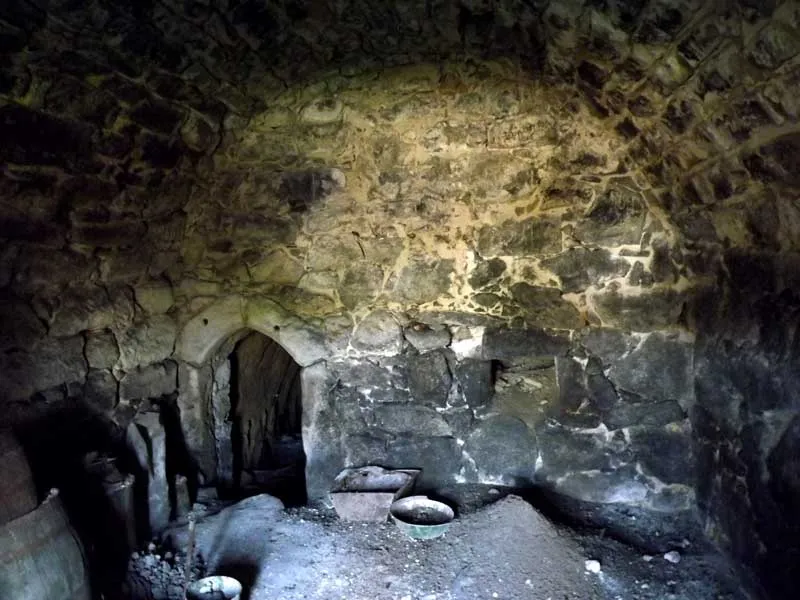
The underground forge and the passage to the underground tunnel
In fact it was this German who laid the foundation of Horodok’s industrial development. The subsequent owners, although supposedly Ukrainian by blood, regarded Horodok and its inhabitants exclusively as a “cash cow”, cruelly exploiting its potential and its residents, whom they treated as rightless cattle.
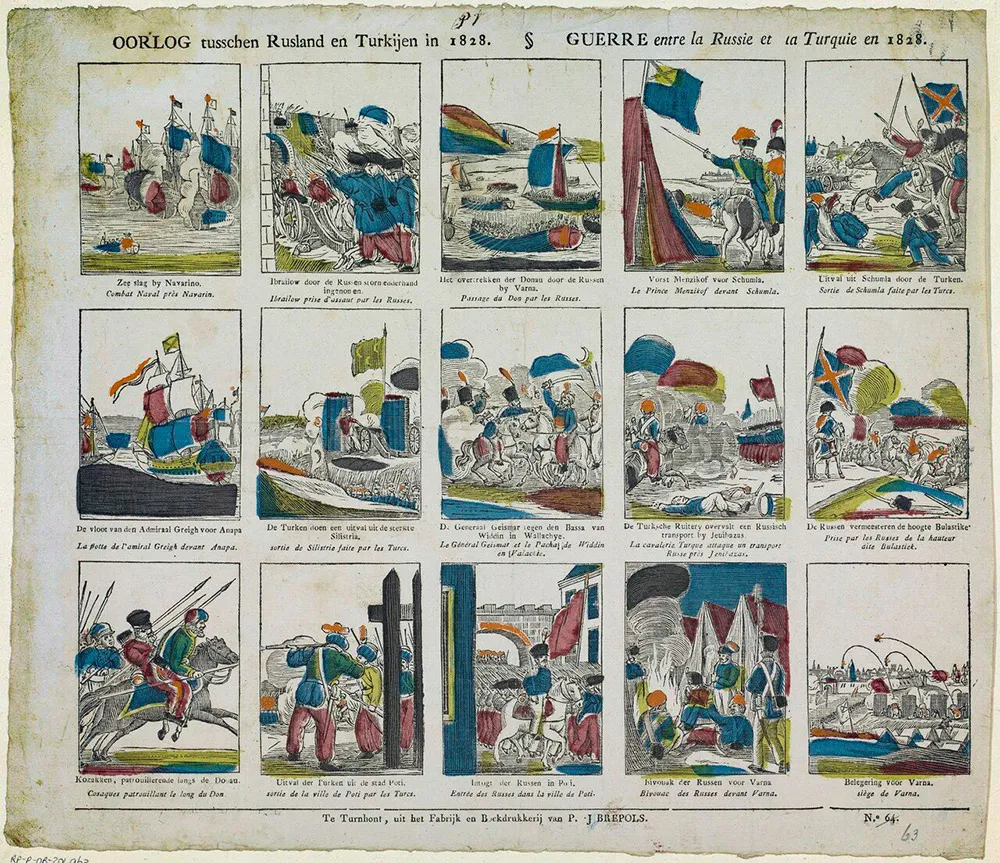
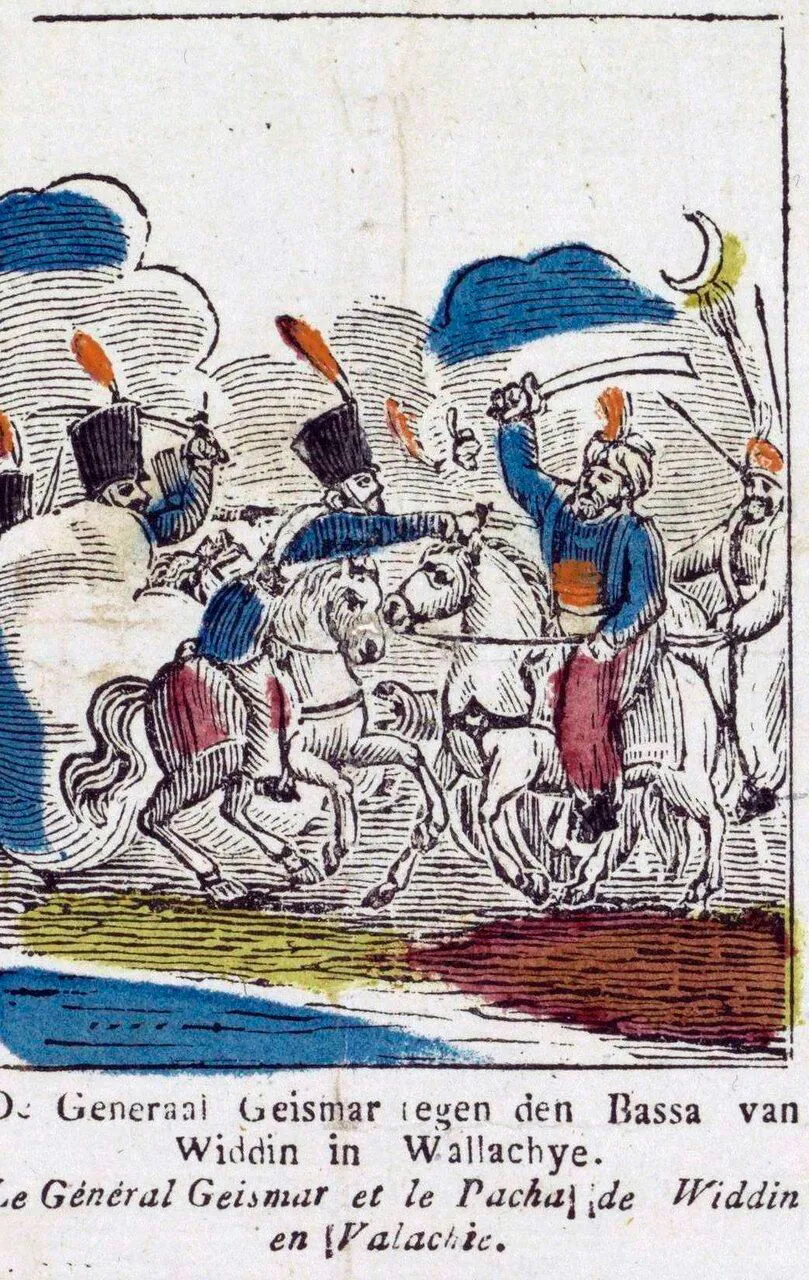
An interesting artefact: in 1828 a lubok (popular print) devoted to the Russo-Turkish War (of 1828) was published in the Netherlands, showing its most striking episodes. Among them one picture is devoted to Baron Heismar.
In the picture (shown separately) General Heismar takes a Turkish pasha prisoner. In addition, Heismar became the first honorary citizen of the German city of Weimar.
In 1848 the baron went to Petersburg to ask the tsar to return him to service. He fretted himself to death and died of an apoplectic stroke in a hotel, three days short of his 65th birthday.
After Heismar the town was owned for several years by his wife. But it was hard for a woman to manage such a large estate.
The Vynohradskyi era, or “do oxen bellow when the mangers are full?”
In 1871 (1870?) Horodok and its surroundings were purchased by Mykola Vynohradskyi, a middling Kyiv banker who was co-founder and co-owner of the Kyiv Land Bank (Kievskii zemelnyi bank), a large (but by no means among the largest) joint-stock mortgage bank that granted loans secured by land and real estate.
Other similar banks operated in Ukraine too: the Bessarabian-Tauridian Land Bank, issuing loans in the Bessarabian, Podolian, Tauridian and Kherson governorates, the Kerch-Yenikale and Odesa city governorships, and in the cities of Katerynoslav and Bakhmut. The Poltava Land Bank operated as well, issuing loans in the Poltava, Kyiv and Volhynian governorates and in cities of the Bessarabian and Kherson governorates. In addition, the Kharkiv Land Bank was active, issuing loans in the Kharkiv, Kursk, Voronezh, Katerynoslav, Poltava, Oryol and Stavropol governorates, and in the cities of Sevastopol, Yalta and Simferopol. The statutes of the banks listed were practically identical.
Some amateur Horodok local historians for some reason present M. Vynohradskyi as one of the founders of banking in Ukraine. Of course this flatters local patriotism, but it is very far from reality. More precisely, it does not touch reality at all.
To begin with, the banking system in the Russian Empire began to form as early as the first half of the 18th century under Empress Anna Ioannovna and in the first half of the 19th century was doing quite well. Recall that Chichikov bought up “dead souls” in order to pass them off as living and, with this false collateral, obtain a bank loan and take to his heels. The action of the novel takes place around the 1830s. Maybe even earlier.
And most importantly, the banking system of the Russian Empire cannot be considered, even slightly, a predecessor of the modern Ukrainian one, because seven decades of Soviet power lie between them. And the banking system of the USSR had practically nothing in common with traditional banks.
It should also be remembered that the Kyiv Land Bank, though a respectable institution, was by no means a leading one, and M. Vynohradskyi was never the chief figure there.
M. Vynohradskyi left no noticeable mark in Horodok, because the banker died six years after becoming the owner of the town. The one plus is that the sugar factory built by Heismar started working again. At the time the town was bought, its operation had been halted.
For the unique (without exaggeration) mausoleum of M. Vynohradskyi, its sad fate and unattractive present, read “The unique mausoleum in Horodok and the great microbiologist Serhii Vynohradskyi”.
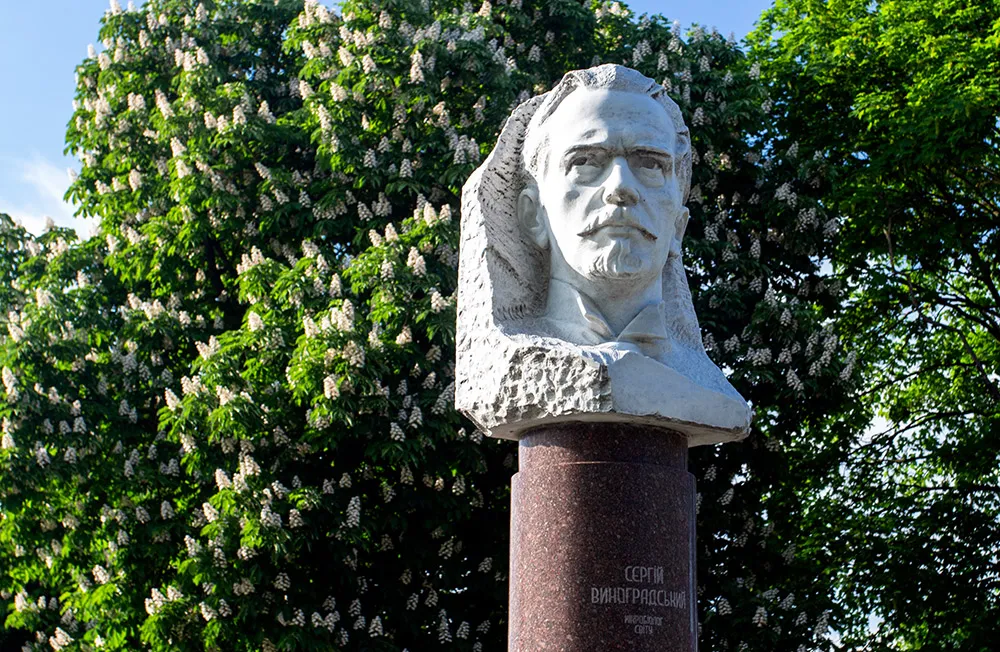
Monument to the scientist S. Vynohradskyi in Horodok
Horodok was then inherited by his son, the famous scientist and microbiologist Serhii Vynohradskyi (Sergei Winogradsky). Yet until 1905 he practically never appeared in the town, and the estate was run by managers he appointed. For Vynohradskyi Horodok was exclusively an asset that was supposed to bring profit.
In particular, the fundamental study “Three Lives of a Great Microbiologist” by G. Zavarzin says:
“All the prosperity of his [Vynohradskyi’s] family was based on the income brought to him by the Horodok estate of 2,000 desiatinas, bought in 1870 (Vynohradskyi’s memoirs give 1871 – author’s note) by his father and passed to him in the division.”
How this income was earned we read in the “History of Towns and Villages of the Ukrainian SSR”, which says of this period:
“Life was not easy for the workers either. For their exhausting labour they received low wages. At the sugar factory (where the principal shareholder and de facto owner was S. Vynohradskyi – author’s note) and the iron foundry in 1902 the average monthly earnings did not exceed 10 roubles, and at the remaining enterprises they paid even less. No one cared about safety. Insanitary conditions led to frequent epidemic diseases. In 1894 there were only 3 doctors for 8,000 inhabitants of the town. Epidemics of typhus, dysentery and smallpox broke out almost every year.”
Even taking into account the ideological component that heavily influenced the authors of the “History”, the picture is still unattractive.
One would think that a town belonging to a famous scientist should at least have been doing well in education. But that is not so. There we read:
“The level of public education was low. The vast majority of inhabitants remained illiterate. The town had only a one-class public ministerial school, opened in 1866. At the end of the 19th century it was reorganized into a two-class school with 130 pupils and 5 teachers. In addition, Horodok had two literacy schools (one for girls). Yet of 1,264 school-age children only 359 were studying. Wretched sums were allocated for education, cultural development and health care. The owner of the sugar factory [S. Vynohradskyi] received a profit of 33,640 roubles in 1907, and for education and so-called charitable needs he allotted only 100 roubles.
It should be noted here that Serhii Vynohradskyi was by no means a miser.
It is known that from his salary (5,000 roubles) at the Imperial Institute of Experimental Medicine (St. Petersburg), which he gave up from 1901 because he had his own income from exploiting the resources and inhabitants of Horodok, a library was built at this institute; it was solemnly opened in 1913 and to this day bears the name of S. Vynohradskyi. In his memoirs the scientist gives the cost of the project: 25–30 thousand roubles.
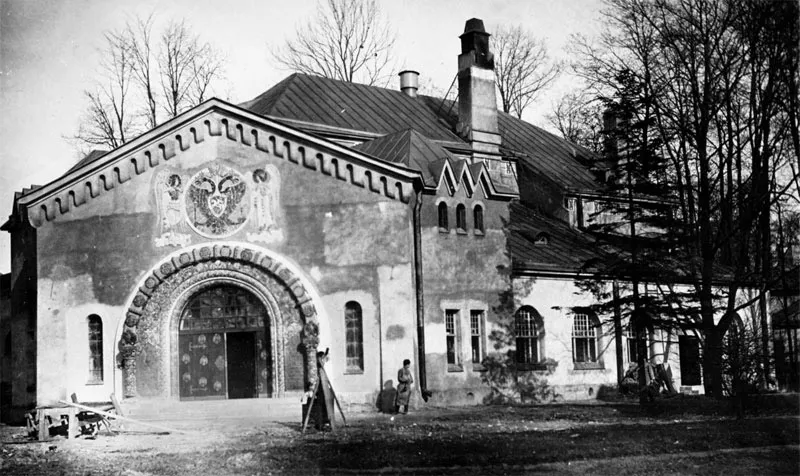
The library in Petersburg built at the expense of S. Vynohradskyi
“…In the summer of 1911, to a design by G. I. Liutsedarskii, construction began of a four-storey building for the scientific library. The building is in the Art Nouveau style with stylization of Romanesque and Old Rus architectural motifs. The book depository is designed so that the rows of shelves are lit by tall narrow windows. The majolica portal was made to a design by V. A. Pokrovskii in the workshop of P. K. Vaulin. On 21 February 1913 the library moved into the new building. At present its stacks hold more than half a million books, including collections of unique editions of the 16th–17th centuries, Tibetan and Chinese manuscripts, and letters of L. Pasteur” (Privalov V. Streets of the Petrograd Side. Houses and People. Moscow: Tsentrpoligraf, 2013. pp. 26–27)
A vivid example of the priorities of an outstanding Russian (later Russian-French) scientist of Ukrainian origin. He did not spare money for the development of science in Russia, but for the education of Ukrainian commoners in Horodok, a whole 100 roubles out of generosity.
Doctor of Historical Sciences Stefaniia Bazhenova notes in her article “Horodok in the 18th–19th centuries (Based on materials of the archive of South-Western Russia)” that in 1897 the local priest, Archpriest Bialkovskyi, opened a literacy school for girls in which only 26 children studied. She also states that the church statistical reports of the time note with regret that Horodok has no reading rooms or public readings.
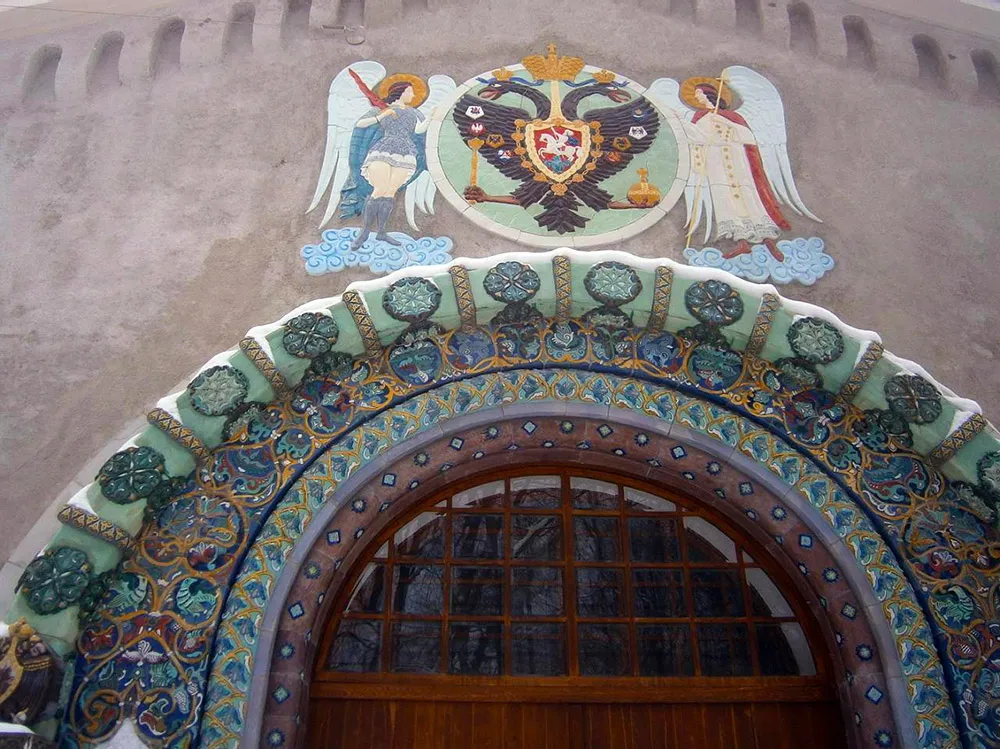
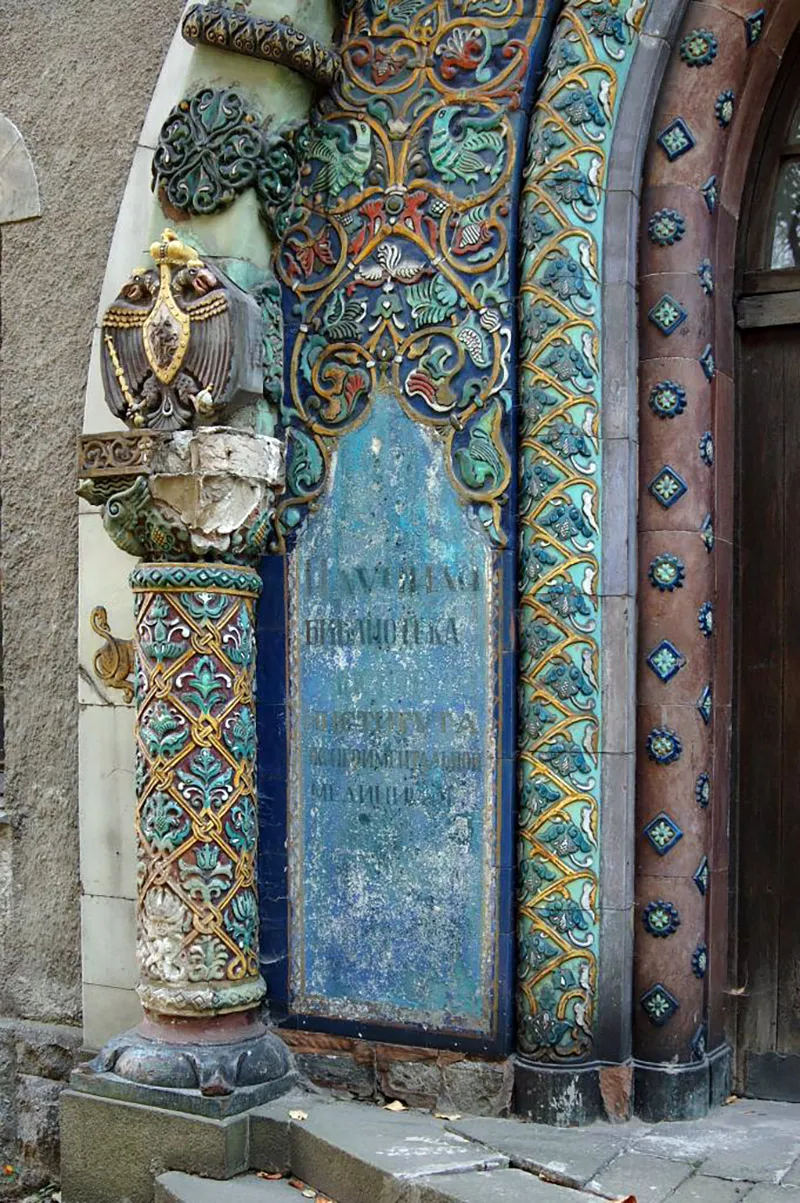
Majolica decoration of the library in Petersburg, built at the expense of S. Vynohradskyi
That is, Professor Vynohradskyi found money for a sizeable library in the then capital of Russia, but in Horodok, which, if his memoirs are to be believed, he loved very, very much, there was no money even for the most modest reading cottage. And this although the cost of the pompous majolica double-headed eagle alone on the facade of the Petersburg library would have been enough to build a proud reading room in Horodok and fill it to the brim with books…
But, let us stress, the education of Ukrainians, like their well-being, was not among Vynohradskyi’s priorities. Horodok and its inhabitants were regarded by the scientist exclusively as a source of income…
Naturally the Podolians for some reason were indignant at this.
It is known that in September 1894 the peasants of Horodok demanded higher pay for harvesting sugar beets on the factory plantations. They dug up the field road leading from the landowners’ farmsteads to the sugar factory.
As the “History of Towns and Villages” writes:
“Protests intensified at the beginning of the 20th century. In April 1905 the members of the board of the Horodok Sugar Factories Society sent a telegram to the governor-general of Kyiv, Podolia and Volhynia about the outbreak of peasant unrest here. The peasants drove all the workers from the estate and did not allow them to do field work, refused to negotiate a settlement of pay on the terms offered to them and put forward their own demands. In addition, the peasants demanded a redistribution of land (in fact not a redistribution but the return of plots taken from them by the factory manager – author’s note). A few days later, on the order of the Podolia governor, a hundred Cossacks entered Horodok to suppress this unrest.”
It is clear that such an unpopular step as summoning punitive Cossacks could not have been taken without the knowledge of the owner of the factory and the town.
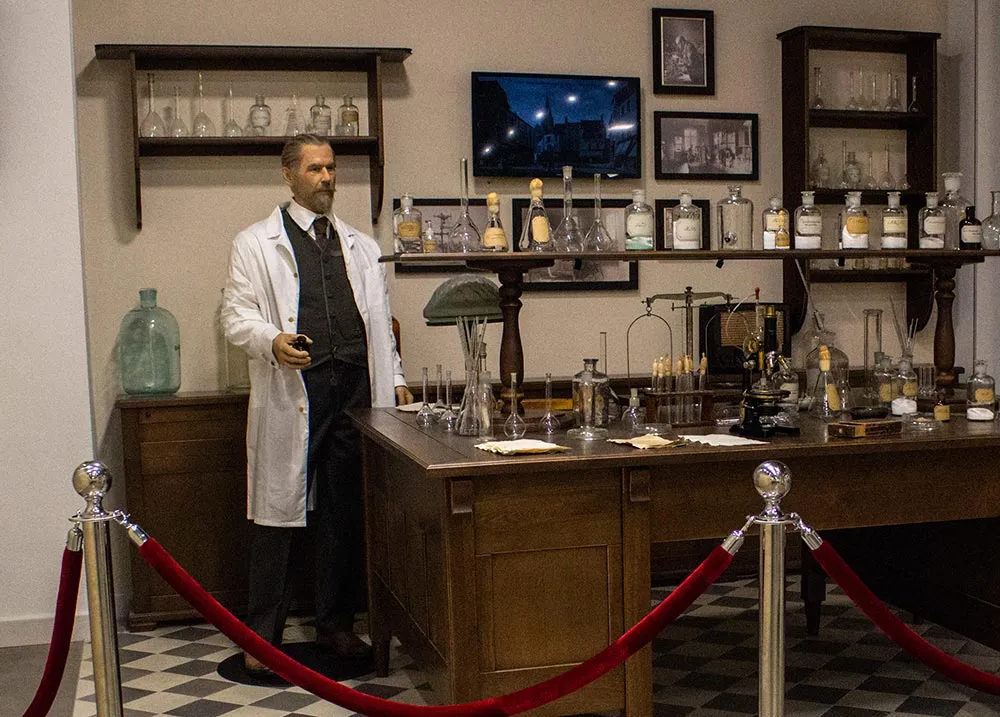
The reconstructed laboratory of S. Vynohradskyi at the Pasteur Institute and his wax figure. “G-museum”
The scientist himself mentions this in passing in his memoirs: “We had to improvise some measures urgently.”
A large detachment of mounted and foot police arrived first in Horodok from Proskuriv. Slipping unnoticed into the sugar factory, the punitive force arrested the members of the strike committee. Having learned of the arrest of the strike leaders, the residents of Horodok came out into the streets. They were joined by peasants of the surrounding villages armed with scythes and pitchforks.
The volost head ordered those present to disperse, but of course nobody obeyed him. A clash broke out between the police detachment and the strikers, who tried to free the arrested. The frightened heads of the town (the police chief, the volost elder and others) even barricaded themselves in the council building. After some time a Cossack hundred arrived from Kamianets and savagely dealt with the protesters. In particular, they beat with whips and trampled with horses the farmhand Kuzei. A young woman, Wanda Lewandowska, died from beatings after giving premature birth to a stillborn child. The number of those beaten and maimed is unknown. Many strikers were sent to hard labour in Siberia…
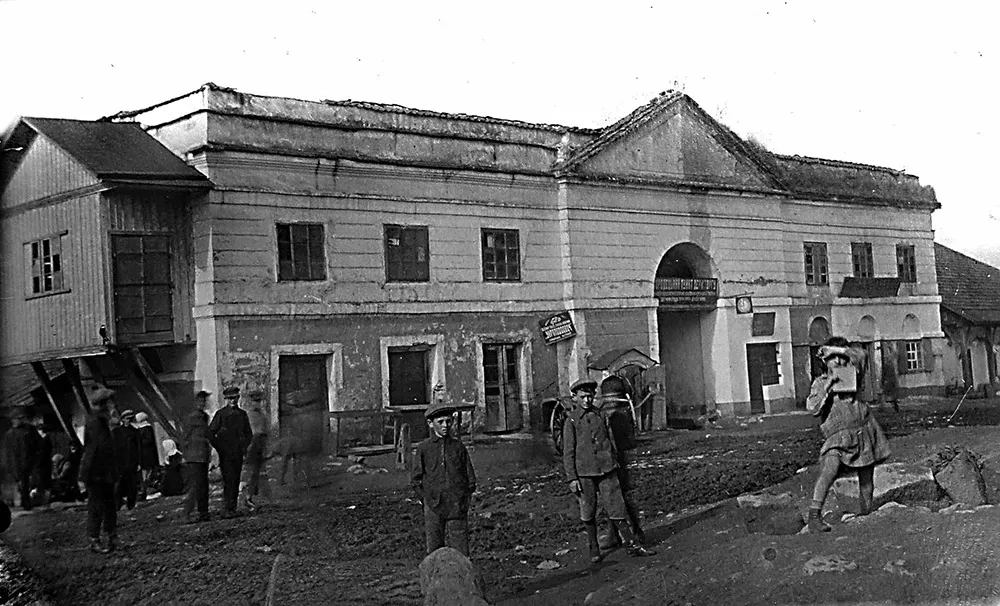
The town council (magistrate) of Horodok. Photo: S. Taranushenko
In his memoirs Vynohradskyi calls this “peasant disorders”, although he expresses mild displeasure at the harshness with which they were suppressed. His attitude to the protesters is vividly seen in these lines: “Only one half-wit was beaten by the Cossacks, the one who was first to strike a Cossack with a cudgel.”
The respected Vynohradskyi clearly understates the “only one”, but so it goes.
After the fact the landowner did nevertheless take a number of measures: “explained his mistake to the governor in a letter, talked with a deputation of peasants, promising to fulfil their request for the return of the little pieces [of land] cut off from them at some time under Fishman.”
Serhii Vynohradskyi does not even mention the causes that led to the revolt, evidently considering them something insignificant.
The merchant of the first guild Karl Fishman mentioned here is quite an interesting and unpleasant figure in the history of Horodok. He was an Austrian subject, manager and later managing director of the Horodok Sugar Factories Society and the second husband of the scientist’s mother, Natalia Vynohradska. It was he who ran all the affairs of the Horodok estate, and the ruthless exploitation of peasants and workers is on his conscience.
Serhii Mykolaiovych was deeply indifferent to this to the very end: all the numerous conflicts between him and his stepfather were purely financial. Fishman brazenly appropriated a considerable part of the income from Vynohradskyi’s Horodok estate, and this irritated him.
One could recall the notorious “The tsar is good, but the boyars are bad”, were it not for one thing. Vynohradskyi was deeply indifferent to how Fishman squeezed profits out of Horodok; what provoked his disapproval was only the fact that part of them “stuck” to the hands of a new relative.
Vynohradskyi’s memoirs generally suggest that the only thing (apart from Fishman’s thefts, of course) that troubled the scientist in Horodok was tending his favourite apple orchard, which he looked after personally.
The attitude of people towards the landowner is vividly shown by lines in his memoirs where he complains that he had to walk about all the time with a Browning in his pocket and hire an armed guard.
Still, one should not paint the landowner Vynohradskyi (precisely as a landowner, not as an outstanding Russian-French scientist of Ukrainian origin) exclusively in black. In particular, old-timers’ accounts say that, caring for the health of the town’s inhabitants, he sank several wells at his own expense so that the townspeople could drink clean water.
As for his description as a “Ukrainian scientist”… Serhii Vynohradskyi, let us stress, did not work a single day in Ukrainian scientific institutions, although he could, at least theoretically, have joined the Ukrainian Academy of Sciences under Hetman Skoropadskyi. His attitude to independent Ukraine is easy to trace in his memoirs:
“The Petliurovshchyna, having seized all of Little Russia, held out in New Russia only briefly. Petliura’s bands reached Odesa and penetrated it, but held on for only a few days.”
“Little Russia”, “bands”… Even the most ardent and diehard Russian Ukrainophobe propagandist would sign his name under these lines today…
On the whole Serhii Mykolaiovych, like Baron Heismar, was also a controversial figure. On the one hand, a truly outstanding scientist whose name is written in golden letters in the history of Science. His anti-Bolshevik pamphlets also evoke only admiration. In them Vynohradskyi, with scientific scrupulousness, dissected the ideology of Russian Bolshevism and vividly showed all its incompetence and criminality. As later turned out, all his predictions came true.
But as a landowner he was a typical Russian exploiting landowner (even if of Ukrainian origin) who regarded Ukrainian peasants and workers exclusively as objects of exploitation and was in no way concerned about their education, health and well-being.
Dmytro Poliukhovych


