

Holoby

· 4 min read
The settlement of Holoby lies on the Lutsk–Kovel highway, 46 kilometres from Lutsk and 28 from Kovel. I knew little about this settlement, so I went solely for the Catholic sculptures on the former Market Square – I had seen them in photos. While leaving Lutsk I looked through the list of landmarks – oh, Holoby has plenty of interesting things. We definitely had to go.
There are several versions of how the name Holoby came about. The most interesting to me seems the story of a lord who made his peasants shave their foreheads – bare foreheads, “holi loby” – Holoby. I wonder whether he made the women do it too, or only the men.
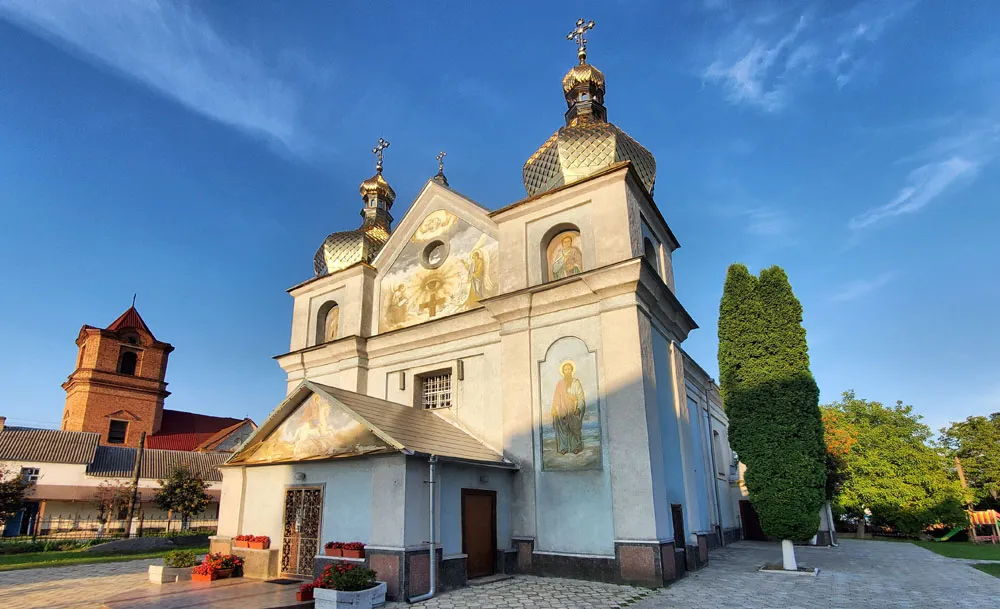
Church of St. George the Dragon-Slayer
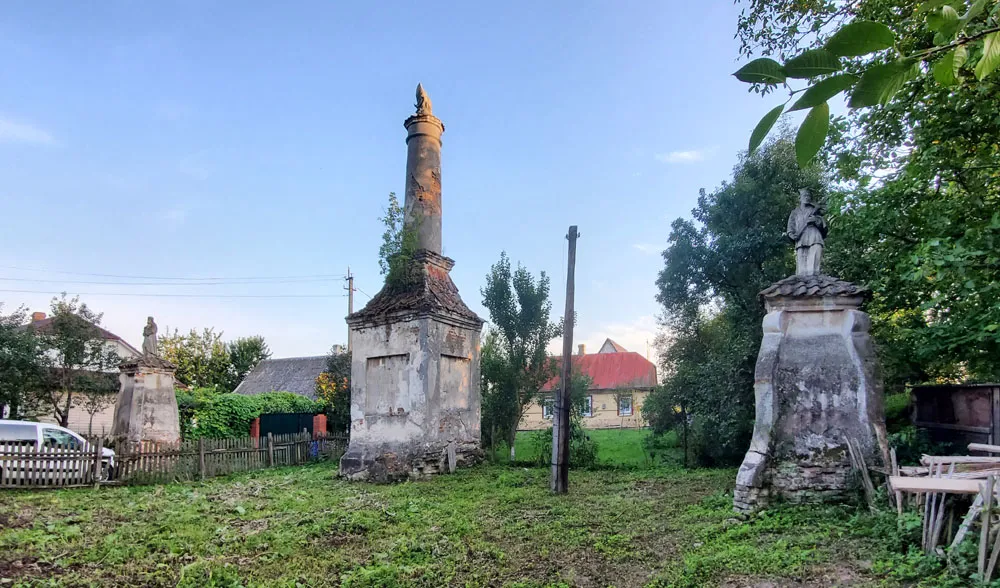
Figures of saints on the former Market Square
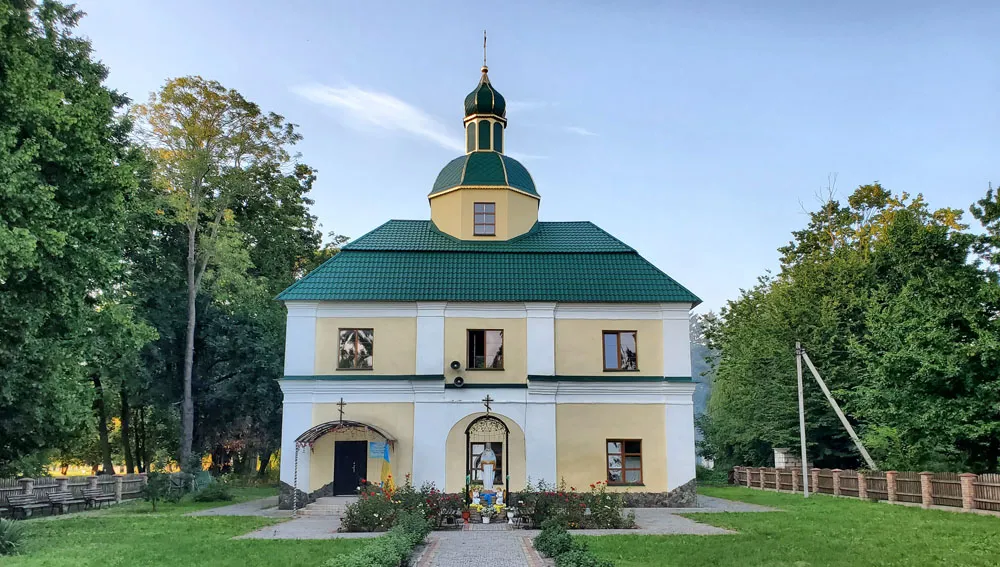
The gate of the Wilga manor converted into a church.
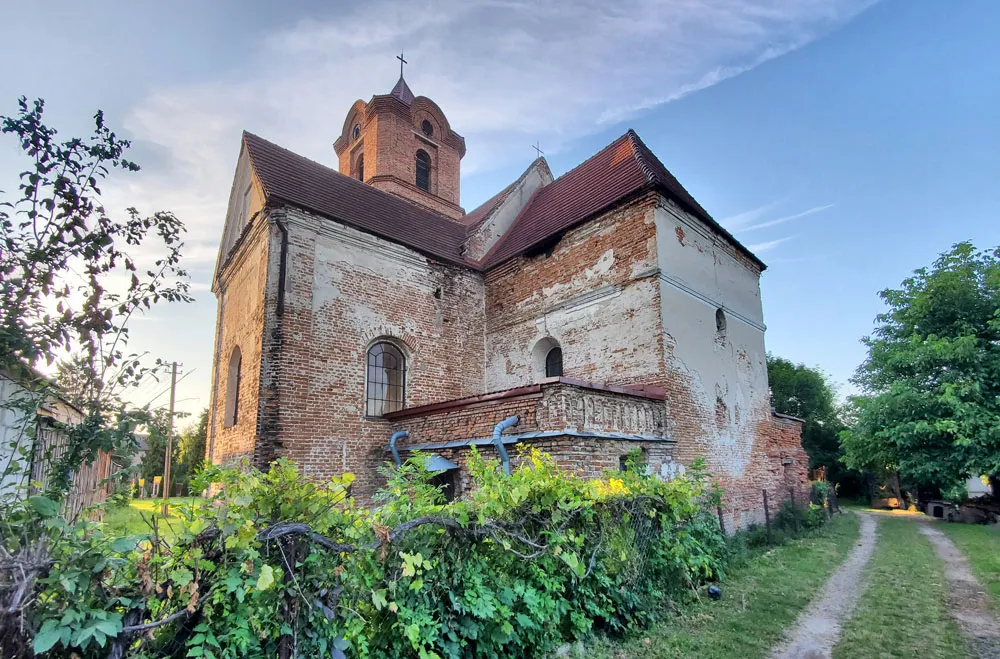
St. Michael’s Roman Catholic church.
Today about 4,000 people live in Holoby. The first mention of the settlement dates from 1434 – it was then subordinate to Lutsk Castle, and the settlers had to haul timber and firewood to the castle. Old Holoby stood in a different place – not where the modern one is. The village was moved in 1708, after the Swedes burned it down completely. The new village was set on a busy trade route, so it began to develop. At that time the village was bought by Józef Jaruzelski, who in 1711–1728 built the Baroque St. Michael’s Roman Catholic church. Józef’s daughter Teofilia married Major General Franciszek Fabian Wilga, who then became the owner of Holoby. Their son Ludwik was the voivode of Chernihiv. In 1793 he rebuilt the church after a lightning strike, and he also expanded the estate in Holoby. To finish with the church, it must be said that in 1945 the Soviets destroyed the bell tower and turned the church itself into a store for mineral fertilisers. The church was returned to the Roman Catholics in 1997. Since then they have not yet completed the restoration of the building, although the bell tower has been rebuilt.
On Google Maps there is a marker for the Wilga manor. Following that marker, tourists end up at a large two-storey building with columns, which stands half-ruined without windows or doors. And everyone thinks it is the former Wilga palace. But that is not so – it is the ruin of a Soviet building erected on the foundations of the Wilgas’ concert hall. The palace itself, built back in the 18th century, was destroyed by fire in the mid-19th century and was never rebuilt after that. The Wilgas probably did not live here by then. Overall, all that remains of the Wilga manor is the gate, but it is so large that a church could be installed in it. At first we did not understand at all what kind of building it was. We read up on it. Quite a gate. The manor must have been far from small as well.
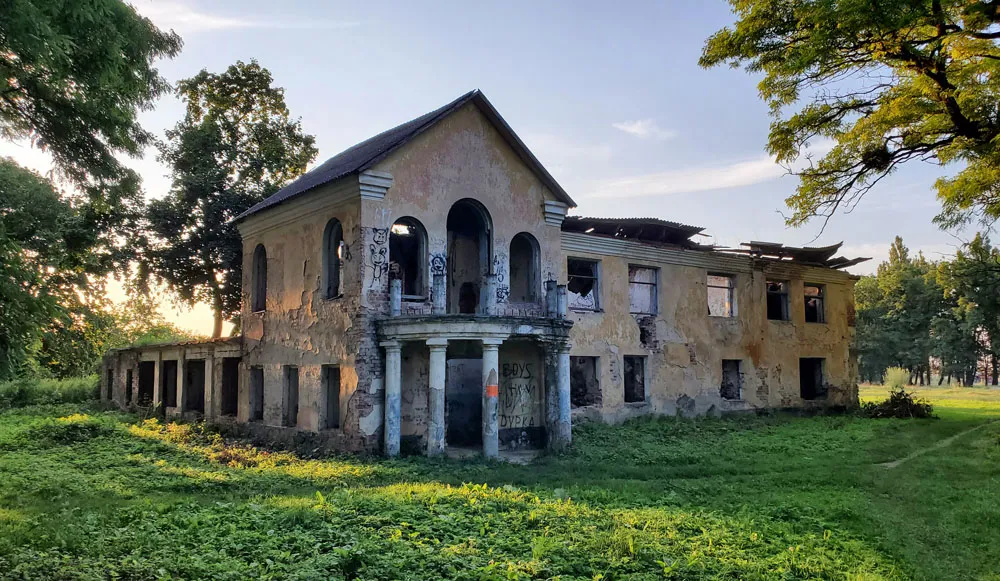
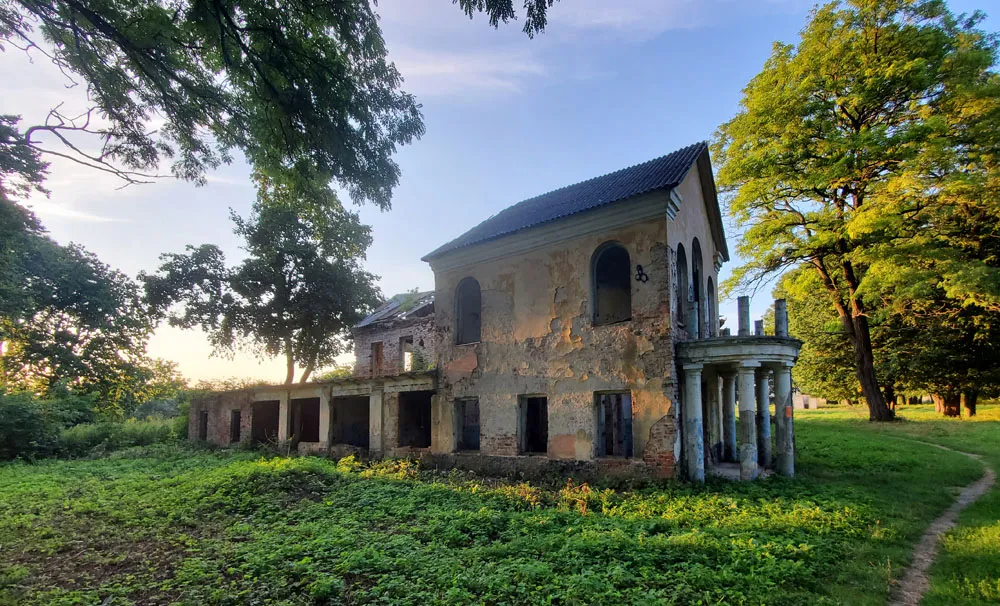
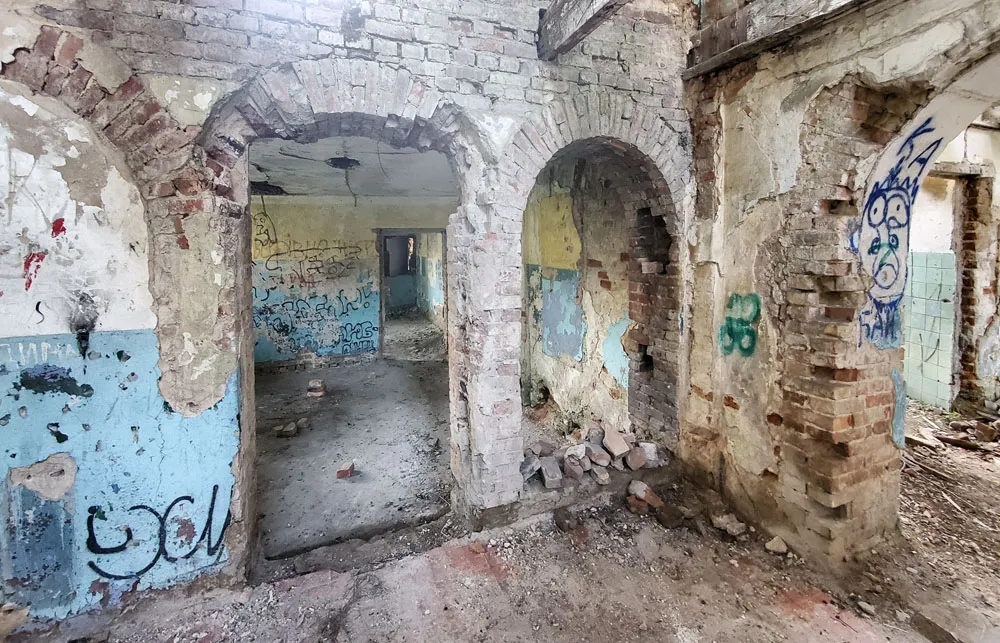
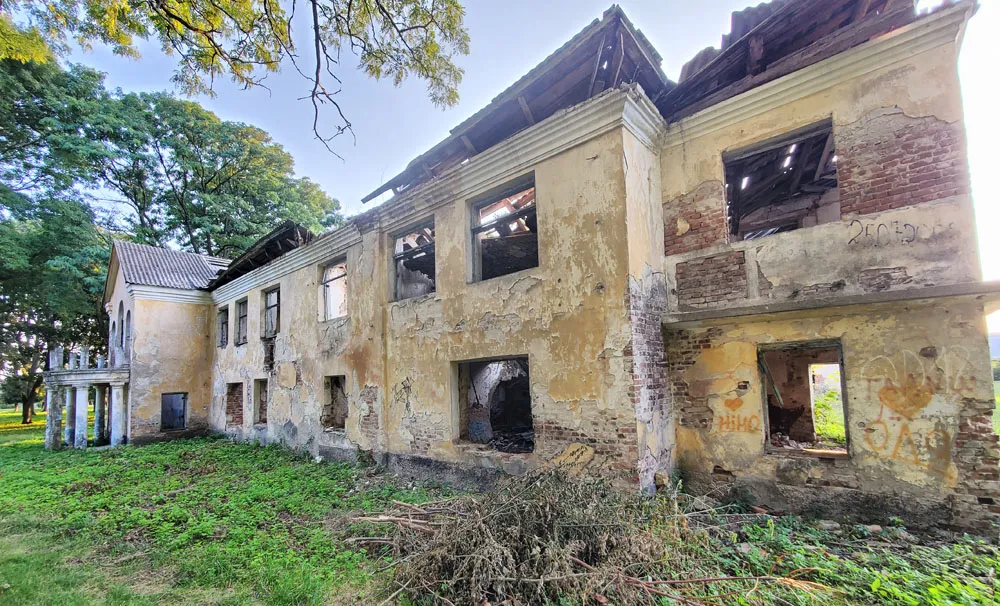
The building often mistaken for the ruins of the Wilga palace.
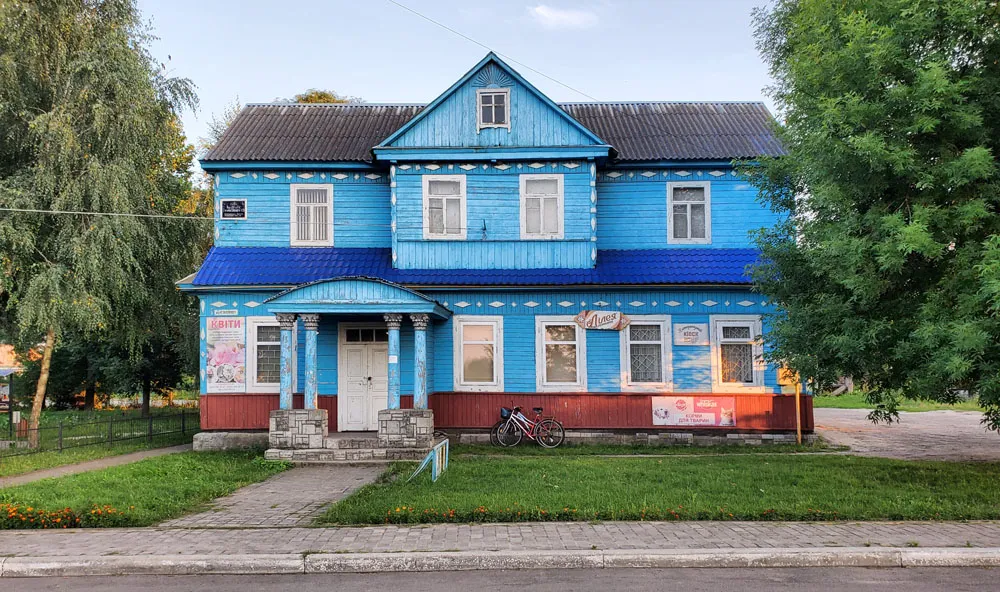
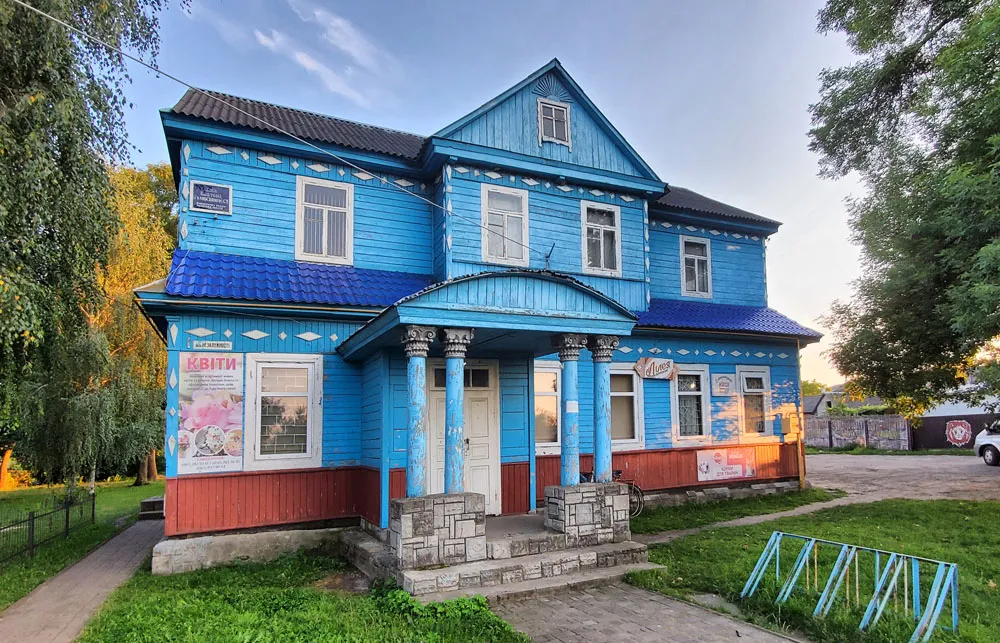
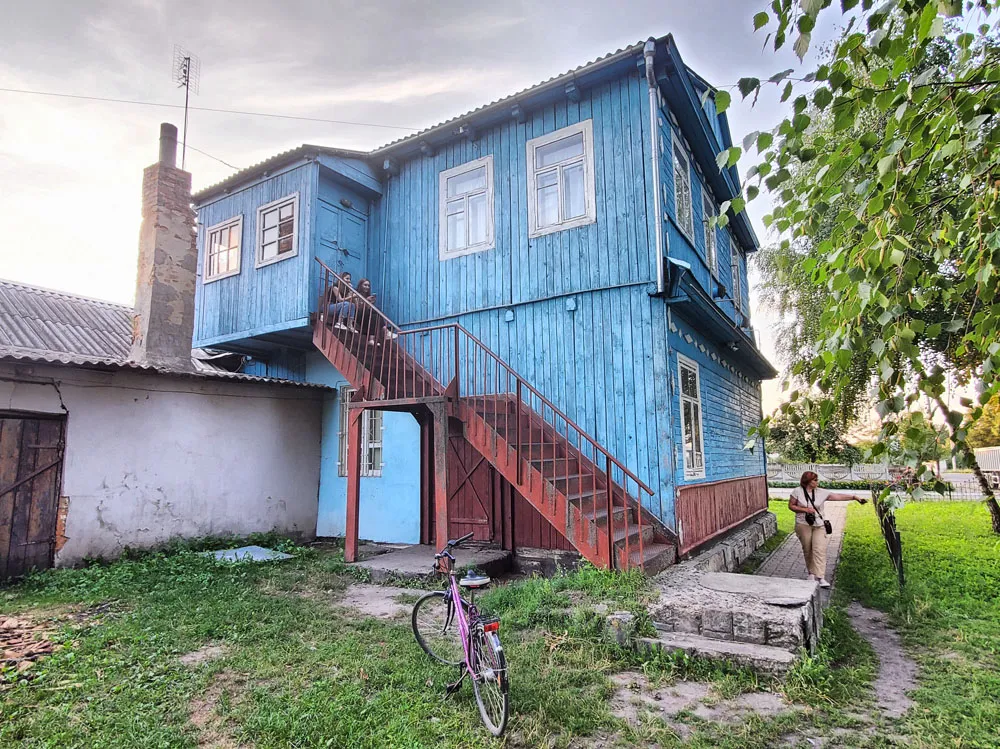
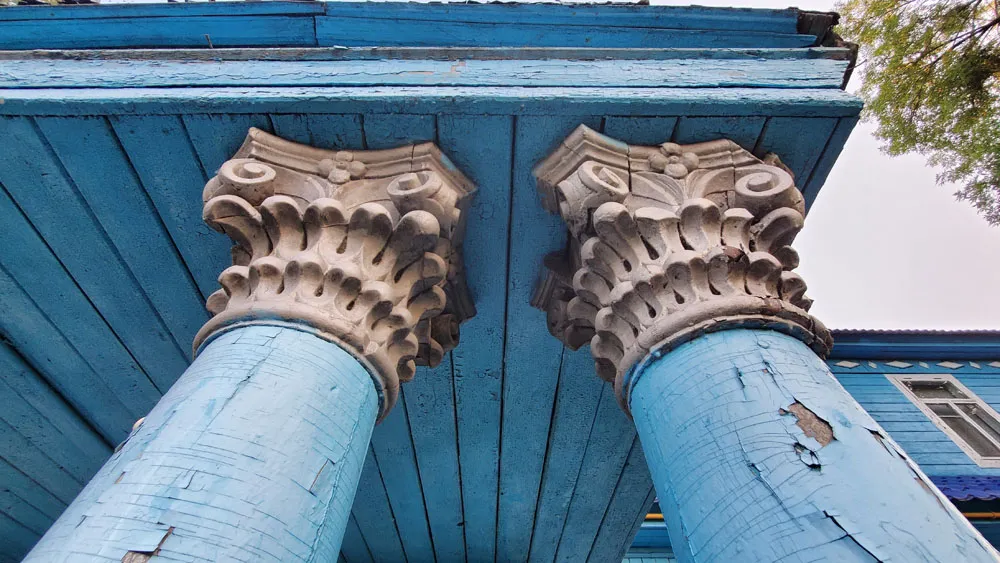
An old administrative building.
We did, of course, find the sculptures of saints on tall pedestals. They were probably erected by the Jaruzelskis on the town’s Market Square. Now the sculptures are in the private sector, next to people’s yards.
The Late Baroque Greek Catholic Church of St. George the Dragon-Slayer was built by Ludwik Wilga in 1783. Unlike the Roman Catholic church, the church has survived very well, but I liked the wooden bell tower, built in the folk style in the same period, even more than the church.
Evidently the area was once surrounded by large forests, which is why wood was one of the main building materials. This is also attested by another interesting landmark of the settlement – the former administration building, two-storey, with columns. Beautiful. Now it is a real shopping centre, with shops, a flower shop and a hairdresser’s.
At the end of the 19th century the Kovel railway passed through Holoby. The railway station became a landmark of that period.
Holoby has many landmarks but, as most often happens in towns whose development fell in the period of being part of the Russian Empire and the USSR, there is no integral architectural ensemble here.
Text and photos by Roman Malenkov.
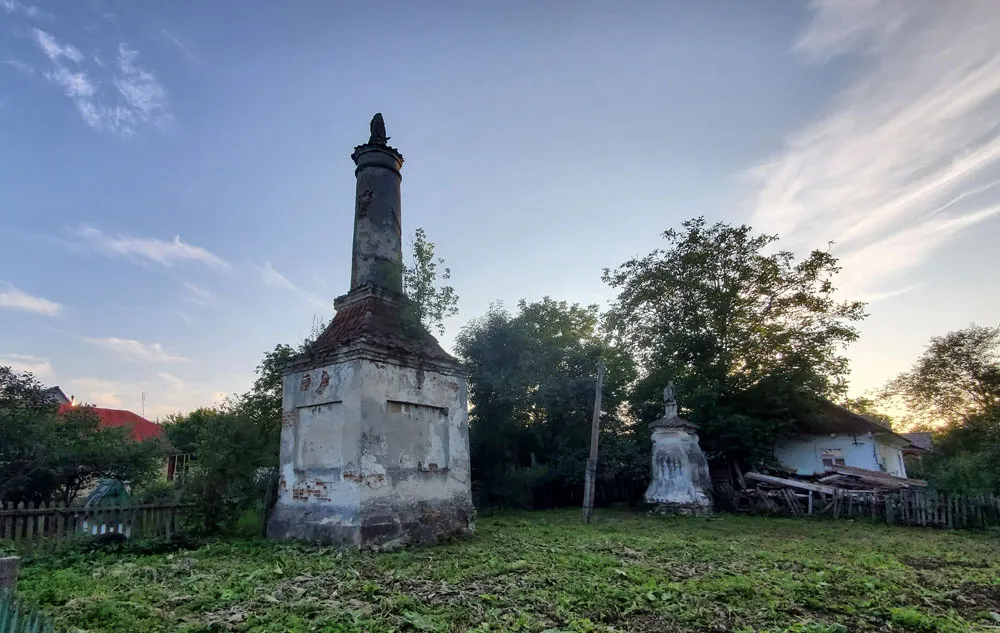
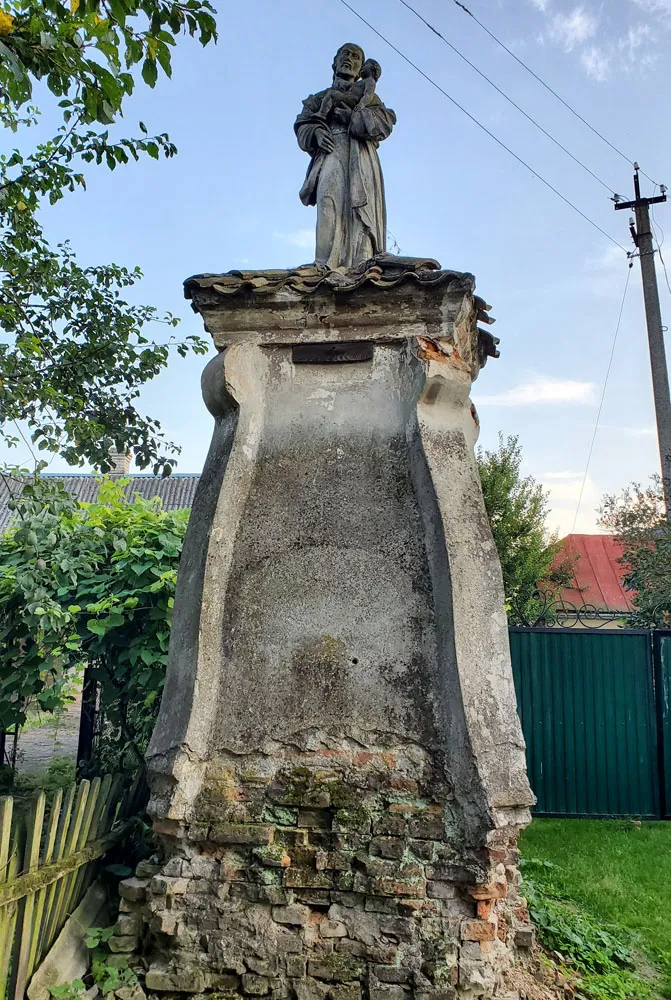
Figures of saints
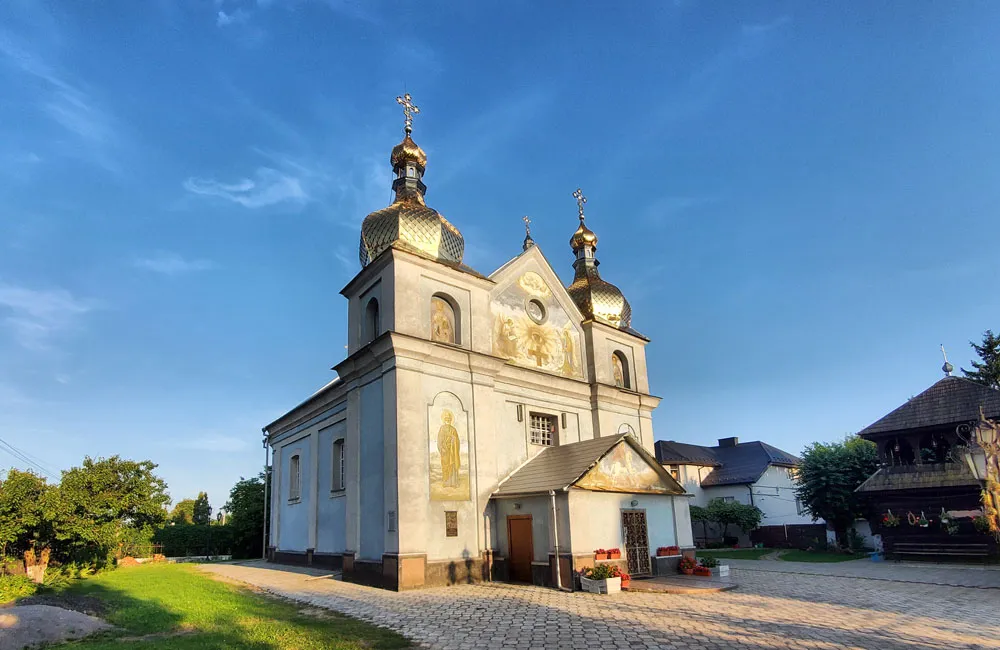
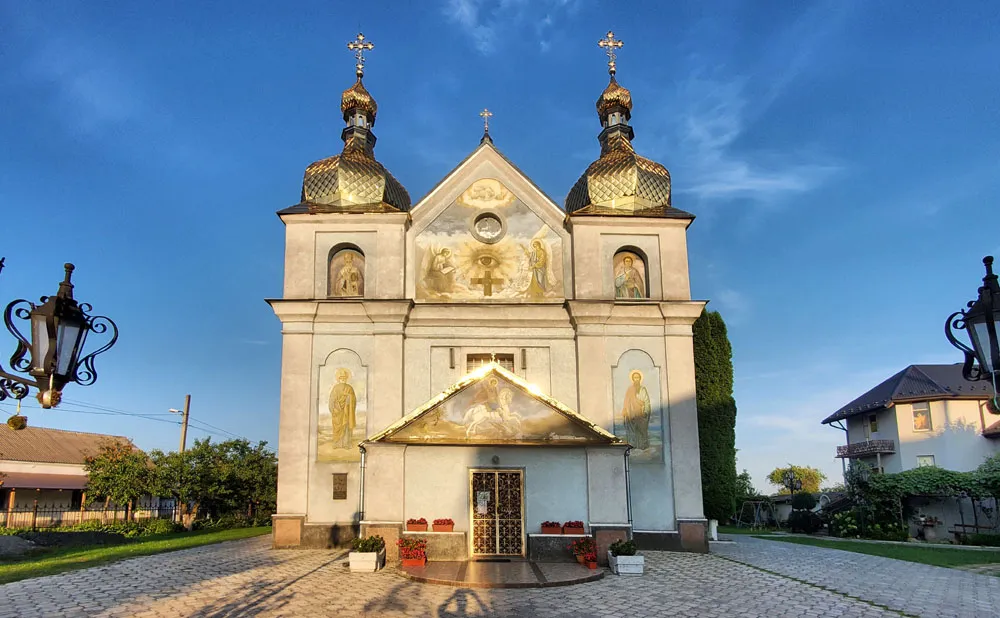
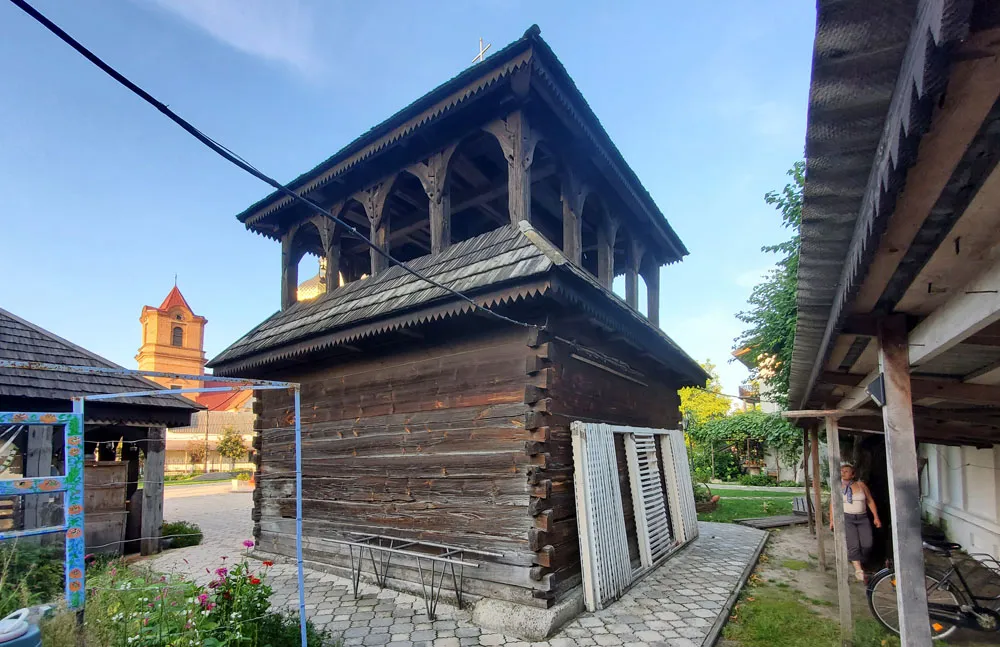
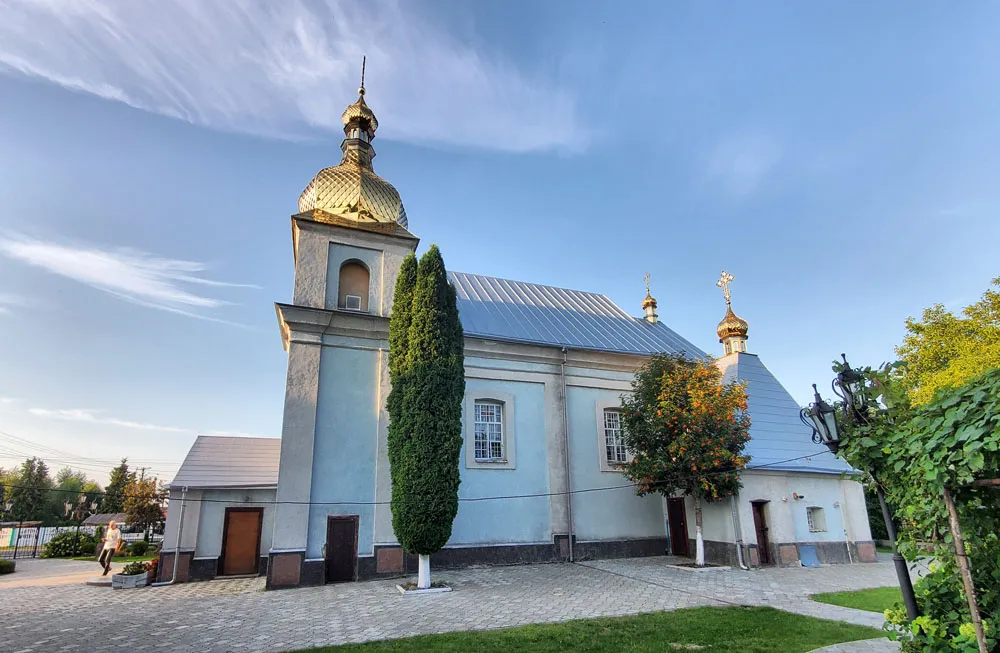
Church of St. George the Dragon-Slayer
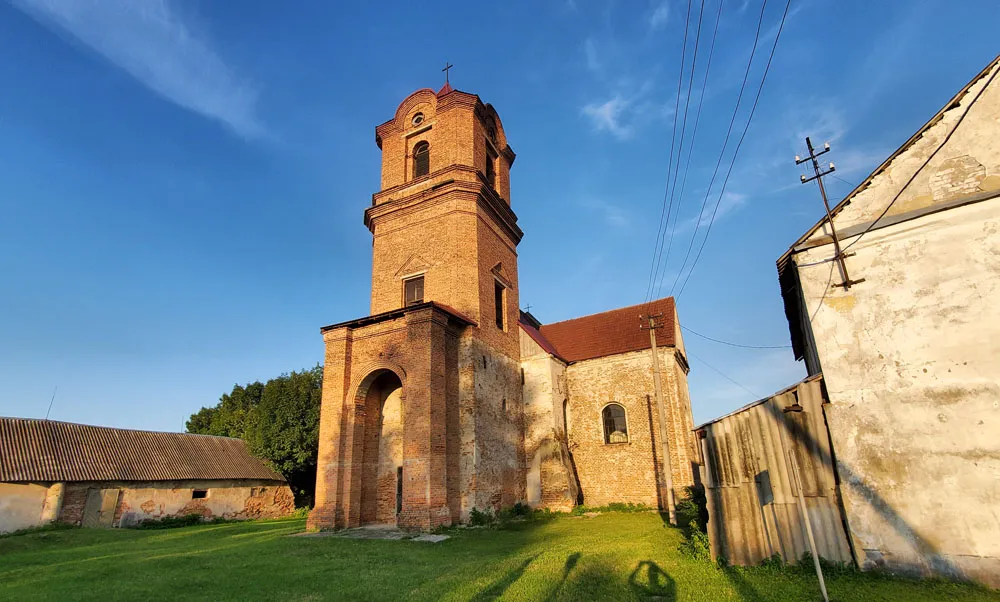
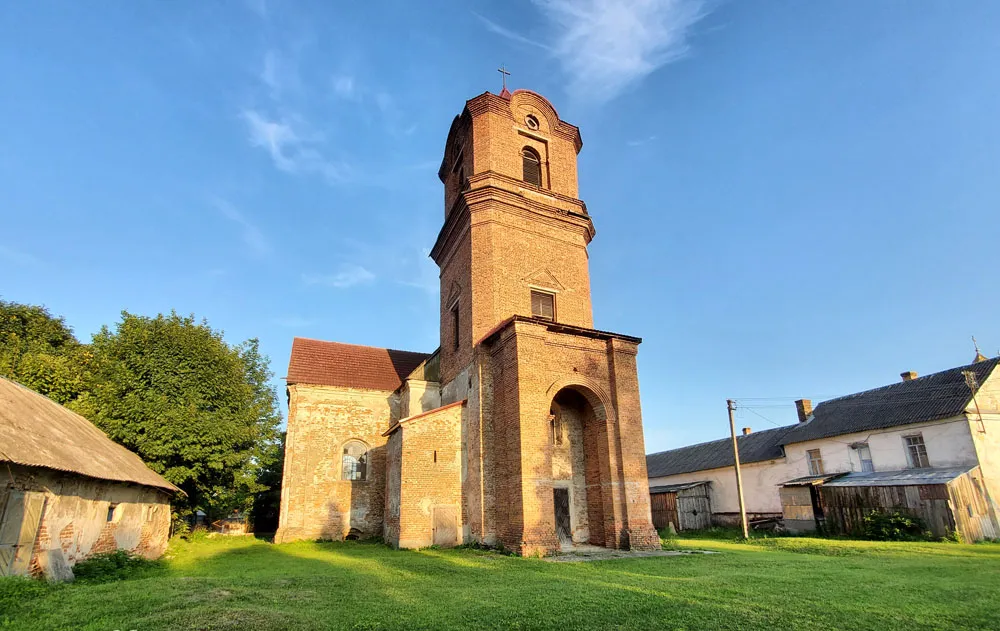
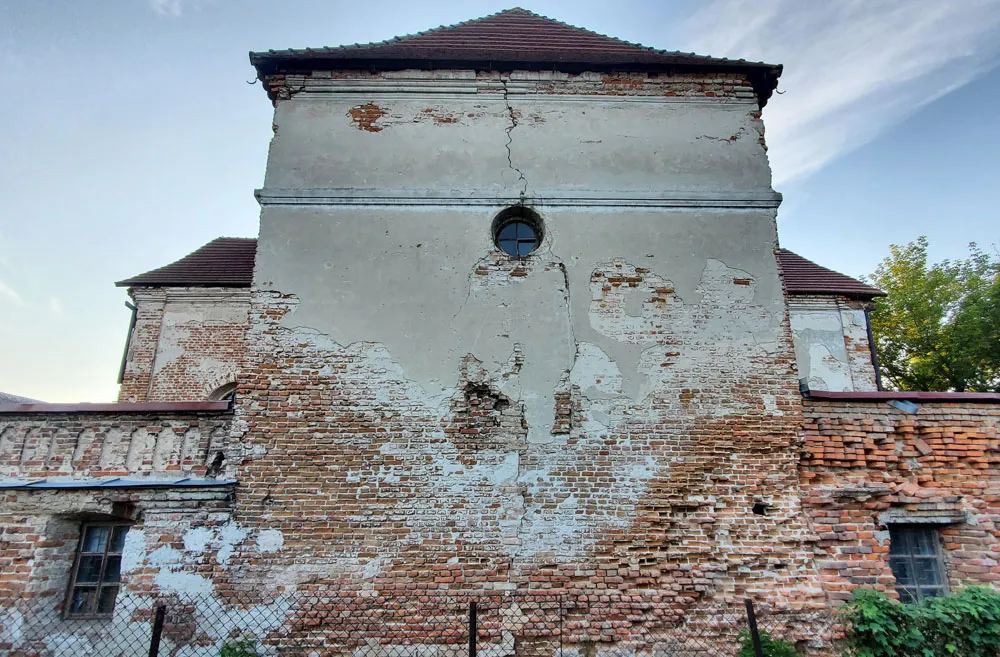
St. Michael’s Roman Catholic church.
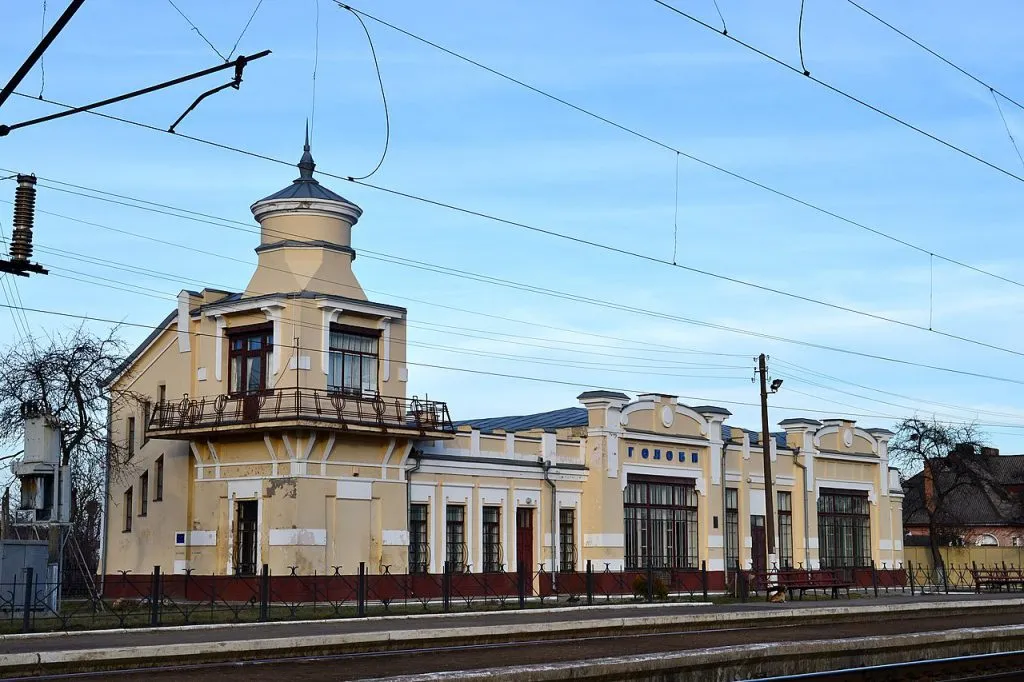
The railway station. Photo by Viacheslav Galievskyi


