

Kutkivtsi: a village with a Victoria Cross and mysterious tombs
The Podillia village of Kutkivtsi, in Kamianets-Podilskyi district, is known above all for its monument to its countryman Pylyp Konoval — the only Ukrainian awarded the Victoria Cross, the highest and most honourable award for valour in the face of the enemy that can be given to soldiers of countries subject to the British Crown. It is an extremely prestigious award, we should note. For example, if the holder of such a decoration suddenly meets the king, the king must greet him first.
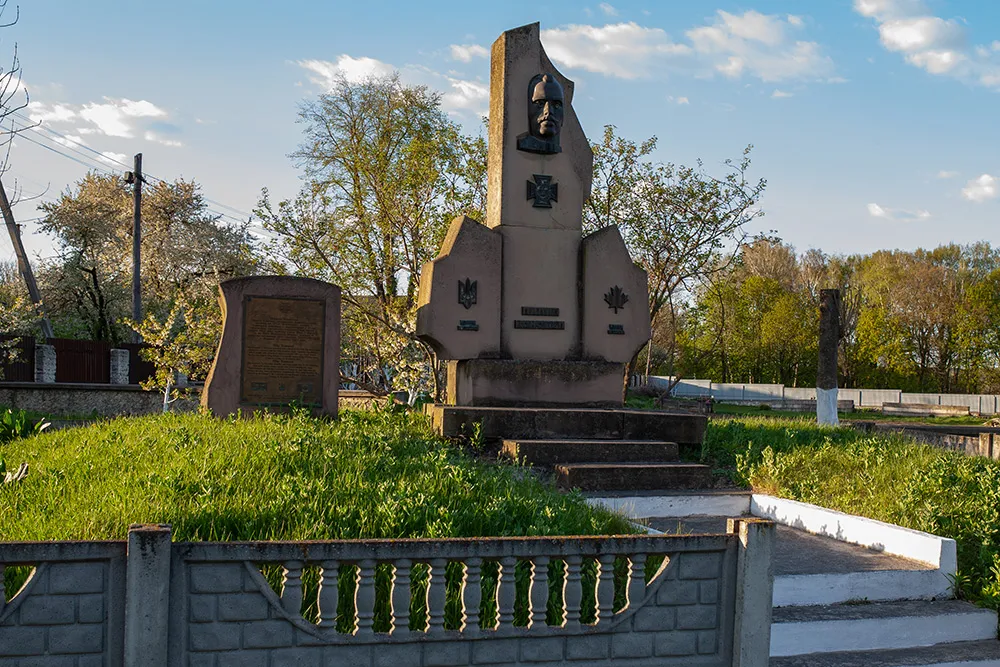
Monument to Pylyp Konoval
What is especially pleasing is that the modest and austere bronze cross of this decoration is struck from the metal of captured Russian cannon taken at Sevastopol during the international peacekeeping mission of 1853–1854 to calm an overreaching aggressor.
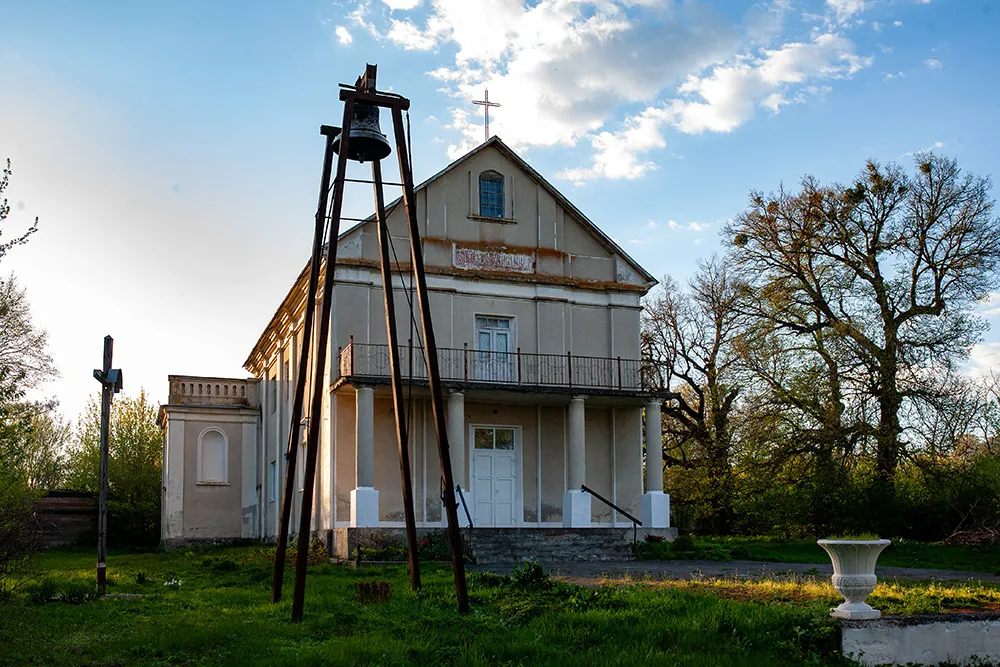
The inscription “House of Culture” can still be made out on the church
Kutkivtsi also has an 18th-century Catholic church, but after a fire in the 1950s it was radically rebuilt (it served as a village club). Even the most ardent optimist would not call it interesting. Travellers never go to such villages on purpose, but they do not pass them by if the opportunity arises. That is what happened this time. Even though the author had to make a sizeable loop along a rather “battered” road, it was not in vain. And, strange as it may seem, the monument to the heroic Podillian turned out to be completely secondary here.
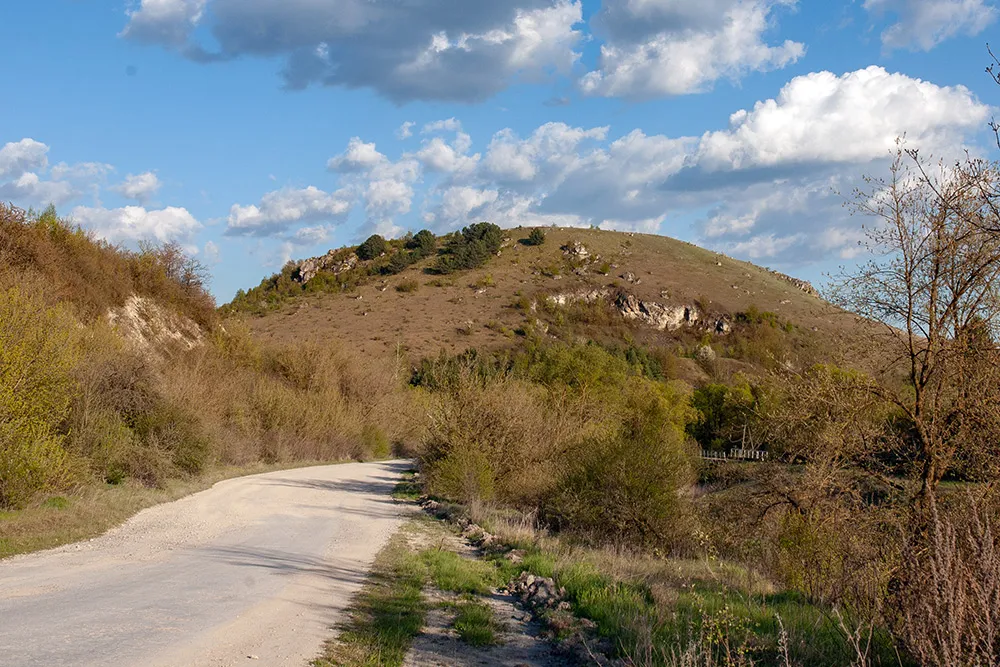
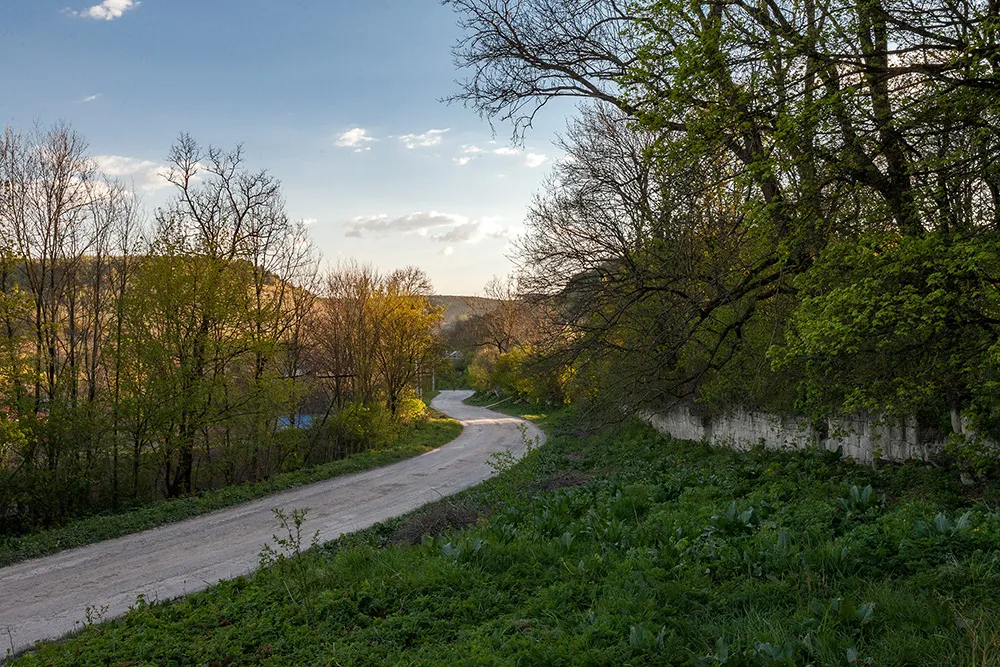
The road to Kutkivtsi (not the worst stretch of it)
It turns out that Kutkivtsi has an amazing monument, full of still unsolved mysteries, about which the general public knows absolutely nothing! It is the old Roman Catholic cemetery. It is right by the road and immediately drew attention with its fence.
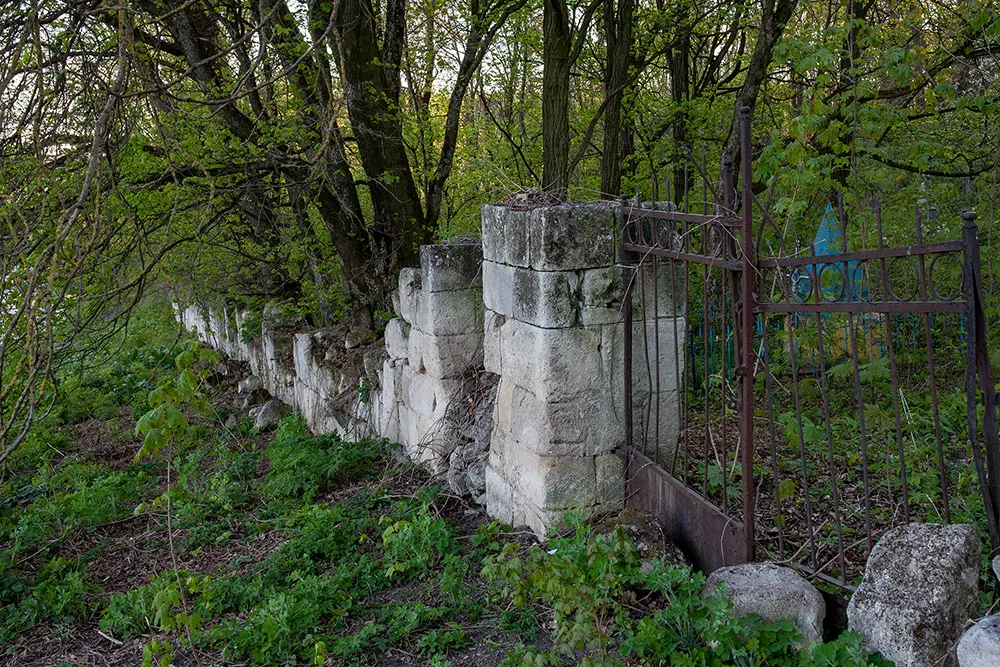
Stone fences, especially in these parts, are common and traditional. All the more so since there is no shortage of stone here, because the Tovtry ridge is nearby. Kutkivtsi in general nestles at the foot of one of the sizeable hills of this ridge.
This fence, however, was striking because it was built not just of stones but of stones dressed into blocks. But even that is not the main thing. The blocks were also carefully fitted to one another. The author of these lines has never come across anything like it anywhere else.
As soon became clear, the Kutkivtsi cemetery is one of the largest and most interesting old Roman Catholic cemeteries in this part of Khmelnytskyi Oblast. And this is connected with the church mentioned earlier.
The construction of the Church of the Exaltation of the Holy Cross (1786–1789) was begun at his own expense by the then landlord of Kutkivtsi, Kajetan Kowalkowski. The construction was completed by August Kicki (with the financial participation of the Warzewski family), to whom the local estates passed as a dowry after his marriage to Marianna Kowalkowska.
Importantly, the church was consecrated by the auxiliary bishop of the Lviv diocese Kajetan Kicki (a relative of August). Not every church had such an honour. The Kicki family endowed the new parish with a fairly good material provision, in particular 900 zlotys for the upkeep of the parish priest, 400 for the vicar, plots of land for the church, the parish house and other church buildings, as well as arable land and meadows.
Considering that the parish included 12 surrounding villages, considerable funds were also allocated to it by their landlords.
A large Roman Catholic cemetery was laid out at the church, where the faithful belonging to the parish, and accordingly the nobility from the surrounding villages, were buried.
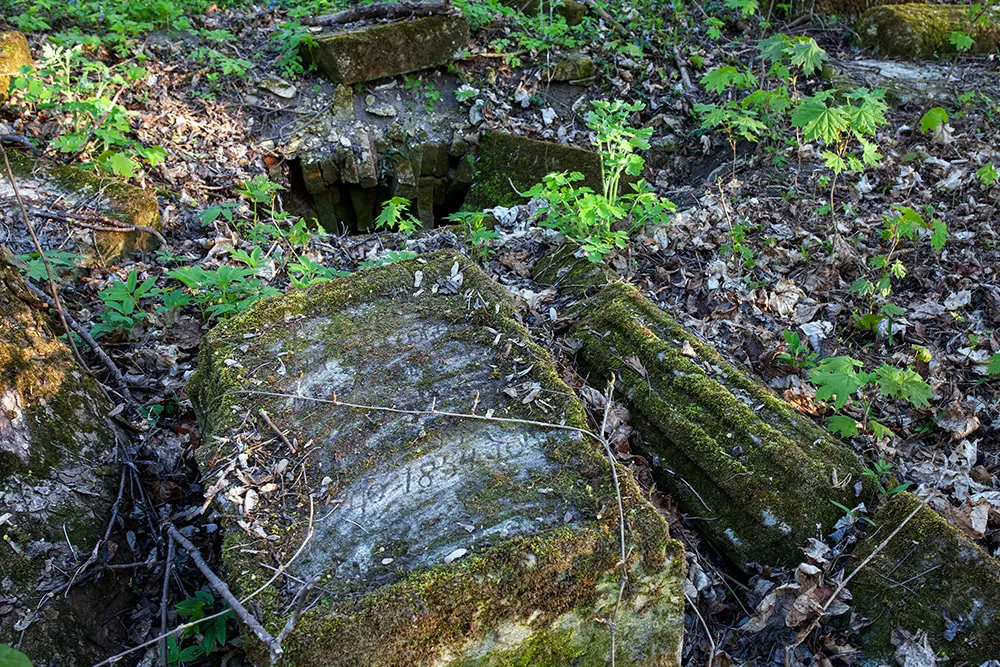
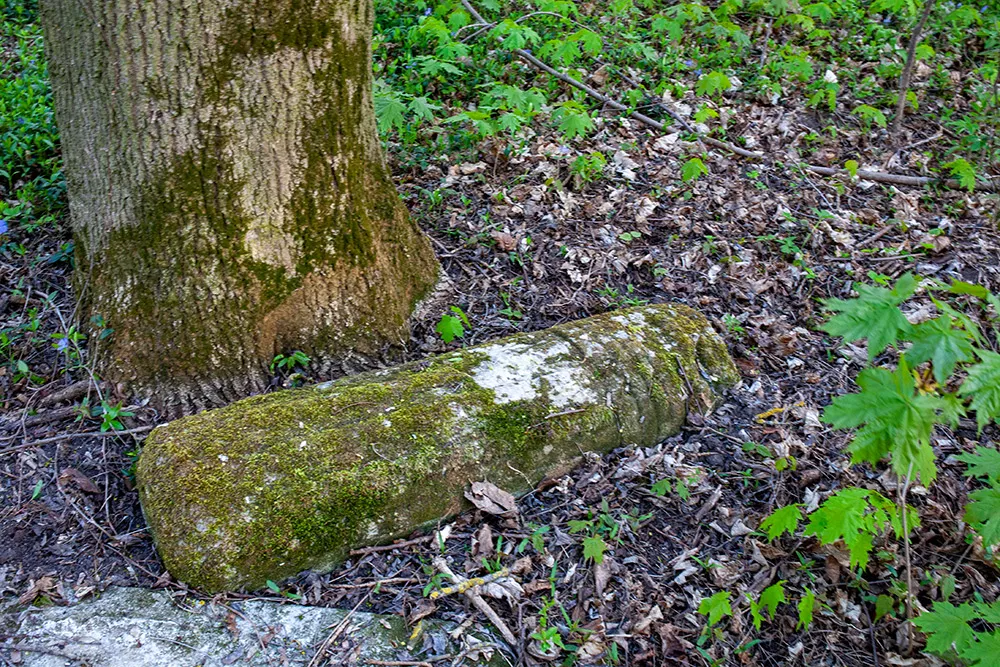
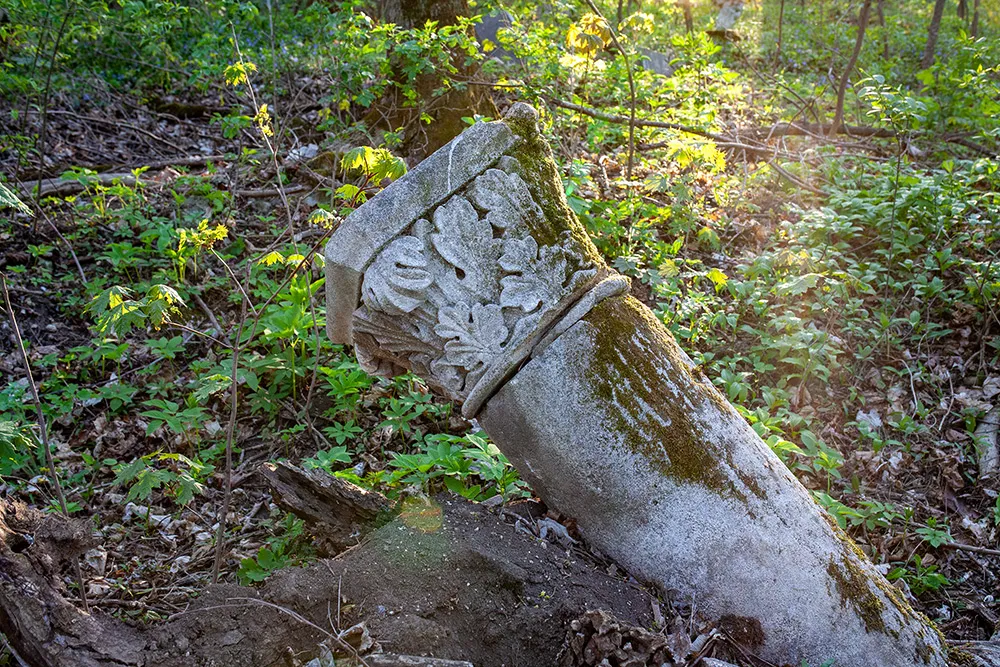
Fallen columns beside one of the crypts…
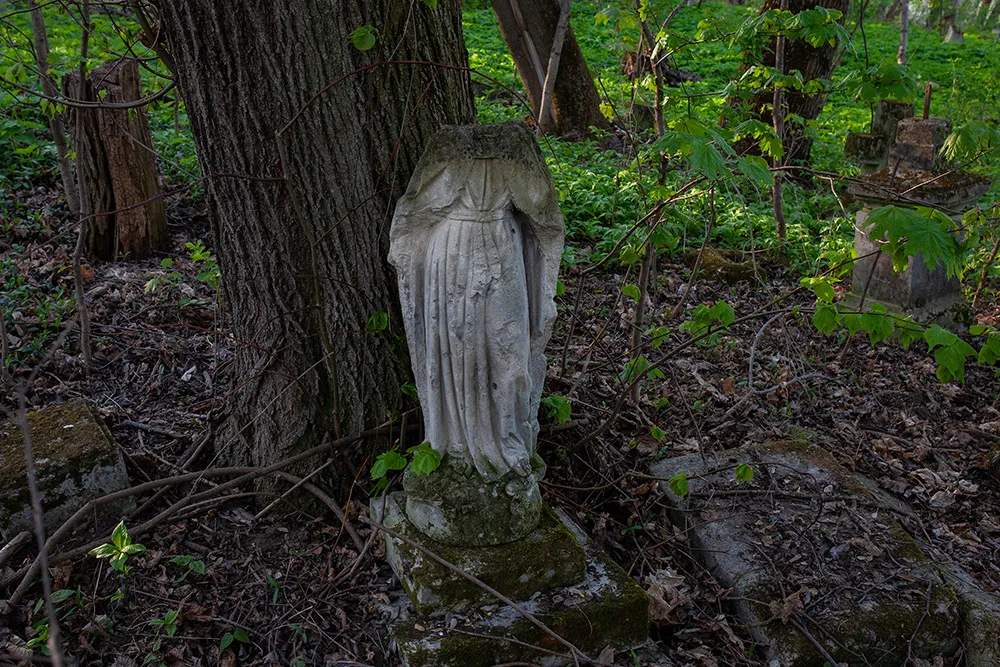
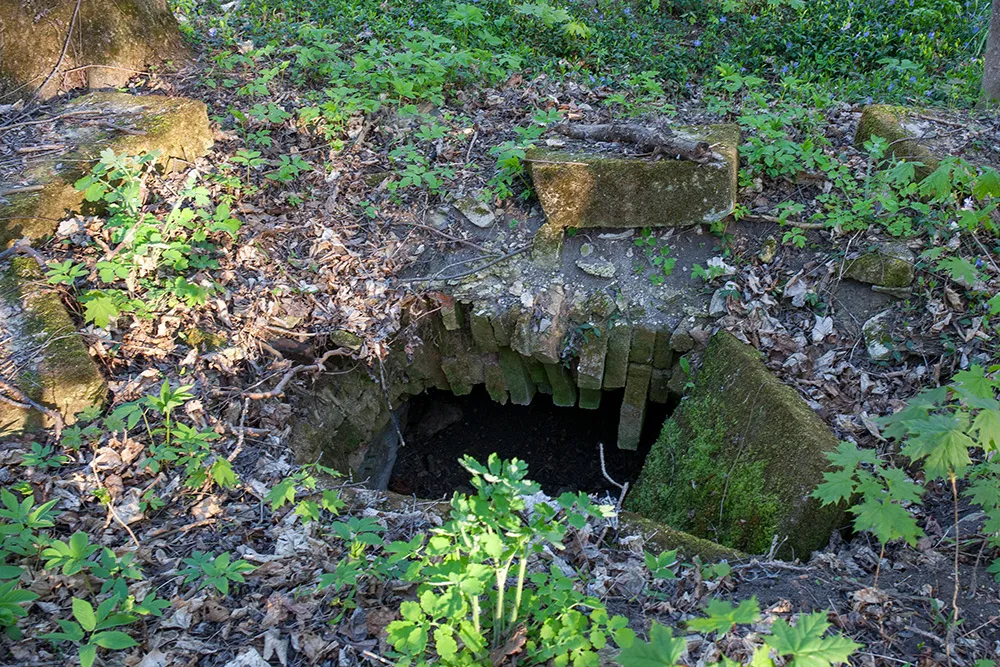
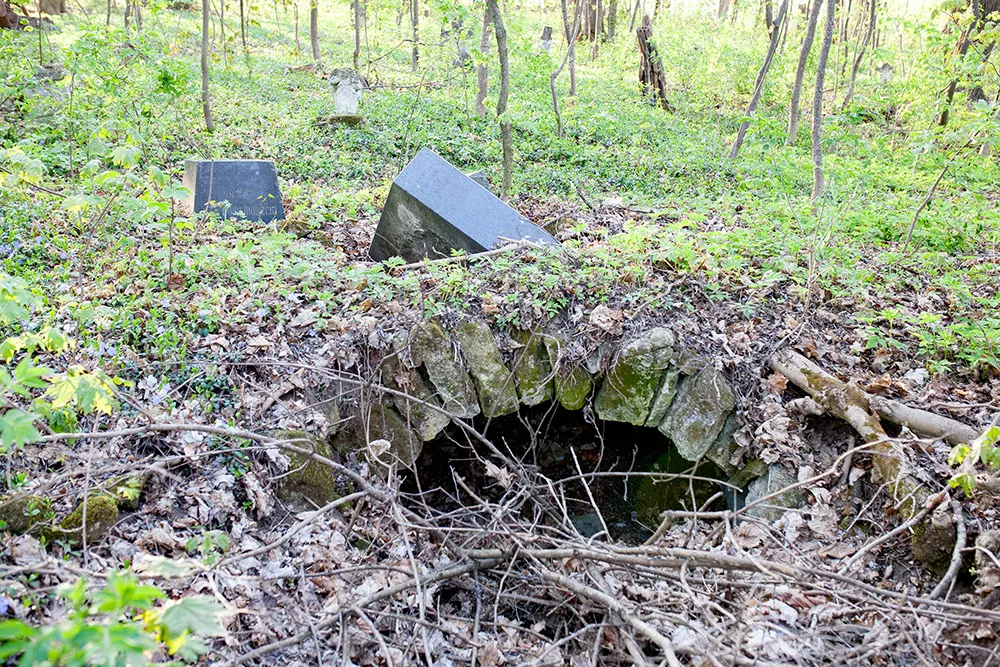
Besides the masonry fence, clearly built in the 18th century, the necropolis impresses with its large number of crypts. Unfortunately, all of them were brutally broken open and the monuments above them toppled. According to tradition, there were once more than two dozen underground crypts here. According to tradition, before the revolution, when the parish looked after the cemetery, it was a kind of park here — with lawns, flower beds, sand-strewn paths and even benches where one could sit and rest.
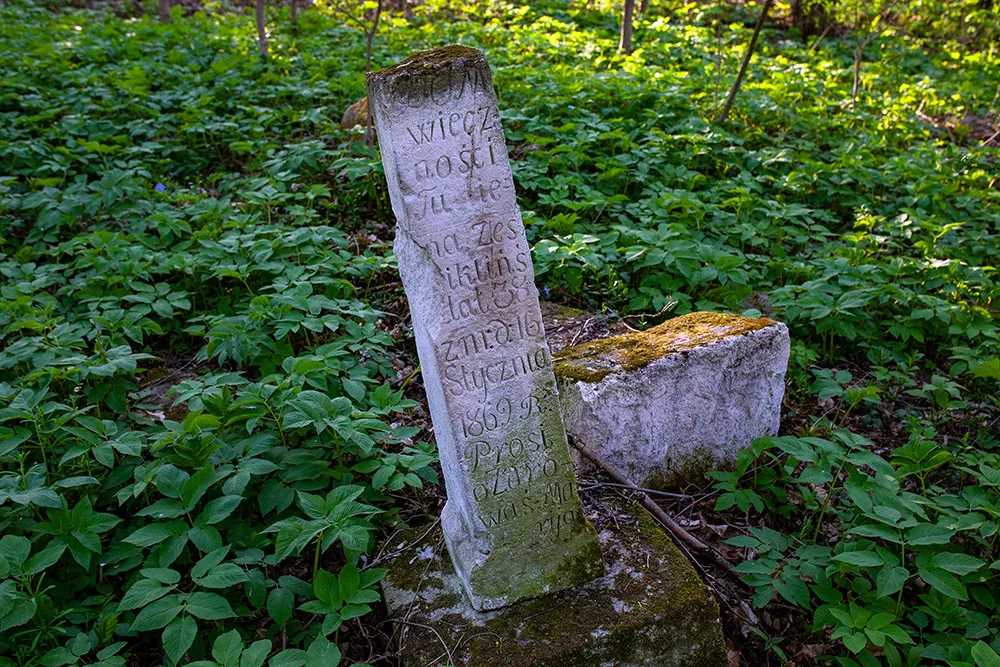
In the 1960s most of the crypts were broken into and plundered by local treasure hunters.
The author counted six crypts and about as many places where something resembling such structures could be seen.
Whom they belonged to is not yet known. Only on one of them, adorned with a large monument made of big blocks of rather expensive labradorite, was it possible to read that it is the tomb of the Pidhorodetskyi family. The block with the names has sunk quite deep into the ground. Below, the years of birth and death are probably hidden. To find out, one would need to dig the earth away a little.
Tomb of the Pidhorodetskyi family
The Pidhorodetskyi family were landlords of the villages of Teremkivtsi and Yurkivtsi, which neighbour Kutkivtsi.
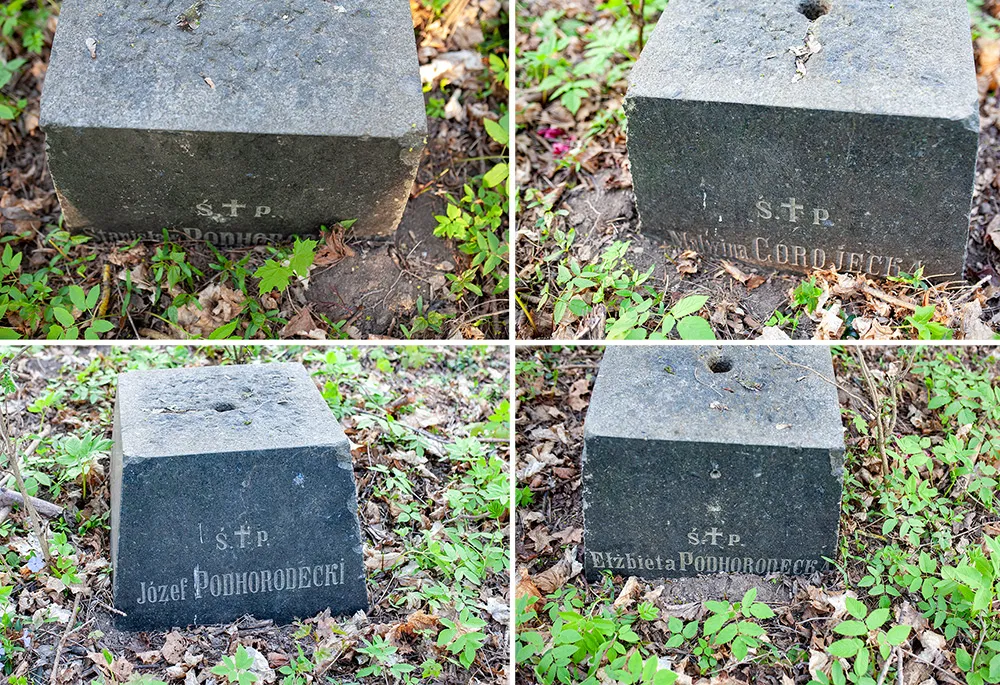
Block with the names of the deceased.
The owners of the other tombs still need to be worked out; in particular, it would be desirable to clear soil and moss from the details of the destroyed gravestones.
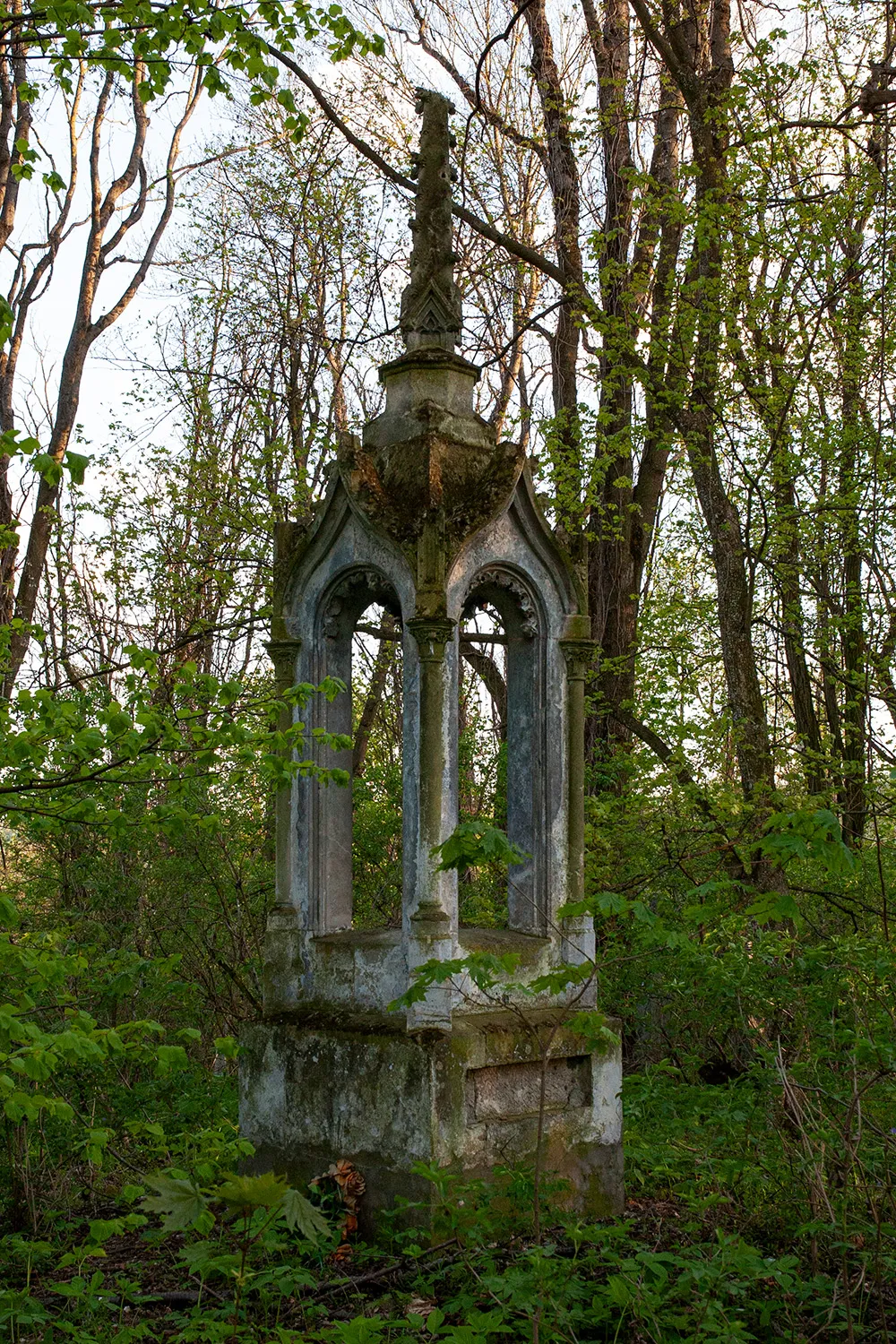
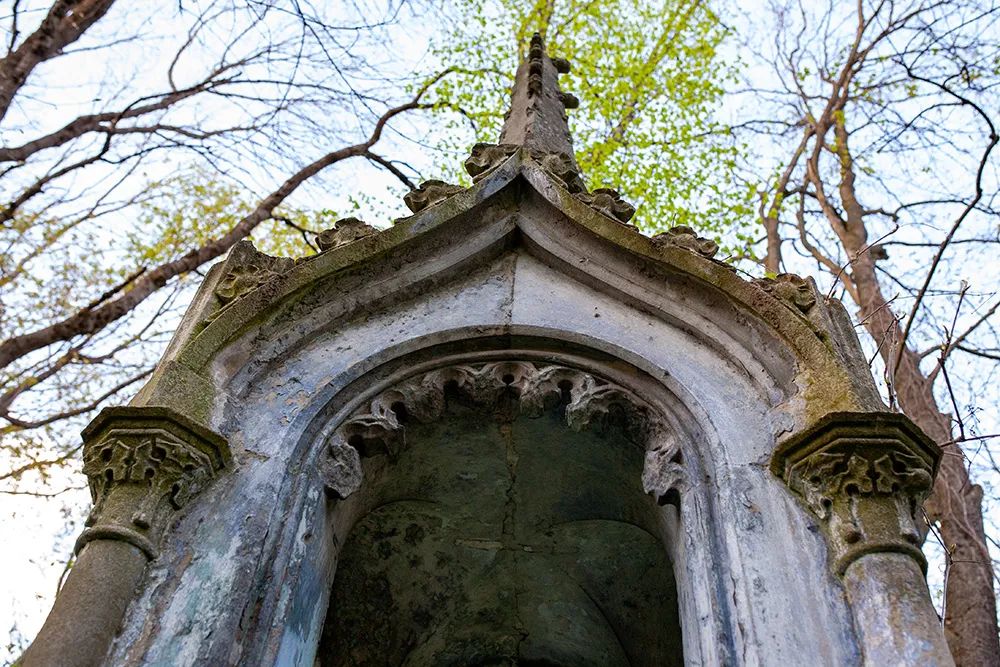
The most interesting and beautiful is the monument above one of the crypts, a Neo-Gothic gazebo carved from stone and crowned with a tall spire, in which some sacred figure once stood (the latter is missing). Who was buried here is impossible to establish. The plaques with names and epitaphs (probably bronze) were torn out long ago and sold for scrap.
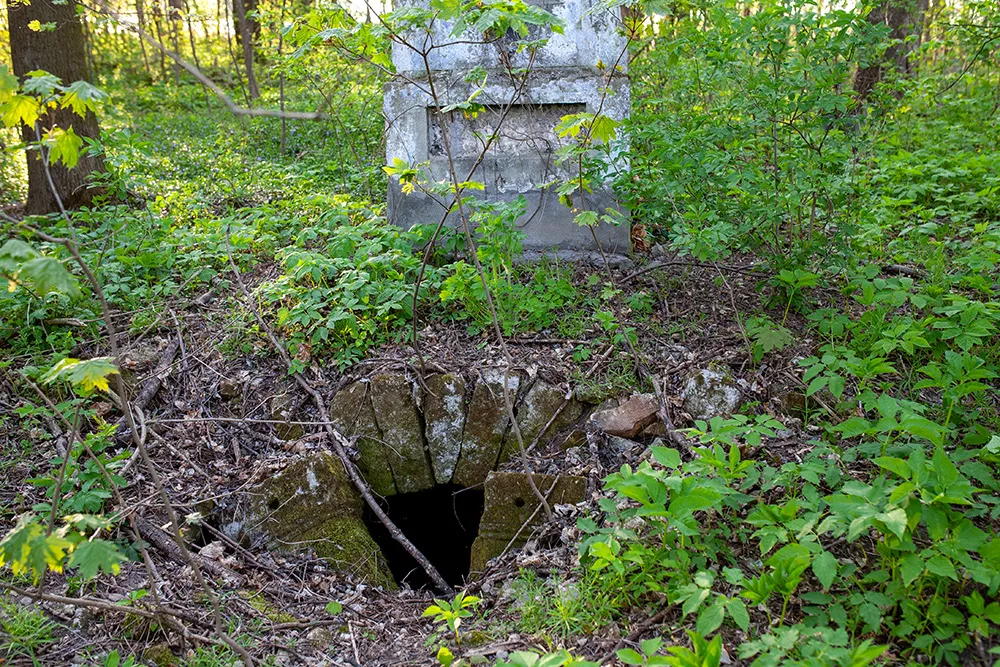
The greatest mystery, however, is a crypt reached by stairs half-buried in earth and fallen leaves. On either side of the underground corridor we see three rows of coffin niches. Ten in each (possibly more; the author had not prepared for such an adventure and had no proper equipment, so he only looked inside but did not go in). That is, this tomb is designed for at least 60 (sixty!!!) burials.
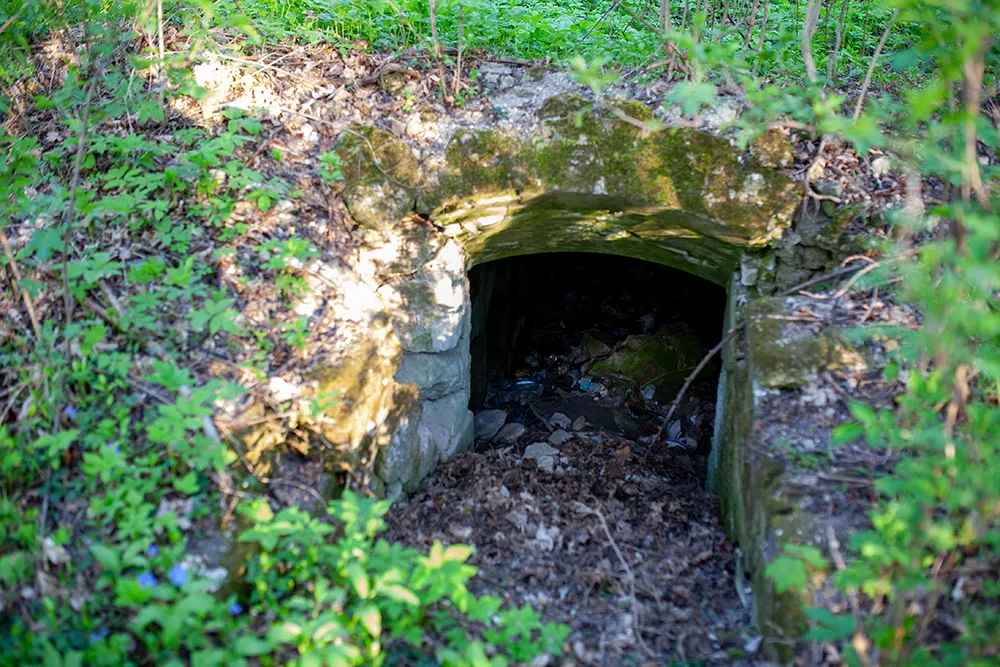
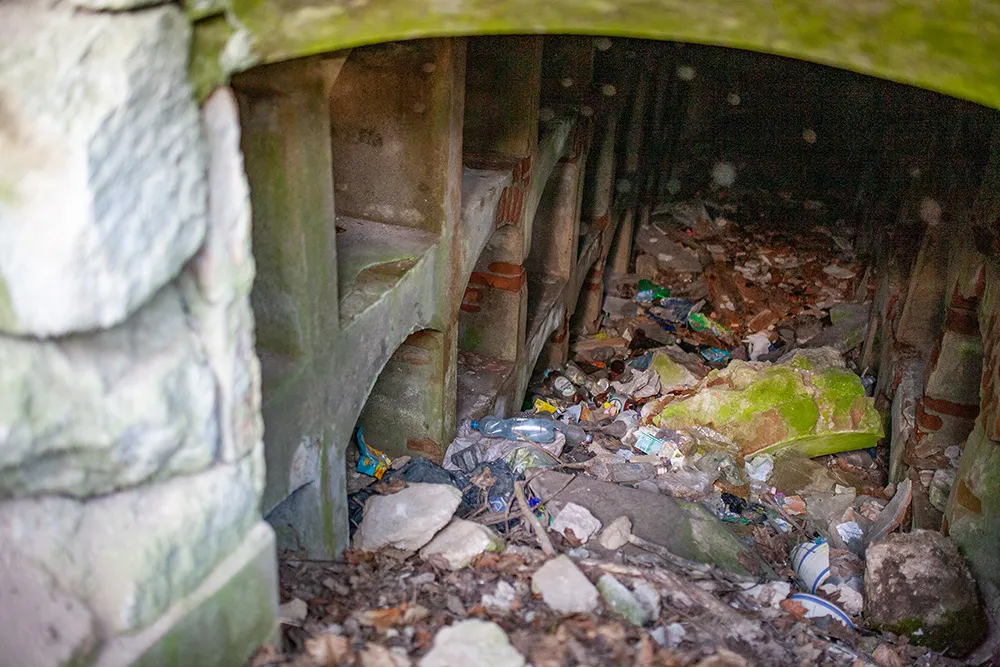
The author has seen a resting place of similar scale only in Yazlovets. But those stylized catacombs were intended for the burial of nuns of the local convent. In Kutkivtsi, by contrast, there was never any convent. So what is it? This historical riddle has yet to be solved.
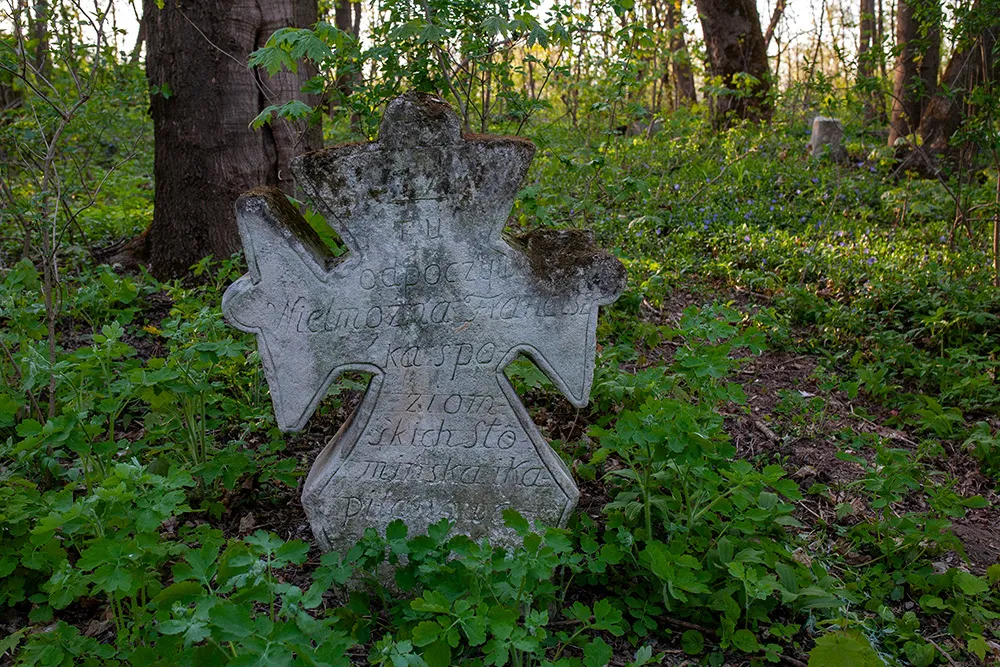
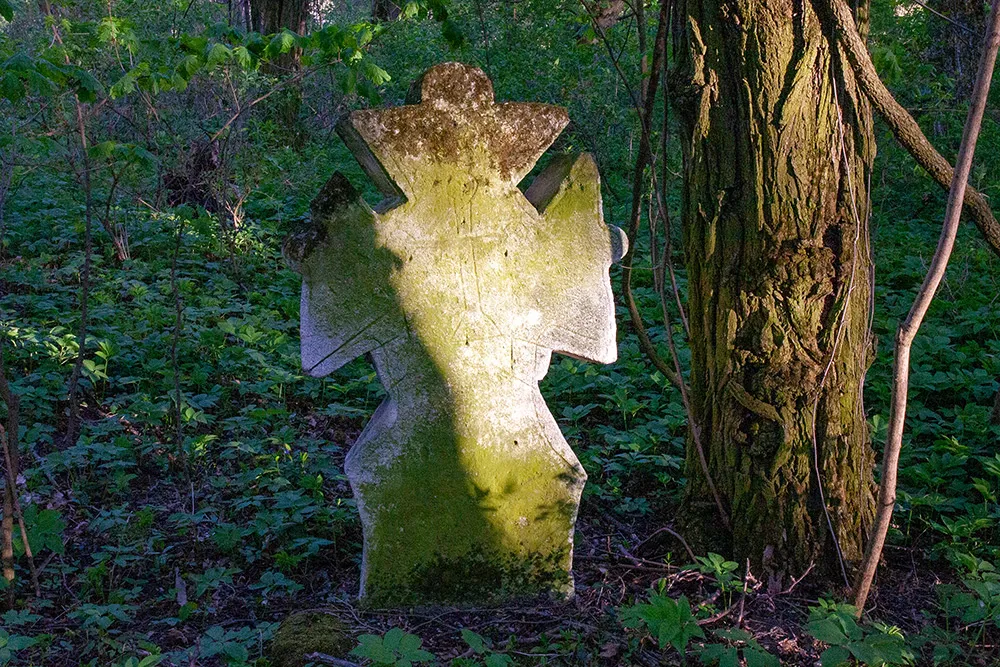
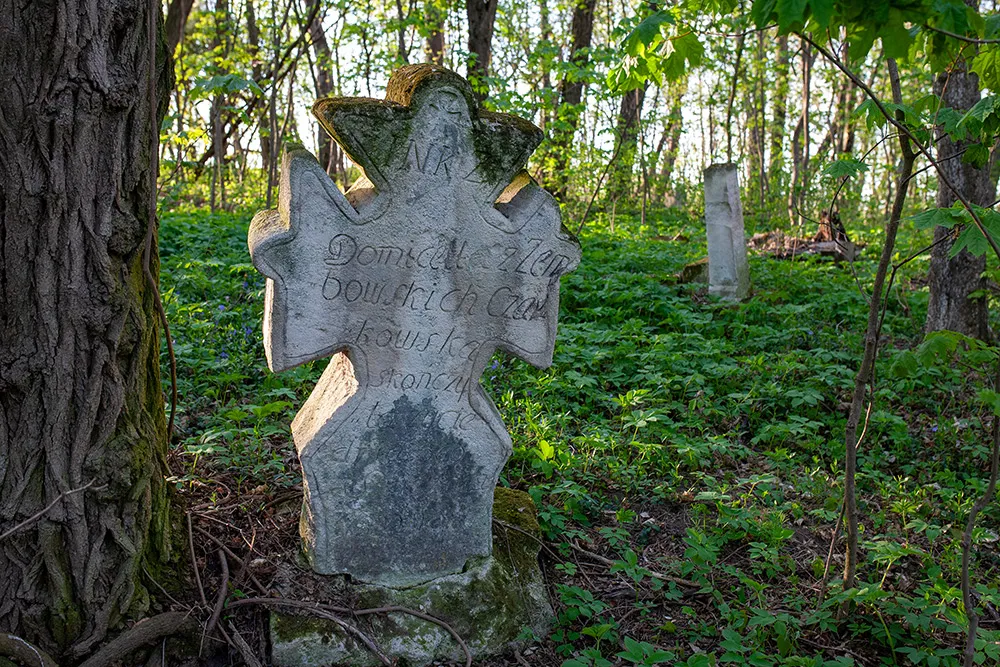
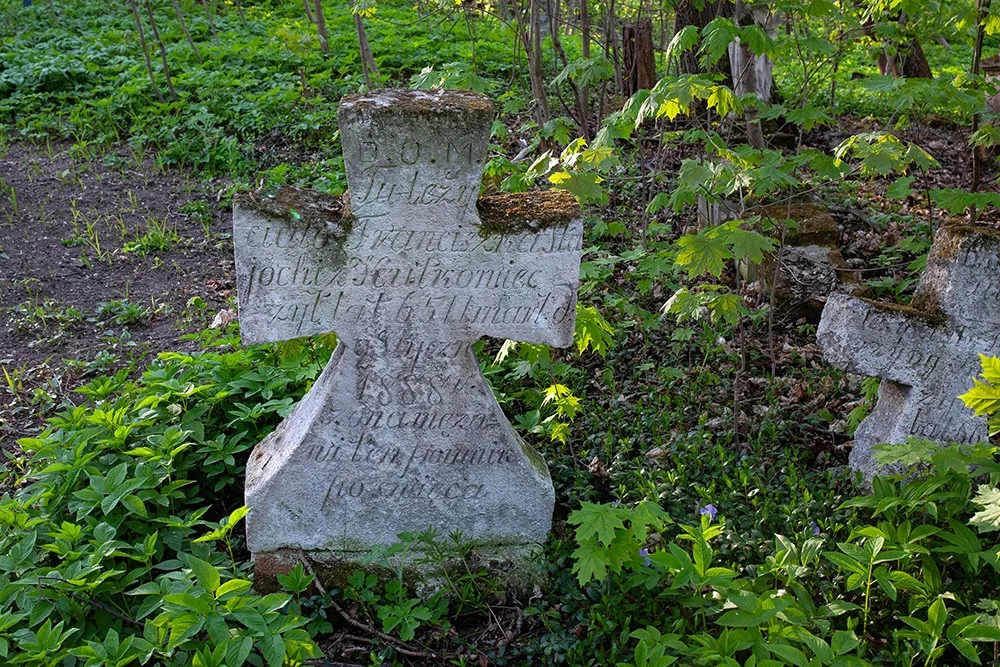
The cemetery is also interesting for its archaic flat crosses of a rather specific shape. The author has not seen similar ones before. They date from the first third of the 19th century.
The oldest of the crosses found is dated 1816. Interestingly, it belongs to the so-called “cross-within-cross” type, extremely popular in these parts in Orthodox necropolises.
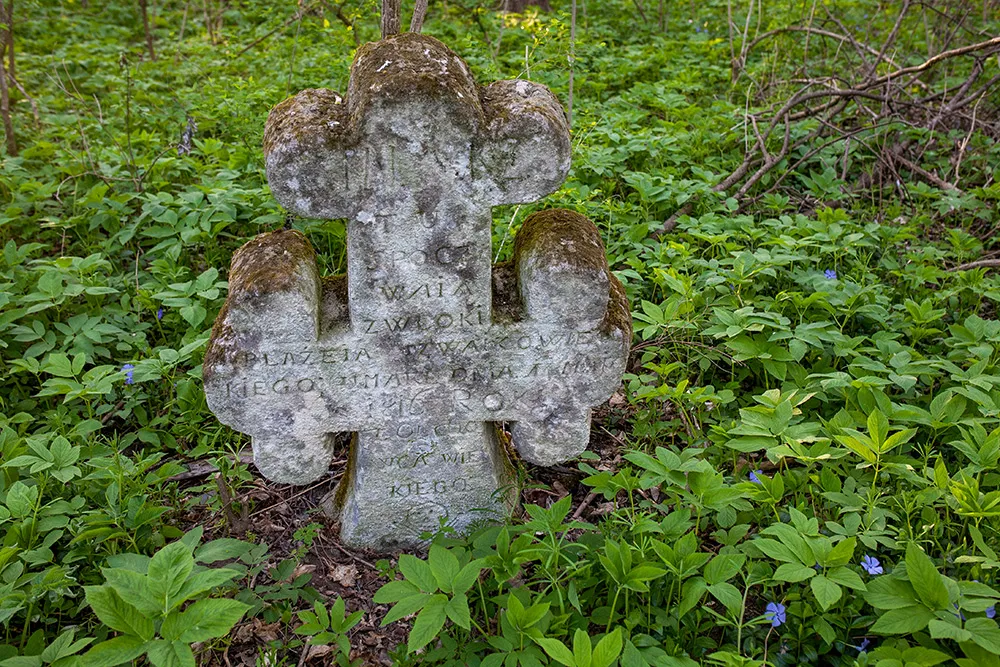
Cross of 1816
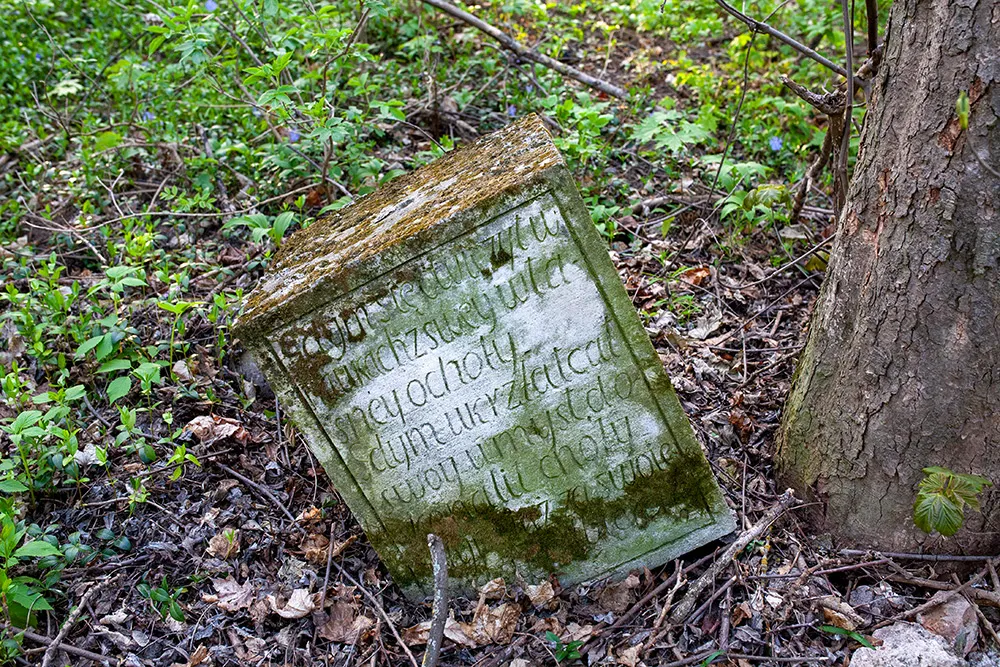
Considering that the cemetery arose practically at the same time as the church, there must also be many burials of the 18th century here, but a considerable part of the oldest gravestones fell long ago (or were toppled by vandals). Accordingly, to study them all this would have to be lifted and cleaned.
On the whole, the Kutkivtsi Roman Catholic necropolis turned out to be an extremely interesting site that conceals a number of amazing secrets.
Text and photos: Dmytro Poliukhovych


