

Lisovody – the Raciborski-Żurowski Palace, a bit of mysticism and a sad present
The first written mention of present-day Lisovody (Khmelnytskyi Oblast) dates from 1559. At that time it belonged to the Herburts. Later the Herburt inheritance passed to the Stadnickis.
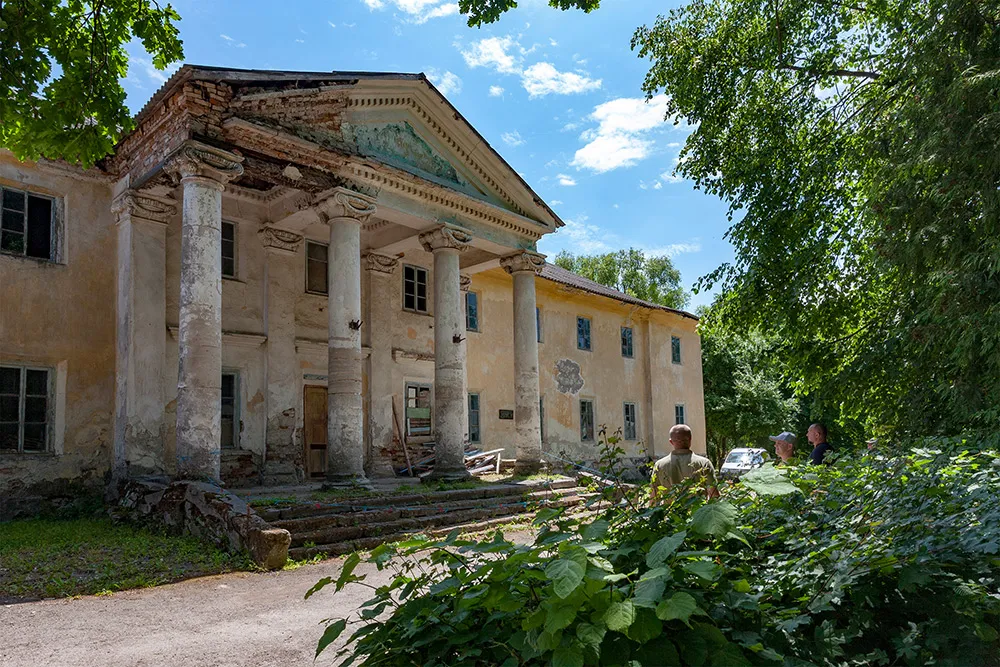
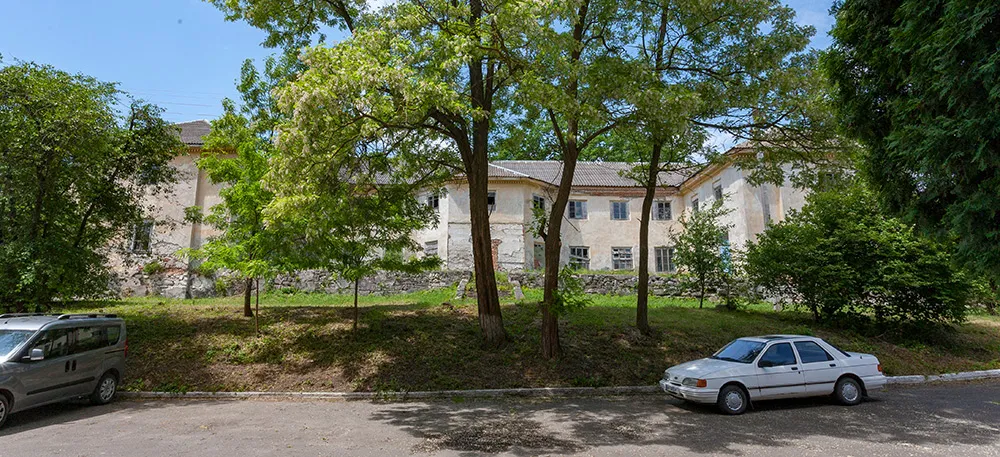
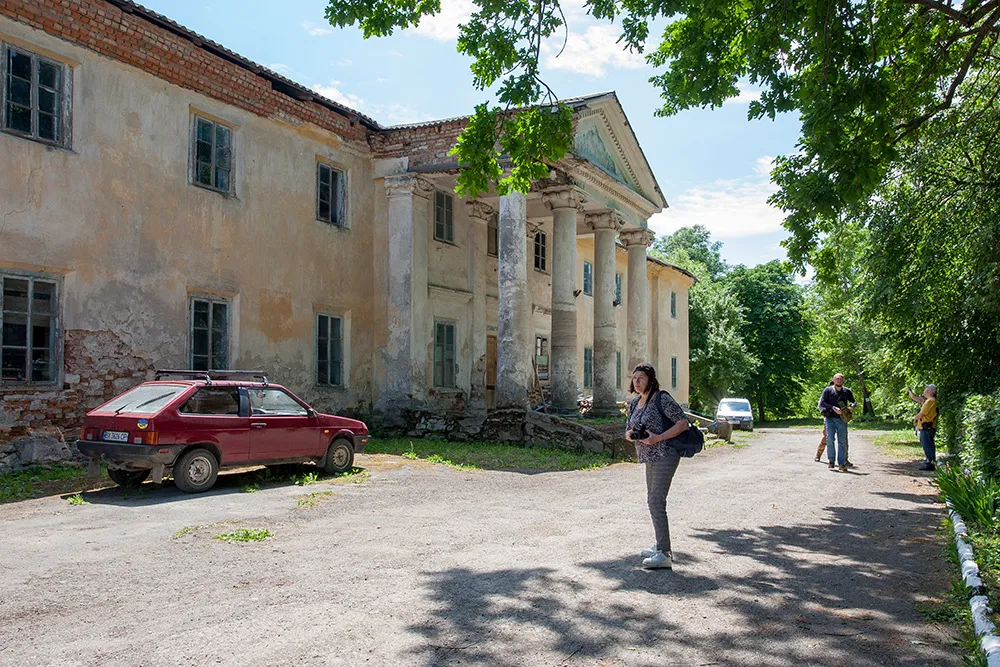
The palace in Lisovody
In 1771 Count Tadei Hrabianka, who would later become a famous mystic and the King of the Illuminati, married Teresa Stadnicka. She had inherited a considerable part of the vast legacy of the Herburt magnates. Her dowry included the villages of Ostapkivtsi, Syrvatyntsi, Skipche, Kreminna, Novosilky and Lisovody, the town of Kupyn and so on.
In 1796 the “King of the Illuminati”’s daughter Anna Hrabianka married Ludwik Raciborski, the marshal of the nobility of Kamianets-Podilskyi county, and Lisovody passed to the Raciborskis as a dowry.
Anna Hrabianka-Raciborska was no less interesting a person than her famous father.
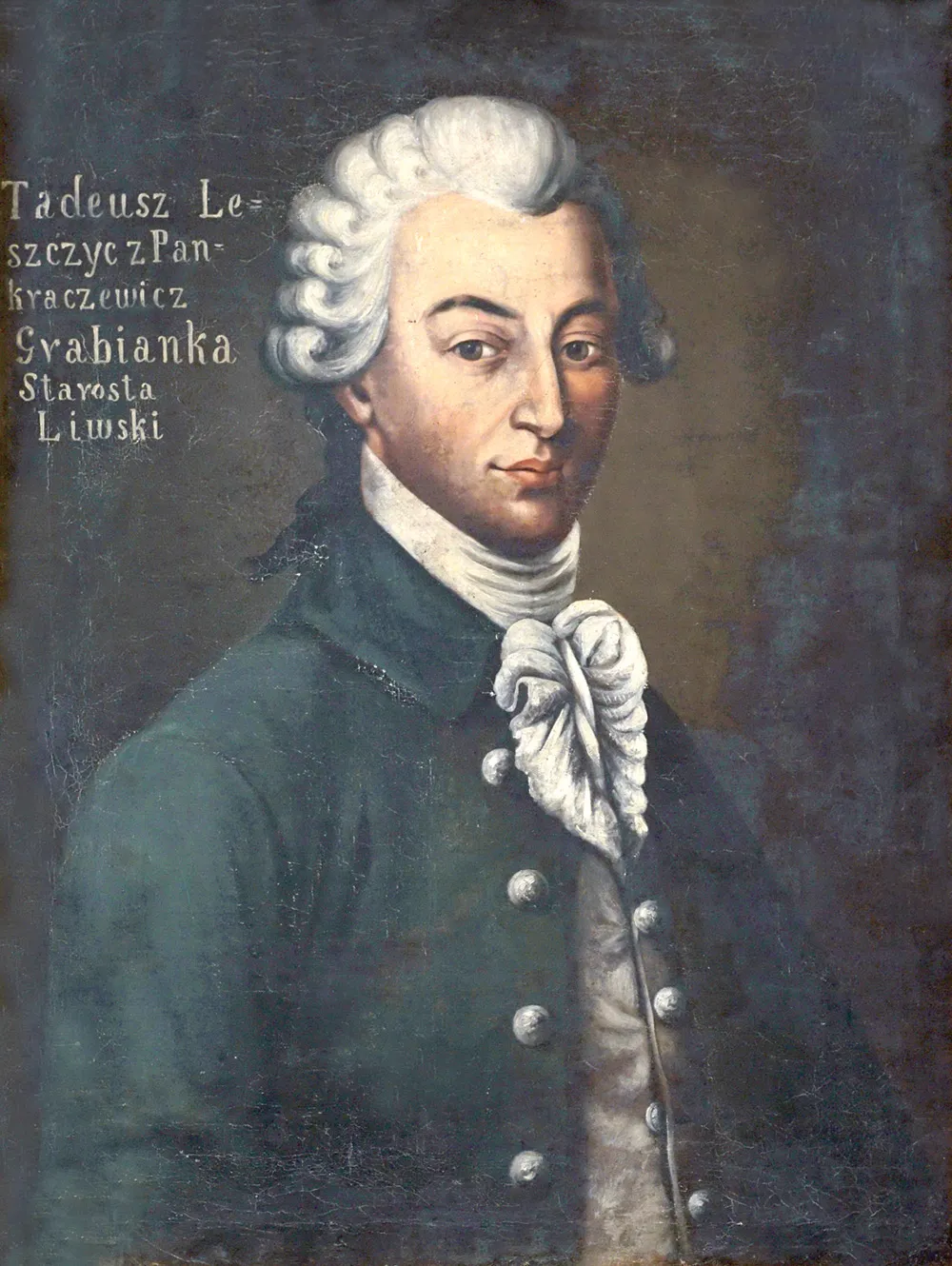
Tadei Hrabianka. Portrait by an unknown 18th-century artist. Kept in the Lviv Historical Museum
In 1780, when the girl was only 6 years old, the mysterious “Oracle”, who directed all the activity of the Illuminati community, ordered Hrabianka to give his child for 7 years to be brought up by Abbé Brumore and Madame Bruchia (two of the founding fathers of the secret society) and not to see her during that time.
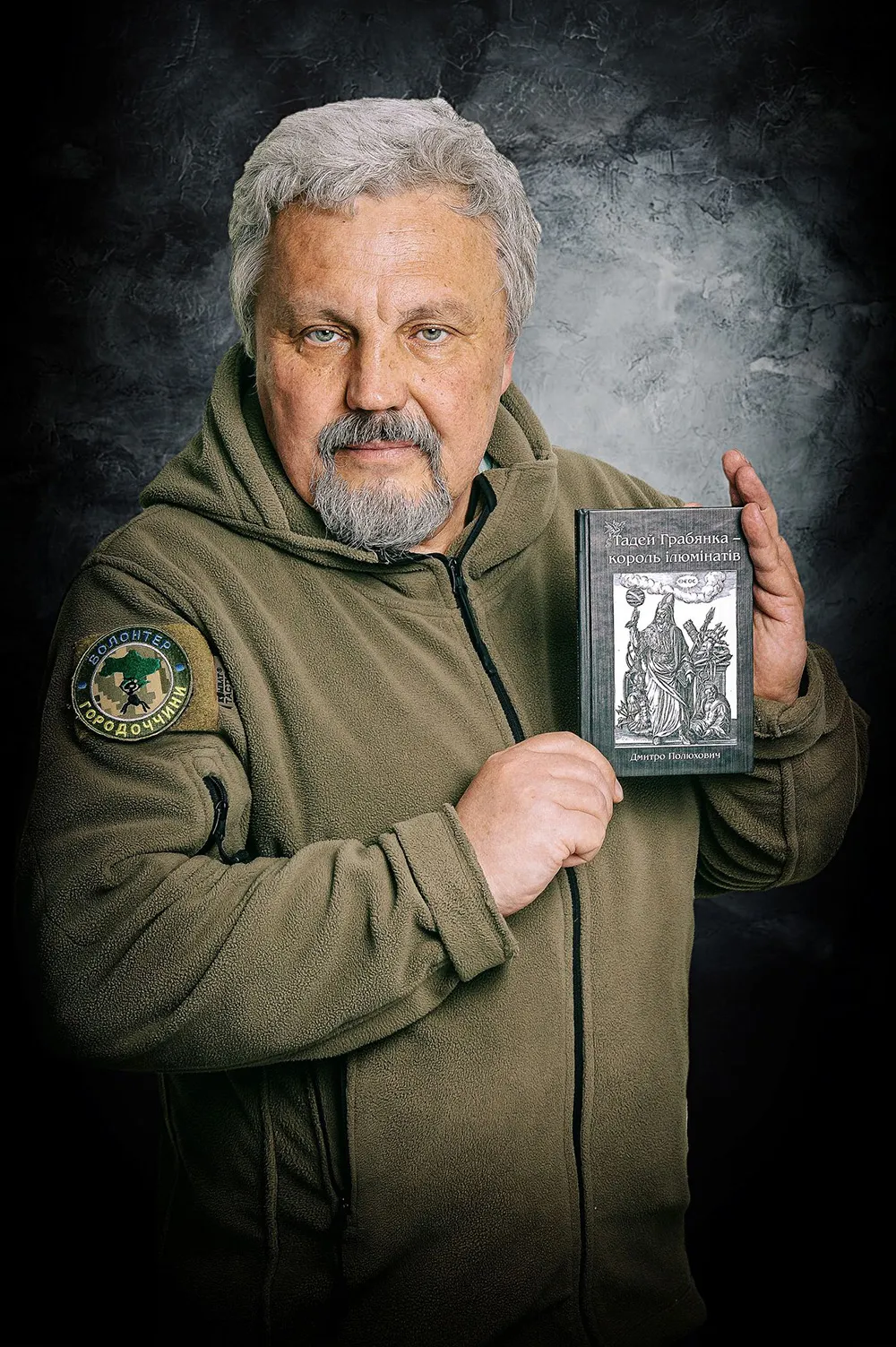
The life and adventures of the Podillian count (Cagliostro weeps with envy here) can be read about in the book by the author of these lines, “Tadei Hrabianka – King of the Illuminati” (Ruslan Khalikov Publishing, 2024). The book is still on sale in online shops, hurry up
It was said that just as Abraham once, the future father of God’s chosen people, was required by God to sacrifice his son, so Hrabianka, as the father of a new people, must also make a sacrifice. A much less cruel one, however – he had only to part with his daughter, because “On the head of the burnt offering vows are written, and the child must become the mother of a new people, the daughter of its strength and the bearer of its glory”.
Hrabianka, who loved his daughter dearly, at first rebelled against this strange order of “La Sainte Parole”. But he received an angry reply: “Who are you, who are you then, to set the timid cries of your blood against the command of your father and the will of your God? For the tree to grow, it is necessary that the branches be disentangled.”
Her mother, Teresa Stadnicka, also protested against separation from the child. But the Holy Word ordered her too to submit and to offer her blood as a sacrifice to God.
The Hrabiankas in the end agreed to the order of the “Oracle” (“La Sainte Parole”, that is, the Holy Word – French), and the father took his daughter to Germany. Let us recall that the mystical community was born in Berlin and only then moved to Avignon.
However, on 10 March 1783 the “Oracle” ordered the child to be returned to her parents. The story with the child itself became ruinous for the relationship between Tadei and his wife Teresa.
Let us note that Brumore and Madame Bruchia did manage to give the girl a good education. In particular, as follows from her letters to General Józef Orłowski, she had exceptionally broad knowledge of literature, world history and philosophy.
One mystical story is connected with Anna Hrabianka-Raciborska.
On 25 January 1795, soon after her engagement to Ludwik Raciborski, the young, beautiful girl sat down to write … a will. A rather tragic and poignant one:
“I die trusting in God’s mercy,” the girl wrote. “He is at once my father and my judge; His mercy is as great as His justice; I firmly believe that I shall feel true, uninterrupted and holy happiness only in the realms beyond. I did not experience it on earth – but I do not complain… I part with this world without regret… Cover my grave with tides, adorn it with myrtle and roses – I have always liked them…”
A little more than a year after the wedding Anna died. Among the mystic’s descendants this death was regarded as one of the manifestations of the “Hrabianka Curse” – God’s punishment that fell on the descendants of the King of the Illuminati for his esoteric pastimes.
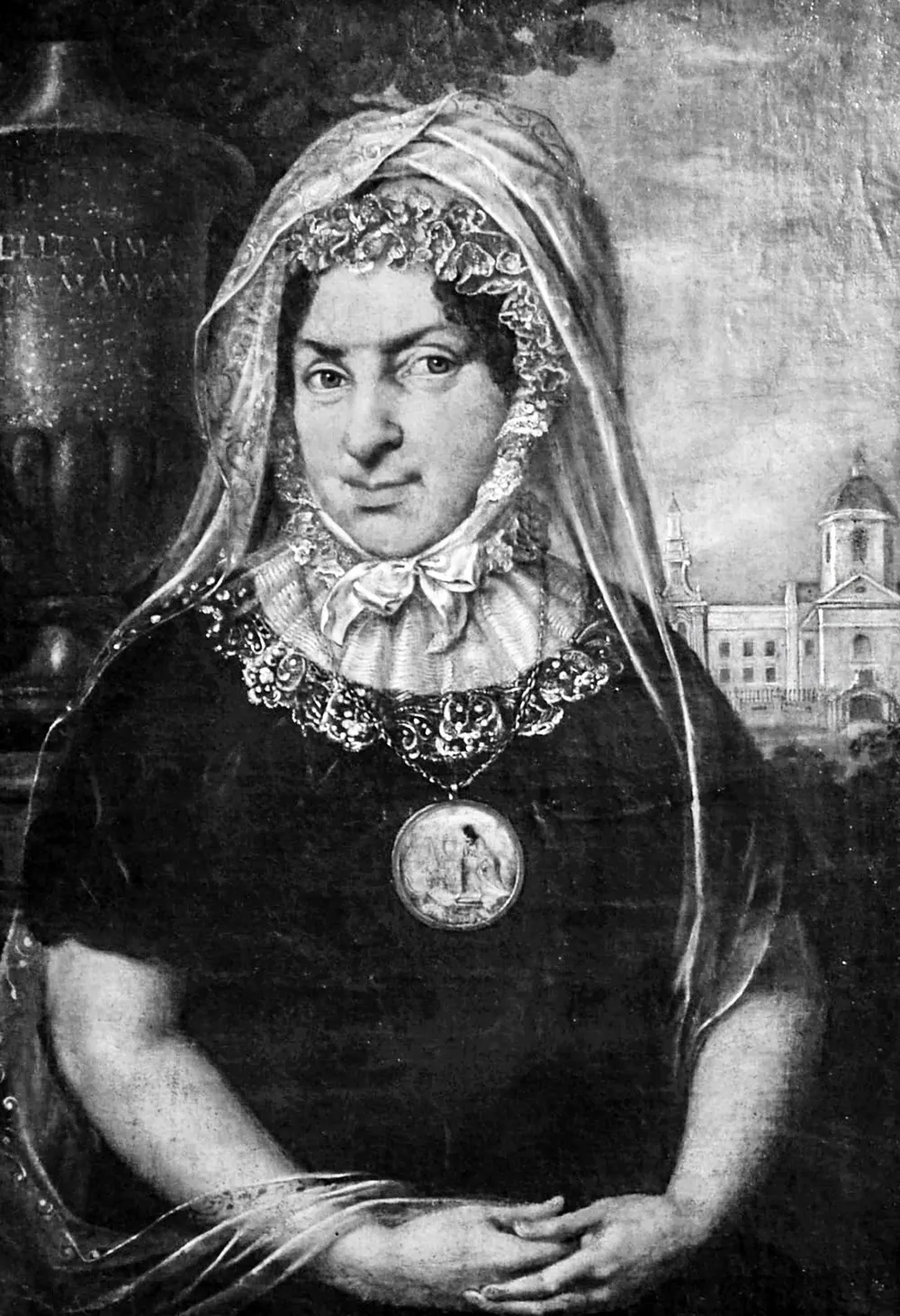
Mourning portrait (in memory of the death of her daughter Anna) of Teresa Hrabiankowa-Stadnicka. A copy from the early 19th century.
However, Anna’s premature death most probably has an entirely logical and materialistic explanation. Let us recall that as a child little Anna spent three years with Abbé Brumore, who actively practised alchemy and had a laboratory right in his house. The main ingredient of the “Great Work” is traditionally mercury. Chronic poisoning with this toxic metal is an extremely unpleasant thing. Brumore himself, let us note, also did not die old – at the age of 48 and, interestingly, in the same year as Anna.
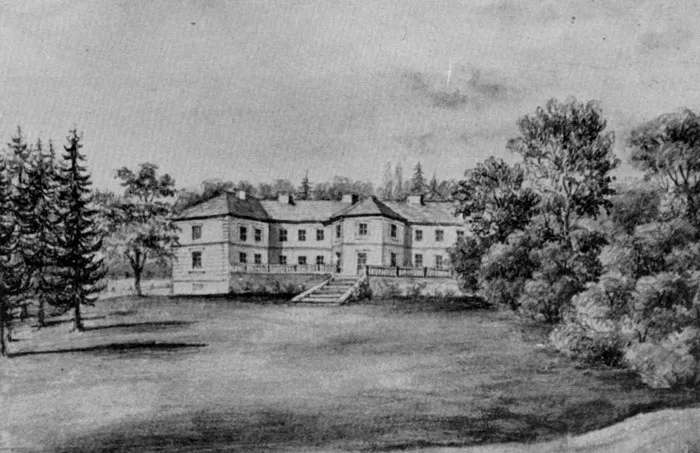
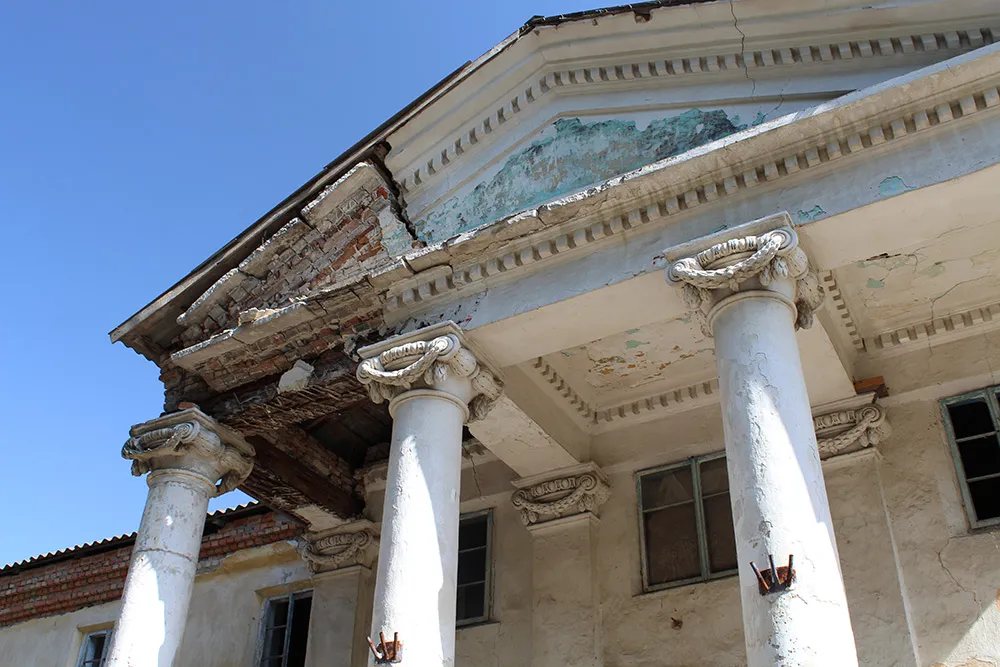
In the 1830s, commissioned by Franciszek Raciborski, the architect Kazimierz Antonowicz built in Lisovody a majestic and quite beautiful two-storey palace in the Neoclassical style. What it looked like in its best days can be clearly seen in a drawing by the indefatigable traveller and artist Napoleon Orda and in photographs from the early 20th century.
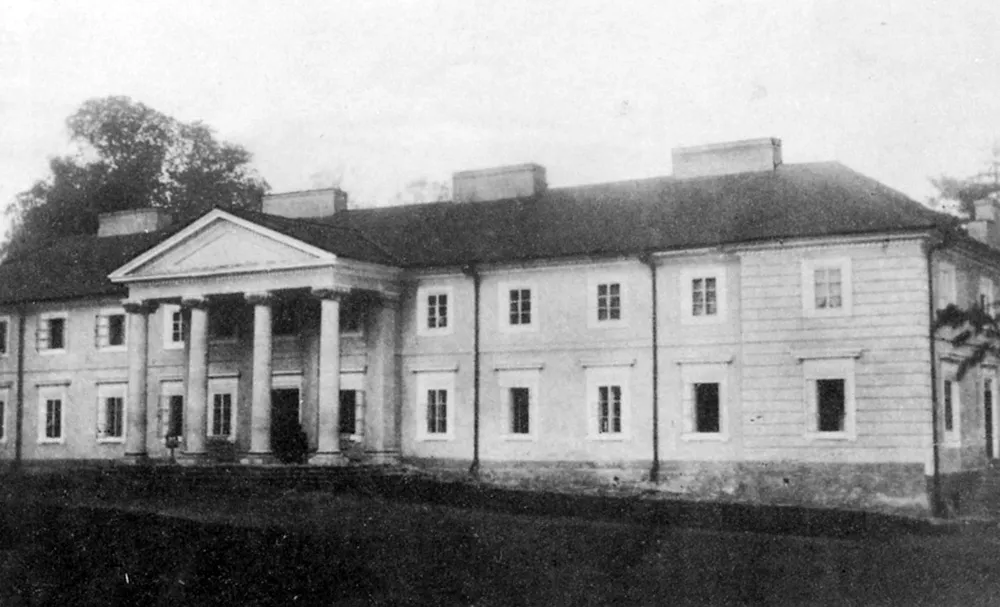
The palace in Lisovody. Early 20th century.
It is possible that the palace was built as early as the end of the 18th century under Ludwik Raciborski, and his son merely rebuilt it.
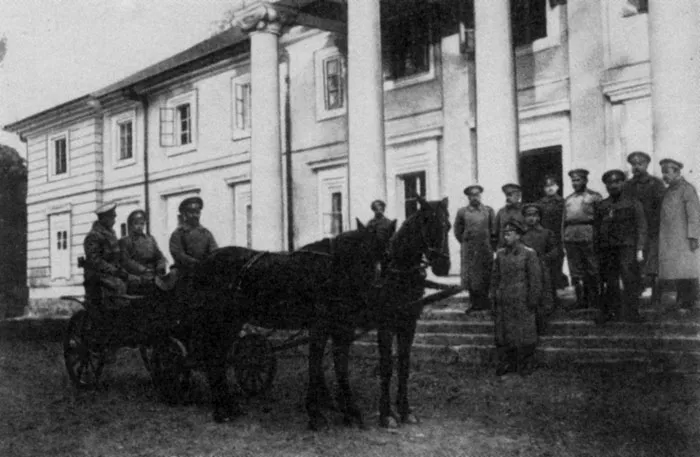
In August 1914 the palace housed the headquarters of the 2nd Cossack Combined Division of Major General Oleksandr Pavlov.
There are photographs of an equally beautiful and refined park. Of it only a few ancient lime trees and a 300-year-old oak, which grew here even in the “pre-palace” times, have survived to our day.
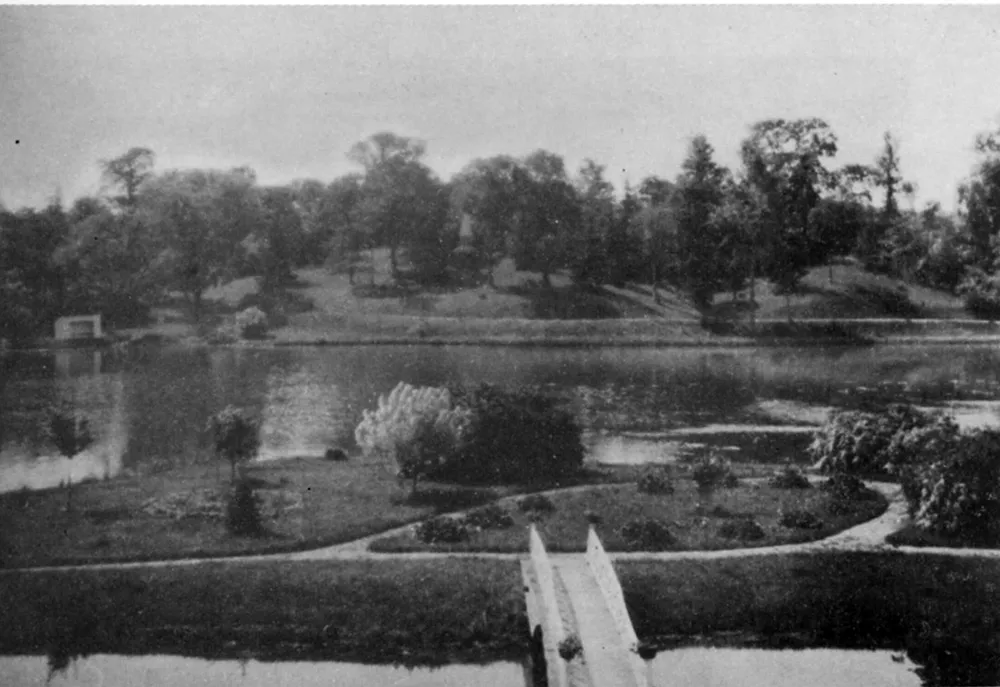
The park
Of the once luxurious park decor – little bridges, gazebos, sculptures and so on – today one can see only a small fragment of some column lying forlornly on the bank of the pond. The park was planted and laid out under the supervision of Wojciech the Younger, son of Franciszek Raciborski, who in 1828 completed agronomy courses in Lviv.
Later, through the marriage of Ludwika Raciborska to the well-known collector and patron Marceli Żurowski, Lisovody and the palace passed to the Żurowskis as a dowry. Hence one of the palace’s names – the “Żurowski Palace”.
Then many antique pieces of furniture and paintings by old Italian and Dutch masters appeared in the palace. A crystal goblet, once presented by King Stanisław August Poniatowski to the Voivode of Kyiv Józef Stempkowski, and a gold cup by the Danzig master Schlaubitz were kept here. Later, in 1987, the heirs donated the goblet to a museum in Częstochowa (Poland). And the Royal Cup is still kept by a family of Żurowski descendants who now live in Canada.
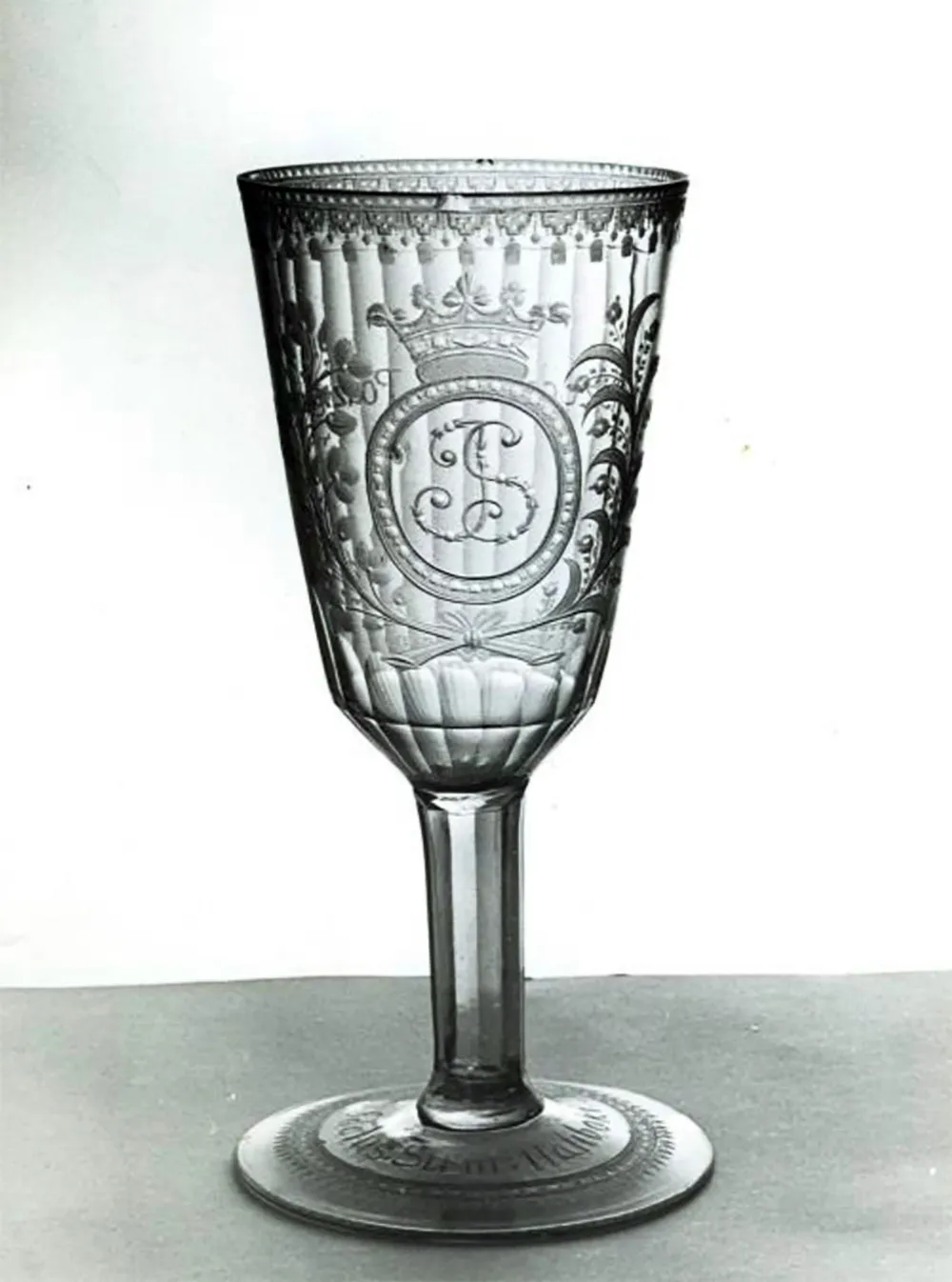
The Royal Cup from Lisovody
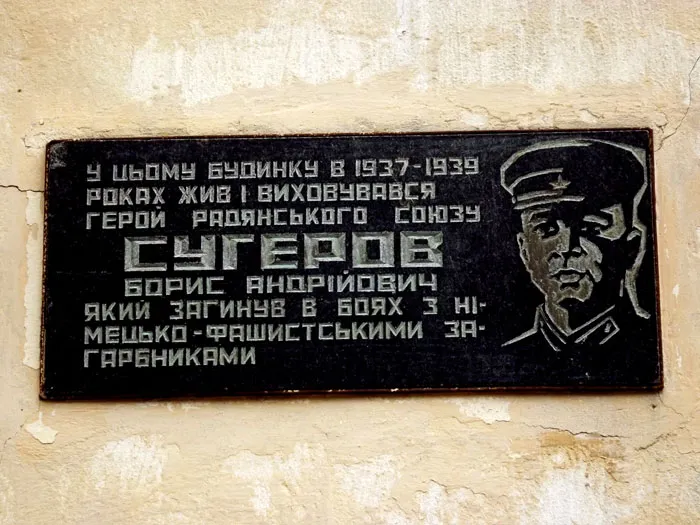
In 1932 an orphanage was set up in the former palace. Where all of a sudden, and why, in that fateful year orphans appeared en masse, there is no need to explain. The most famous pupil was the future Hero of the Soviet Union Borys Suherov. A memorial plaque tells of this.
As soon as Podillia was liberated from the Germans, the orphanage was restored. It was not an ordinary institution but a specialized one – for children of Soviet officers who had been killed at the front. Conditions here were much better than in other similar institutions, and the teaching staff was very good, so there are many recorded cases of children from other orphanages running away to Lisovody.
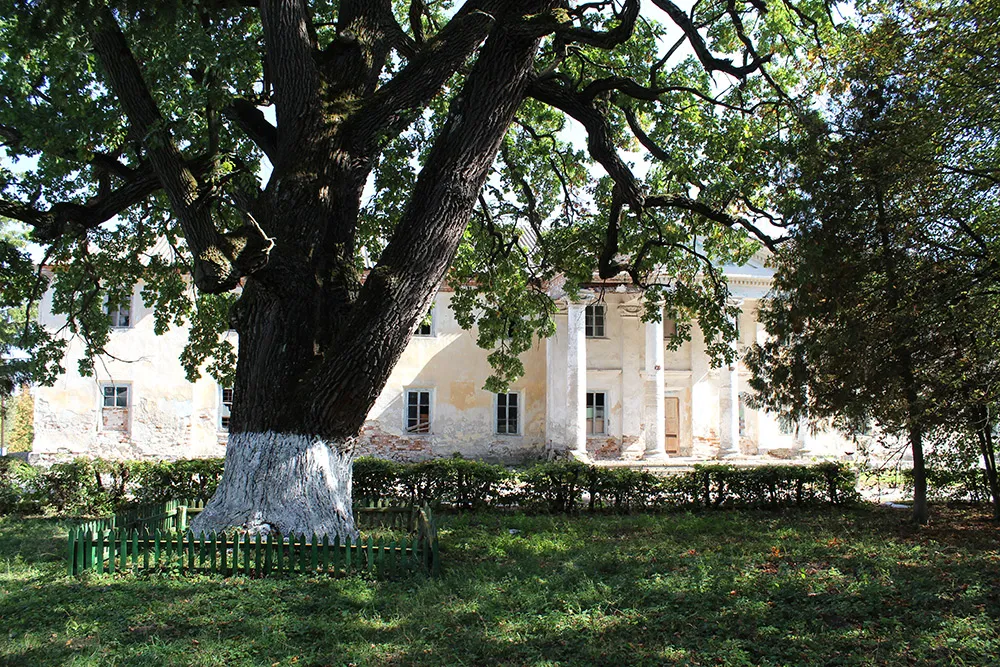
The famous oak
In 1970, on the initiative of Hryhorii Tkachuk, once famous throughout the USSR as head of the local collective farm, an agricultural vocational school was established in the palace to train specialists for the collective farms of the Horodok district.
Tkachuk was a twice Hero of Socialist Labour, a holder of orders, a member of the Central Committee of the Communist Party of Ukraine, a deputy of many convocations of the Supreme Soviets of the USSR… A rather powerful manager (you cannot take that away). But his worldview remained at the level of a semi-literate young farmhand from a remote village of interwar Poland (he was born in the Carpathian foothills).
The “lords’ heritage” was incomprehensible and perhaps hostile to him.
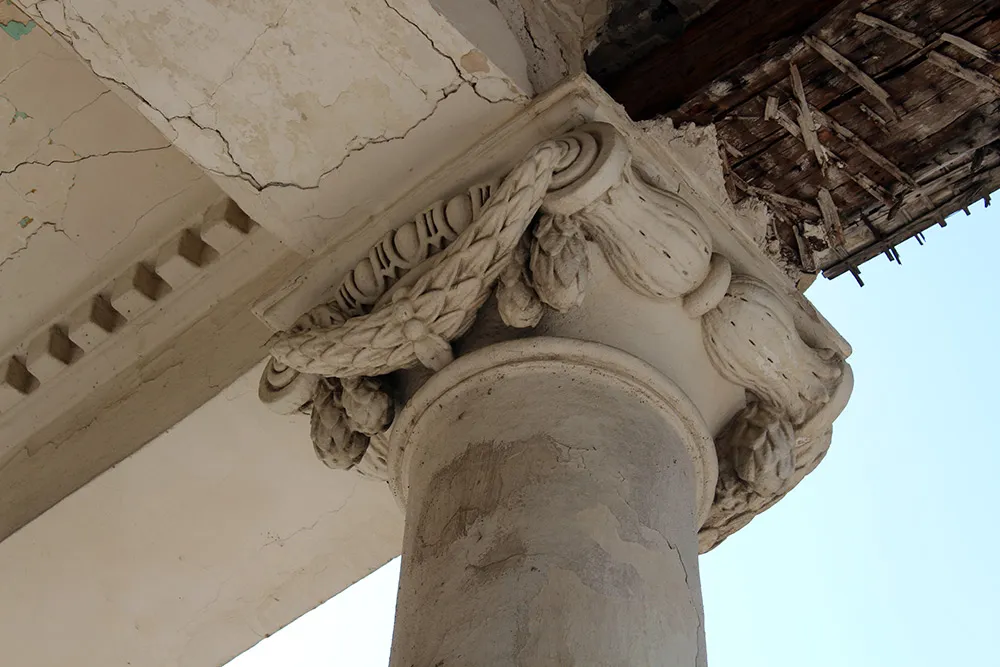
Some sort of repair was carried out in the palace only when the former orphanage was being rebuilt as a vocational school. The workmen treated the building without the slightest reverence. Unique fireplaces were destroyed, splendid tiled stoves dismantled (and why are they needed when steam heating has been installed?). Nearly all the highly artistic stucco was either knocked off or plastered over. The carved wood of the interior was also replaced with standard Soviet doors and frames. After that they limited themselves to “cosmetics”.
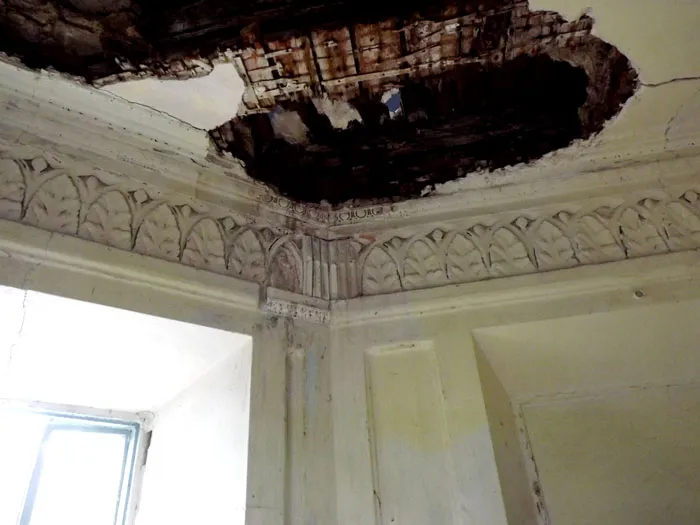
Remains of the stucco
During the expansion of the vocational school the amazing park was destroyed by a titled, power-laden peasant upstart. In its place rose new “bursa” dormitory buildings and housing for teachers. When the new vocational school building was completed, the old palace was abandoned and the countdown of its slow death began. Hryhorii Ivanovych had more than enough money to carry out its complete restoration, but Tkachuk, by virtue of his limited peasant-upstart (not to be confused with peasant) worldview, saw no need for it. Instead he invested in pompous and useless projects.
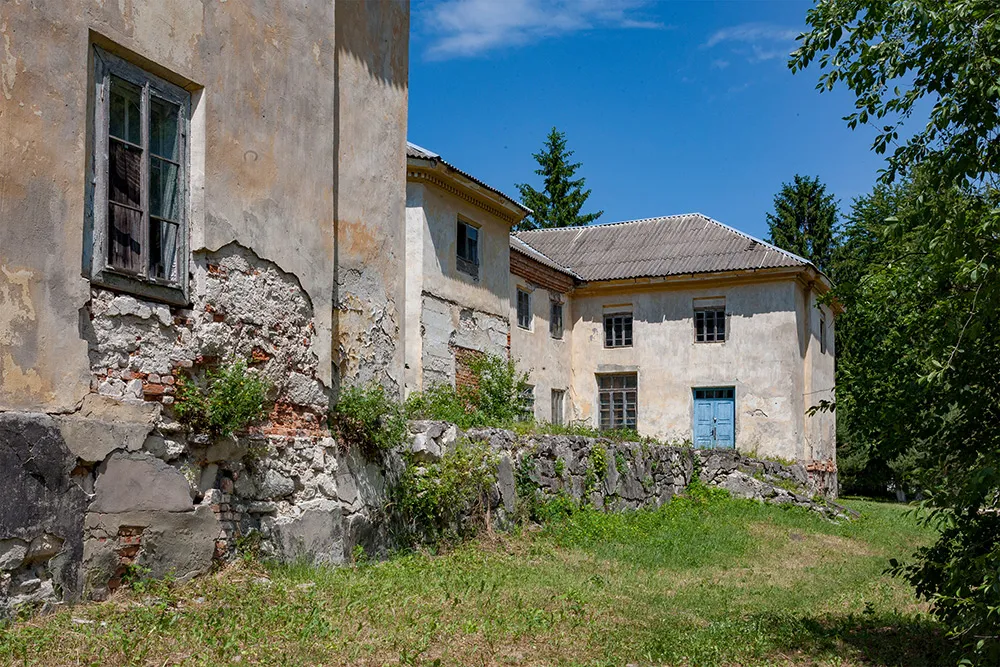
By the mid-1990s the palace was little different from a ruin, so a restoration was undertaken. The money was enough only for a new roof and some research work. Since then the palace has stood empty and is gradually collapsing.
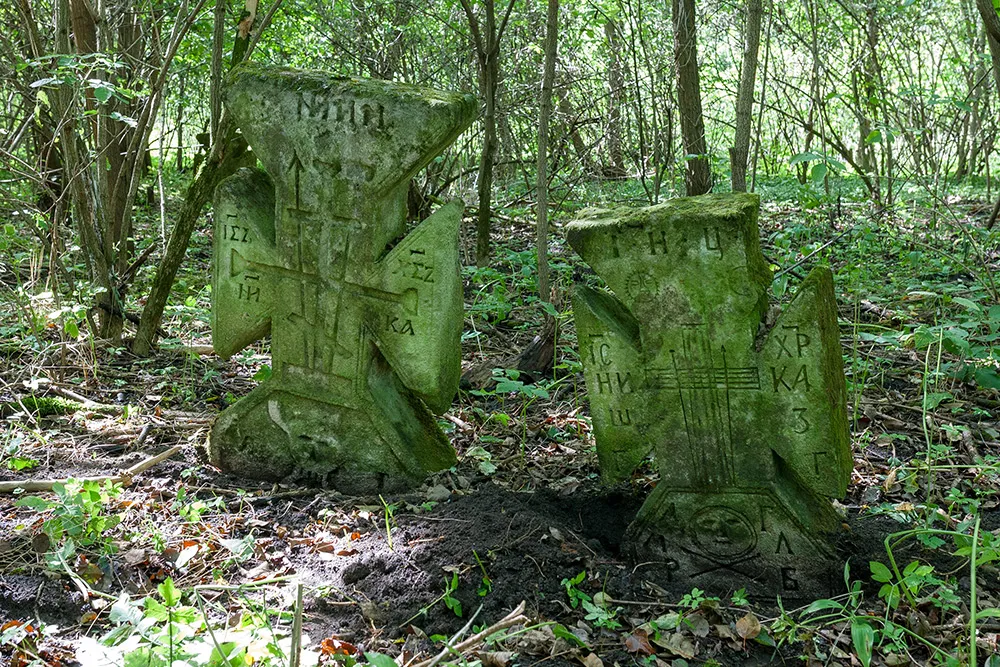
Crosses from the very beginning of the 19th century
Among other curiosities of Lisovody, the old cemetery deserves to be singled out. There one can see quite interesting and rare cross-shaped gravestones from the very beginning of the 19th century. It is worth studying it more carefully – it is not excluded that there are crosses from the end of the 18th century too. The most interesting cross is on the burial of Pantylymon Kopytko, who lived 75 years and died in 1860. At first glance it is a stone gravestone traditional for village cemeteries in the western part of Khmelnytskyi Oblast, made in the form of a flat “cross pattée”.
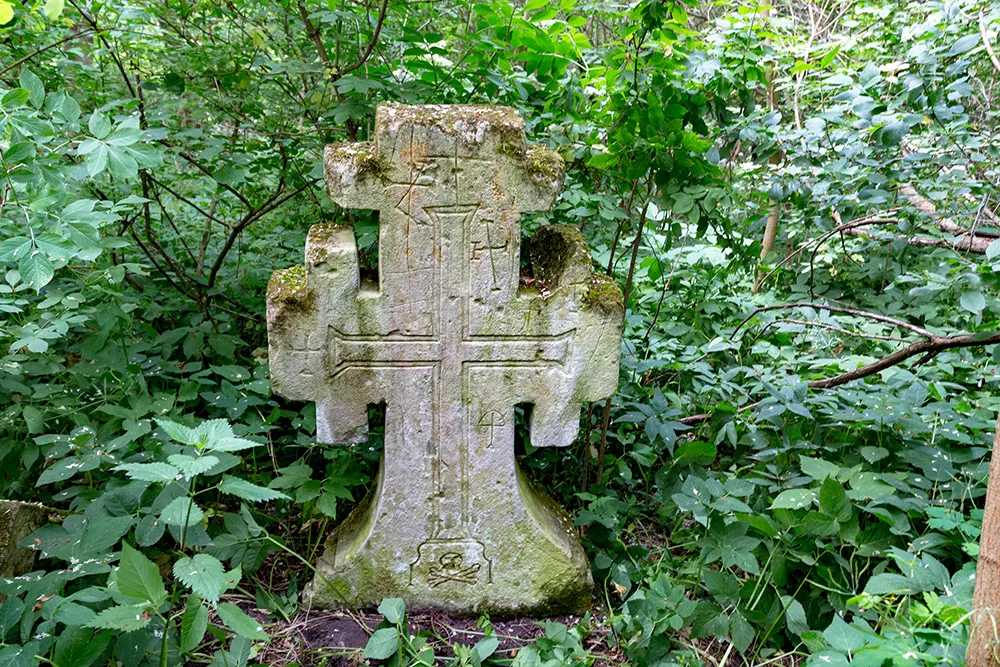
It differs from its twin neighbours in that numerous marks in the form of crosses of various types are scratched all over its surface.
Similar petroglyphs and graffiti were long a sign of pilgrimage and testified that a certain person had once visited a holy place. Hence their scholarly name – “pilgrim crosses”. In Western Europe and the Middle East they have been known almost since Antiquity and the early Middle Ages. In Ukraine they are usually dated to the 11th–18th centuries.
It was believed that a scratched little cross would bring the “scratcher” some good in life and strengthen his prayers. A multitude of such marks – tens of thousands, if not more – can be seen on the walls of the Church of the Holy Sepulchre in Jerusalem.
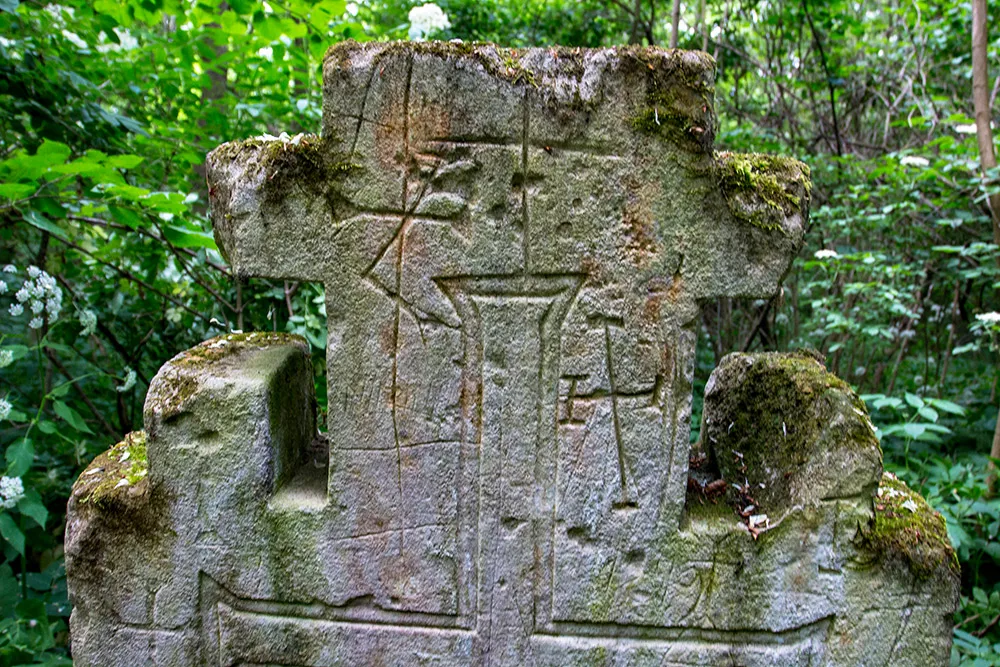
In Lisovody about 20 such graffiti were counted. “About” – because some are barely visible and it is hard to determine whether it is a little cross or just scratches. One can speak confidently of 17 images. For such a small object – not bad at all! And it is clearly visible that these are not decorative elements. All the more so as one of the graffiti is even dated (1870).
Unfortunately, the parish registers from Lisovody for 1860 are missing, so it is impossible to find out who was buried there and why his grave is accorded such honour and reverence. Attempts to question old-timers, even with the involvement of the local priest, also had no success. Nobody remembers anymore who that Kopytko was and why people came to pray at his grave… Although people with that surname are plentiful in Lisovody and neighbouring Horodok even today.
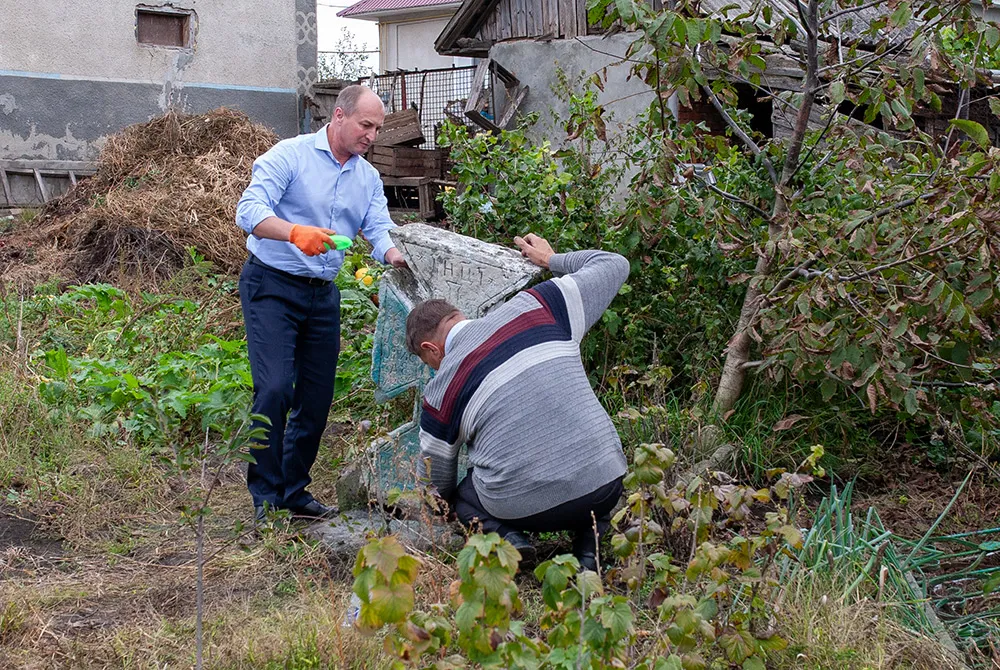
Participants of the “Graves of the Ancestors” project, local historians Oleh Fedorov and Valentyn Nyshchyi, clean the “plague cross” of layers of lime and paint
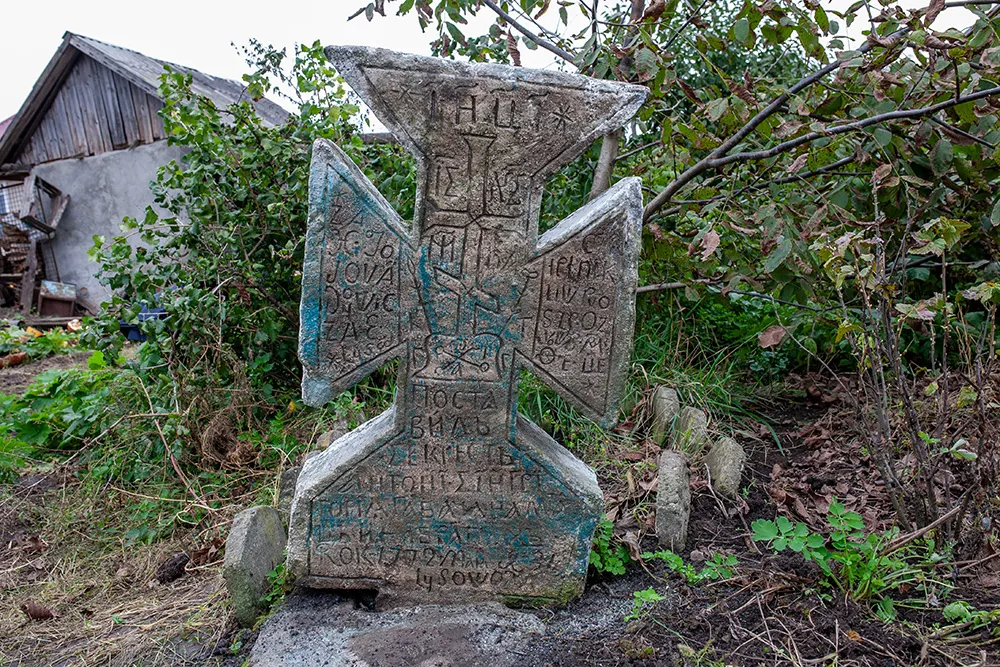
Unique (without exaggeration) is the cross on a grave outside the cemetery, where “here rests the servant of God Maria Horbachykha with her children and infants Vasyl, Semion, Pylyp, sons of Hryhorii Horbach. In the year of GOD 1771, month of November, 14th day.” It was discovered during an expedition of the partner project “Graves of the Ancestors”, carried out by the NGO “Ukraine Incognita” and the Department of Culture, Nationalities, Religions and Tourism of the Horodok City Council.
Crosses outside cemeteries on the burials of plague victims (here we are speaking of the epidemic of 1770–1771) are a great rarity. The cross in Lisovody is also unique in that its inscriptions are made both in Church Slavonic and in Polish. Gravestones of the 18th century like this are not known anywhere else.
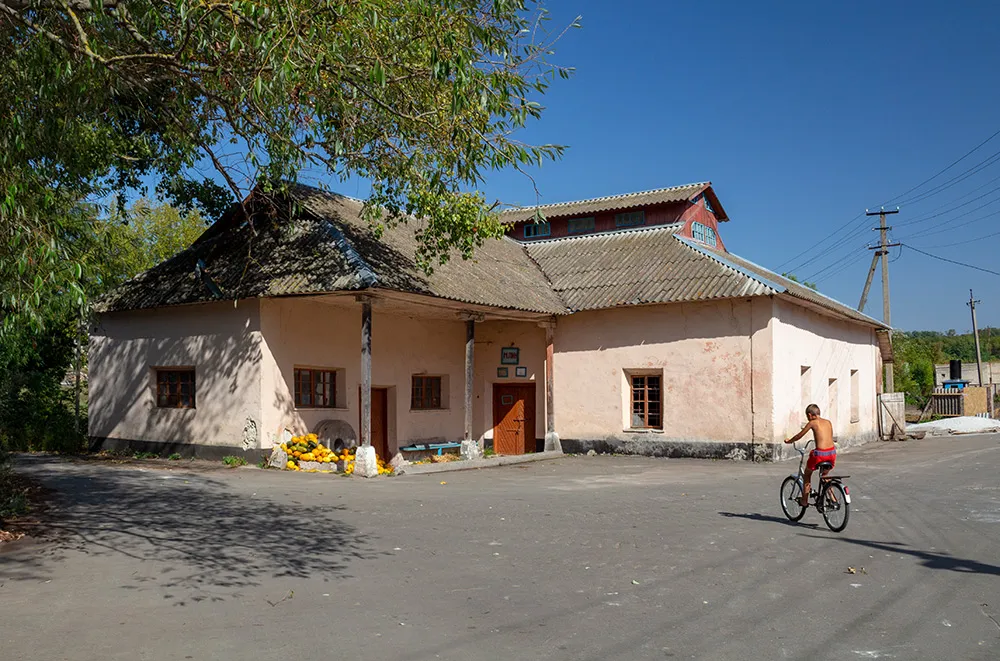
The old mill from the early 20th century is also interesting.
Text and contemporary photos by Dmytro Poliukhovych


