

A “biblical plant” is blooming in Ternopil Oblast (photo report)
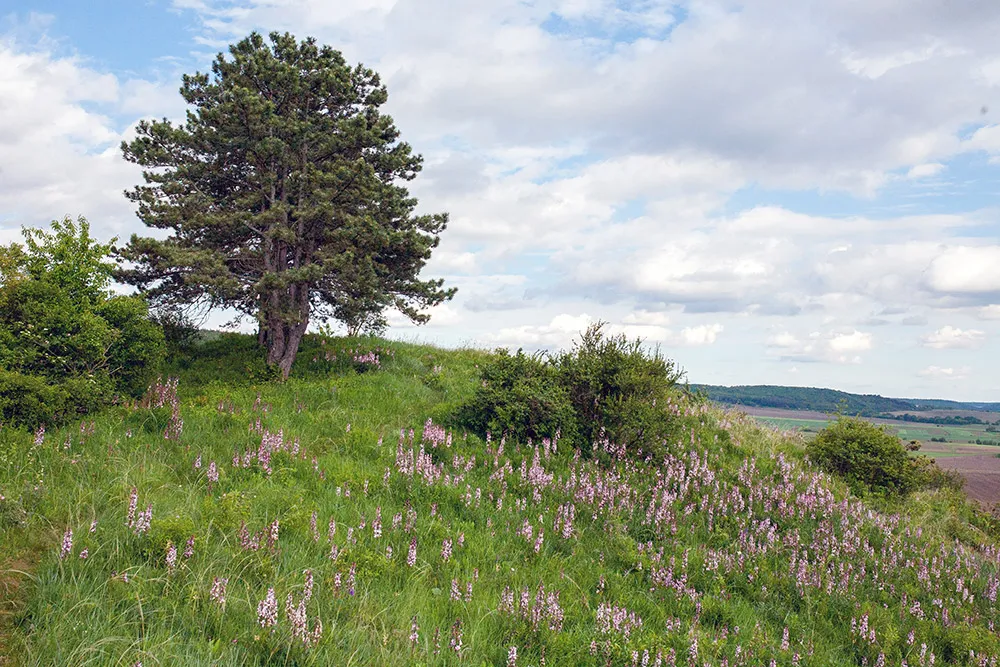
At the turn of spring and summer in Ternopil Oblast you can see an amazing, incredible spectacle – the mass blooming of the legendary “burning bush” (white dittany, Dictamnus albus). To admire this beauty you need to get to the Medobory Nature Reserve. Its pearl is a small hill called Hostra (49°21’23.0”N 26°04’30.5”E — 49.356381, 26.075132), rising on the outskirts of the village of Vikno in the Hrymailiv settlement community of Chortkiv district. We offer a report by Dmytro Poliukhovych, a member of the NGO “Ukraine Incognita” team, about his visit to the reserve on 31 May this year.
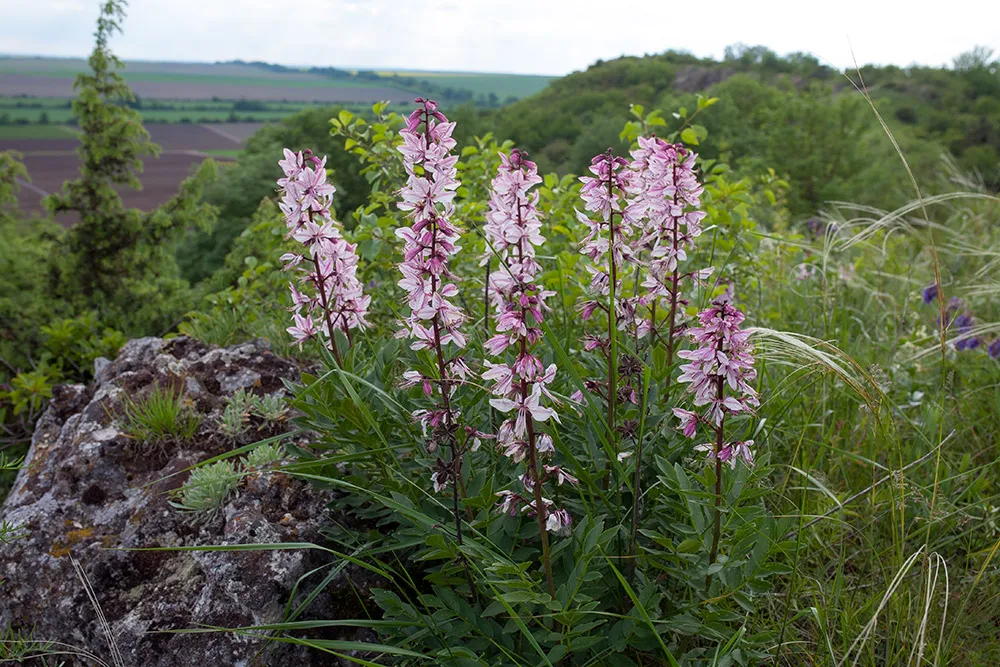
“The burning bush”
The village owes its name to the “Viknyny” – karst sinkholes from which the water of an underground river wells up to the surface. They say there were once some two dozen of them here (though that is hardly likely); today only two remain – “Syne” (Blue) and “Bezodnia” (Abyss).
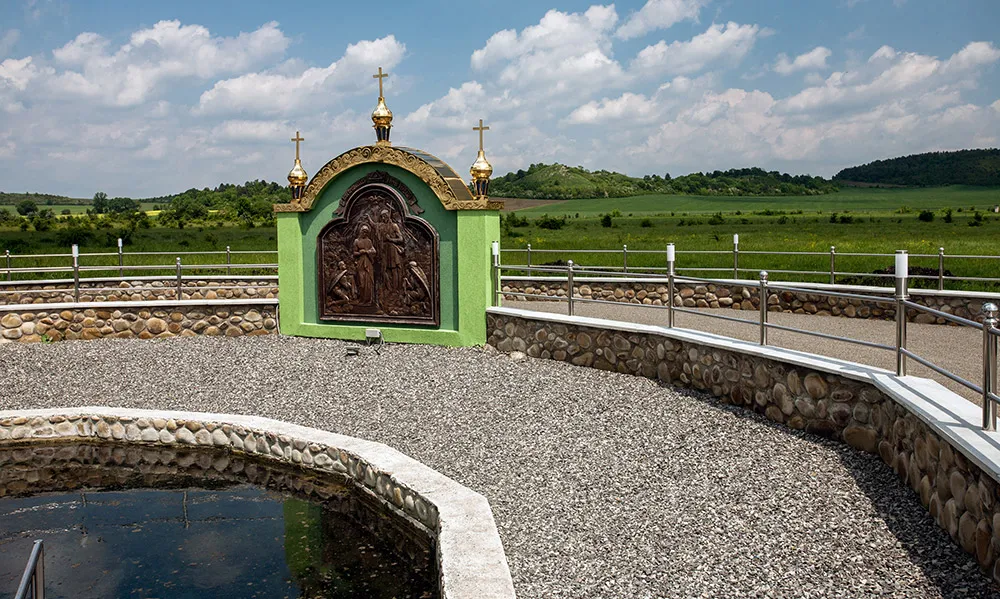
A font on the karst lake. It should be noted that the “concreting” was a forced step. Because of natural changes the pond could have been destroyed by the banks slipping. (Photo from 2023.) Behind it is the toltra (reef ridge) of Hostra.
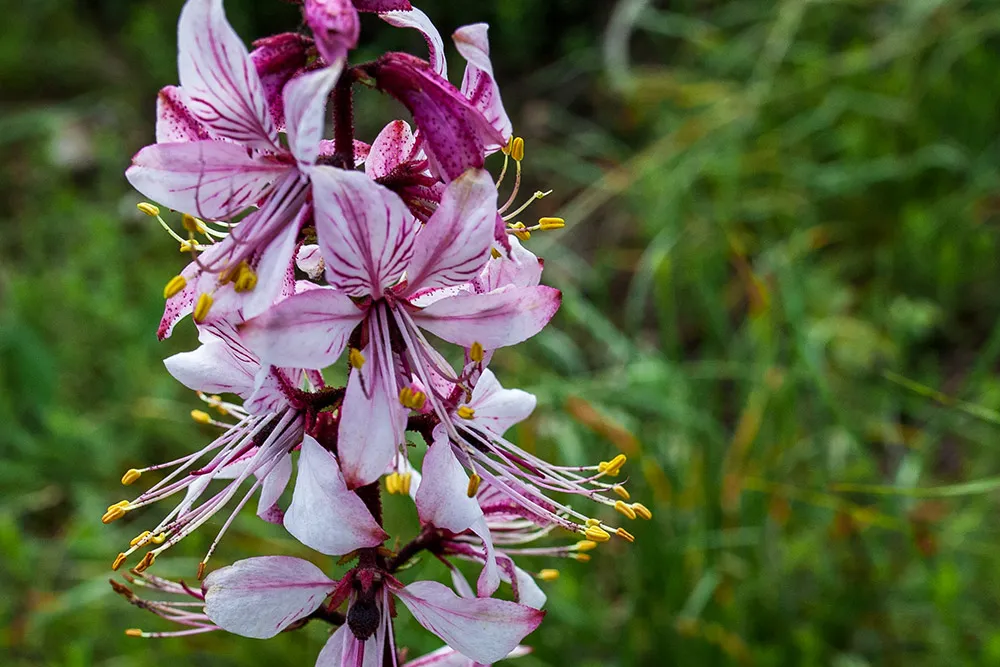
On Hostra you can see 14 species listed in the Red Book and some fifty species of endemic, rare and regionally rare plants. But its main “highlight” is the largest population in Ukraine of the Red Book white dittany (Dictamnus albus L.). The plant owes its Ukrainian name to its leaves, which resemble ash leaves, and the epithet “white” (albus) to the colour of its flowers. In fact, their colour varies from white to pink and light lilac. White flowers are found extremely rarely.
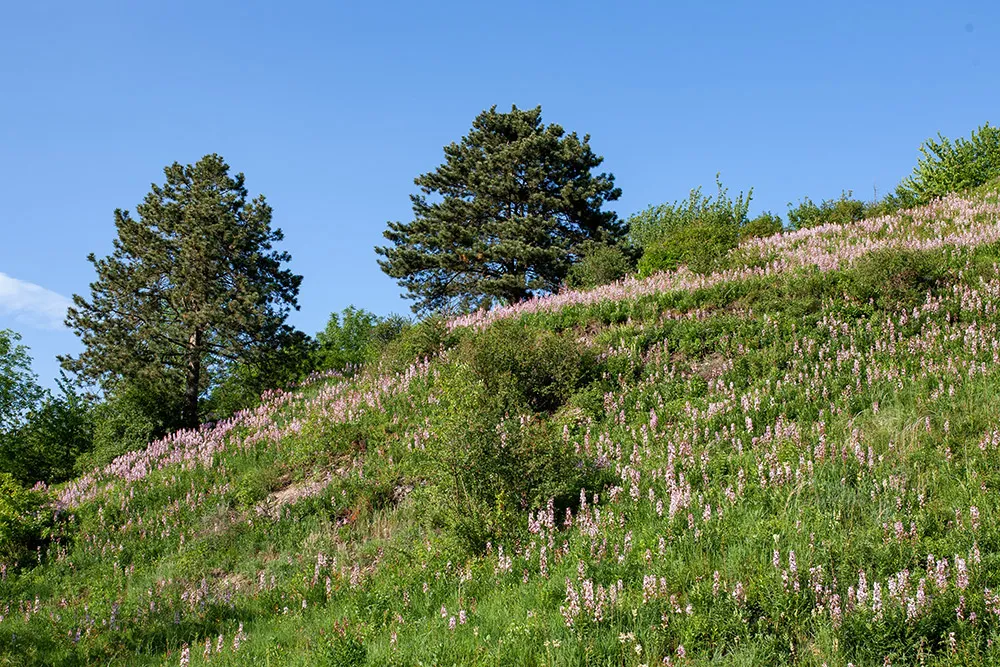
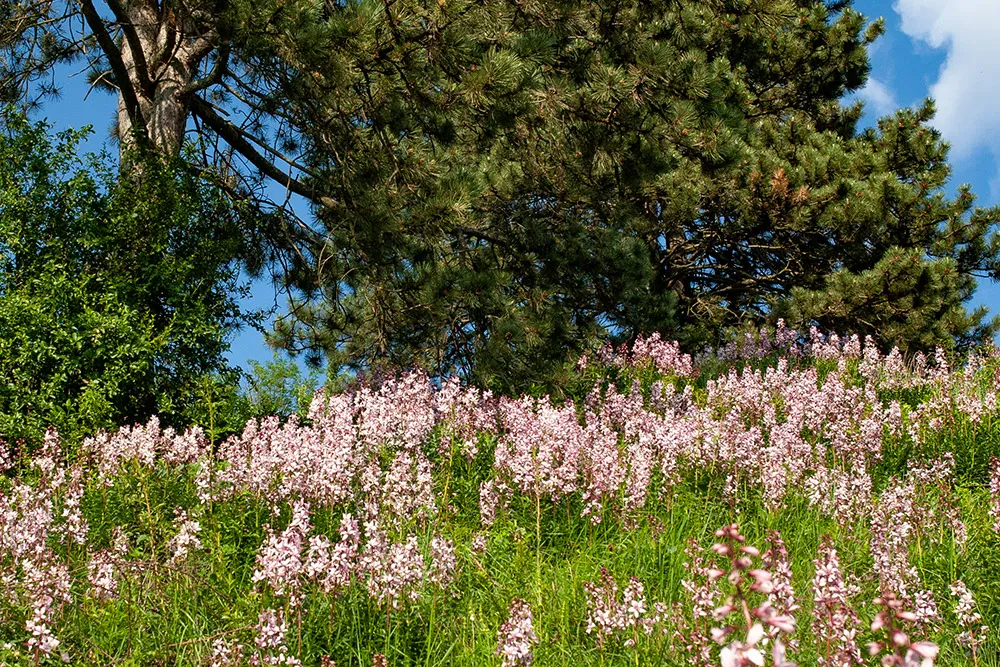
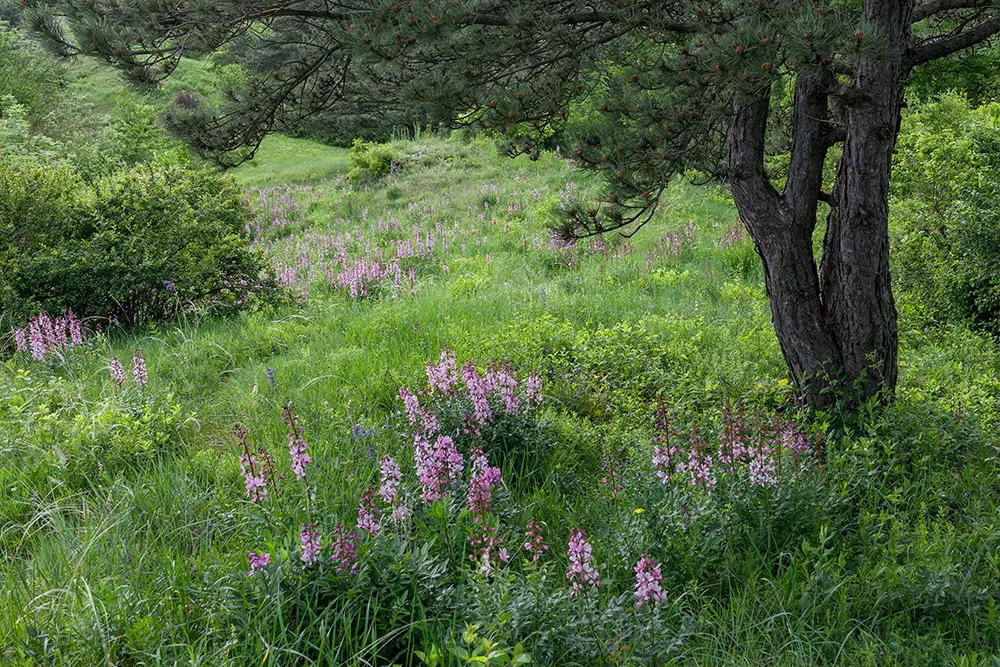
This interesting plant also has an informal popular name, “burning bush” (neopalyma kupyna), after the fiery bush from which God spoke to Moses on Mount Sinai. That bush, as is well known, burned but was not consumed.
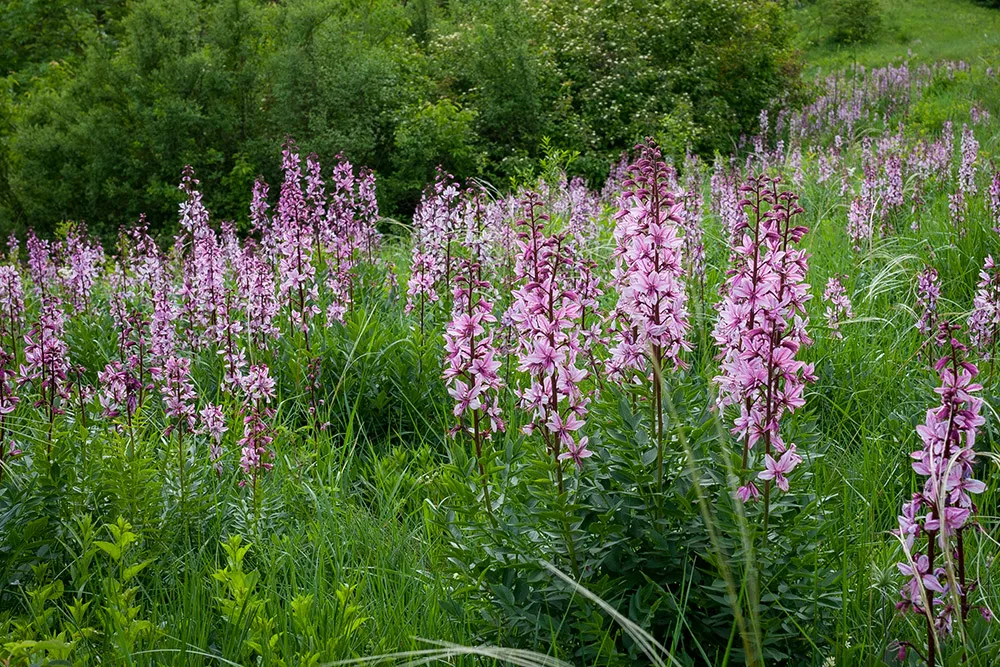
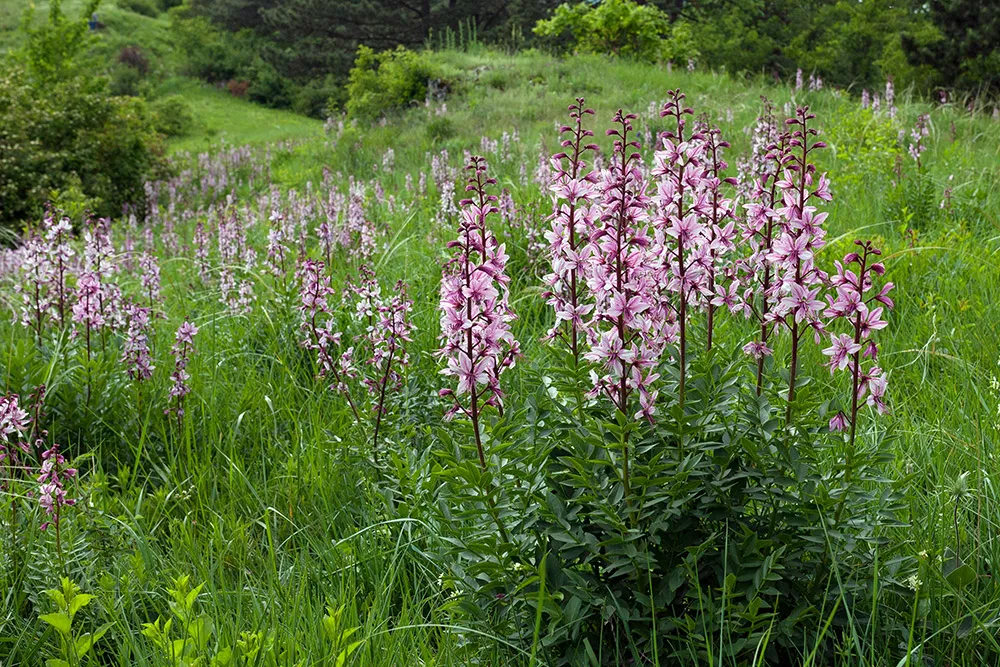
Dittany has developed quite an interesting defence against being eaten by herbivores. All its parts produce special poisonous substances that cause severe chemical burns on contact with the body. In addition, the plant itself is enveloped in an invisible cloud of volatile essential oils. These vapours irritate the respiratory tract and serve as a warning to herbivores. When inhaled in large quantities they can even cause burns and swelling of the lungs (this is not only a botanical fact but also a warning to careless tourists).
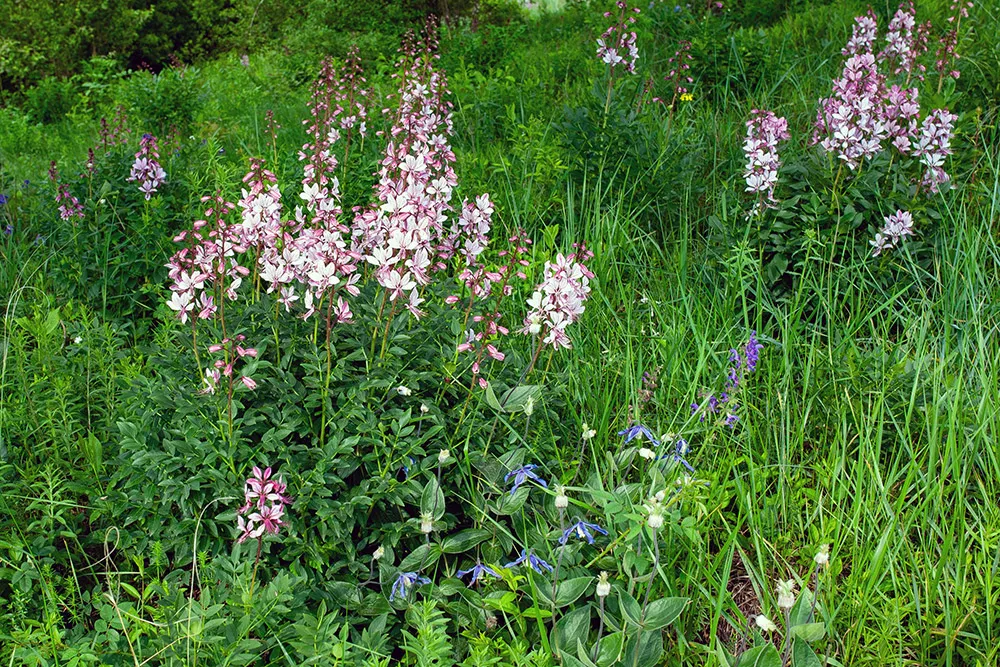
Next to the dittany we see the blue flowers of another rare plant – clematis
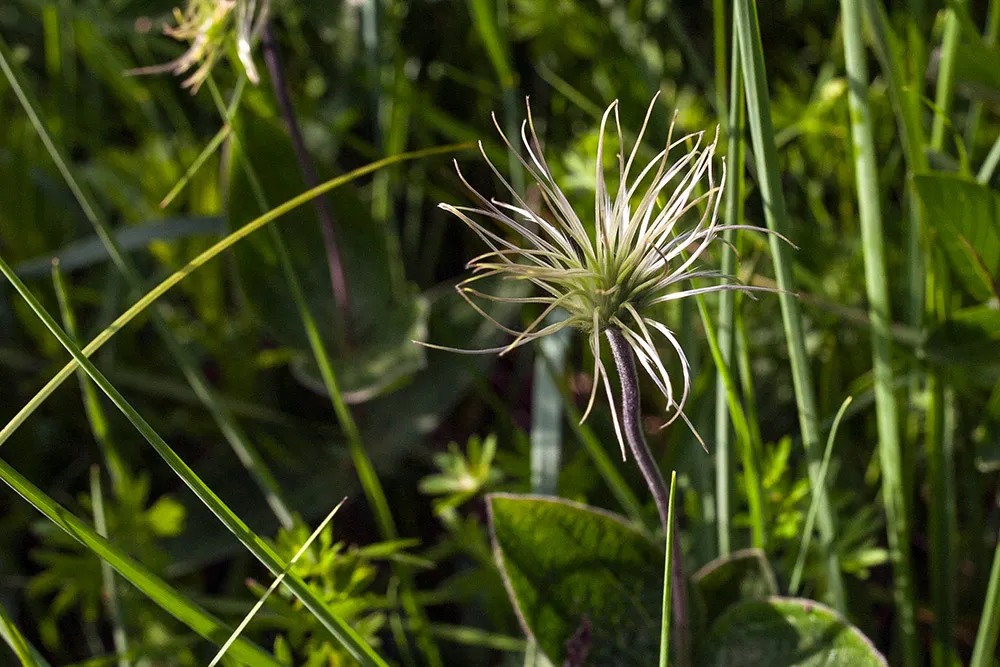
When the clematis finishes flowering, a fluffy ball like this is formed
If on a hot, windless day you bring a lit match to a dittany bush, these vapours instantly flare up, for a moment wrapping the flower in a ball of orange flame. As with the biblical bush, the plant remains unharmed. In this sense Hostra fully deserves to be called the “Galician Sinai”.
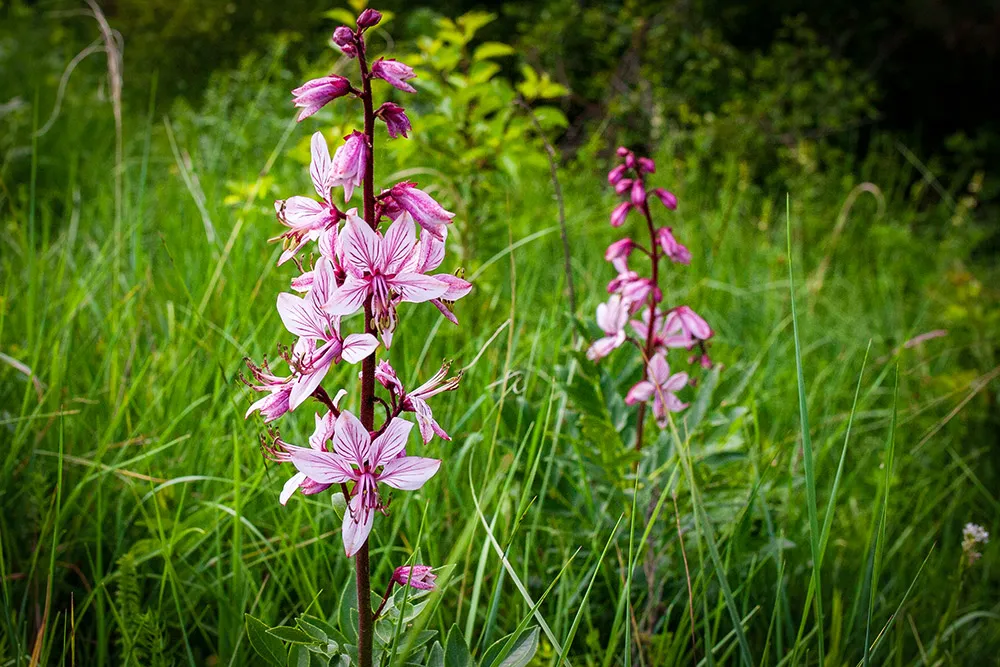
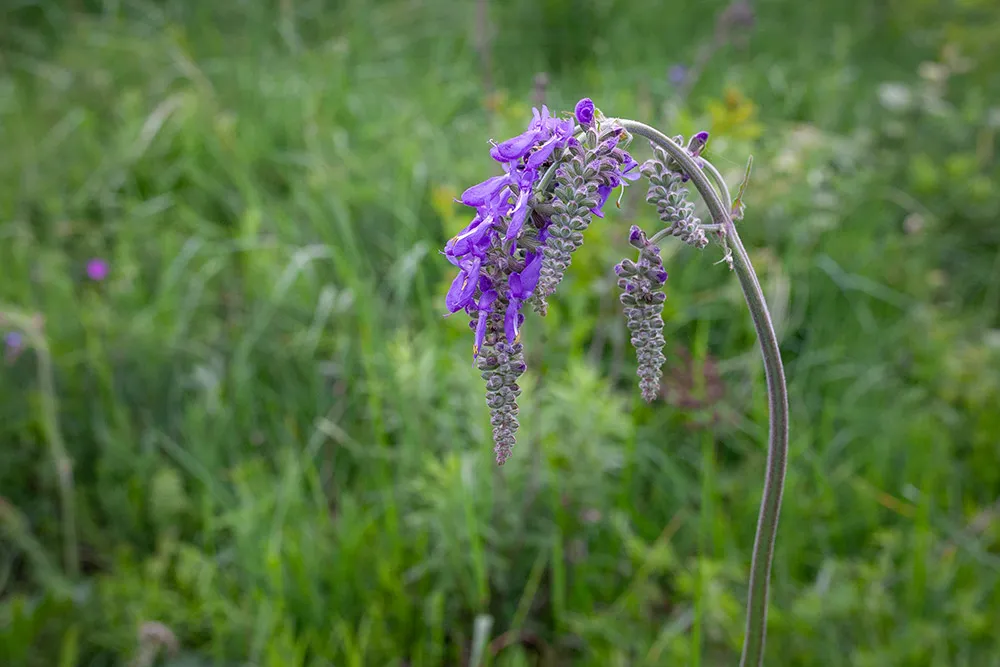
Drooping sage
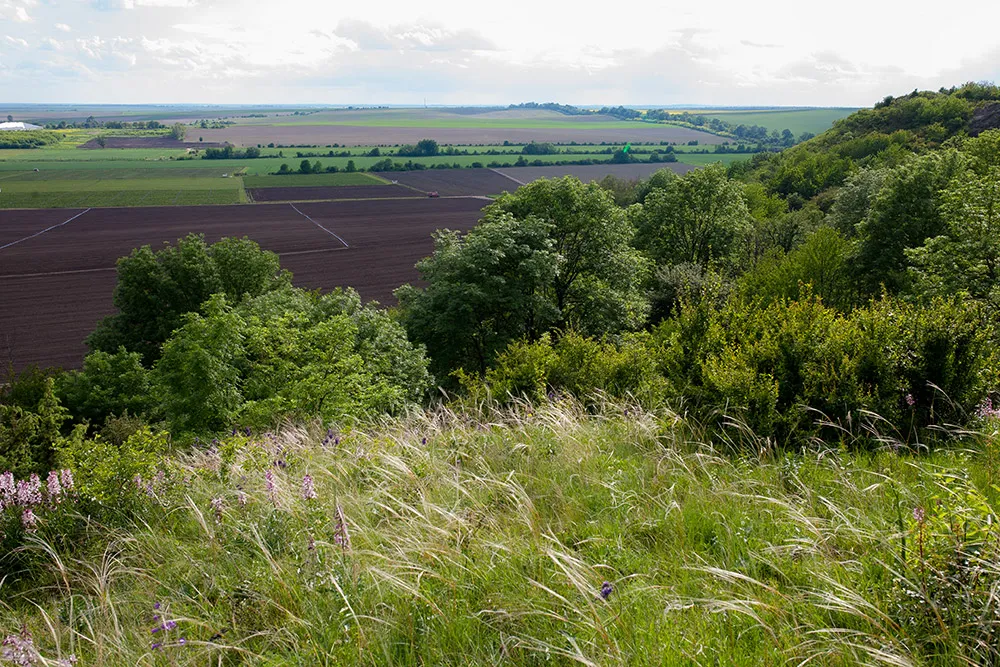
Another “highlight” of Hostra – feather grass
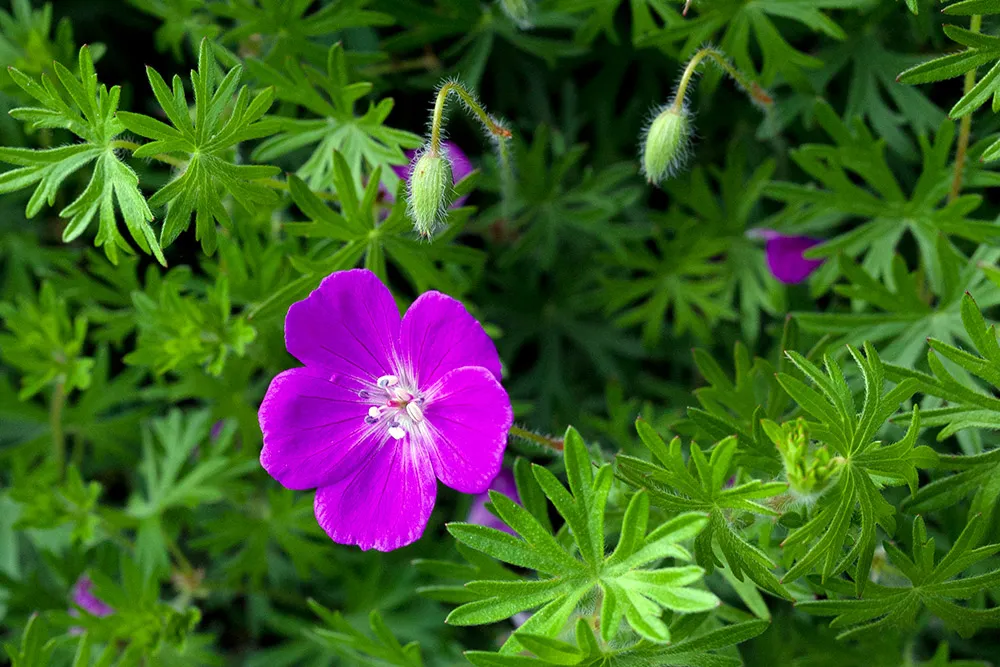
Geranium
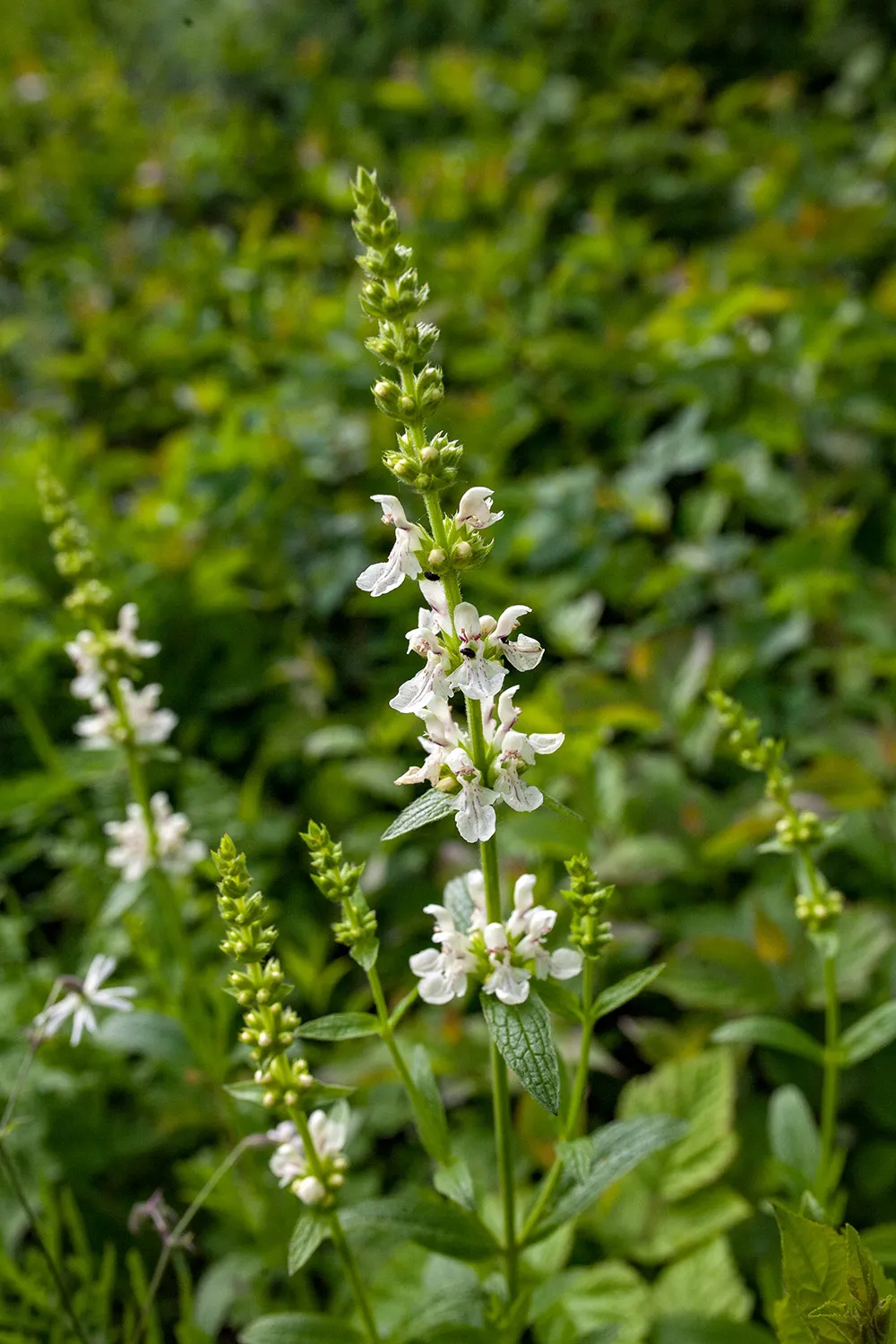
Upright hedge-nettle
The author once carried out this curious experiment in the Crimean mountains. It really did flare up! But on Hostra, because of the constant winds, the trick never once worked.
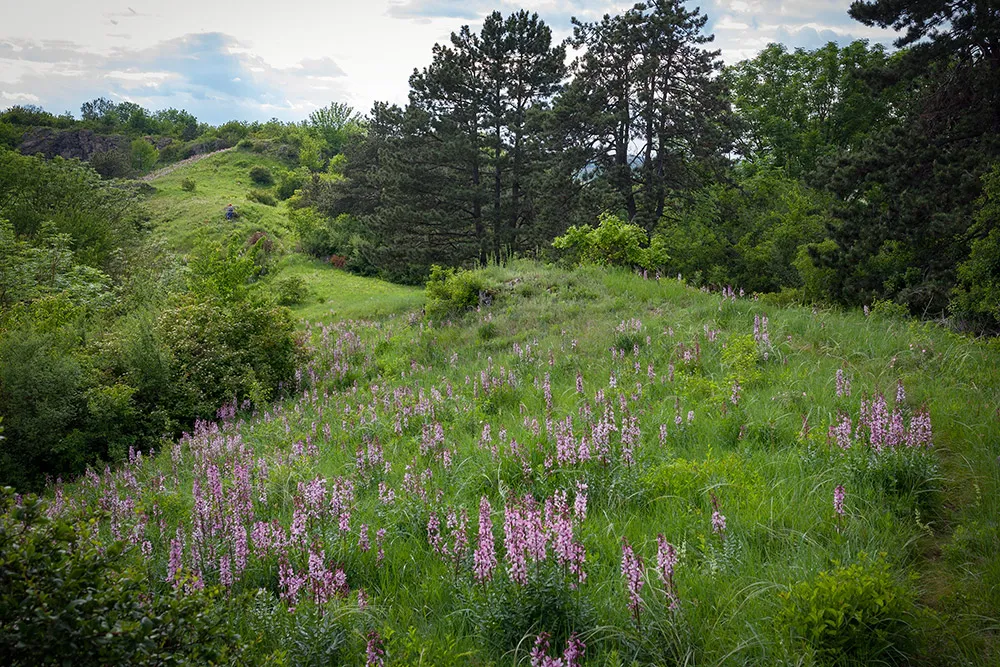
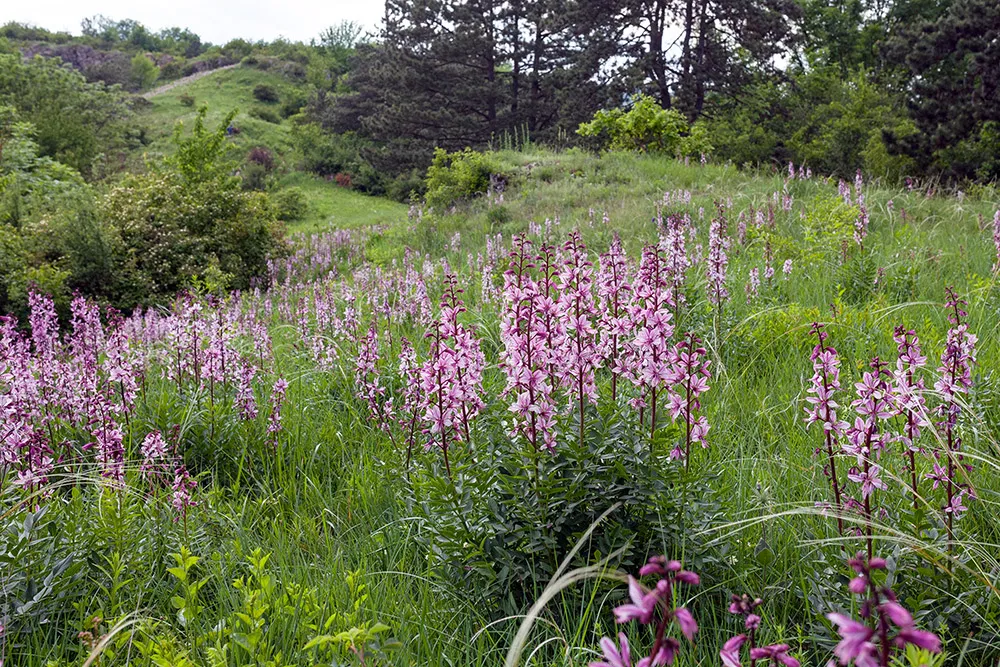
Dittany usually grows in localized populations numbering from a few dozen to a few hundred plants. On Hostra the count runs into thousands! At the peak of flowering it seems that the slopes of the toltra are engulfed in pink flame. The sight is unforgettable!


