

Oksanivka. The cave monastery of the rakhmany, or why we should dye eggs

· 11 min read
Have you heard the word “rakhmany”? Certainly not everyone has. What kind of rakhmany are they?
According to ancient Ukrainian legends, the rakhmany are righteous Christians who live in some distant enchanted land called Vyrii (yes, that is exactly where the birds fly in winter) and pray for all people, sinful and righteous alike. They converse with angels and have no clothes, dishes, knives or gold, you get the idea. They have no reckoning of time of their own, but they celebrate Easter, which they learn about thanks to eggshells floating down the river… Stop! How does that get to Vyrii? Of course, in the beliefs about the rakhmany everything got mixed up, from pagan rites to Easter and Christian monks. But there are also less muddled accounts of them, spread from the Chernihiv region to the Romanian province of Banat. By the way, in Romania the rakhmany are often called the blessed.
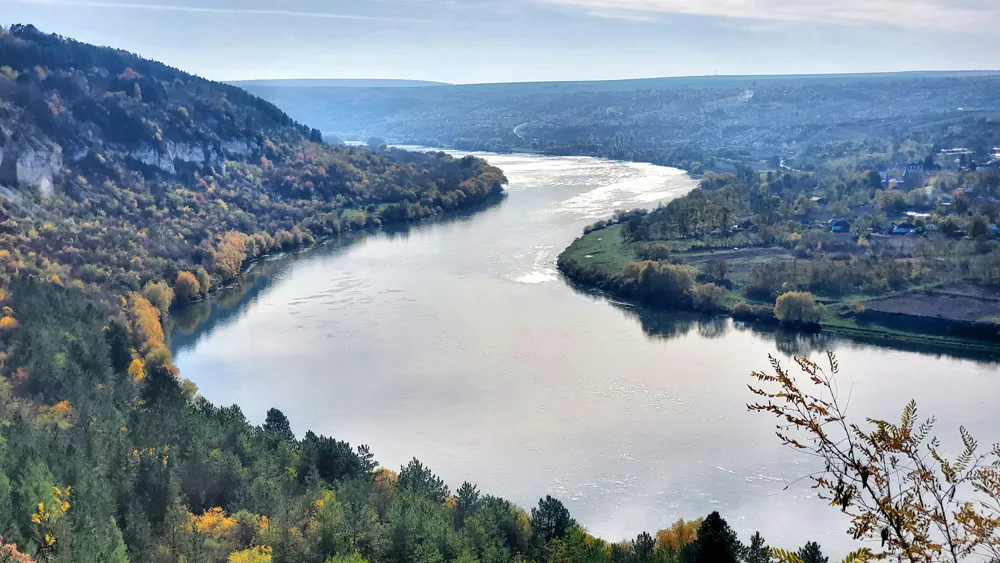
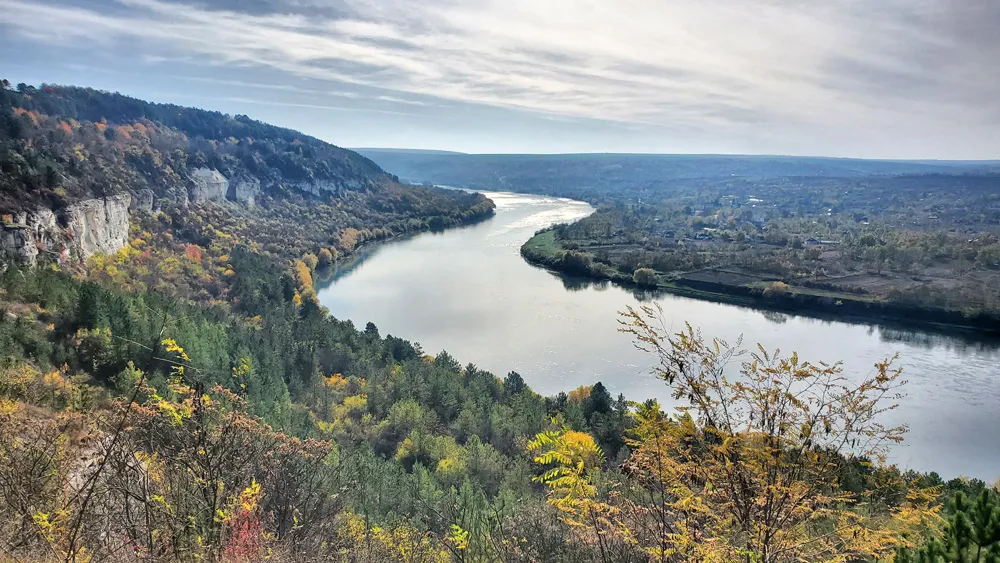
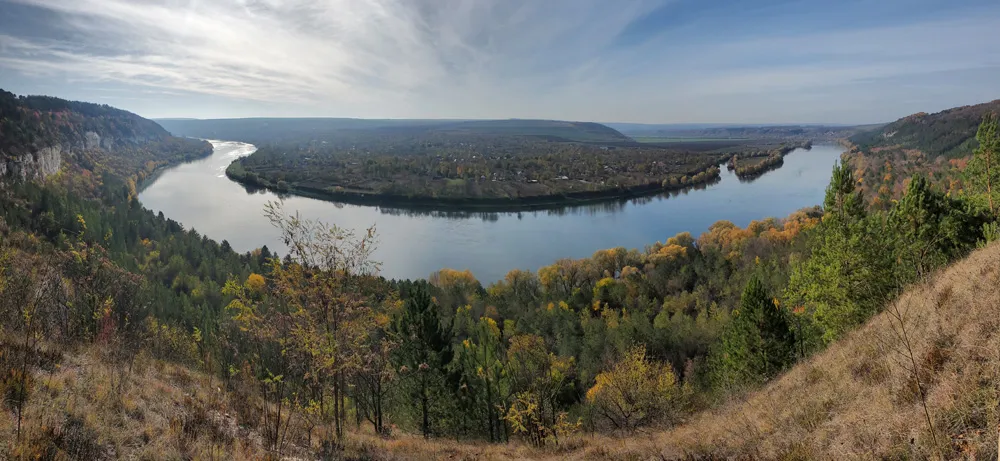
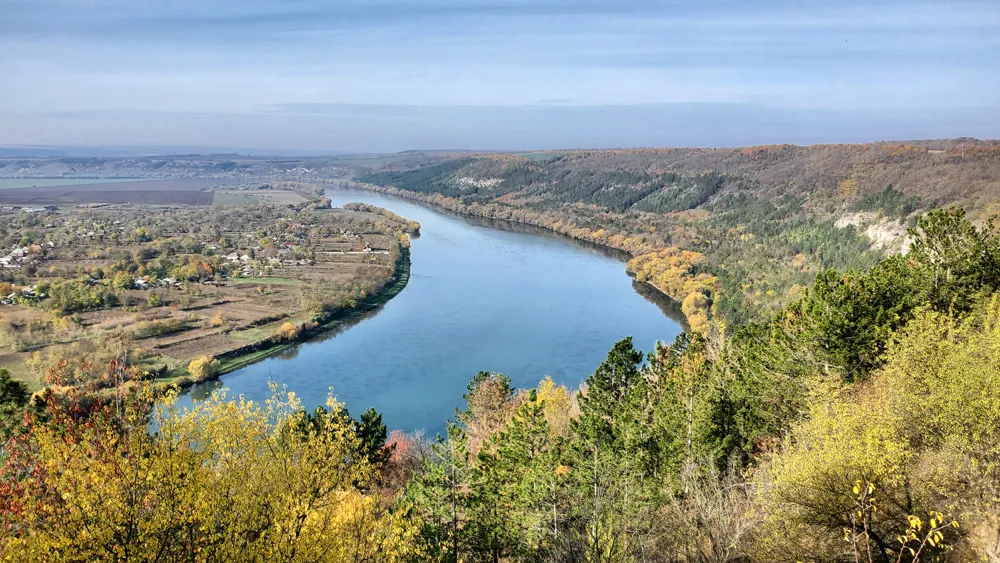
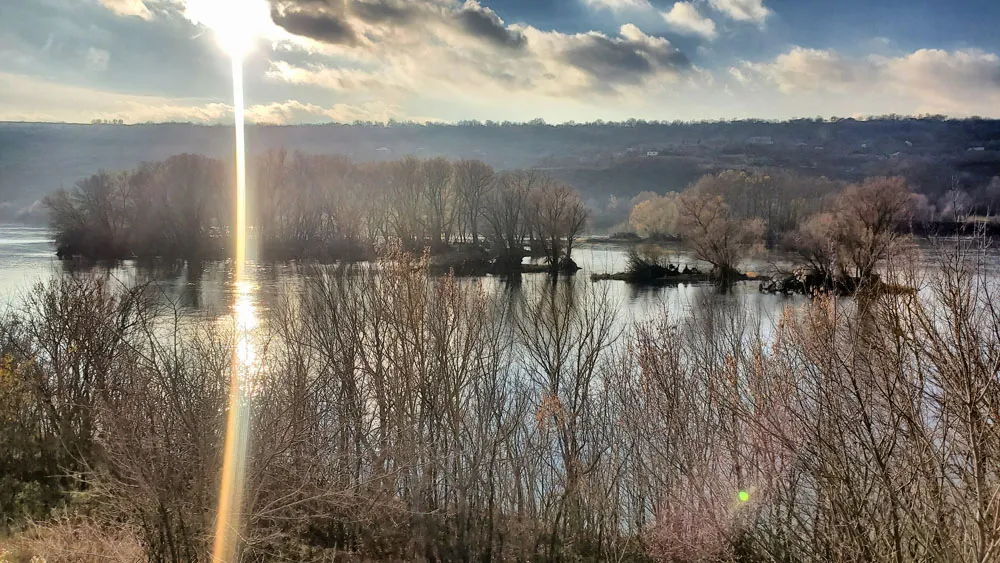
View of the Dniester from the cave monastery
As late as the 19th century, in many regions of Ukraine there was a tradition at Easter of releasing the shells of dyed eggs (krashanky) into a river, or a lake or pond. In many places, for example in the Desna region, people no longer remembered what this ritual was connected with, but in the Dniester region they still know today that it is for the rakhmany, who, when they see the shell, know that Easter has come. And so that they certainly do not miss it, the shell has to be dyed. Could this tradition, too, be connected with the rakhmany?
We do not know whether anyone among today’s scholars is researching the legends and myths about the rakhmany, but the outstanding Ukrainian folklorist, one of the first academicians of the Ukrainian Academy of Sciences, Mykola Sumtsov, collected and recorded quite a few folk tales about them. He also wrote in his day an article about the rakhmany for the Brockhaus and Efron encyclopaedia (1899).
“Rakhmany, Rakhmany Easter. Among the series of Little Russian folk tales about paradise and blessed people, a prominent place is occupied by the tale of the rakhmany and of Rakhmany Easter, which is found already in the Chronicle of Nestor with an indication of its source, the chronicle of George Hamartolos. The fantastic tale of the blessed life of the Brahmans, or Indian Brahmins, turned in Christian legends into exemplary Christians, is related in detail in the “Journey of Zosimus to the Rakhmany”, published by Tikhonravov from two copies, of the 14th and 17th centuries, literally similar (“Monuments of Renounced Literature”, vol. II, pp. 78–92). The venerable Zosimus did not eat for 40 days and asked God to show him the land of the blessed. His wish was fulfilled. First a camel carried him across the desert, then the wind brought him to a river beyond which the blessed lived. Having crossed the river with the help of huge trees that bent their tops from one bank to the other, Zosimus entered the land of the rakhmany and stayed among them for seven days. The rakhmany are in prayer day and night, eat the fruits of the earth and drink sweet water that flows from under the root of one tree. They have no vines, no iron dishes, no iron knives, no houses, no fire, no gold or silver, and no clothes either. Having raised two children with a wife, the rakhmany part and live chastely. They sleep in caves on the ground, lined with tree leaves. Angels inform the rakhmany about righteous and sinful people on earth, how many years of life each is allotted, and the rakhmany pray for people because, as they told Zosimus, “we are of your kind”. During fasts, instead of tree fruits the rakhmany feed on manna that falls from the sky, and by it they judge the change of time. The rakhmany live from 100 to 860 and even to 1,800 years. They know the hour of their death and die without illness or fear. The tales of the rakhmany penetrated deep among the people in southern Russia, and the tradition of the rakhmany’s bright feast of Easter took particular root in southern Russian soil. In Lityn county it is said that the rakhmany are Christians. They have no reckoning of time of their own and therefore celebrate Easter when an eggshell floats down to them. As a result, there is a custom among the people of throwing eggshells into a river on Holy Saturday; they reach the rakhmany after three and a half or four weeks. A distortion of the belief is the additional feature that the rakhmany live underground. In Galicia there is a belief that the shells, having reached the land of the rakhmany, turn into eggs and each egg goes to twelve rakhmany, who feed on it for a year. When throwing a shell onto the water, people keep silent or say: “Float to the rakhmany land.” On Rakhmany Easter, which fell on the Wednesday of the fourth week after Easter, people do not work. There is a legend that in the Galician village of Harasymiv a peasant who once went out to plough the field on this day fell underground together with his driver, plough and oxen, and if on the day of Rakhmany Easter you put your ear to the ground, you can hear the driver’s cries for help. A woman who washed linen on this day died the next day. In Ukraine, on Rakhmany Easter people break birch twigs, ascribing healing significance to them (they set bones with them).”
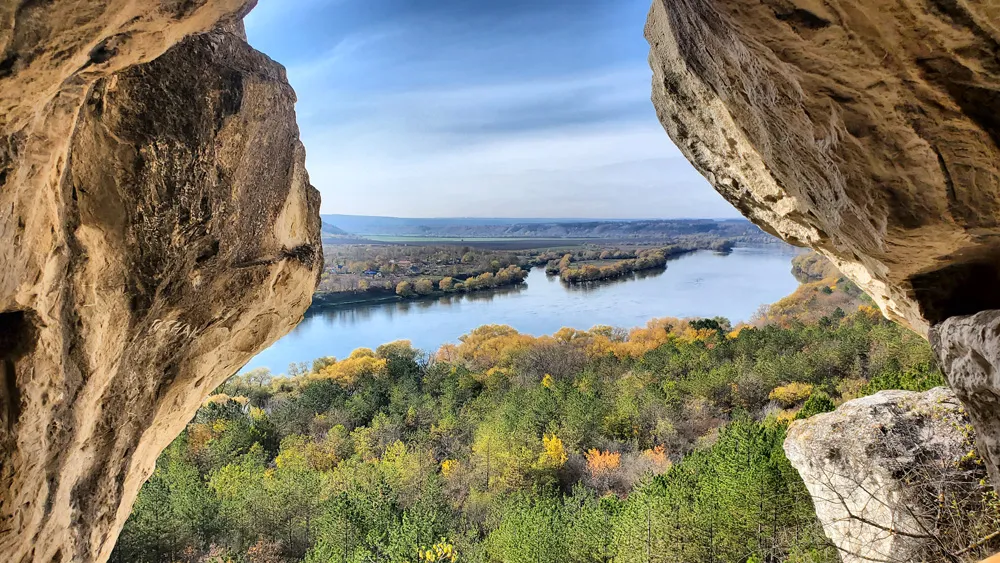
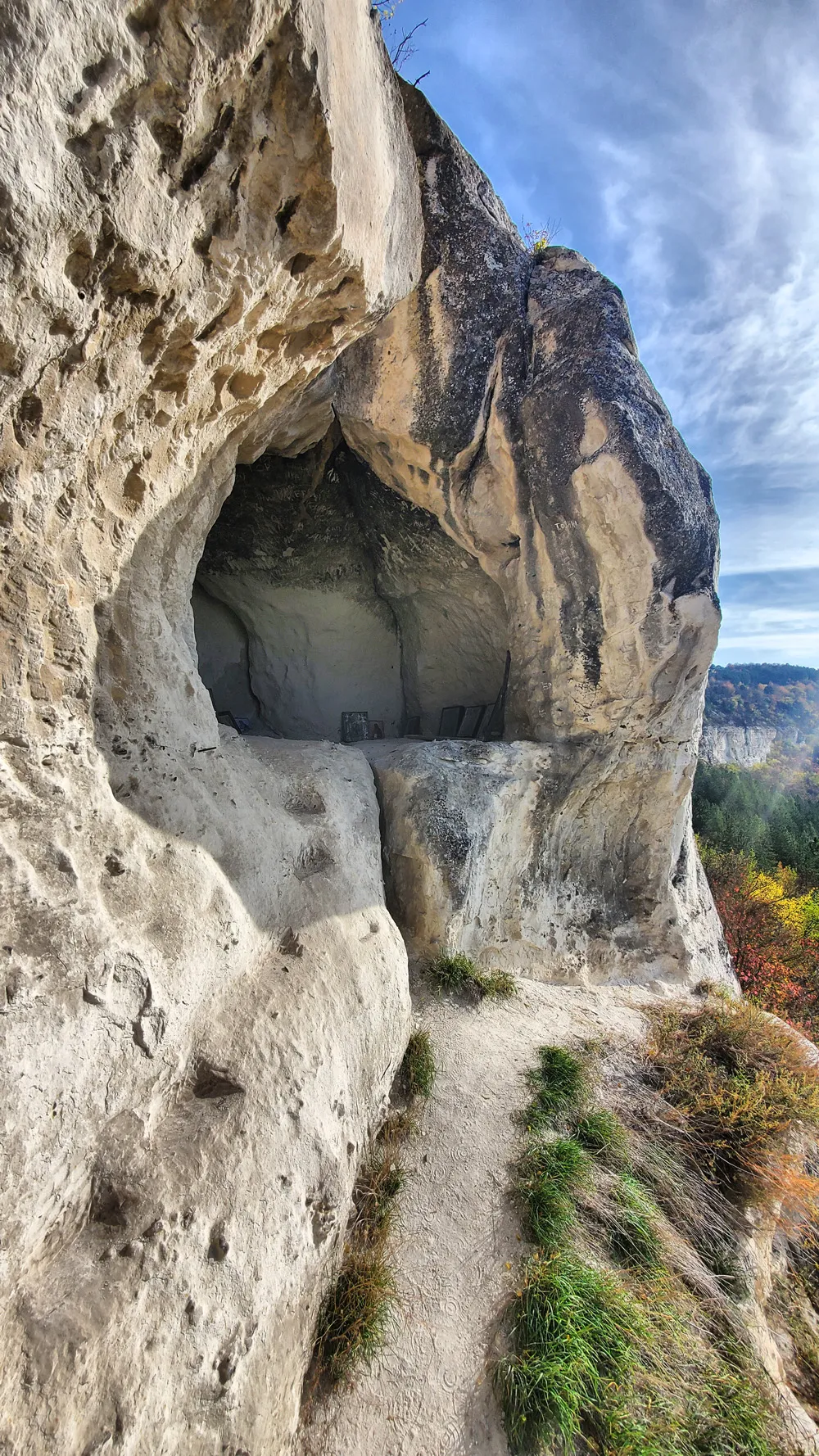
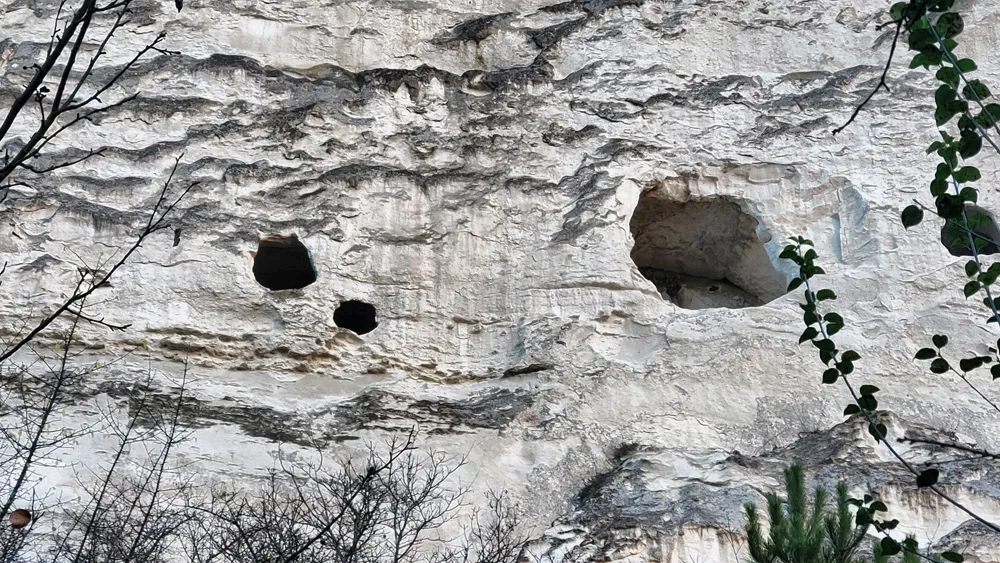
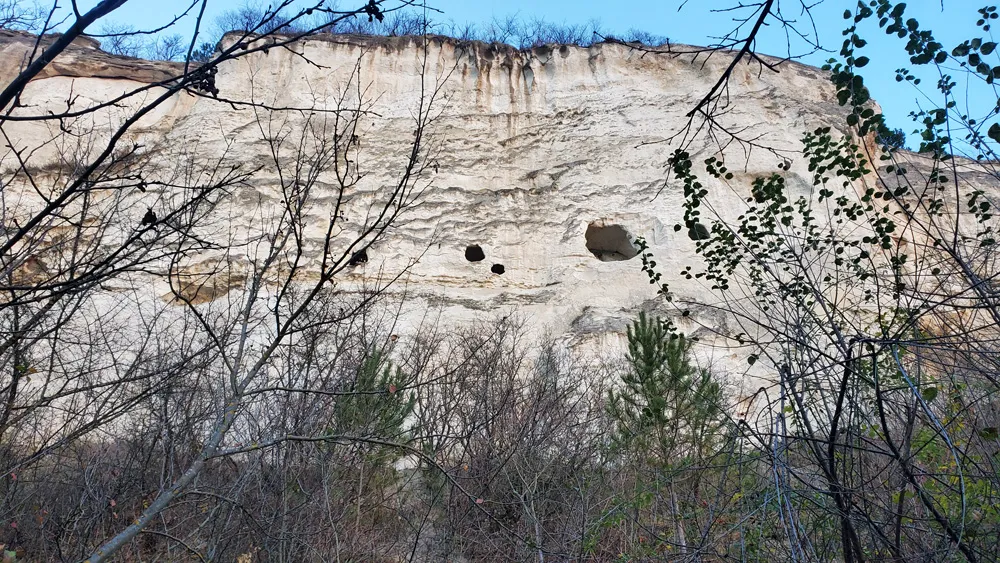
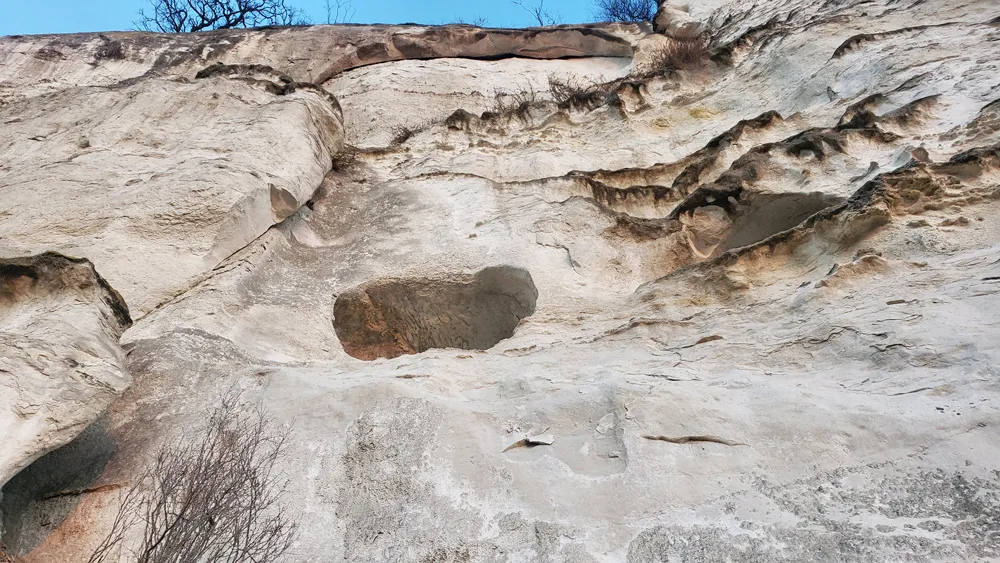
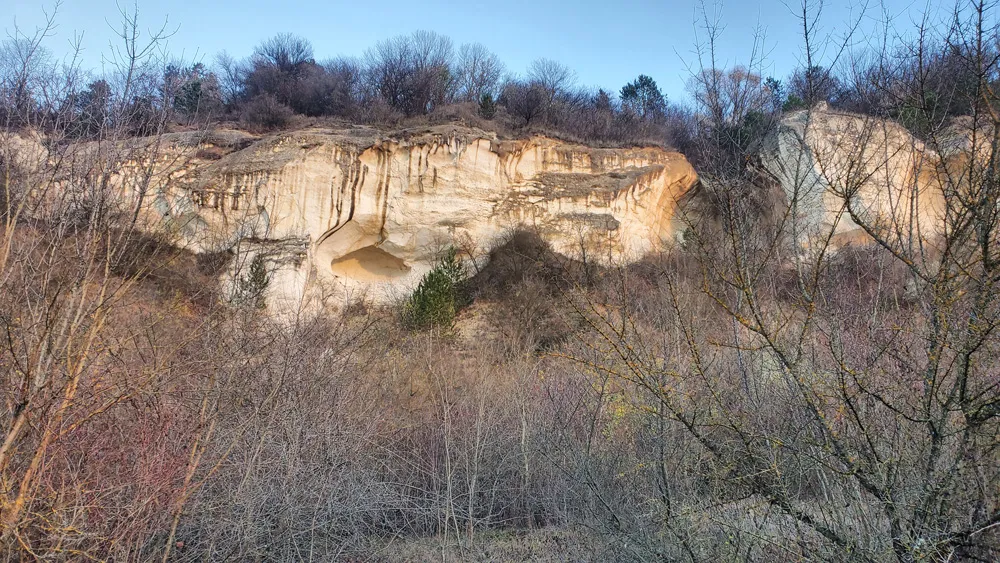
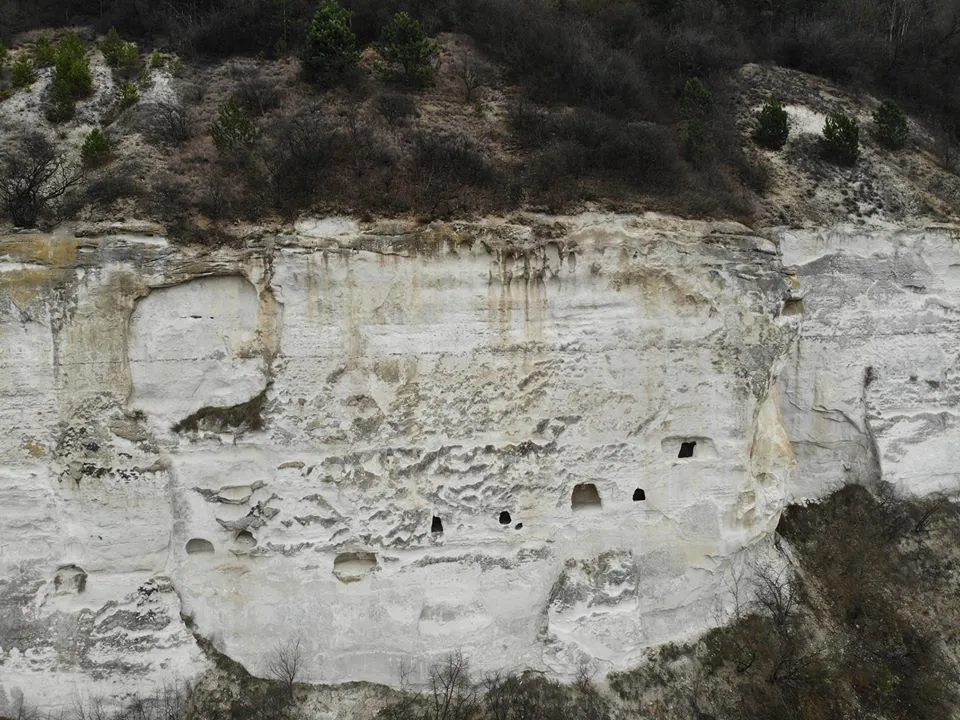
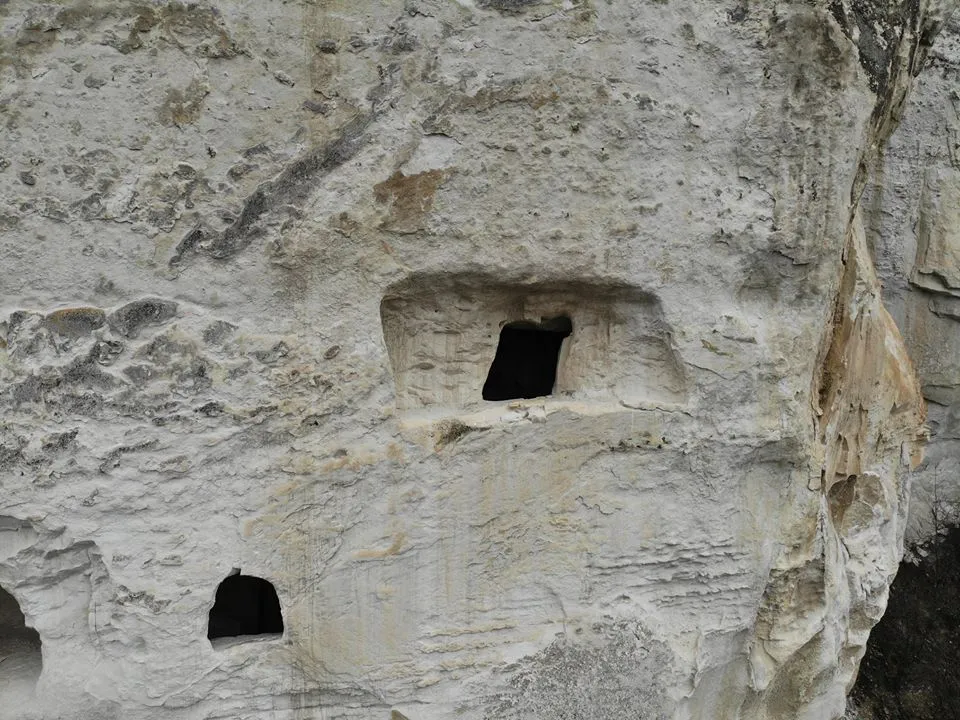
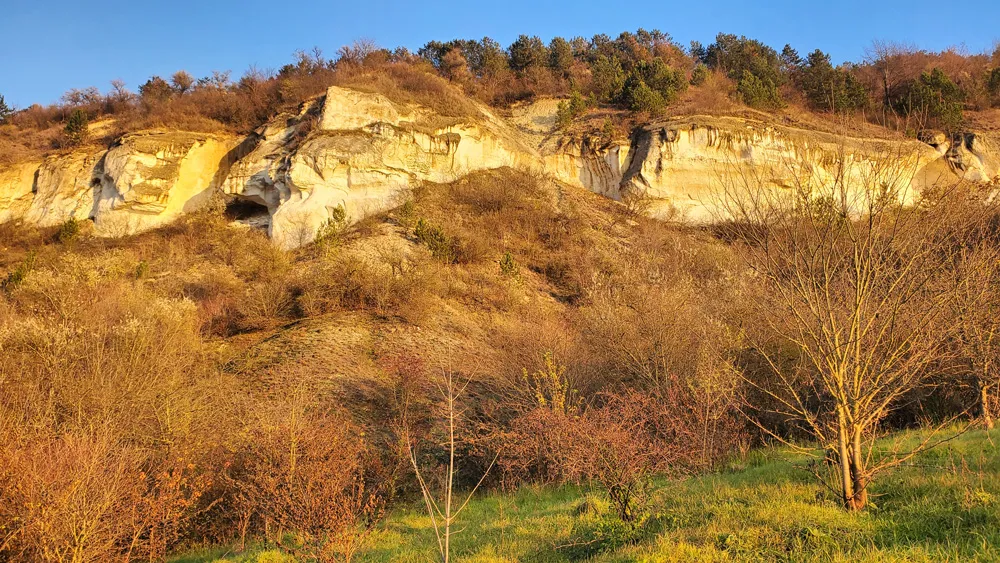
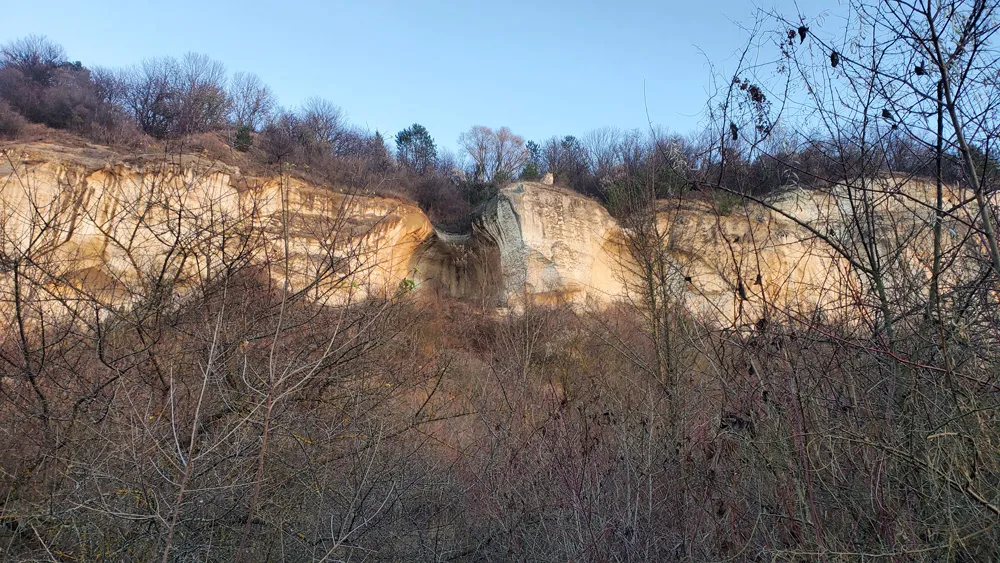
Cave monastery. Local residents say that the rakhmany lived in it. The last two photos are from the newspaper “Den”
And here is what Wikipedia writes about Rakhmany Easter:
On Rakhmany Easter the shells of Easter eggs (pysanky) were released onto the waters of rivers. Rakhmany Easter is based on the legend of the “resettlement of the rakhmany” (ancestors, better than people) beyond the Blue Sea, to whom the shells of Easter krashanky must float on the water for 25 days. In many regions of Ukraine a characteristic feature of Easter is a plate with an imitation of a burial mound, which was surrounded with red krashanky according to the number of the dead in the family. Those krashanky testify to the Indo-European antiquity of Easter, because only then, according to the Rigveda, did the image of the egg-shaped red Martanda exist, the “Dead egg”, a deceased person who after his resurrection became the “Herald of life”, Vivasvat, and was embodied in the spring-and-day “Sun”, Surya, well known also to the Book of Veles.
The ethnographer Oleksa Voropai in his book “Customs of Our People” (Munich, 1966) states that as late as the beginning of the 20th century Rakhmany Easter was observed in the Kyiv, Poltava and Kherson regions and in Podillia. The peculiarities of the Rakhmany Easter rite among the Hutsuls are described in the works of the ethnographers Sofron Vytvytskyi, “A Historical Sketch of the Hutsuls” (Lviv, 1863), and Volodymyr Shukhevych, “Hutsulshchyna”, volume IV (Lviv, 1904).
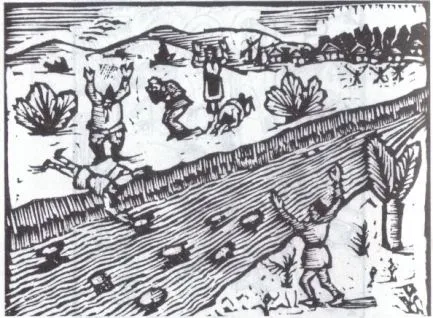
The rakhmany rejoice at the shells of krashanky. Engraving by Marcel Olinescu
“The Hutsuls observe Rakhmany Easter with reverence.” “On the fourth Wednesday after the Easter holidays the Hutsuls observe Rakhmany Easter. On that day they do not actually go to church, but at home, as a sign of the feast, they refrain from all work.” “The Hutsuls fast that whole day. After sunset, when the evening star appears on the horizon, the whole Hutsul family gathers in the house. The housewife gives her husband one boiled egg and puts on the table only one paska, kept specially for this day from Easter. (In fact three paskas were blessed: one was eaten at Easter, the second on the Day of Remembrance of the Dead, and the third on Rakhmany Easter.) Holding the egg in his hand, the master of the house stands in the middle of the room and says: ‘Come, children, let us all share this egg today.’ At these words one of the household replies: ‘But how can we all share one egg?’ Then the father solemnly says: ‘Oh, if twelve Rakhmans could share one egg this Easter, then surely there will be enough of it for us.’ Having said this, he gravely peels the shell off the egg and lays it on the table, and divides the egg itself into as many parts as there are souls in the house plus one more. Having given a portion to everyone, he gives the smallest child the remaining piece as well.
After the egg is divided, the master of the house gathers the shell and goes with the children to the riverbank, where he throws it onto the water, saying: ‘The egg will not reach the Rakhman, but the shell will, and surely will.’ Then everyone returns to the house and eats the paska and a lenten supper” (S. Vytvytskyi).
According to Borys Hrinchenko’s dictionary, “rakhman” means “an inhabitant of a mythical place, a righteous Christian”. The same interpretation of this word is found in the work of Volodymyr Shukhevych: “The Hutsuls tell that the rakhmany are monks, just Rusnaks (true Rusyns, that is Ukrainians); they have the same faith as we. They live far in the east in a monastery (some Hutsuls add ‘in Sochiv’), where they lead a prayerful life; we live for them (we owe our life to them), because they atone for our sins by fasting through the whole year, and break the fast only with the fact that at Easter 12 of them share one egg… the rakhmany are our kin (blood relatives); therefore older people observe a fast on Monday, Wednesday and Friday until Rakhmany Easter, and none of them would break it even with milk.”
At the end of the topic S. Vytvytskyi notes: “Who that Rakhman was is hard to say, but among the Hutsuls this word means the ideal of splendour and gentle life.”
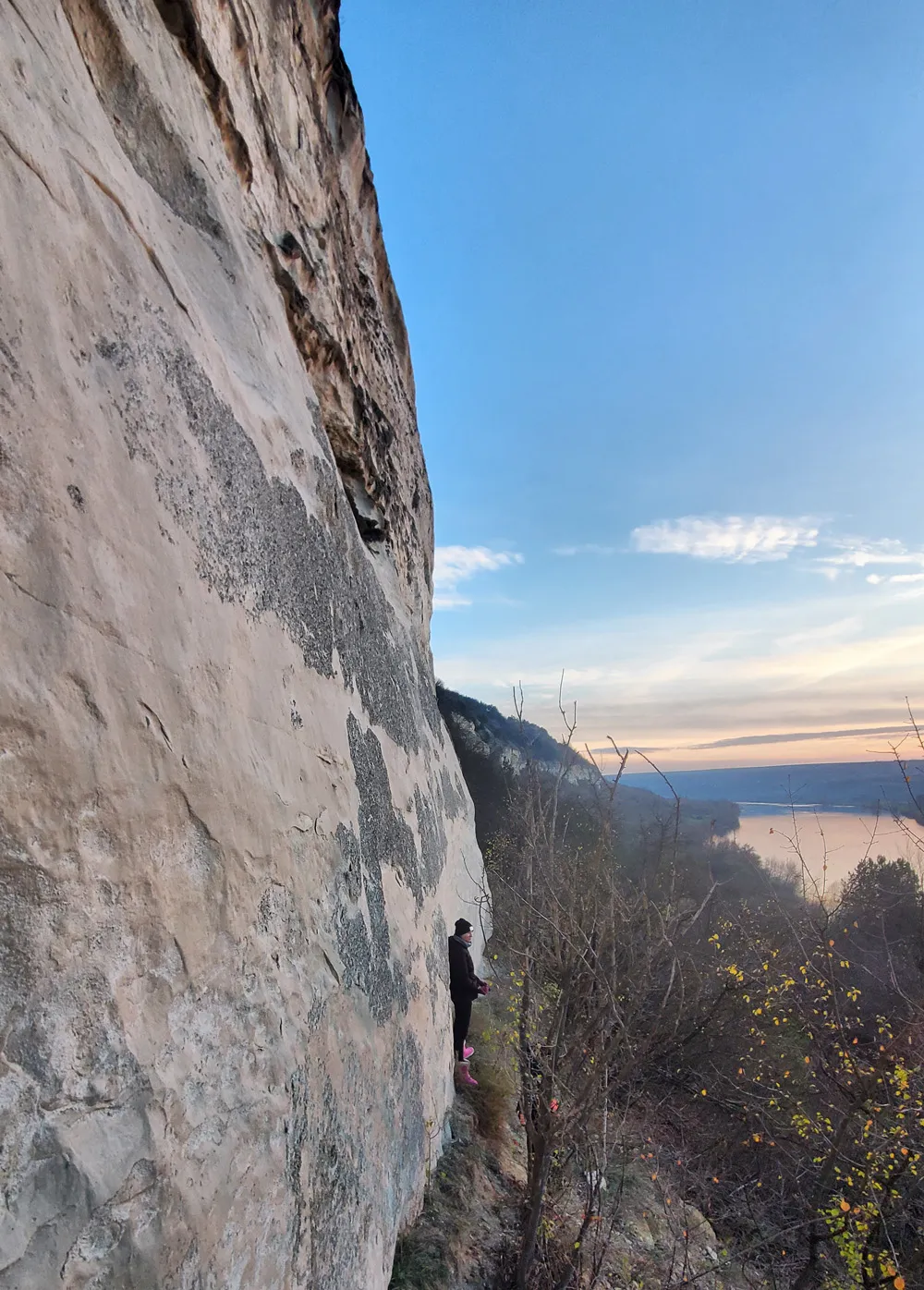
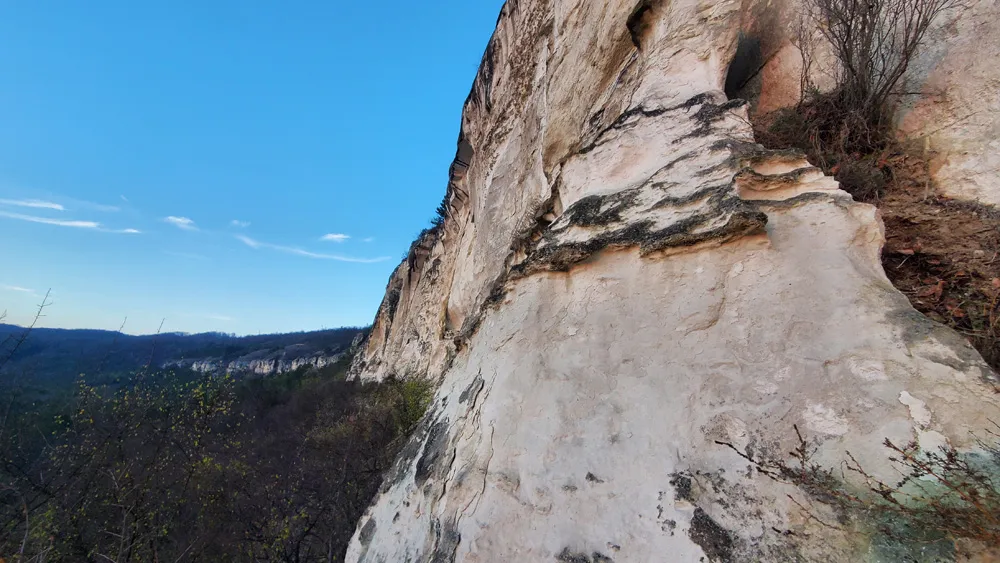
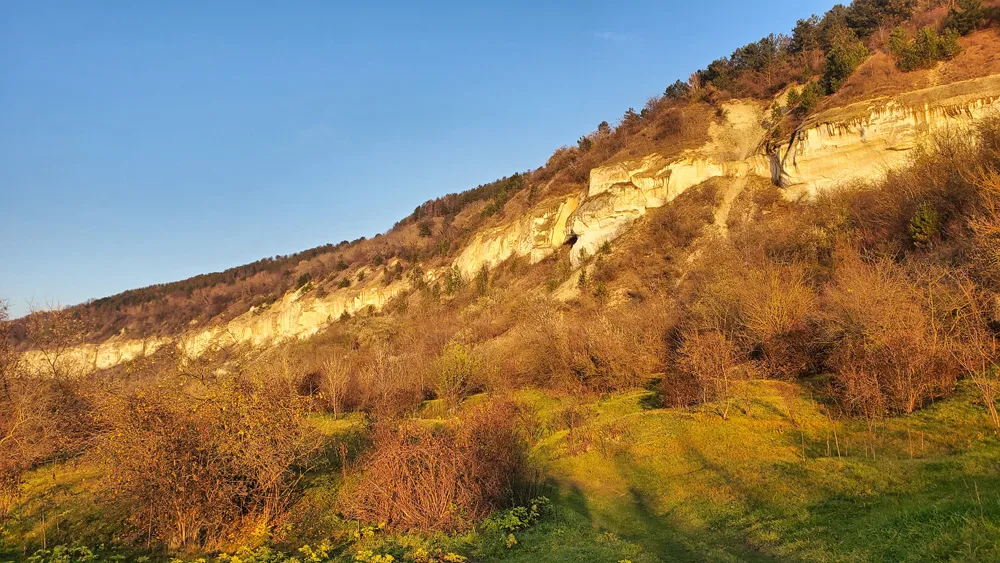
The bank of the Dniester in Oksanivka
Almost all of this was told to us by residents of the village of Oksanivka, in the Yampil community, on the Dniester. True, they know much more, for example about the rakhmany cemetery that was once near the village and was washed away by the river. Then rakhmany bones were seen, and they were huge. They also told us that in ancient times the rakhmany came to live in Oksanivka, got married, had two children with a wife, and then went to live an ordinary rakhmany life (just as it is written in Sumtsov) in the caves. And next to Oksanivka was their monastery, almost a Vyrii (that part we added ourselves).
The Oksanivka cave monastery is a complex of man-made caves on a steep slope above the Dniester. They say it was founded by monks from Mount Athos. Scholars point out that the monastery had a defensive character: indeed, capturing such a dwelling is practically impossible, because the caves are located at a considerable height above the water line, and from above they can be reached only on a rope. Probably this is how the monks got there. After Cappadocia and Meteora, such a monastery does not seem anything incredible to us, but what is incredible is that scholars began studying it only in the 21st century. And they proved that it is a unique cult and defensive complex. In 2020 it was included in the State Register of Monuments. Petroglyphs and graffiti were found in the caves, though to carry out the research the archaeologists had to turn into rock climbers, since access to most of the caves is almost nonexistent. There are hundreds of images on the walls: cross-shaped figures, rhombuses, images of beasts, fish and birds.
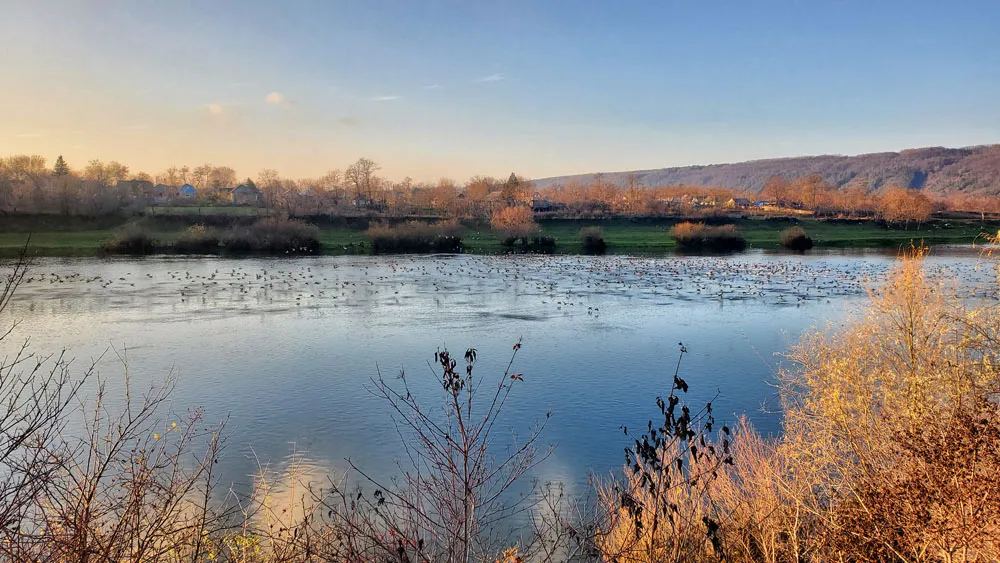
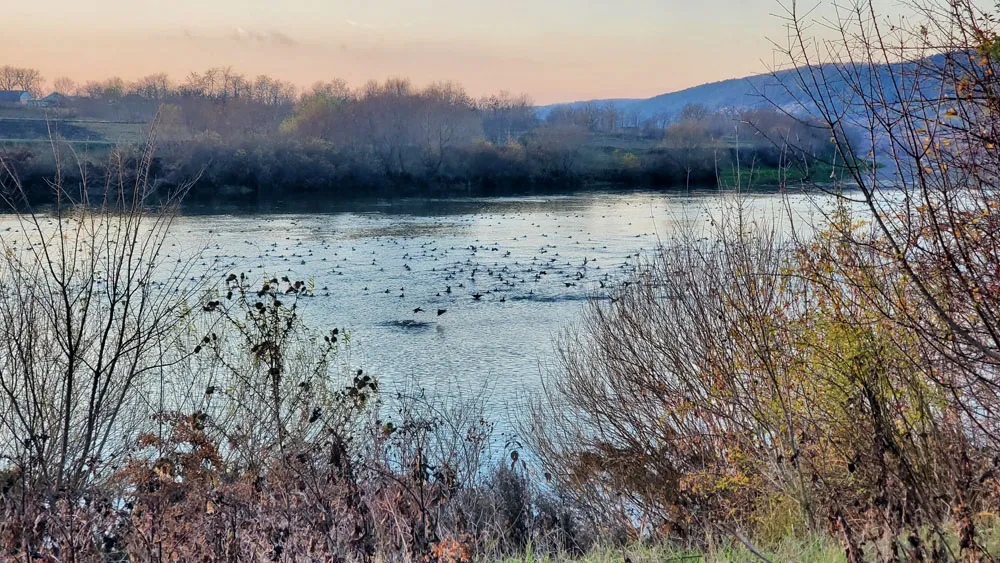
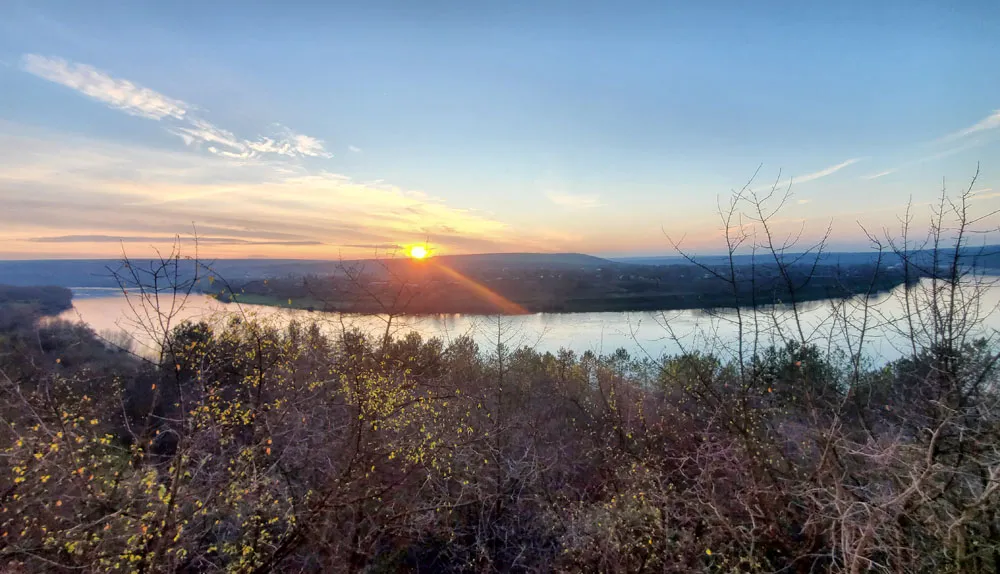
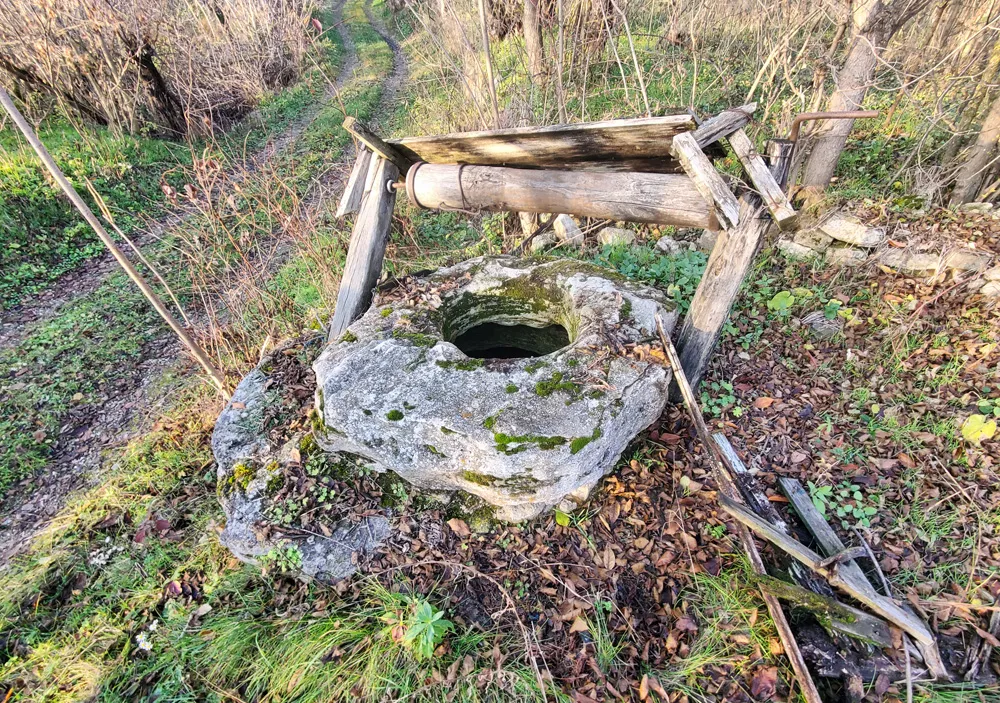
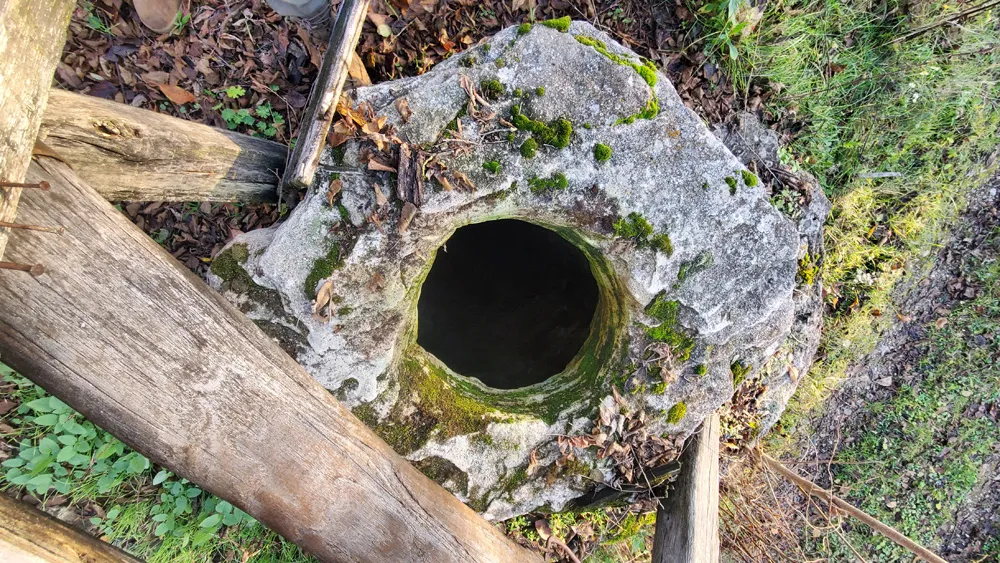
The Dniester and an old stone well
The Yampil community has equipped the approach to several of the monastery caves for tourists: it is a fairy-tale path, absolutely safe, though laid on a breathtaking slope. Viewing platforms have also been built along the path, from which fairy-tale views of the Dniester valley open up.
The village of Oksanivka is very cosy and colourful. It nestles under the very high and steep bank of the Dniester near a bend of the river. There is no paved road to the village, so keep this in mind if you travel in rain or snow: you may not be able to drive back up the hill on the slippery surface. In general the village has considerable tourist potential, and local residents have gradually begun to use it.
Beautiful nature, a mild microclimate (the high Dniester bank protects against cold northern winds), legends about the Brahmans and the rural colour of southern Podillia: that is Oksanivka. There is even already a homestead with a hot tub here; we tried it once on an expedition and recommend it. And in Oksanivka there is also a monument to the river mussel, the only one in Ukraine. This mollusc saved the residents of the region from famine in 1946–1947.
Until 1946 the village was called Flemynda, after the first settler, a fisherman named Flamund. It is clear that the poor fisherman was from Moldova, from across the Dniester, but most of the village’s population were Ukrainians. Right after the Second World War the village was renamed Oksanivka, after a local communist, Oksana Dudnitska. Perhaps soon it will be Flemynda again.
Text and photos by Roman Malenkov.
There is an old cemetery in Oksanivka. See its photos in our gallery.


