Pidkamin. A mysterious cemetery beneath the rock. A Cossack one?

· 3 min read
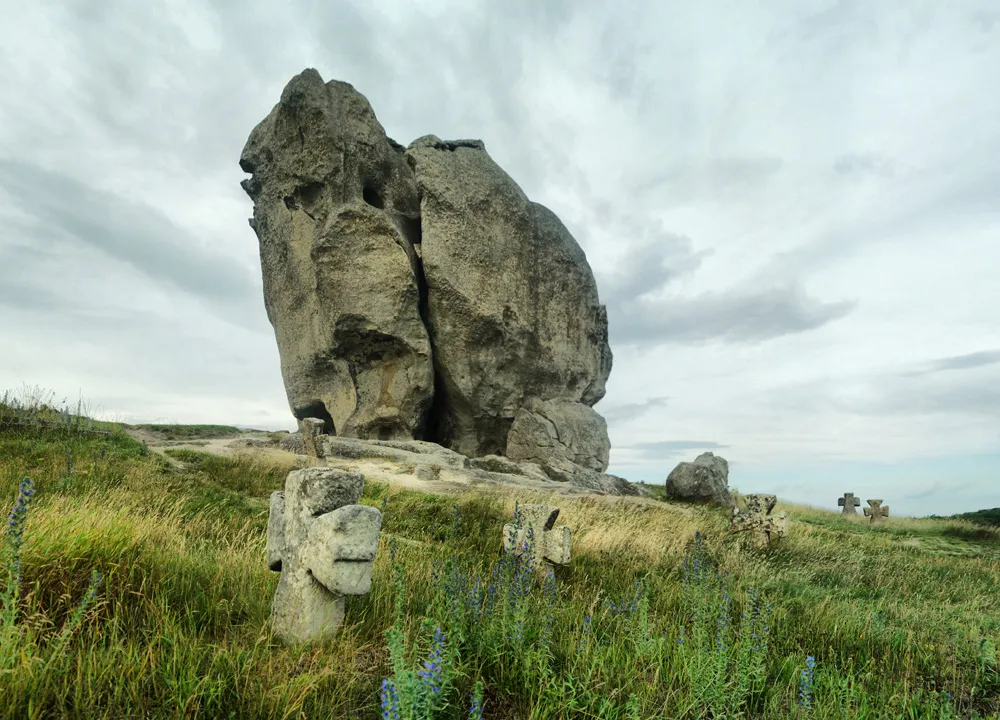
The main landmark and effectively the calling card of Pidkamin is the limestone rock called the Devil’s Stone – a remnant of an ancient coral reef. According to a legend recorded in the chronicles of the Pidkamin Dominican monastery, the devil himself dragged this rock here in order to destroy the monastery. He got hold of an enormous stone somewhere and carried it towards the monastery. But the stone turned out to be too heavy, so the devil had to stop several times to rest. When he stopped quite close to the monastery, a rooster crowed, announcing the start of the day. The devil fled and abandoned the stone. And so it stands to this day.
It might no longer have been standing, since in the 19th century local residents began to break it up into rubble for their own needs. The monument was saved by the efforts of the monastery’s prior Dominik Babicki, who secured a ban on its destruction. In 1850 the district office in Zolochiv (to which Pidkamin belonged) forbade breaking the stone under threat of a huge fine – 200 Rhenish gulden.
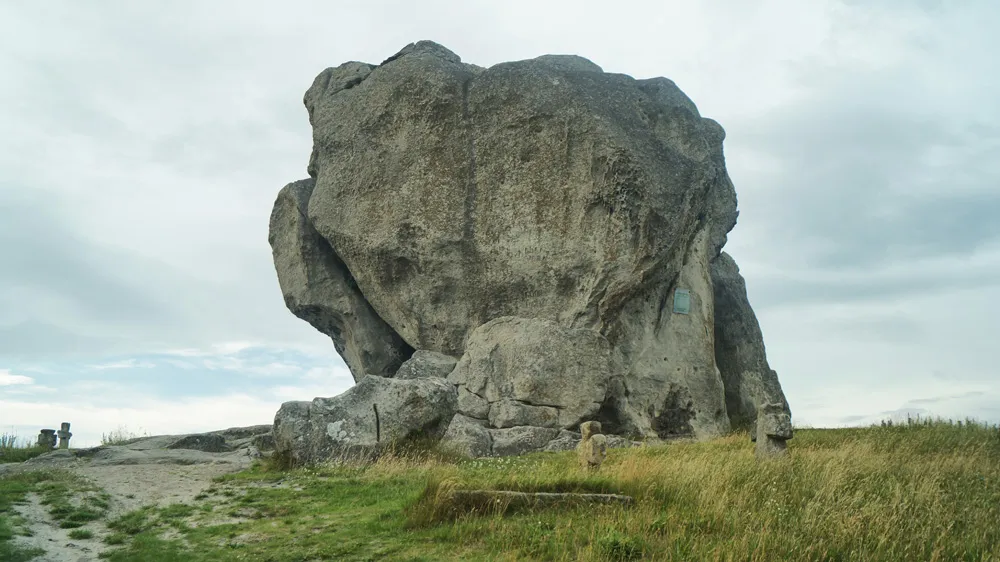
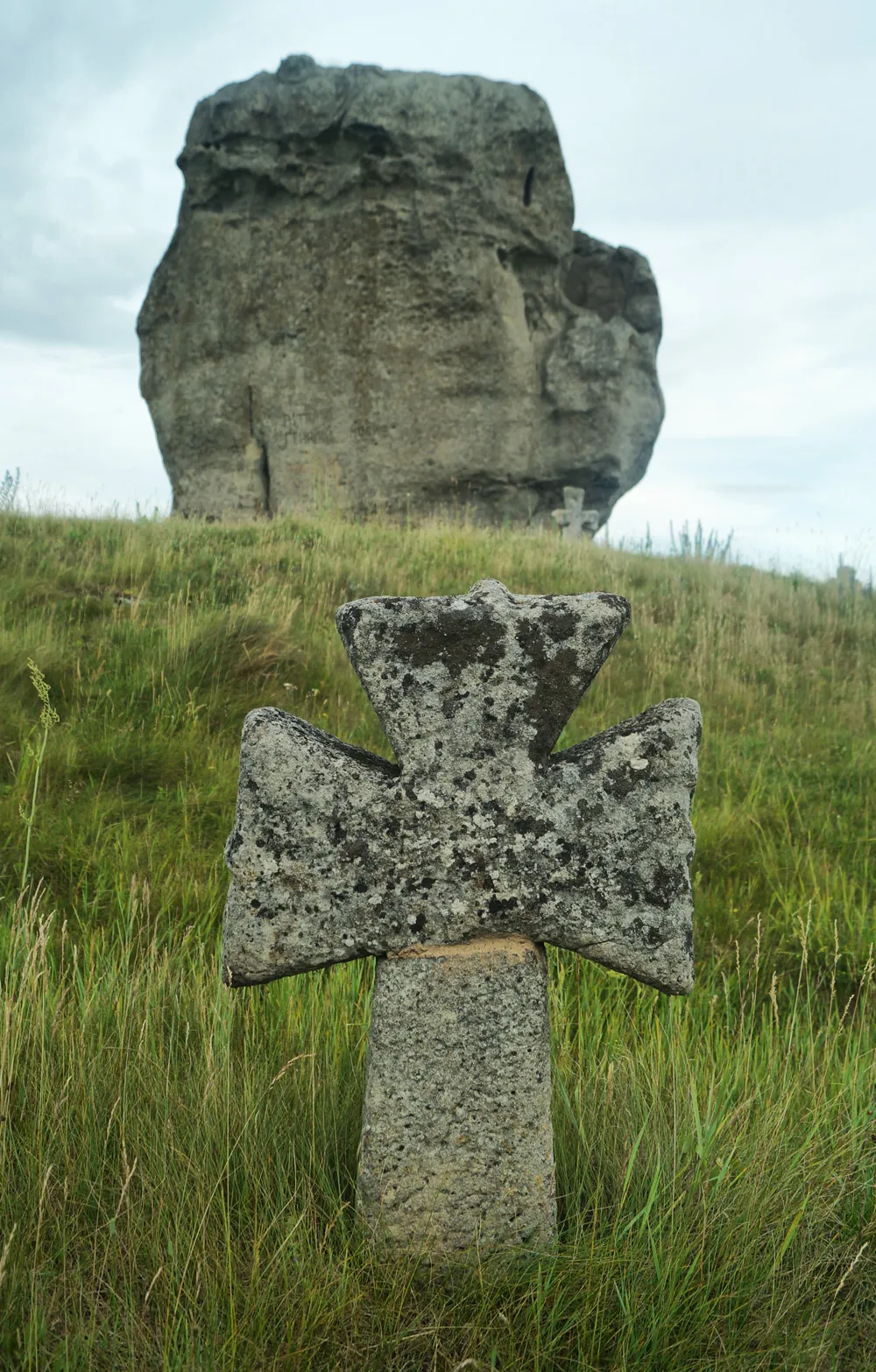
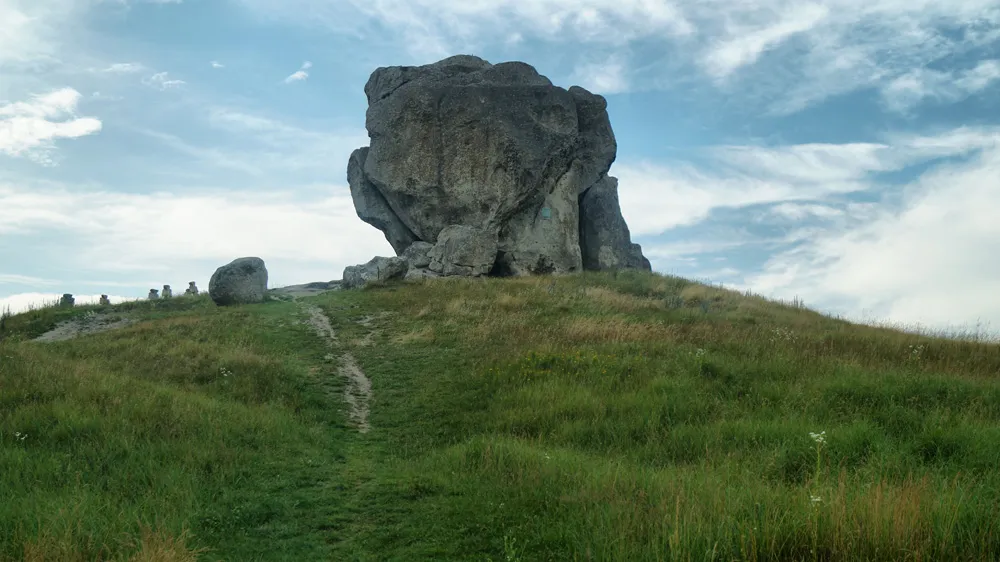
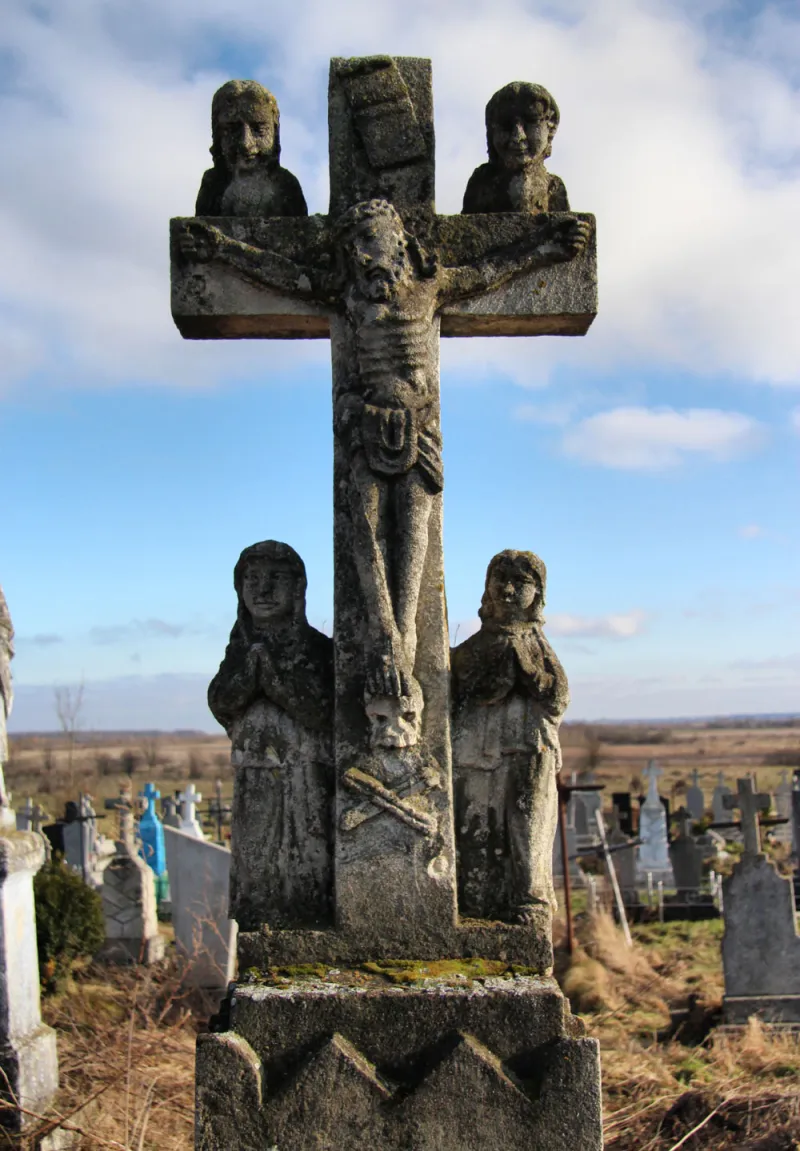
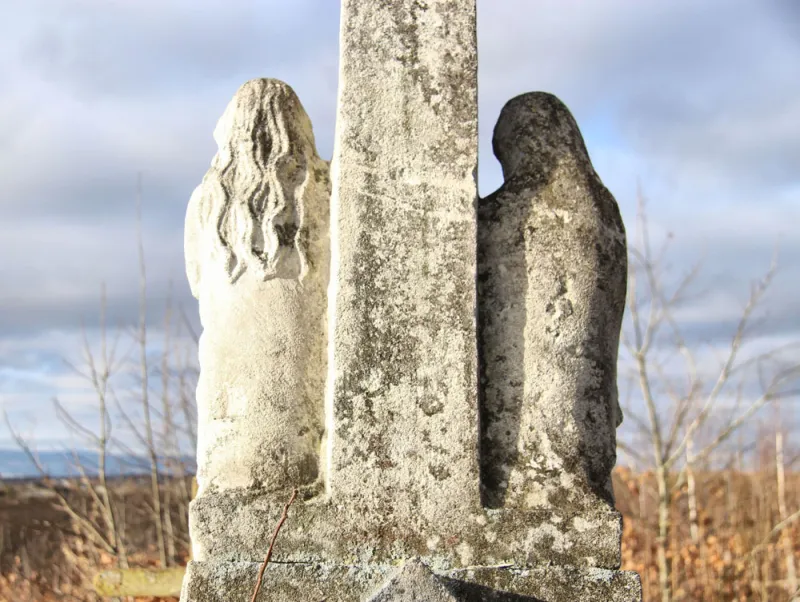
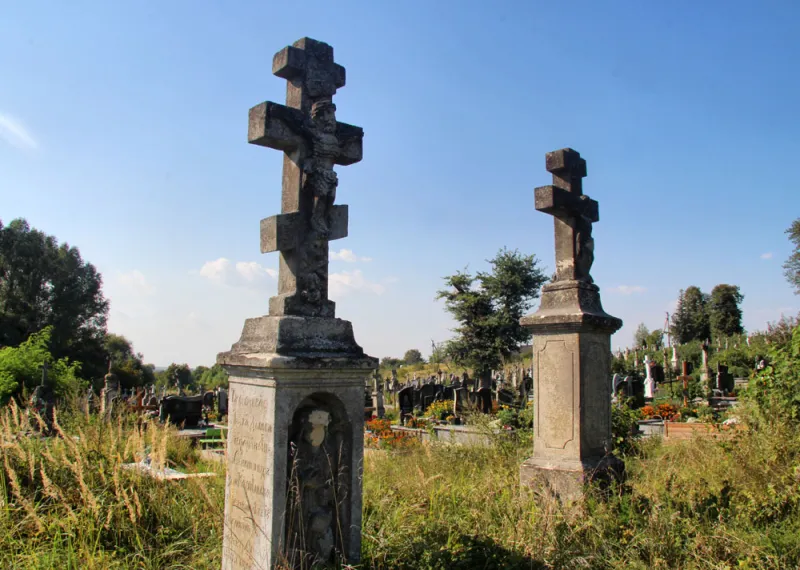
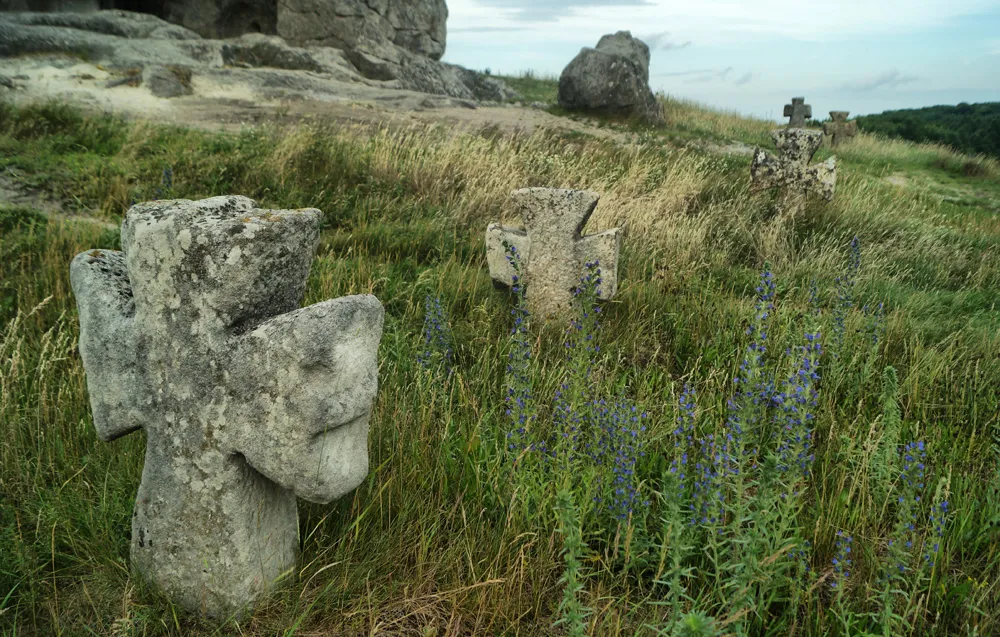
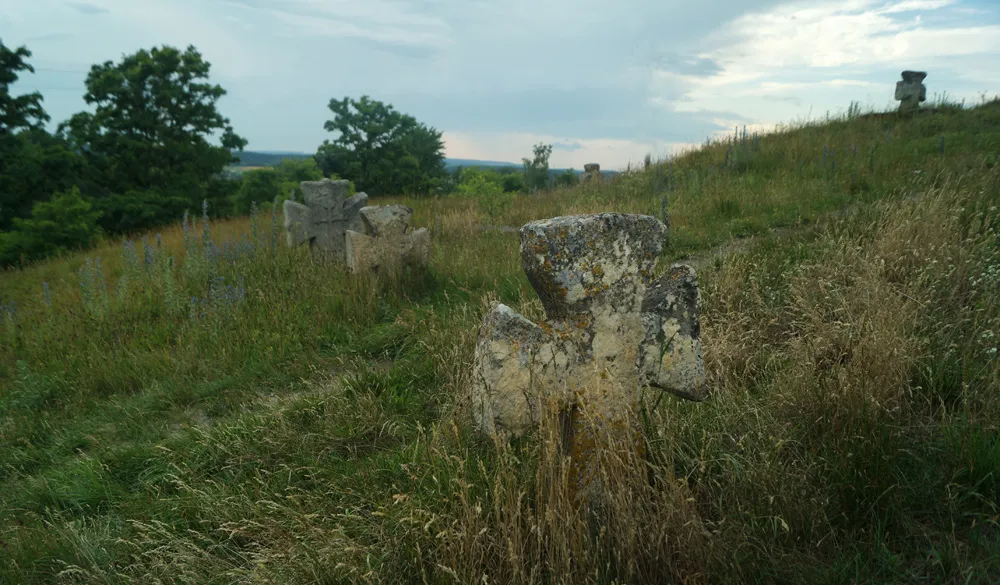
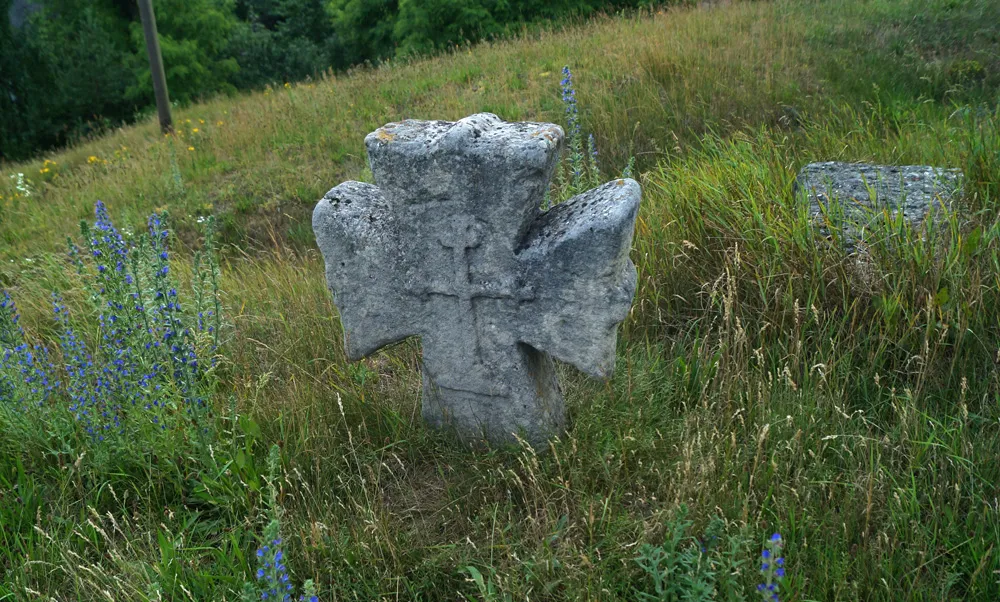
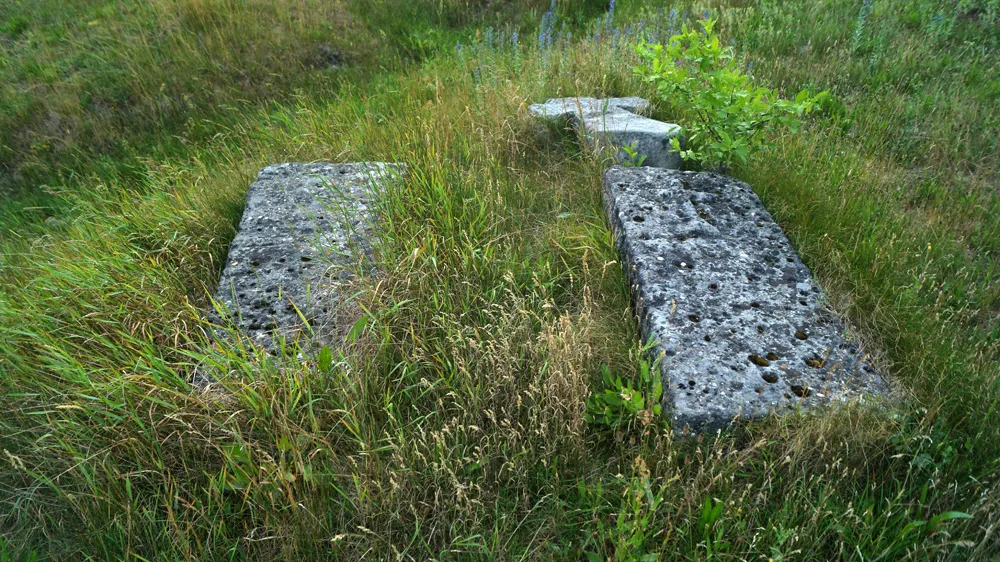
The height of the rock from base to top is 17 metres, and its width is 8–10 metres. In ancient, pre-Christian times this stone was used for ritual purposes. There were also some fortifications here, but there is almost no information about them. Around the stone lies an old cemetery with crosses of the Cossack type. Some scholars date it to the period of the Khmelnytskyi Uprising, pointing out that Cossacks killed in one of the battles may be buried here. The inscriptions (epitaphs) on the crosses have almost worn away with time; only on one was it possible to make out a burial date from the early 18th century. This was done by specialists of the Polish society Magurych, who in 2008 carried out professional restoration of the crosses under the direction of Szymon Modrzejewski.
The appearance of a cemetery on the hill is explained by the fact that the Devil’s Stone was traditionally a sanctuary, and in the 17th–18th centuries a wooden church stood somewhere near it, which later burned down. Some even believe it is an ordinary parish cemetery beside a church. The priests from the monastery, however, told us that knights are buried here, presumably meaning Cossacks. But we have to admit that we do not know for certain who lies in those graves. Local residents call the cemetery Cossack, and we have no compelling reason to refute their opinion. At least the crosses there are certainly Cossack.
The Cossack cross, which is now a symbol of the Armed Forces of Ukraine, derives in form from the cross pattée of the knightly Order of the Templars, and has no connection with the eight-pointed Maltese cross. Such crosses began to spread across the territory of Ukraine, from the Dnipro region to the Carpathians, from the 17th century.
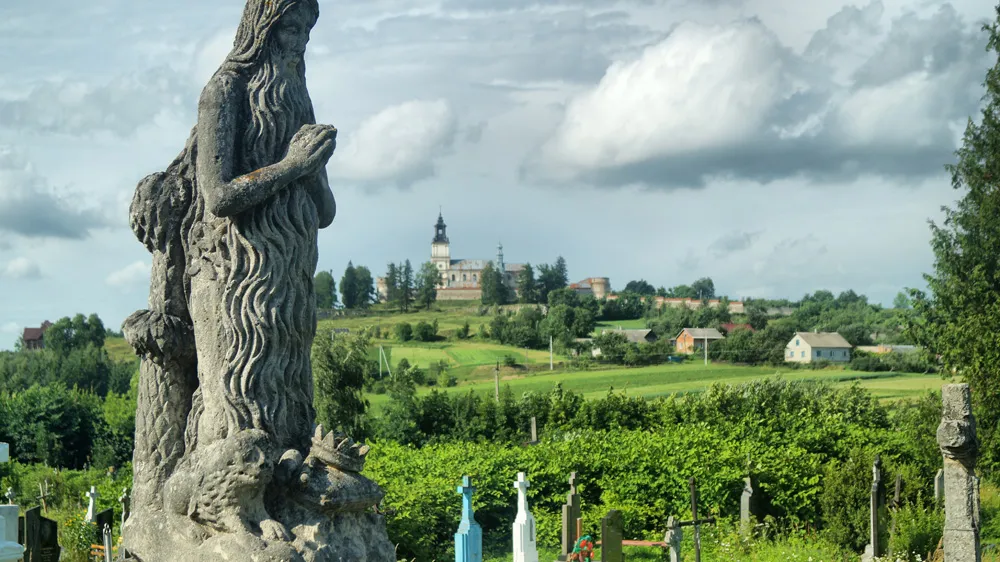
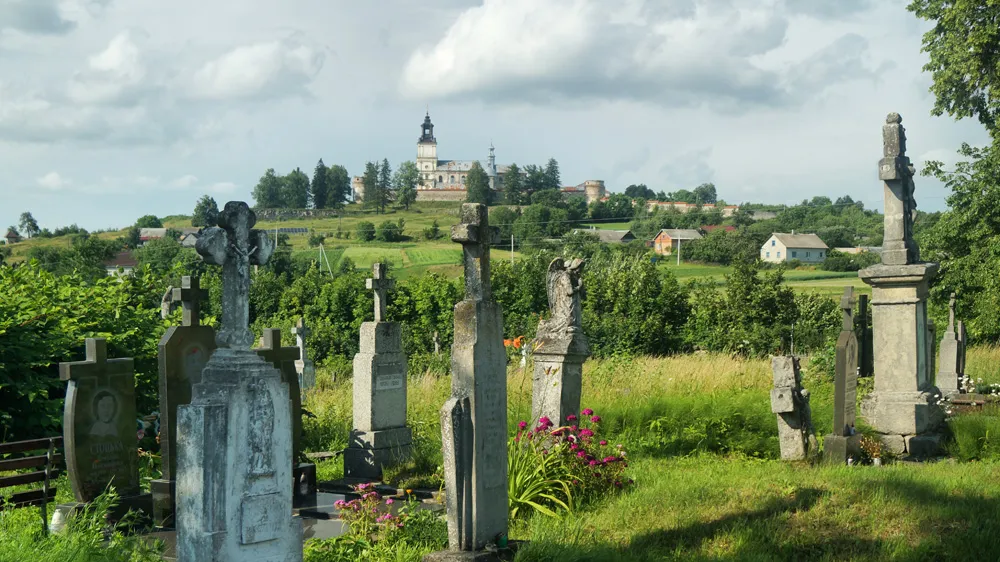
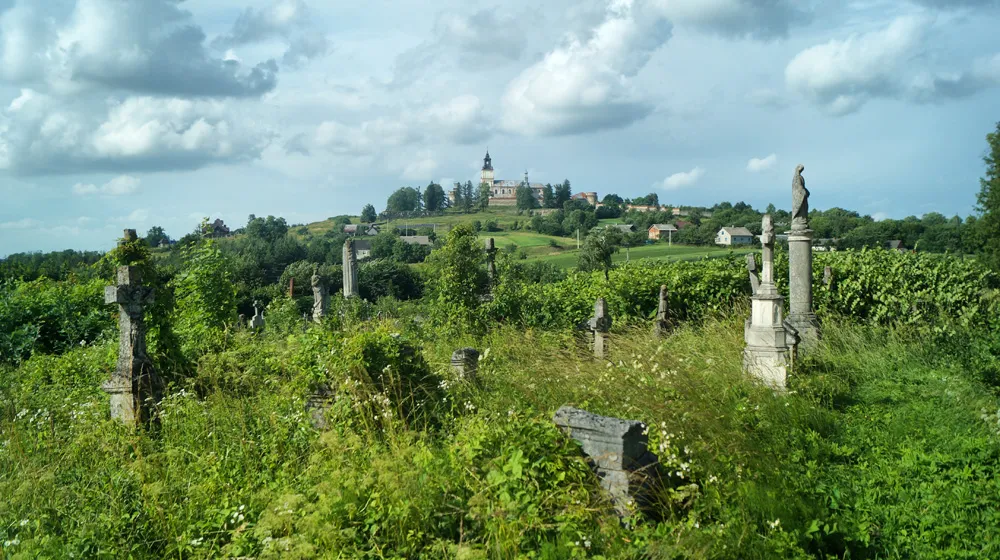
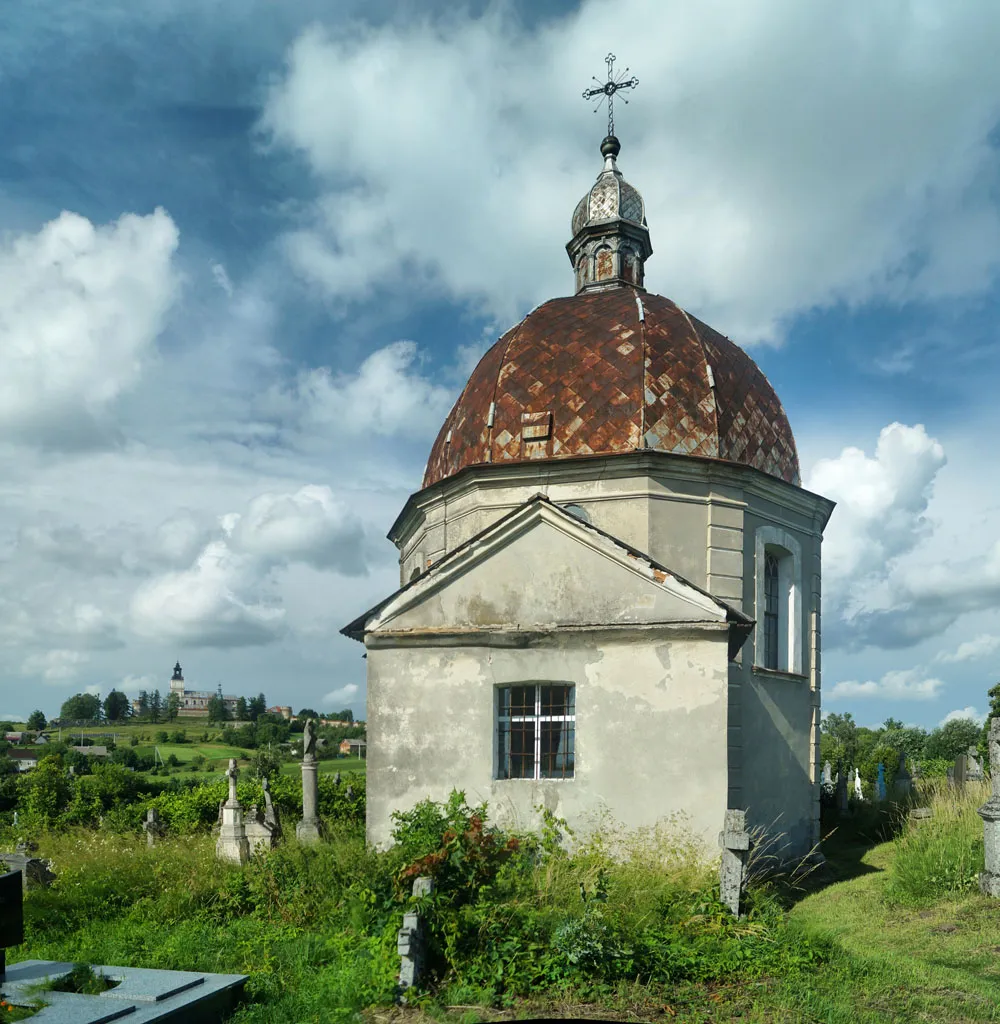
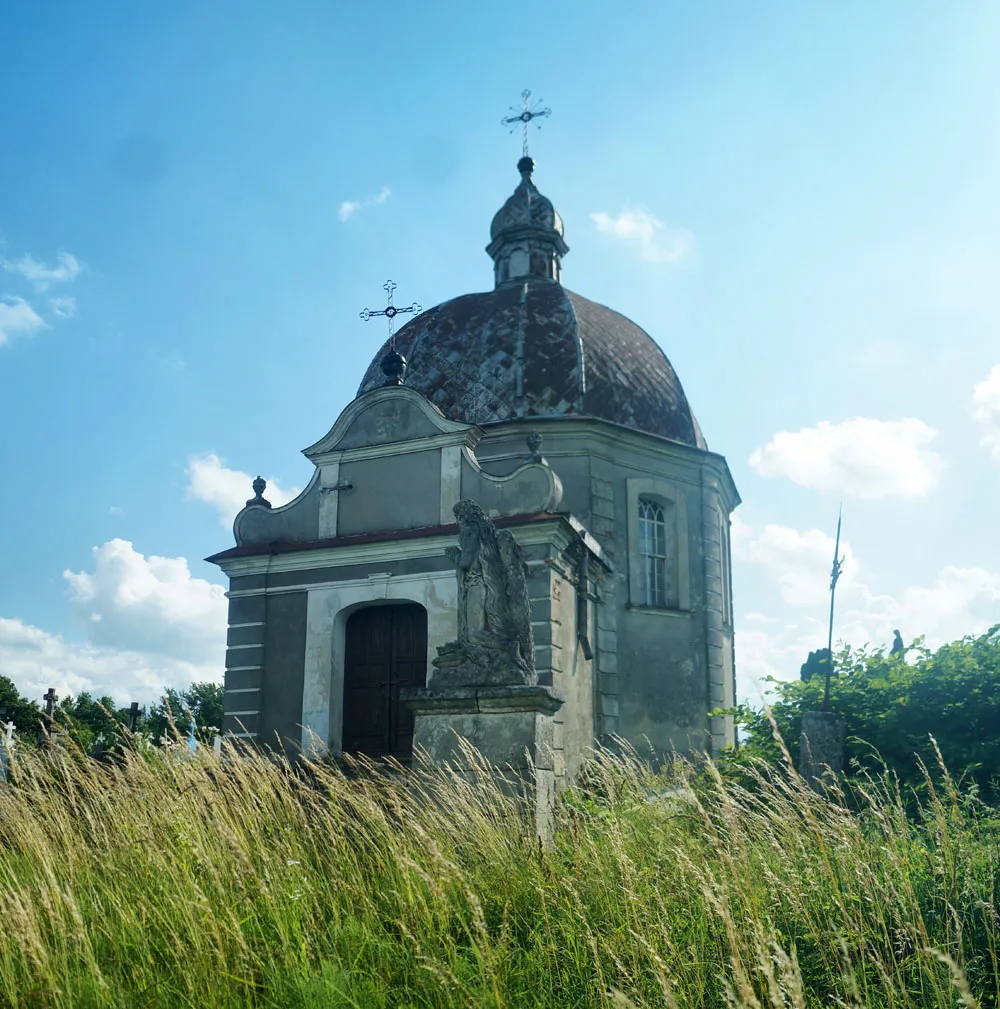
In Pidkamin, on the south-eastern outskirts, there is another cemetery – newer, but also old. It was once Polish, but later became mixed Polish-Ukrainian. In the centre of the cemetery stands a Baroque chapel, built in 1796–1797. It is the burial vault of the Cetner family. Near the chapel the sculpture of St. Onuphrius deserves attention.
Text and photos by Roman Malenkov
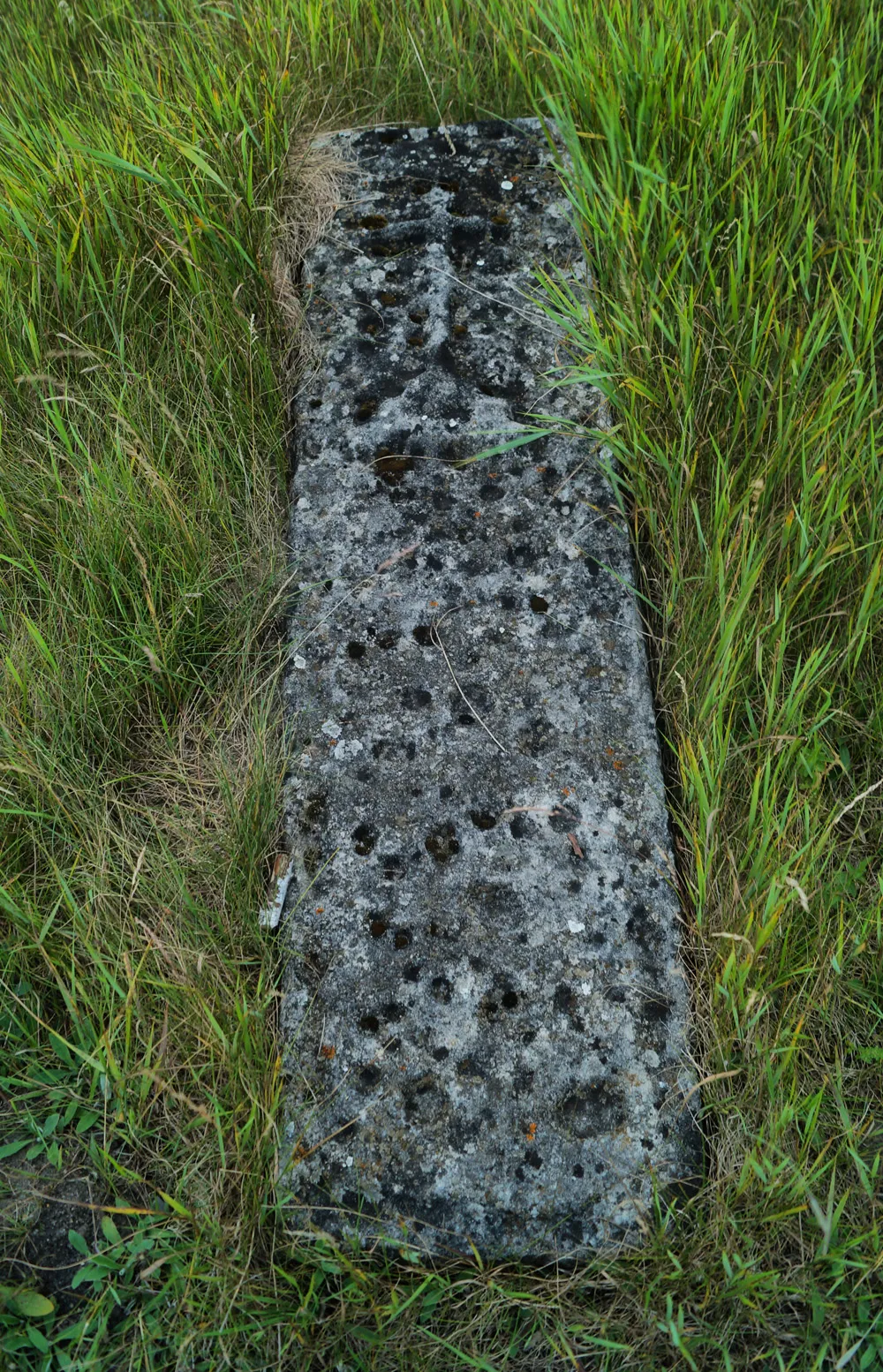
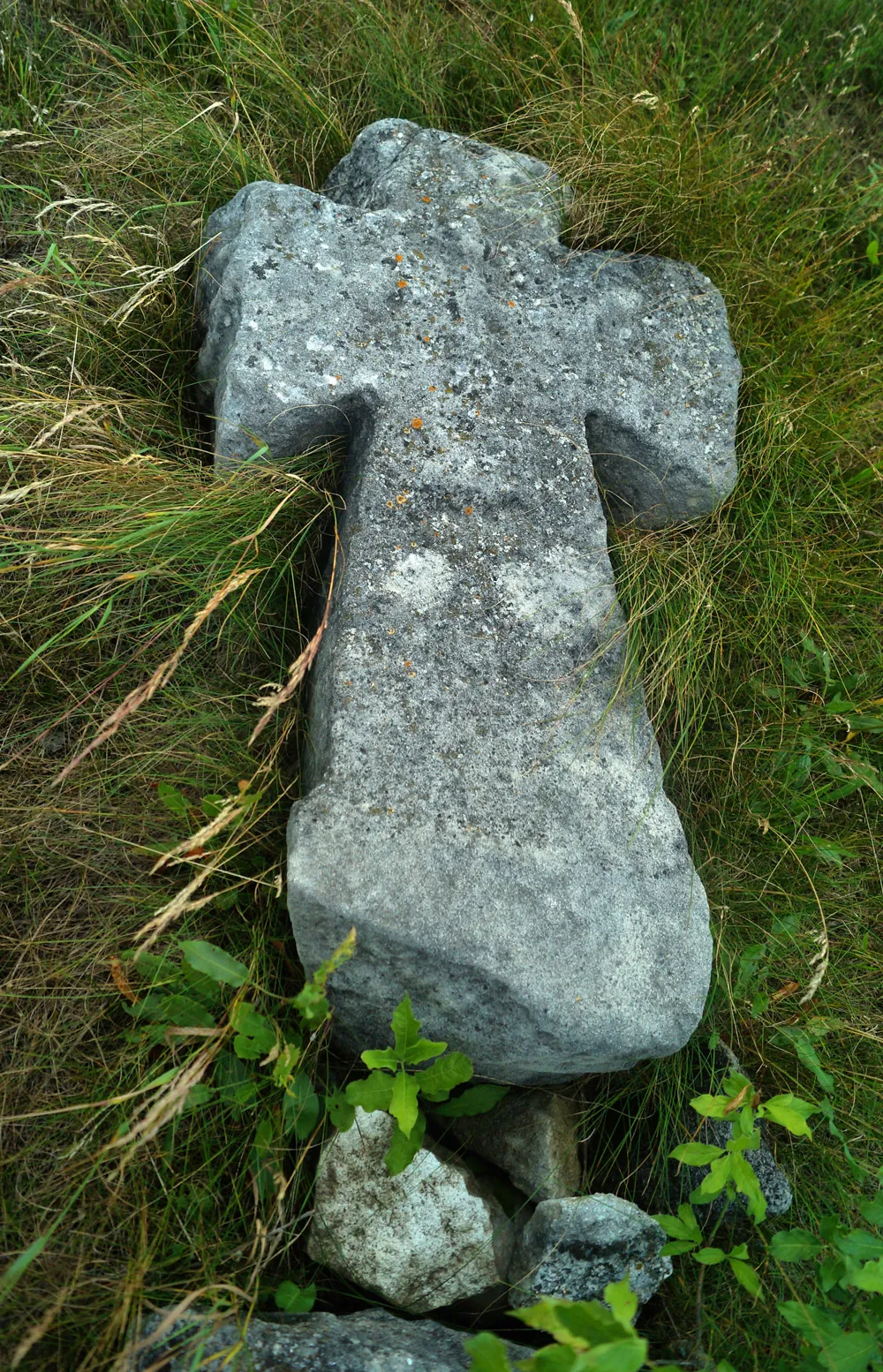
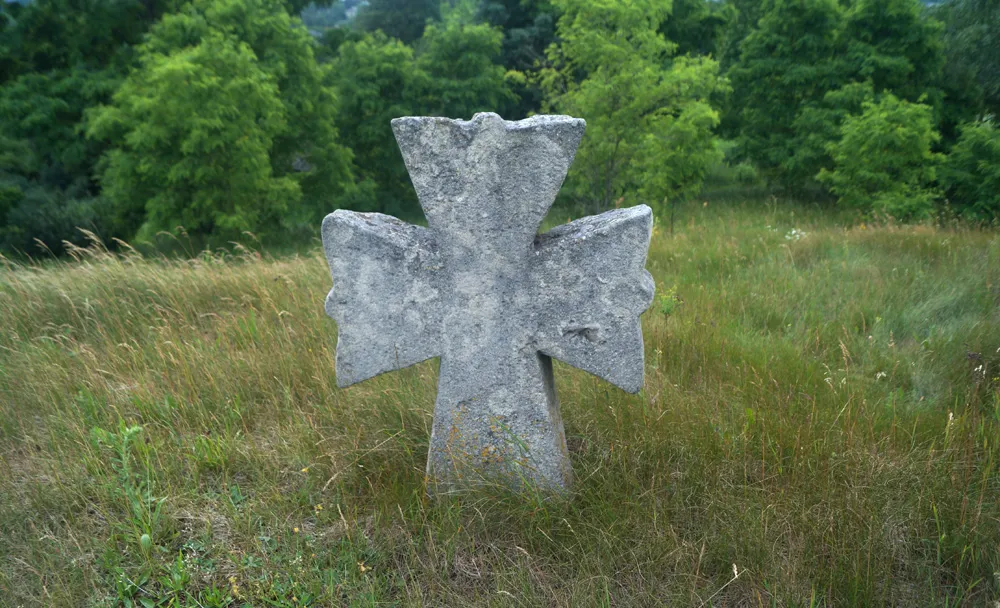
The old Cossack cemetery